 PledgeBox
Crowdfunding Video Games Your Essential Playbook for Success
A definitive guide to crowdfunding video games. Learn to build a community, craft a winning campaign, and manage post-campaign fulfillment for a funded project.
A definitive guide to crowdfunding video games. Learn to build a community, craft a winning campaign, and manage post-campaign fulfillment for a funded project.
For indie developers, crowdfunding a video game is more than just a way to raise money—it's a complete game-changer. It allows you to sidestep the traditional publisher route, connect directly with players who are genuinely excited about your vision, and keep full creative control. You’re not just securing capital; you're building a loyal community and proving there's real demand for your game before it even launches.
So, you're ready to bring your game to life. This isn't just another guide; it's your complete playbook for launching a video game that doesn't just get funded but builds a thriving community. We're going to walk through the entire journey together, from building buzz before you ask for a dime to crafting a campaign page that converts lurkers into passionate backers.
We'll cover actionable strategies for everything—designing reward tiers people can't resist, keeping your community engaged, and nailing the post-campaign phase, which is where many projects either succeed or stumble. Platforms like Kickstarter have torn down the old gates, empowering you to take your vision directly to the players. And while you're planning, it's worth exploring how modern tools can give you an edge; check out these insights on AI game development techniques to see how you can build more efficiently.
Before diving in, you need to understand the big picture. A successful campaign is a marathon, not a sprint, broken down into three distinct phases. Get these right, and you're well on your way.
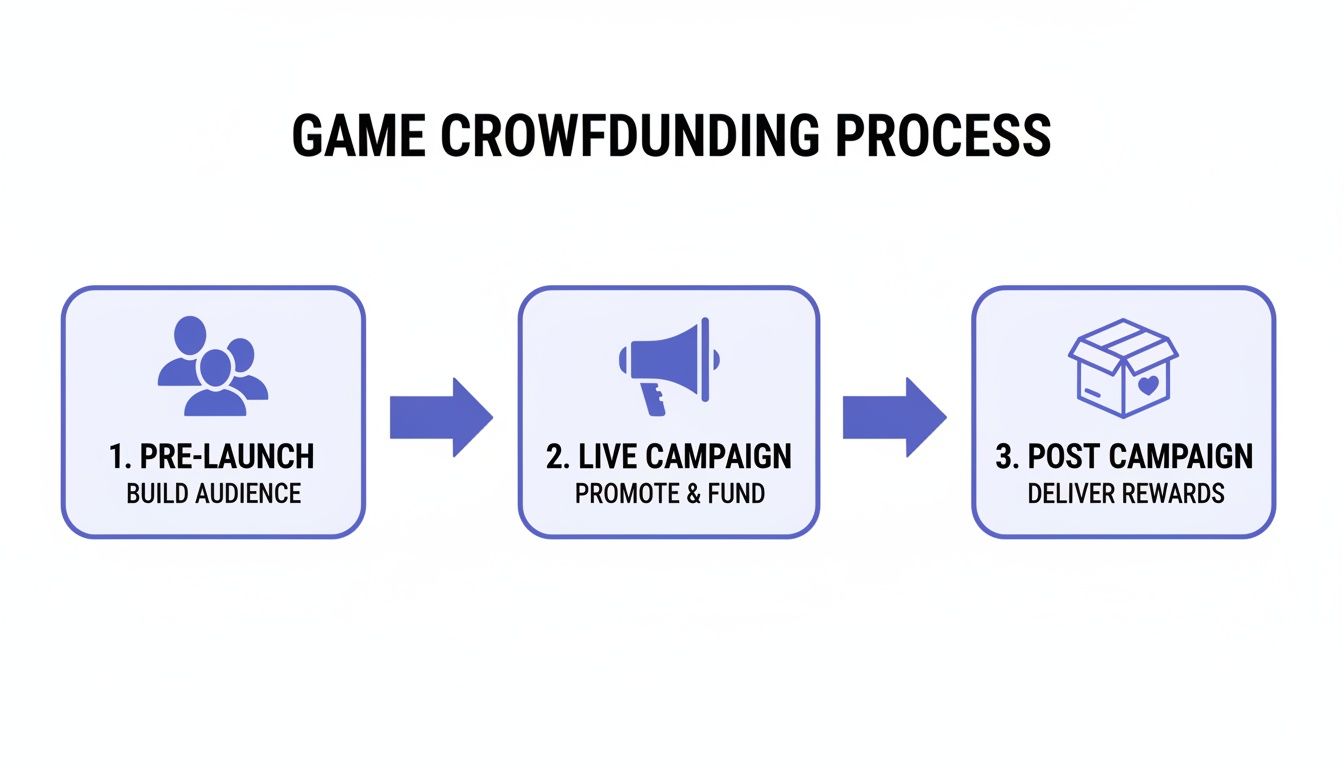
As you can see, the real work starts months before you hit "launch" and keeps going long after the funding clock runs out. Success is all about preparation and follow-through.
To help you visualize the journey, here’s a high-level look at each stage.
| Phase | Primary Objective | Key Activities |
|---|---|---|
| Pre-Launch | Build an engaged community and validate your game concept. | Creating a landing page, growing an email list, social media engagement, content creation (devlogs, trailers), press outreach. |
| Live Campaign | Hit your funding goal and maintain momentum. | Launch day promotion, daily updates, community management, stretch goal reveals, paid advertising, responding to backer feedback. |
| Post-Campaign | Fulfill rewards and transition backers into long-term fans. | Sending backer surveys, managing pledges and upsells, manufacturing physical goods, delivering digital rewards, ongoing community updates. |
Each phase requires a unique strategy, but they all flow into one another. A strong pre-launch makes for an explosive live campaign, which in turn sets you up for a smooth post-campaign fulfillment process.
We’ll also dig into the essential tools that make this all manageable, like how a smart pledge manager can not only simplify fulfillment but actually boost your total funding after the campaign ends. Choosing the right tool here is a massive strategic advantage.
Think of Kickstarter's pledge manager like Amazon—it's a closed, standardized marketplace. A flexible tool like PledgeBox, on the other hand, is like Shopify. It gives you a powerful, customizable storefront to manage backer relationships and grow your revenue post-campaign.
This is a critical distinction. With PledgeBox, you can send your backer survey for free, and it only takes a 3% fee on any successful upsells you make. This model lets you offer more cool stuff to your backers without any upfront cost. If you want to see what the data says about winning strategies, you can learn more about crowdfunding success in the gaming industry.
Consider this your map to not only hitting your goal but building a game and a fanbase that will last for years to come.
Let’s talk about the single biggest mistake I see indie devs make with crowdfunding: launching to an empty room. Your campaign's success isn't sealed on launch day; it’s decided in the months leading up to it. Having a crowd of eager fans ready to back you the second you go live is the whole game.
This pre-launch phase is all about turning your game from a solo project into a shared journey. You need to find your future players where they already hang out and give them a compelling reason to care. This isn't about spammy marketing—it's about building a real, authentic connection and a tribe that's genuinely invested in your vision.
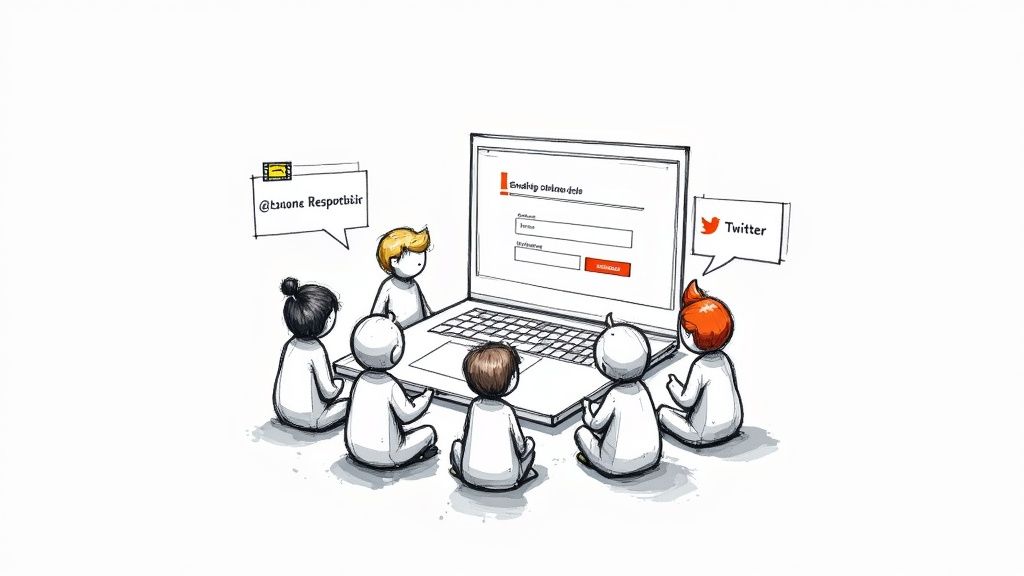
Your first hundred followers are worth more than a thousand casual onlookers. These are the people who will shout your name from the rooftops and provide the social proof that convinces others to join in. Focus your energy where gamers live and breathe.
The trick is consistency. Be open about your passion, your roadblocks, and your small victories. People want to back people, not just a faceless project.
Social media is fantastic for conversation, but your email list is your golden ticket. You need a simple, effective landing page that serves one purpose: getting people to sign up for updates.
Your landing page doesn't need to be complicated. It needs a killer headline, a captivating piece of key art or a screenshot, and a big, obvious button to sign up. This list is your direct line to your most passionate fans, bypassing social media algorithms entirely. These are your guaranteed day-one backers. For a deeper dive, check out these 7 essential actions to build your community before your campaign.
The old model of game development had gatekeepers—publishers deciding if your game deserved to exist. Today, you are the gatekeeper. Building your own community is how you open that gate.
To keep that spark alive in your growing community, you have to feed them. Consistent, valuable content shows you're making real progress and builds a mountain of trust and anticipation.
This steady drumbeat of updates proves you’re committed and keeps your game at the top of their minds. For a more advanced look at fostering a dedicated audience, some of the modern strategies for Web3 community building have fantastic takeaways on genuine engagement. By the time you hit that launch button, you won’t be starting from zero; you'll be launching with an army at your back.
Think of your campaign page as your game's world premiere, digital storefront, and elevator pitch all rolled into one. When a potential backer lands there, you have just a few seconds to hook them. A well-designed page and a killer video are what separate a funded project from a forgotten one.
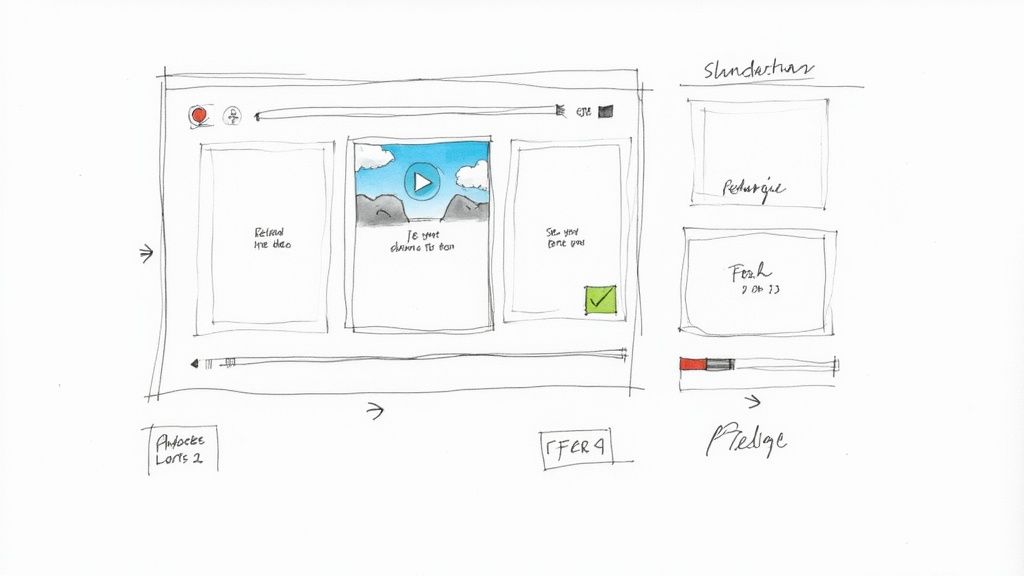
This isn't about slapping some screenshots together and calling it a day. It’s about creating a journey. Every single element—from the first frame of your video to the pricing of your rewards—needs to work together to turn a curious visitor into a committed backer.
Your campaign video is, without a doubt, your most powerful asset. Many people will decide whether to back your game based on the video alone, and those first 15 seconds are absolutely critical. Forget the drawn-out intros and team bios. You need to grab them immediately.
Lead with your best, most exciting gameplay. Don't just tell them your game is fun—show them. Let them see the core mechanics, the gorgeous art, and the unique hook that sets your game apart. Once you have their attention, follow up with a short, passionate pitch from you, the developer. Your genuine excitement is infectious and creates an instant human connection.
A winning video formula often looks like this:
Once the video has done its job, your page layout has to hold that attention. Let’s be honest: nobody reads huge walls of text online. Your goal is to make the page easy to scan, breaking up the information with compelling visuals.
Use high-energy GIFs to show off specific mechanics or slick animations on a loop. High-resolution screenshots are non-negotiable. Frame all your visuals with clear, punchy headlines that tell the backer exactly what they're looking at. Think of your page as a series of visual highlights, not a novel.
Your campaign page should answer three simple questions almost instantly: What is this game? Why should I care? And who are you guys (and can I trust you to deliver)?
Keep your paragraphs short—two or three sentences, max. Use bullet points for key features and bold text to make important details pop. This structure lets backers get the gist in seconds and then explore the parts that really grab their interest.
Your reward tiers are the engine of the whole campaign. They’re what convince backers to finally click that pledge button, and a smart structure can significantly boost your average pledge. The secret is to offer something for everyone.
A solid reward structure usually includes:
Just look at how Brandon Sanderson's Cosmere RPG campaign absolutely demolished records, raising over $15 million to become the top gaming project on Kickstarter. They tapped into a massive, pre-existing fanbase of book lovers with perfectly crafted rewards that spoke directly to them. It’s a masterclass in understanding your audience. You can discover more insights about record-breaking gaming projects on Statista.com.
By combining a powerful video, a visually engaging page, and strategic rewards, you build a compelling case that turns casual browsers into the dedicated community you need to fund your vision.
Hitting that "launch" button feels like the finish line, but it’s really just the starting pistol. The next 30 days are a non-stop marathon of marketing, community management, and communication. You’ll get a huge funding spike from your pre-launch followers, which is an amazing feeling, but real success in crowdfunding video games is all about keeping that energy alive until the very end.
This is where all your planning pays off. Your one job now is to keep a steady stream of fresh eyes on your campaign page. This constant forward motion is what separates the campaigns that just barely squeak past their goal from the ones that blow past it and start unlocking incredible new features.
That initial launch day buzz is powerful, but it won't last on its own. To fight off the inevitable slowdown, you need to be pushing your campaign across multiple channels, creating a constant drumbeat of excitement.
All this hard work is what will carry you through the notorious "mid-campaign slump"—that quiet period where pledges can really flatline. By keeping the conversation active, you stay visible.
Your backers aren't just buying a game; they're investing in you and your vision. That makes trust your most valuable currency. The absolute best way to build and maintain it is through consistent, honest updates.
You should be posting updates on your campaign page at least every two or three days. Share the wins, of course, but don't hide the challenges. If you’re stuck on a nasty bug or a piece of art is taking longer than expected, tell your backers. This kind of honesty makes you relatable and shows you respect them and their investment.
Constant, clear communication is non-negotiable. It transforms anxious backers into confident advocates who are more likely to share your project and stick with you for the long haul.
These updates are also a great chance to rally the troops. End every post with a simple call to action, like asking backers to share the campaign with one friend who would love the game. It’s a small ask that can have a huge ripple effect.
Stretch goals are more than just numbers on a page; they're events. Used correctly, they can completely reignite a campaign's momentum during the middle slump or the final 48-hour push.
Don't reveal all your stretch goals at once. Instead, unveil them one by one as you get closer to hitting the previous funding milestone. This builds a sense of discovery and gives everyone something new to get excited about. Even better, tie these goals to features your community is already asking for—a new character, a special game mode, or a port to another console. It shows you're listening and makes backers feel like they're actively shaping the game’s future.
The potential here is massive. To date, video game projects on Kickstarter have raised over $377 million across more than 5,500 campaigns. That’s proof that a huge, passionate audience is out there, ready to fund the next great indie title. You can discover more about Kickstarter's impact on game funding on gam3s.gg. By managing your campaign with a smart, proactive strategy, your project won't just get funded—it'll become another one of these incredible success stories.
You did it. Your campaign is a success! But after the confetti settles from a successful round of crowdfunding video games, the real work begins. This is the post-campaign phase, where you shift from fundraising to fulfillment, and it’s where a great pledge manager becomes your best friend.
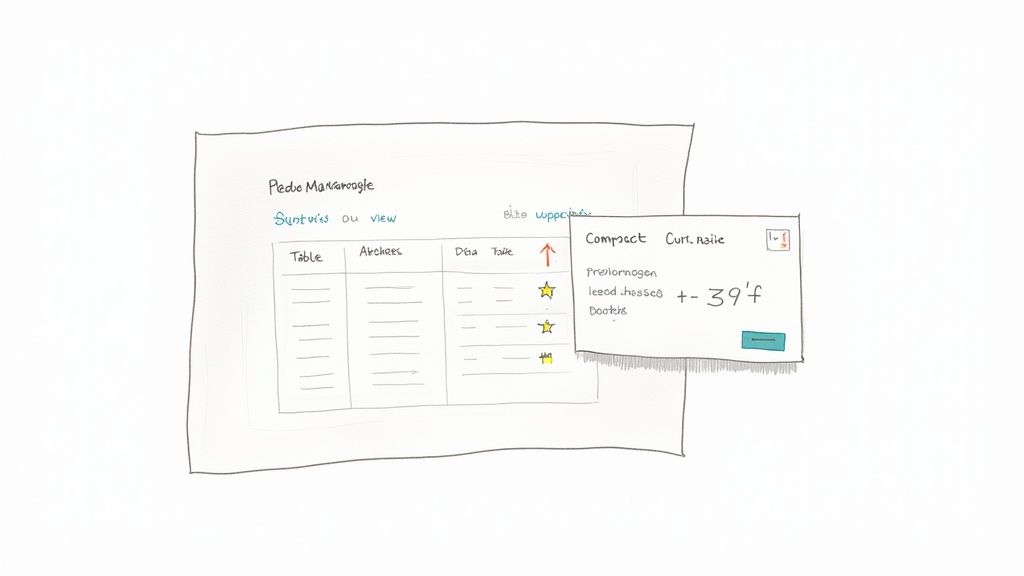
While platforms like Kickstarter are incredible for collecting initial pledges, they aren't designed for the logistical marathon that follows. You need a dedicated system to handle backer surveys, lock in shipping info, manage all those reward variations, and calculate accurate shipping costs. This is exactly what a pledge manager is built for.
Not all pledge managers are created equal, and your choice will have a huge impact on your workflow and, frankly, your bottom line. Using Kickstarter's pledge manager is like using Amazon—it's a closed, standardized marketplace with little room for customization. It gets the basic job done, but you leave a lot of opportunity on the table.
On the other hand, a dedicated solution like PledgeBox is like having your own Shopify store. It gives you total control to create a branded, customized experience for your backers. This lets you build a much stronger relationship with your community and opens up post-campaign revenue streams that a basic tool simply can't handle.
The very first thing you need to do after your campaign wraps is send out backer surveys. This is how you confirm everyone’s reward selections, grab their shipping addresses, and finalize the orders. With PledgeBox, sending your backer survey is completely free. You can collect all that crucial information without any upfront cost, which is a massive help for an indie studio watching every dollar.
But here’s where the real magic happens: the pledge manager is your first and best chance to upsell. Think about it—your backers are already fired up and invested in your game. This is the perfect moment to offer them some awesome add-ons they might have missed during the campaign rush.
These could be things like:
This isn't just about squeezing out extra money; it's about delivering more value to your biggest fans. They want more cool stuff related to the game they love, and a pledge manager makes it dead simple to offer it to them.
PledgeBox is built for this. As a backer completes their survey, you can present them with a curated selection of add-ons. The platform only charges a small 3% fee on the new funds you raise from these upsells. There are no hidden charges or per-backer fees. This model encourages you to offer great extras because it costs you nothing if no one bites, but it provides a significant revenue boost when they do.
Choosing the right tool is a big strategic decision, and you can get more guidance on how to select the right pledge manager for your project to make sure you're set up for success. Done right, this post-campaign strategy can be a game-changer, turning a successful campaign into a massively successful one.
Getting your game into the hands of your backers is the final boss of your crowdfunding video games journey. This is where you deliver on every promise, solidifying the trust you've worked so hard to build. It’s all about managing timelines, coordinating distribution, and smoothly navigating the final leg of the race.
Consistent, transparent communication is everything at this stage. Backers get that game development can hit snags—what they won't stand for is silence. A great fulfillment experience, even one with a few bumps, is what turns those backers into true fans who will be first in line for your next project.
Your communication job doesn't stop when the campaign funds. If anything, it kicks into high gear. Your backers have handed over their hard-earned money and their trust; now you have to show them it was a good investment.
This kind of transparency makes your community feel like they're part of the team, not just customers. That feeling is gold for long-term support.
Don't sleep on your pledge manager's pre-order store. It's a fantastic tool for catching sales from people who missed the campaign. Plenty of folks discover projects late, and a pre-order page gives them a direct path to jump on board. This turns your one-time campaign into an ongoing revenue stream that can help fund your studio’s next big thing.
A great fulfillment experience is your best marketing for your next game. When backers feel cared for and receive a quality product, they become your most authentic and powerful advocates.
This entire ecosystem proves how powerful direct-to-player funding really is. Kickstarter has seen over 651,000 projects, with video games pulling in a staggering $377 million across 5,526 campaigns—a critical funding pipeline for indie and AA studios alike. With a platform-wide success rate of nearly 42%, it’s clear that crowdfunding has some serious global punch. You can read the full research on crowdfunding statistics at ElectroIQ.com.
When you absolutely nail your fulfillment and communication, you're doing more than just shipping a game. You're cementing a lasting relationship with your players, making sure the end of this campaign is just the beginning of your studio's story.
Even with the best playbook, taking the leap to crowdfund your game can feel like a huge step. You've probably got a ton of questions floating around. Let's tackle some of the big ones so you can move forward with confidence.
This is the big one, and your funding goal should never be a guess pulled out of thin air. It has to be grounded in a rock-solid budget.
You need to account for everything. That means team salaries, software licenses, paying artists and composers for assets, and a real marketing budget. But don't stop there. So many creators get tripped up by the "hidden" costs: platform fees (around 5%), payment processing (another 3-5%), and the actual cost to manufacture and ship every single t-shirt, artbook, and collector's box you promise.
My advice? Once you have your total, add a 15-20% buffer on top. Trust me, unexpected things will happen, and that cushion will save you.
Your campaign page, video, and rewards are all crucial, but if you ask any veteran creator, they'll tell you the same thing: the campaign is won or lost before you ever click "launch."
Building an engaged community and a healthy email list beforehand is what drives that explosive day-one funding. That initial surge does more than just get you a chunk of your goal; it creates massive social proof, tells the platform's algorithm that your project is hot, and attracts a whole new wave of backers who want to jump on a winning train.
Launching to an empty room is an uphill battle you probably won't win.
Think of it like this: Kickstarter's pledge manager is like Amazon—a giant, one-size-fits-all marketplace. A dedicated pledge manager like PledgeBox is your own powerful, custom storefront—like Shopify, built specifically to manage your backer relationships and keep growing your revenue after the campaign ends.
This difference is huge. For example, PledgeBox is free to send the backer survey, and only charges 3% of the upsell revenue if you generate any. This setup lets you offer cool add-ons to your most dedicated fans without any upfront risk, turning what used to be a logistical headache into another funding opportunity.
Ready to streamline your post-campaign process and boost your funding? With PledgeBox, you can manage surveys, upsells, and fulfillment with ease. Get started for free today.
PledgeBox
The All-in-One Toolkit to Launch, Manage & Scale Your Kickstarter / Indiegogo Campaign