 PledgeBox
A Creator's Guide to Crowdfunding Order Fulfillment
Master crowdfunding order fulfillment with this practical guide. Learn how to manage backer data, shipping, and communication to deliver rewards on time.
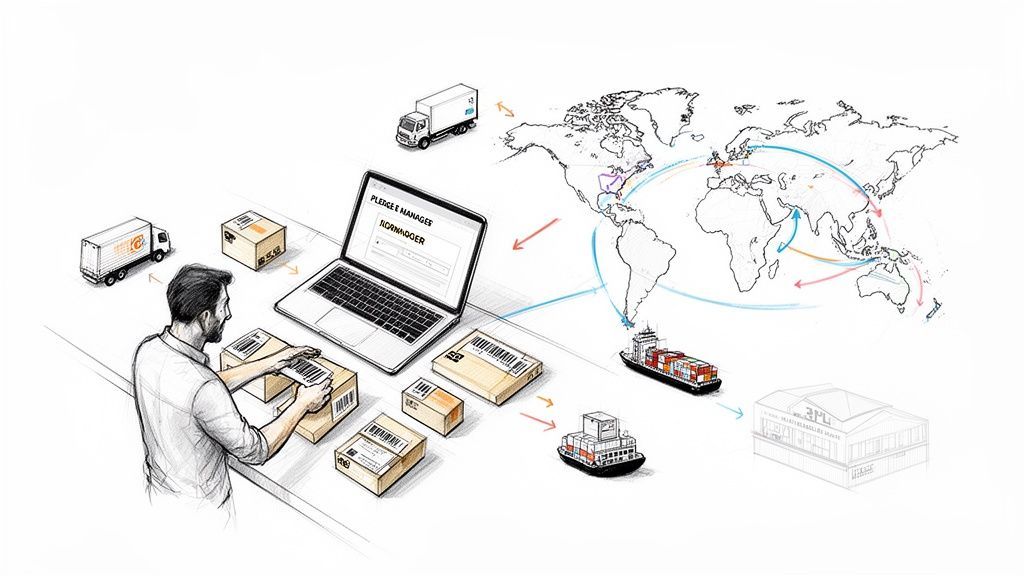
Master crowdfunding order fulfillment with this practical guide. Learn how to manage backer data, shipping, and communication to deliver rewards on time.
Congratulations, your campaign is funded! Crowdfunding order fulfillment is the make-or-break phase where you finally turn those pledges into real, physical rewards for your backers. It’s a multi-stage process that kicks off the second your funding period ends and doesn’t truly finish until the last package hits a backer's doorstep.
The moment your campaign clock hits zero and the funding goal is met, the real work begins. Popping the champagne is a must, but the journey ahead—fulfillment—is what will ultimately define your project's success and your brand's reputation. This is where you either solidify backer trust or, unfortunately, break it.
Fulfillment is so much more than just sticking things in a box and mailing them out. It’s a full-blown logistical operation. You have to meticulously collect backer data, coordinate with manufacturers, manage inventory, and navigate the notoriously tricky world of global shipping. Each step is a potential banana peel that can derail even the most well-funded campaigns if you're not prepared.
Think of this whole process as a roadmap with clear milestones. You’re essentially translating digital promises into physical products, and each phase sets the stage for the next. The core stages usually look something like this:
This visualization breaks down the high-level flow of what happens after your campaign ends, from gathering data to the final shipment.
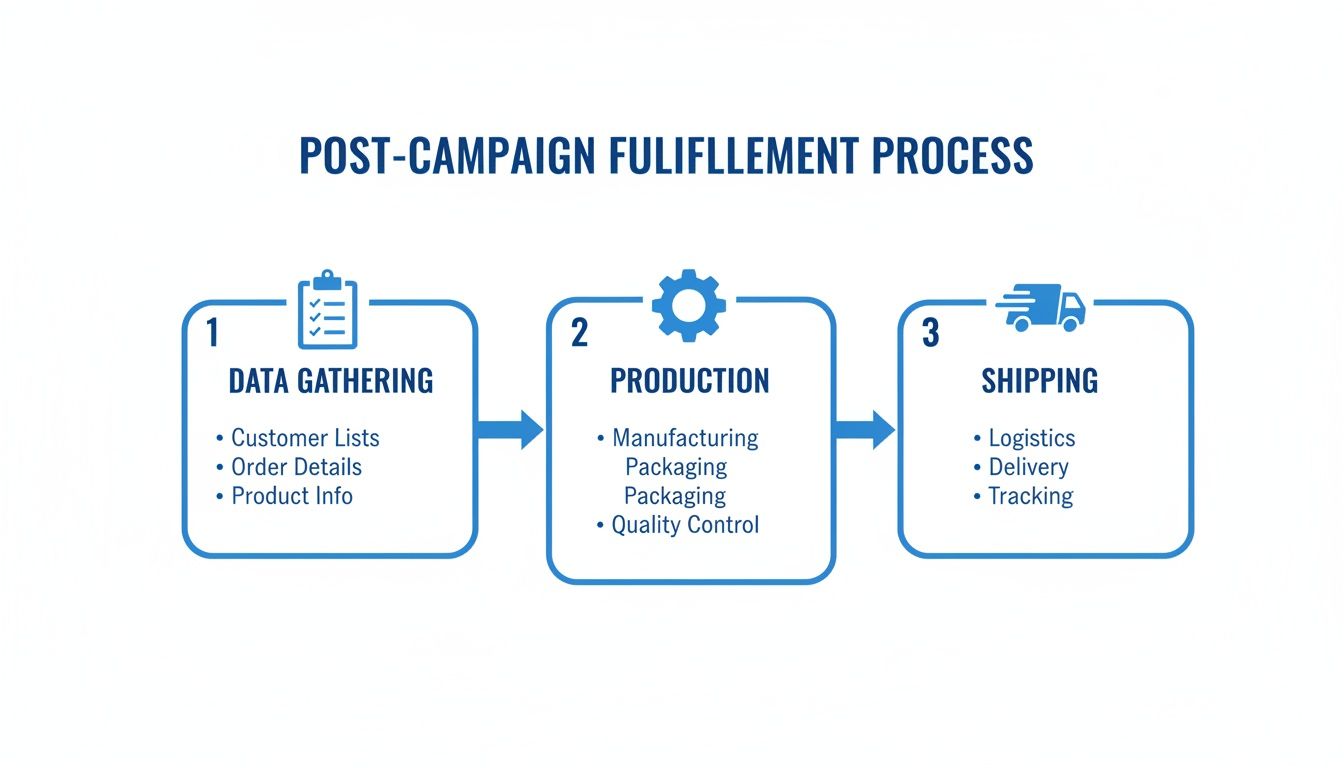
As you can see, everything is connected. A mistake in the first stage will ripple through the entire process, which is why having a solid plan from day one is so critical.
So many first-time creators get blindsided by the sheer complexity and cost of this final stage. It's shockingly easy to underestimate shipping costs, get tripped up by manufacturing delays, or deal with a flood of incorrect backer addresses. These issues can chew through your funds and create massive delays in the blink of an eye.
A well-structured fulfillment plan is the single most important asset you have after the confetti settles. It’s not just about logistics; it’s about maintaining momentum and delivering on the promise that earned you your backers' support in the first place.
Building a loyal community—the kind that will eagerly back your future projects—hinges on their experience after they've pledged their money. A smooth, transparent fulfillment process is how you turn one-time backers into lifelong fans. To get a deeper dive into this journey, check out our guide on everything you need to handle after your crowdfunding project ends. This playbook is your first step toward mastering that process.
Once your campaign is successfully funded, the real work begins. Your first big job in crowdfunding order fulfillment is to collect clean, accurate backer data. This is the moment a dedicated pledge manager stops being a "nice-to-have" and becomes the mission control for your entire post-campaign operation.
Trying to manage everything with the basic surveys from Kickstarter or Indiegogo is a classic rookie mistake. Those built-in tools are incredibly basic. They just aren't built to handle the complexities of modern campaigns, like charging the right shipping fees, sorting out reward variations, or letting backers grab those last-minute add-ons.
Relying on them often leads to a domino effect of problems—think incorrect orders, surprise shipping bills that demolish your profit margin, and a whole lot of backer frustration. Clean data is the foundation of a smooth fulfillment process, and using basic platform tools is like building on quicksand.
Here’s a great way to think about the difference. The native Kickstarter pledge manager is like Amazon, while a dedicated tool like the PledgeBox pledge manager is like Shopify.
Kickstarter's Pledge Manager (Amazon): It’s a simple, one-size-fits-all checkout. It works for the most basic pledges, but you get zero flexibility, no branding control, and no real way to engage with your backers after they’ve paid.
PledgeBox Pledge Manager (Shopify): This gives you a powerful, branded storefront just for your backers. You're in complete control of the experience. You can manage complex orders, offer exciting upsells, and communicate with your community in a professional, customized space that feels like an extension of your campaign.
One is just a transaction tool. The other is a platform for building relationships and squeezing every last drop of success out of your campaign.
A powerful pledge manager is so much more than a glorified address form. It’s a multi-tool designed to solve the biggest headaches in crowdfunding order fulfillment, making sure you get the data right from the start.
Its main jobs include:
To help you get a clearer picture, here’s a quick comparison:
| Feature | Basic Platform Survey | Dedicated Pledge Manager |
|---|---|---|
| Upsells & Add-ons | Not supported | Fully supported, drives extra revenue |
| Shipping Fees | Estimated upfront or not collected | Collected post-campaign based on real data |
| Address Validation | None | Yes, reduces shipping errors significantly |
| Order Management | Very basic, hard to edit | Advanced, easy to manage and update |
| Backer Communication | Limited to platform updates | Direct, integrated communication tools |
| Branding & Customization | Minimal to none | Fully branded and customizable experience |
As you can see, a dedicated pledge manager offers a far more robust and professional solution that prevents problems before they start.
The business model for these tools is also a huge factor. Many platforms charge creators upfront or take a cut of all funds raised.
PledgeBox is free to send the backer survey and only charges 3% of the upsell if there's any. This means you can professionalize your entire data collection process without spending a dime upfront.
One of the most frustrating (and costly) fulfillment headaches is dealing with incorrect shipping addresses. A single typo can lead to a returned package, an angry backer, and paying for shipping twice.
Good pledge managers have address validation tools built-in, often using Google Maps APIs to check and standardize addresses as backers type them. This simple feature catches a huge percentage of shipping errors before they can cause a problem.
This kind of data hygiene is similar to what you’d find in high-end business software. For creators juggling thousands of backers, leveraging CRM systems can be another powerful way to manage relationships alongside a pledge manager.
Picking the right tool is a critical step in your post-campaign plan. To dive deeper, check out our guide on how to select the right pledge manager for a full breakdown of features. By investing in the right platform, you’re setting yourself up for a smooth ride from survey to delivery.
Okay, your backer data is clean, locked in, and ready to go thanks to your pledge manager. Now for the exciting part: turning all those digital pledges into actual, physical products. This is where crowdfunding order fulfillment gets real, and lining up your production schedule with your shipping plan is non-negotiable if you want to avoid delays and keep your backers happy.
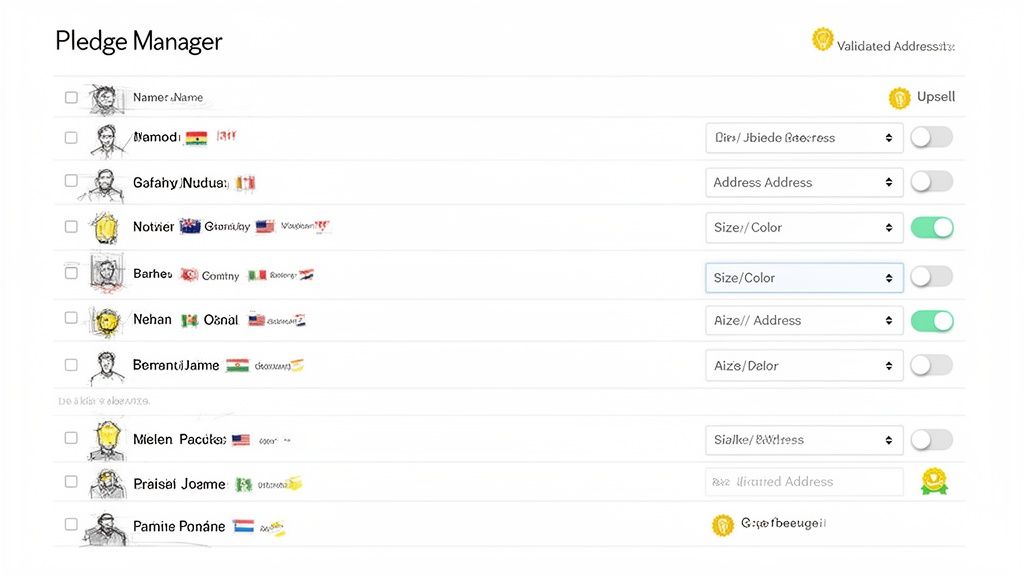
The very first thing on your list is to translate all that survey data into a rock-solid purchase order for your suppliers. The numbers you have are no longer just estimates; they're the exact quantities you need to make good on every single promise you made. Nailing the communication here is everything.
Your manufacturer doesn't need to know who backed your project, but they absolutely need a perfect breakdown of what to produce. Keep it simple and direct to avoid any confusion. A clear production manifest is your best friend.
This document should spell out:
Seriously, miscommunications about quantities are a rookie mistake that can derail your entire timeline. A detailed purchase order is your first line of defense.
I've seen so many creators shoot themselves in the foot by creating a production timeline with zero wiggle room. The hard truth is that delays will happen. A supply chain hiccup, a snag in quality control, a customs inspection—something is almost guaranteed to take longer than you think.
A timeline without a buffer is not a plan; it's a prayer. Always build in extra weeks for potential delays in manufacturing, freight shipping, and customs clearance to set realistic expectations for your backers.
Here’s how to do it right:
This padded schedule gives you the breathing room you need to handle problems without immediately having to post a dreaded "delay" update to your backers.
Once the factory run is complete, your job shifts to inventory management. Whether you’re packing boxes in your garage (the classic self-fulfillment route) or working with a third-party logistics (3PL) partner, the next steps are absolutely critical.
Your number one priority is a thorough quality control (QC) check. Never, ever have your product shipped directly from the factory to your fulfillment center without inspecting it first. Get a sample, check for defects, make sure the colors are right—catch any issues before they become a massive headache for you and your backers.
After your inventory gets the green light, it's time to prep it for your fulfillment partner. Your 3PL will have very specific instructions on how they need to receive your goods, from labeling to palletizing. Follow their guide to the letter. A smooth handover here is the final bridge between a successful production run and getting those rewards into your backers' hands.
Once production is underway, your attention needs to pivot to what is arguably the biggest logistical beast in crowdfunding order fulfillment: shipping. This is often the single most expensive and complicated part of the whole journey, especially with backers dotted all over the planet. Get this wrong, and you could see your profits vanish and your delivery timeline stretch into oblivion.
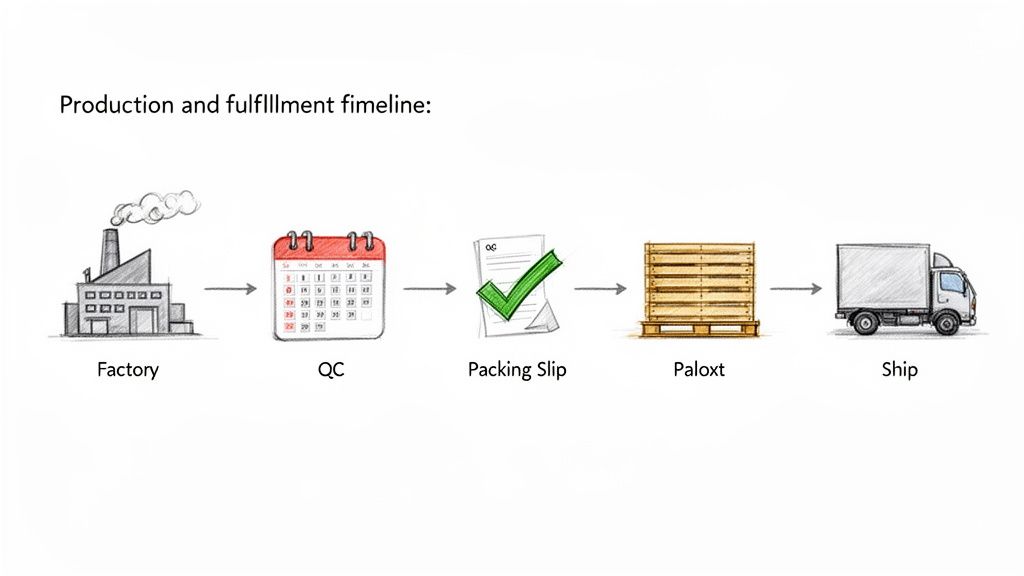
Putting together a solid, cost-effective plan means really getting to grips with your options, from picking the right carriers to navigating the labyrinth of international customs. Nailing this part is crucial for a smooth delivery that keeps your backers happy and raving about your project.
Let's be clear: not all shipping carriers are created equal. The best fit will always depend on your product's size, weight, and final destination. For most creators I've seen succeed, a multi-carrier approach is the only way to go.
The good news is that most fulfillment partners and modern shipping software can automatically shop for the best rates between these carriers, so you're not leaving money on the table. If you want to dive deeper into this decision, our guide offers a great breakdown of how to pick the right shipping vendor for your crowdfunding campaign.
Sending rewards to international backers adds a whole new layer of complexity. If you haven’t done your homework, your packages can get marooned in customs for weeks, and your backers could get slapped with surprise import fees—a recipe for angry comments.
A non-negotiable part of your international plan involves understanding HS Codes. An HS (Harmonized System) code is a universal number that customs officials worldwide use to classify products. You must use the correct code; it’s what determines the duties and taxes owed and keeps your shipments from getting flagged and delayed.
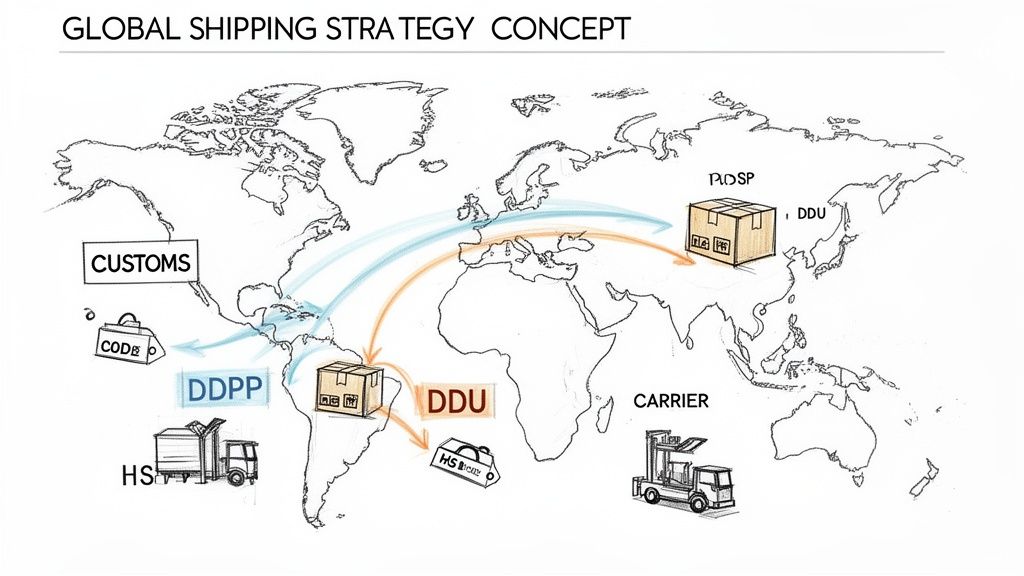
You're going to face a critical policy choice: will you ship Delivered Duty Unpaid (DDU) or Delivered Duty Paid (DDP)?
Being crystal clear about your shipping policy (DDU or DDP) on your campaign page and in your survey is non-negotiable. Transparency sets expectations correctly and saves everyone a lot of headaches later.
Your box does more than just protect your product; it's a huge factor in your shipping costs. Carriers use a pricing model called dimensional weight (or DIM weight), which bases the shipping fee on a package's size, not just what it weighs on a scale.
This sneaky detail means a big, light item can cost way more to ship than a small, heavy one. The fix? Use the smallest box that can still safely protect your product. Minimize that empty space! Custom-fit packaging can save you a small fortune when you're shipping thousands of units.
Finally, manual data entry is the arch-nemesis of efficient fulfillment. This is where modern shipping software becomes your best friend. These platforms plug directly into your pledge manager to:
By marrying smart carrier choices with a clear international strategy and efficient, automated packaging, you can build a shipping machine that truly delivers for you and your backers.
This is the moment all your careful planning leads up to. With clean data and a solid shipping strategy, you’re ready to dive into the final, most visible phase of crowdfunding order fulfillment: actually getting rewards into your backers' hands. This stage is less about spreadsheets and more about sharp execution and transparent communication.
First up, you'll send the finalized order data to your fulfillment partner. A good pledge manager makes this incredibly simple, letting you export clean, perfectly formatted files that your 3PL can plug right into their system. This seamless handoff is critical—it’s your best defense against manual entry errors that cause mis-shipments and headaches.
As soon as packages start moving, communication becomes your most important job. Your backers have been patient, but now they're more eager than ever for updates. Keeping them in the loop builds a massive amount of trust and dramatically cuts down on the flood of "Where's my reward?" support tickets.
You'll want to hit these key communication beats:
Think of the native Kickstarter pledge manager as a basic Amazon checkout—it gets the job done but offers little else. A dedicated pledge manager like PledgeBox, on the other hand, is like having your own Shopify store, giving you full control over the backer experience, including automated, branded shipping notifications.
Tools like PledgeBox are built to handle this workload for you. Once your fulfillment partner sends over the tracking numbers, PledgeBox can automatically sync them to the right backers and trigger branded email notifications. This single feature transforms what would be a huge administrative task into a smooth, hands-off workflow.
Let's be real: no matter how perfectly you plan, some packages will get lost, damaged, or returned. It’s just an unavoidable part of logistics. How you handle these issues is what separates a good creator from a truly great one.
Having a clear, pre-defined policy for these situations is essential. Your backers need to know exactly what to do when something goes wrong. Your policy should cover:
Treat every support ticket as a chance to provide outstanding service. It really strengthens your community. A backer who has a problem solved quickly and graciously often becomes even more loyal than one who never had an issue at all.
Ultimately, getting fulfillment right isn't just about being efficient; it's about protecting your bottom line and your reputation. Post-funding mistakes can make costs spiral. For instance, smaller campaigns often try to manage fulfillment in-house, which can lead to address errors that inflate shipping costs by up to 20-30% per order due to reshipments. This really drives home why accurate data and automated systems are so vital. You can discover more insights about crowdfunding trends and statistics and see how top-tier campaigns manage these exact challenges.
Even with the best plan in the world, questions are going to pop up during the controlled chaos of crowdfunding order fulfillment. Getting ahead of these common queries can help you dodge major headaches and keep your project running smoothly. Let's dig into the most frequent concerns I see creators wrestling with.
Without a doubt, the single most common—and costly—mistake is underestimating shipping costs, particularly for international backers. So many creators get completely blindsided by fluctuating carrier rates, sneaky dimensional weight charges, and surprise customs fees or VAT.
This oversight forces a terrible choice: either you lose money on every single reward you ship, or you have to go back to your backers and ask for more funds. That second option can seriously erode the trust you worked so hard to build. This is exactly why a post-campaign pledge manager is an absolute must-have.
You need to be thinking about fulfillment long before your campaign ever goes live. This isn’t something you figure out after the money is raised; it’s a critical piece of your pre-launch strategy.
Your pre-launch checklist should absolutely include:
Having this foundation in place means you can set realistic funding goals and price your rewards correctly. It lets you hit the ground running the moment your campaign ends, avoiding that dreaded "what now?" paralysis that stalls too many great projects.
Think of a pledge manager as your post-campaign command center. It automates all the tedious, error-prone parts of getting rewards to backers. The native Kickstarter pledge manager is like a basic Amazon checkout; it gets the job done. But a dedicated tool like the PledgeBox pledge manager is more like your own powerful Shopify storefront, giving you way more control.
Here’s where it really makes a difference:
Critically, PledgeBox is free to send the backer survey and only charges 3% of the upsell if there's any. This makes it a powerful, zero-risk tool for professionalizing your fulfillment process.
It also validates addresses to cut down on shipping errors and generates clean, simple data reports for your manufacturing and fulfillment partners. It just smooths out the entire workflow from campaign end to final delivery.
Ready to master your post-campaign process? PledgeBox offers a complete, creator-friendly toolkit to manage surveys, upsells, and fulfillment with ease. Get started for free today.
PledgeBox
The All-in-One Toolkit to Launch, Manage & Scale Your Kickstarter / Indiegogo Campaign