 PledgeBox
Address Lookup for Free: 10 Tools Worth Trying
Find the best address lookup for free tools, from USPS to batch checkers, with honest limits, privacy notes, and tips for crowdfunding fulfillment.

Find the best address lookup for free tools, from USPS to batch checkers, with honest limits, privacy notes, and tips for crowdfunding fulfillment.
You print labels on a Sunday night. One backer wrote apartment 4B as apartment 48. The carrier can't match the unit, the carton bounces, and you pay the return plus a second shipment while that backer waits. That bill is larger than any stamp, and it shows up on campaigns that looked clean in the survey export.
An address lookup for free is good at three jobs: confirming a ZIP Code, putting the line into a postal format, and surfacing a deliverability hint. It is not a background check. A match does not prove who lives there, and it does not guarantee the driver will finish the drop. Use it to catch typos before you hand a file to a 3PL, then ask the backer to confirm unit numbers, rural boxes, and anything that looks newly built.
These ten tools cover single checks, small batch cleanup, and developer hooks. Official postal pages come first, then trials and browser validators, then map views and an API. If you only have one bad row, a browser tool is enough. A few hundred pledge-survey rows need a batch check with a cap you understand. If you own the form, an API can suggest a correction while the backer is still on the page.
Keep privacy in the loop. Don't drop a full backer file into a people-search site just to "find" an address. A no-cost lookup can still expose someone else's home.
Start here when a U.S. line looks almost right and the ZIP is the part you don't trust. The USPS ZIP Code Lookup takes a street address, or a city and state, and returns a USPS-recognized ZIP Code plus a mailing format the postal service uses.
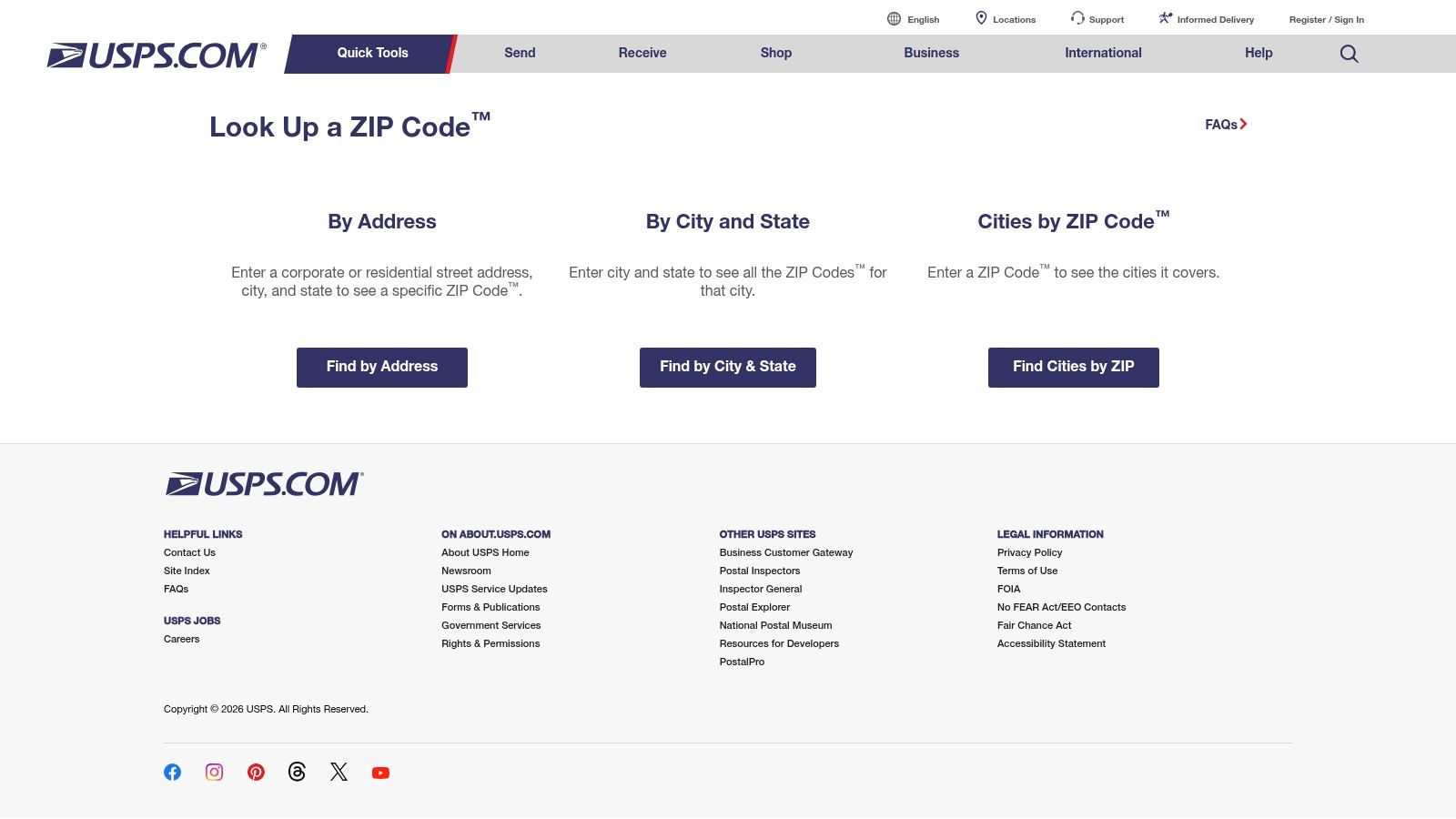
I use it for one-off fixes, not for a 2,000-row pledge export. Paste the street, city, and state, compare the standardized line to what the backer typed, and fix the ZIP before you buy the label. It is free, official, and there is no account to create.
A ZIP result is a format check. For the fuller U.S. workflow, pair it with a US address validation pass before vendor export. Large lists will feel slow if you type them one by one.
Practical rule: If the unit number is the only thing that changed, ask the backer. Don't overwrite it from a ZIP tool.
Smarty is the trial I open when the survey form itself is the problem, not a single typo. The Smarty free address verification offer lists 1,000 U.S. verification lookups and 1,000 U.S. autocomplete lookups for up to 42 days, with no credit card required. International products sit on a smaller free allocation.
That volume is enough to test a small campaign or a form prototype. Autocomplete nudges backers while they type. The API and SDKs matter only if someone on the team will wire them up. Ongoing use moves to a paid plan, so treat the window as a test, not a permanent cleanup bench.
An address-standardization pilot processed 835,539 records, found an average 12% undeliverable rate, and reported a 23.94% improvement in deliverability after standardization, validation, and geocoding. A plausible line can still fail at the carrier. A database hit is not the same as a door the driver can reach.
Melissa Address Check accepts typed lines, pasted lines, or autocomplete, then checks and corrects U.S. and Canadian addresses against postal standards. The batch tool covers lists of up to 500 records. That is the right size for a late pledge wave or a messy tab you don't want to retype.
Credits apply to some lookups, and free access can run out. Melissa also cautions that an individual result is not guaranteed accurate. I still like it as a pre-fulfillment standardizer because you can see the corrected components before you overwrite the backer's original text. Appending extra data through credit options is optional. Skip it if you only need a ship-to line.
For a longer pass on formatting rules, this address standardization tool walkthrough sits next to the same job. Larger or repeating campaigns will outgrow the 500-row batch and belong on a paid product.
Keep the original survey text in a spare column. Silent overwrites are how unit numbers disappear.
Run one sloppy backer address through the Lob address verification browser demo and you get more than a yes or no. The page accepts domestic and international lines, then returns USPS deliverability, ZIP+4, carrier route, and broken-out components. Lob is built for people who already think in direct mail, and the fields it returns show it.
A free demo is a sample, not a bulk pipe. Recurring volume wants an account.
The deliverability verdict is the part worth your time before a label run. It tells you whether the postal database treats the line as deliverable, which is closer to a shipping decision than a pin on a map. Carrier route and the other mail extras are noise if you only hand a CSV to a freight forwarder.
There is an API and batch validation once you leave the demo, which is where real list cleanup happens. Treat single demo results as a check, not a verdict, on rural routes and messy international lines. Cross-check anything expensive before you commit the postage.
A backer types "4500 Oak St" and the ZIP tool returns it cleanly formatted. Google Maps is where you check whether that clean line is real. Search the address, look at the road, and see whether the pin lands on a warehouse, a campus, or an empty field. Street-level landmarks catch the "Oak St" versus "Oak Ave" mistakes that formatting tools pass straight through.
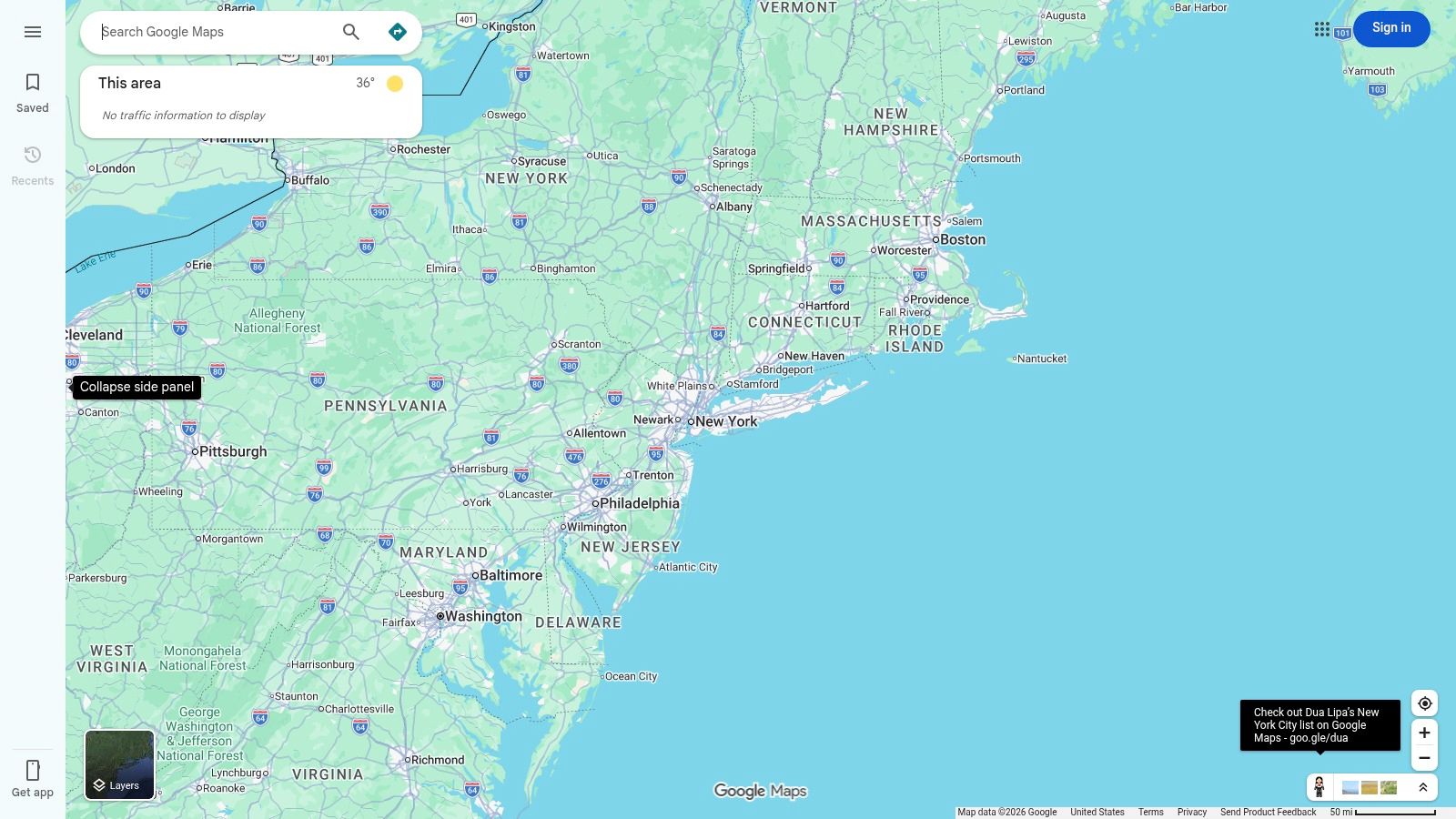
Treat the pin as a visual second opinion, not a postal authority. It can sit on a building centroid or a street segment and still miss the actual entrance or unit. I would not ship a high-value reward on a map pin alone, and I would not run it on a whole backer list. One lookup at a time is the natural pace here, which makes it a spot-check tool for suspicious addresses, not a bulk cleanup pass.
A peer-reviewed comparison of about 2,500 addresses found Google matched more than 93%, against more than 82% for OpenStreetMap. Google's median deviation was below 9 meters, versus below 175.8 meters for OpenStreetMap. Match rate still fell when address quality and urbanization fell. Free geocoding can look confident and still land on the wrong rooftop, so flag the backer and ask for a corrected line before the label gets printed.
The map search itself stays free for casual checks. The separate Address Validation API bills per request and needs billing turned on, which is a different job for a different section.
This is the developer door, not a Sunday-night lookup. The Address Validation API validates inside your app. You need an API key or OAuth token and a billing account. Pricing is pay-as-you-go, so "free" stops being a safe assumption once real survey traffic hits it.
Google's Address Validation documentation separates geocoding (turning text into latitude and longitude) from validation (checking components, standardizing the mail format, and returning a deliverability view). A coordinate can point at a nearby building. Component checks can flag a bad street, locality, postal code, or premise. For global backers, country or ISO-2 data and region bias improve the match. Keep the original line next to the status code.
A benchmark of 1,000 messy, real-world addresses reported Google Maps v3 at a 100.0% candidate-return rate and 98.6% agreement at that benchmark's GH4 precision. The same write-up said leading commercial geocoders could beat open-source systems by as much as 49 percentage points in recall, and non-canonical wording alone can cut open-source recall by up to 25 percentage points. Sample your own historical pledges. Don't treat a candidate as deliverable without confirmation.
Quotas and cost live in Google Cloud, which helps if you already pay for Maps. A 200-backer board game usually doesn't need this build. If you do wire a form, this Google Maps address validation note is the practical companion. Confirm licensing before you store results forever.
Pelcro is the no-account browser check I use when I don't want another login. Pelcro's address verification tool runs a single U.S. line against USPS data, standardizes the format, and reports a Delivery Point Validation result. You are not on the USPS site. You are on a third party that says it uses that data.
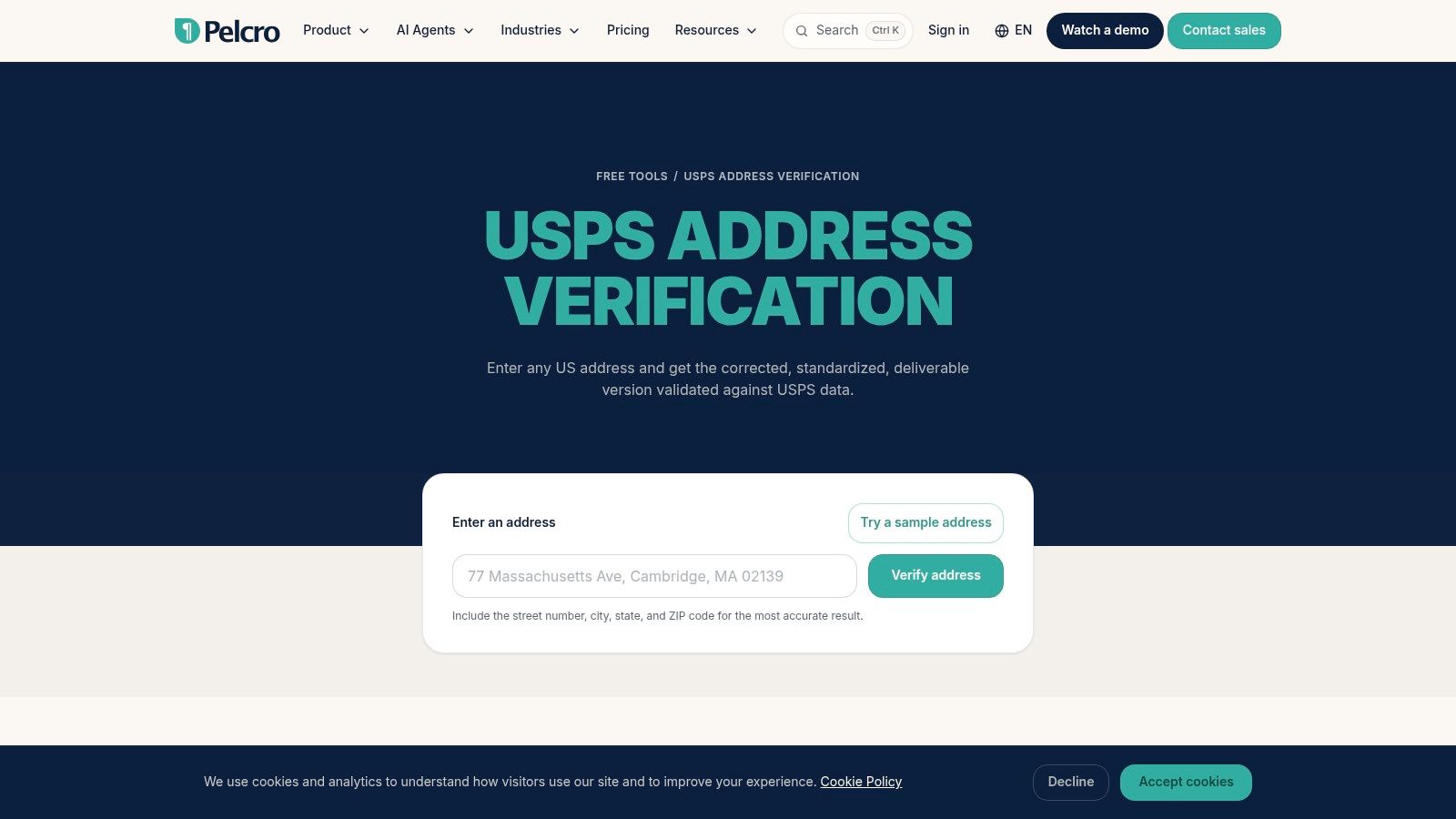
That DPV-style flag is more useful than a map pin for a one-off mail question. It still doesn't name the resident, and a pass doesn't insure the drop. Read the data-handling terms before you paste anything beyond a public ship-to. Limits can change without a pricing page that spells out a monthly cap.
ShipWave's address verification tool is built for shipping, not sightseeing. The page says its data includes USPS delivery-point information for U.S. addresses and that it standardizes lines to a recommended postal format. That is the right vocabulary for fulfillment, closer to a label check than to Google Maps.
Public detail on bulk limits and how long the free tier lasts is thin. I would not upload a full creator export until you test a handful of known-good and known-bad rows and see what the tool returns. Reputation is also thinner than USPS or the large verification vendors, so a critical international pallet should get a second source.
Check the current limit on the page the week you fulfill. Tools like this change caps without a blog post. Normalization still matters. Carriers reject lines that a human can understand, especially when the unit is jammed into the street field. Keep military, diplomatic, and campus addresses in a manual queue even if the tool paints them green.
Same official family, different question. When you have a city and a state but not a trustworthy ZIP, or a ZIP whose city name looks wrong, use the USPS city and state lookup. It lists ZIP Codes for that city and the city name USPS prefers for a given ZIP. Street lookup is on the same site if you later get a full line.
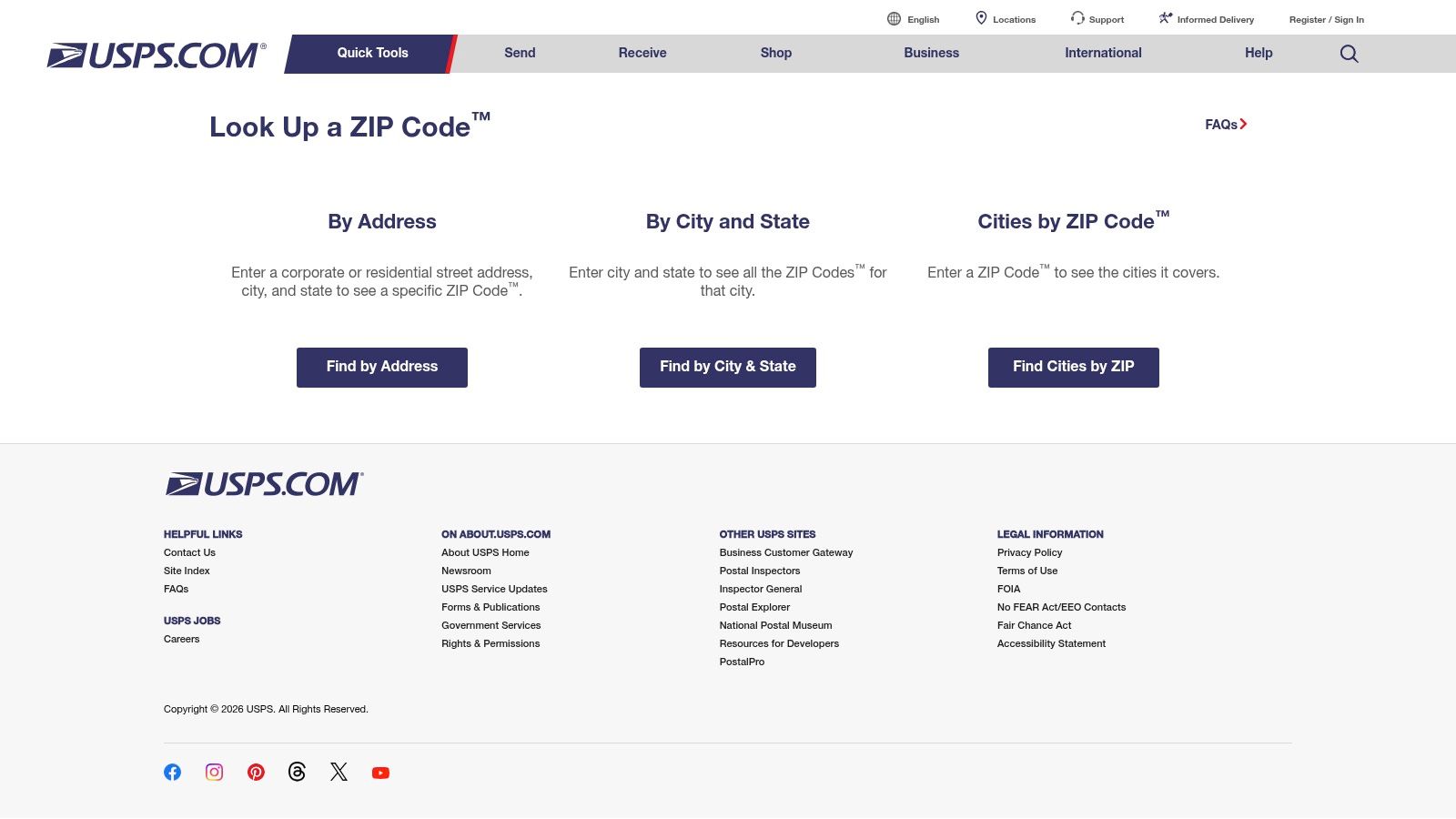
This does not reveal a person's street. A city often has many ZIPs, so filling "the" ZIP from the city name alone can still misroute a parcel. I use it to correct a backer who swapped the postal city for a neighborhood name, then I go back to a full-address check before I buy postage.
It is free and it doesn't ask you to create an account. It also doesn't replace validation. If two ZIPs both look plausible, send the backer the standardized city and let them pick. Guessing the ZIP to "save a message" is how reships start.
PostalUp offers free browser tools for U.S. address validation and standardization, plus related utilities, with no software to install. It fits occasional manual cleanup when you don't want a trial countdown.
Public pricing, volume caps, and independent reviews are limited. That is the trade-off. Convenient pages with little documentation are fine for a test row and risky as the only gate on a timed ship date.
Run three checks before you trust it on a live file.
If PostalUp and USPS disagree, ship on the USPS reading or ask the backer. Don't let the prettier interface win.
| Tool | Best for | Lookup type | Bulk support | Free limits |
|---|---|---|---|---|
| USPS ZIP Code Lookup, Street Address | Correcting a U.S. address and ZIP Code | Manual street-address lookup | Not designed for large lists | Free individual lookups |
| Smarty Free Address Verification | Testing U.S. address verification or autocomplete | Browser tool, API, and SDK | Limited trial volume | 1,000 U.S. verification and 1,000 autocomplete lookups for up to 42 days |
| Melissa Address Check | Checking and standardizing U.S. and Canadian addresses | Manual lookup and batch checking | Up to 500 records | Free access may be limited; some options use credits |
| Lob Address Verification | Exploring detailed validation for mailing workflows | Browser demo and API | Batch validation available; demo is not an unlimited bulk tool | Free demo; recurring use may require a paid account |
| Google Maps | Visually checking an address location | Map search | No bulk validation stated | Free for manual map searches; API use may incur charges |
| Google Maps Platform Address Validation API | Integrating address checks into software | API | Automated validation; quotas can be monitored | Pay-as-you-go; billing account required |
| Pelcro Free Address Verification | Occasional U.S. mailing-address checks | Manual browser lookup | Not designed for bulk lists | Free, no account listed as required; limits unspecified |
| ShipWave Address Verification | Checking and standardizing U.S. shipping addresses | Manual browser lookup | Bulk support unclear | Advertised as free; current limits are unclear |
| USPS ZIP Code Lookup, City and State | Finding ZIP Codes or recommended city names | Manual city-and-state lookup | Not designed for large lists | Free individual lookups |
| PostalUp Address Validator | Occasional U.S. address validation and cleanup | Browser-based manual lookup | Bulk support unclear | Advertised as free; usage limits are unclear |
Pick the tool by the job, not by the logo. USPS and no-sign-up pages such as Pelcro cover a single suspicious line. Melissa is the practical batch step when you are under a few hundred rows and you have both U.S. and Canadian backers. Smarty is the short trial when you want autocomplete in the form. Lob and the Google Address Validation API belong with a team that will integrate and pay once volume is real. Google Maps stays a visual cross-check. ShipWave and PostalUp are spot tools. Cross-check them when the shipment is expensive or the docs are thin.
Kickstarter's Pledge Manager collects shipping addresses, reward choices, taxes, and shipping fees in one flow, and the backer survey can collect variants such as size and color while the pledge manager supports add-ons. Kickstarter's help center says you wait until the project has ended and pledges are collected before you send the survey, and you decide whether backers can still edit after checkout. I treat that pledge manager like Amazon. It is capable and closed, and it stays inside the platform.
PledgeBox's pledge manager is closer to Shopify. It is open, flexible, and brandable, including custom survey domains so the form can live on your own domain. Surveys that only collect shipping addresses and product choices, with no extra payment, are free. Sending the backer survey is free, and PledgeBox charges 3% only on add-on or upsell sales when those sales happen. Google Maps-powered address validation sits in that same survey flow, so you are not pasting the export into a random checker after the fact.
The Federal Trade Commission warns that people-search sites can bundle addresses with property, family, and employment data and sell reports widely. Opting out of one site may not clear relatives' profiles, and records can reappear. Verifying a ship-to, finding a person, and researching property are different jobs. Don't use a casual people-search hit for a reward address, and never for employment, housing, credit, or insurance. Ask for consent, skip sensitive IDs on unknown sites, and keep the backer's original line beside any correction.
Rural lines, missing units, and nonstandard international formats fail quiet lookups more often than downtown apartments. Confirm those with the recipient instead of overwriting them. Clean components also prevent international shipping delays that start as a bad postal code, not a slow boat.
PledgeBox collects shipping addresses in the backer survey for free and checks them with Google Maps-powered validation, so typos get caught before you export to a vendor. You only pay 3% when an add-on upsell sells. If you are cleaning pledge addresses before the next ship date, start with PledgeBox.
PledgeBox
The All-in-One Toolkit to Launch, Manage & Scale Your Kickstarter / Indiegogo Campaign