 PledgeBox
Add on Pricing Strategy for Crowdfunding Success
Master your add on pricing strategy for Kickstarter & Indiegogo. Learn to calculate, test, and implement upsells that boost revenue with our step-by-step guide.
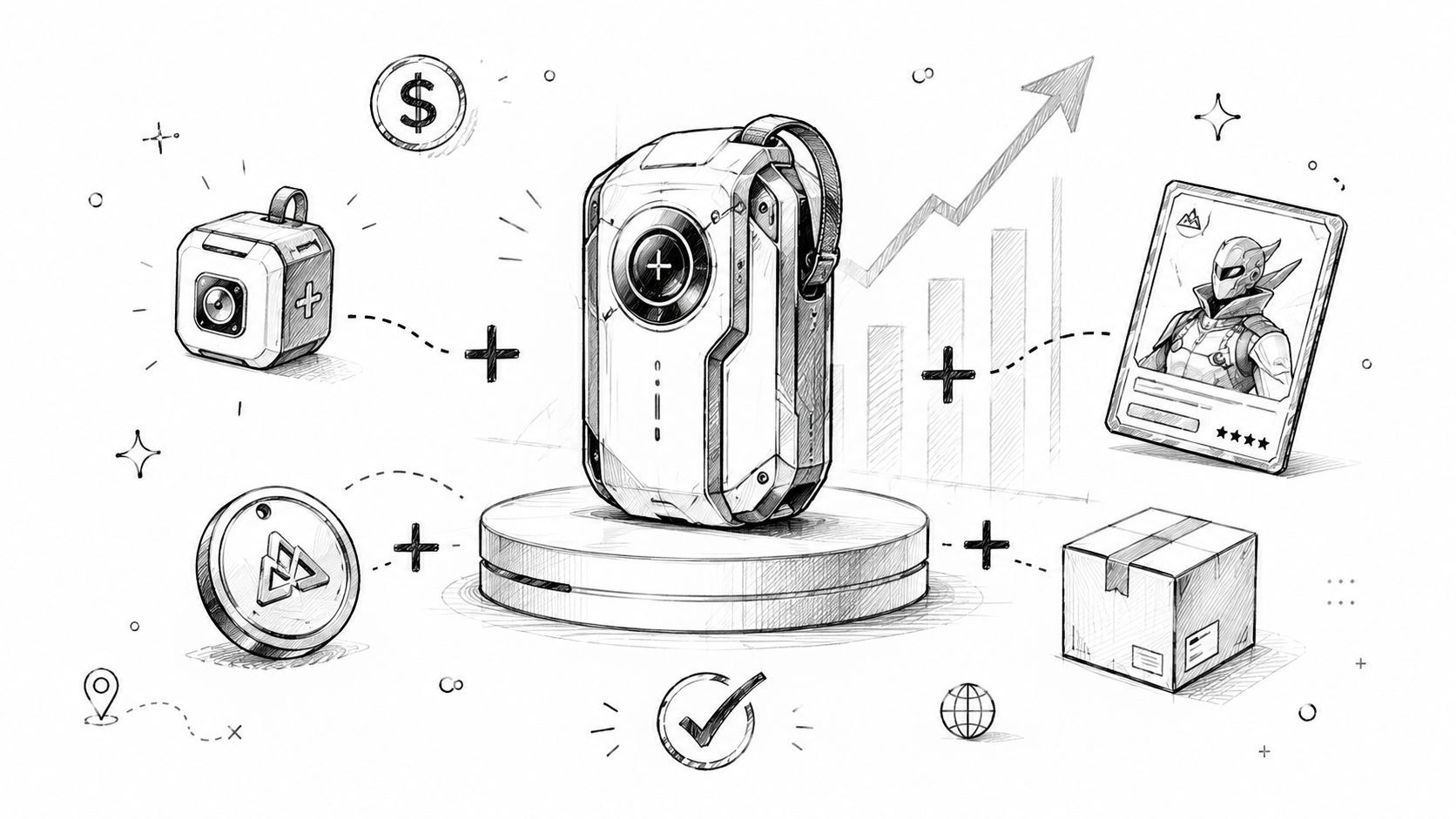
Master your add on pricing strategy for Kickstarter & Indiegogo. Learn to calculate, test, and implement upsells that boost revenue with our step-by-step guide.
Your campaign just ended. Funding came in, comments are still active, and your inbox is full of supplier questions, shipping estimates, and backers asking whether they can still add one more item.
That moment decides more revenue than many creators realize.
The post-campaign survey is frequently viewed as administrative work. It isn't. It's a sales environment. If you build it correctly, your pledge manager becomes the place where committed backers upgrade, add accessories, fix reward selections, and raise your final average order value without forcing you to discount the core product.
A strong add on pricing strategy during the post-campaign phase does two things at once. It gives enthusiastic backers a better version of the experience they already wanted, and it protects margin by charging for optional value instead of trying to bake everything into one pledge tier. For Kickstarter and Indiegogo creators, that's often the difference between a campaign that looked successful on the platform and a project that stays financially healthy through fulfillment.
The campaign close feels like the finish line, but it isn't. It's the handoff from marketing to monetization.
Backers who supported you are already convinced enough to buy. Some want the base reward and nothing else. Others want sleeves, upgraded components, extra colors, spare parts, gift copies, expansion content, or premium variants. If you only offer one fixed package, you leave money on the table and force very different customers into the same buying path.
Add-on pricing isn't just a crowdfunding tactic. It's a classic pricing principle. MIT Economics describes add-on pricing as a form of price discrimination in which companies sell a base good and a base good plus an add-on as two distinct quality tiers, capturing more value from customers with higher willingness to pay in this MIT Economics paper on add-on pricing.
That matters in crowdfunding because your audience is never uniform. One backer wants the lowest commitment that gets them the product. Another wants the deluxe experience and will gladly pay more if the optional upgrade feels coherent and useful.
Practical rule: Don't use add-ons to patch a weak core offer. Use them to let committed backers buy deeper into a strong one.
This is why post-campaign add-ons often outperform campaign-page guesswork. Backers can see what they bought, understand what they still need, and evaluate upgrades in a calmer setting than the live campaign rush.
Many creators still think of add-ons as a side list. That's the wrong frame. A real add on pricing strategy turns your survey into a structured upgrade path.
A few examples make the difference clear:
If you're trying to grow your eCommerce revenue, the same principle applies. Increase order value by presenting relevant optional purchases, not by making the initial decision harder.
For crowdfunding specifically, the post-campaign survey is where this becomes operational. A backer who skipped an upgrade during the live campaign may still buy it when the offer is presented clearly inside a structured survey flow, as shown in this walkthrough on delighting backers with add-ons.
The easiest way to lose money after a successful campaign is to treat post-campaign add-ons as pure upside.
I have seen creators add a $20 upgrade in the pledge manager, sell a surprising number of units, then discover later that the item added packing time, pushed parcels into a higher shipping tier, and carried enough fee leakage to wipe out the margin. Revenue went up. Profit did not.
That is why add-on pricing in the post-campaign phase needs a worksheet. Pledge managers make it easy to sell more. They also expose every weak assumption in your numbers.
An add-on deserves a place in your survey only if it improves contribution margin after all incremental costs. For post-campaign upsells, that means looking beyond unit cost and checking what the extra item does to fulfillment, fees, support load, and shipping.
A useful starting point comes from standard bundle-pricing logic: set the perceived standalone value, total the actual cost to deliver the offer, apply any discount carefully, then confirm the final price still leaves enough margin to justify the operational complexity. That same discipline applies whether you are offering a two-item bundle, a premium accessory, or a one-click upgrade inside a pledge manager.
Use a worksheet with these lines before you publish any offer:
| Line item | What to include |
|---|---|
| Standalone value | What the backer would reasonably pay if the item were sold on its own |
| Direct product cost | Manufacturing, sourcing, assembly, inbound freight |
| Packaging impact | Inserts, sleeves, dividers, added carton size, protective materials |
| Fulfillment labor | Extra pick-pack time, variant handling, kitting complexity |
| Fee impact | Payment processing, pledge manager commissions, currency conversion, banking deductions |
| Service risk | Replacement exposure, support tickets, address changes tied to the add-on |
| True contribution margin | Final add-on price minus every incremental cost above |
Creators rarely miss the obvious lines. They miss the expensive ones.
Packaging changes are a common problem. A lightweight accessory may look profitable on paper until it requires a larger mailer or more dunnage. Variant-heavy add-ons create a different issue. Size, color, and personalization increase picking errors, customer support, and reshipments.
Labor matters too. If an add-on adds only a small amount of COGS but slows fulfillment across thousands of orders, the margin story changes fast.
If the add-on creates a new packing rule, a new exception path, or a new support burden, price that work into the offer before it goes live.
Use this sequence for every post-campaign add-on:
Discounts need discipline. A modest bundle discount can help attachment rate, but creators often give away margin they will need later for freight swings, failed deliveries, and replacements. In the post-campaign phase, I usually prefer stronger value framing over aggressive discounting unless the bundle meaningfully reduces fulfillment cost per order.
Approve add-ons that are easy to explain, easy to pick, and cheap to add to an existing parcel. Reject add-ons that look attractive on the survey page but create custom handling, fragile packing requirements, or frequent customer-service exceptions.
Good candidates include spare parts, expansions, cases, extra units, and premium components that fit the same fulfillment flow as the core reward.
Weak candidates include low-margin merchandise, awkwardly shaped items, and anything that forces a separate shipping method unless the price fully covers that burden.
Teams using automation to model offers and forecast margin often borrow ideas from broader commerce operations. This guide to AI tools for e-commerce success is useful for seeing how operators speed up pricing and merchandising analysis. The principle carries over well to pledge-manager upsells.
The test is simple. If an add-on raises average order value but makes fulfillment harder than the margin can support, cut it. If it adds profit without creating operational drag, it belongs in the post-campaign offer set.
The math decides whether an add-on is viable. The framing decides whether backers buy it.
Most creators know their extra items have value. The issue is that they present them as a plain inventory list. Backers don't buy lists. They buy outcomes, convenience, completeness, and relief from future regret.
Here is the first framing principle that matters: offer add-ons when their value is most evident. Research summarized by Monetizely notes that timely offers significantly improve attachment rates, and that while bundle pricing often uses a 10% to 20% discount, well-timed add-ons can maintain stronger margins while still increasing AOV in this article on using add-on pricing without annoying customers.

A backer doesn't think, "Do I want SKU B-14?" They think, "Will I wish I had this later?"
That changes how you write and sequence offers.
If you're using automation or segmentation tools to refine merchandising language, this broader guide to AI tools for e-commerce success is useful for thinking about testing copy, grouping offers, and sharpening product presentation.
Too many creators confuse optionality with effectiveness. More choices don't automatically produce more sales. They often create hesitation.
Use this decision filter:
| Survey setup | Likely backer reaction |
|---|---|
| Small set of highly relevant add-ons | Faster decisions |
| Clear premium option | Easier upgrading |
| Long menu of loosely related extras | Fatigue |
| Confusing bundle names | Delay or abandonment |
The strongest survey offers usually answer one question fast: "If I already backed this, what's the most sensible thing to add?"
A practical structure is to present three levels of optional buying behavior:
That pattern works because it gives different buyer types a natural lane without flooding the page.
Later in the flow, once the backer has confirmed core choices, video can help reinforce value for a premium offer or a bundle:
Three mistakes show up again and again:
The right add on pricing strategy feels like service. The wrong one feels like extraction.
A strategy on a spreadsheet doesn't generate revenue. The survey environment does.
Creators need to be blunt about tooling. Kickstarter's native pledge manager is like Amazon. It's useful because it exists inside the platform, but it's a controlled environment with limited flexibility. A dedicated pledge manager is closer to Shopify. You get more control over branding, variants, surcharges, and upsell flow.
That difference matters when your project has color choices, size variants, optional accessories, shipping collection, late pledges, or tier-to-tier upgrades.

For post-campaign add-ons, look for a system that lets you:
If you're evaluating operational depth, it also helps to understand how flexible ordering systems handle multiple line items and fulfillment logic. This overview of a Multi Product Ordering API is a useful reference point for that broader complexity.
The most creator-friendly setup is performance-based. PledgeBox is free to send the backer survey and only charges 3% of upsell if there's any, according to its survey pricing explanation. It charges no upfront fee, no per-backer fee, and no campaign fee for sending the survey, and the workflow is creator-controlled with branded surveys and customizable upsells. In practical terms, Kickstarter pledge manager is like Amazon, and PledgeBox pledge manager is like Shopify.
That matters because fixed software costs can punish smaller campaigns before post-campaign revenue even starts. A performance-based structure keeps the economics cleaner. If the survey doesn't generate add-on revenue, the platform doesn't collect upsell commission.
The operational side matters too. A creator-controlled pledge manager should let your team configure branded surveys, set variant-level surcharges, present add-ons directly in the survey, and manage backers without hidden setup charges. For a broader look at that role in the workflow, this guide on choosing a crowdfunding pledge manager is a good operational reference.
A pledge manager shouldn't just collect addresses. It should act as your post-campaign checkout.
Your first survey structure is a draft. Treat it that way.
Creators often spend weeks refining their campaign page and only minutes thinking about post-campaign optimization. That's backwards. The survey gives you cleaner buying signals because the audience is made of actual backers, not browsers.
The most useful metrics are behavioral, not vanity metrics.
Watch these closely:
Use the numbers to answer practical questions. Which item gets added most often? Which bundle gets ignored? Which premium option attracts attention but not checkout completion? Which add-on increases support complexity without enough extra margin?
You don't need a complicated experimentation lab. You need disciplined comparisons.
A usable testing rhythm looks like this:
Backers don't always tell you what they'll buy. Their completed survey orders do.
Not every variable deserves equal attention. In my experience, these are the ones that move outcomes most often:
The point of testing isn't to chase every tiny lift. It's to replace assumptions with evidence so your next launch starts with better pricing, cleaner packaging decisions, and stronger post-campaign monetization.
The post-campaign phase is where many creators give back margin they thought they had won.
I have seen this happen after a strong Kickstarter or Indiegogo campaign. The pledge manager goes live, backers are ready to add more, and the survey still underperforms because the add-ons were priced too loosely, packaged too broadly, or introduced without enough operational discipline. Post-campaign revenue is there, but only if the offer survives the realities of support, fulfillment, and backer trust.
A major warning sign is chasing short-term conversion at the expense of trust and margin. Reliafund notes that common pricing mistakes include relying on intuition instead of customer data and failing to account for embedded costs such as processing fees and overhead, which can erode margins in its breakdown of common pricing strategy pitfalls.

Some errors stay hidden until fulfillment starts. Then they show up as refund requests, ticket volume, packing mistakes, and weaker contribution margin than the campaign dashboard suggested.
Use this as your go-forward plan before the next pledge manager goes live:
| Step | What to confirm |
|---|---|
| Cost review | Every direct and indirect cost is included |
| Offer design | Each add-on has a clear reason to exist |
| Pricing logic | Premium value is priced deliberately, not arbitrarily |
| Survey build | Variants, shipping, and upgrades work in one flow |
| Support prep | Common questions, change requests, and edge cases are documented |
| Post-campaign review | Results are captured for the next launch |
Keep one principle in view: net profit matters more than extra revenue headlines. A survey that produces more orders but also drives up support load, replacement risk, and fulfillment complexity is not a strong result.
The best add on pricing strategy in a pledge manager is disciplined execution. Price optional value clearly. Introduce it after the campaign, when backers can review their pledge without campaign-page clutter. Keep the choices easy to understand. Then review what sold, what created work, and what improved margin so the next campaign starts with a stronger post-campaign monetization plan.
Good post-campaign monetization feels organized, useful, and consistent with the promise that got the backer to pledge in the first place.
If you need a pledge manager that supports branded backer surveys, customizable add-ons, and post-campaign upsells, PledgeBox is worth evaluating. It's free to send the backer survey and only charges 3% of upsell revenue if there is any, which makes it a practical fit for creators who want to expand post-campaign revenue without taking on upfront survey platform costs.
PledgeBox
The All-in-One Toolkit to Launch, Manage & Scale Your Kickstarter / Indiegogo Campaign