 PledgeBox
Sentinels of the Multiverse Game: Your Definitive Guide
Explore the Sentinels of the Multiverse game with our definitive guide. Learn core mechanics, compare editions, and discover key lessons for game creators.
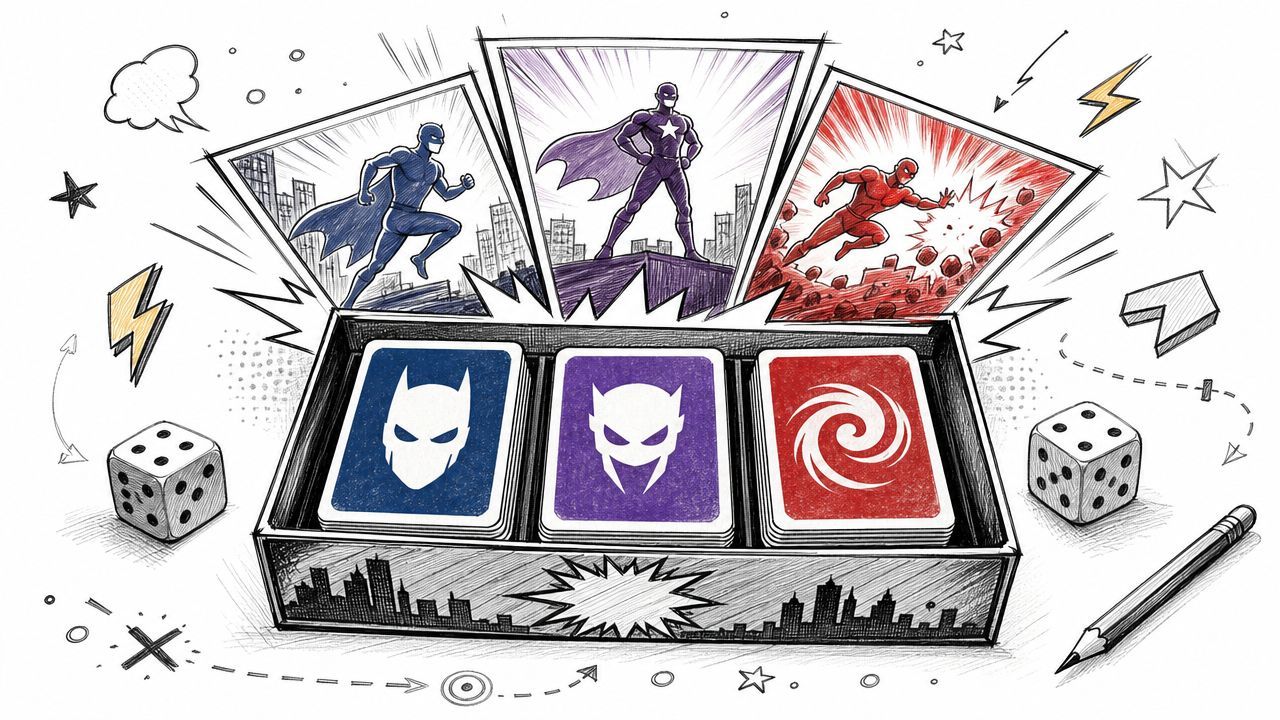
Explore the Sentinels of the Multiverse game with our definitive guide. Learn core mechanics, compare editions, and discover key lessons for game creators.
You're probably in one of two spots right now. You've seen Sentinels of the Multiverse on a store shelf and wondered whether it's still the right buy after all these years, or you've heard longtime fans talk about it like a cult classic and you're trying to sort out which version of the sentinels of the multiverse game makes sense in 2026.
That confusion is fair. Sentinels has history, multiple product lines, and a rules identity that's easy to admire but not always easy to evaluate from the outside. A lot of coverage stops at “here's how a turn works.” That's useful, but it doesn't answer the key buyer question.
This game also matters for another reason. If you design tabletop products or run crowdfunding campaigns, Sentinels is a strong study in modular design, expandable content, and the hard reality that a great game system creates fulfillment complexity fast. If you follow upcoming board games on PledgeBox, you've already seen how often expandable systems become operational challenges after the campaign glow fades.
Sentinels sells a fantasy that a lot of superhero games miss. It doesn't ask you to draft a clever engine over time or build a custom deck before play. It throws you straight into a comic-book crisis. Heroes collide with a villain. The battlefield itself starts interfering. Your team scrambles to stabilize the mess before the whole issue ends in catastrophe.
That immediate identity is the first thing the sentinels of the multiverse game gets right. Every hero has a distinct deck, so your character feels authored rather than assembled. That choice has trade-offs. You lose deck construction freedom, but you gain a strong thematic profile and a cleaner path to the table.
The game works best when players want to inhabit a hero, not optimize a card pool before the first turn.
For new players, that's a gift. For experienced card gamers, it can be a pleasant reset. You focus less on pregame tuning and more on reading board state, sequencing powers, and solving a shared problem with the tools your team brought.
The harder question isn't whether Sentinels is interesting. It is. The harder question is which edition deserves your money and table time now. That's where most guides stop too early, and that's where this one starts to get useful.
Sentinels didn't begin as a sprawling lifestyle product. It began with a smart, disciplined core pitch. Sentinels of the Multiverse debuted as a cooperative card game published by Greater Than Games and released at Gen Con 2011, and the original box included 10 heroes, 4 villains, and 4 environments according to the game's historical overview on Wikipedia. That combination tells you almost everything important about its design DNA.

A lot of cooperative games launch with one scenario flow and a narrow replay loop. Sentinels took a different route. It gave players modular ingredients. You weren't moving through a fixed campaign. You were assembling a showdown from interchangeable parts.
That meant the product could do three jobs at once:
For designers, that's a strong lesson. If your base game supports meaningful recombination, expansion design gets easier and your customers understand what new content does.
The lasting appeal isn't only theme. It's the way the system simulates comic-book storytelling through structure. The villain creates tempo pressure. Heroes develop their boards and answer threats. The environment acts like an unpredictable third force, which gives each match a narrative shape without requiring scripted writing.
That's a subtle design win. Players remember outcomes as stories, but the system generates those stories from repeatable rules.
Design lesson: Modular content isn't only a replayability feature. It's also a business model. If players understand the value of each new module, they're more willing to keep buying into the line.
That commercial clarity helps explain why Sentinels grew beyond tabletop visibility and became recognizable as more than a single boxed card game. Lists of top Kickstarter board games of all time tend to reward spectacle, but Sentinels shows that a repeatable system with strong identity can build staying power too.
Open a Sentinels box and the first reaction is usually the same. There are a lot of decks. New players often mistake that density for complexity. In practice, the structure is cleaner than it looks.
The game runs on three deck types, and once you understand their jobs, the whole table makes sense.
Hero decks are the player identities. Each hero's deck represents powers, equipment, tactics, and personality. You're not customizing it before play. You're learning how that deck wants to operate.
Villain decks are the scenario engine. They set the match's central pressure, whether that means raw damage, board clutter, status effects, or time pressure.
Environment decks are the twist. They don't belong to either side. They add hazards, complications, and sometimes accidental help. This is one of the system's best ideas because it stops fights from feeling like a simple tug-of-war.
If you're teaching from a physical copy, I'd use this order:
That order reduces buyer's-remorse setup. New players often pick heroes by art alone, then discover they've built an awkward team into a punishing matchup. Theme-first selection is fun, but threat-aware selection is better once you know the roster.
A practical storage note matters here too. Sentinels is a deck-heavy game, so organization changes the experience more than people expect. If your cards are sorted, setup feels light. If they aren't, the game feels fiddlier than it really is. That's one reason storage planning matters in card systems, and articles about a game table with storage get at a real pain point for this kind of design.
Look for these cues in your first game:
The setup teaches the whole philosophy of the game. Sentinels isn't about building your own deck. It's about reading a battle, understanding each deck's role, and making a team function under pressure.
Sentinels has a lot of text on cards, but its turn structure is remarkably steady. That's one reason it survives repeated play. Once players absorb the cadence, they stop fighting the system and start making decisions inside it.
According to Board Game Quest's review of the game, playtime averages around 45 minutes for 2 to 5 players, and the fixed turn order is villain, heroes clockwise, then environment. That predictability is one of the design's quiet strengths.

The villain goes first. That means players start each cycle by reacting to pressure, not leisurely building in a vacuum. Good cooperative design often does this well. It gives players a problem before it gives them freedom.
Then each hero takes a turn in clockwise order. In most plays, that creates a conversational rhythm. One player stabilizes. Another sets up. Another converts that setup into damage or removal.
The environment resolves last. That closing beat matters because it keeps the board alive. Even after the heroes solve part of the puzzle, the battlefield can still shift under them.
The system is easy to remember because every round feels like a repeating pattern:
For new players, this removes a lot of cognitive load. They don't need to memorize a sprawling flowchart. They need to know when the bad stuff happens, when they get agency, and when the table state changes again.
If a cooperative game wants repeat play, its turn order needs to become intuitive before its card interactions become exhausting.
That's also why the digital adaptation works so well for learning. It automates timing and edge cases, which lets players focus on role understanding and target priority rather than administration.
At the table, a hero turn usually revolves around three basic tasks. Different editions present wording and presentation differently, but the practical loop is simple:
| Focus | What it means in play | What beginners often do wrong |
|---|---|---|
| Play | Put a card into your engine or immediate plan | Play flashy cards instead of necessary ones |
| Power | Use your hero's active ability or a card-based substitute | Trigger the default power when a board power is stronger |
| Draw | Refill options for future turns | Treat draw as passive rather than strategic tempo |
That sequence gives every hero a recognizable shape. Some heroes want early setup. Others want immediate pressure. The skill ceiling comes from knowing which part of your turn matters most in a given matchup.
If you want your early games to improve fast, focus on these habits:
The sentinels of the multiverse game feels best when players stop asking “what can my hero do?” and start asking “what does the table need from my hero right now?”
This is the buyer question that matters most in 2026. Not “is Sentinels good?” but “which Sentinels should I buy?”
The short answer is simple. Definitive Edition is the cleanest entry point for most tabletop players. Digital is the easiest way to learn and the strongest option for solo convenience. Legacy content mainly makes sense for collectors, historians of the line, or players who already own into that ecosystem.
The digital version deserves serious consideration. It launched on Steam on December 22, 2014, and the current Steam listing shows a 92% positive rating from 1,185 user reviews while marked Very Positive, which you can verify on the Steam store page for Sentinels of the Multiverse.

Here's how I'd frame the decision.
| Edition | Best for | What works | What doesn't |
|---|---|---|---|
| Legacy original line | Collectors and longtime fans | Big historical footprint, classic presentation, lots to explore if you already own it | Older onboarding, more product sprawl, not the clearest buy for a newcomer |
| Definitive Edition | Most new tabletop players | Cleaner presentation, easier recommendation, feels like the current tabletop entry point | Still a text-heavy card game, still asks players to manage several decks |
| Digital | Solo players, remote play, rules learning | Fast setup, automated timing, easy iteration, strong for repeated practice | Less tactile, less table presence, can hide timing logic that physical players should learn |
If you want the shortest path to “I understand why fans love this,” buy digital first.
If you know you prefer physical cards and want the current tabletop identity, buy Definitive Edition.
If you already have older boxes, don't panic and replace everything just because a newer line exists. Legacy Sentinels still delivers the core appeal. I just wouldn't point a first-time buyer there unless they specifically want the original experience.
Buying rule: Choose the edition that removes your biggest friction point. If setup annoys you, go digital. If screens kill your enthusiasm, go physical. If collecting matters more than streamlining, legacy still has a place.
Most wrong purchases come from mismatching personality to format.
That last point matters. “Available” and “good first purchase” aren't the same thing.
For many readers, the sentinels of the multiverse game becomes much easier to approach once you stop treating the product line as one giant blob and start treating it as three distinct ways to access the same core fantasy.
Once the rules are comfortable, Sentinels becomes a role-assignment game. Teams that win consistently don't just bring strong heroes. They bring heroes that solve different jobs at the right time.
The common mistake is overvaluing raw damage. Damage matters, of course, but unsupported damage often loses to board pressure, attrition, or a villain engine that was allowed to keep running.
I think about teams in three broad functions.
Some heroes exist to absorb pressure, redirect danger, or survive turns that would crush a fragile lineup. You don't need a formal “tank” every game, but you do need someone who can stabilize bad rounds.
A team without this role often looks strong until the villain spikes. Then the whole board collapses at once.
Support heroes are easy to underrate because their turns don't always look dramatic. They fix hands, improve sequencing, heal, increase action quality, or make another hero's turn much stronger.
In Sentinels, support is often the difference between a team that survives and a team that snowballs.
Some heroes are there to close games. That doesn't mean attacking blindly. It means converting openings into progress before the villain recovers.
The best damage dealers aren't just efficient. They hit the right targets at the right stage of the battle.
A lot of losses come from hitting the villain because hitting the villain feels heroic. Sometimes that's correct. Often it's not.
Ask three questions before committing damage:
Those questions sound basic, but they separate casual survival from deliberate play.
Strong teams don't always maximize damage. They minimize the number of bad future turns.
Players often talk about “good hero combinations” as if synergy were a static property. In practice, synergy is usually temporal. One hero sets up a board state that another hero exploits. One support card turns a mediocre hand into a decisive turn cycle. One defensive effect buys the exact round needed for an engine hero to come online.
That means you shouldn't only ask “who pairs well together?” Ask:
After a handful of games, most groups improve in four visible ways:
That's where Sentinels becomes more than a thematic co-op. It becomes a systems game wrapped in superhero language, which is a big reason veteran players keep returning to it.
A designer looking at Sentinels should pay attention to more than the cards. This line shows how a strong core system can support years of new content, multiple formats, and a loyal audience without losing its identity. That matters in 2026, especially for creators weighing how far a game can stretch before the product line starts fighting itself.
The design lesson starts with modular structure. Sentinels separates value into hero decks, villain decks, and environment decks. Each piece is saleable and playable on its own terms, but its greatest strength comes from combination. For players, that creates variety. For publishers, it creates a product line where expansions add fresh decisions instead of replacing the box people already own.

Sentinels gets several hard things right.
New content works because the base rules stay stable. That lowers teaching cost, keeps older purchases relevant, and gives expansions a clear pitch. In publishing terms, compatibility raises the lifetime value of the whole line. In design terms, it forces discipline, because every addition has to create new play without rewriting the game.
The best Sentinels heroes are recognizable from a few turns of play. Players do not just remember card names. They remember that one hero ramps, another controls the board, another survives ugly turns through timing and damage reduction. That kind of authored identity drives word of mouth better than generic mechanical efficiency.
Replayability here is not a promise on the back of the box. It is built into the matchup grid. A hero that feels comfortable against one villain can feel strained against another. An environment can reward greedy setup in one game and punish it in the next. That kind of variability gives a fixed card pool a longer life.
Definitive Edition is a useful reminder that revision is part of product stewardship. Legacy editions can earn loyalty, but they also accumulate rough edges, rule burden, and onboarding friction. A revised edition lets a publisher keep the heart of the game while fixing text density, pacing problems, and presentation. The trade-off is real. Every revision asks existing fans whether they are buying refinement or rebuying content.
Expandable systems create operational complexity fast. More SKUs mean more bundle logic, more packing errors, more regional shipping exceptions, more address changes, and more customer support after the campaign funding celebration is over. A modular game produces modular logistics.
Post-campaign tooling matters because of that. Kickstarter's native pledge manager covers the basics in a broad, standardized way. PledgeBox offers a more configurable post-campaign setup for surveys, add-ons, shipping collection, and fulfillment workflows. Per the publisher brief, PledgeBox is free to send the backer survey and only charges 3% of upsell if there is any. For creators planning lots of add-ons, edition choices, or variant selection, that pricing model changes the math.
I have seen projects design expansions with real care, then lose margin and goodwill in fulfillment because operations were treated as an afterthought. Sentinels is a good case study because the product design invites repeat buying. If a game line is built to grow, the back-end has to support growth cleanly.
Sentinels is worth studying, but it is not a template to copy card for card.
A few limits matter:
The best lesson here is simple. Build a system with a stable core, a clear fantasy, and room for meaningful expansion. Then treat edition strategy, fulfillment, and long-term support as part of the design job, not a separate business problem.
PledgeBox
The All-in-One Toolkit to Launch, Manage & Scale Your Kickstarter / Indiegogo Campaign