 PledgeBox
What Is Indiegogo Campaign: Your 2026 Creator's Guide
Curious about what is Indiegogo campaign? Our 2026 guide explains funding models, fees, and fulfillment for creators.
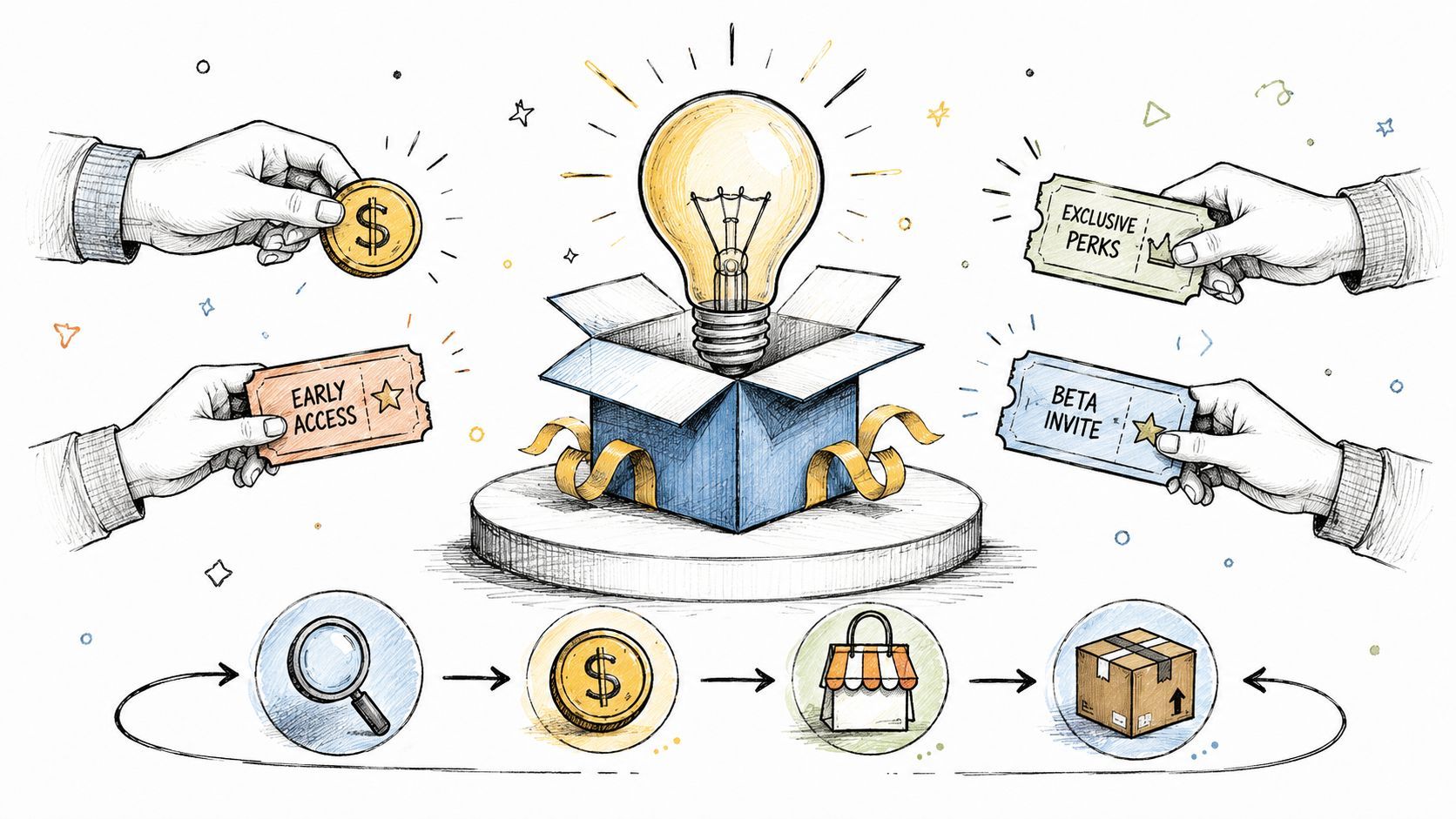
Curious about what is Indiegogo campaign? Our 2026 guide explains funding models, fees, and fulfillment for creators.
An Indiegogo campaign is a reward-based way to raise funds and pre-sell a new product or creative project directly to backers, usually by offering perks in return. Indiegogo, founded in 2008, has grown into a major global platform with 9M+ backers across 235 countries and territories and about 19,000 new campaigns per month.
If you're reading this, you probably have a project that feels real enough to launch but not fully funded enough to produce. Maybe it's a gadget prototype, a board game with finished art, a film in post-production, or a first manufacturing run you can't bankroll alone.
That's where creators start asking a practical question. What is an Indiegogo campaign, really?
The short answer is that it's not just a fundraising page. It's a way to test demand, collect pre-orders, organize rewards, and move a project from idea to delivery with a crowd behind it. If you approach it like a donation appeal, you'll miss how the platform works. If you approach it like a structured launch system, you'll make better decisions from day one.
A lot of first-time creators hit the same wall. They know what they want to build, they may even have a prototype or polished concept, but they don't have the cash to produce inventory, pay vendors, or prove that customers want it.
An Indiegogo campaign gives you a public way to close that gap. You present the project, explain what backers get, set your funding terms, and invite people to support the launch before the product exists at full scale.
Indiegogo has been around since 2008 and operates at meaningful scale. One industry roundup describes it as a global platform with 9M+ backers across 235 countries and territories, launching about 19,000 new campaigns each month according to these Indiegogo platform statistics.
That matters for one simple reason. You're not posting into a void. You're entering an ecosystem where people already understand crowdfunding behavior, perk-based backing, and early access offers.
Creators don't use Indiegogo only because they need money. They use it because a campaign can answer several business questions at once:
If you need help thinking beyond the campaign page itself, this guide for a successful product launch is useful because it frames launch planning as a broader go-to-market process, not just a crowdfunding event.
For a simpler primer on how people raise money around a specific project goal, see this explanation of how to fund a project through crowdfunding.
Practical rule: If your campaign only answers "How do I get funded?" you're underprepared. It also needs to answer "What exactly am I selling, to whom, and how will I deliver it?"
An Indiegogo campaign is not equity crowdfunding. Backers aren't buying ownership in your company. In the usual setup, they're supporting a reward-based campaign in exchange for a perk, such as the product itself, a bundle, an exclusive edition, or another defined benefit.
That distinction clears up a lot of confusion for first-time creators. You're not pitching investors on future returns. You're asking backers to support a launch in exchange for a clearly described reward.
A useful way to think about it is this. You're building a public pre-order system with storytelling attached.

Indiegogo's own creator terms describe the platform as supporting campaign setup, rewards, add-ons, pledge management, and post-campaign sales. That makes an Indiegogo campaign technically closer to a staged pre-order and fulfillment pipeline than a simple donation page, as explained in the Indiegogo creator terms.
That's an important mindset shift.
If you're offering a physical product, your campaign page isn't just a pitch. It's also your first storefront, your pricing page, your FAQ, and the front end of your fulfillment process.
Backers usually evaluate a campaign through a few practical questions:
What am I getting?
The perk has to be specific.
Why should I trust this team?
Your story, prototype, timeline, and transparency matter.
When will it ship?
People want realistic expectations, not vague optimism.
What happens after the campaign ends?
Many beginner guides often stop too early.
An Indiegogo campaign works best when you treat every perk like a product offer and every backer like an early customer.
Say you're launching a new desktop productivity gadget. You might create:
That structure is why people searching for what is Indiegogo campaign often get incomplete answers. It isn't just "post a page and collect money." It's a managed exchange between creator and backer, with operational consequences after funding ends.
Before you launch, you need to make one strategic choice that affects risk, cash flow, and backer expectations. You choose how the campaign handles money if the project doesn't hit its target.
Indiegogo has historically offered both a conventional all-or-nothing model and a flexible keep-what-you-raise model. Independent guidance from BackerKit also notes that Indiegogo offers InDemand, which allows post-campaign fundraising with no target or deadline. That makes campaign structure a real business decision, not a box-checking step, as outlined in this Kickstarter vs. Indiegogo comparison from BackerKit.

| Feature | Fixed Funding (All-or-Nothing) | Flexible Funding (Keep-What-You-Raise) |
|---|---|---|
| How funds are collected | You receive funds only if the campaign reaches its target | You receive pledged funds even if the target isn't reached |
| Best fit | Projects that need a minimum budget to be viable | Projects that can still move forward with partial funding |
| Backer perception | Often feels more protective because the project needs full support to proceed | Can feel riskier if the budget looks too low to deliver |
| Cash flow | Less flexible during the campaign | More immediate access to whatever is raised |
| Main risk | You may raise interest but collect nothing if you miss the goal | You may collect money without enough budget to execute well |
Choose Fixed Funding if production only works above a hard minimum. Hardware creators often fall into this camp because tooling, manufacturing, and logistics don't scale down cleanly.
Choose Flexible Funding if partial funding still helps you complete the project responsibly. That can work for creative projects, community initiatives, or launches where outside capital already covers some of the cost.
Here are the practical tests I use with clients:
For creators comparing platforms before deciding, this breakdown of Indiegogo vs Kickstarter differences helps clarify how campaign structure affects planning.
Flexible funding can help cash flow. It can also create delivery pressure if you collect funds without enough margin to fulfill what you promised.
A campaign page has one job. Turn interest into commitment.
Most weak pages fail because they try to sound exciting without answering practical questions. Strong pages do both. They create belief and reduce uncertainty.

Your headline, opening image, and first few lines should make the offer clear. Visitors should understand what the product is, who it's for, and why it's different before they hit the first scroll break.
A common mistake is leading with personal backstory and delaying the product explanation. Story matters, but clarity comes first.
Good opening copy usually answers:
Once people understand the offer, they start checking whether your team can deliver. That's why your page should include proof, not just enthusiasm.
Use these trust elements:
Backers don't expect perfection. They expect signs that you've thought through manufacturing, timing, and communication.
Reward tiers often get messy because creators try to be clever. Simple beats clever.
A clean perk structure usually works better than a crowded one:
When people can't tell the difference between perks, they delay. When they delay, many won't come back.
Every visitor carries silent questions. Your page should answer them before they have to ask.
A good FAQ often covers:
If your page feels like a polished storefront with a credible delivery plan, you're much closer to turning traffic into backers.
Many creators think the campaign ends when the funding window closes. On Indiegogo, that's not how the workflow is structured.
Indiegogo's help documentation describes four stages in the campaign lifecycle: Preview, Crowdfunding, Late Pledge (optional), and Pledge Manager, as shown in this Indiegogo getting started workflow guide.
This is the quiet part that determines whether launch day has energy or silence. You prepare the page, refine your message, and gather early interest before the public push.
If you skip this phase, you usually end up testing messaging while the campaign is already live. That's expensive in both attention and momentum.
This is the public funding window people usually think of when they hear "crowdfunding campaign." Backers pledge, pick perks, ask questions, and watch updates.
Your job during this stage isn't just promotion. You also need to monitor objections, clarify rewards, and keep campaign communication active.
This optional stage catches people who missed the live launch window but still want in. For creators with strong traffic, good press, or ongoing community interest, this can extend the commercial life of the campaign.
It also changes how you should think about launch day. You're not building toward a single deadline only. You're building a pipeline that may continue after the public campaign closes.
At this stage, crowdfunding turns into operations.
You collect shipping details, confirm reward selections, handle optional items, and organize the data needed for fulfillment. This stage is where many campaigns either become manageable or chaotic.
A campaign isn't over when funding closes. It's over when backers have confirmed what they ordered and you've built a clean path to delivery.
That full timeline is why the best answer to what is an Indiegogo campaign isn't "a way to raise money." It's a multi-stage launch workflow that starts before the campaign goes live and continues into fulfillment.
Once the campaign closes, the glamorous part is done. The hard part starts. You need clean order data, accurate addresses, add-on handling, shipping charges, and a repeatable way to communicate with backers.
Many creators discover that campaign success and fulfillment readiness aren't the same thing.

A dedicated pledge manager helps you do work that a campaign page was never designed to handle well:
If you want a working definition and examples, this guide explains what a crowdfunding pledge manager does after a campaign.
Native post-campaign tools tend to be more closed and standardized. Dedicated pledge managers give creators more control over the backer experience and the data flow.
The analogy I use is simple. Kickstarter's pledge manager is like Amazon, while PledgeBox pledge manager is like Shopify. One is more fixed and marketplace-like. The other gives you more control over how the post-campaign experience is set up.
PledgeBox is one option creators use for Kickstarter and Indiegogo campaigns. It can import campaign data, send backer surveys, collect shipping and add-ons, and manage post-campaign orders. The practical pricing point many creators care about is straightforward: sending the backer survey is free, and PledgeBox only charges 3% of upsell if there's any.
Use this sequence:
The smoother your post-campaign workflow is, the fewer support tickets, spreadsheet errors, and fulfillment mistakes you'll fight later.
A good campaign raises money. A well-run campaign also turns that momentum into accurate orders and delivered rewards.
If you're preparing for the post-campaign phase, PledgeBox is worth evaluating as a practical workflow tool for surveys, shipping collection, add-ons, and fulfillment prep. For creators who want more control after the campaign ends, it offers free backer surveys and charges only 3% on upsell revenue when upsells happen.
PledgeBox
The All-in-One Toolkit to Launch, Manage & Scale Your Kickstarter / Indiegogo Campaign