 PledgeBox
What Is Fulfillment Management: Your 2026 Crowdfunding Guide
Discover what is fulfillment management and its crowdfunding importance. Our 2026 guide covers workflows, tools, and a Kickstarter checklist.
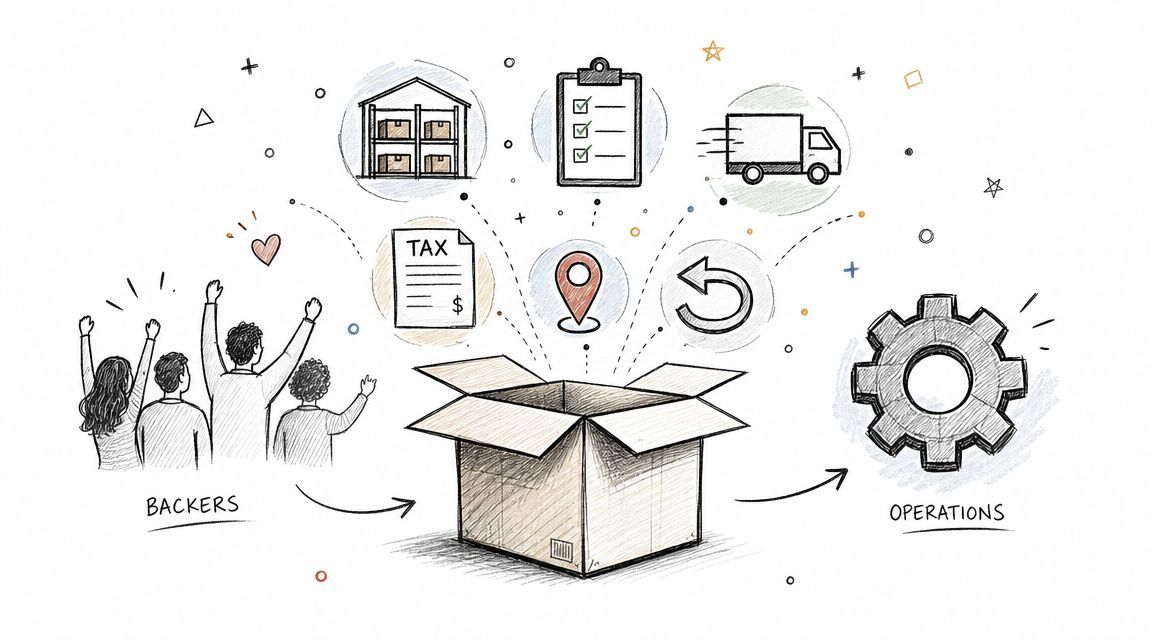
Discover what is fulfillment management and its crowdfunding importance. Our 2026 guide covers workflows, tools, and a Kickstarter checklist.
You closed your campaign. Funding came in, comments are still rolling, and now the actual work starts.
Most first-time creators think fulfillment begins when cartons reach a warehouse. It doesn't. It starts the moment you have to turn pledge data into shippable orders without losing money, shipping the wrong variant, or triggering a support avalanche from backers asking where their reward is.
That's why creators keep asking a simple question with a complicated answer: what is fulfillment management? In crowdfunding, it's the system that turns a promise into delivery. If you manage it well, backers feel taken care of. If you manage it badly, a successful campaign can still end with delays, chargebacks, remakes, reships, and a damaged reputation.
For a creator, fulfillment management is the answer to the post-campaign question nobody can avoid: what happens next?
It's the disciplined coordination of receiving inventory, storing it, picking and packing orders, shipping them, and handling returns. That definition matters, but the more practical version is this: fulfillment management is the operating system for getting every reward configuration to the right backer, at the right cost, with the least chaos possible.
Generic ecommerce advice often treats fulfillment like a warehouse problem. Crowdfunding doesn't work that way. You're usually dealing with reward tiers, stretch goals, add-ons, split shipments, upgraded pledges, address changes, and backers spread across many countries. That's not just shipping. That's decision-making under pressure.
Industry guidance also makes clear why teams take this seriously. Fulfillment is a core operating function, not a minor back-office task, and one source estimates it accounts for about 25% to 30% of total supply chain costs for ecommerce retailers in fulfillment analytics and reporting guidance. For creators, that's a useful reality check. Post-campaign operations can become the most expensive part of delivering your product if you don't control inventory, shipping, and returns.
A lot of creators think they need a freight forwarder, a warehouse, or a 3PL. Sometimes they do. But those are only pieces of the machine.
Management is the part that decides:
Practical rule: If you can't answer “what exactly are we shipping, to whom, from where, and with what exception rules,” you don't have fulfillment under control yet.
There's also a platform choice hiding inside this question. Native pledge management inside a crowdfunding platform is a bit like selling on Amazon. It's convenient, but you operate inside someone else's structure. A dedicated pledge manager is more like Shopify. You get more control over branding, customer data flow, shipping logic, and post-campaign revenue tools.
That distinction matters more than most creators realize. Once the campaign closes, your pledge manager becomes the bridge between backer intent and warehouse execution. If you want a broader primer on the ecommerce side of the process, this guide on what fulfillment means in ecommerce is a useful companion.
A workable setup treats fulfillment as a sequence of controlled decisions. A bad setup relies on exported spreadsheets, manual edits, and “we'll fix it later” assumptions.
What usually works:
| Approach | Why it works |
|---|---|
| Locking SKU logic early | Prevents late confusion around variants and bundles |
| Collecting final addresses after campaign close | Reduces stale shipping data |
| Separating survey completion from warehouse release | Gives you time to validate orders |
| Planning returns before launch | Keeps support issues from becoming operational fires |
What usually fails:
| Approach | Why it fails |
|---|---|
| Treating all backers like standard store orders | Reward structures are more complex |
| Waiting to think about VAT, duties, or address validation | International issues surface late and cost more to fix |
| Sending everything at once without segmentation | One weak data set can stall the whole batch |
A campaign can fund on Friday and leave you with a month of operational decisions by Monday. The work gets easier when fulfillment is treated as a workflow with six controlled checkpoints, not one giant shipping task.

Crowdfunding fulfillment starts before the first label is printed. It starts when inventory lands and someone verifies what arrived.
That means receiving goods, checking counts against the packing list, quarantining damaged units, and assigning storage locations that match how orders will be picked. For creators, this stage often gets messy because factories ship partial runs, accessories arrive later, or cartons contain mixed SKUs that do not match the original production plan.
If counts are wrong here, every later promise gets weaker. Backers see delays, support gets flooded, and the warehouse wastes time chasing stock that does not exist in the system.
Mature operations use prior order patterns to plan labor and replenishment, and they run quality checks before inventory is released for picking. The Warehouse Education and Research Council outlines the value of receiving accuracy, slotting discipline, and quality control in warehouse operations in its warehouse management guidance.
At this point, crowdfunding stops being a pledge list and becomes a real order file.
You need final addresses, confirmed reward selections, add-ons, shipping charges, and any tax still owed. You also need a clear rule for when an order is locked. Without that rule, creators end up editing live orders in email threads while the warehouse is already packing them.
Surveys do more than collect preferences. They create the fulfillment record your ops team will use. For a first-time creator, the safest approach is to hold orders in review until payment issues, missing selections, and address problems are resolved.
A practical survey workflow should do these jobs:
Here's a simple walkthrough worth watching before you build your own process:
Shipping gets the attention because backers can see it. The hard part is setting it up so the shipment data is correct before anything leaves the building.
You need carrier rules, label generation, batch logic, customs documentation, and a plan for split shipments if part of a reward is delayed. Crowdfunding adds pressure because one campaign can produce domestic parcels, EU VAT considerations, and remote-area surcharges all at once.
Modern setups usually split responsibility across systems. An OMS routes the order, a WMS runs receiving, picking, packing, inventory control, and shipment execution, and a TMS handles carrier selection, rate shopping, and labels, as outlined in this fulfillment technology guide.
The teams that handle campaign spikes well remove manual handoffs before the surge hits.
Many first campaigns lose margin here because the numbers looked manageable during the campaign and changed once orders were ready to ship.
If you have international backers, decide early who collects tax, when VAT is charged, and what paperwork needs to travel with each parcel. Waiting until stock is in the warehouse usually creates shipment holds, backer confusion, or surprise charges at delivery.
Tax collection works best when it is built into order finalization. Support should not be calculating exceptions one ticket at a time.
Returns in crowdfunding are broader than standard ecommerce returns. You are dealing with damaged rewards, failed deliveries, customs rejections, missing components, and replacement requests tied to pledge tiers that may no longer exist in your active catalog.
That is why creators need decision rules before parcels start moving.
A workable returns process answers three questions fast:
Clear rules protect margin and keep support from making inconsistent promises.
Support is part of fulfillment operations. It is not a separate clean-up crew.
When a backer asks where their reward is, the support team should be able to see order status, tracking status, address history, replacement history, and any warehouse notes in one place. If that information is split across spreadsheets, inboxes, and carrier portals, response time slows down and trust drops.
For crowdfunding creators, support also becomes an early warning system. A cluster of tickets about one SKU, one country, or one carton type usually points to an operational issue worth fixing before the next batch goes out.
Standard ecommerce content assumes a steady stream of orders. Crowdfunding almost never gives you that luxury.

A normal online store can adjust week by week. A campaign creator often goes from zero to a packed queue of customized orders with very little room for error. That changes everything about staffing, systems, communication, and cash timing.
A store owner can learn from daily order flow. A creator usually gets a sudden wave of orders that all need interpretation at once.
That means you're not only processing volume. You're processing volume plus exceptions. One backer changed color choice. Another added an expansion. Another needs a replacement component. Another is in a country with stricter customs handling. Those exceptions aren't side cases. They're the job.
This is why spreadsheet-led workflows break under pressure. They can hold data, but they don't control process.
Crowdfunding rewards are often bundles, editions, upgrade paths, and accessory combinations. A standard store order might be one item or two. A campaign order can be a mini rules engine.
When a creator offers multiple SKUs, small errors get amplified across a batch. The wrong insert, missing stretch goal, or swapped colorway doesn't stay small once hundreds or thousands of shipments move.
Common complexity traps include:
Most first-time ecommerce brands grow into cross-border shipping. Crowdfunding creators usually face it immediately because backers come from many countries from the start.
That creates operational pressure around address validation, customs paperwork, duties, and carrier selection. DHL's overview of fulfillment notes that global ecommerce buyers expect fast, transparent delivery, while merchants face more complex address validation, customs, and duties. It also notes that global parcel volumes continue to rise, increasing complexity and cost in last-mile delivery, which is especially relevant for creators with international backers in this fulfillment overview from DHL.
If your campaign is global, fulfillment isn't one shipping plan. It's a set of regional operating rules.
That's where many creators get blindsided. They price shipping too early, underestimate address errors, or assume one carrier setup can handle every destination equally well.
Crowdfunding backers don't behave like ordinary retail customers. They funded the project, followed updates, and often feel emotionally invested in the outcome.
So the standard “your package has shipped” approach isn't enough. Backers want to know why there's a delay, whether addresses are locked, what happens with add-ons, and when tracking will appear. If you don't provide those answers proactively, support fills the gap.
Here's the practical difference:
| Standard ecommerce | Crowdfunding |
|---|---|
| Orders arrive continuously | Orders surge after campaign close |
| SKUs are usually stable | Rewards often involve bundles and variants |
| Cross-border may be optional | Cross-border is common immediately |
| Customers expect convenience | Backers expect transparency and updates |
That's why generic fulfillment advice often feels incomplete for creators. The mechanics overlap, but the pressure pattern is different.
Most creators don't need more tools. They need fewer disconnected ones.
The central decision is your pledge manager. This is the layer that collects final backer data, turns pledges into usable orders, handles add-ons and shipping charges, and feeds clean records into your shipping and fulfillment workflow.

A native pledge flow inside a crowdfunding platform is a lot like Amazon. It's convenient, familiar, and structured around the platform's rules.
A dedicated pledge manager is more like Shopify. You get a branded post-campaign environment, more direct control over data collection, and more flexibility in how orders move from survey to shipment.
That difference matters when you need to collect missing shipping fees, run add-on upsells, support late backers, or export clean files for a 3PL.
If you're comparing options, this guide on how to select the right pledge manager is a useful starting point.
A pledge manager shouldn't live alone. It should connect the rest of the stack.
Useful surrounding tools usually include:
One practical option is PledgeBox. It lets creators send backer surveys for free and only charges 3% of upsell if there is any upsell revenue. That pricing model changes the risk profile for first-time creators because there's no upfront survey cost to start collecting finalized order data. In plain terms, if Kickstarter's native pledge flow is like Amazon, PledgeBox's pledge manager is closer to Shopify.
That doesn't mean every creator needs the same stack. It means your tools should reduce handoffs, not create them.
Choose software based on where mistakes happen. If your pain is order cleanup, survey logic matters more than fancy dashboards.
Creators get into trouble when they run fulfillment by feeling. You need a small set of operating metrics, and you need habits that keep those numbers honest.
The point isn't to build a corporate analytics department. The point is to catch problems before they become expensive.
By 2023, logistics guidance emphasized tracking KPIs such as order cycle time, carrier on-time performance, average carrier cost, and claim ratio in this fulfillment management guidance. For a creator, these aren't abstract warehouse terms. They answer practical questions.
| Metric | What it tells you |
|---|---|
| Order cycle time | How long it takes an order to move from ready state to shipment |
| Carrier on-time performance | Which delivery partners are creating avoidable support tickets |
| Average carrier cost | Whether your shipping mix is drifting beyond plan |
| Claim ratio | How often loss or damage is turning into replacements and refunds |
Those metrics matter because fulfillment decisions are linked. A slow inbound process delays picking. Bad slotting increases walking time. Weak carrier performance inflames support even when warehouse execution was fine.
The same logistics guidance notes that operations can improve by analyzing SKU affinity to reduce unproductive picker walking time and by improving inbound workflows so inventory doesn't sit on the dock and create stockout issues. That's a useful reminder that some shipping problems begin long before parcels leave the building.
A creator doesn't need dozens of rules. A few disciplined habits go a long way.
If you're trying to reduce delivery friction after handoff to carriers, this practical resource on how to conquer final mile delivery challenges is worth reading. It's useful context because many creator complaints arise in the last mile, even when upstream fulfillment was done correctly.
Good fulfillment teams don't wait for damage reports to think about packaging. They don't wait for repeated delivery failures to audit address quality. And they don't release every order in one blast just because manufacturing finished.
They create checkpoints.
The cheapest mistake to fix is the one you catch before the label is printed.
That's the mindset first-time creators need. Fulfillment is not a single event. It's a chain of control points.
You close the campaign, funding clears, and the comments shift from celebration to one question: when does mine ship?
That is the point where a creator finds out whether fulfillment management is a plan or just a pile of spreadsheets. In crowdfunding, the gap between those two is expensive. A missed variant, a bad address, or a rushed warehouse handoff can turn a strong campaign into weeks of support debt.

Finalize your SKU map
Define every reward, add-on, bundle, stretch goal item, and region-specific version before surveys go out. Crowdfunding campaigns create unusual order combinations, so vague naming at this stage usually becomes picking errors later.
Import and clean backer records Build one clean source of truth. Remove duplicates, flag unpaid balances, and separate incomplete surveys from orders that are ready for fulfillment.
Configure your survey flow
Ask only for information that affects production, shipping, tax, or support. Every extra question slows completion rates and creates more edge cases for your team to sort manually.
Collect shipping, tax, and add-on selections
This step involves transforming a campaign pledge into a shippable order. Keep core reward choices, optional add-ons, and shipping charges clearly separated so your final export matches what the warehouse needs.
Validate addresses before lock
Fix formatting issues, missing fields, and country-specific postal problems before you freeze orders. Reshipping a crowdfunding reward is expensive because the replacement cost includes product, postage, and support time.
Export fulfillment-ready orders
Send your 3PL or warehouse only the orders that are operationally clean. That export should already include SKU mapping, quantities, package rules, and any region-based shipping instructions.
Run quality control before the first batch leaves
Check count, packaging, inserts, labels, and variant accuracy on real packed orders, not just on paper. For campaigns with multiple reward tiers and add-ons, a small packing mistake can repeat across hundreds of shipments. The practical fix is a pre-ship QC pass and a short pilot batch before full release. Industry guidance from the Warehousing Education and Research Council reinforces the value of standardized warehouse quality checks and documented procedures.
Monitor tracking and handle exceptions fast
Watch for stalled scans, failed delivery attempts, customs holds, and regional delays. Backers are usually patient when the update is clear and early. They get frustrated when the creator appears not to know what is happening.
A pledge manager should support that sequence instead of forcing manual cleanup between steps. A creator using the PledgeBox pledge manager can run branded surveys, collect shipping fees and tax, manage add-ons and late backers, validate addresses, and export order data for warehouse and shipping teams.
That matters because crowdfunding fulfillment usually breaks at the handoffs. Survey responses sit in one system. Payment adjustments live in another. Shipping exports get rebuilt by hand. Tracking updates do not always flow back to backers. Every manual transfer creates another chance to ship the wrong reward, miss a customs rule, or lose time chasing exceptions.
Keep these in front of you when the campaign ends:
What is fulfillment management in practice? It is the discipline of turning campaign promises into accurate, delivered orders at a scale your team can still control.
For first-time creators, that usually means one thing above all. Slow down just enough to get the sequence right.
PledgeBox
The All-in-One Toolkit to Launch, Manage & Scale Your Kickstarter / Indiegogo Campaign