 PledgeBox
Cost Benefit Analysis for Crowdfunding: A How-To Guide
Run a cost benefit analysis for your Kickstarter campaign. Our guide covers costs, revenue, pledge managers, and how to ensure profitability before you launch.
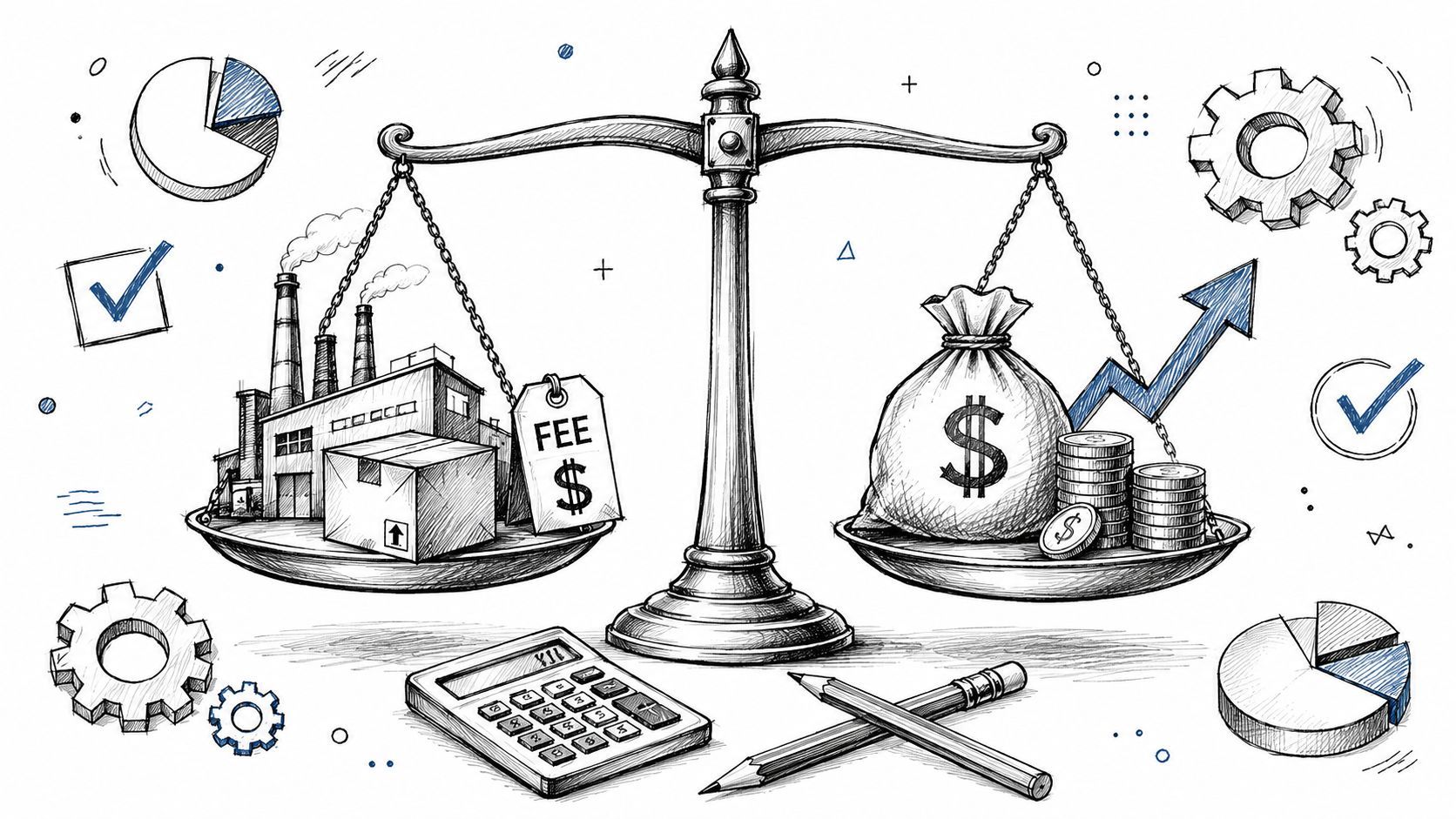
Run a cost benefit analysis for your Kickstarter campaign. Our guide covers costs, revenue, pledge managers, and how to ensure profitability before you launch.
You hit your funding goal. The campaign page looks great. Backers are celebrating in the comments. Then the spreadsheet starts telling the truth.
Manufacturing came in higher than expected. Freight is ugly. Shipping zones don't behave the way your first estimate assumed. A reward tier that looked profitable on launch day now barely covers its own fulfillment. If you're adding surveys, add-ons, late pledges, replacements, tax handling, and platform fees after the campaign, the gap between “funded” and “profitable” gets wide fast.
That's why serious creators need cost benefit analysis. Not as an academic exercise. As a working spreadsheet that answers one question: after every cost and every realistic revenue stream, is this campaign worth running?
Most failed crowdfunding campaigns don't fail because the product is bad. They fail because the creator confuses cash collected with economic value created.
That confusion isn't new. The core principle behind cost benefit analysis entered U.S. public policy through the 1936 Flood Control Act, which required that “benefits to whomsoever they may accrue are in excess of the costs.” That's still the right test for a crowdfunding campaign. If your benefits don't exceed your costs, hitting the goal doesn't save you.

A back-of-the-napkin budget usually includes the obvious line items. Unit cost. Freight. Maybe platform fees.
It usually misses the things that turn a good-looking campaign into a stressful year:
Practical rule: If your spreadsheet only models campaign-day pledges, it's not a financial model. It's wishful thinking.
A proper cost benefit analysis forces discipline. You list every cost, including opportunity costs and non-cash pain points. You list every benefit, not just front-end pledge revenue. Then you test whether the campaign still works when assumptions move against you.
In crowdfunding, this matters more than in many other businesses because creators lock in promises before they've lived through fulfillment. That's the dangerous part. By the time reality shows up, the campaign is over and the promises are public.
The creators who stay calm after funding aren't guessing. They've already modeled the ugly version of the campaign and decided they can still survive it.
Profit comes from what you keep, not what the funding total says. In practice, the cost side of a crowdfunding model is where most creators underbuild their analysis.

Start with the product itself. This category has both one-time and per-unit costs, and mixing those together is how creators misprice reward tiers.
Use separate rows for:
One mistake I see often is treating prototype spending as “already spent” and leaving it out of the analysis. That hides real cost. If the campaign exists because you invested in development, that spend belongs in the model.
Shipping is where optimistic campaigns go to die. It's not one number. It's a stack of numbers that moves by region, weight, dimensions, and exception handling.
Your spreadsheet should split fulfillment into at least these buckets:
If you need a practical framework for estimating this side of the model, this shipping cost calculation guide is useful because it forces you to think in operational pieces instead of one blended guess.
Shipping doesn't break campaigns because creators ignore it. Shipping breaks campaigns because creators compress too many moving parts into one line item.
This is the category people “rough estimate,” and that's usually where slippage starts.
Include:
Taxes belong here too, or in their own category if your sheet is larger. Income tax, VAT or GST collection, and region-specific obligations affect net value even when the campaign page makes them feel secondary.
At this juncture, seasoned operators get conservative and first-time creators get hurt.
Add rows for:
A complete cost benefit analysis also recognizes intangible costs. Brand reputation, creator burnout, and community trust aren't abstract. If you run a campaign that technically ships but damages trust, your next launch starts weaker.
Most creators still model revenue as one line. “Projected campaign funding.” That's too shallow for crowdfunding.
The question isn't what the campaign page raises. It's what each backer relationship can produce across the campaign, the survey window, and the period after the campaign closes. That's where a practical cost benefit analysis gets more accurate than generic small-business advice.
Primary pledge revenue matters, but it's only one part of the benefit side. Crowdfunding has unusual revenue layers that standard business templates don't handle well:
What changes the economics is that post-campaign systems can act less like a form and more like commerce infrastructure. That's why I tell creators to think of post-campaign revenue as a second sales stage, not a clerical task.
Not every dollar has the same value.
An add-on that fits inside an existing shipment usually behaves better than an add-on that creates dimensional weight issues, warehouse complexity, or extra customer support. A late pledge from a straightforward region can be cleaner than a first-wave backer in a harder market. Revenue only helps if the operational burden doesn't erase it.
If you want one metric to watch closely, focus on backer basket expansion. Average order value in a crowdfunding context is a useful lens because it shifts attention from headline funding to the mix of what people buy.
A campaign with lower headline funding and healthier basket composition can outperform a larger campaign that attracts expensive-to-serve demand.
This is also where the underserved discount-rate problem shows up. Standard cost benefit analysis tells you to discount future cash flows, but a flat, corporate-style assumption can distort reality for creators selling across rural markets or globally. The Headwaters Economics discussion of improving benefit-cost analyses highlights how standard discount approaches can skew outcomes in smaller, rural, or lower-income communities.
In crowdfunding terms, that matters when your campaign expects a meaningful share of international backers. Currency fluctuations, VAT or tax handling, shipment failure risk, and local opportunity costs can make a fixed discount rate too blunt. A scenario-weighted discount rate is often more honest than pretending every future dollar carries the same certainty.
That doesn't mean your spreadsheet has to become academic. It means you should stop treating all future add-on and late-pledge revenue as equally reliable.
A campaign model doesn't need to be fancy. It needs to be complete, auditable, and easy to stress-test.

Start with a simple workbook. I like separate tabs for assumptions, unit economics, campaign scenarios, and sensitivity checks. If every number in the model can't be traced back to one assumptions tab, the sheet gets hard to trust.
Before you forecast the whole campaign, prove that one reward tier works.
For each tier, create rows for:
That gives you the cleanest answer to the first practical question: does this tier help the campaign, or is it just attractive on the page?
A surprising number of campaigns carry one or two “marketing tiers” that look exciting but erode profit. Sometimes that's fine. The key is to know it. A weak tier can still be useful if it drives volume into stronger add-ons or larger bundles.
Once the unit economics are clear, layer in the expenses that don't scale neatly by backer.
Use a short table like this in your sheet:
| Cost group | What belongs here |
|---|---|
| Pre-launch | Creative, prototypes, landing pages, tests |
| Launch and live campaign | Media buying, content production, agency or contractor work |
| Post-campaign | Survey admin, reporting, support, data cleanup |
| Fulfillment prep | Freight planning, warehouse setup, file prep |
| Overhead | Legal, accounting, software, contingency |
Break-even thinking becomes a useful tool. You're asking how much contribution margin the campaign must generate before fixed costs are covered.
A rigorous cost benefit analysis should calculate both Benefit-Cost Ratio and Net Present Value. According to the IMD guide to cost-benefit analysis, a BCR greater than 1.0 and a positive NPV indicate that expected benefits outweigh expected costs.
In a crowdfunding model, that translates well:
For creators, BCR is a great filter. If it's below 1.0 in your realistic scenario, stop pretending fulfillment excellence will rescue weak economics. It won't.
Here's a good explainer to pair with your spreadsheet review:
Don't build one forecast. Build three.
The point isn't optimism versus pessimism. It's decision quality. If the campaign only works in the optimistic version, you don't have a plan. You have a dependency on luck.
The best spreadsheet is the one that tells you not to launch a weak offer before the market does it publicly.
This step gets skipped because it feels advanced. It isn't. It's just a deliberate way to ask, “What happens if I'm wrong?”
The standard CBA process includes sensitivity analysis as a required final step because it tests how changes in assumptions affect the result. In crowdfunding, the most useful variables to stress are:
Run one variable at a time first. Then test combinations. If a modest change flips the project from healthy to dangerous, the campaign is fragile even if the base case looks fine.
A campaign can fund well, hit every social proof milestone, and still give away margin after the campaign ends.
I've seen this happen when creators treat the pledge manager as an admin tool instead of a revenue and cost tool. On Kickstarter and Indiegogo, that choice affects three profit lines at once: how much backers add after the campaign, what fees apply to that extra revenue, and how much operational friction your team absorbs while collecting surveys, shipping charges, and late pledges.
The practical question is simple. Does your pledge manager only help you finish fulfillment, or does it also help you collect more profitable revenue without adding avoidable complexity?
Kickstarter's native option is more controlled and standardized. PledgeBox gives creators more room to customize the post-campaign store experience and monetize beyond the initial pledge. That difference matters most for campaigns with strong add-on potential, late pledge demand, or a wide spread of shipping scenarios.
| Feature / Fee | Kickstarter Pledge Manager | PledgeBox |
|---|---|---|
| Add-on sales fee | Higher fee on post-campaign add-on revenue | Lower fee structure on upsell revenue |
| Survey cost when no upsells happen | Creators should verify current terms directly with Kickstarter | Survey-only use is positioned as free if no new payment is collected |
| What triggers fees | Add-on activity inside the native system | Fees apply to new funds collected through upsells during the survey flow |
| Positioning | More marketplace-style and closed | More customizable and store-oriented |
In a spreadsheet, I model this as incremental contribution margin, not just software cost. If a tool takes a smaller cut of add-ons but lifts attach rate, average order value, or late pledge conversion, it can outperform a cheaper-looking option that leaves money on the table. The reverse is also true. A feature-rich system is a bad deal if your campaign has weak upsell logic or a simple one-SKU fulfillment plan.
Creators often misread the economics. They compare subscription or platform fees and ignore fulfillment drag. More add-ons can improve revenue while making pick-and-pack, customer support, and replacement risk worse. The right choice is the one that raises net profit after fees, freight, labor, and error rate, not the one with the best sales pitch.
For that reason, I test pledge manager options in the model with a few campaign-specific inputs:
If you want a practical shortlist for comparing those factors, this guide to selecting the right pledge manager is useful.
Three days before launch, the sample quote from your freight forwarder comes back higher than the number in your sheet. If you ignore it, you can still hit your public funding goal and lose money on every pledge. That is the point where cost benefit analysis stops being theory and starts protecting the campaign.
A spreadsheet earns its place when it forces hard calls before cash gets trapped in bad promises. Reward tiers that looked exciting in the campaign draft get cut because they create too many picks, too many support tickets, or too little margin. Shipping regions get narrowed because one customs-heavy lane can erase the profit from a strong domestic launch. Funding goals get reset to the level that covers production, fees, freight, taxes, replacements, and the post-campaign work creators often forget to price.

A useful model should give you a clear answer to operational questions, not just a clean summary tab.
I usually add one more decision gate. If a reward tier, add-on, or stretch goal cannot survive a downside case in the model, it does not go live.
Creators rarely fail because they forgot one obvious expense. They fail because several small misses stack up. An accessory add-on looks profitable until packing time increases. A low-priced tier brings in backers but drives up customer service volume. A stretch goal raises conversion and also pushes carton size into a worse shipping bracket.
The model should catch those trade-offs before your backers do. External advice on cost benefit analysis often focuses on keeping assumptions current and testing downside cases, and that discipline matters even more in crowdfunding because your costs keep changing after the campaign funds. Freight moves. Payment failures happen. Address problems show up late. Backers ask to split shipments or combine orders. Community trust also belongs in the model, even if it sits in a notes column instead of a formula. A campaign that cuts corners to save a little cash can make the next launch much more expensive.
Rebuild the model when assumptions change. A forecast from pre-launch is not reliable once live pricing, ad performance, or shipping quotes move.
The strongest operators use the sheet as a control system through the whole campaign life cycle. They review it before launch, during the live funding window, before surveys open, after add-on performance becomes clear, and again before locking fulfillment files.
That cadence matters because crowdfunding revenue does not stop at the campaign total on Kickstarter or Indiegogo. Late pledges, shipping collection, and post-campaign add-ons can rescue margin or destroy it, depending on how they affect fees, labor, and error rate. I prefer to make those decisions with a live contribution margin view by tier and by order type. If late pledge customers convert well but generate more support work, I want that cost in the same sheet before I scale ads or extend the store window.
Good analysis leads to plain decisions. Raise a tier price. Drop a weak add-on. Limit a region. Delay a stretch goal. Collect shipping later if your estimate range is too wide. Keep the campaign simpler if the extra revenue does not survive fulfillment reality.
That is how creators protect profit after the excitement of funding wears off.
PledgeBox can fit this workflow if you want one system for post-campaign surveys, add-ons, late pledges, shipping collection, and fulfillment coordination. As noted earlier, its pricing structure matters less than the net result in your model. The right test is whether it improves profit after fees, freight, labor, and order complexity are accounted for.
PledgeBox
The All-in-One Toolkit to Launch, Manage & Scale Your Kickstarter / Indiegogo Campaign