 PledgeBox
What Is Fulfillment in Ecommerce Your Guide for Creators
Unsure what is fulfillment in ecommerce? Our guide demystifies the process, models, and tools for crowdfunding creators to deliver rewards and boost revenue.
Unsure what is fulfillment in ecommerce? Our guide demystifies the process, models, and tools for crowdfunding creators to deliver rewards and boost revenue.
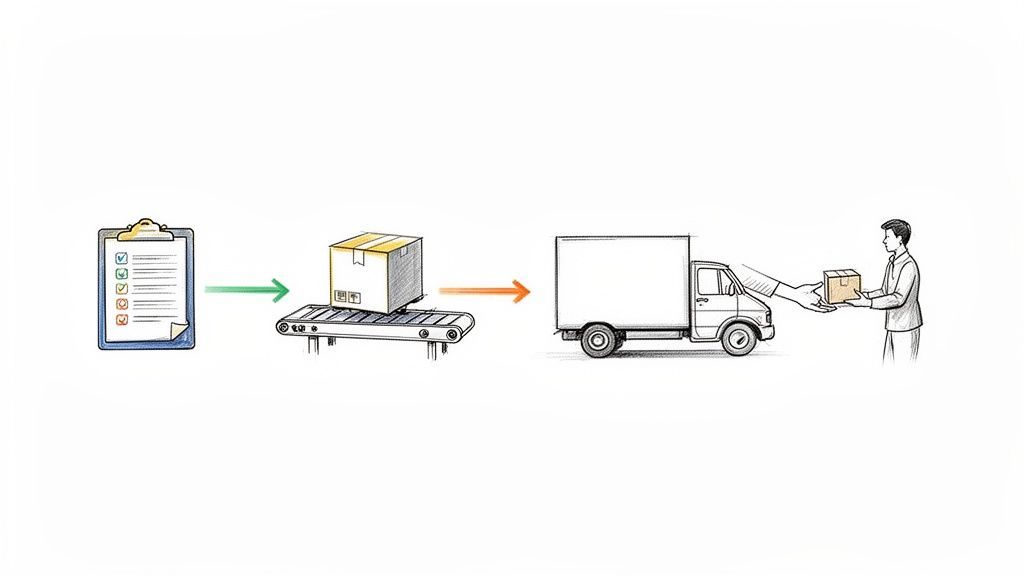
When your crowdfunding campaign ends, the real work is just beginning. Ecommerce fulfillment is the entire post-campaign operation that gets your product from the factory into your backers' hands. It’s the critical link between a successful fundraiser and a community of happy, loyal supporters.
For creators, this isn't just about shipping boxes. It involves sending out backer surveys, collecting final shipping addresses and fees, managing inventory, packing rewards, and navigating the complexities of global delivery.

Think of your campaign as a bustling new restaurant. Your backers have all placed their orders by making pledges. Fulfillment is the entire kitchen and delivery team working behind the scenes to make sure every single person gets exactly what they ordered, piping hot and on time.
If that operation is slow, disorganized, or makes mistakes, it doesn't matter how great the food is—your customers won't come back. The same is true for your campaign. A smooth fulfillment process is the engine that drives backer satisfaction and your future success.
To really understand what's involved, it helps to break the entire process down into manageable steps. A well-oiled fulfillment machine moves through five distinct stages, each one just as important as the last.
Here's a quick look at what that journey looks like from start to finish.
| Stage | Description | Key Activity for Creators |
|---|---|---|
| 1. Receiving | Your manufactured products arrive at the warehouse or fulfillment center. | Confirming product counts and performing quality checks on your inventory. |
| 2. Inventory Storage | Products are organized, cataloged, and stored securely, ready for picking. | Making sure your SKU (Stock Keeping Unit) data is clean and accurate. |
| 3. Order Processing (Pick & Pack) | When an order is ready, warehouse staff pick the correct items and pack them. | Ensuring your survey data is locked and sent to the fulfillment partner correctly. |
| 4. Shipping | The packed box is labeled, handed to a carrier (like DHL or FedEx), and sent on its way. | Tracking shipments and managing any customs or international shipping issues. |
| 5. Returns Management | Handling any packages that are returned due to delivery issues or customer requests. | Having a clear policy for handling undeliverable packages or damaged goods. |
This system is the backbone of a great backer experience. Getting it right leads to rave reviews and repeat customers, which directly boosts your Lifetime Customer Value. For a deeper dive into finding a logistics partner, check out our guide on choosing crowdfunding fulfillment services.
The ecommerce logistics market isn't just growing; it's exploding. It shot up to €521.9 billion, more than doubling in value since 2019. For creators, this boom means more competition but also more powerful tools to manage the complexities of shipping, taxes, and add-ons.
To compete in this crowded space, a dedicated pledge manager is no longer a luxury—it's essential. Relying on Kickstarter's native survey tool is like trying to run a professional online store using a basic forum. Think of Kickstarter's pledge manager as Amazon, where you operate within a larger marketplace, whereas a dedicated tool like PledgeBox is like Shopify, giving you your own powerful, customizable storefront.
This "Shopify-like" approach gives you complete control over surveys, upsells, and shipping calculations. Best of all, PledgeBox is free to send the backer survey and only charges 3% of upsell if there's any. It’s a powerful, risk-free way to professionalize your post-campaign operations.
Picking a fulfillment model is one of the biggest strategic calls you'll make as a crowdfunding creator. This isn't just about shipping boxes; it's about building the entire backbone of your operation, shaping your customer's experience, and deciding how you'll grow. The best choice really boils down to your product's complexity, the size of your campaign, and just how much hands-on control you want to keep.
Think of it like this: you've just invented a fantastic new snack. Now you have to decide how to get it to all the hungry people who want it. Each delivery method comes with a different mix of control, cost, and convenience. Let’s break down the four main models using this tasty analogy.
Handling fulfillment yourself is basically like running a home bakery. You're in complete control of every ingredient, the way you wrap each cookie, and the thank-you note you slip inside. For a small campaign with a simple product—say, shipping a zine to 50 backers in your own country—this approach is perfect.
But just like that home baker, you're on the hook for everything. You have to buy the shipping supplies, stack inventory in your garage, pack every single order, print the labels, and haul it all to the post office. It's incredibly rewarding, but it’s a massive time sink and can get out of hand the moment your orders start piling up.
Dropshipping is like being a food critic who puts together a "best of" menu from different local restaurants. You take the order, then call the restaurant to cook and deliver it. You never actually touch the food (or inventory), which means very little risk. The trade-off? You give up control over the quality and how fast it gets to the customer.
A Third-Party Logistics (3PL) partner, on the other hand, is like hiring a professional catering company. You give them your amazing recipes (your product), and they take over the entire kitchen—storage, packing, and shipping. These companies are logistics pros, giving you efficiency and scale that you could never manage on your own. For most growing crowdfunding campaigns with hundreds or thousands of backers, this is the sweet spot.
The move to outsource fulfillment is huge. A massive 60% of online retailers now outsource at least some of their logistics, and 20% hand the whole operation over to a 3PL. It just goes to show how valuable specialized logistics expertise is in a market that demands speed and accuracy. You can dig into more of these ecommerce fulfillment trends to see what it means for creators like you.
Finally, you've got Fulfillment by Amazon (FBA). This is like plugging into a gigantic, automated, global kitchen that serves millions of people every single day. You send your products to Amazon's massive warehouses, and they handle everything from storage to that famous Prime delivery. The speed and reach are incredible.
The downside is that it's a very rigid system. FBA has strict rules for how products must be prepped, often uses Amazon-branded boxes (which can dilute your brand experience), and can get pricey. It's a powerhouse if you're selling on the Amazon marketplace, but it offers far less flexibility for the unique, personal touch a crowdfunding campaign often needs.
No matter which model you're leaning toward, remember that technology is the glue holding it all together. You'll need to think about critical ERP integration steps to make sure all your systems—from orders to inventory—are talking to each other seamlessly.
Once your crowdfunding campaign wraps up successfully, the real fun begins: turning those pledges into real products in your backers' hands. The key to understanding what fulfillment in ecommerce really is, is to see it as a detailed roadmap with several crucial stops. Missing just one can lead to frustrating delays and unhappy backers.
This journey shows how different fulfillment approaches build on each other, starting from a simple setup in your garage and scaling up to a global logistics network.

As you can see, the operational complexity grows as you move from doing it all yourself to using advanced models like 3PL or FBA. Let's break down the key steps.
First things first, you need to collect accurate information from every single backer. This is where a solid pledge manager becomes your best friend. You'll send out backer surveys to get final shipping addresses, confirm which rewards everyone wants, and even give backers a last chance to grab some add-ons.
Think of it this way: Kickstarter’s native pledge manager is like a basic, one-size-fits-all tool within a larger ecosystem, similar to Amazon. But a dedicated pledge manager like PledgeBox is like having your own powerful and customizable storefront after the campaign, much like Shopify. It gives you so much more control over the experience.
With all the addresses locked in, you can finally calculate shipping costs and collect any necessary VAT or sales tax. For many creators, especially those with backers all over the world, this is the most nerve-wracking part of the entire process. If you undercharge, you could wipe out your profits. Overcharge, and you risk angering your supporters.
For a crowdfunding creator, accurately collecting shipping fees and taxes isn't just a boring accounting task—it’s about protecting your budget and maintaining backer trust. Getting this wrong can sink a project that was otherwise successful.
A good pledge manager handles all this automatically by applying the right shipping rates and tax rules for each region. It takes the guesswork out of the equation, saving you from major financial headaches. If you want to dive deeper, our guide on how to calculate shipping costs is a fantastic resource.
Once all the data is collected and payments are settled, you'll export a master order file for your warehouse or 3PL partner. This file is the blueprint for fulfillment, telling them exactly which items go into which box for every backer. Clean, organized data here is essential to avoid packing mistakes.
When the warehouse gets your file, they kick off the "pick and pack" process, slap shipping labels on the boxes, and hand the packages over to the carriers. At this point, your pledge manager can send automated tracking information to your backers, which gives them peace of mind and drastically cuts down on "Where's my stuff?" emails.
This seamless flow—from survey to shipment—is what a successful fulfillment strategy is all about. And with tools like PledgeBox, which is free to send the backer survey and only charges a 3% fee on upsell if there's any, you can manage it all without breaking the bank.
While the basic idea of ecommerce fulfillment still holds, crowdfunding throws a few curveballs that can catch even seasoned creators off guard. Fulfillment for a Kickstarter or Indiegogo project isn't just about shipping boxes; it’s about delivering on a promise you made to a whole community of believers.
The challenges are different and require a dedicated game plan. From handling backers who find you after the campaign clock runs out to untangling complex international tax laws, each step has its own pitfalls that can drain your budget and create shipping chaos.
One of the first hurdles is juggling different groups of supporters. You have your day-one backers, but what about the people who discover your amazing project a month later? Trying to manage these "late backers" alongside your original crew with a simple spreadsheet is a recipe for disaster.
This is where a dedicated pledge manager really proves its worth. It lets you set up a smooth pre-order storefront that feeds new orders directly into your original backer list. This keeps everyone's data in one tidy place, so you don't have to worry about anyone falling through the cracks when it's time to ship.
For many creators, the most intimidating task is calculating and collecting the right fees for international shipping and Value-Added Tax (VAT). Regulations are always shifting—like the elimination of the U.S. de minimis exemption, which now means duties on all low-value imports. Getting this wrong can be a massive financial blow.
Think of it this way: using Kickstarter's built-in survey tool is like having a basic stall at a giant marketplace like Amazon. It works, but your options are limited. Using a dedicated pledge manager like PledgeBox is like building your own powerful, custom storefront—much like you would with Shopify.
That "Shopify-like" control is a game-changer. A solid pledge manager can automatically figure out the correct tax and shipping rates for each backer based on their location, making sure you collect the right amount from the start. This feature alone has saved countless campaigns from sinking under the weight of unexpected fulfillment costs.
Crowdfunding rewards are rarely just one item in a box. Backers often grab multiple add-ons, and some campaigns even offer multi-wave shipping where rewards go out in different phases. Trying to track all these moving parts by hand is nearly impossible and a huge source of errors.
A good pledge manager helps you organize all that complexity without breaking a sweat. It sorts out every order, even if it has multiple items shipping at different times, and spits out clean data files for your fulfillment partner. This ensures your warehouse knows exactly what goes in each box for each backer, which dramatically cuts down on shipping mistakes and the inevitable wave of "Where's my stuff?" emails.
By gearing up with the right tools, these unique crowdfunding challenges become much more manageable. A platform like PledgeBox—which is free to send the backer survey and only charges a small 3% fee on upsell if there's any—gives you the power to handle these hurdles without any upfront cost. It’s what turns potential fulfillment nightmares into a smooth, professional operation.

This visual gets right to the point: a pledge manager should be the mission control for everything happening after your campaign funds, connecting all the dots from backer surveys to the final shipment.
Most creators see fulfillment as a pure cost center—a necessary, expensive last mile. But what if you could flip that script? With the right tools and approach, you can turn your post-campaign operations into a serious revenue driver. This is exactly where a pledge manager shines.
It’s so much more than a data collection form. It's a platform for growth, smoothing the transition from fundraising to order management while giving your backers a great experience and boosting your bottom line.
Your backer survey is the first, and arguably best, chance to generate more revenue. Instead of a boring address form, a good pledge manager turns the survey into an interactive storefront. This is where backers confirm their rewards and can easily browse and add valuable extras, like exclusive accessories or deluxe upgrades.
This upsell process feels completely natural because it taps into their existing excitement. They've already backed your vision, which makes them the perfect audience for complementary products. It’s a simple, powerful way to increase your average pledge value without spending a dime on extra marketing.
Think of it this way: the Kickstarter pledge manager is like operating on Amazon—functional, but you're confined to their ecosystem. A tool like PledgeBox is like having your own Shopify store; it opens up a world of customization, control, and sales potential for your own brand.
Choosing the right tool is a strategic move that can define your campaign's success. You can learn more by reading our guide on how to select the right pledge manager.
Just because your campaign ended doesn't mean the sales have to stop. A pledge manager lets you open a late pledge or pre-order store, catching all the folks who missed the initial funding window. This keeps your momentum going and adds a steady stream of revenue while you head into production.
This is especially important when you consider that global retail e-commerce sales are expected to hit $6.419 trillion. Creators, particularly tabletop publishers managing huge volumes of rewards, need tools that can tap into this massive market. Platforms like PledgeBox, trusted by over 8,000 creators since 2019, deliver the features needed to manage this kind of growth. You can learn more about the global e-commerce trends in 2025 and how they affect creators.
Best of all, this strategy is completely risk-free if you pick the right partner. For instance, PledgeBox is completely free to send your backer survey and only charges a simple 3% fee on the new revenue you generate from upsells. This model means you only pay when you profit, making it a no-brainer for any creator focused on maximizing their success.
As a crowdfunding creator, you're expected to be an expert in your product, not necessarily in logistics, tax law, and inventory management. Let's clear up some of the most common questions creators have about shipping rewards so you can get back to what you do best.
This is a fantastic question because it gets to the heart of how modern crowdfunding works. It’s best to think of them as two sides of the same coin: one is digital, the other is physical.
A pledge manager is the software you use after the campaign ends. It's your digital command center for organizing all that messy backer data. This is where you'll send surveys, collect shipping addresses, calculate tricky taxes, and let backers purchase add-ons.
A fulfillment center, on the other hand, is the physical warehouse where your products are stored. These are the folks who take the clean, organized order data from your pledge manager, pick the right items off the shelf, pack them into boxes, and hand them off to the mail carrier.
Separating these jobs is a game-changer. It lets you focus on your product and your community while leaving the warehouse logistics to the pros.
This is the "how long is a piece of string?" question, as costs can vary dramatically. The path you choose—and your campaign's scale—will determine your budget. If you decide to handle fulfillment yourself, you're on the hook for packaging supplies, printing shipping labels, and, of course, your own time (which is never free!).
When you outsource to a third-party logistics (3PL) partner, you’ll see fees for receiving your inventory, storing it, and a "pick and pack" fee for each order they ship.
A pledge manager like PledgeBox works differently. It’s free to send the backer survey, and we only charge a 3% fee on upsell if there's any. Think of Kickstarter’s built-in survey as the basic Amazon marketplace, while PledgeBox is more like having your own powerful Shopify store specifically for crowdfunding. This approach ensures you're collecting the right fees from backers without any scary upfront costs.
The best advice? Get quotes from several 3PLs to compare their rates and find a partner that fits your project's needs.
“PledgeBox handles tax calculations and shipping fees upfront, giving creators peace of mind without upfront charges.”
For instance, we saw a board game campaign with 2,000 backers use PledgeBox to correctly collect VAT. This simple step saved them over $5,000 in what would have been a massive, unexpected tax bill.
Yesterday! But seriously, you need to start planning for fulfillment before your campaign even launches. This isn't something you can figure out later. Why? Because you need accurate weight and dimension data for your products to set realistic shipping rates and, ultimately, your funding goal.
If you skip this, you're flying blind and are at huge risk of under-funding your project and facing a crowd of angry backers when shipping costs more than you charged. Research 3PL partners early and get shipping quotes for every country you plan to ship to.
Here’s a simple checklist to get you started:
Having this data upfront is the only way to build a budget you can trust.
You absolutely can... sometimes. Self-fulfillment is a totally viable option for very small campaigns, especially if you have fewer than 100 backers and are shipping mostly within your own country.
However, the moment your backer count climbs or you start shipping internationally, DIY fulfillment can quickly spiral into a full-time, soul-crushing job. A single mistake in packing an order or filling out a customs form can lead to expensive returns, lost packages, and a damaged reputation.
For projects with complex reward tiers or thousands of backers, outsourcing to a 3PL and managing the chaos with a pledge manager like PledgeBox is almost always the smarter, safer choice.
Some creators find a happy medium with a hybrid model. They might handle local shipments themselves to add a personal touch, while relying on a 3PL for the complexities of international orders.
This approach can be the best of both worlds:
Ready to get your fulfillment organized? Get started with PledgeBox today and see how simple it can be.
PledgeBox
The All-in-One Toolkit to Launch, Manage & Scale Your Kickstarter / Indiegogo Campaign