 PledgeBox
A Winning Video for Kickstarter in 2026
Learn how to create a powerful video for Kickstarter that gets funded. Our guide covers scripting, production, and post-campaign strategy to convert backers.
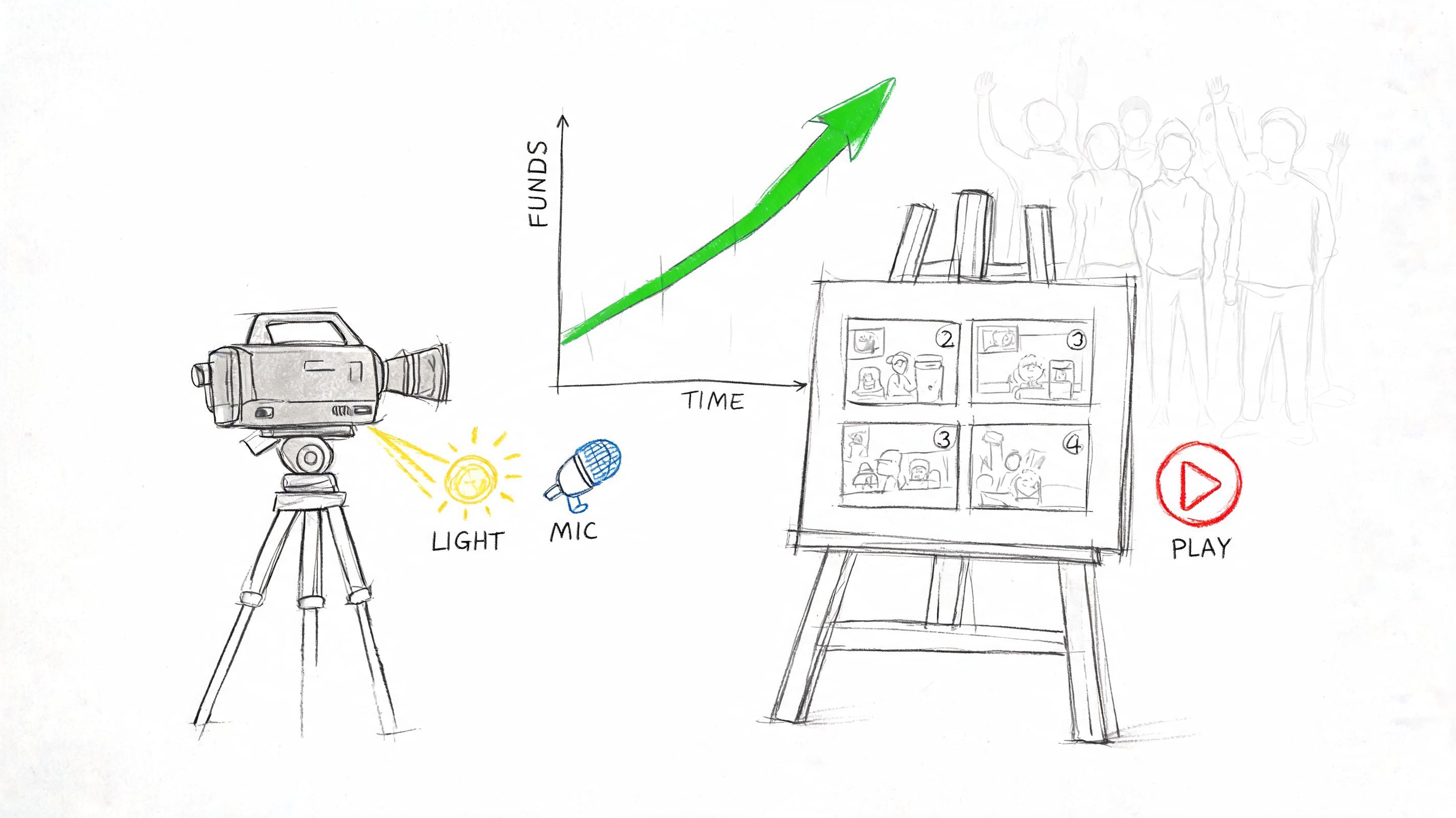
Learn how to create a powerful video for Kickstarter that gets funded. Our guide covers scripting, production, and post-campaign strategy to convert backers.
Let's be blunt: your campaign's success is going to lean heavily on having a powerful video for kickstarter. This isn't just a simple promo clip. It's the beating heart of your entire effort and the main thing that builds backer trust and gets them excited.
Think of your Kickstarter video as the first, firm handshake with a potential backer. It’s your one real chance to turn a casual browser into someone who believes in your project enough to pledge. The numbers don't lie: projects with videos have a 50-54% success rate, which is a massive leap from the 30-39% for those without one. That 20-point gap tells you everything you need to know—video isn't optional anymore; it's a must-have.

The clock starts ticking the moment someone hits play. Those first 30 seconds are make-or-break; they decide whether a viewer sticks around to hear your story or clicks away. You need a strong narrative hook right out of the gate to grab their attention and earn that initial flicker of trust. This isn't just a crowdfunding trick; it's a core principle of how B2B experiential content works to build connections, and it applies perfectly here.
A great video does more than just tell your story—it kickstarts the momentum that signals to Kickstarter's algorithms that your project is hot. This early visibility is an investment that pays off long after the campaign is over.
Your video isn’t just a pitch; it’s a trust-building exercise. It proves you are a real creator with a tangible vision, capable of bringing your idea to life. This visual proof is what convinces backers to join your journey.
Don't think of your video as a one-and-done asset. It’s an incredibly versatile marketing tool you'll use everywhere. From building your pre-launch email list to running social media ads, your main video can be chopped up and repurposed to drive traffic straight to your page.
Once the campaign wraps, the real work of managing backers begins. Kickstarter’s built-in pledge manager is okay—it’s like Amazon; functional but limited. But a dedicated tool like PledgeBox is like having your own Shopify store for your project. It is free to send the backer survey and only charges a 3% fee on any upsell revenue you generate, making it a risk-free way to handle fulfillment and even boost your post-campaign funding.
Let's get one thing straight: a killer video for kickstarter isn't about fancy cameras or slick editing. Those things help, but they’re not the foundation. The real secret weapon is a story that grabs people and doesn't let go. Before you even think about hitting record, you need a script that connects with backers on a human level.
The most successful campaign videos all follow a surprisingly simple, time-tested formula. Resist the urge to lead with a laundry list of features. Instead, start by highlighting a real, relatable problem that your audience faces every day.
Once you’ve got them nodding along, that's your moment to introduce your product as the hero of the story. Show it in action. Let them see firsthand how it solves that nagging problem you just brought up. This is how you transition from just another product to an indispensable solution.
Your script's job isn't just to list facts; it's to build a bridge between your idea and your backer's emotions. You want them to feel seen and understood.
The goal of your script isn’t just to inform; it’s to make the viewer feel understood. When a backer sees their own problem reflected on screen and then sees your solution, they don’t just see a product—they see a better version of their own life.
This storytelling approach is a cornerstone of great marketing. Getting a feel for how different stories are built can give you a major advantage. Checking out general Sup Growth content ideas can help you understand how to frame narratives to capture attention across any platform.
With your narrative locked down, it's time to turn those words into a visual plan. This is where storyboarding comes in. Don't worry, you don't need to be an artist—stick figures and simple sketches work perfectly. A storyboard helps you map out your video shot by shot, ensuring the final product flows smoothly and makes a powerful impact.
To make sure your video is as effective as possible, it helps to follow a proven structure. The best videos hook the viewer, present the problem, reveal the solution, and call them to action—all in about 90 seconds.
Here’s a simple blueprint to guide your scriptwriting process.
| Time Stamp | Section | Goal |
|---|---|---|
| 0-10s | The Hook | Grab attention with a compelling question or a relatable pain point. |
| 10-30s | Introduce the Problem | Show the problem in a real-world context. Make the viewer feel it. |
| 30-60s | Reveal the Solution | Introduce your product as the clear hero that solves the problem. |
| 60-80s | Show Unique Value | Highlight what makes your product special and why it's a must-have. |
| 80-90s | The Call to Action | Tell backers exactly what you want them to do: "Back our project today!" |
This structure is a game-changer, but there's always more to learn from the pros. For a deeper dive, take a look at these 4 tips from million-level crowdfunding videos to see how top creators nail their storytelling every time.
One of the biggest questions every creator asks is whether to shoot their video for kickstarter themselves or hire a professional crew. There’s no easy answer here—it really boils down to your budget, your skills, and what you’re trying to achieve with your campaign. A smart cost-benefit analysis will point you in the right direction.
Going the DIY route is a totally valid option, especially if you have a smaller campaign or some video experience under your belt. A solid DIY setup can run you anywhere from $200 to $1,000. The secret isn't a fancy camera; it's nailing the fundamentals. Crisp audio and good lighting are absolutely non-negotiable.
Believe it or not, a modern smartphone can shoot incredible video. The trick is to support it with the right gear. A simple lavalier microphone and a basic three-point lighting kit will boost your quality way more than an expensive new camera body ever could. Remember, the goal is a polished video, not a Hollywood blockbuster. You can find more budget-friendly tips for creating a crowdfunding winning video in our detailed guide.
On the other hand, bringing in a professional crew can be a game-changer. A high-quality production typically costs between $10,000 and $15,000. This kind of investment makes perfect sense for ambitious projects where the video's quality needs to match the product's innovation. Consider this: 79% of projects that raise just 20% of their goal go on to get fully funded, making that initial momentum absolutely vital. A pro video can help you get there. You can see more data on Kickstarter success rates and see just how critical that early backing really is.
This infographic breaks down the difference between a structured script blueprint and the more common amateur approach, showing just how much planning affects the final product.

As you can see, a well-planned video grabs attention by starting with a problem and ends with a clear call to action. Amateur videos often just jump into features and completely miss that compelling narrative hook that gets people to back you.
Your budget decision should also consider what happens after the campaign. Think of Kickstarter’s native pledge manager like Amazon—it’s a one-size-fits-all marketplace. In contrast, PledgeBox is like having your own Shopify store; it gives you total control and opens up powerful upsell opportunities.
Best of all, PledgeBox is free to send your backer survey and only charges a 3% fee on successful upsells. This makes it a completely risk-free tool that can seriously boost your total funds raised, no matter what you spent on your video.
This is where the story truly comes to life. All that footage you worked so hard to shoot is just a collection of clips until the edit. Post-production is where you shape those clips into a compelling narrative, control the energy, and make sure your video for kickstarter lands with the impact it deserves.
Your first order of business in the editing suite? Be ruthless. Seriously. If a shot, a line, or a moment doesn't actively push the story forward, it needs to go. Your goal is to create a tight, focused video that grabs your viewer's attention from the very first second and never lets go.
These three elements are the soul of your video's final feel. Get them right, and your video will sing.
Pacing is the heartbeat of your story. You want it to feel energetic and engaging, not like a long, boring lecture. Use quick cuts to build excitement during a product demo and let other shots breathe for a moment to build an emotional connection.
Music is your secret weapon for telling the audience how to feel. A great score can make your project feel inspiring, innovative, or urgent without you having to say a word. Just be sure it complements your message instead of overpowering it.
Video length is another huge factor. We’ve all seen the data, and it consistently shows the sweet spot for a Kickstarter video is between 1 and 2 minutes. Once you push past six minutes, you'll see a massive drop in funding success. Why? The average completion rate for a 2-minute video is only about 33%. Discover more insights about these Kickstarter video findings.
Once your campaign is over, managing your backers becomes the new challenge. Think of Kickstarter's native pledge manager like a basic marketplace (Amazon), whereas PledgeBox is like your own customizable storefront (Shopify), giving you powerful features to upsell backers and boost your total funding.
What's really incredible is that PledgeBox is free to send your backer survey. They only charge a 3% fee on any revenue you generate from upsells. This makes it a no-brainer, risk-free tool for increasing your final raise and making fulfillment a whole lot smoother.
Your main campaign video is far too valuable to be a one-hit wonder, living only on your Kickstarter page. Think of it as the central hub of your marketing efforts. To get the most out of your investment, you need a plan to use that video for kickstarter across your entire promotional funnel, long after the 30-day funding window closes.
Smart creators have known this for years. They slice and dice their primary video into smaller, bite-sized clips perfect for different platforms. A punchy, 15-second cut can be perfect for social media ads on TikTok or Instagram Reels. A more detailed 60-second version works wonders in pre-launch email sequences to build excitement and drive followers to your "Coming Soon" page.

Even while your campaign is live, your video content is pure gold. Use specific clips in backer updates to spotlight stretch goals you’ve unlocked or share some behind-the-scenes progress. It’s a simple way to keep your community engaged and feeling like part of the journey. For a deeper dive, check out these 5 easy ways to create awesome YouTube videos for your campaign to keep the momentum going.
Once the confetti settles and your campaign is funded, your focus shifts to the nitty-gritty of fulfillment and backer management. This is where a clear strategy becomes absolutely critical. Kickstarter’s built-in pledge manager gets the job done, but it's incredibly basic. Think of it like Amazon—a massive marketplace that serves its own purposes.
A dedicated pledge manager like PledgeBox, however, is like having your own Shopify store for your backers. It’s a powerful platform designed to give you more control, streamline fulfillment, and even increase your total funds raised through strategic upsells.
What makes this approach a no-brainer is the business model. PledgeBox is completely free to send your backer survey. The platform only charges a 3% fee on any revenue you generate from upsells, if you choose to offer them. This means you can manage your backers and offer add-ons with zero upfront cost or risk, turning a post-campaign necessity into a significant new revenue stream.
Even after you've nailed your video and the campaign clock hits zero, a new set of questions always pops up. Getting your project funded is just the beginning; now, the real work of managing backers and fulfillment begins.
Let's tackle some of the most common questions we see from creators once the confetti settles.
Once your campaign ends, you’ll quickly notice a pattern in your inbox. Backers will start asking the same four questions over and over:
Having a game plan for these inquiries will save you an incredible amount of time and stress. This is where your backer management system becomes your new best friend.
Kickstarter provides a basic pledge manager, but think of it like the simple checkout on Amazon. It gets the job done for the most basic transactions, but it's not built for the complexity of a thriving crowdfunding project.
Another frequent question is about refunds. If a backer needs their money back, you can process it through your Backer Report. But be careful: if you issue a full refund after Kickstarter’s 14-day post-campaign window, you’ll lose the 8% in fees that Kickstarter and Stripe have already collected.
A dedicated tool like PledgeBox is like getting your own Shopify store for your campaign. It transforms the logistical headache of post-campaign management into a genuine opportunity to increase your funding and build stronger relationships with your backers.
This is where a dedicated pledge manager really shines. Instead of being a cost center, it becomes a revenue driver.
What makes a tool like PledgeBox so effective is its pricing. It’s completely free to send out your backer survey, letting you gather all the essential information without any upfront cost. The platform only takes a 3% fee on any extra money you make from successful upsells—if you decide to offer them. It's a risk-free way to boost your final funding total and make the entire fulfillment process smoother for everyone involved.
PledgeBox
The All-in-One Toolkit to Launch, Manage & Scale Your Kickstarter / Indiegogo Campaign