 PledgeBox
Travel Pillow Kickstarter: Launch Your Campaign in 2026
Launch your travel pillow Kickstarter successfully in 2026! Get expert guide on positioning, storytelling, budgeting, and fulfillment with PledgeBox.
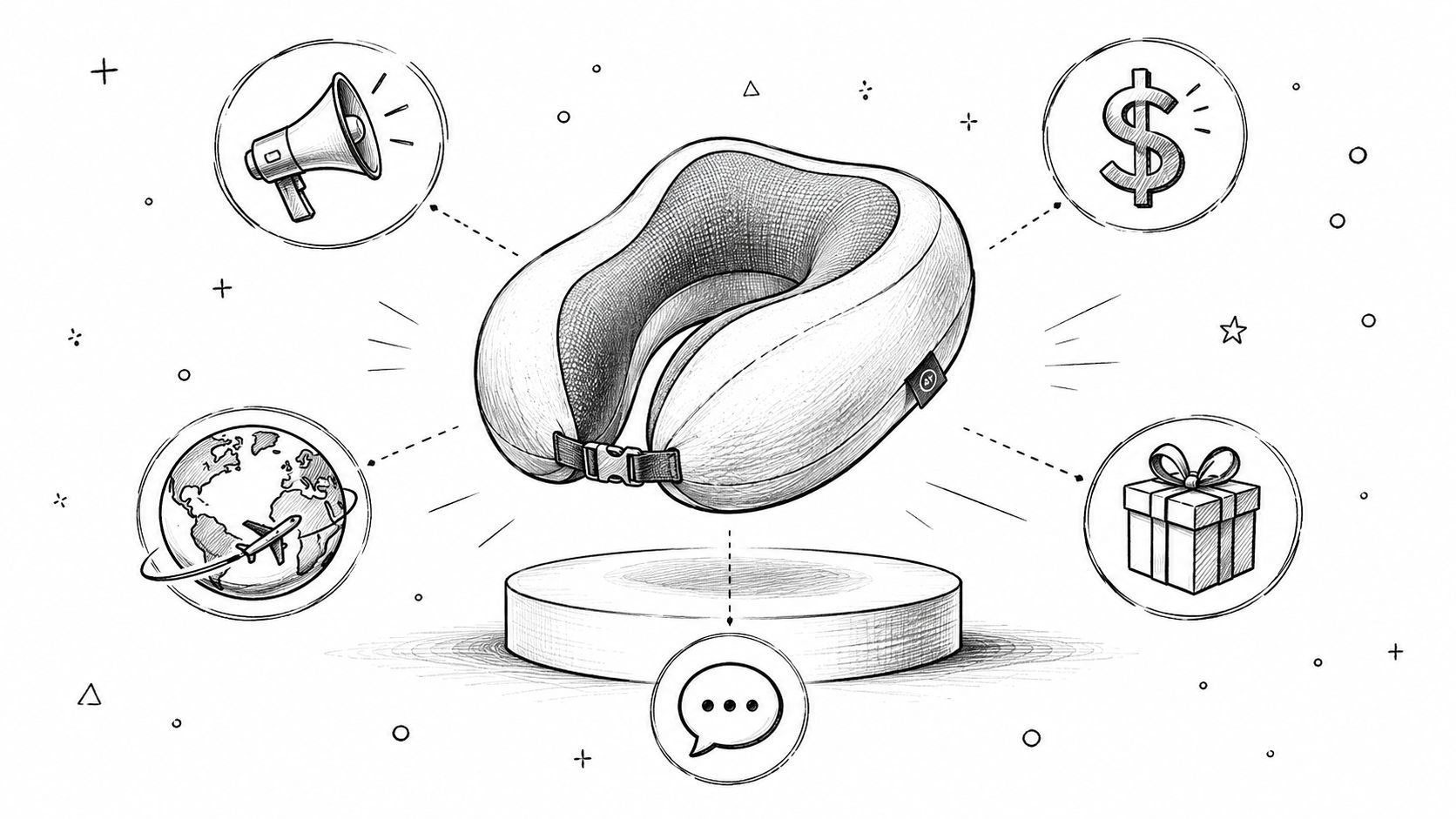
Launch your travel pillow Kickstarter successfully in 2026! Get expert guide on positioning, storytelling, budgeting, and fulfillment with PledgeBox.
You're probably staring at a prototype, a rough margin sheet, and a Kickstarter draft that still feels too thin. The product seems promising. The category is active. But a travel pillow Kickstarter is one of those niches where a good idea can still fail if the campaign page is vague, the rewards are messy, or the shipping plan falls apart after funding.
I've seen this pattern a lot with physical products that look simple from the outside. A travel pillow is small, soft, and easy to explain. That's exactly why backers compare it fast. If your page doesn't show a clear improvement over what they already own, they scroll. If you do win the campaign, poor fulfillment planning can erase the win just as quickly.
The first mistake most creators make is assuming the market is too crowded to enter. It isn't. It's crowded with weak differentiation.
The stronger question is this: why should someone replace the travel pillow they already tolerate? “More comfortable” is not a positioning statement. “Supports side-sleeping on planes without collapsing” is closer. “Packs flat into a carry-on side pocket” is better. “Works for upright train naps and window-seat leaners” is better still.
One of the clearest signs that the category has real headroom came from FaceCradle, reported in 2016 as the most-funded travel pillow in Kickstarter history after passing $1 million in pledges with over 18,000 backers in this FaceCradle campaign coverage. That matters because it proved the category could support a mainstream crowdfunding audience, not just a small pocket of gear enthusiasts.

Don't start with your own product story. Start with the market's existing promises.
Pull up the leading travel pillow Kickstarter campaigns and compare them on a simple grid:
| Campaign element | What to inspect | What usually goes wrong |
|---|---|---|
| Hero image | First impression, shape clarity, use case | Product looks abstract or too similar to cheap alternatives |
| Headline | Specific problem solved | Generic comfort claims |
| Demo visuals | Sleeping position, packing, setup | Feature claims with no proof |
| Reward structure | Clarity, bundles, add-ons | Too many tiers or no obvious anchor offer |
| Fulfillment signals | Materials, timeline, shipping logic | Campaign focuses only on design |
You're looking for gaps, not inspiration wallpaper. If everyone is selling “neck support,” look at posture, portability, cleaning, storage, seat compatibility, or temperature comfort.
A travel pillow doesn't need five major innovations. It needs one clear win and two supporting benefits.
A practical positioning framework:
Practical rule: If your product advantage can't be shown in one image and one sentence, it's not campaign-ready yet.
Product teams often overbuild. They add clips, magnets, hidden pockets, and bundled extras before they've proven the core comfort story. Backers don't reward complexity by default. They reward believable improvement.
A travel pillow Kickstarter lives or dies on launch momentum. You need a warm list before the page goes live.
CORI is a useful benchmark here. It hit its $10,000 goal within 24 hours, then finished with over $100,000 raised, 800+ units sold, and backers from more than 50 countries, according to this report on the CORI campaign. That doesn't mean every campaign should expect the same result. It does show how much early traction matters in this category.
Use a pre-launch stack that's simple and disciplined:
If you need a practical framework for list-building and launch prep, PledgeBox's Kickstarter pre-launch checklist is a useful reference. For the campaign video itself, this guide to product launch video success is worth reviewing before you storyboard your page.
Most travel pillow pages fail because they read like packaging copy. Backers don't fund packaging copy. They fund a believable before-and-after.
Start with the discomfort they already know. A cramped seat. A head bobbing forward. A pillow that slips, overheats, or eats half the carry-on. Then show your product fixing one of those moments in a way that's obvious without explanation.

A clean travel pillow Kickstarter story usually follows this rhythm:
Problem
Travel is tiring, and most pillows solve only one sleeping position badly.
Solution
Your product supports the user in a way existing shapes don't.
Vision
This is the beginning of a smarter travel comfort brand, not a one-off sketch.
A-Nap's coverage is a good reminder that features alone don't close the sale. Recent reporting highlighted 360° neck support, inflatable compact storage, and breathable materials, but the main lesson is that these features need visual proof, not just text on a page, as shown in this A-Nap Kickstarter article.
Here's the difference in practice:
Backers don't trust comfort claims until they can see the body position, the setup, and the packed size.
Your main campaign video should answer four questions fast:
A demo matters more than polished brand language. I'd rather see a clean side-by-side comparison in an airport seat than a cinematic montage that avoids the actual support angle.
If you need extra help producing concept assets before your final prototype shoot, tools that generate product visuals with AI can help with iteration. Just don't let synthetic visuals replace real-use proof once your page is live.
A strong reference point for pacing and visual structure is below:
Use your visuals to answer objections before they appear in comments.
A good travel pillow campaign page feels like a product trial compressed into a scrollable story. If the backer still has to imagine how it works, your visuals aren't doing enough.
A backer lands on your page, likes the pillow, clicks a reward tier, then hesitates. Too many options, too many color choices, too many small pricing differences. That hesitation costs pledges.
Reward design should reduce decision time. For a travel pillow campaign, the strongest setup is usually a short ladder with clear reasons to choose each tier. I usually advise founders to keep it to one early offer, one standard single unit, one two-pack, and one larger bundle only if the packaging and shipping model already support it.
The first buying decision needs to feel obvious.
A practical reward ladder for a travel pillow Kickstarter usually looks like this:
Each tier should answer a specific buying intent. Single for trial. Two-pack for shared use or gifting. Larger bundle for real volume buyers, not casual browsers. If backers have to study a pricing table to understand the difference, the structure is already too complicated.
I also avoid opening too many variants on day one. Every extra fabric, color, or size creates another way for surveys to go wrong later. That matters more than founders expect, because reward complexity does not disappear when the campaign ends. It shows up again in late surveys, warehouse mistakes, replacement requests, and support tickets.
For more examples of simple offer design, this guide to rewards your backers will love is a useful reference.
Your reward page should feel like a checkout decision, not a restaurant menu.
Add-ons can raise average order value, but they also create post-campaign work. I have seen campaigns make a little extra revenue on paper, then lose it in sorting errors and customer support.
The best add-ons for a travel pillow are small, relevant, and easy to fulfill.
| Add-on type | Good use case | Risk if overdone |
|---|---|---|
| Spare cover | Useful upsell, light, easy to explain | Variant and color mismatch errors |
| Carry pouch | Extends portability story | Feels low-value if quality is weak |
| Sleep accessory | Eye mask or similar travel item | Feels random if it does not match the product |
A good rule is simple. If an add-on needs a long explanation, custom packaging, or separate sourcing from a new supplier, leave it out. The cleanest campaigns usually sell fewer SKUs and collect revenue with less operational drag.
Stretch goals are where founders often create their own delays. They get excited by demand and promise upgrades the factory has not sampled, priced, or approved.
Use stretch goals that keep the base product intact. Safer options include:
Risky stretch goals usually involve new fills, construction changes, extra sizes, or material swaps. Those changes affect sourcing, testing, carton counts, freight costs, and quality control. They also create more combinations to manage in your pledge manager later, which is exactly where many travel pillow campaigns get bogged down after funding.
The test is straightforward. If your supplier has not quoted it, sampled it, and confirmed lead time, do not put it on the campaign page. A stretch goal should increase revenue potential and keep fulfillment manageable after the campaign, not hand you a bigger mess to sort out once the pledges are in.
Campaign funding hides mistakes. Fulfillment exposes them.
That's why I treat the budget for a travel pillow Kickstarter as an operating plan, not a pitch artifact. If your margin only works when every estimate lands perfectly, the project is already in trouble.

Start with the delivered product, not the ex-factory product. That means you need to model every stage that happens after manufacturing, including packaging, freight movement, storage, pick-and-pack, damaged unit replacements, and customer support overhead.
A simple budgeting checklist:
Many founders underestimate the soft costs. They budget for goods, but not for the time and tools required to sort address errors, variant mismatches, and backer changes after the campaign ends.
A travel pillow seems simple to ship, but soft goods can still be margin traps. Volumetric size matters. Protective packaging matters. International routing matters. Returns and failed deliveries matter.
Nod Pod is a useful caution point. Its Kickstarter raised over $245,000, but coverage also highlighted delivery timelines that extended months beyond the initial estimate in this Nod Pod report. The lesson isn't that the campaign failed. The lesson is that successful funding and smooth fulfillment are not the same thing.
Field note: A funded campaign with sloppy logistics isn't a success yet. It's a promise with a deadline.
For physical campaigns, I strongly prefer collecting shipping after the campaign rather than burying rough shipping estimates inside the pledge amount. Rates change. destinations vary. Address data improves after funding. You need room to charge accurately and communicate clearly.
Three practices make a major difference:
Backers are more forgiving of a realistic delivery window than an optimistic one that collapses. Be conservative in the campaign. Be specific in updates. And don't confuse a lightweight product with a low-risk operation.
Most creators spend months preparing for launch and almost no time preparing for the week after funding ends. That's backwards.
Post-campaign work is where your project either becomes a real business process or turns into a spreadsheet fire. You need to collect addresses, confirm variants, charge shipping correctly, manage add-ons, handle late backers, and export clean fulfillment data. Kickstarter's native survey tool can gather basics, but it doesn't give you much operating flexibility.

If your campaign is tiny and your offer is simple, a basic survey may be enough. But travel pillow campaigns often include color choices, bundle configurations, shipping differences by country, and post-campaign add-ons. That's where basic tools start to feel cramped.
I usually explain it this way. Kickstarter's pledge manager is like Amazon. PledgeBox's pledge manager is like Shopify. One is functional and closed. The other gives you more control over branding, customer flow, and post-campaign revenue handling.
That matters because the backer experience doesn't stop when the funding bar closes. It shifts from campaign storytelling to order management.
A proper post-campaign system should let you:
One option in this category is PledgeBox. Its crowdfunding pledge manager overview outlines the post-campaign workflow, including surveys, shipping collection, and add-on handling. The practical detail creators should know is simple: it's free to send the backer survey and only charges 3% of upsell if there's any.
That pricing model matters because it lets a creator clean up post-campaign operations without adding fixed software cost just to collect addresses.
A survey tool should do more than ask where to ship the box. It should reduce errors before your team pays for them.
The biggest operational mistakes usually happen in a rush:
A dedicated pledge manager gives structure to messy campaign data. That structure is what saves support time, reduces fulfillment errors, and creates room for post-campaign upsells without chaos.
If you're serious about turning a travel pillow Kickstarter into a brand, this phase isn't admin work. It's customer operations.
A strong Kickstarter shouldn't end with fulfillment. It should hand you your first real customer base, your first batch of buying behavior, and a clear view of what to sell next.
That's one of the biggest strategic advantages of crowdfunding when it's managed properly. You're not just shipping units. You're collecting signal.
Purple Pillow is a strong example of what that can look like at scale. The campaign raised $2,640,852 in 30 days from 17,733 backers and, as of the press release, became the 43rd most-funded Kickstarter project of all time and the most-funded bedding product ever on Kickstarter, according to this Purple Pillow campaign report. The important takeaway for creators isn't just the size of the campaign. It's that a successful launch can become category-level validation for a broader brand.
You should leave a campaign knowing:
That information should shape your next product page, your next ad angle, and your retail positioning.
Late pledges and pre-orders can extend the life of the launch if you handle them cleanly. This works especially well for travel products because buyers often discover them in seasonal waves around trips, holidays, and gift windows.
The key is not to treat late demand as leftover demand. Treat it as a second, more informed sales phase.
A simple post-campaign growth sequence looks like this:
| Stage | Focus | What to watch |
|---|---|---|
| Late pledge window | Capture missed buyers | Which offer still converts |
| Production updates | Maintain trust | Questions that repeat |
| Fulfillment phase | Reduce support load | Address and tracking issues |
| Post-delivery | Collect feedback | Repeat complaints or praise themes |
Creators who last beyond one campaign usually do three things well.
Many teams leave money on the table at this point. They finish fulfillment, go quiet, and let the audience decay. A better move is to maintain a useful update rhythm, open a pre-order path for missed buyers, and segment backers based on what they bought.
If your first travel pillow Kickstarter lands well, don't think only about reorders. Think about adjacent products, replacement accessories, premium versions, and channel expansion. Crowdfunding can validate the product. It can also validate the brand story around it.
If you want a cleaner handoff from Kickstarter funding to surveys, shipping collection, add-ons, and late pledges, take a look at PledgeBox. It fits the part of the process where many hardware campaigns get messy, especially once backer data, fulfillment prep, and post-campaign revenue all start colliding.
PledgeBox
The All-in-One Toolkit to Launch, Manage & Scale Your Kickstarter / Indiegogo Campaign