 PledgeBox
Dice Throne Kickstarter: Master Your 2026 Campaign
Learn from Dice Throne Kickstarter's success. Unpack funding, stretch goals, & fulfillment to master your own 2026 crowdfunding campaign.
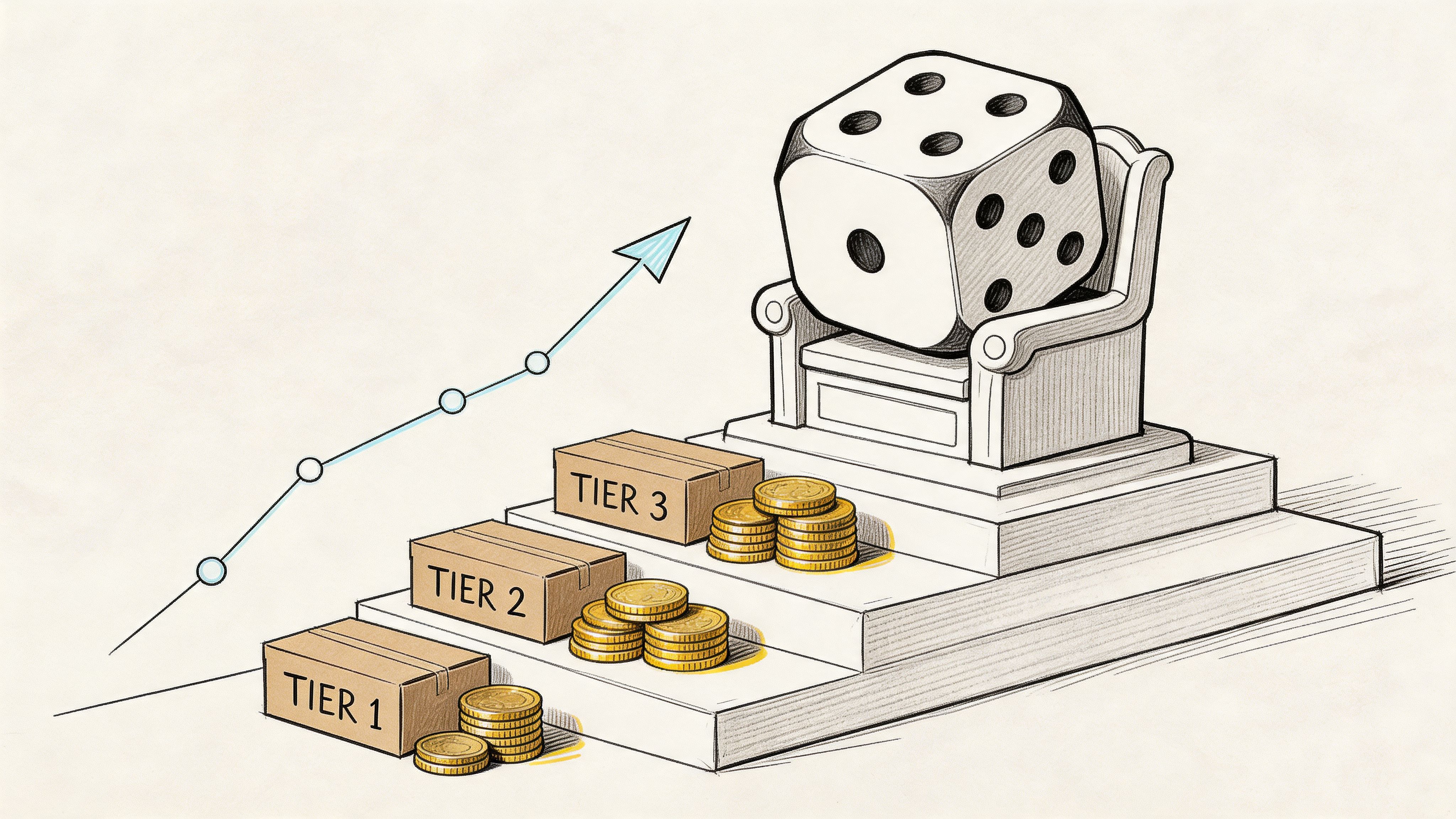
Learn from Dice Throne Kickstarter's success. Unpack funding, stretch goals, & fulfillment to master your own 2026 crowdfunding campaign.
A lot of creators study Dice Throne at the moment the funding graph spikes. The more useful moment comes later, when the campaign has to turn into files, freight, surveys, add-ons, and customer support without breaking trust.
Dice Throne's success can look prewritten now. It did not feel that way at launch.
The first campaign mattered because of the discipline behind it. The team set a goal low enough to get funded quickly, prove demand in public, and turn early backers into social proof. That is a smarter opening move than treating Kickstarter like a branding exercise where a big target is supposed to signal ambition.

A restrained funding goal does more than improve the odds of crossing the line.
It creates visible traction early, and visible traction changes how people judge risk. Backers rarely assess a project in isolation. They look for signs that other buyers already trust the team, the pitch, and the product. Fast funding supplies that signal.
It also protects the creators from a common Kickstarter mistake. A campaign can sell a simple product and still collapse later because the launch promise outgrew the team's ability to produce, pack, and support it. Dice Throne started with a cleaner promise. That gave the creators room to expand later without creating a fulfillment mess on day one. For creators planning a tabletop launch, that trade-off matters more than a dramatic headline number.
The pitch itself helped. Hero combat, dice manipulation, asymmetric play, and replay value are easy to show in a campaign video and easy for backers to repeat to friends. Clear concepts travel. Confusing concepts stall, even if the art is strong.
One more practical point. Strong campaigns are rarely built only at the campaign page level. They are built in the decisions made before launch about scope, manufacturability, and what can still be handled after funding closes through a pledge manager. That is why Dice Throne remains a useful case study. The franchise grew because the initial offer was focused enough to sell, then structured well enough to support later expansion and post-campaign revenue.
Creators studying breakout tabletop launches can compare that pattern with the projects in this list of top Kickstarter board games of all time. The shared lesson is not "start small" in the abstract. It is "start with a version you can actually deliver, then build systems for the add-ons, late pledges, and logistics that come next."
A newer example, this new party game launch, shows the same principle in a different format. The campaign story gets attention. The operational choices determine whether that attention turns into margin or support debt.
I’ve watched a lot of tabletop campaigns open with a solid product and still stumble because the page asked backers to do too much work. They had to decode the rules, guess the fun, and trust that the team would figure out the messy parts later. Dice Throne avoided that trap. Its breakout came from reducing friction at every decision point, especially in the first few days.

The campaign worked because a new visitor could answer three questions fast. What is the game? Why is it different? Why back now?
That sounds obvious. It is also where many creators lose people.
Dice Throne presented a product with a clean gameplay identity, strong visual contrast between characters, and a premise that backers could repeat to friends without opening a rulebook. That kind of clarity does more than improve conversion on the page. It improves sharing off the page, which is where a lot of early tabletop growth comes from.
A good campaign page sells twice. First to the visitor. Then through the visitor.
Early audience activity matters because backers read behavior before they read details. Comments, shares, and visible support reduce perceived risk. They also change the tone of the campaign. It feels active, not speculative.
For creators, the practical lesson is straightforward. Do not treat launch day as the start of marketing. Treat it as the public release of work already done with your warm audience. Email lists, preview groups, Discord communities, convention demos, and creator cross-promotion all matter more when they are coordinated to create immediate movement instead of scattered awareness.
I see one mistake repeatedly. A team builds a polished page, posts it on launch day, then waits for Kickstarter discovery to carry the rest. That approach usually produces weak social proof and a much harder middle stretch.
If you want a current example of how a team frames a game clearly before broader discovery kicks in, study this new party game launch. The useful lesson is not the category. It is the way the campaign communicates player experience quickly enough to earn attention.
The strongest part of the Dice Throne pattern is that the front-end pitch supported the back-end business. The campaign did not depend on a complicated explanation, a maze of reward logic, or stretch goals that rewrote the product halfway through funding.
That restraint matters because breakout campaigns create operational pressure. Every extra SKU, variant, and upgrade path adds customer service load, pledge errors, and fulfillment risk. Creators who want to study stretch goal structure should review these Kickstarter stretch goal strategies for creators. The best versions increase desire without forcing the team to rebuild production assumptions mid-campaign.
A short comparison makes the difference clear:
| Campaign choice | What tends to work | What usually fails |
|---|---|---|
| Core message | A backer can explain the game in one sentence | The pitch depends on lore, edge cases, or long rules text |
| Launch plan | Warm audience activity is timed to create immediate proof | Promotion starts after launch and arrives in scattered bursts |
| Reward structure | Easy entry point, clear upgrade path, limited confusion | Too many tiers, too many exceptions, too many support questions |
| Stretch goals | Add perceived value without changing manufacturing reality | Add complexity that later spills into freight, packing, and errors |
The practical takeaway is simple. Breakout campaigns are built on compression. Shorter explanation. Faster trust. Fewer choices that create hesitation. Better alignment between what sells on day one and what can still be fulfilled cleanly after the campaign closes.
That last part is where many creators miss the core lesson. Dice Throne is not only a funding story. It is a case study in how a strong campaign structure sets up later upsells, cleaner post-campaign operations, and a better shot at turning one successful launch into a repeatable business.
Reward design is where many strong projects start leaking money and clarity. Creators often assume more tiers mean more choice. In practice, more tiers usually mean more hesitation, more support questions, and more fulfillment complexity.
Dice Throne became known for sustained hype through stretch goals that added heroes, accessories, and playmats. That's not just fan service. It's a pricing system disguised as excitement. The campaign gives people a reason to increase commitment without making the base offer feel incomplete.
Good tabletop reward tiers do three things well.
They establish a clear entry point. They create an obvious best value. They leave room for premium supporters without making the middle feel weak.
When creators miss one of those, problems show up fast:
Dice Throne's broader franchise strategy suggests a disciplined understanding of expandable value. New heroes and accessories are especially effective because they feel additive. They increase excitement without changing the backer's understanding of the base game.
A bad stretch goal solves a problem no backer had. A good one sharpens the promise that got the campaign funded in the first place.
That usually means choosing from a short list:
The psychological effect is simple. Backers feel like joining early gives them access to a version of the product that gets better in public.
Stretch goals should increase perceived value faster than they increase operational risk.
For many creators, a common pitfall isn't picking weak stretch goals. It's revealing too many too early. Once backers can see the full map, they stop imagining what might come next. The campaign loses narrative rhythm.
The practical work happens before the page goes live, not when comments start demanding extras.
Use this pre-launch checklist:
If you're building your own stretch goal plan, this guide to Kickstarter stretch goals is useful because it frames them as a strategic system, not just a list of bonus content.
The right reward architecture doesn't just raise more money. It protects your future survey, your warehouse, and your margins.
A successful launch proves a product. A franchise proves audience trust over time.
Dice Throne didn't stay confined to one box and one moment. It expanded through additional seasons, collaborations, and eventually a digital adaptation. That kind of growth only works when creators understand what the audience wants preserved. In this case, the answer was clear. Distinct heroes, recognizable combat identity, and a product line that still feels like the same world.

Franchise scaling fails when creators confuse "more products" with "more reasons to care." Dice Throne avoided that trap by extending the same appeal rather than replacing it with something unrelated.
That pattern shows up in how the brand moved into digital. In 2024, Dice Throne launched a $100,000 Kickstarter for Dice Throne Digital, building on $18 million+ in crowdfunding track record and 1.5 million+ physical units sold, with a projected core release in February 2027, according to PocketGamer.biz's report on the campaign. That's not a random pivot. It's an IP extension aimed at taking an established audience into PC, mobile, and VR-adjacent ecosystems without abandoning the identity that built the brand.
A mature tabletop property usually reaches a point where the next question isn't "Can we launch another box?" It's "Where else does this audience want to interact with the system?"
Digital helps in several ways:
That last point is easy to miss. Highly engaged backers don't just pay. They pressure-test UI choices, onboarding, and fairness assumptions long before a wider release.
The useful lesson isn't "turn your board game into an app." The useful lesson is to define what part of your game is portable.
For Dice Throne, the portable asset wasn't cardboard. It was the hero framework and combat identity. That's what could survive adaptation.
I've seen creators struggle here because they expand too early into side products that don't reinforce the brand. A cleaner path is to ask three questions before greenlighting any extension:
| Question | Good sign | Warning sign |
|---|---|---|
| What do fans actually return for | A distinct mechanic or character system | A vague attachment to packaging or hype |
| Can the experience travel | The core loop works in another format | The product depends on one physical novelty |
| Will expansion deepen loyalty | New format strengthens the original brand | New format competes with or confuses the main line |
If you want to study how expansion can also become a merchandising and bundling advantage, look at all TerraClash game expansions. It's a useful contrast point for how creators package ecosystem value around a core game instead of treating each release as an isolated sale.
Franchise growth isn't about being everywhere. It's about being coherent across formats.
Creators love to talk about launch day. Backers care just as much about what happens after the campaign closes.
That's where even successful projects can start damaging their reputation. Dice Throne is a good case study because the brand shows both sides of the equation. Strong demand, strong identity, and real fulfillment pressure once campaign promises have to become delivered goods.
One verified data point should reset expectations. Dice Throne's Season 3 delivery was pushed to Q1 2024 due to supply chain issues, and the same source notes that poor communication can push refund rates as high as 25%, according to this fulfillment-focused discussion.
That doesn't mean the project was poorly run. It means scale multiplies every small weakness.
A campaign can be healthy at the pledge stage and fragile at the fulfillment stage because these are different systems. Marketing rewards speed. Fulfillment punishes ambiguity.
The recurring post-campaign failures are predictable.
The mistake is treating these as edge cases. They aren't edge cases. They're the default conditions of a live crowdfunding project.
The easiest refund to avoid is the one triggered by confusion, not by delay.
I've worked with enough campaigns to say this plainly. Many creators don't lose goodwill because manufacturing went sideways. They lose goodwill because backers couldn't tell what was happening, what was needed from them, or when they should expect the next update.
The strongest teams handle fulfillment as a product surface, not an afterthought. They define what information needs to be collected, which fees should be handled later, how product variants map to shipping, and what support scenarios are most likely.
A simple planning frame helps:
The public story of crowdfunding success usually ends with the final funding total. The business reality starts when a creator has to turn thousands of promises into accurate shipments and clear communication.
Kickstarter is good at gathering demand. It isn't built to be your full post-campaign operating system.
That's why the right mental model matters. Kickstarter's pledge manager is like Amazon. PledgeBox pledge manager is like Shopify. One gives you a marketplace-style starting point. The other gives you more control over brand, workflow, backer data handling, upsells, and fulfillment logic.

The verified evidence around modern campaigns is practical, not theoretical. For projects like Dice Throne: Vanguard, using a pledge manager with VAT and tax calculators, vendor-direct exports, and add-on upsells can cut refund rates from 8% to 3%, according to this campaign operations discussion.
That kind of improvement doesn't happen because a tool is fashionable. It happens because the system closes common failure points:
A dedicated pledge manager also changes creator behavior. Teams become more willing to keep the Kickstarter page focused because they know complexity can be handled cleanly after the campaign.
The practical workflow is usually this:
You send a branded survey, collect addresses, confirm reward selection, and reopen the buying decision in a controlled way. Through this process, many campaigns recover value from backers who wanted more but didn't want to make a complicated pledge on day one.
Good systems validate addresses, collect shipping later when rates are firmer, and account for VAT or tax requirements without forcing the creator into spreadsheet triage.
Post-campaign revenue often materializes after the campaign concludes. A backer who initially chose the base game can add sleeves, expansions, accessories, or extra copies when the buying environment is calmer and clearer.
Good pledge management doesn't just organize data. It creates a second purchasing moment.
Manufacturers and fulfillment partners need clean data. If your team is manually reworking files, you are creating avoidable failure points at the worst possible stage.
A more detailed overview of why these systems matter is in this article on the importance of pledge manager in Kickstarter projects.
This point deserves direct wording because too many creators assume a dedicated system automatically means another large platform bill.
PledgeBox is free to send the backer survey and only charges 3% of upsell if there's any.
That pricing logic is important. It means the survey and operational core don't become an upfront burden, and the fee aligns with extra revenue rather than punishing the campaign for existing.
A quick comparison makes the trade-off obvious.
| Post-campaign approach | Usually works | Usually creates pain |
|---|---|---|
| Survey timing | Send after rewards and add-ons are clearly defined | Rush it before product logic is stable |
| Shipping collection | Collect when rates and zones are better understood | Guess early and absorb the mismatch later |
| Upsells | Offer curated extras that match the original pledge | Dump the full catalog on backers with no guidance |
| Data exports | Standardize files for vendors | Patch spreadsheets manually across tools |
Creators often ask whether a pledge manager is optional. For very small and simple projects, maybe. For board games with variants, accessories, global shipping, or franchise-style add-ons, it quickly becomes the command center that keeps the project from turning into a support queue.
The value of the Dice Throne case isn't that it proves one brand can get big. The value is that it shows where disciplined creators make their money and protect their reputation.
Dice Throne's pattern is useful because it combines ambition with restraint. The creators started lean, expanded carefully, and built a brand that could move into new formats without losing its identity.
That combination is rare. Many campaigns are either too cautious to gain momentum or too expansive to deliver cleanly.
Success in crowdfunding usually comes from doing fewer things, more clearly, at each stage of the campaign.
If you're planning your own dice throne kickstarter-style launch, don't focus only on the visible highs. Study the handoff points. Launch to survey. Survey to manufacturing. Manufacturing to delivery. Those transitions decide whether a funded campaign becomes a durable business.
For many tabletop projects, collecting shipping after the campaign is cleaner. Rates, regions, and product combinations are easier to confirm once pledges are locked. It also keeps your main campaign page simpler for backers who are still deciding.
Yes, if they're curated. A small set of relevant add-ons usually performs better than an overloaded store. Backers respond well when the extras clearly improve or complete the experience they already chose.
Use a system that allows corrections, reminders, and clear support flows. Address mistakes aren't rare. They should be expected and handled through the survey process instead of patched manually at the end.
Be specific about how the system preserves the tabletop experience. In the case of Dice Throne Digital, the game uses pseudo-random number generators to maintain statistical fidelity to physical dice rolls, with deviations of less than 0.1% over 10,000 simulations, as reported in GameTyrant's launch roster coverage. If you're adapting a physical game, that kind of explanation addresses backer concerns better than vague reassurance.
If your project has multiple rewards, add-ons, shipping regions, or franchise extensions, yes, it usually saves time and protects revenue. The more complex the campaign becomes, the more dangerous manual post-campaign operations get.
If you want a cleaner way to handle surveys, shipping, taxes, add-ons, and late pledges, take a look at PledgeBox. It's especially useful for board game creators who need a post-campaign system that stays organized, supports branded surveys, and doesn't charge upfront for sending them.
PledgeBox
The All-in-One Toolkit to Launch, Manage & Scale Your Kickstarter / Indiegogo Campaign