 PledgeBox
Cheapest Shipping Method: 2026 Guide For Crowdfunding
Optimize costs! Find the cheapest shipping method for your 2026 Kickstarter & Indiegogo rewards. Compare carriers & packaging to save money.
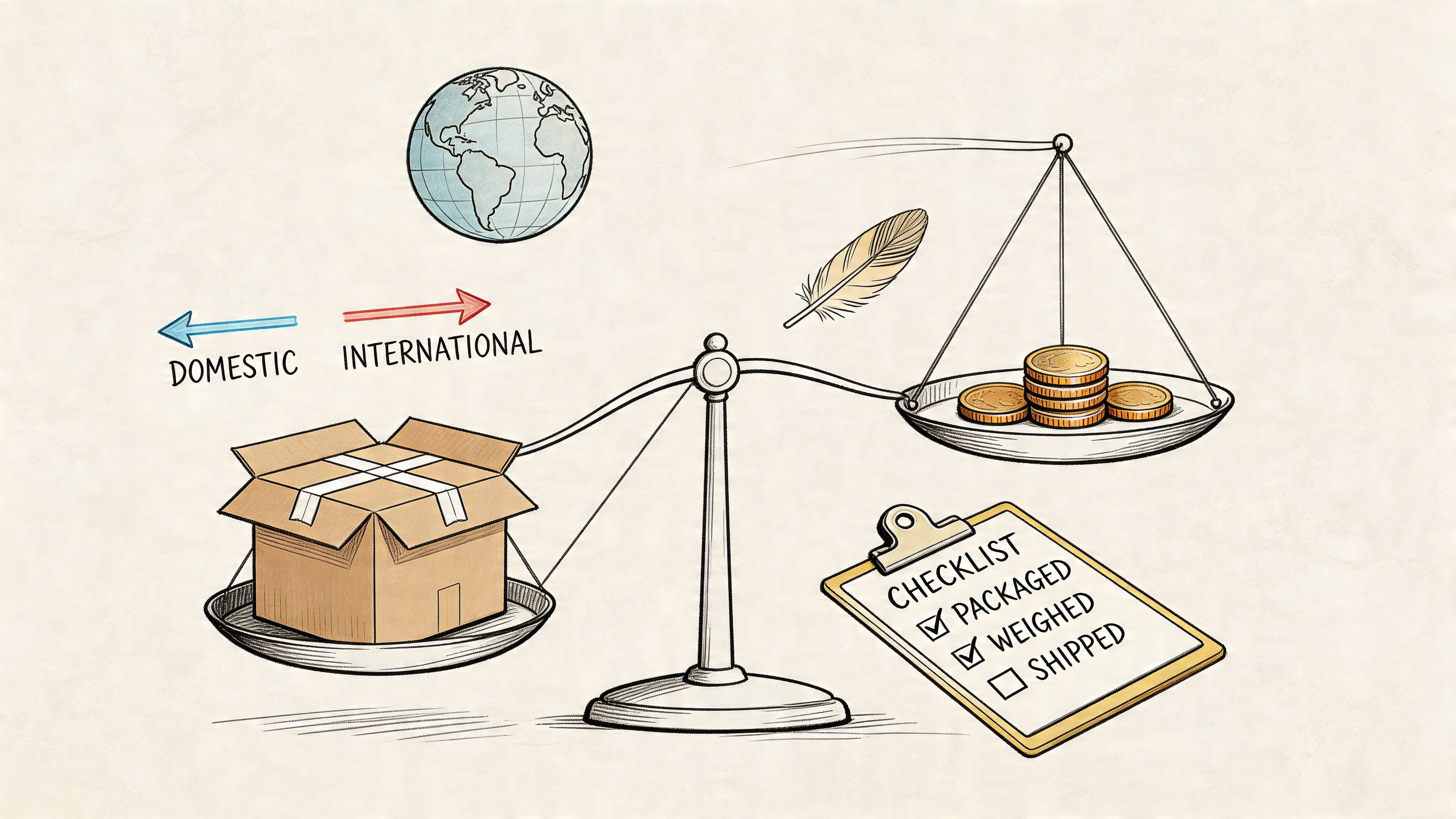
Optimize costs! Find the cheapest shipping method for your 2026 Kickstarter & Indiegogo rewards. Compare carriers & packaging to save money.
Your campaign funds. You celebrate for a day. Then the spreadsheet starts.
Now you’re staring at reward tiers, add-ons, late backers, address changes, VAT questions, and a shipping quote that looked fine until the fees started piling on. That’s the point where a lot of first-time creators learn the hard lesson. The cheapest shipping method isn’t a single carrier. It’s a process.
For a small card game expansion, the right answer might be USPS. For a heavy hardware bundle, it might be UPS Ground. For pallets moving from a manufacturer to a warehouse, parcel carriers stop making sense and freight takes over. And if your backer data is messy, even the right carrier won’t save you.
The creators who keep margin don’t guess. They weigh the product early, pack it properly, compare carrier rules, and use a pledge manager that lets them collect the right shipping charges before labels are printed.
The easiest way to lose money after a successful campaign is to treat shipping like an admin task.
A first-time creator usually focuses on manufacturing, stretch goals, and campaign graphics. That makes sense during launch. But after funding, fulfillment becomes the part that decides whether you end the project with happy backers or with support tickets, chargebacks, and a budget hole you didn’t see coming.

For crowdfunding, shipping gets complicated fast because rewards aren’t uniform. A tabletop campaign might ship a core box to one backer, a core box plus sleeves and playmat to another, and a retailer pledge in cartons to someone else. A gadget campaign has the same problem in a different shape. One person wants the device. Another wants two units plus accessories. A third lives at a military address or PO box.
The mistake I see most often is choosing a carrier too early based on a headline rate.
That rate might work for one SKU in one box size going to one domestic zone. It usually falls apart once real backer orders come in. Weight changes. Dimensions change. Residential delivery changes the bill. International orders introduce customs friction. Add-ons turn a small parcel into a bulky one.
Practical rule: Shipping should be priced at the reward-package level, not at the campaign level.
If you want the cheapest shipping method for your project, focus on these variables:
A cheap campaign to fulfill isn’t the one with the lowest advertised postage. It’s the one where the creator planned for the actual order mix before the survey went out.
Base rate is only the beginning.
Most creators see a shipping calculator result and assume that’s the number. It usually isn’t. The final invoice often includes adjustments that weren’t obvious when you first estimated fulfillment. If you don’t understand where those extra costs come from, you’ll undercharge backers or absorb the difference yourself.
Carriers don’t only care about how heavy a package is. They also care about how much space it takes up.
That matters a lot in crowdfunding because rewards are often awkwardly shaped. Board games can be large but not especially heavy. Gadget bundles can include foam inserts, cables, or branded packaging that adds volume faster than weight. A box with too much empty space can cost more than a smaller, denser package with the same items inside.
That’s why packaging decisions affect shipping cost as much as carrier choice. If your insert tray or outer carton adds bulk without protecting the product better, you’re paying for that design choice every time you ship.
A cheap base rate can get inflated by extra fees. Hidden fees matter enough that they deserve their own line in your planning sheet.
According to Easyship’s breakdown of package shipping costs, residential delivery surcharges often run $4-5, fuel surcharges can reach up to 10% of base rate, and remote area fees can push total shipping costs 20-50% higher. The same source notes that creators report 15-30% savings when they use multi-carrier software to anticipate and reduce those charges.
If you only budget the base postage, you’re not budgeting shipping. You’re budgeting hope.
Domestic shipping gets more expensive as distance increases. International shipping adds another layer because the package doesn’t just need transport. It also needs the right data, paperwork, and delivery path.
Three problems show up again and again:
Creators dealing with manufacturing and imports already know how chaotic pricing can be. If you’ve ever had to sort through unpredictable freight quotes, you know that logistics costs don’t stay tidy for long once real routes, handling, and timing enter the picture.
Don’t finalize reward shipping until you’ve checked these items:
Most shipping disasters aren’t caused by choosing the wrong carrier. They’re caused by using incomplete data.
Here’s the short version. USPS is usually the cheapest for small packages. UPS Ground usually wins once packages get heavier. FedEx and DHL both have valid use cases, but they’re less often the lowest-cost answer for a typical first-time crowdfunding creator focused on domestic reward fulfillment.
According to FirstMile’s carrier comparison, USPS is consistently the cheapest for small packages under 5-13 lbs, with a 5 lb domestic package costing $9–$12, undercutting UPS and FedEx Ground. The same source says UPS Ground becomes the cheapest for heavier packages over 10-20 lbs, with rates 10-30% lower than FedEx for long-distance domestic hauls.
| Carrier | Usually cheapest when | Main trade-off | Good crowdfunding use case |
|---|---|---|---|
| USPS | Small and lightweight rewards | Less ideal for heavier boxes and peak-period reliability can dip | Pins, books, small gadgets, card games, compact rewards |
| UPS | Heavier domestic parcels | Not usually the best price for lightweight shipments | Hardware, multi-item bundles, heavy board game pledges |
| FedEx | Select heavier or specialty scenarios | Often not the cheapest default for creators comparing basic parcel rates | When service requirements or account pricing fit a specific lane |
| DHL | Some international routes | Less often the first domestic answer for U.S.-based creators | International delivery where its network fits the destination well |

USPS is where most first-time creators should start looking for lightweight reward fulfillment.
That’s especially true if your campaign ships a lot of compact parcels. Think miniatures accessories, card decks, small electronics, dice, art books, or single-item rewards. USPS also reaches every U.S. address, including PO boxes and military locations, which removes some edge-case headaches that can appear with other carriers.
The economics are hard to ignore for lighter packages. For small business shipments under one pound, USPS dominates enough that it has become the default choice for many lightweight e-commerce parcels, and Stamps.com’s shipping rate comparison notes that USPS handles over 60% of small business shipments under 1 lb domestically.
Best fit: If your average reward is compact and light, USPS should be your benchmark before you price anything else.
Once your boxes get bigger and heavier, the answer changes.
UPS Ground is usually where creators save money on weighty domestic shipments. This shows up a lot in hardware campaigns, collector editions, and board game projects with multiple expansions packed together. The more your package moves away from “small parcel” and toward “serious box,” the less likely USPS remains the cheapest option.
If you’re shipping heavier domestic orders, compare UPS early, especially if your pledge manager allows export to different vendors by package profile. That’s also why creators who automate rate checks through a multi-carrier shipping API tend to make better decisions than creators who manually check one carrier at a time.
For a broader look at shipping vendor fit inside crowdfunding, this guide to popular shipping vendors for Kickstarter campaigns is a useful starting point.
FedEx is rarely the first recommendation when a creator asks for the cheapest shipping method in plain domestic crowdfunding terms.
That doesn’t mean it’s irrelevant. FedEx can still make sense for some heavier packages, certain account-rate situations, or specialized shipping requirements. But if your only goal is minimizing standard reward shipment cost, it’s usually the carrier you compare against rather than the one you begin with.
In practice, many creators overestimate the value of premium tracking and underestimate the damage caused by a higher bill. If your backers are buying collectibles or gadgets and your margins are tight, shipping cost usually matters more than a marginally nicer tracking interface.
DHL matters more in international shipping conversations than domestic U.S. reward fulfillment.
If your backer base is globally distributed, DHL can be useful on routes where its network is strong. But for many U.S.-based creators shipping a large share of domestic parcels, DHL is less often the cheapest default and more often a lane-specific option.
If I were advising a first-time creator with no negotiated rates and no logistics team, I’d simplify the choice like this:
Carrier choice gets expensive when it becomes ideological. It gets cheaper when it stays conditional.
Packaging is the part you control most directly. That’s why it’s often the fastest place to save money.
A lot of shipping waste starts before fulfillment even begins. The reward was designed without thinking about carton size. The insert was oversized. The team picked one “safe” box size for every order. That approach feels simple, but it makes cheap shipping impossible.

Creators usually prototype the product and treat the shipping carton as an afterthought. Do the opposite.
For light rewards, even small weight changes matter. According to Atomix Logistics on the cheapest way to mail a package, USPS First-Class Package Service starts at $4.75 for items under 1 lb and can be 50-60% cheaper than UPS Ground or FedEx Ground for the same lightweight parcel. If your packed reward creeps above that threshold because of oversized packaging, your postage can jump for no good reason.
A few practical packaging habits save money consistently:
If you’re choosing mailers for flatter rewards, this guide to understanding padded envelopes sizes is useful because envelope dimensions affect both fit and waste.
Flat-rate packaging sounds attractive, but it isn’t always cheaper. Dense small parcels can perform well under cubic logic, while awkward packages can trigger higher charges just because of shape.
If you’re testing package sizes, a cubic shipping calculator for crowdfunding fulfillment helps you compare whether a compact redesign changes the economics.
Packaging rule: Standardize where you can, but don’t force one carton size across every reward tier.
After you’ve seen a few real-world examples, the trade-off becomes clearer:
If you ship ten parcels, a few extra ounces won’t feel catastrophic.
If you ship hundreds or thousands, sloppy packaging compounds into a real fulfillment problem. The same goes for void fill, oversized retail boxes, and decorative inserts that don’t improve protection. A prettier unboxing experience is nice. A profitable fulfillment run is better.
The cheapest shipping method often starts at the packing table, not on the carrier website.
Single-SKU shipping is easy. Crowdfunding rarely stays that simple.
The moment backers start mixing core rewards, expansions, accessories, and late add-ons, the cheapest shipping method becomes a bundling decision. Ship too many items separately and you waste postage. Force everything into one oversized parcel and you may trigger the opposite problem.
For most campaigns, shipping items together is cheaper than sending multiple parcels. But “together” only works when the combined package still fits an efficient carton and doesn’t become bulky enough to erase the savings.
That’s why creators need to map common order combinations before surveys lock. In tabletop projects, that means checking the core game alone, core plus expansions, all-in pledge, and retailer cartons. In gadget campaigns, it means checking the main unit alone, with accessories, and with multiple units.

There’s a clear threshold where palletized freight becomes smarter than parcel carriers.
According to Betachon Logistics on inexpensive shipping methods, LTL freight is the cheapest method for palletized goods, delivering per-pound rates 30-50% below parcel carriers like UPS or FedEx for bulk shipments that exceed parcel practicality. That matters for board game publishers moving inventory from a manufacturer to a warehouse, or for hardware teams moving consolidated stock into regional fulfillment centers.
A pallet is not a large parcel. Treating it like one is how creators overpay.
Here’s the practical way to think about scale:
A third-party logistics partner starts making sense when your team can no longer pack accurately, ship quickly, and handle support issues at the same time.
You don’t need a 3PL just because a campaign funded well. You need one when operational complexity starts creating mistakes. Typical warning signs include address changes being missed, bundled rewards being packed inconsistently, and support tickets increasing because shipment status is unclear.
A good 3PL doesn’t magically make shipping cheap. It makes your process stable enough that you can use the cheaper methods without operational fallout.
The cheapest shipping method for a multi-item campaign usually comes from better grouping, not from chasing one lower label rate.
Creators save money when they decide in advance which items should travel together, which SKUs belong in separate cartons, and when freight should replace parcel. If that logic isn’t set before fulfillment begins, your warehouse ends up improvising. Improvised shipping is almost never cheap.
Most creators think of a pledge manager as a survey tool. That undersells what it does.
For shipping, the main job of a pledge manager is to convert campaign enthusiasm into clean operational data. Without that, you can’t charge the right shipping amount, you can’t sort orders properly, and you can’t export useful fulfillment files. The result is predictable. Under-collected shipping, manual corrections, and backers who bought one thing during the campaign but expect three things after add-ons and upgrades.
You can’t find the cheapest shipping method if you don’t know what each backer is receiving.
A proper pledge workflow needs to answer a few basic questions without manual cleanup:
If your post-campaign workflow lives in spreadsheets and email threads, you’re not really choosing a shipping method. You’re patching one together.
The tool model is a key factor.
The native Kickstarter pledge manager is like Amazon. It’s convenient, but it’s a closed environment with less flexibility around how you structure post-campaign operations. A dedicated pledge manager is more like Shopify. You get more control over surveys, add-ons, shipping logic, and the handoff into fulfillment.
That difference matters when your campaign has multiple reward combinations, shipping regions, VAT requirements, or late backer sales that change parcel contents after funding.
For a closer look at why creators use dedicated post-campaign tools, this article on the importance of a pledge manager in Kickstarter projects covers the operational side well.
PledgeBox is free to send the backer survey and only charges 3% of upsell if there’s any. That pricing model matters because it lets creators collect shipping, organize orders, validate addresses, manage add-ons, and prepare exports without adding an upfront survey cost. It also supports Google Maps-powered address validation, shipping fee collection, VAT and tax collection, downloadable reports, direct vendor exports, Stripe and PayPal, and shipment tracking.
That changes the economics of fulfillment planning. Instead of paying just to gather post-campaign data, you can use the survey flow to clean up addresses, charge the right shipping amount, and keep add-on revenue organized.
Good shipping decisions require good post-campaign data. A pledge manager is the system that creates that data.
Creators lose money when they do any of the following:
The cheapest shipping method is rarely found by shaving a little off postage. It’s found by preventing bad data from turning cheap shipping into expensive exception handling.
Most fulfillment problems can be avoided before the campaign even ends.
You don’t need a massive ops team to get this right. You need a repeatable checklist and the discipline to use it. If you’re a first-time creator, keep the process simple and concrete.
Start with the product, not the carrier.
In this context, creators either gain control or lose it.
Don’t let fulfillment logic drift after the campaign. Finalize what each backer tier contains.
Collect accurate backer data
Use a pledge workflow that gathers final addresses, order contents, and any required taxes or shipping charges in one place.
Validate addresses before export
Bad addresses cost more than they seem. They create delays, reshipments, support load, and inventory reconciliation problems.
The cheapest parcel is the one you only ship once.
This is the step people rush. Don’t.
The warehouse needs clarity more than creativity.
Keep the handoff clean:
Your first shipment wave tells you what your estimates missed.
Review which orders caused adjustments, which boxes were inefficient, which countries created support volume, and where your packaging logic needs work. That post-mortem is what makes your next campaign cheaper to fulfill.
The creators who get shipping under control aren’t guessing less because they’re lucky. They’re guessing less because they measure earlier, package smarter, and use better backer data.
If you want tighter control over post-campaign shipping, surveys, add-ons, and fulfillment exports, take a look at PledgeBox. It lets creators send backer surveys for free and only charges 3% on upsells when there are any, which makes it a practical option for collecting shipping fees and organizing fulfillment without adding upfront survey cost.
PledgeBox
The All-in-One Toolkit to Launch, Manage & Scale Your Kickstarter / Indiegogo Campaign