 PledgeBox
SWAT Kats Kickstarter: A Creator's Guide to Success
Explore the record-breaking SWAT Kats Kickstarter. This guide explains its success and offers lessons for creators on campaign management and fulfillment.
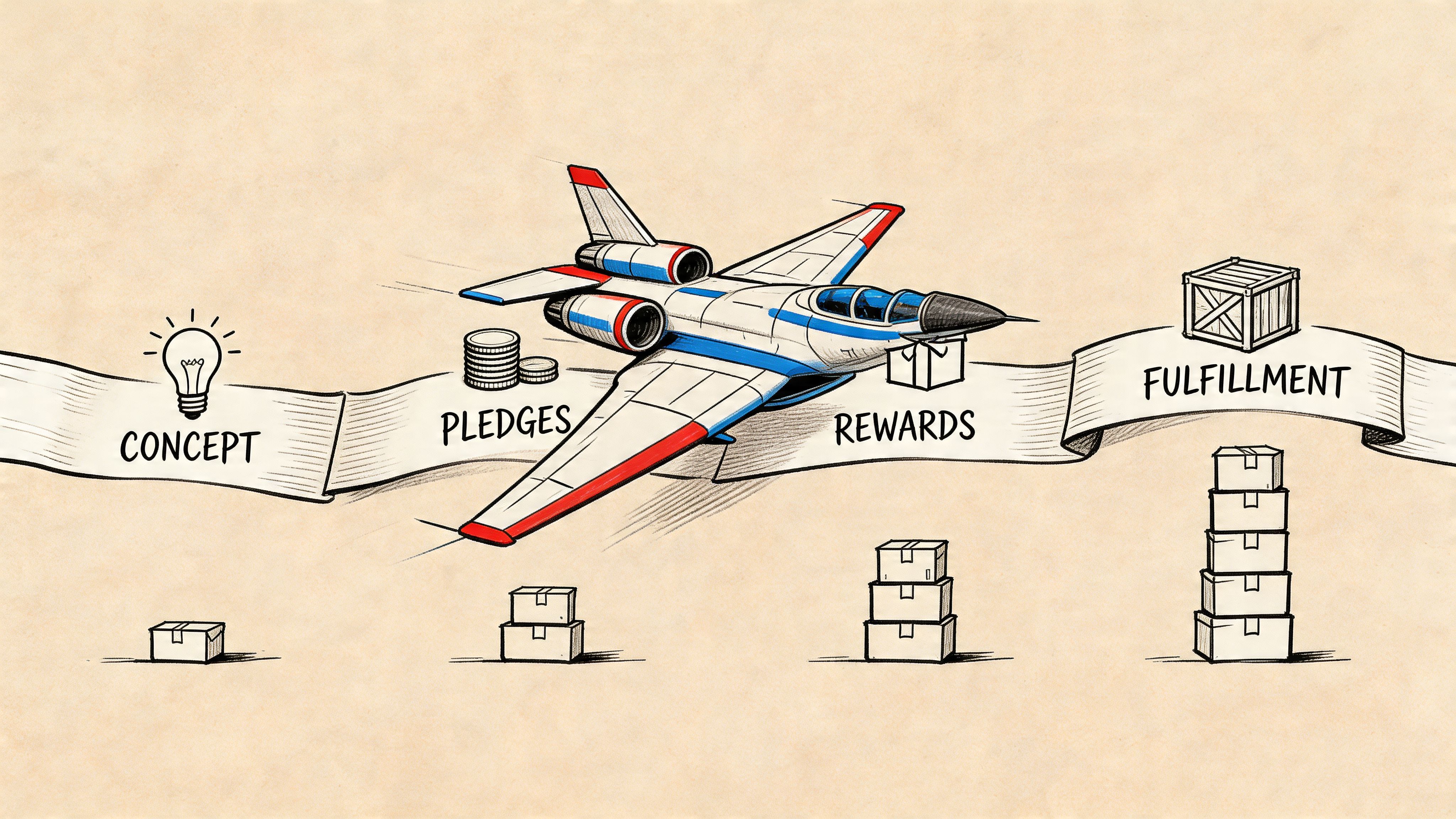
Explore the record-breaking SWAT Kats Kickstarter. This guide explains its success and offers lessons for creators on campaign management and fulfillment.
A lot of campaigns look finished when the funding clock hits zero. That’s when the actual work starts.
The swat kats kickstarter is one of the best recent examples of that gap between public victory and private operations. Fans saw a record. Creators should see a full-stack case study.
The campaign didn’t just perform well. It reset the category.
The SWAT KATS – FIRST EVER COMIC BOOK Kickstarter raised $730,065 from 6,476 backers, officially becoming the biggest Kickstarter campaign ever for a single-issue comic book, according to First Comics News coverage of the record. That same report notes it beat the previous record by over 37% in funding and delivered an 89% surge in backer count.

That matters beyond comics fandom. A dormant animated property from the 1990s came back and didn’t just attract attention. It converted that attention into high-volume pledging at a level that puts the campaign in the broader conversation about most-funded Kickstarter campaigns, even though this was still a single-issue comic project.
A lot of nostalgia campaigns get clicks and comments. Fewer get committed buyers. This one did.
Three things made the result feel different in market terms:
Success at this scale usually means more than one buyer motive is working at the same time.
For fans, the headline was simple. SWAT Kats came back in comic form and people showed up. For creators, the useful question is different. What made enough people commit quickly and at higher-value tiers to push a single-issue comic to a record outcome?
Most creators focus on the public-facing layer: IP, art, trailer, campaign page, social buzz. All of that matters. But the SWAT Kats result is more useful when you treat it as an operating model.
This campaign shows what happens when recognizable IP, disciplined pre-launch work, smart reward design, and post-campaign readiness line up. That combination is rare. When it works, the outcome doesn’t look incremental. It looks like a category break.
Long before the record headline, this audience had already been asked a harder question: will you pay to bring SWAT Kats back? The earlier SWAT Kats Revolution Kickstarter answered that with a yes, bringing in $141,500 from over 2,000 backers, as documented on SWATKATS.info’s campaign summary. That first campaign did more than prove fan interest. It gave the team a live test of pricing, messaging, and buyer behavior.
That matters because repeat success usually comes from learning, not luck.
Creators often overestimate how much a polished Kickstarter page can do on its own. Conversion usually starts earlier, with the audience work that happens weeks or months before launch.
SWAT Kats had recognizable IP, but recognizable IP does not guarantee pledges. The team benefited from an existing fan base that had already seen prior campaign activity, followed updates, and understood that this revival was real. For other creators, the practical takeaway is straightforward: build a system that keeps attention warm between projects instead of restarting from zero each time.
A strong social media strategy helps, but social posts alone are not enough. The campaigns that hold up under pressure connect social reach to email capture, repeat touchpoints, and a clear path to pledge when the project opens.
The campaign also sold well because the offer was built for different buyer types, not just one ideal backer.
Public campaign coverage and the Kickstarter page itself showed a reward mix built around standard copies, premium editions, and collector-focused variants. That structure matters in practice. Casual fans can enter at a lower commitment level, while collectors have a reason to stack value through exclusives, special covers, and higher-priced bundles.
The pattern is repeatable:
Good tiering is not about adding more options. It is about giving each segment a purchase path that feels obvious.
The campaign also used a familiar Kickstarter tactic well: set a funding goal low enough to reach quickly, then let momentum do part of the selling.
Once a campaign funds early, the buyer’s question changes. Instead of asking whether the project will happen, backers start comparing editions, weighing add-ons, and deciding how much they want. That shift improves conversion because perceived execution risk drops fast after the funded label appears.
I have seen this pattern repeatedly with entertainment and collector campaigns. Early momentum does not replace product quality, but it does make every later marketing push work harder. And for creators planning a campaign with lots of variants or layered rewards, that early confidence matters twice. It lifts conversion during the campaign, and it sets up a more complex post-campaign operation that needs to be planned before launch, not after.
Funding headlines are clean. Fulfillment is not.
For a media property campaign like SWAT Kats, the operational burden after funding is heavy. Managing fulfillment for over 6,000 backers, each with an average pledge of around $119, means shipping coordination, international tax and VAT handling, and late-backer management become serious business problems, not admin tasks.

Backers see a funded banner and assume the hard part is over. Creators immediately inherit a different workload:
A small campaign can brute-force this with spreadsheets and email. A large one can’t.
The biggest mistakes don’t happen because a team is careless. They happen because success expands faster than the workflow.
Common failure points look like this:
| Operational area | What breaks first |
|---|---|
| Surveys | Missing preference data, unclear selections, duplicate responses |
| Shipping | Under-collected fees, region errors, delayed charge capture |
| Backer support | Inbox overload, inconsistent answers, lost change requests |
| Fulfillment exports | Dirty data, vendor formatting issues, manual cleanup |
Practical rule: If your campaign can produce many reward combinations, your post-campaign system has to be designed before launch, not after funding.
The SWAT Kats campaign is useful because it shows the trade-off clearly. The same tactics that grow funding, premium tiers, exclusives, and broad backer reach also make fulfillment harder. Scale increases revenue and complexity at the same time. If you prepare only for the first half, the second half eats your margin and your schedule.
Kickstarter’s native tools are fine for straightforward projects. They’re not built for high-complexity campaigns with collector behavior, late demand, shipping exceptions, and multiple fulfillment paths.
That distinction matters in any swat kats kickstarter analysis because the campaign model itself points toward complexity. Once reward combinations start multiplying, the survey layer stops being a form and starts becoming an order system.

Kickstarter gives creators the essentials. You can communicate updates, send surveys, and close out basic fulfillment questions. For simple campaigns, that may be enough.
Third-party pledge managers exist for a different use case. They handle the messy middle between campaign funding and shipment delivery.
A useful breakdown appears in this guide comparing Kickstarter survey options and third-party pledge managers. The decision isn’t whether one tool is good and the other is bad. It’s whether your campaign complexity matches the system you’re using.
Think of Kickstarter’s pledge manager as Amazon. A simple, standardized marketplace. A third-party pledge manager is like Shopify. It gives you a more customizable storefront to manage your own backers, upsell products, and control the post-campaign experience.
Kickstarter’s built-in workflow can work if your campaign looks like this:
That’s a real segment of campaigns. There’s no reason to over-tool a simple project.
The case for a dedicated pledge manager gets stronger when your campaign starts acting more like a store after funding.
Use one when you need:
The key trade-off is control versus simplicity. Native tools are easier to start with. Specialized systems handle more edge cases and more revenue opportunities.
For a campaign in the SWAT Kats mold, I wouldn’t treat post-campaign software as an afterthought. I’d treat it as core infrastructure. Once your project behaves like a miniature commerce operation, you need commerce-grade workflows.
For creators handling a campaign with high-value backers and layered rewards, the post-campaign job is to turn enthusiasm into accurate orders. A dedicated system matters because complexity shows up fast once funding closes.
The SWAT Kats campaign reached an average pledge of $119 per backer, according to Kicktraq coverage of the project. At that level, backers usually expect more than a single fixed reward. They want editions, add-ons, upgrades, and the ability to correct choices without creating a support mess for the team.
That is the operational gap PledgeBox is built to handle.
A good pledge manager does four jobs at once. It collects final order details, charges the right shipping and tax amounts, creates room for additional purchases, and produces cleaner fulfillment data for vendors.
In practice, the features that matter most are:
If you want to see how that workflow is structured, the PledgeBox pledge manager for crowdfunding campaigns lays out the feature set creators usually need once a campaign starts behaving like an order operation.
Post-campaign software has to make financial sense, especially after platform fees, payment processing, manufacturing deposits, and freight estimates have already taken a bite out of the budget.
PledgeBox keeps the survey side free and charges 3% of upsell revenue if there’s any. That changes the decision for creators who want better post-campaign control without adding another fixed software cost before extra revenue exists.
I like that trade-off for campaigns with collector behavior. If backers are likely to add items after funding, the tool pays for itself from incremental sales. If they are not, the creator is not carrying much extra overhead just to collect addresses and finalize orders.
Large fandom campaigns create two pressures at the same time. Fans want flexibility, and fulfillment partners want clean data.
PledgeBox helps on both sides:
| Need | Why it matters |
|---|---|
| Cleaner surveys | Fewer order errors become fewer support tickets and fewer replacement shipments |
| Controlled upsells | Extra demand turns into added revenue instead of getting lost in email requests |
| Better exports | Printers and fulfillment partners receive structured order data they can actually use |
Creators often treat fulfillment tools as back-office insurance. For a campaign like SWAT Kats, they also function as revenue infrastructure. The backer experience after funding affects final order value, support volume, and how painful production handoff becomes.
That same logic applies to creators who monetize fan communities between launches through models like sites similar to Patreon for creators. Once audience demand is active, the system behind the sale matters almost as much as the pitch that created it.
A campaign like SWAT Kats gets remembered for the headline result. Creators should study it for a different reason. It shows how a strong launch can create operational pressure fast, and how teams that plan for that pressure keep more revenue, make fewer fulfillment mistakes, and protect backer trust.
The sale starts before launch day.
SWAT Kats had the advantage of an activated fanbase, but the repeatable lesson is simpler. Give people enough reasons to care before you ask them to pledge. That means collecting emails early, posting updates that train the audience to pay attention, and showing the product clearly enough that fans already know what they want when the campaign opens.
Creators who want steadier income between launches should also study sites similar to Patreon for creators. Recurring support does more than add monthly revenue. It keeps your audience warm, gives you a testing ground for offers, and makes launch-week conversion less dependent on paid reach or last-minute hype.
One of the smartest patterns in this campaign was tier coverage. It did not assume every backer wanted the same version of the product.
That matters because crowdfunding audiences split into clear groups. Some want a low-friction entry point. Some want exclusivity. Some want signed items, premium variants, or bundles that feel harder to get later. Good tier design gives each group a clear path without making the page feel bloated.
A practical framework:
The trade-off is real. More options can raise average order value, but too many overlapping rewards slow decisions and create survey errors later. The best campaigns give buyers meaningful choice, not endless choice.
Many successful campaigns lose margin at this point.
The launch gets the attention, but the post-campaign phase decides whether the project stays profitable and manageable. Address collection, shipping rules, VAT, failed payments, add-ons, and late pledges all pile up after funding ends. If those systems are unclear, support volume rises fast and fulfillment partners get messy data.
Set these rules before launch:
I tell creators to treat post-campaign planning like production planning. Both affect delivery dates, customer experience, and final margin.
SWAT Kats also shows why modular rewards matter. The campaign did not stop at a single purchase decision. It created room for backers to spend more over time through variants, upgrades, and post-campaign add-ons.
That approach works best when the structure is clean. Backers should understand what they are getting, what can be added later, and when they need to lock choices. If that information is buried, the campaign may still fund well, but support requests will eat the upside.
For creators, the lesson is straightforward. Build your campaign so demand can continue after the funding window closes. Then use a post-campaign system that can capture late pledges, collect accurate selections, and turn that extra interest into usable fulfillment data. That is how a breakout campaign stays organized after the headline moment passes.
Yes. The campaign is widely cited as the top Kickstarter for a single-issue comic, which matters for one reason beyond the headline. It proved that a nostalgia-driven project could perform like a modern collector campaign, with enough buying intensity to create real operational pressure after funding closed.
For creators, that distinction matters. A campaign can break a category record and still struggle later if the team has not prepared for add-ons, address collection, replacement requests, and segmented shipping.
Often, yes, if the creator sets up a late-pledge or pre-order system. The practical question is not whether demand exists. It is whether the team can capture that demand without creating duplicate orders, messy spreadsheets, or backers who picked items that no longer fit the production plan.
This matters most for campaigns built around variants, collector bundles, or upgrade paths. Those projects benefit from a post-campaign system that keeps late orders tied to the same SKU logic and fulfillment exports as the original backer data.
It is especially useful for creators with existing IP, licensed properties, revival projects, or any audience that already has emotional attachment before launch. Those campaigns can scale quickly because trust and demand are already present, but that same speed exposes weak back-end systems fast.
A first-time creator can still learn from it too. The takeaway is not "have a famous brand." The lesson is to design the campaign so your order data, reward logic, and post-campaign sales process can still hold up when response exceeds the original forecast.
Backers should watch update quality more than raw excitement. A strong post-campaign operation usually shows up in clear timelines, specific manufacturing milestones, shipping policy explanations, and direct answers about surveys or add-on timing.
Silence creates support problems. Clear updates reduce them.
Study the handoff between funding success and fulfillment execution. That is where many high-performing campaigns lose time and margin. If rewards include multiple covers, signed editions, physical merch, international shipping, or post-campaign upgrades, manual workflows become expensive fast.
That is why many larger campaigns move beyond Kickstarter's built-in tools and use a post-campaign platform such as PledgeBox. It centralizes surveys, add-on sales, late pledges, shipping charges, and cleaner exports for fulfillment partners. For creators managing a campaign with collector behavior and lots of moving parts, that kind of system is less about convenience and more about keeping the project organized after the funding spike.
PledgeBox
The All-in-One Toolkit to Launch, Manage & Scale Your Kickstarter / Indiegogo Campaign