 PledgeBox
7 Secrets From The Most Funded Kickstarters in 2025
Discover the strategies behind the most funded Kickstarters. Learn key takeaways and post-campaign tactics for creator success.
Discover the strategies behind the most funded Kickstarters. Learn key takeaways and post-campaign tactics for creator success.
Kickstarter has transformed from a niche platform for passion projects into a launchpad for multi-million dollar global brands. The campaigns that achieve record-breaking success aren't just lucky; they are meticulously planned and executed. This article deconstructs the strategies behind the most funded Kickstarters, providing a blueprint for aspiring creators. We will move beyond simple success stories to offer a deep, tactical analysis of what made these campaigns giants in the crowdfunding space. You will gain actionable insights into community building, reward tier structuring, stretch goal psychology, and post-campaign management.
Each example includes a detailed breakdown of the specific tactics that propelled them to the top. We'll explore everything from their pre-launch audience-building efforts to their fulfillment strategies, examining how they leveraged platforms and tools to maximize their funding. For crowdfunding projects aiming for maximum visibility, understanding how much Google Ads cost is essential for effective campaign budgeting and reach.
We will also touch upon crucial post-campaign tools, highlighting how platforms like PledgeBox can streamline the fulfillment process. To use an analogy, if Kickstarter's native pledge manager is like Amazon—a big marketplace with standard tools—then a dedicated service like PledgeBox is like Shopify, giving creators more control and customization. A key benefit is that PledgeBox is free to send backer surveys and only charges 3% of the upsell revenue if there is any. This guide is your tactical manual for turning a great idea into one of Kickstarter's next major successes.
To find the most funded Kickstarters, the best place to start is the source itself. Kickstarter is the original and largest crowdfunding platform, serving as the official record for every campaign launched on its site. It's not just a historical archive; it's a dynamic tool for creators and backers to research what makes a project successful. By exploring the platform, you can dissect record-breaking campaigns, read creator updates to understand their journey, and track fulfillment timelines.
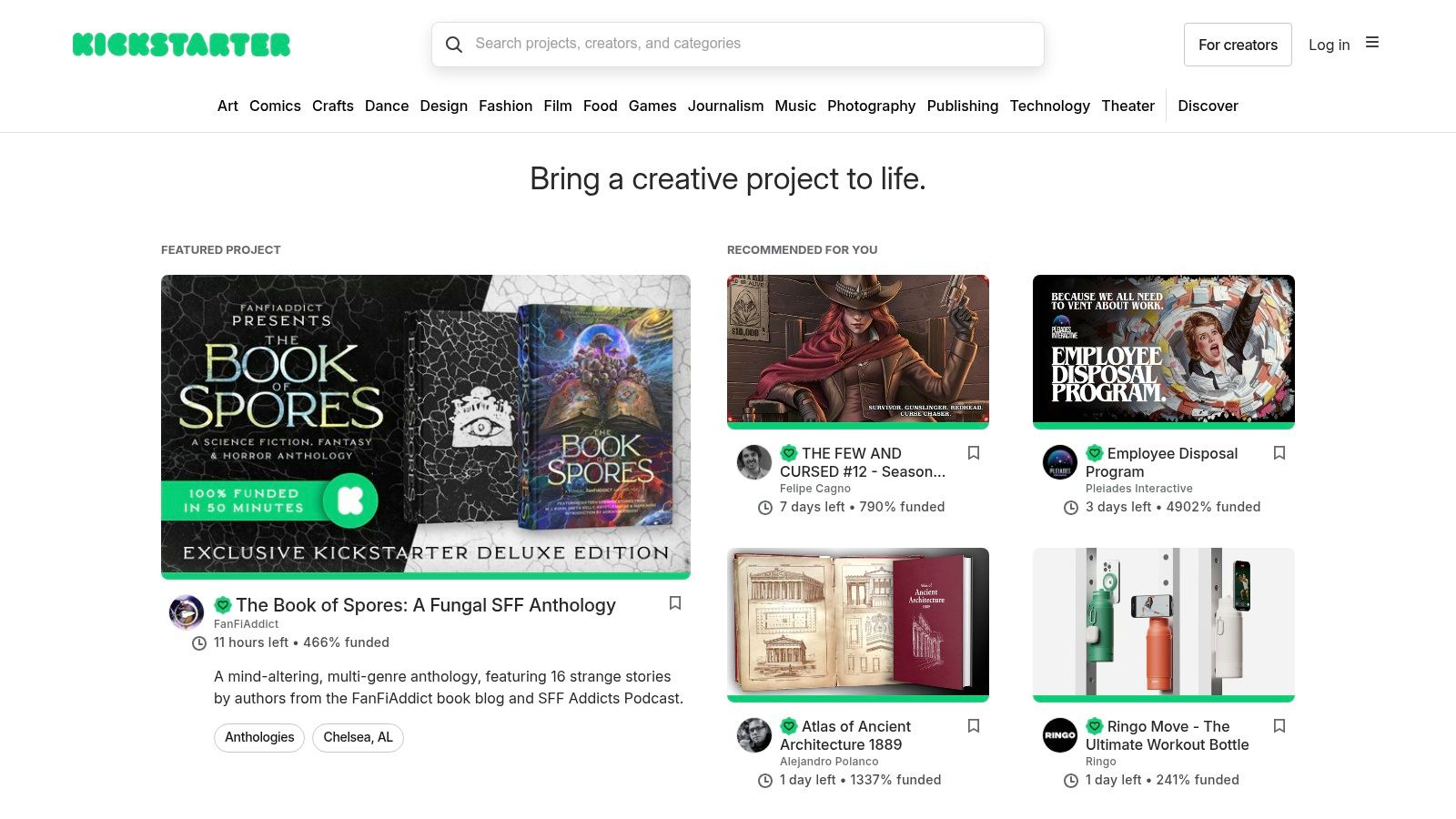
Kickstarter stands out as the authoritative source. Its powerful search and filtering tools allow you to sort projects by funds raised, popularity, category, and launch dates. This functionality is invaluable for creators analyzing high-performing segments, like tabletop games or technology, to identify trends and winning strategies. The platform’s user interface is clean and intuitive, making it easy to navigate through detailed project pages, which often include links to post-campaign pledge managers or late-pledge stores.
For creators, Kickstarter is the "Amazon" of crowdfunding—a massive, centralized marketplace with immense traffic but limited post-campaign tools and branding control. While its native pledge manager exists, many top creators turn to specialized "Shopify-like" solutions for more robust post-campaign management. For example, PledgeBox is free for sending backer surveys and only charges a 3% fee on upsells. For a deeper dive into how the platform works for creators, you can explore this overview of the Kickstarter crowdfunding platform.
Key Features for Research:
While Kickstarter is free to browse, backing a project requires creating an account. Keep in mind that you typically cannot pledge after a campaign ends unless the creator provides a specific link to a late-pledge manager. Delivery timelines are also estimates and are subject to change based on production realities.
After a campaign ends, many of the most funded Kickstarters don't simply disappear. They transition to powerful post-campaign platforms, and BackerKit is a dominant player in this space. It’s a specialized pledge management tool that allows creators to survey backers, collect shipping fees, and most importantly, offer late pledges or preorders. This gives people who missed the original campaign a second chance to get in on the action, often purchasing the same items and add-ons as the original backers.
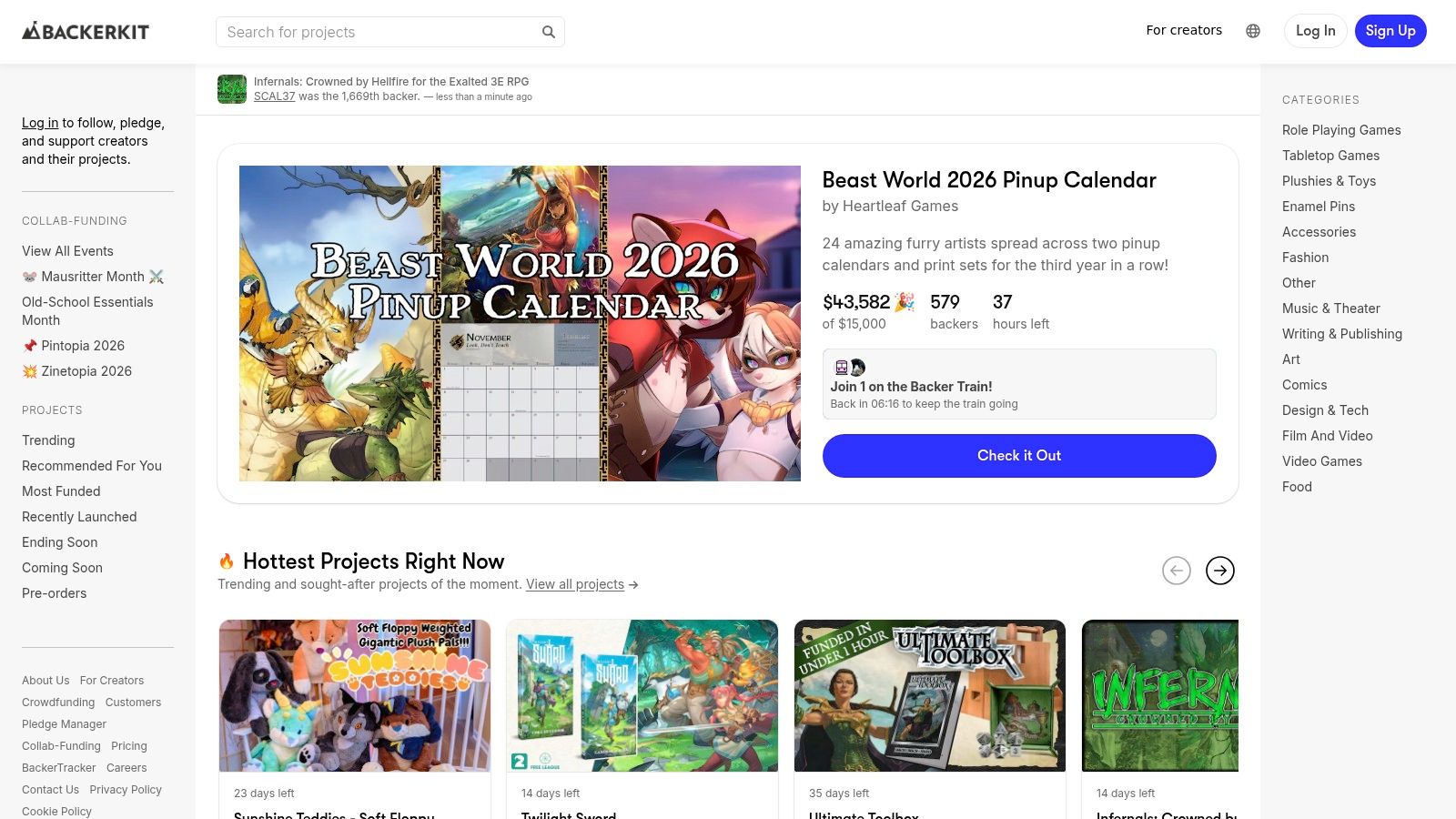
BackerKit stands out by providing a seamless, e-commerce-like checkout experience that feels more modern than Kickstarter’s native interface. For researchers, browsing BackerKit stores offers a unique window into a campaign’s post-funding life. You can see how creators structure their add-ons, manage complex shipping logistics, and communicate with their community during the critical fulfillment phase. It’s a valuable resource for understanding the "second act" of a crowdfunding success story.
For creators, BackerKit acts as a sophisticated post-campaign sales and logistics engine. While Kickstarter's pledge manager is like "Amazon"—a huge marketplace with basic tools—specialized platforms offer more control. For example, a "Shopify-like" solution such as PledgeBox is free to send the backer survey and only charges a 3% fee of upsell if there's any. Understanding the differences is key, as you can see in this comparison of PledgeBox and BackerKit.
Key Features for Research:
Accessing BackerKit stores is free and doesn't require an account to browse, though you'll need to provide an email to pledge. Remember that these stores are temporary and run by the project creator, so they have set closing dates. Delivery timelines are entirely dependent on the individual project’s production schedule, just like the original Kickstarter campaign.
While many of the most funded Kickstarters originate on Kickstarter, their journey often continues on Gamefound. This platform specializes in crowdfunding and pledge management for the tabletop game industry. Creators of massive, component-heavy games frequently use Gamefound for its robust post-campaign tools, including Late Pledge storefronts that allow newcomers to join after the initial funding window has closed. It serves as an essential hub for managing complex orders and global shipping for the campaigns that regularly top funding charts.
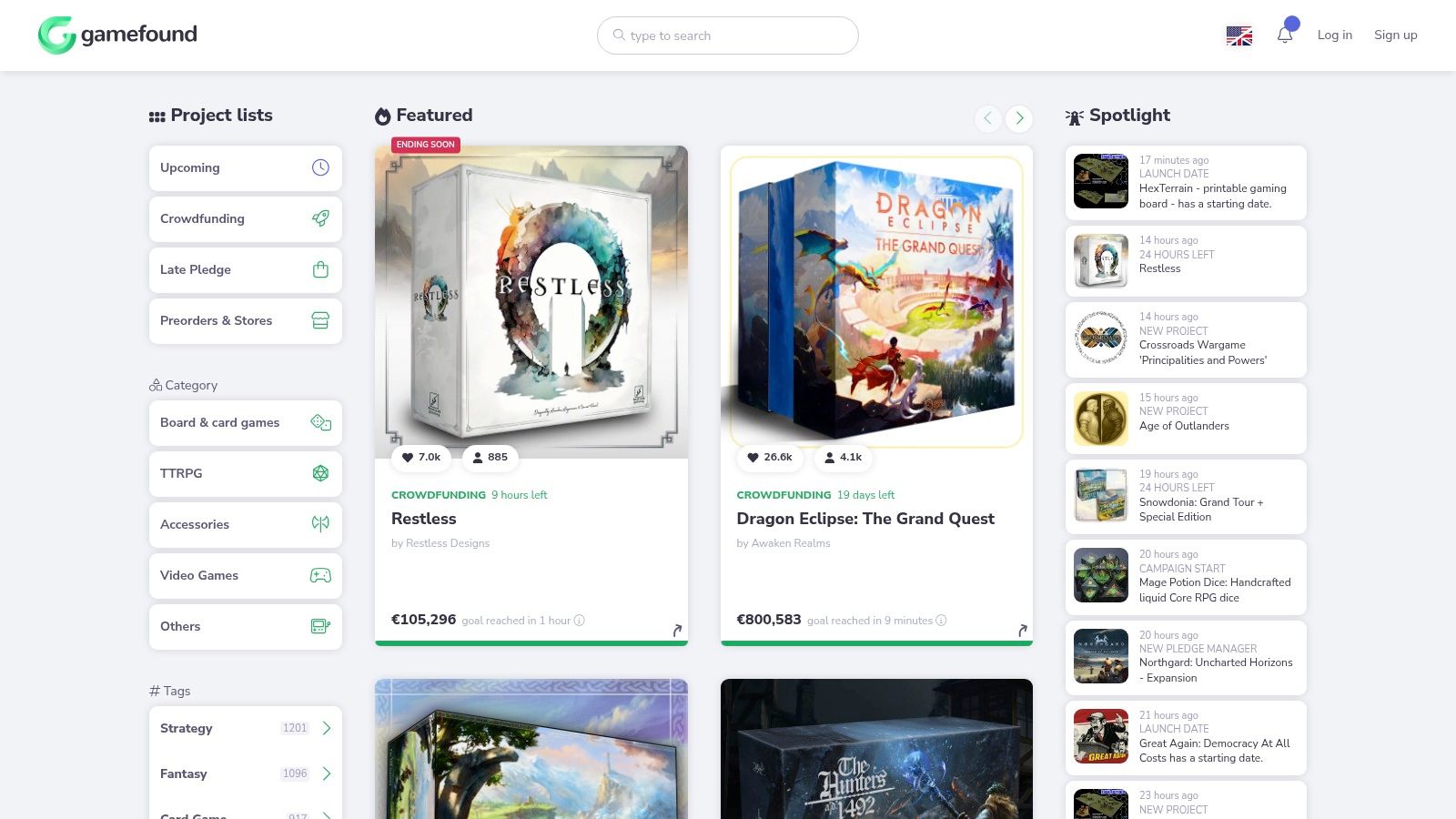
Gamefound excels where Kickstarter's native tools leave off, providing a dedicated "Shopify-like" experience for pledge management. Its interface is designed specifically for board game backers, making it easy to upgrade pledges, add expansions, and manage intricate shipping details. This focus makes it the go-to platform for creators in the tabletop niche who require powerful tools to handle tens of thousands of individual orders with region-specific shipping and multiple add-ons.
For creators of tabletop games, Gamefound is a critical post-campaign partner. While Kickstarter is the "Amazon" of crowdfunding, Gamefound provides a "Shopify-like" logistical engine for the tabletop niche. However, creators seeking more flexibility might explore alternatives. For instance, PledgeBox is free to send the backer survey and only charges a 3% fee of upsell if there's any. For a detailed breakdown, you can learn more about Gamefound compared to other platforms.
Key Features for Research:
Access to Gamefound is free for backers, but you will need an account to manage a pledge or make a late pledge. It is most relevant for the tabletop games category; you will find limited projects outside this niche. Be aware that late pledge windows can close at the creator's discretion, often just before manufacturing begins.
When the initial 30-day funding window on Kickstarter closes, many of the most funded Kickstarters don't simply disappear. Instead, they transition to a post-campaign phase to capture continued interest, and a primary destination for this is Indiegogo's InDemand platform. This feature effectively turns a successful crowdfunding campaign into an ongoing e-commerce storefront, allowing creators to keep taking pre-orders and gathering funds long after their original campaign has ended.
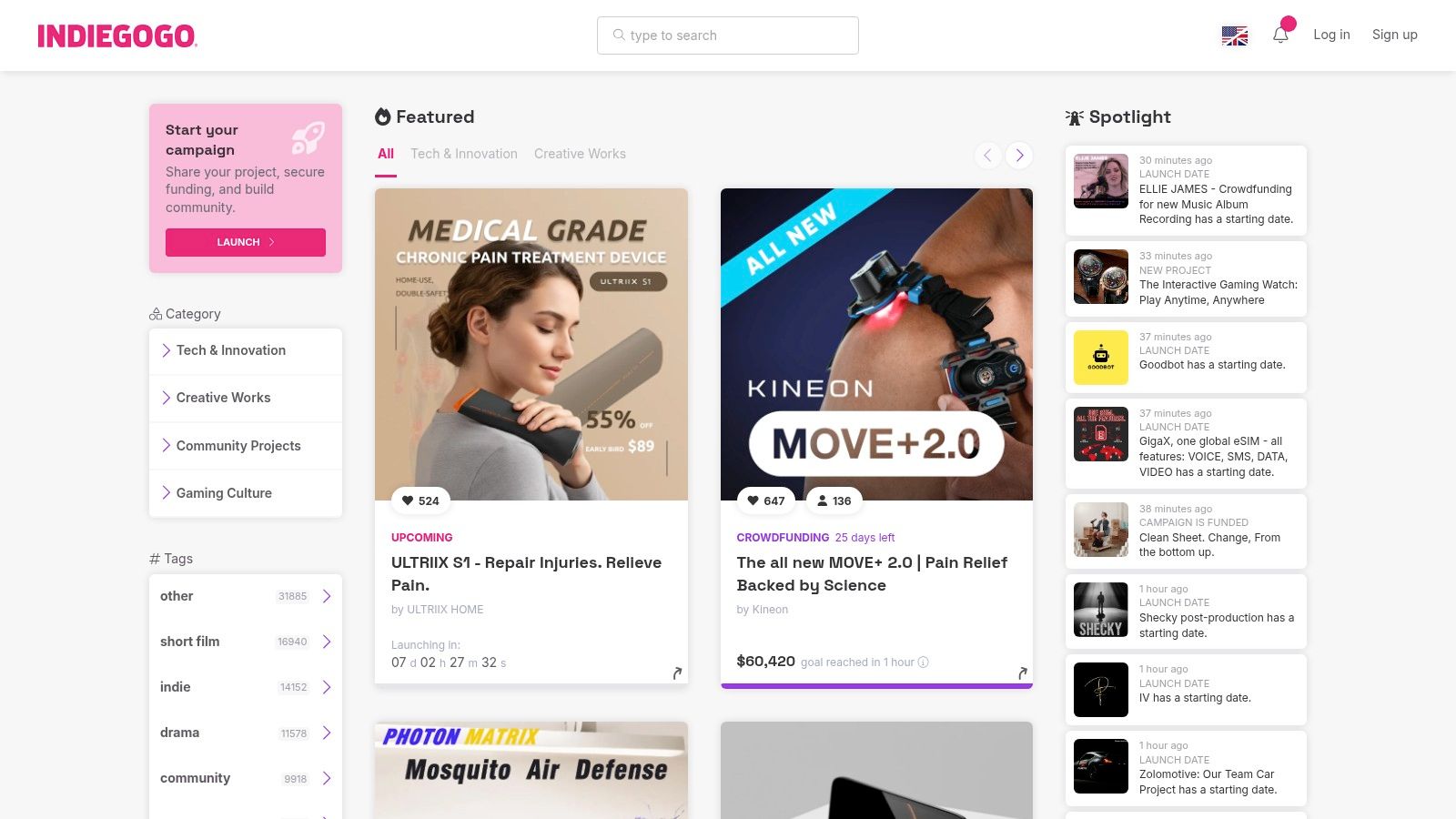
Indiegogo InDemand stands out because it acts as a bridge between crowdfunding and traditional retail. It provides a familiar, trusted platform for late backers to discover and support projects they may have missed. The interface is straightforward, offering a seamless checkout experience and a centralized place for creators to post ongoing production updates. This continuous funding model is especially popular with hardware and tech gadgets that have long development cycles.
For creators, InDemand offers a powerful way to maintain momentum and cash flow. Unlike a static campaign page, it allows for flexible timelines and editable perks, letting creators adjust pricing and offerings as they approach the shipping date. While many creators use InDemand, they still require a separate pledge manager to handle the complex logistics of backer surveys, reward management, and fulfillment. This is where specialized solutions become critical.
If Kickstarter is the "Amazon" of crowdfunding, a robust pledge manager like PledgeBox is the "Shopify" for post-campaign management. It provides the detailed, customizable tools needed to efficiently survey backers and maximize upsell revenue. A key advantage is its pricing: PledgeBox is free to send the backer survey and only charges a 3% fee of upsell if there's any, making it a cost-effective choice for creators of all sizes.
Key Features for Research:
Access to Indiegogo is free for browsing, and backing an InDemand project is similar to pre-ordering a product. However, it's important to remember that not every Kickstarter campaign transitions here, and the platform's fees don't inherently guarantee faster production or delivery. Always check the creator's updates for the most current fulfillment estimates.
For those researching the most funded Kickstarters in the hardware and engineering space, Crowd Supply offers a specialized, curated alternative. This platform is a hybrid model that combines crowdfunding, pre-ordering, and an in-stock e-commerce store, catering specifically to creators of sophisticated electronic and open-hardware projects. By focusing on this niche, it provides a valuable lens for understanding what drives success in technical product launches, from initial funding to long-term retail availability.
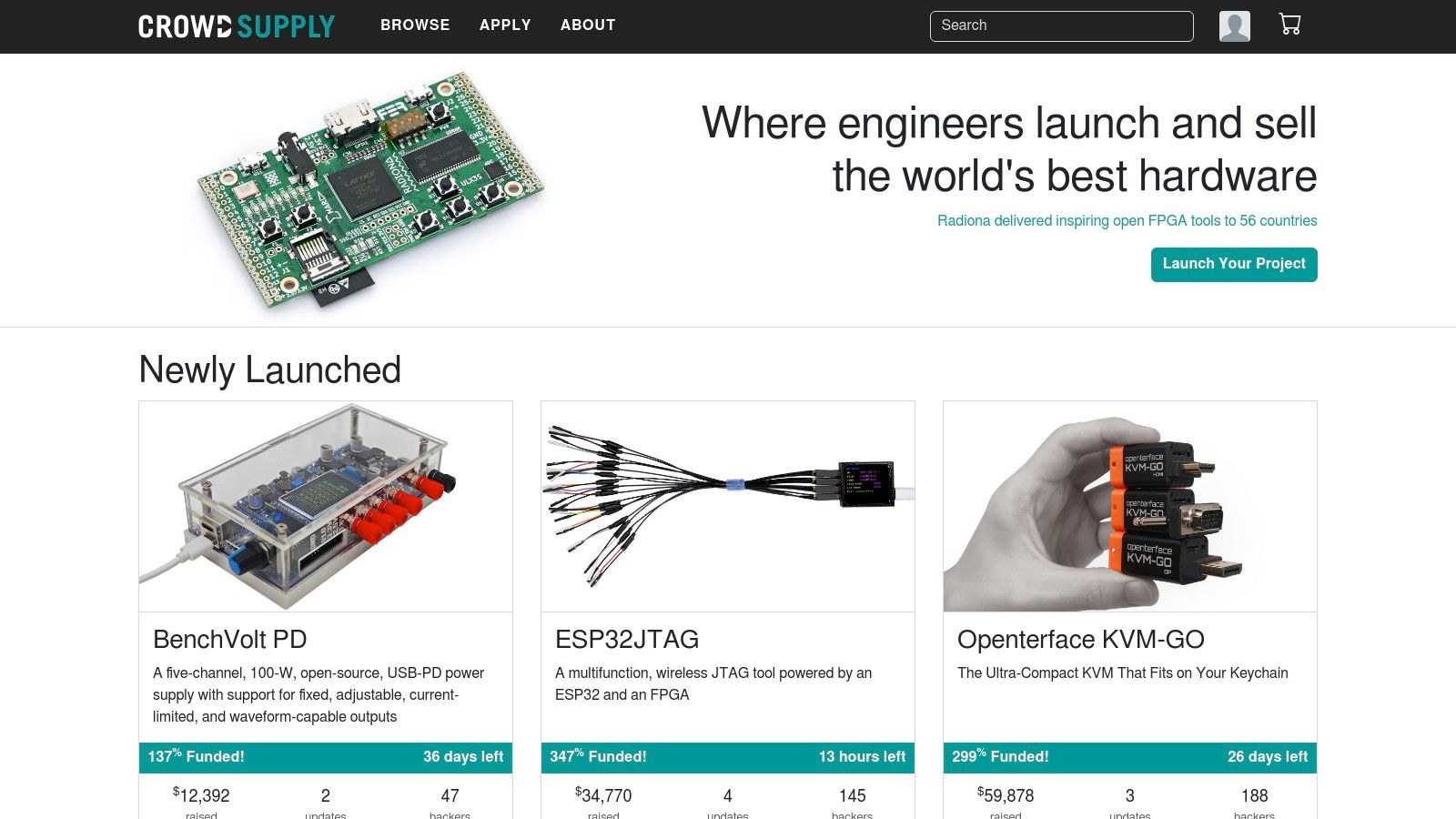
Crowd Supply stands out for its rigorous vetting process and strong emphasis on project fulfillment. The platform guides creators through a distinct lifecycle: crowdfunding to pre-order and finally to in-stock retail, often handled through its U.S. fulfillment partner, Mouser Electronics. This structure provides backers with clear communication and reliable shipping updates, a common pain point on larger platforms. For creators, this ecosystem offers a clear path from campaign to sustainable sales.
Crowd Supply is the "specialty boutique" of crowdfunding. While Kickstarter is the "Amazon" where anything can be sold, Crowd Supply is for a specific, knowledgeable customer. For post-campaign management, creators often need more flexibility, turning to "Shopify-like" tools such as PledgeBox, which offers robust survey and upsell features. It's free to send the backer survey and only charges a 3% fee of upsell if there's any.
Key Features for Research:
Access to Crowd Supply is free for browsing, but an account is needed to back projects. A key difference is its post-campaign lifecycle; many items that successfully fund move into a pre-order phase before becoming available as in-stock products for immediate purchase, though pre-order manufacturing times can be long.
Once a Kickstarter campaign successfully funds and fulfills its pledges, many of its products transition to a new life on Amazon. The retail giant serves as a crucial secondary market where backers can find replacements or accessories, and where the general public can finally purchase items they missed during the campaign. For researchers tracking the long-term success of the most funded Kickstarters, Amazon provides invaluable data on a product's market viability, customer reviews, and mainstream pricing.
Amazon stands out for its unmatched logistics and massive consumer audience. Unlike the limited-time nature of a Kickstarter campaign, Amazon offers evergreen availability, fast shipping via Prime, and a standardized process for returns and customer service. This makes it an essential destination for analyzing a crowdfunded product's journey from a niche project to a mass-market retail SKU. You can observe how creators adapt their branding, packaging, and pricing strategies to compete in a much larger and more competitive environment.
For creators, Amazon represents the ultimate post-fulfillment retail channel. But if Kickstarter's pledge manager is like Amazon—a big marketplace with basic tools—then specialized pledge managers like PledgeBox function more like Shopify, offering greater control, branding, and upsell opportunities post-campaign. Many creators use a tool like PledgeBox, which is free to send the backer survey and only charges a 3% fee of upsell if there's any, to manage backers before leveraging Amazon's platform to reach a new retail audience.
Key Features for Research:
Accessing Amazon is free, but purchasing requires an account. Keep in mind that third-party sellers can vary significantly in quality and authenticity, so it's crucial to check seller ratings. Items sold on Amazon often lack the exclusive stretch goals or add-ons from the original Kickstarter campaign, which can sometimes be found on the secondary market at a premium.
For those who missed the funding window on the most funded Kickstarters, eBay serves as the world's largest secondary marketplace. This is where rare, out-of-print, and Kickstarter-exclusive editions find new homes. It’s an essential resource for backers looking to acquire limited pledge tiers or add-ons long after a campaign has ended, and for creators to gauge the long-term aftermarket value of their exclusive items.
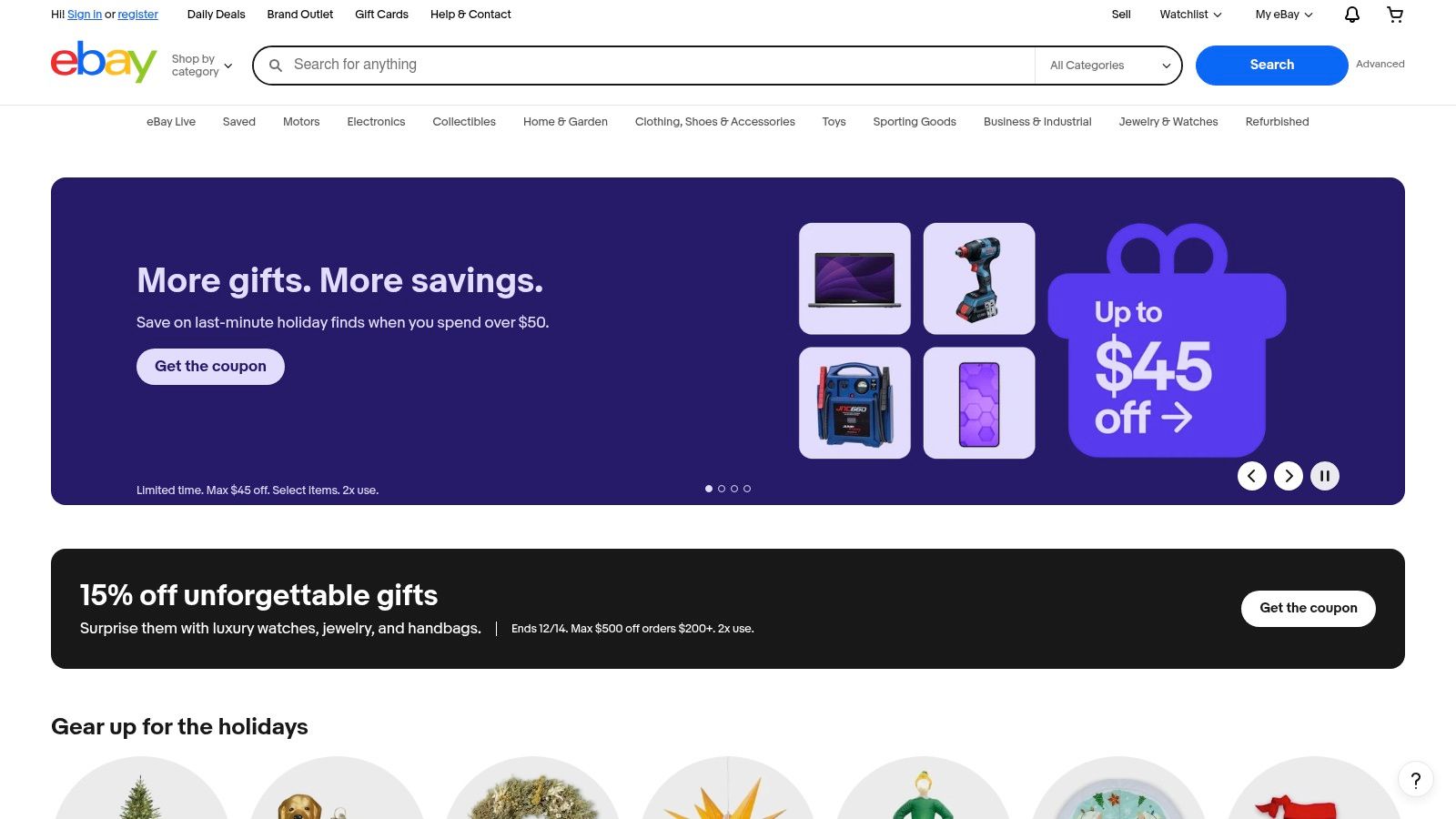
eBay's primary strength is its sheer scale and global seller base, making it the go-to platform for tracking down discontinued products that never hit mainstream retail. The platform's search filters and alert system are powerful tools for anyone hunting a specific item. The buyer protection offered through the eBay Money Back Guarantee provides a safety net for eligible purchases, adding a layer of security when dealing with individual sellers from around the world. For many, it's the only viable option to obtain sought-after Kickstarter collectibles.
For creators, eBay is a crucial indicator of aftermarket demand. Monitoring how your Kickstarter-exclusive items are priced and sold provides valuable data on which products resonate most with your audience, informing future campaign reward tiers and scarcity strategies. For backers, it's a game of patience and diligence; prices can be significantly inflated for in-demand items, but auctions and "Best Offer" listings sometimes yield fair deals. Always check a seller's feedback and return policy before purchasing.
Key Features for Research:
Using eBay is free, but you’ll need an account to bid or buy. Shipping costs and delivery times vary significantly based on the seller's location, so factor those into your total cost. Remember that while you might find an amazing deal, you are often buying from an individual, not a retail company, so customer service and return options are not standardized.
| Platform | Implementation complexity 🔄 | Resource requirements ⚡ | Expected outcomes 📊 | Ideal use cases 💡 | Key advantages ⭐ |
|---|---|---|---|---|---|
| Kickstarter | Low for browsing; high if running a campaign | Low for backers; creators need campaign assets & fulfillment plan | ⭐⭐⭐ — authoritative discovery, campaign history, creator updates | Research top-funded campaigns; follow creator timelines; find late-pledge links | Authoritative records, detailed timelines, category stats |
| BackerKit | Medium — setup for pledge manager and stores | Moderate — surveys, shipping data, add‑on management | ⭐⭐ — streamlined late‑pledge/preorder flow and order consolidation | Post‑campaign pledge management, add‑ons, collecting shipping | Centralized pledge management; common creator destination |
| Gamefound | Medium‑High — specialized pledge manager with region tools | Higher — complex shipping for component‑heavy items | ⭐⭐⭐ (for tabletop) — robust late‑pledge and region‑aware fulfillment | Large, component‑heavy board‑game campaigns | Region‑aware shipping, clear late‑pledge flow for tabletop |
| Indiegogo (InDemand) | Low for buyers; medium for creators to configure store | Low‑Moderate — flexible perks/pricing and ongoing payouts | ⭐⭐ — continued sales after campaign; flexible storefront | Hardware/gadget creators wanting ongoing preorders post‑campaign | Flexible post‑campaign storefront; easy checkout for late buyers |
| Crowd Supply | Medium — staged crowdfunding → pre‑order → retail | Higher — vetting, hardware logistics, warehouse fulfillment | ⭐⭐⭐ (for hardware) — clear shipping guidance and fast in‑stock delivery | Engineering/open‑hardware projects transitioning to retail | Strong vetting, U.S. fulfillment partner, fast in‑stock shipping |
| Amazon | Very low for buyers; high for sellers to list/manage | High for sellers; buyers need nothing special | ⭐⭐⭐ — fast delivery, broad availability for retail SKUs | Buying mass‑market retail versions, fast delivery and returns | Prime logistics, centralized tracking, easy returns |
| eBay | Low for buyers; moderate for sellers | Low for buyers; sellers manage listings/shipping | ⭐⭐ — access to rare/discontinued items; price variability | Sourcing Kickstarter‑exclusive or out‑of‑print items | Secondary market access, auctions, buyer protection (where eligible) |
As we've journeyed through the campaigns of the most funded Kickstarters, a clear pattern emerges. Success isn't just about having a brilliant idea; it's about meticulous planning, strategic execution, and a deep understanding of the crowdfunding ecosystem. These giants didn't just launch a product; they built a community and leveraged powerful platforms to manage their explosive growth.
From the Pebble Time's mastery of repeat backing to the Frosthaven board game's logistical precision, each campaign offers a blueprint for aspiring creators. The common thread is a relentless focus on the backer experience, from the initial pitch to the final delivery.
The strategies employed by these top-tier campaigns are not secrets reserved for the elite. They are accessible tactics that any creator can adapt.
Beyond the initial funding success, the longevity and 'giant' status of these ventures often depend on robust customer retention strategies, ensuring that first-time backers become lifelong fans.
The transition from a funded project to a fulfilled promise hinges on your pledge manager. Think of Kickstarter's pledge manager as the Amazon of its ecosystem—a massive marketplace with basic tools. Your pledge manager, then, is your operational headquarters for post-sale logistics, more akin to your own Shopify store where you control the customer relationship.
Consider a tool like PledgeBox, which offers a powerful, creator-friendly approach. It's free to send your backer survey, allowing you to collect crucial shipping information without any upfront cost. The platform only earns when you do, taking a small 3% fee on funds raised through add-on sales and upsells within the survey. This model aligns perfectly with a creator's goal: maximizing revenue while minimizing risk.
Ultimately, the lesson from the most funded Kickstarters is one of empowerment. The tools and strategies are available, the path has been illuminated, and the community is waiting for the next groundbreaking idea. Your campaign has the potential to join these ranks, not by chance, but by deliberate, strategic design.
Ready to streamline your post-campaign process and boost your funding with powerful upsells? See why thousands of creators trust PledgeBox to manage their backers and fulfillment. Explore PledgeBox and discover how our free-to-start survey tools can help you scale your success.
PledgeBox
The All-in-One Toolkit to Launch, Manage & Scale Your Kickstarter / Indiegogo Campaign