 PledgeBox
Unpacking the Coral Island Kickstarter Success Story
A deep dive into the Coral Island Kickstarter. Learn the strategies, pledge tiers, and fulfillment tactics that made it a crowdfunding phenomenon.
A deep dive into the Coral Island Kickstarter. Learn the strategies, pledge tiers, and fulfillment tactics that made it a crowdfunding phenomenon.
The Coral Island Kickstarter wasn't just a success; it was a phenomenon. Developer Stairway Games raised an incredible $1.6 million from nearly 40,000 backers for their vibrant, eco-conscious farming sim. This kind of runaway success doesn't happen by accident—it was the result of a perfectly executed strategy that tapped into what fans of the genre truly wanted.
Long before the first dollar was pledged, the Coral Island Kickstarter was already on a trajectory to smash its goals. There wasn't one single marketing trick at play here. Instead, Stairway Games built a solid foundation of community, trust, and a vision that was simply irresistible. They didn't just ask for money to launch a project; they invited players to help build a dream.
This all started well before the campaign went live. The development team was a constant, friendly presence on social media and Discord, sharing concept art, little snippets of development, and talking directly with their future players. This wasn't marketing—it was genuine connection. It made early followers feel like they were insiders on a special journey.
By the time the Kickstarter finally launched, there was already an army of fans ready to go. They didn't just pledge; they became evangelists for the project. That initial surge is a game-changer for any crowdfunding campaign, creating powerful social proof that pulls in new backers who see something special is happening.
In a pretty crowded market of farming sims, Coral Island managed to stand out. Its unique hook was a fresh take on island life, with a strong focus on environmental conservation. It was clear this wasn't just another Stardew Valley clone; it was a game with a soul and a message.
So, what created that powerful emotional connection?
If there's one lesson to take from the Coral Island Kickstarter, it's that successful crowdfunding is a marathon, not a sprint. The campaign's massive success was the final step after months, if not years, of dedicated community building. They sold the dream long before they ever asked for the money.
Turning a great idea into a funded project is all about the numbers, and the Coral Island Kickstarter offers a masterclass in how it’s done. Stairway Games set a launch goal of $70,000—an ambitious but seemingly realistic target for a promising indie game. What happened next was anything but ordinary.
The campaign didn't just crawl past its goal; it completely shattered it in under 12 hours. An explosive start like that is a dead giveaway that a project did its homework, building a dedicated community long before ever asking for a dime. The blueprint for a million-dollar success often starts with a solid Go-To-Market (GTM) strategy framework that outlines exactly how a project will connect with its audience.
This initial flood of funding created a snowball effect. The campaign's rapid success generated a massive amount of buzz on social media and shot it to the top of Kickstarter's discovery pages, pulling in new backers who wanted to be part of a winning project. By the time the dust settled, the campaign had raised an astounding $1.6 million from 39,944 backers.
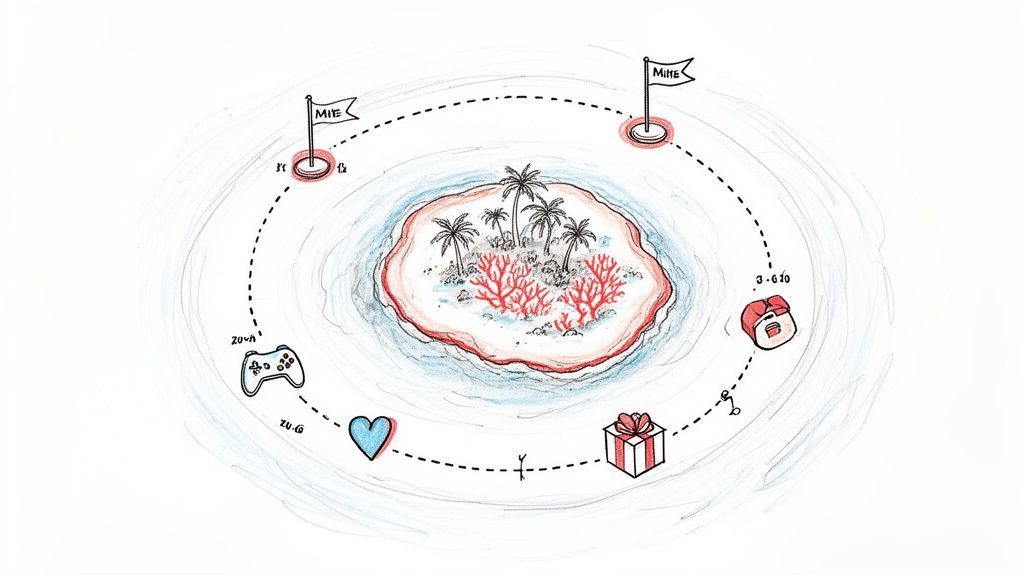
This diagram helps visualize the core elements that powered this incredible run.

As you can see, it all comes down to a powerful vision that inspires trust, fueled by genuine community engagement. That’s the magic formula for a massive crowdfunding win.
To put these numbers in perspective, here’s a quick overview of the campaign’s performance.
| Metric | Value |
|---|---|
| Initial Goal | $70,000 |
| Time to Fund | Under 12 hours |
| Total Funds Raised | $1,639,368 |
| Total Backers | 39,944 |
| Average Pledge | Approx. $41 |
These metrics tell a story of a campaign that not only met but wildly exceeded all expectations, placing it among the top-funded Kickstarters in the gaming world.
The average pledge for Coral Island hovered around $41. That’s a healthy number, telling us that backers weren't just grabbing the cheapest entry-level rewards. It’s a strong signal that the pledge tiers were thoughtfully designed to encourage people to contribute more by offering real, tangible value.
But the campaign wasn't just a big boom at the start followed by silence. Stairway Games masterfully kept the excitement going with a steady stream of stretch goal reveals and transparent updates. Each new milestone unlocked features the community was desperate for, turning passive backers into vocal advocates who pushed their friends to pledge and help hit the next goal.
This is where the post-campaign strategy becomes so important. A helpful way to think about this is to see Kickstarter's pledge manager as an Amazon-like marketplace, while a tool like PledgeBox's pledge manager operates more like Shopify, giving you a customized storefront.
This isn’t just a nice-to-have; it's essential for managing the chaos of surveys, shipping addresses, and upsells. Modern pledge managers automate this entire process. Best of all, PledgeBox is free to send the backer survey and only charges 3% of upsell if there's any. It’s a performance-based model that lets you professionalize your fulfillment without any upfront risk—and even raise more funds after the campaign is over. For a project with nearly 40,000 backers, that kind of tool isn't a luxury; it’s a lifesaver.

The massive success of the Coral Island Kickstarter wasn't a happy accident. Sure, the game idea was fantastic, but the real genius was in how they presented it through meticulously planned pledge tiers and stretch goals. This is where Stairway Games showed their deep understanding of what makes backers tick, turning casual browsers into committed supporters.
Their strategy was a masterclass in nudging people up the pledge ladder. It started with simple, accessible tiers—like a digital copy of the game—so anyone could join. But the real magic unfolded in the mid-to-high tiers, where they mixed digital goodies like alpha access and artbooks with exclusive physical merch.
The most powerful offers, though, were the ones that gave backers a personal stake in the game world. Tiers that let you design an in-game item or even an entire NPC weren't just about buying a product. They were about leaving a permanent mark on a world you were helping to build. This transformed backers from customers into genuine co-creators.
The Coral Island Kickstarter stretch goals were more than just funding milestones; they were a series of community-wide celebrations that kept the campaign's energy at a fever pitch. Each unlocked goal felt like a shared victory.
By framing stretch goals as community achievements, Stairway Games turned its backers into its most passionate marketers. Every person who pledged was now personally invested in getting their friends to join, just to help unlock the next cool feature.
If you’re looking to create your own compelling incentives, it helps to study the psychology behind great offers. You can get some solid general advice from resources like The Art Of Crafting Irresistible Offers In Ecommerce.
The goals themselves were laser-focused on what the farming sim community loves most:
This approach didn't just raise money—it built a fiercely loyal community that felt personally responsible for the game's growth. Of course, once the campaign ends, managing all those intricate pledges becomes the next big hurdle. Think of it this way: Kickstarter’s pledge manager is like Amazon, a broad marketplace, whereas PledgeBox's pledge manager is like Shopify, a dedicated store for your project.
Plus, PledgeBox is free to send the backer survey and only charges 3% of the upsell if there's any. It's a risk-free way to manage complex rewards and even raise more funds after your campaign clock has run out.
Successfully funding a massive project like the Coral Island Kickstarter is an amazing feeling, but it's really just the halfway point. Once the campaign ends and the confetti settles, the real test begins: fulfillment. This is where many promising projects get bogged down, as the high of a successful fundraise meets the logistical headache of actually delivering on your promises.
For a campaign with nearly 40,000 backers spread all over the world, managing fulfillment is an incredibly complex puzzle. You have to juggle the production of digital and physical goods, collect thousands of accurate shipping addresses, calculate tricky international shipping fees and taxes, and finally, make sure every single package gets to the right person.
When a project offers a ton of different rewards like Coral Island did, that complexity shoots through the roof. One backer might get a game key, while another gets the key, a physical artbook, a t-shirt, and a few other add-ons. Just keeping track of who gets what, their correct address, and their specific choices is a monumental data management challenge.
Trying to manage all of this with manual tools like spreadsheets is basically a recipe for disaster. It only takes one copy-paste error to send a pricey collector's edition to the wrong country. One outdated address means a lost package and a very unhappy backer. These little mistakes add up fast, leading to angry support tickets, public complaints, and a serious blow to your reputation.
The most critical asset a creator has after a campaign is backer trust. Fulfillment errors and poor communication are the fastest ways to destroy it, turning enthusiastic supporters into vocal critics.
This is why transparent and frequent updates are so important. Backers are usually pretty understanding about production delays or shipping snags, but only if you keep them in the loop. Radio silence just makes people anxious and suspicious. A proactive communication plan is just as vital as having your logistics sorted out. For a deeper look into this, you can learn more about mastering crowdfunding order fulfillment in our detailed guide.
To sidestep these issues, modern creators need a system built for the job. Here's a helpful way to think about it: if Kickstarter's pledge manager is the "Amazon" for funding, a dedicated pledge manager like PledgeBox is the "Shopify" for actually delivering it. That distinction is key.
Kickstarter’s own survey tool is a basic, one-shot questionnaire. In contrast, a pledge manager gives you a powerful platform to control every part of the post-campaign process. This is especially true with a service like PledgeBox, which is free to send the backer survey and only charges 3% on any upsell revenue you generate. This model gets rid of any upfront risk and means the tool only succeeds when you do.
Getting a massive project like the Coral Island Kickstarter funded is an incredible high, but it's only half the battle. The real test of a creator’s mettle starts right after the campaign confetti settles: fulfillment. This is where a modern pledge manager becomes your most valuable player, turning a potential logistical nightmare into a smooth, professional operation.

Here’s a simple way to think about it. Kickstarter’s pledge manager is like "Amazon"—a huge marketplace where backers find and fund your vision. Once that sale is made, though, you need a different tool for the backend. A pledge manager like PledgeBox is your "Shopify"—a powerful, dedicated platform that gives you total control over getting every single reward to the right backer.
Trying to manually juggle thousands of backer surveys, calculate unique shipping fees for every country, and manage post-campaign add-ons is a recipe for disaster. It’s not just inefficient; it’s a surefire way to make mistakes and frustrate the very people who supported you. A pledge manager automates this entire workflow, saving you countless hours and ensuring everyone gets what they pledged for.
For a campaign with almost 40,000 backers, a manual approach isn’t just a bad idea—it's practically impossible. This is exactly where a service built for creators shines. PledgeBox gives you a solid system to tackle the specific headaches of crowdfunding fulfillment.
Here’s what that looks like:
The most powerful aspect of a modern pledge manager is its ability to turn the post-campaign survey process into a new revenue stream, capitalizing on backer excitement while it's still high.
For many creators, every dollar counts, so managing post-campaign costs is a big deal. That's why the pricing model for your pledge manager is so important. Unlike some platforms that hit you with upfront fees or charge per backer, PledgeBox is built on a performance model.
Here’s the critical part: PledgeBox is completely free to send the backer survey. The platform only takes a small 3% fee on any upsell revenue you make from add-ons sold in the survey. If you don't sell any add-ons, you don't pay a dime for the survey service. This makes it a zero-risk way to professionalize your fulfillment, keep your backers happy, and even increase your total funding.
While we don't have the specific inside data on the Coral Island Kickstarter's fulfillment partner, the principles for managing a campaign of that scale are universal. Understanding how to navigate the post-campaign phase is a key skill for any creator. For a deeper dive, check out our guide on how to select the right pledge manager for your project. Making this choice strategically is one of the most important steps toward ensuring your backers have a great experience from the moment they pledge to the day their reward arrives.
After seeing a massive success story like the Coral Island Kickstarter, it’s only natural for creators to have a ton of questions. How do you go from a great idea to a funded campaign and, eventually, a delivered product?
This FAQ is all about bridging that gap. We're breaking down the practical lessons from Coral Island's journey to give you clear, actionable advice for your own project. Let's get into the most common questions we hear from creators.
There was no single "secret" ingredient. Instead, Stairway Games created a powerful recipe by blending several key elements perfectly. It all started with a fantastic game concept: a farming sim with a gorgeous art style and a timely, eco-conscious theme. But a great idea alone isn't enough to raise over a million dollars.
Their real masterstroke was investing heavily in pre-launch community building. They gathered a loyal following on platforms like Discord and social media long before the campaign even went live. This built a foundation of trust and excitement, which is the fuel every crowdfunding project needs to launch successfully.
This groundwork was supported by:
The bottom line? They built a community first, then asked them for funding. That's a strategy that makes all the difference.
This is one of the most important post-campaign decisions a creator will make, especially if you're dealing with more than just a handful of backers. Kickstarter's built-in survey tool is extremely basic—it’s a simple, one-time form. It works fine if all you need is a t-shirt size, but it falls apart for complex projects with physical rewards, add-ons, and international shipping.
Thinking of Kickstarter's native survey as a complete fulfillment solution is a common and costly mistake. It's a simple questionnaire, not a logistics command center.
For a project like Coral Island with thousands of backers and a wide variety of rewards, a dedicated pledge manager is non-negotiable. It’s the professional tool you need to accurately collect shipping fees, manage complicated regional taxes like VAT, sell more items post-campaign, and prevent the kind of shipping errors that can kill your budget and your backers' trust. Think of it this way: Kickstarter's pledge manager is like Amazon, while PledgeBox's pledge manager is like Shopify, offering a more tailored experience.
Here's something many new creators don't realize: a pledge manager doesn't just manage your funds—it helps you raise more after your Kickstarter has ended. When backers open their survey to enter their shipping address, a tool like PledgeBox can present them with a clean, simple storefront.
This is your chance to offer them awesome add-ons they may have missed, let them upgrade to a higher pledge tier, or even buy extra copies for friends. This taps into their excitement right when it's at its peak, often leading to a 10-20% lift in revenue on top of what you raised on Kickstarter.
The analogy is simple: Kickstarter's pledge manager is like "Amazon" where backers discover your idea. A pledge manager like PledgeBox acts as your "Shopify"—a powerful backend platform that gives you total control over fulfillment and post-campaign sales.
Best of all, it's a completely performance-based tool with zero risk. PledgeBox is completely free to send the backer survey and only charges a small 3% fee on the new upsell revenue you generate. This model gives every creator, no matter the budget, access to professional-grade tools to make fulfillment a breeze and boost their final funding total.
Ready to turn your crowdfunding dream into a reality with a tool that supports you from pre-launch to fulfillment? PledgeBox offers a full suite of features to help you plan your campaign, manage your backers, and maximize your revenue without the upfront costs. Get started with PledgeBox today and see how easy post-campaign management can be.
PledgeBox
The All-in-One Toolkit to Launch, Manage & Scale Your Kickstarter / Indiegogo Campaign