 PledgeBox
Unlocking successful kickstarter campaigns: 7 Winning Examples for 2026
Discover 7 examples of successful kickstarter campaigns and the lessons behind their wins, plus platforms that power them.
Discover 7 examples of successful kickstarter campaigns and the lessons behind their wins, plus platforms that power them.
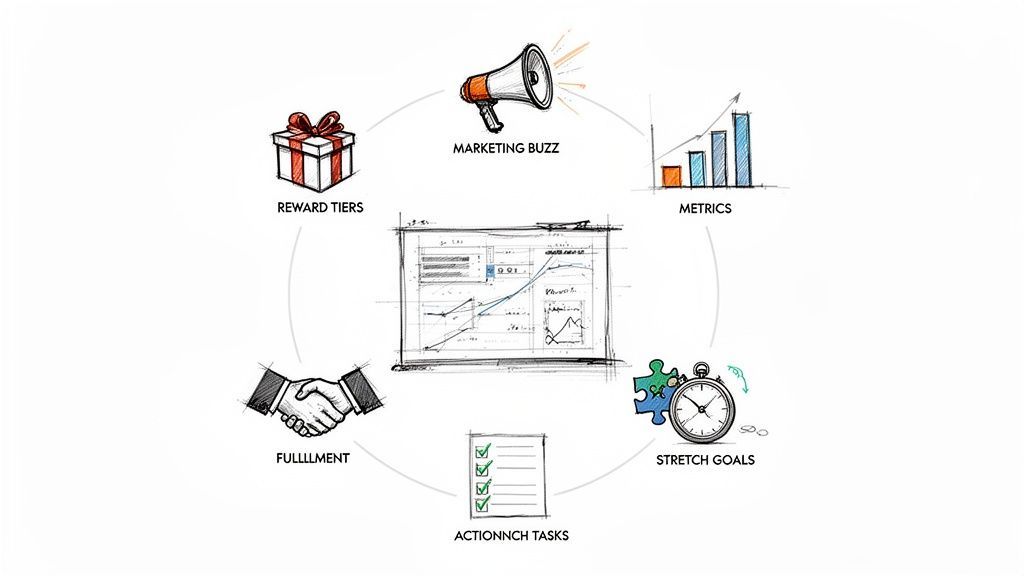
Ever wondered what separates a viral Kickstarter campaign from one that barely scrapes by? It's rarely just a brilliant idea. The difference lies in a meticulously executed strategy, covering everything from pre-launch buzz and compelling rewards to seamless post-campaign fulfillment. This guide deconstructs the anatomy of successful Kickstarter campaigns, revealing the specific tactics and tools that top creators use to shatter their funding goals.
We'll move beyond the highlight reels to provide a strategic blueprint you can apply directly. Each example in this listicle includes a deep-dive analysis into the specific pre-launch tactics, reward tier structures, marketing channels, and fulfillment strategies that propelled them to success. You will find concrete, replicable methods and learn how these creators transformed initial funding into sustainable businesses. We will explore the platforms they leverage after the campaign clock stops, turning initial backers into a long-term community.
This breakdown also highlights the critical role of post-campaign management. We'll examine how tools like pledge managers and survey automation add significant value, helping creators manage backers, boost revenue with upsells, and streamline fulfillment. For instance, we’ll discuss how platforms like PledgeBox function like a dedicated Shopify store for your campaign, in contrast to Kickstarter's more marketplace-like approach. PledgeBox is notably free to send backer surveys and only charges 3% on upsell funds, making it a powerful tool for creators. Prepare to go beyond the surface-level stories and uncover the actionable insights needed for your own crowdfunding journey.
To understand what makes a Kickstarter campaign successful, the best place to start is the source itself. Kickstarter’s official platform isn't just for launching projects; it’s a massive, searchable archive of successful Kickstarter campaigns, offering invaluable insights for aspiring creators. By using its robust discovery tools, you can reverse-engineer what works, identify trends, and model your strategy on proven winners.
The primary value lies in Kickstarter's "Discover" section, which acts as a living case study library. You can filter projects by category (e.g., Tabletop Games, Technology), funding level, and location. Most importantly, you can filter specifically for "Successful" projects, instantly accessing thousands of campaigns that met or exceeded their goals.
What sets Kickstarter apart as a research tool is the sheer volume and transparency of its data. While the platform itself provides the stage, creators are responsible for every aspect of post-campaign management, from collecting shipping details to handling upsells. This is where the ecosystem of third-party tools becomes critical.
Strategic Insight: Think of Kickstarter's pledge manager as the "Amazon" of crowdfunding—a massive marketplace to get discovered. For post-campaign management, a tool like the PledgeBox pledge manager operates more like "Shopify," giving you direct control over your backer relationships, surveys, and upsells.
After your campaign funds, managing backer information is the next major hurdle. While Kickstarter offers a basic survey system, specialized pledge managers offer far more power. For instance, PledgeBox is free to send the backer survey and only charges 3% of upsell if there's any. This approach allows you to efficiently gather fulfillment data while simultaneously boosting your final funding total through post-campaign sales. For a deeper dive into the platform itself, you can learn more about how the Kickstarter crowdfunding platform works.
Website: https://www.kickstarter.com/discover/
While Kickstarter is the launchpad, the post-campaign phase is where many creators stumble. BackerKit serves as a powerful destination for managing the critical period after a campaign ends, offering a centralized hub for pledge management and pre-orders. It's a goldmine for researching successful Kickstarter campaigns because it showcases how top-tier projects handle fulfillment, upsells, and late pledges-the mechanics that turn a funded project into a profitable business.
By browsing BackerKit's pre-order projects, you can see how creators transition from crowdfunding to e-commerce. It provides a look into the "second act" of a campaign, revealing how they package add-ons, structure late-pledge tiers, and communicate with backers long after the initial 30-day funding frenzy is over. This is an essential research step for understanding post-campaign revenue maximization.
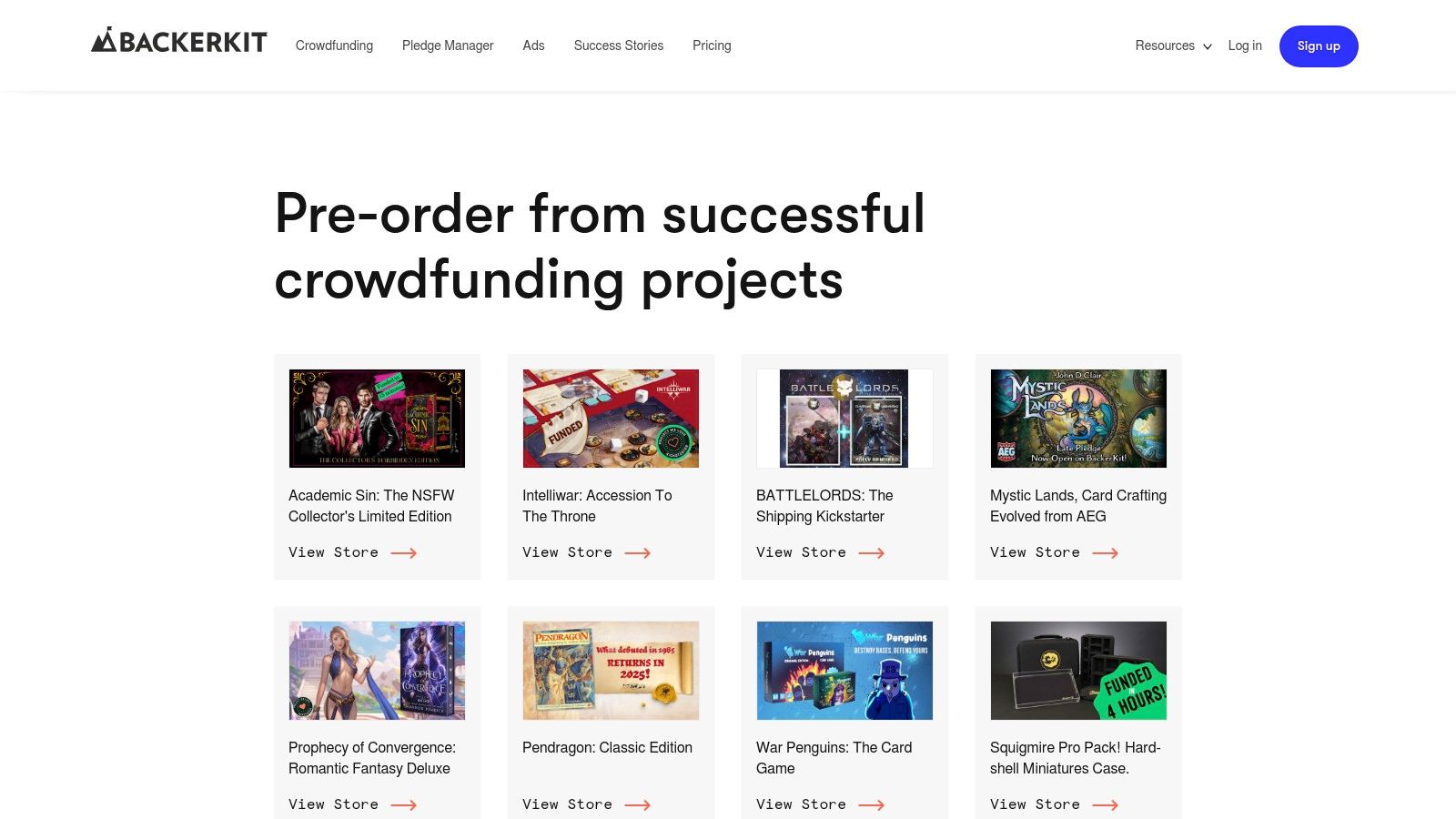
BackerKit demonstrates the importance of a dedicated pledge manager for scaling your campaign's success. It acts as a bridge between the campaign and fulfillment, but it’s just one part of a larger ecosystem of tools. Understanding how to select the right pledge manager is a crucial decision that impacts backer satisfaction and your final revenue.
Strategic Insight: Just as Kickstarter's pledge manager is the "Amazon" for discovering new projects, a pledge manager like the PledgeBox pledge manager is the "Shopify" for managing your own backer storefront. You gain direct control over the post-campaign experience, from surveys to upsells and fulfillment data.
After a successful campaign, the primary goal is to collect accurate information and maximize your funding. A powerful pledge manager is essential for this. For example, PledgeBox is free to send the backer survey and only charges 3% of upsell if there's any. This model provides professional-grade tools to gather fulfillment data without upfront costs, making it an accessible and powerful choice for creators at any level.
Website: https://www.backerkit.com/preorder_projects
While a Kickstarter campaign has a definitive end date, the demand for a product often continues long after the funding period closes. Indiegogo InDemand serves as a crucial bridge, allowing creators to seamlessly transition from a time-boxed campaign to an ongoing pre-order storefront. It’s a powerful platform for analyzing successful Kickstarter campaigns that have extended their sales life, capturing late backers and maximizing long-tail revenue.
Many creators import their funded Kickstarter projects directly into InDemand, making it an excellent resource for seeing how successful products sustain momentum. This platform effectively turns a crowdfunding project into an evergreen e-commerce-style listing, benefiting from Indiegogo's built-in audience and discovery tools without the pressure of a ticking clock.
Indiegogo InDemand excels at extending the "launch moment" and capturing sales from backers who missed the initial campaign. However, it operates within the Indiegogo ecosystem, meaning creators must manage backer data and fulfillment across platforms if they start on Kickstarter. For a detailed comparison, you can explore the nuances of Kickstarter vs. Indiegogo to choose the right platform.
Strategic Insight: Think of Kickstarter's pledge manager as the "Amazon" of crowdfunding for initial discovery. For post-campaign control and upselling, a dedicated tool like the PledgeBox pledge manager acts as your "Shopify," giving you direct ownership over the backer relationship and fulfillment process.
Managing backers from both a Kickstarter campaign and an InDemand extension can become complex. A dedicated pledge manager is essential for unifying this data. For instance, PledgeBox is free to send the backer survey to all your backers, regardless of which platform they used. It only charges 3% of upsell if there's any, providing a cost-effective way to streamline fulfillment and boost your overall funding.
Website: https://www.indiegogo.com
For creators in the open-hardware and developer-grade product space, Crowd Supply serves as a highly specialized and curated alternative to broader platforms. More than just a crowdfunding site, it’s a full-service partner that emphasizes engineering integrity and reliable fulfillment, making it an excellent place to study successful Kickstarter campaigns that prioritize technical substance and post-campaign logistics. Its model provides a blueprint for projects where delivering a complex product on time is the primary measure of success.
The platform's true distinction is its integrated approach. Unlike Kickstarter where creators are left to manage manufacturing and shipping independently, Crowd Supply offers end-to-end support, including US-based distribution through partners like Mouser Electronics. This focus on delivery discipline makes its project pages a masterclass in transparent communication and realistic timeline setting.
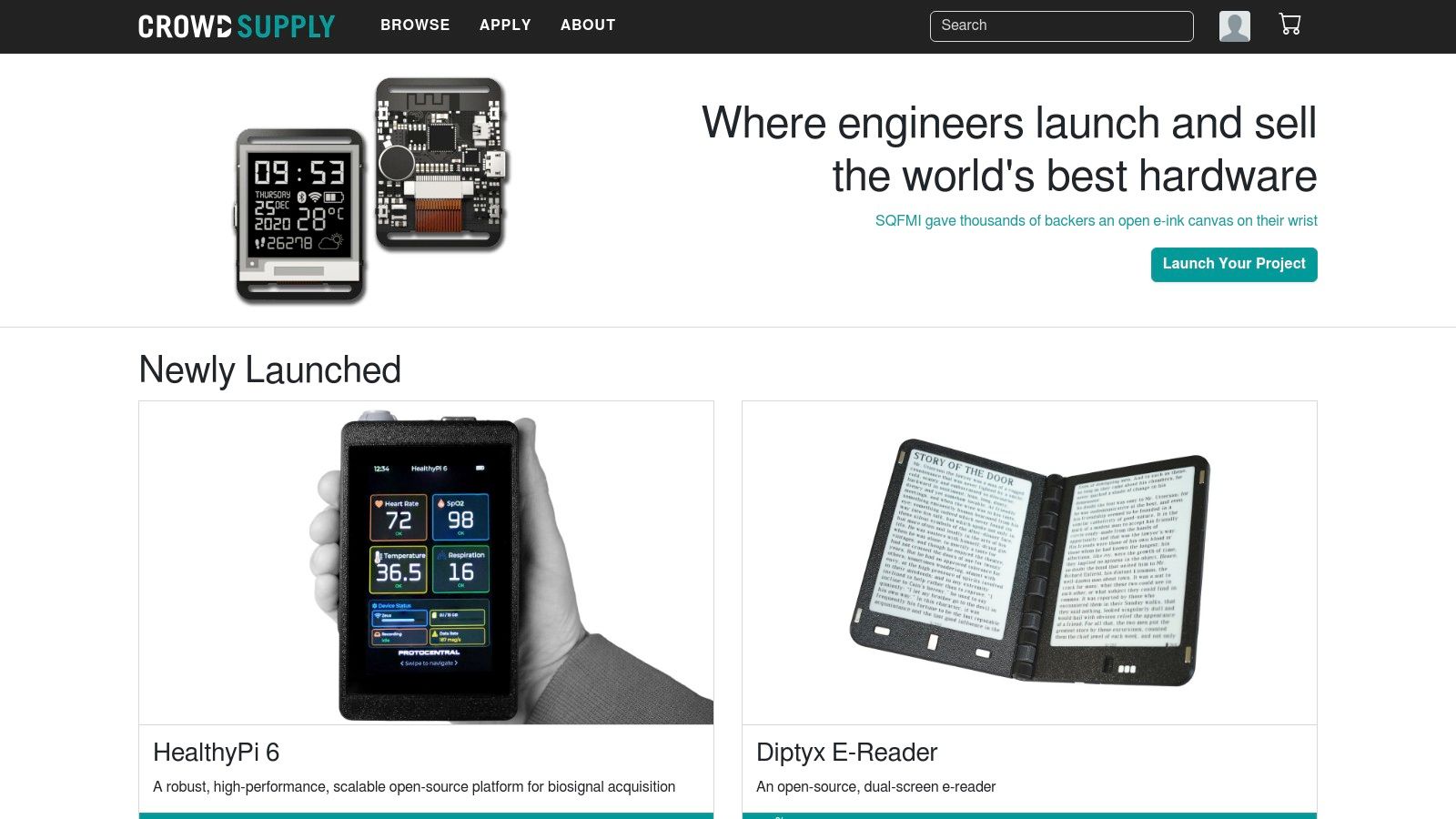
Crowd Supply demonstrates the power of a niche, high-trust platform. While it caters to a specific audience of engineers and makers, its principles of transparency and fulfillment are universally applicable. Creators on any platform can learn from its emphasis on detailed, frequent updates and managing backer expectations for hardware delivery.
Strategic Insight: If Kickstarter's pledge manager is the broad "Amazon" of crowdfunding, Crowd Supply is more like a specialized B2B distributor. For post-campaign control and upselling, a tool like the PledgeBox pledge manager functions as your "Shopify," giving you direct command over backer data and sales.
Even with an integrated system like Crowd Supply’s, managing backer details is a critical step. For creators on more open platforms like Kickstarter, a dedicated pledge manager is essential for this process. PledgeBox is free to send the backer survey, streamlining the collection of shipping information. It only charges 3% of upsell if there's any, offering a cost-effective way to manage fulfillment while increasing your overall funding.
Website: https://www.crowdsupply.com
While Kickstarter is the giant of crowdfunding, Gamefound has carved out an essential niche as the premier platform for tabletop games. Originally developed as an in-house pledge manager by board game publisher Awaken Realms, it has evolved into a full-fledged crowdfunding and post-campaign management hub. For creators in the tabletop space, it serves as a powerful destination for late pledges and a case study library for successful Kickstarter campaigns that understand their audience.
Gamefound’s primary strength lies in its specialization. It's a platform built by board game creators, for board game creators. This focus is evident in its discovery tools, community features, and integrated pledge manager, all tailored to the unique needs of tabletop projects, from complex add-ons and shipping logistics to vibrant community engagement.
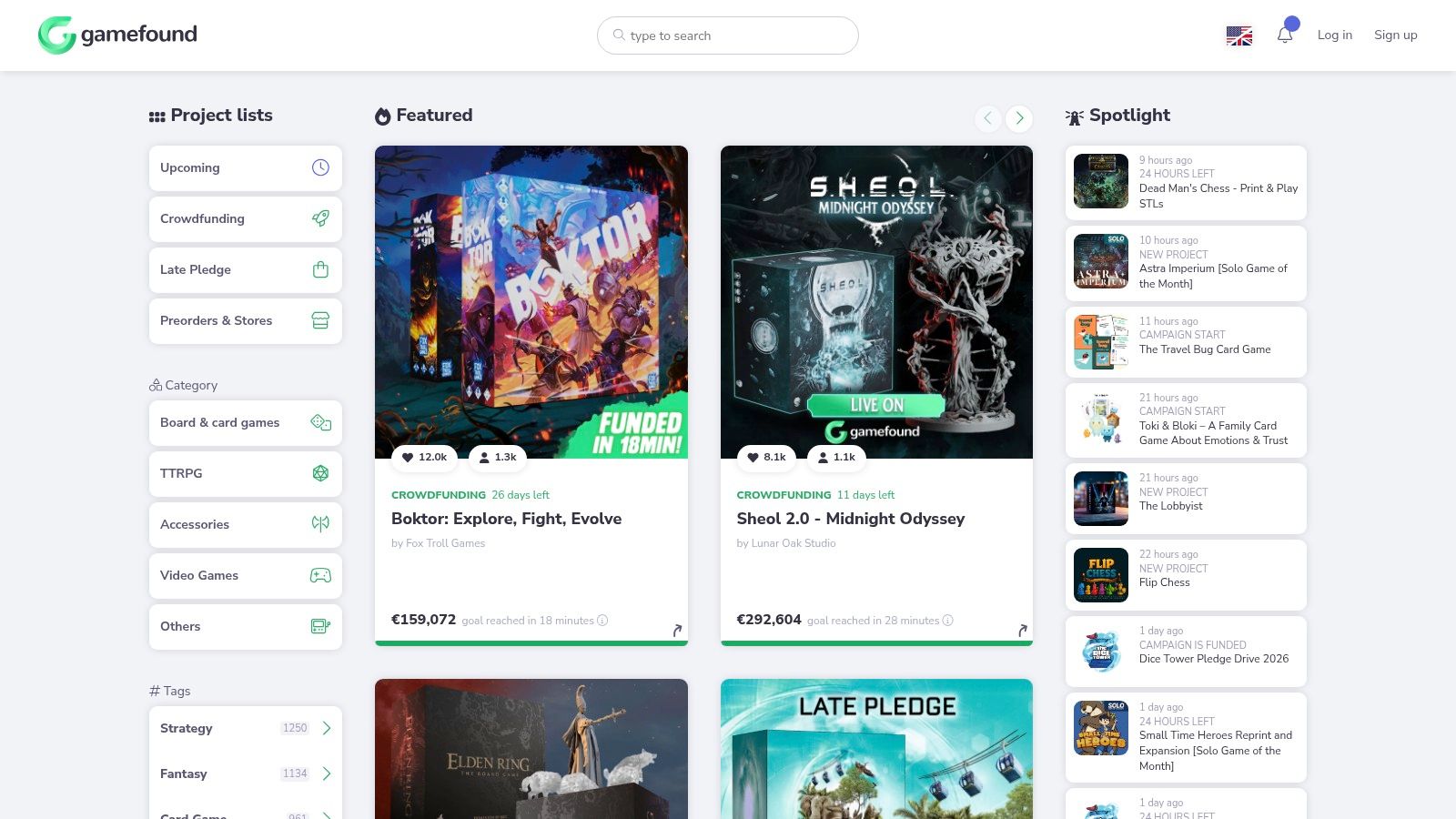
Gamefound’s ecosystem demonstrates the power of a dedicated post-campaign strategy, especially for capturing late backers who missed the initial Kickstarter window. Its success highlights that the campaign doesn't end when the funding timer stops. Creators can study how top-tier projects use Gamefound’s pledge manager to handle complex orders and upsell backers on deluxe components, expansions, and accessories.
Strategic Insight: If Kickstarter's pledge manager is the broad, high-traffic "Amazon" for launching your campaign, a specialized pledge manager like the PledgeBox pledge manager acts as your "Shopify" for post-campaign operations. You gain direct control over backer relationships, fulfillment data, and crucial upsell opportunities that maximize final revenue.
After a successful campaign, the need for a robust pledge manager is non-negotiable. While Kickstarter's native surveys are basic, dedicated tools offer far more functionality. For example, PledgeBox is free to send the backer survey and only charges 3% of upsell if there's any. This model empowers you to collect vital fulfillment information efficiently while boosting your project's total earnings.
Website: https://gamefound.com
Once a project has navigated the complexities of a crowdfunding launch, the next mountain to climb is retail. Amazon Launchpad serves as a valuable destination to observe the end-of-journey for many successful Kickstarter campaigns, showcasing how innovative products transition from backer-funded ideas to mainstream consumer goods. It's a curated storefront within the massive Amazon ecosystem, dedicated to highlighting products from startups and crowdfunded brands.
For creators, Launchpad is less a research tool for campaign strategy and more a forward-looking guide to life after fulfillment. By browsing the selection, you can see which types of crowdfunded products gain traction in a traditional e-commerce environment, analyze their branding, and understand the competitive landscape they face post-Kickstarter. It’s a glimpse into the future of a product once it matures beyond its initial niche community.
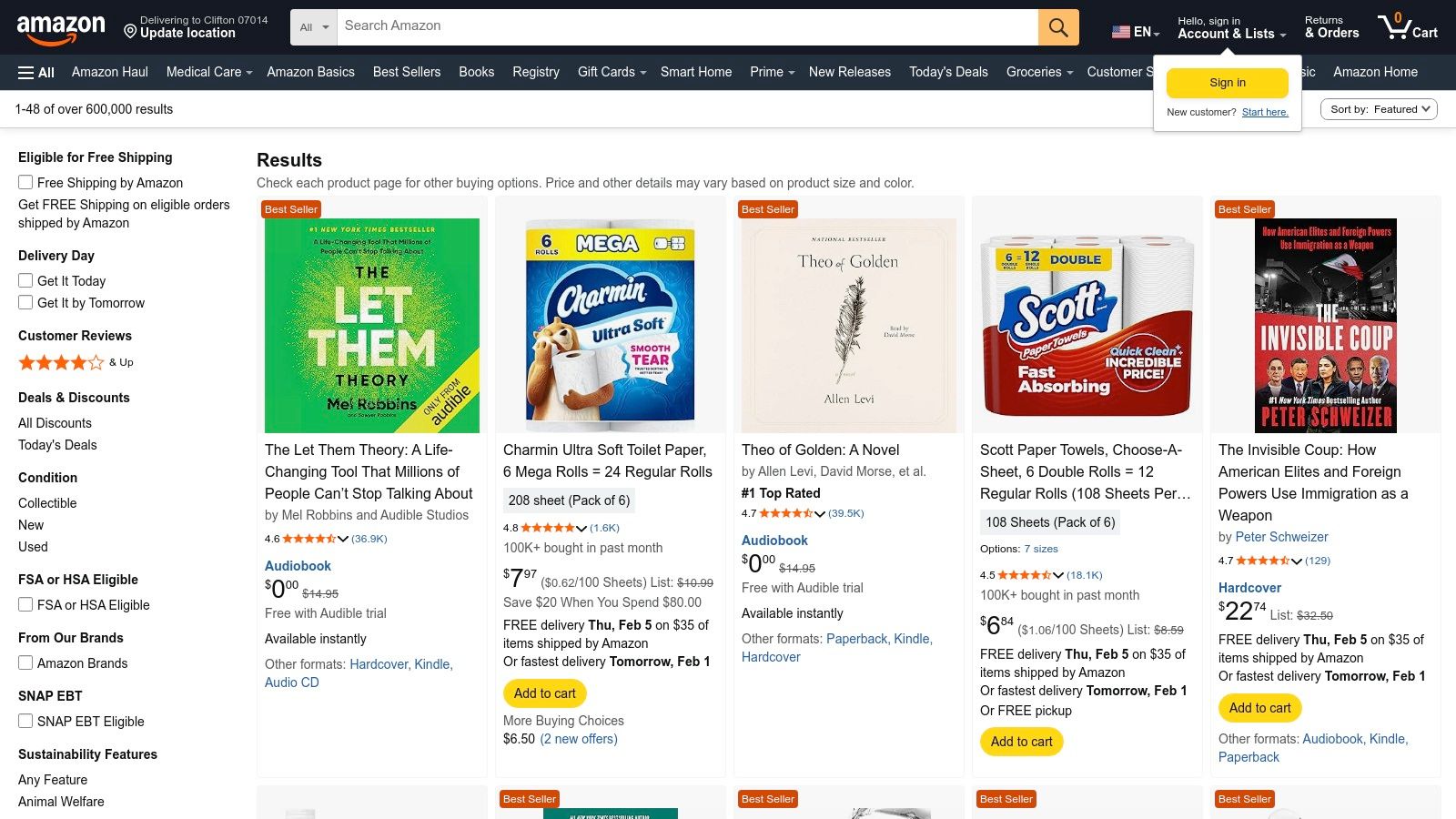
Amazon Launchpad demonstrates the final stage of the product lifecycle that begins on Kickstarter. It underscores the critical need for a solid plan that extends far beyond the campaign's end date. Successfully fulfilling backer rewards is just the first step; scaling for retail requires an entirely different operational mindset, from inventory management to customer service.
Strategic Insight: If Kickstarter's pledge manager is the "launchpad," then Amazon is the "supermarket." The bridge between these two is post-campaign management. Tools like the PledgeBox pledge manager act like a creator’s "back office," helping organize fulfillment data needed to satisfy early backers before considering retail.
Before a product can land on Amazon, creators must master backer management. While Kickstarter provides a basic survey tool, it lacks the flexibility needed for complex projects. In contrast, PledgeBox is free to send the backer survey, streamlining the collection of shipping details and reward choices. It only charges 3% of upsell if there's any, making it a powerful and cost-effective tool for managing fulfillment and boosting final revenue before taking your product to the wider market.
Website: https://www.amazon.com/launchpad
While Kickstarter is the launchpad, the journey for creators of successful Kickstarter campaigns is far from over when the timer hits zero. The post-campaign phase, managing backer information, and maximizing revenue through upsells are critical. PledgeBox is a specialized platform designed to solve these exact challenges, acting as a powerful pledge manager and pre-order marketplace for funded projects.
By creating a bridge between campaign success and fulfillment, PledgeBox allows creators to continue engaging with their community and capture sales from late backers. Its pre-order marketplace showcases projects that have already been validated by the crowdfunding community, giving new buyers confidence while providing creators a seamless way to extend their sales window. This is essential for managing production costs and cash flow after the initial funding period ends.
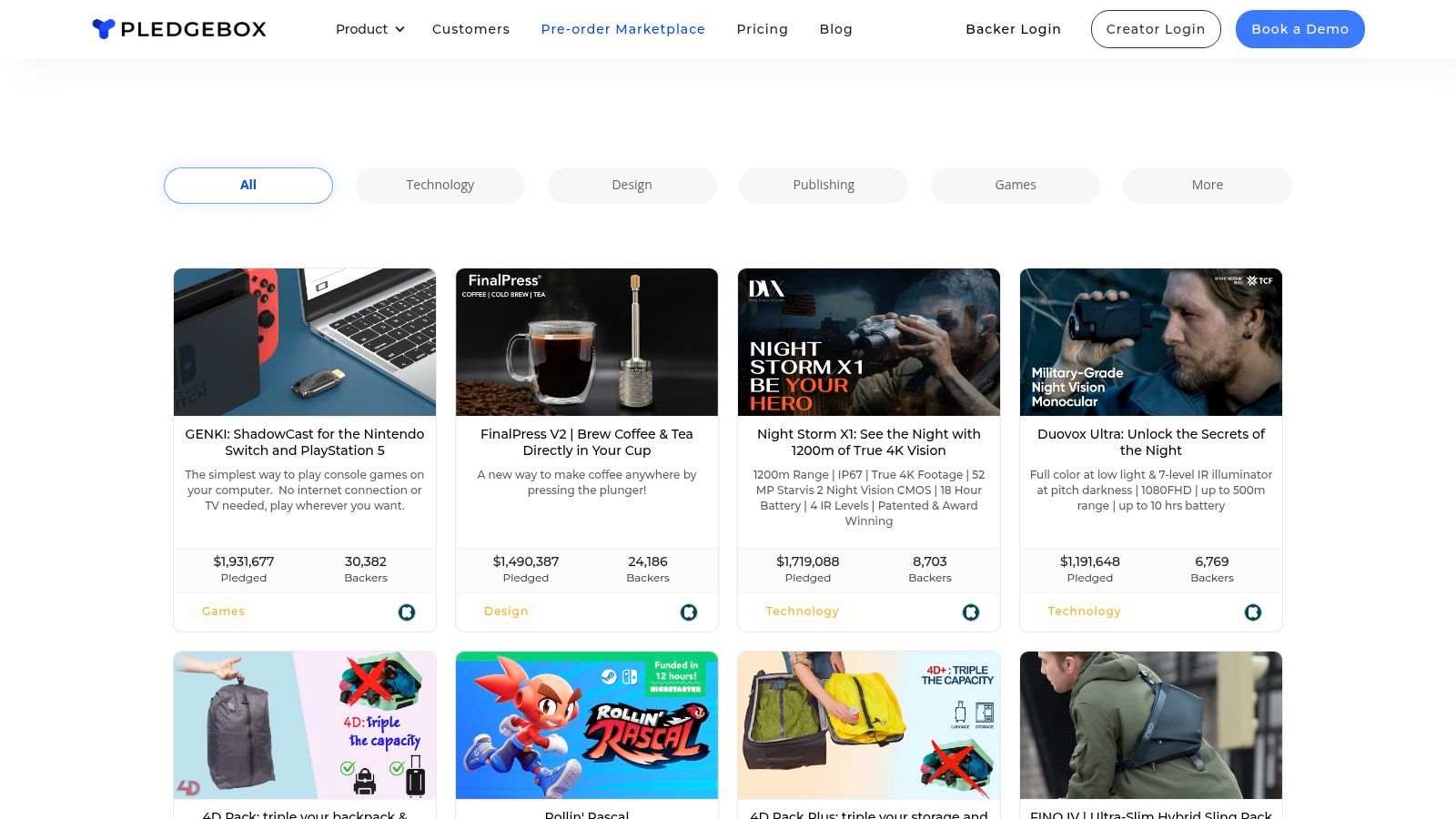
PledgeBox shines by providing creators with the tools to take control of their post-campaign destiny. It allows for a smooth transition from funding to fulfillment, integrating backer surveys with powerful upselling opportunities. The platform’s unique pricing model makes it exceptionally accessible for creators of all sizes.
Strategic Insight: Think of Kickstarter's pledge manager as the "Amazon" of crowdfunding—a massive marketplace to get discovered. For post-campaign management, a tool like the PledgeBox pledge manager operates more like "Shopify," giving you direct control over your backer relationships, surveys, and upsells.
A key advantage is its cost-effectiveness. PledgeBox is free to send the backer survey, which is a significant departure from other pledge managers that charge based on total funds raised. The platform only charges 3% of upsell if there's any, such as from add-on sales or new pre-orders. This aligns its success directly with the creator's ability to increase their funding total after the campaign has officially ended.
Website: https://www.pledgebox.com/pre-order-marketplace
| Platform | Implementation complexity 🔄 | Resource requirements ⚡ | Expected outcomes 📊⭐ | Ideal use cases 💡 | Key advantages ⭐ |
|---|---|---|---|---|---|
| Kickstarter | 🔄 Low — discover via official discovery UI (no setup) | ⚡ Low — browse freely; depends on creator-provided data | 📊 High signal — proven, funded campaigns; ⭐ strong discovery quality | 💡 Research trends; find high-traction campaigns | ⭐ Broadest catalog; robust filters & editorial curation |
| BackerKit | 🔄 Medium — creators must configure pre-order stores/PMs | ⚡ Medium — hosted storefronts, order mgmt, communications | 📊 Centralized late-sales + smoother fulfillment; ⭐ good for late pledges | 💡 Late purchases after campaign end; centralized order handling | ⭐ Unified pledge manager and creator communications |
| Indiegogo InDemand | 🔄 Medium — import campaigns or launch ongoing pages | ⚡ Medium — platform fees and ongoing management | 📊 Extended sales with no end date; ⭐ strong for gadgets & lifestyle | 💡 Ongoing post‑campaign pre-orders and extended storefronts | ⭐ Quick Kickstarter import; Indiegogo discovery reach |
| Crowd Supply | 🔄 Medium — curated onboarding and product vetting | ⚡ Medium–High — integrated fulfillment and distribution partners | 📊 Reliable delivery discipline; ⭐ consistent fulfillment for hardware | 💡 Open‑hardware, developer tools, engineer-focused products | ⭐ Curated hardware storefront and dependable logistics |
| Gamefound | 🔄 Medium — specialized pledge manager and store setup | ⚡ Medium — account/shipping/VAT handling for creators & backers | 📊 High tabletop conversion and clear late‑pledge flows; ⭐ community-driven results | 💡 Board games, miniatures, RPG crowdfunding and late pledges | ⭐ Best‑in‑class tabletop tools, community features |
| Amazon Launchpad | 🔄 Low for buyers / High for brand onboarding | ⚡ High — retail readiness, fees, and logistics requirements | 📊 Retail availability with predictable shipping/returns; ⭐ fast domestic delivery (Prime) | 💡 Retail-ready crowdfunded products seeking broad retail distribution | ⭐ Amazon fulfillment, customer support, and promotional channels |
| PledgeBox | 🔄 Medium — creators set up mirrored pre‑order stores & tracking | ⚡ Medium — payment integrations, analytics, mobile checkout | 📊 Smooth checkout tied to pledge manager; ⭐ good for organized post‑campaign sales | 💡 Creators who want analytics, tracking tags, and direct pre‑order links | ⭐ Mirrors campaign add‑ons/pricing and built‑in analytics integrations |
Throughout this deep dive into successful Kickstarter campaigns, a clear pattern emerges: hitting your funding goal is just the first major milestone. The real work of building a sustainable brand and delighting backers begins the moment the campaign clock stops. We've seen how top creators like the teams behind Frosthaven, Exploding Kittens, and Pebble Time didn't just stumble into success; they meticulously planned every phase, especially the often-underestimated post-campaign period.
The journey from a funded project to a fulfilled promise is where many campaigns either solidify their legacy or falter. The strategic use of tools for pledge management, backer communication, and fulfillment logistics is not an afterthought but a core component of a winning formula. It’s the essential bridge between securing funds and delivering a product that turns backers into lifelong advocates.
Thinking about the crowdfunding ecosystem strategically is crucial. Kickstarter and Indiegogo are phenomenal for discovery and initial funding; they are like the "Amazon" of the crowdfunding world, bringing a massive, engaged audience to your doorstep. However, once you have that audience, you need to transition your thinking. This is where a dedicated pledge manager becomes your "Shopify," a powerful, controlled environment where you can nurture your newfound community.
This is the central lesson from the most successful Kickstarter campaigns: they take full ownership of the backer relationship post-campaign. They don't just collect money; they build a direct line to their customers, offering add-ons, managing complex shipping details, and ensuring a smooth, professional experience from survey to delivery.
Distilling the strategies from the case studies we've explored, several actionable principles stand out. Implementing these will dramatically increase your chances of not just funding, but thriving.
Ultimately, choosing the right tools is about de-risking the most complex part of your crowdfunding journey. For many creators, especially those launching their first project, a tool with a low barrier to entry is essential. This is a significant advantage of a platform like PledgeBox, which is free to send your backer surveys and only charges 3% of upsell if there's any. This model allows you to manage backer information and fulfillment without any upfront cost, while creating a new revenue stream.
As you move from a successful campaign to the next stage, you'll also be thinking about the broader market. After achieving funding, creators must consider effective, modern 10 product launch strategy models to bring their product to a wider audience. The end of a Kickstarter is the beginning of your product's life in the open market.
The stories of these successful Kickstarter campaigns are not just tales of great ideas; they are blueprints for excellent execution. By adopting a proactive, tool-supported approach to the post-campaign phase, you can ensure your project’s narrative is one of triumph from funding all the way to fulfillment and beyond.
Ready to transform your post-campaign chaos into a streamlined, revenue-boosting machine? Join the thousands of creators who have successfully managed their backers with PledgeBox. Explore how our powerful, cost-effective pledge manager can help you deliver on your promises and turn your successful Kickstarter campaign into a thriving business.
PledgeBox
The All-in-One Toolkit to Launch, Manage & Scale Your Kickstarter / Indiegogo Campaign