 PledgeBox
Kickstarter Crowdfunding Platform A Creator's Guide
Discover how the Kickstarter crowdfunding platform works. This guide offers proven strategies to plan, launch, and manage a successful campaign.

Discover how the Kickstarter crowdfunding platform works. This guide offers proven strategies to plan, launch, and manage a successful campaign.
The Kickstarter crowdfunding platform is really just a digital stage where creators can pitch their big ideas and get a community to rally behind them with pledges. It’s famous for its all-or-nothing funding model, a simple but powerful rule: if you don’t hit your funding goal, no money changes hands. This approach protects everyone and has been the launchpad for everything from indie films to game-changing tech.
At its heart, Kickstarter is a matchmaker, connecting creators with people who want to see their vision become a reality. Instead of chasing one huge investment, creators build a groundswell of support from a crowd of backers, each contributing a smaller amount. This doesn't just raise the money you need; it proves people actually want what you're making before you even start production.
Since it first went live back in 2009, Kickstarter has become a giant in the creative funding world. It's been the starting point for over 651,000 projects, with backers putting up an incredible $8.5 billion to support them. And while not every idea takes off, a solid 41.98% of projects have successfully hit their funding goals, which just goes to show how powerful the platform can be. For a closer look at the numbers, you can check out Kickstarter's growth and success rates on Statista.
Let's quickly break down the core of what makes Kickstarter tick.
This table gives you a high-level view, but the real magic is in the details, especially the funding model.
This is Kickstarter’s defining feature. If your campaign hits its goal (or sails past it) by the deadline, you get the funds. If it falls even a dollar short, nobody is charged a thing. It’s a simple rule that creates a surprisingly safe environment for both sides.
One glance at the Kickstarter homepage shows you just how diverse the community is.
You'll see everything from intricate tabletop games and clever tech gadgets to indie films and comics, which really shows how wide its appeal is across different creative fields.
Here's something a lot of newcomers miss: Kickstarter isn't just a bank. It's a community-building machine. Your backers aren't just customers buying a product; they are your first fans, your most vocal advocates, and an incredible source of feedback. For a deeper dive into this, check out our quick look at everything Kickstarter offers. This relationship is what turns a one-off campaign into a brand with staying power.
Think of Kickstarter's pledge manager like Amazon—it's great for taking the initial order. A dedicated tool like PledgeBox, however, is your Shopify—it gives you the power to manage, upsell, and truly control the post-campaign experience.
This difference is critical. Kickstarter gives you the launchpad, but you often need other tools to handle the messy, complicated reality of getting rewards to your backers. For example, PledgeBox is free to send the backer survey and only charges 3% of the upsell if there's any. That makes it a no-brainer addition to your toolkit for handling all the post-campaign logistics and even boosting your final revenue.
A successful Kickstarter campaign isn’t just a 30-day sprint. It's a full-blown journey with clear, distinct phases. Each stage requires its own game plan, from building hype months before you launch to handling the nitty-gritty logistics long after the funding clock runs out. Getting a handle on this lifecycle is non-negotiable for any creator serious about using the Kickstarter crowdfunding platform.
The whole thing starts with your big idea and moves through a structured campaign, which hopefully ends with a successfully funded project. This simple flow chart lays out the core journey every single creator takes.
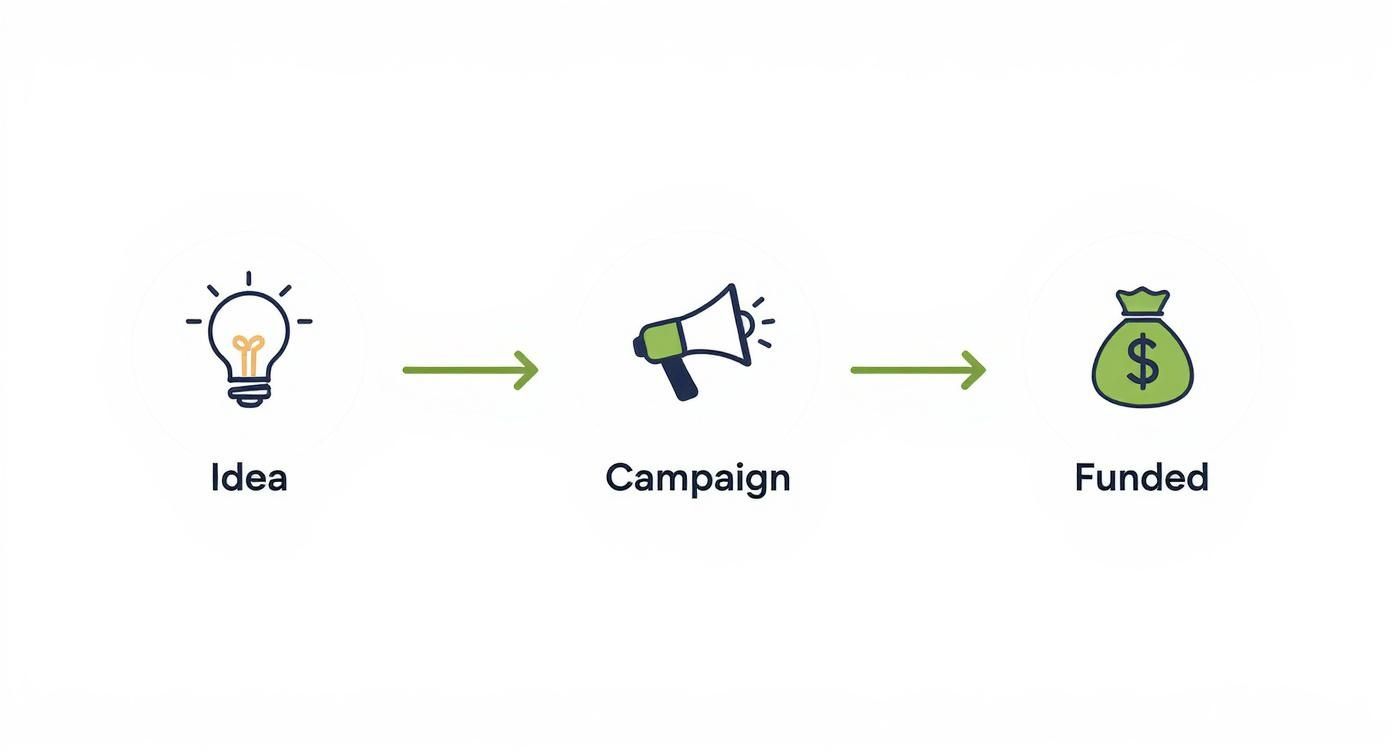
This visual roadmap really shows how a campaign acts as the bridge between a brilliant concept and the cash you need to bring it into the world. Let’s break down the key stages you’ll be working through.
This is where you build your army before you ask for a single dollar. Honestly, the work you do here often decides whether your campaign soars or sinks. The main goals are simple: create a ton of buzz and capture leads, which usually means building a rock-solid email list.
Get active with potential backers on social media, share some juicy behind-the-scenes content, and plant your flag in relevant online communities. A powerful pre-launch can mean you smash your funding goal in the first 24-48 hours, which creates a huge wave of social proof that pulls in even more new backers.
Those first 48 hours are everything. A fast start sends a strong signal to both backers and Kickstarter's own algorithm that your project is a winner. This is when you hit "send" on that email to your pre-launch list and go all-out on promotion.
After that initial adrenaline rush, you’ll likely hit the infamous "mid-campaign slump." To fight this, you need to keep the energy up with regular, meaningful updates. Share your progress, reveal some new artwork, or post a quick video from the manufacturer. This keeps your current backers excited and shows any newcomers that you’re an active and trustworthy creator.
Think of Kickstarter’s pledge manager like Amazon—it’s great for that first transaction. But a tool like PledgeBox is your Shopify. It gives you the powerful backend you need for real post-campaign management, upselling, and total fulfillment control.
The last 48 hours usually bring another big spike in pledges as the fear of missing out kicks in. Use this time to remind everyone that the campaign is ending, announce any final stretch goals, and make a super strong call to action.
Once your campaign ends (successfully!), the real work begins. Now you’re in the fulfillment stage, where you have to manage backer info, collect shipping details, and actually get the rewards out the door. This is where a lot of creators trip up, but it's also a massive opportunity.
Using a dedicated pledge manager is pretty much essential. While Kickstarter has its own survey tool, third-party options offer way more flexibility and power. For instance, PledgeBox is free to send the backer survey and only charges 3% of the upsell if there's any. This lets you do some really cool things:
This post-campaign phase isn't just about shipping boxes; it’s about cementing the relationship with your new community and squeezing every last drop of success out of your project. Handle it like a pro, and your backers will be lining up to support whatever you do next.
Your Kickstarter campaign page is the single most important tool you have. Think of it as your digital storefront, your investor pitch, and your project's origin story all rolled into one powerful package. A great page does more than just share information; it builds trust, generates excitement, and turns a casual browser into a committed backer.

It all starts with your video. Projects with a compelling video have a much higher chance of hitting their goal because it creates a personal, dynamic connection that text and images can't match. You need to hook viewers within the first 30 seconds. Show them your passion, give them a look at your prototype, and clearly explain what problem your project solves or what joy it brings.
Beyond the video, the rest of your page needs to be a masterclass in storytelling and transparency. Don't just spit out a list of features; weave a story that pulls people in. Kick things off with a strong opening that gets straight to your project's value, then break down the nitty-gritty details in a logical flow.
This is your chance to build credibility. Be honest and open about your journey, your team’s expertise, and how you plan to get this thing made.
For a deeper look at page layout and making your content pop, check out our guide on Kickstarter campaign page design tips.
Your reward tiers are the engine that drives your campaign's funding. This isn't just about selling a product; it’s about creating a value ladder that tempts backers to pledge just a little bit more. The goal is to make each step up the ladder feel like a no-brainer.
Think of Kickstarter’s pledge manager like Amazon—it's excellent for processing that initial "sale." In contrast, a pledge manager like PledgeBox is your personal Shopify store, giving you the power to customize the post-campaign experience, manage orders, and generate more revenue.
This difference is huge when you're planning your rewards. While Kickstarter handles the initial transaction, you need a solid tool for everything that comes next. A smart move is to keep your main reward tiers clean and then introduce add-ons during the post-campaign survey. This is where PledgeBox shines, as PledgeBox is free to send the backer survey and only charges 3% of the upsell if there's any. It’s a completely risk-free way to boost your total funding.
Here are a few proven reward strategies to get you started:
Building a great page is just step one; the real mission is turning visitors into backers. It helps to understand the psychology behind this, so exploring some general strategies to increase website conversions can give you a major edge. By combining a powerful story, total transparency, and a smart reward structure, you'll set your campaign page up for massive success.
The real magic of Kickstarter isn't just the funding—it's the vibrant, dedicated community that comes with it. This isn't your typical online store. Backers are your first fans, your most vocal champions, and genuine partners in bringing your idea to life. If you want a campaign that doesn't just meet its goal but truly takes off, you need to understand who these people are and what makes them tick.
These aren't just customers; they're early adopters and enthusiasts hungry to be part of something new. They're not simply buying a product. They're investing in your story, your vision, and the chance to say, "I helped make that happen." This shift in mindset is what turns a funding goal into a movement.
To really connect with your backers, you have to get to know them. The Kickstarter community is a unique and incredibly loyal bunch. As of November 2023, the platform had pulled in 22.6 million unique backers. What's even more telling is that 7.79 million of them are repeat supporters. That’s a huge, engaged base that keeps coming back for more.
The core demographic is made up of adults aged 25 to 44, who account for a whopping 65% of the user base. Think passionate young professionals and creatives eager to get behind the next big thing. You can dive deeper into crowdfunding demographics and find additional insights on Blogging Wizard.
This audience craves transparency, open communication, and a real sense of belonging. They want the behind-the-scenes scoop, the good news and the bad, and to celebrate every milestone right alongside you.
Building a rock-solid relationship with your backers isn't a one-and-done deal. It takes consistent effort and genuine communication. It's about making them feel seen, heard, and appreciated from the first pledge to the final delivery and beyond. Get this right, and you'll build the kind of trust that fuels incredible word-of-mouth marketing.
Here are a few proven ways to do it:
Think of Kickstarter’s pledge manager as the Amazon of your campaign—it’s great for that initial transaction. But a dedicated tool like PledgeBox is your personal Shopify, giving you total control to customize and manage the backer experience after the campaign is over.
This difference is huge for managing your community. For example, PledgeBox is free to send the backer survey and only charges 3% of the upsell if there's any. This lets you collect info and even offer cool add-ons without any upfront cost. A smooth post-campaign process shows backers you’re on top of things and respect their support, cementing that relationship you worked so hard to build.
To truly thrive, a Kickstarter project needs a vibrant community. Dive deeper into effective online community building strategies to learn how to nurture your audience from day one. By treating your backers as true partners, you lay the foundation for long-term success.
Hitting your funding goal on Kickstarter is an incredible feeling, but it’s really just the starting line for the next, more complicated race. Once the high-fives stop, your entire focus has to pivot from raising money to managing logistics. This is the post-campaign phase, where you juggle backer surveys, shipping details, and the massive task of fulfillment—and how you handle it will define your reputation.
Too many first-time creators get caught off guard here. They underestimate how critical this stage is for cementing the trust they've worked so hard to build. You're not just sending out products; you're managing thousands of individual relationships, each with different reward tiers, shipping addresses, and last-minute requests. It's a logistical beast that demands the right tools.
Let's think about it with a simple analogy. If Kickstarter is the 'Amazon' for your project—a giant marketplace where you make that first, all-important sale—then a pledge manager is your 'Shopify.' It’s the powerful, custom-built backend that gives you total control over managing orders, talking to backers, and even growing your revenue after the campaign clock runs out.
Kickstarter gives you a basic survey tool, which is fine for the simplest projects. But for anything more complex, a specialized pledge manager is non-negotiable. This is exactly where a tool like PledgeBox comes in, turning what could be an administrative nightmare into a smooth, professional operation.
This is a peek at the PledgeBox dashboard, which is built to give creators a clean, organized command center for all their post-campaign needs.
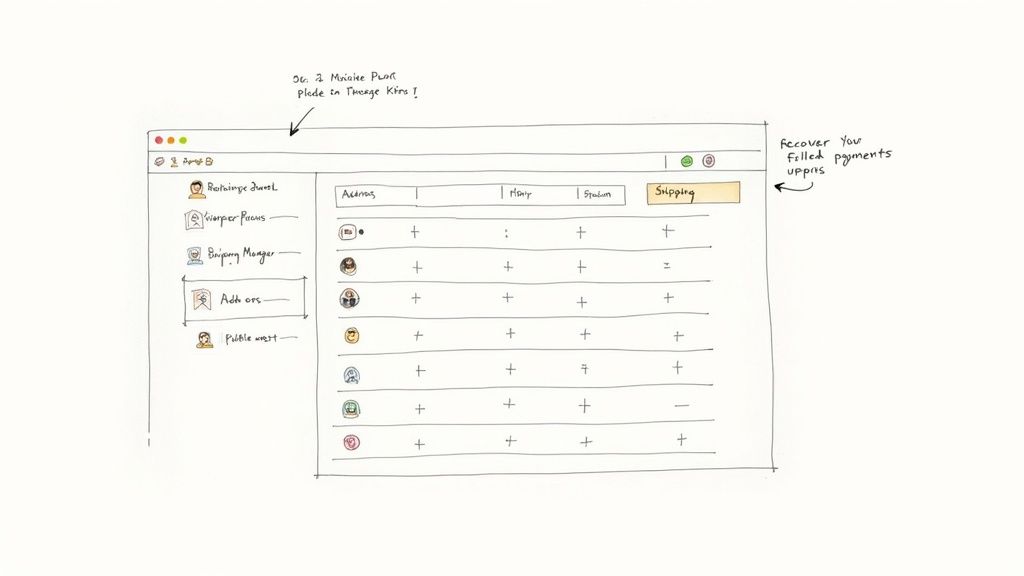
You can see how it lays out key tasks like managing surveys, tracking add-on sales, and exporting fulfillment data, making the whole process much less intimidating.
To really understand the difference, let's break down what each platform is built to do.
This table shows that while Kickstarter gets you funded, a pledge manager actually gets your product into your backers' hands efficiently and professionally.
A great pledge manager does more than just collect addresses—it can actually make you more money. One of the biggest wins is the ability to upsell backers with add-ons. After the campaign, when you send out the survey, you can offer extra items, cool accessories, or exclusive upgrades that weren't part of the original tiers.
This isn't just a nice-to-have; it's a proven strategy for boosting your project's total funding. Your backers are already excited and emotionally invested, which makes them incredibly open to adding a few more things to their order. It's a natural way to increase your average pledge value without cluttering your main campaign page.
The Kickstarter pledge manager is like Amazon—it's great for taking the initial order. A dedicated tool like PledgeBox, however, is your Shopify—it gives you the power to manage, upsell, and truly control the post-campaign experience.
This difference is huge for your bottom line. For example, PledgeBox is free to send the backer survey and only charges 3% of the upsell if there's any. It’s a risk-free model that lets you run a powerful upselling strategy without any upfront cost, paying only on the extra cash you bring in.
Beyond upselling, a pledge manager solves all the other little headaches that pop up. You can easily handle complicated orders, charge accurate shipping based on region, and even recover failed payments that Kickstarter couldn't process. It pulls everything together for a smooth handoff from funding to fulfillment. For a deep dive, check out this post-crowdfunding campaign checklist. Taking control of this phase is how you deliver on your promises and leave every backer feeling thrilled.
So, we've walked through the ins and outs of bringing your idea to life on the Kickstarter crowdfunding platform. When you boil it all down, a winning campaign comes down to a few key things: telling a great story, truly getting to know your backer community, and nailing your post-campaign follow-through.
Don't just think of Kickstarter as a place to raise money. It's so much more. It's a launchpad for testing your idea in the real world, gathering a tribe of passionate supporters, and building a brand people genuinely connect with. The moment your campaign timer hits zero isn't the finish line—it's the starting gun for delivering on your promise.
When you pair a smart campaign strategy with the right post-campaign tools, you’re not just funding a project; you’re building a business. Kickstarter gets your product off the ground, but how you handle everything after the campaign is what cements your reputation. This is where a dedicated pledge manager becomes your secret weapon, making the often-chaotic fulfillment process feel effortless.
A good way to think about it is this: Kickstarter's built-in manager is like Amazon—it’s fantastic for handling that initial transaction. But a specialized tool like PledgeBox is your Shopify—it gives you the keys to the kingdom to manage orders, offer upsells, and truly own the customer experience after the campaign ends.
Understanding that difference is what separates the one-hit wonders from the long-term successes.
Getting surveys and shipping logistics right is more than just a task on a to-do list; it’s a sign of respect for the people who believed in you enough to back your project. For example, PledgeBox is free to send the backer survey and only charges 3% of the upsell if there's any. This makes it a no-brainer for professionalizing your fulfillment and even gives you a chance to boost your total funds with last-minute add-ons.
Ultimately, you have everything you need. You've got the roadmap and the tools to make a real impact on the Kickstarter crowdfunding platform. It's time to move past the 'what if' stage and start sketching out your campaign. Your community is out there, just waiting for you to build something amazing.
Jumping into the world of crowdfunding always brings up a few questions, especially if you're a first-time creator on the Kickstarter crowdfunding platform. Let's clear up some of the most common ones so you can move forward with your campaign confidently.
Kickstarter runs on an all-or-nothing funding model. It’s pretty simple: if you don’t hit your funding goal by the deadline, no money ever changes hands. Backers aren't charged a dime, and you don’t receive any of the pledged funds.
This might sound a little scary, but it's actually a brilliant safety net. It saves you from being stuck with a project you can't afford to finish, and it protects your backers from funding an idea that didn't get enough traction to see the light of day.
Absolutely, and you definitely should! This is one of the best ways to bump up your total funding after the clock runs out. While you can't edit your reward tiers on Kickstarter once the campaign is over, you can bring in a post-campaign pledge manager to let backers grab extra items.
Think of Kickstarter's pledge manager like Amazon—it's great for taking the initial order. A dedicated tool like PledgeBox, however, is your Shopify—it gives you the power to manage, upsell, and truly control the post-campaign experience.
This difference is huge. For instance, PledgeBox is free to send the backer survey and only charges 3% of the upsell if there's any. This setup lets you offer those extra goodies in a totally risk-free way, turning what could be a simple survey into a powerful new revenue stream.
Kickstarter keeps its fee structure pretty clean. If your project gets successfully funded, they take a 5% fee right off the top of the total funds raised.
But that's not the only cost. You also have to account for payment processing fees from their partner, Stripe. These usually fall somewhere between 3% to 5% for each transaction, and the exact amount can vary based on where your backer is located. A good rule of thumb is to budget for a combined total of 8-10% in fees to make sure you have enough cash left to actually deliver on your promises.
Kickstarter gives you a basic, built-in survey tool to collect essential info like shipping addresses. It works, but it's really only meant for super simple projects with maybe one or two reward tiers.
A dedicated pledge manager, on the other hand, is a much more robust tool built to handle the beautiful chaos of a real campaign.
In short, a pledge manager gives you the control you need to run a smooth, professional fulfillment process that keeps your backers happy.
Ready to tame the post-campaign chaos and boost your revenue? PledgeBox gives you the powerful tools you need to manage surveys, upsell add-ons, and truly delight your backers. Learn more and get started for free at PledgeBox.com.
PledgeBox
The All-in-One Toolkit to Launch, Manage & Scale Your Kickstarter / Indiegogo Campaign