 PledgeBox
Your Guide to a Modern Crowd Sourcing Site
Discover how a crowd sourcing site can bring your idea to life. Our guide breaks down platforms like Kickstarter and shows you how to run a successful campaign.
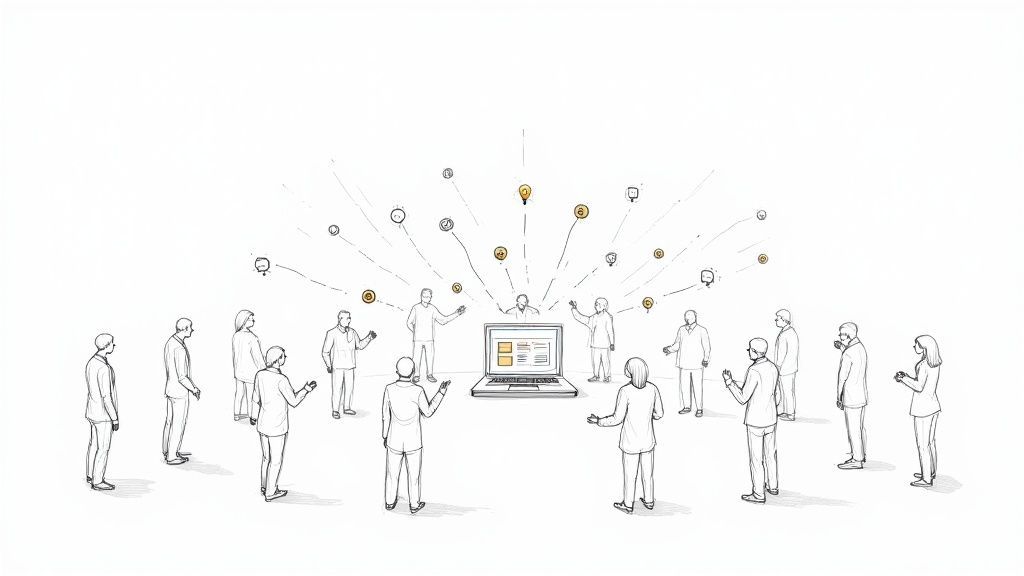
Discover how a crowd sourcing site can bring your idea to life. Our guide breaks down platforms like Kickstarter and shows you how to run a successful campaign.
Think of a crowd sourcing site as a digital town square. It's a place where you can stand up, share a passion project, and pitch it directly to a community that genuinely wants to see you succeed. These platforms connect creators—from indie filmmakers to tech innovators—with a worldwide audience of potential backers.
This whole model completely flips the script on how new ideas get off the ground.
Instead of wrestling with bank loans or chasing down venture capitalists, creators can sidestep the traditional gatekeepers entirely. You just lay out your vision, set a funding goal, and offer some cool rewards in exchange for pledges. It’s a setup that opens the doors to funding for anyone with a great idea, which we dive into more deeply in our guide to defining crowdfunding.
A crowd sourcing site isn't just a piggy bank. It's also an incredible tool for validating your idea. When hundreds or even thousands of people are willing to put money down for your project before it even exists, that’s a powerful signal that you’ve found a real market need. It's market research with real skin in the game, and it seriously cuts down your financial risk.
The real magic of a crowd sourcing site is its power to build a community around an idea. Your backers aren't just customers; they become your first fans, your cheerleaders, and a valuable source of feedback.
This community-building is priceless. You're creating a base of loyal supporters who will stick with you long after the campaign wraps up. The proof is in the numbers: the global crowdfunding market hit $2.14 billion in 2024 and is expected to jump to $5.53 billion by 2030. You can see more on these trends in this crowdfunding marketing report. That kind of growth shows just how central these platforms have become for launching new ventures.
Not all crowd sourcing sites are created equal, and honestly, picking the right one can make or break your project. Your choice really boils down to one simple question: what are you giving your backers in return for their support? Figuring this out is one of the first major hurdles after you've decided to go the crowdfunding route instead of chasing traditional funding.
This little diagram helps visualize that first big decision—whether to seek institutional funds or tap into the power of the crowd.
Once you’ve landed on crowdfunding, the next step is to drill down and find the specific model that fits your campaign goals like a glove.
Each crowdfunding model has its own flavor and attracts a different kind of backer. Getting to know them is key to finding your perfect platform.
To make things easier, here's a quick breakdown of the four main types of crowdfunding. This table should help you figure out which path makes the most sense for your project.
| Model Type | How It Works | Best For | Example Platforms |
|---|---|---|---|
| Reward-Based | Backers pledge money in exchange for a non-financial perk—usually the product you're creating or some exclusive merch. | Gadgets, board games, films, fashion, and other creative projects. | Kickstarter, Indiegogo |
| Donation-Based | People give money to a cause, project, or individual without expecting anything tangible in return. It's pure goodwill. | Charitable causes, personal emergencies, community projects, medical bills. | GoFundMe, DonorsChoose |
| Equity-Based | Contributors invest money in your business in exchange for a small piece of ownership (shares or equity). | Startups and early-stage companies with high growth potential. | Wefunder, StartEngine |
| Debt-Based | Also known as peer-to-peer (P2P) lending, backers lend you money that you agree to pay back over time, usually with interest. | Small businesses needing a loan or individuals looking for personal loans. | LendingClub, Prosper |
As you can see, the model you choose really shapes your entire campaign, from the story you tell to the community you build.
For most creators with a new product, the reward-based model is the go-to. It’s the classic crowdfunding path. But even within that world, you have choices. The Kickstarter vs. Indiegogo debate is a big one for creators, as each platform has its own quirks and community that can seriously affect your campaign’s success. When exploring the various models of raising capital, such as reward-based or donation-based, don't overlook the potential of equity crowdfunding.
Getting these basics down is the first step. For a much deeper dive, you should check out our guide on choosing between Kickstarter and Indiegogo.
Of course, once the campaign ends, managing all those backers is the next adventure. You can think of the Kickstarter pledge manager like Amazon—a huge marketplace. A tool like PledgeBox, on the other hand, is like Shopify; it gives you your own personalized storefront to handle upsells and surveys. A key difference is that PledgeBox is free to send the backer survey and only charges 3% on upsell revenue, if there's any, making it a pretty low-risk way to nail your fulfillment.
So, how does a major crowd sourcing site like Kickstarter or Indiegogo really function behind the scenes? It’s not just a matter of hitting "launch." The whole process starts with two critical decisions you have to nail long before your campaign ever sees the light of day.
First, you need to set a realistic funding goal. This isn’t a wish list number; it’s a hard calculation. You have to account for everything: production, shipping, platform fees, and a buffer for those inevitable surprises. If you get this wrong, you could hit your goal and still not be able to deliver your product—a creator’s worst nightmare.
Next up are your reward tiers. These are the perks your backers get for supporting you, and they need to be irresistible. Think strategically. Structure them to guide backers up the ladder, from a simple thank-you to the product itself, or even a deluxe bundle.
Once your homework is done and the page is built, it's go-time. A killer launch video is absolutely non-negotiable here. It’s your chance to tell your story, forge an emotional connection, and show people why they should care. It’s also a good idea to learn how to make a compelling pitch deck, as those skills are invaluable for convincing backers to jump on board.
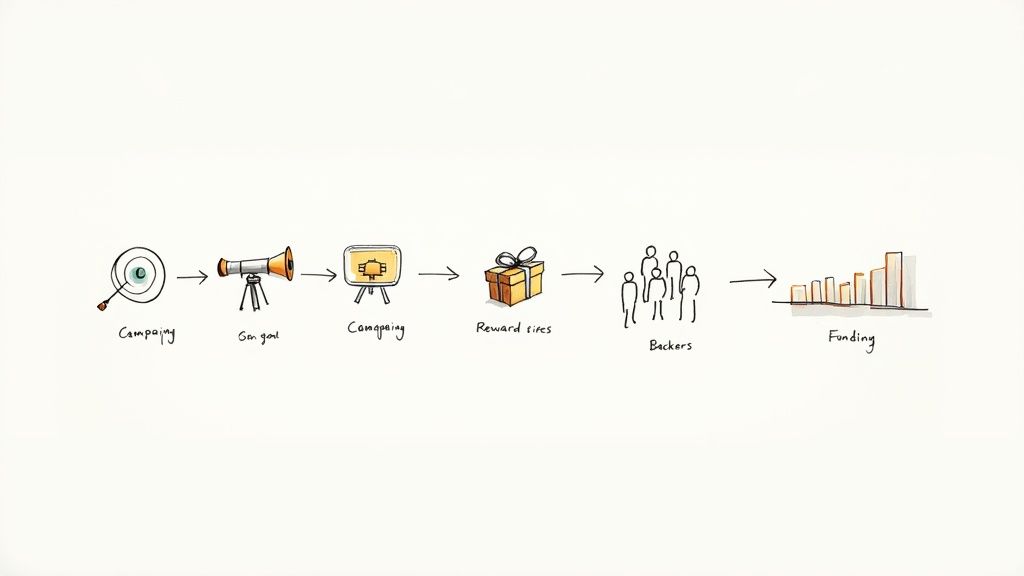
The best platforms are designed to give creators multiple shots at getting noticed, featuring popular projects and organizing them by category. This just goes to show how vital a strong visual identity and a crystal-clear message are if you want to stand out from the crowd.
A crucial detail to understand is the funding model. All-or-nothing means you only see a dime if you hit 100% of your goal. Flexible funding lets you keep whatever you raise, no matter the total. All-or-nothing creates more urgency but comes with higher stakes.
During the campaign, keeping your backers in the loop with consistent, honest updates is non-negotiable. It’s how you build trust and keep the energy high. This constant communication is a signature move of the most successful projects. To give you a sense of scale, by January 2024, Kickstarter alone had launched over 650,000 projects, raising billions from supporters around the globe.
Of course, the clock hitting zero doesn't mean the work is over. That’s when post-campaign management kicks in, and it's where pledge managers become a creator's best friend. Think of Kickstarter's pledge manager as a big marketplace like Amazon. A dedicated pledge manager like PledgeBox, on the other hand, is more like your own personal Shopify store, giving you total control.
Better yet, PledgeBox is free to send the backer survey and only charges 3% on revenue from any upsells, if there's any, making it a powerful and low-risk tool for managing everything after the campaign ends. To see how different platforms stack up, you can check out our full rundown of different crowd sourcing sites.
So, you did it. Your campaign was a massive success, you hit your funding goal, and the celebration is over. Now what? This is the moment the real work starts, and frankly, it's where a lot of creators drop the ball, turning a funding win into a fulfillment disaster.
Managing all your backers, their pledges, and their expectations is just as important as running the campaign itself. This is exactly why a dedicated pledge manager is a creator's best friend. Think of it as a specialized tool built to handle all the messy logistics after the campaign clock stops ticking.
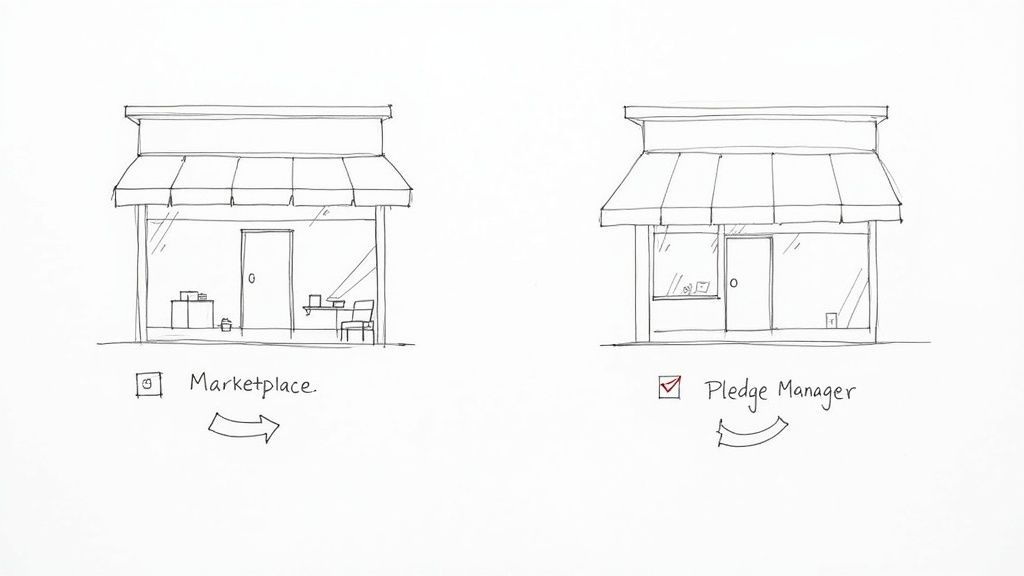
Here’s a simple way to picture the difference: using Kickstarter's pledge manager is a bit like selling on Amazon—you're just one product in a huge marketplace. A dedicated tool like PledgeBox, on the other hand, is like having your own Shopify store. It gives you a personal, branded storefront where you can manage your customer relationships directly.
A good pledge manager becomes your command center for everything that happens next. It’s how you’ll send out detailed backer surveys to get crucial info like shipping addresses, reward choices, and even color preferences. More importantly, it gives you a chance to open up a new stream of revenue through add-ons and upsells.
A pledge manager transforms the fulfillment process from a logistical headache into a strategic opportunity. You can offer backers extra items, accessories, or upgraded versions of your product, often generating significant post-campaign revenue.
This is where picking the right tool can make or break your post-campaign phase. Take PledgeBox, for example. It's completely free to send the backer survey. The platform only takes a small 3% fee on funds you raise from upsells—if there's any. This setup is a game-changer for creators, offering a powerful, low-risk way to deliver on promises without facing huge upfront costs.
By using a dedicated pledge manager, you don't just make your life easier. You also create a much more professional and satisfying experience for the very community that helped bring your idea to life. It’s the final, crucial step in your journey on any crowd sourcing site.
The crowdfunding world never sits still. It’s always changing, pushed forward by new tech and what backers have come to expect. When you look at what's next for any crowd sourcing site, it’s all about creating smarter, more personal experiences for everyone involved. New tools are making it easier than ever for creators to find their tribe, no matter where they are in the world.
Artificial intelligence and machine learning are leading the charge. These aren't just buzzwords; they're becoming practical tools baked right into the platforms. They can analyze backer behavior, help predict if a campaign will hit its goal, and give creators incredibly precise advice on who to reach out to. It’s like having a data scientist on your team before you even press "launch."
Of course, social media is still the undisputed king of free promotion. It gives projects a massive boost, extending their reach far beyond the platform itself and helping build global communities around shared passions.
Beyond the big tech shifts, we're also seeing a boom in specialized crowdfunding platforms. Instead of trying to be everything to everyone, these niche sites focus on specific communities—think tabletop gaming, sustainable tech, or independent comics. This is a game-changer because it connects creators with an audience that's already fired up and ready to back projects they care about.
This trend toward specialization, powered by AI-driven insights, is making crowdfunding a seriously sophisticated option for launching a product. Industry forecasts show the global crowdfunding market is set to grow by another USD 540.1 billion between 2025 and 2029, chugging along at a massive 20.5% CAGR. You can dig into more of the data on how AI is redefining the market on PR Newswire.
The future of crowdfunding isn't just about raising money; it's about building smarter campaigns, fostering dedicated communities, and using data to turn a great idea into a successful reality.
As the industry gets bigger, what happens after the campaign is just as important. Tools that manage the post-campaign chaos are becoming essential. Think of it this way: a platform like Kickstarter is like Amazon (a huge marketplace), while a pledge manager like PledgeBox is your personal Shopify store. It gives you the control.
PledgeBox’s model, where it’s free to send the backer survey and only charges 3% on upsell revenue, if there's any, is perfectly in tune with where things are headed. Creators get powerful, low-risk tools designed to make their lives easier and their businesses more successful.
Even with the perfect project and a solid plan, jumping into the world of crowdfunding can feel a bit daunting. New creators, in particular, tend to run into the same questions about everything from funding goals to post-campaign logistics. Let's clear the air and tackle some of the most common ones.
First up, the big one: what happens if you don't hit your funding goal? It depends on the platform. On "all-or-nothing" sites like Kickstarter, if you don't reach 100% of your target, no money changes hands. It’s a high-stakes model, but it’s designed to protect backers and make sure you actually have enough cash to follow through on your promises.
Another common question is about the fees. Most crowdfunding platforms will take a cut, but only if your campaign is a success. You can typically expect a platform fee of around 5% of the total funds raised, plus a payment processing fee that usually lands somewhere between 3-5%.
Now, what about after the confetti settles and your campaign is over? This is where pledge managers come in, and it's a critical choice. Think of it this way: Kickstarter’s pledge manager is like Amazon—a huge, one-size-fits-all marketplace. A dedicated pledge manager like PledgeBox, on the other hand, is like Shopify, giving you a personalized storefront to manage your backer relationships and grow your brand.
That distinction really matters when you start looking at costs and features.
Choosing the right post-campaign tool can make or break your project's profitability and your backers' experience. The goal should always be to find a solution that gives you powerful features without hitting you with heavy upfront costs.
For example, PledgeBox is free to send your backer survey. The platform only charges a 3% fee on any upsell revenue you generate from add-ons, if there's any. This model takes the financial risk off your shoulders while giving you the tools you need to manage rewards, collect shipping info, and even boost your total funding.
Finally, what about taxes? Yes, the money you raise is generally considered taxable income. It’s absolutely essential to talk to a tax professional to understand what you owe and how to properly account for all your campaign expenses to lower that tax bill.
To help you keep these key points straight, here's a quick reference table.
| Question | Answer |
|---|---|
| What if I don't meet my goal? | On "all-or-nothing" platforms, no money is exchanged. This protects both you and your backers. |
| How much are platform fees? | Expect to pay around 5% for the platform fee and another 3-5% for payment processing, but only on successful campaigns. |
| How do pledge managers work? | They help you manage backer info post-campaign. Some, like PledgeBox, offer a low-risk model based on upsell revenue. |
| Is the money I raise taxable? | Yes, it's generally considered taxable income. Always consult with a tax professional to manage your finances correctly. |
Navigating these details is a huge part of running a successful campaign. By understanding the costs, tools, and obligations upfront, you can focus on what really matters: bringing your amazing idea to life.
Ready to streamline your post-campaign process and delight your backers? With PledgeBox, you get a powerful, low-risk toolkit for surveys, upsells, and fulfillment. Discover how PledgeBox can help you succeed.
PledgeBox
The All-in-One Toolkit to Launch, Manage & Scale Your Kickstarter / Indiegogo Campaign