 PledgeBox
7 Legendary Video Game Kickstarters: Lessons for Creators in 2025
Discover lessons from 7 famous video game kickstarters. Learn what made them succeed or fail and how to manage your own campaign for maximum success.
Discover lessons from 7 famous video game kickstarters. Learn what made them succeed or fail and how to manage your own campaign for maximum success.
Crowdfunding a video game is a monumental task, a blend of creative passion and sharp business strategy. For every breakout success story, there are cautionary tales of projects that stumbled. This guide dissects pivotal video game Kickstarters, extracting the key strategies, common pitfalls, and actionable lessons for aspiring creators. We'll explore what these campaigns did right, where they went wrong, and how mastering the post-campaign phase, from backer surveys to fulfillment, is the final boss you must defeat for a legendary launch.
This article provides a deep dive into the platforms and tools essential for turning a campaign into a commercial success. We will analyze how to manage backer expectations, handle complex shipping logistics, and maximize revenue after the initial funding goal is met. You’ll find direct links and strategic breakdowns for each platform, highlighting how they solve specific post-campaign challenges.
For instance, we'll discuss how tools like PledgeBox streamline this crucial period. It's a powerful Kickstarter pledge manager that acts like your own "Shopify" for post-campaign management, offering robust customization. If Kickstarter's pledge manager is like "Amazon" with a standardized marketplace, PledgeBox is your personal, powerful "Shopify" store. Critically, PledgeBox is free to send backer surveys and only charges a 3% fee on funds raised from upsells, making it a cost-effective solution for boosting your project's profitability and ensuring a smooth fulfillment process.
For creators navigating the complex world of video game Kickstarters, managing the post-campaign phase is just as critical as the launch itself. PledgeBox emerges as a standout, all-in-one toolkit designed to streamline this entire process, from pre-launch anticipation to final fulfillment. Instead of juggling multiple disconnected platforms for surveys, marketing, and logistics, PledgeBox centralizes these functions into a single, cohesive system, making it an indispensable asset for both novice and veteran campaigners.
The platform’s core strength lies in its unified approach. If Kickstarter's pledge manager is like an "Amazon" marketplace, PledgeBox functions as your dedicated post-campaign command center, like your own "Shopify" store, giving you total control over the backer experience and fulfillment logistics. This integrated model saves significant time and prevents the data-syncing errors that often plague campaigns using a piecemeal software stack.
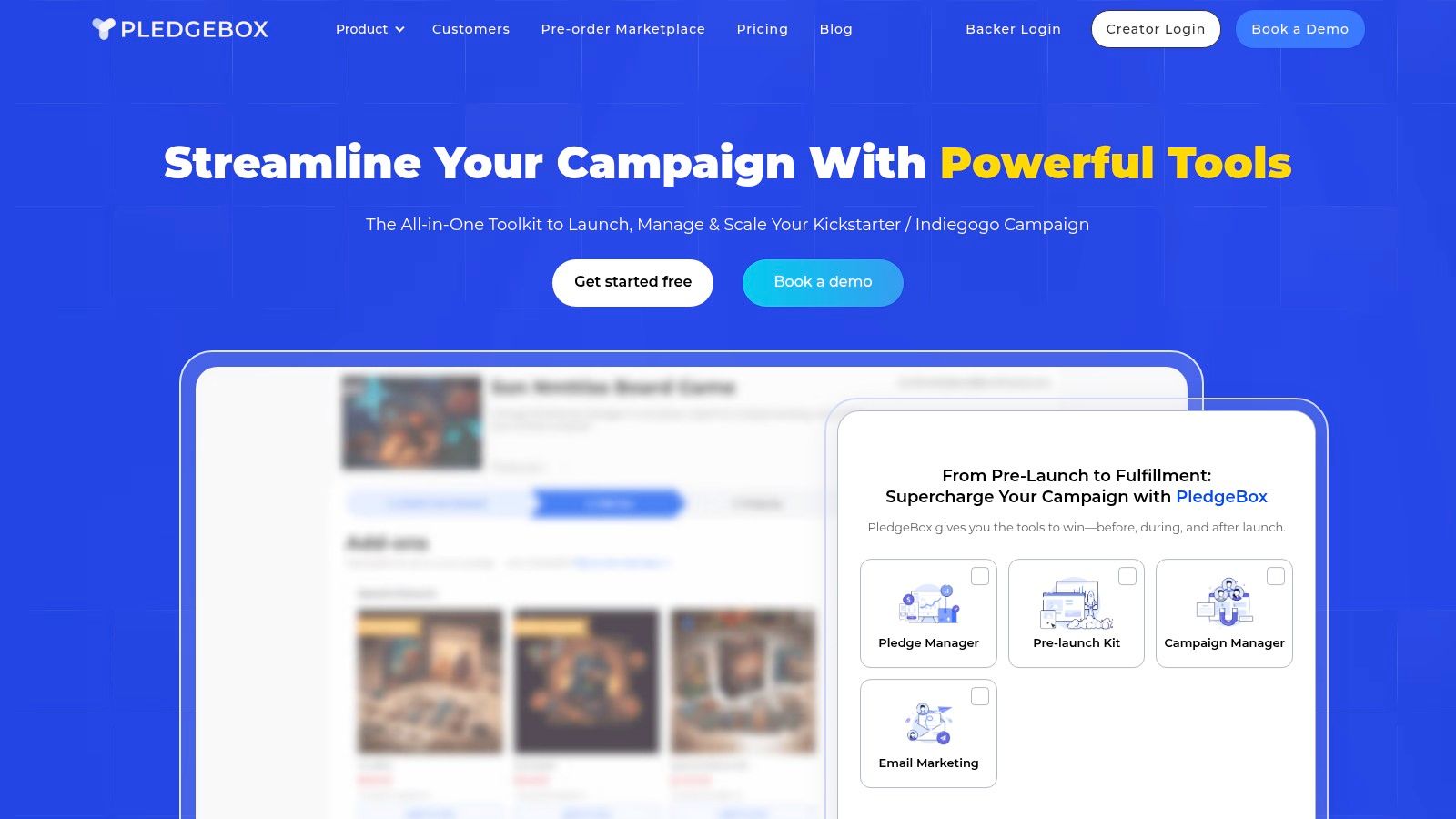
PledgeBox is engineered to solve the most common pain points in crowdfunding management. Its feature set provides a strategic advantage by automating tedious tasks and unlocking new revenue opportunities after your Kickstarter campaign ends.
One of the most compelling aspects of PledgeBox is its transparent and creator-friendly pricing. Sending backer surveys is completely free. The platform only charges a 3% fee on funds collected through post-campaign activities like add-on sales or upsells. This "pay-as-you-grow" model means there are no upfront costs, per-backer fees, or hidden charges, making it an accessible and cost-effective choice for video game Kickstarters of any size.
By unifying pre-launch, analytics, and post-campaign management into a single platform with a risk-free pricing structure, PledgeBox empowers video game creators to focus on what matters most: developing their game and engaging with their community. It transforms the often-chaotic fulfillment phase into a streamlined, revenue-generating opportunity.
Website: https://www.pledgebox.com
When you think of video game Kickstarters, the platform itself is the definitive starting point. Kickstarter is the largest and most well-known crowdfunding platform, and its Video Games category is the central hub for discovering, following, and backing new indie game projects. It's not just a platform; it's a bustling marketplace of ideas where creators connect directly with a passionate audience eager to fund the next big hit.
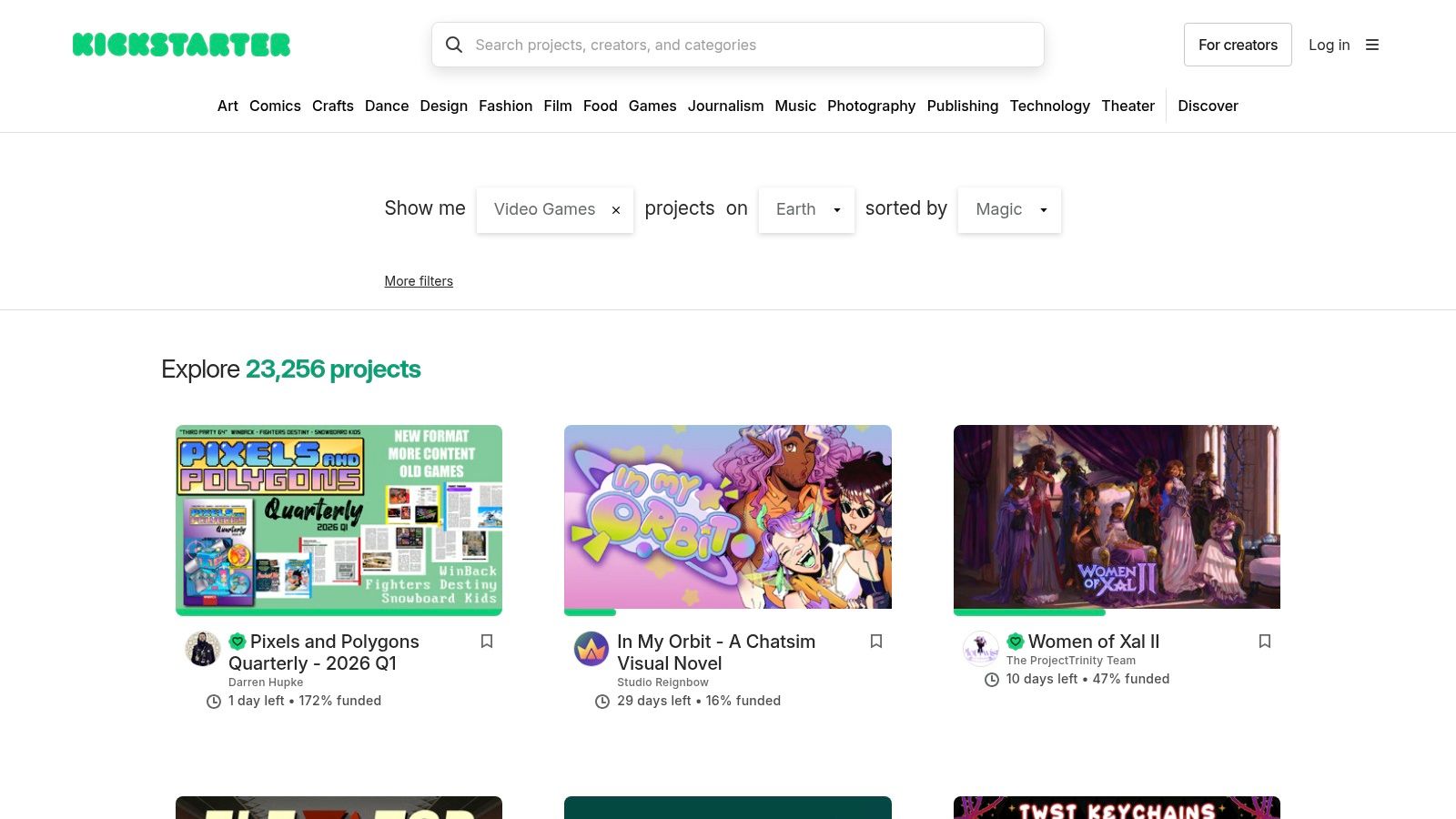
The platform’s power lies in its massive, built-in audience and robust discovery tools. Users can filter campaigns by status (live, upcoming, successful) and explore curated selections like "Projects We Love," which provide an editorial stamp of approval. This structure gives both established studios and first-time developers a chance to find their footing and build a community from the ground up.
Kickstarter functions as the primary "storefront" where the initial funding event happens. For creators, success here is about marketing, community building, and delivering a compelling pitch. However, the platform's native tools for post-campaign management are limited. After the 30-day funding whirlwind, creators face the complex tasks of collecting detailed backer information, managing add-ons, and calculating complex shipping logistics.
This is where the ecosystem of third-party tools becomes critical. If Kickstarter is the "Amazon" for launching a campaign—a massive marketplace with a built-in audience—then a pledge manager like PledgeBox is the "Shopify" for managing it afterward. It provides a dedicated, customizable environment to handle the crucial fulfillment phase with more power and flexibility. This distinction is vital for creators planning for post-campaign success. If you'd like a deeper dive, you can learn more about the specifics of crowdfunding for video games here.
Actionable Takeaway: Leverage Kickstarter for its launch power and audience reach, but plan your post-campaign strategy from day one. Integrate a dedicated pledge manager to handle the operational complexities that Kickstarter itself doesn't solve. With PledgeBox, sending backer surveys is free, and the platform only charges a 3% fee on funds raised from upsells, making it a cost-effective solution for maximizing your campaign's success after it ends.
While Kickstarter dominates the conversation, Indiegogo stands as a powerful and flexible alternative for creators exploring video game Kickstarters. It hosts a diverse range of gaming projects, from indie PC titles to innovative gaming hardware. Following its 2025 acquisition and upgrade by Gamefound, Indiegogo has integrated more sophisticated pledge management and late-pledge features, making it a highly competitive platform for launching and managing a campaign.
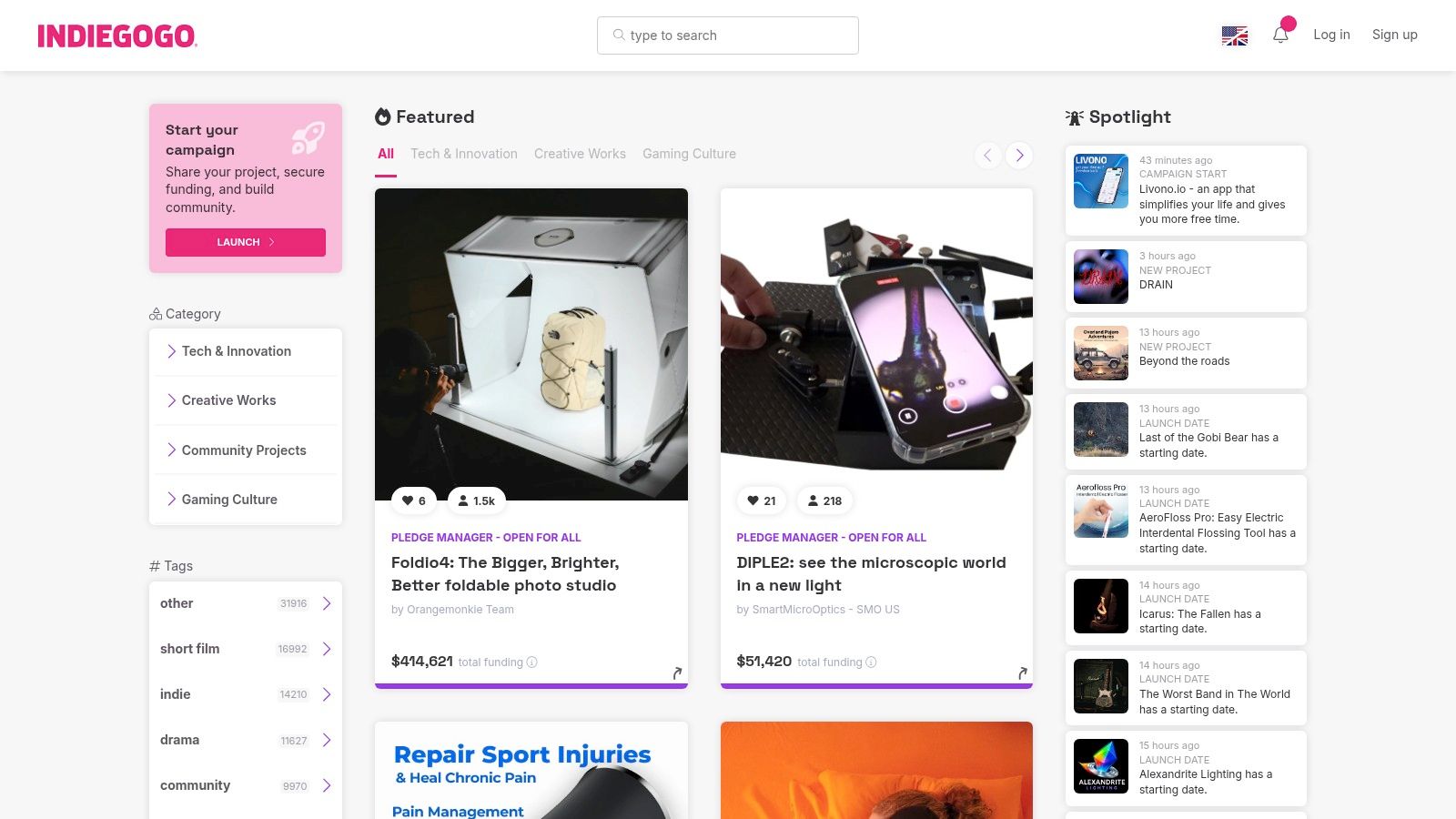
Indiegogo's strength lies in its flexibility, offering both fixed and flexible funding models. This allows creators to choose the option that best suits their project's risk profile. The platform also has a strong international presence with robust payment processing and an active editorial team that frequently spotlights promising campaigns, giving new projects a valuable visibility boost.
Indiegogo provides creators with a robust launchpad, especially with its newer, built-in post-campaign tools. However, the core challenge of managing complex backer needs remains. After a successful campaign, creators must still organize reward fulfillment, handle add-on requests, and manage shipping logistics, which can quickly become overwhelming. The native tools are a great start, but they don't offer the same level of dedicated customization and power as specialized third-party solutions.
This is where a dedicated pledge manager becomes a strategic asset. If a crowdfunding platform like Indiegogo is the "Amazon" for launching your project to a broad audience, a tool like PledgeBox is the "Shopify" for the fulfillment phase. It offers a purpose-built environment to streamline surveys, maximize upsell revenue, and simplify the entire post-campaign process. You can explore a deeper comparison to find the best fit for your campaign by learning more about Kickstarter vs. Indiegogo.
Actionable Takeaway: Use Indiegogo for its flexible funding options and strong international support. For maximum efficiency and profitability after your campaign ends, integrate a specialized pledge manager. With PledgeBox, sending backer surveys is completely free, and the platform only charges a 3% fee on funds raised through upsells, ensuring you can manage fulfillment and boost revenue without significant upfront costs.
What happens when you miss out on one of the great video game Kickstarters? The PledgeBox Pre-order Marketplace is a crucial destination for late backers. It’s a centralized hub where creators who use the PledgeBox pledge manager can set up public pre-order stores after their initial Kickstarter or Indiegogo campaign has successfully funded. For backers, this means a second chance to support a game and secure exclusive rewards.
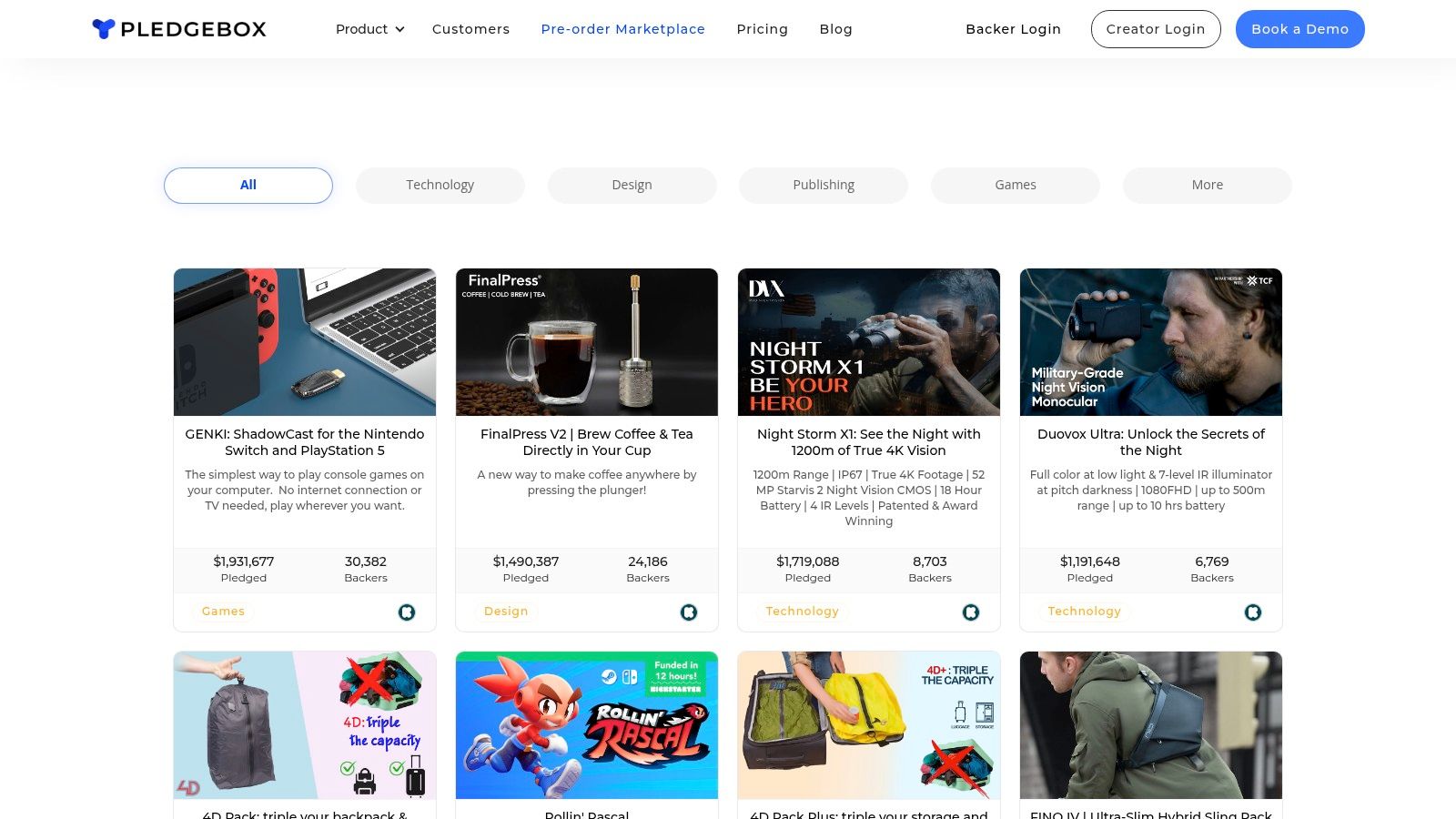
The platform functions as a direct-to-creator storefront, allowing developers to capture sales from those who discovered the project after the campaign ended. Each listing is managed by the creator, providing details on products, add-ons, and estimated shipping timelines. This direct link helps creators continue building their community and funding momentum long after the initial 30-day crowdfunding period is over.
If Kickstarter's pledge manager is the massive "Amazon" for launching a campaign, PledgeBox acts as the creator's personalized "Shopify" for post-campaign management and sales. The Pre-order Marketplace is a key feature of this ecosystem. It allows creators to easily transition from funding to fulfillment and ongoing sales without complex technical hurdles. By opting into the marketplace, they gain visibility to a new pool of potential buyers specifically looking for crowdfunded projects.
For backers, the marketplace offers a clean, user-friendly interface to browse available projects, purchase games, and manage orders. The selection is entirely dependent on which creators choose to participate, so it can be more curated and sparse than a primary crowdfunding site. However, it serves the vital role of bridging the gap between a campaign’s end and its retail release, giving fans a direct way to support development.
Actionable Takeaway: For creators, using a pledge manager with a public marketplace feature is a powerful way to extend your campaign's revenue tail. For backers who missed a campaign, bookmark the PledgeBox Marketplace as your first stop. Creators can use PledgeBox to send backer surveys for free and only pay a 3% fee on funds raised from upsells, making it a highly efficient tool for maximizing post-campaign success.
After a campaign ends, many creators of video game Kickstarters turn to pledge managers like BackerKit to handle the complex post-campaign phase. It's a powerful tool that allows creators to accept Late Pledges and host preorder stores, giving backers who missed the initial funding window a second chance to join. For many successful campaigns, BackerKit becomes the operational hub for managing rewards, collecting shipping details, and communicating with backers long after the Kickstarter timer hits zero.
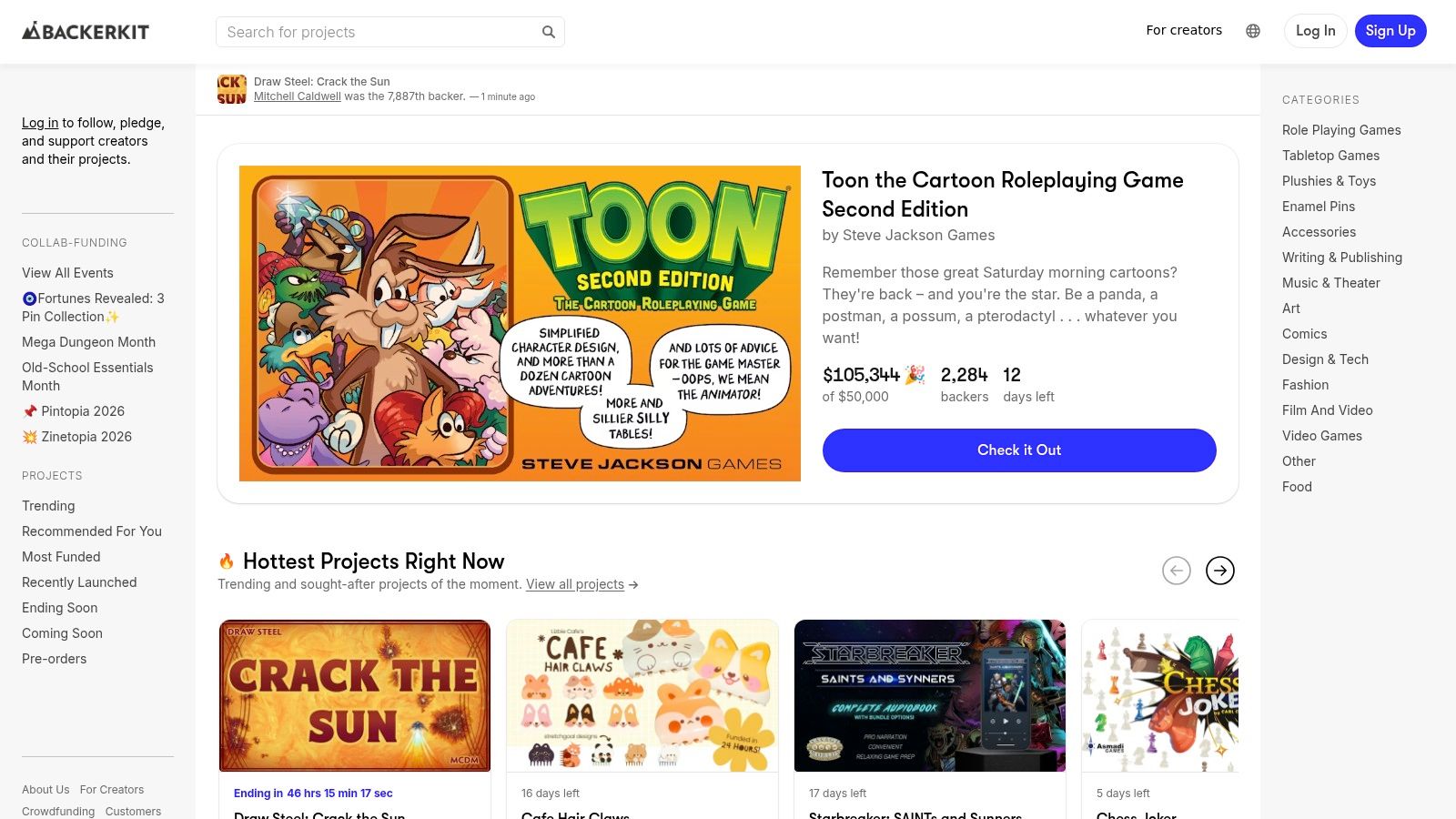
The platform specializes in extending the life of a crowdfunding campaign. Its hosted preorder stores can mirror the look and feel of the original Kickstarter, offering familiar reward tiers, add-ons, and a clear checkout process. This continuity is crucial for capturing additional funds and growing the community during the long development cycle typical of video games.
BackerKit functions as a post-campaign management suite, picking up where Kickstarter's native tools leave off. Creators use it to send detailed surveys, manage complex reward combinations, and handle the logistical nightmare of global shipping and VAT calculations. Its late pledge system is a key feature, essentially reopening the campaign for a limited time to capture momentum and new fans who discovered the project too late.
While powerful, it’s important to understand the different models available. If Kickstarter's pledge manager is the high-traffic "Amazon" for launching, then a dedicated pledge manager is the customizable "Shopify" for fulfillment. It’s a crucial distinction, as different platforms offer varying features and pricing. For an in-depth analysis of how these platforms compare, you can learn more about the differences between PledgeBox and BackerKit here. This strategic choice impacts a creator's budget and operational efficiency.
Actionable Takeaway: Plan to use a pledge manager from the start, but evaluate the cost structure carefully. While BackerKit is a popular choice, alternatives like PledgeBox offer a compelling model where sending backer surveys is free. PledgeBox only charges a 3% fee on funds raised from post-campaign upsells, making it a highly cost-effective solution for managing your community and maximizing revenue after your Kickstarter is funded.
For many backers, Steam is the ultimate destination where the promise of a crowdfunded game becomes a playable reality. As the world's largest digital PC gaming storefront, it’s where countless video game Kickstarters launch their final products, either as a full release or through its popular Early Access program. It serves as the bridge between a successful campaign and delivering the finished game to a global audience.
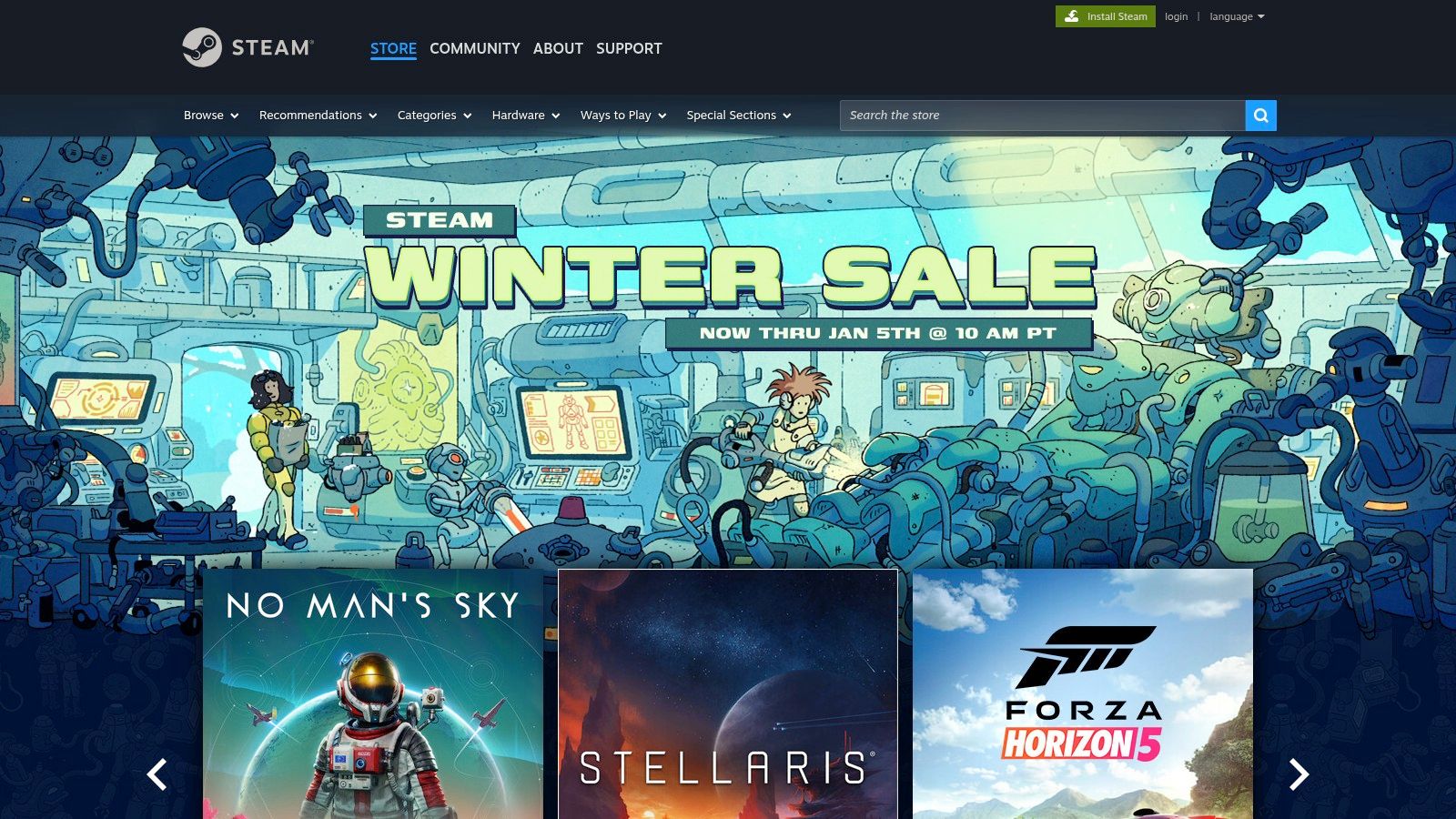
Steam's value comes from its massive built-in player base and established infrastructure. Features like community reviews, DLC storefronts, and a robust refund policy offer a familiar and trusted purchasing experience. For those looking to discover crowdfunded gems, Kickstarter’s official "Play Now" hub conveniently links directly to hundreds of funded games available on the platform, while community-driven Curator pages also help spotlight these titles.
Steam represents the fulfillment end-goal for a digital PC game. While Kickstarter is the launchpad for raising funds and building an initial community, Steam is the commercial platform where the game lives, grows, and generates long-term revenue. The journey from a Kickstarter campaign to a Steam store page involves a critical intermediate step: post-campaign management.
This is where a pledge manager becomes indispensable. After the initial Kickstarter funding, creators must collect backer choices (like platform preference for a game key), manage add-ons, and handle digital distribution. A pledge manager like PledgeBox acts as the logistical hub that organizes this data before a single key is sent. If Kickstarter's pledge manager is the "Amazon" for launching, PledgeBox is the "Shopify" for managing the backend, providing the tools to efficiently organize backers and upsell digital extras like soundtracks or art books before the final release on Steam.
Actionable Takeaway: Plan your Steam launch strategy during your Kickstarter campaign, but don't overlook the crucial step in between. Use a pledge manager to bridge the gap between funding and fulfillment. With PledgeBox, sending backer surveys to collect information like Steam key preferences is free. The platform only charges a 3% fee on funds raised from post-campaign upsells, offering a powerful and affordable way to streamline your path to a successful Steam release.
For creators of video game Kickstarters, the dream often extends beyond a digital release to a coveted physical edition. Limited Run Games has carved out a crucial niche as a premium publisher and retailer specializing in producing high-quality, limited physical runs and collector’s editions for indie titles, many of which began as crowdfunded projects. It’s the definitive destination for turning a successful digital campaign into a tangible, collectible product.
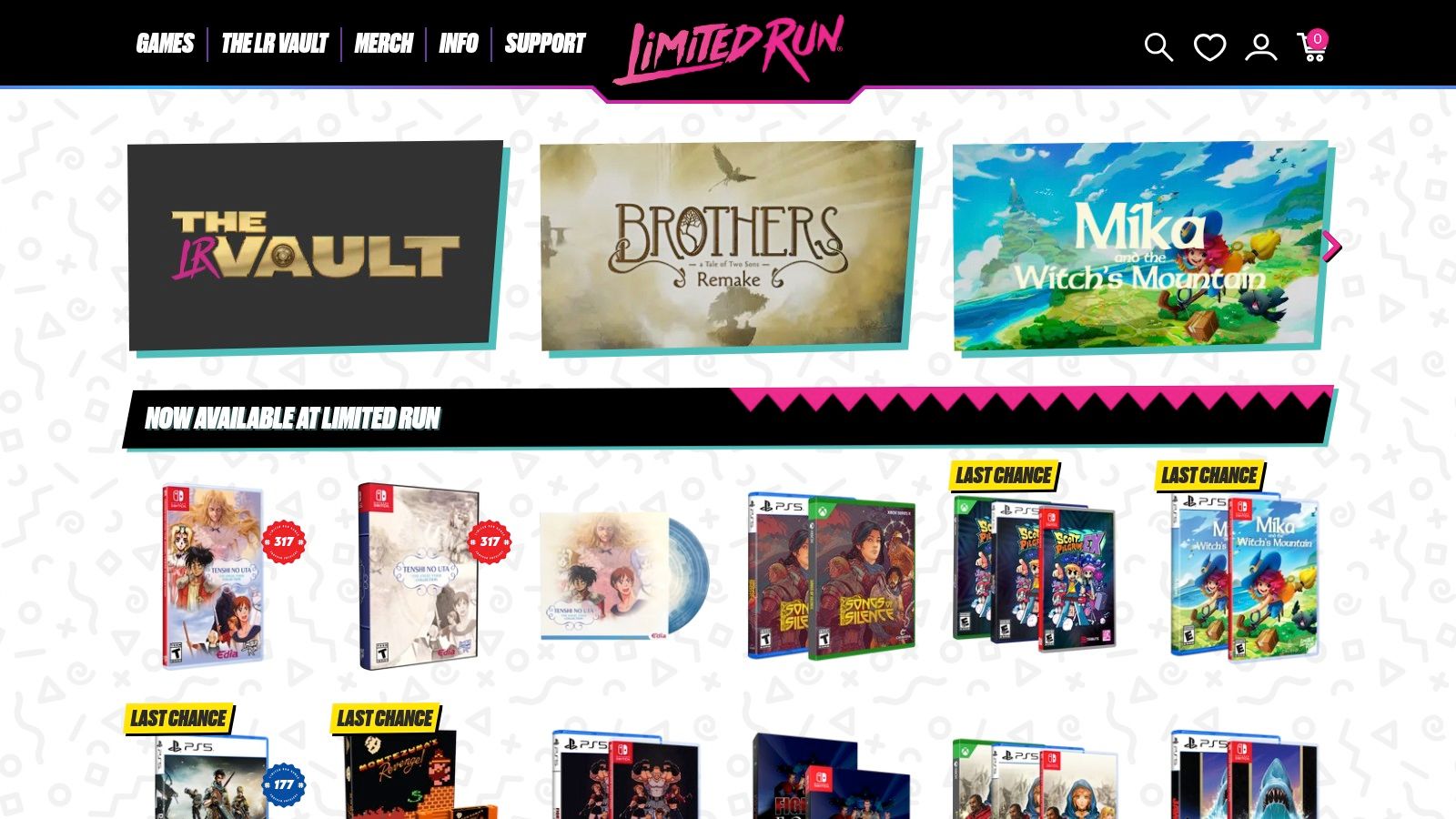
The company operates on a time-boxed preorder model, allowing fans to secure standard or collector’s editions of games that might otherwise never see a physical release. This approach minimizes risk for developers and ensures that everyone who wants a copy during the open window can get one, satisfying the dedicated communities built during a Kickstarter campaign.
Limited Run Games serves as a powerful fulfillment and distribution partner after a game is developed. While a Kickstarter campaign validates interest and funds development, partnering with a company like Limited Run handles the complex manufacturing, packaging, and distribution of physical goods. This allows creators to offer premium physical rewards without becoming logistics experts overnight.
This model highlights the importance of a phased approach to crowdfunding fulfillment. The initial campaign is just the beginning. After collecting funds on Kickstarter, creators need a robust system to manage backer data, offer last-minute add-ons, and segment orders for different reward types. If Kickstarter's pledge manager is the "Amazon" for launching, a pledge manager like PledgeBox is the "Shopify" for post-campaign management, organizing the crucial data needed for production partners. Once physical editions are ready, efficient distribution is key; learn about pick and pack fulfillment strategies to ensure your backers receive their rewards promptly.
Actionable Takeaway: Plan for physical editions early in your campaign strategy and consider partners like Limited Run Games to handle production. Use a dedicated pledge manager to seamlessly collect backer addresses and preferences. With PledgeBox, sending backer surveys is free, and the platform only charges a 3% fee on funds raised from upsells, making it a cost-effective way to manage your backer information before sending it to a manufacturing partner.
| Platform / Product | Complexity 🔄 | Resources ⚡ | Expected outcomes 📊 | Ideal use cases 💡 | Key advantages ⭐ |
|---|---|---|---|---|---|
| PledgeBox | Moderate — setup of pages, integrations and pledge manager | Moderate — Stripe/PayPal, shipping integrations; 3% when collecting payments | Streamlined campaign + post‑campaign sales; faster fulfillment | Hardware startups, board games, creators who need integrated pledge & fulfillment | Unified toolkit with upsells and fulfillment automation |
| Kickstarter — Video Games | Low — use platform for discovery/backing; creators list campaigns | Low — account and campaign creation for creators; pledges for backers | High visibility within game crowdfunding community | Discovering and backing game projects; early‑stage exposure | Largest concentration of game campaigns and curated highlights |
| Indiegogo | Low–Moderate — campaign setup; modernized pledge tools (post‑2025) | Low — account; creators benefit from updated pledge manager and payments | Flexible funding options and improved late‑pledge support | International creators and campaigns needing flexible funding | Strong international payments and advanced creator tools |
| PledgeBox — Pre‑order Marketplace | Low for buyers; Moderate for creators to opt in and configure | Low — depends on participating creators; standard payments | Centralized late‑pledge/preorder availability when creators participate | Backers who missed a live campaign looking for add‑ons/preorders | Single place to buy post‑campaign items from opted‑in creators |
| BackerKit — Late Pledge & Preorders | Moderate — survey and store configuration; campaign integration | Moderate — platform fees or service costs; shipping/VAT handling | Clear late‑pledge flow with taxes/shipping collected pre‑fulfillment | Larger campaigns needing robust late‑pledge and preorder handling | Widely used by large campaigns; comprehensive fulfillment tools |
| Steam — Store & Early Access | Low for buyers; Moderate for developers to publish | Moderate — developer account, distribution and storefront requirements | Easy purchase/download of finished/Early Access games; strong post‑launch sales | Players buying finished crowdfunded games; developers releasing on PC | Massive catalog, community reviews, refunds and wide reach |
| Limited Run Games — Physical Editions | Moderate — creators coordinate limited runs; retailing process | High — manufacturing lead times, production costs, shipping logistics | Premium physical collector editions with long lead times | Collectors and fans seeking boxed/collector editions of indie games | Reliable source for high‑quality, limited physical releases |
The journey from a promising concept to a delivered product for video game Kickstarters is paved with both incredible opportunity and significant logistical challenges. As we've seen from the successes of games like Shovel Knight and the cautionary tales of ambitious projects that stumbled, a brilliant campaign is only half the battle. The true test often begins after the funding clock stops.
The most critical takeaway is the need for a robust post-campaign strategy. This isn't just about collecting funds; it's about maintaining momentum, managing backer expectations, and streamlining a complex fulfillment process that can easily overwhelm even the most organized teams. Communication, accurate data management, and efficient logistics are the pillars that support a successful project long after the initial hype has faded.
Reflecting on the examples in this article, several core principles stand out for aspiring creators:
Choosing the right tools is paramount to executing this strategy effectively. While Kickstarter and Indiegogo are fantastic for funding, dedicated pledge managers are designed to handle the intricate post-campaign phase. Think of it this way: Kickstarter's pledge manager is the "Amazon" of crowdfunding, a massive marketplace to get discovered. A pledge manager like PledgeBox is your "Shopify," giving you a powerful, dedicated backend to manage your customer relationships and revenue streams after the initial sale.
This distinction is crucial for modern video game Kickstarters. You need a specialized platform that handles the nitty-gritty of address verification, segmented surveys for different tiers, VAT calculation for international backers, and seamless integration for late pledges. PledgeBox addresses these needs with a creator-focused model. Critically, it is free to send your backer surveys. The platform's revenue comes from a simple 3% fee on funds raised through add-on upsells, meaning you only pay if you generate additional income. This risk-free approach allows you to professionalize your backend operations without any upfront cost, turning a potential logistical nightmare into a streamlined, revenue-boosting engine. By embracing this specialized toolkit, you equip your campaign not just for funding victory, but for fulfillment success.
Ready to transform your post-campaign chaos into a streamlined and profitable operation? Discover how PledgeBox can help you manage surveys, boost revenue with add-ons, and delight your backers with a seamless experience. Get started for free and see why top creators trust PledgeBox to deliver on their promises.
PledgeBox
The All-in-One Toolkit to Launch, Manage & Scale Your Kickstarter / Indiegogo Campaign