 PledgeBox
Master Order Fulfillment Automation for Crowdfunding
Master order fulfillment automation for Kickstarter & Indiegogo. This 2026 guide covers workflows, pledge managers, KPIs, and common pitfalls for creators.
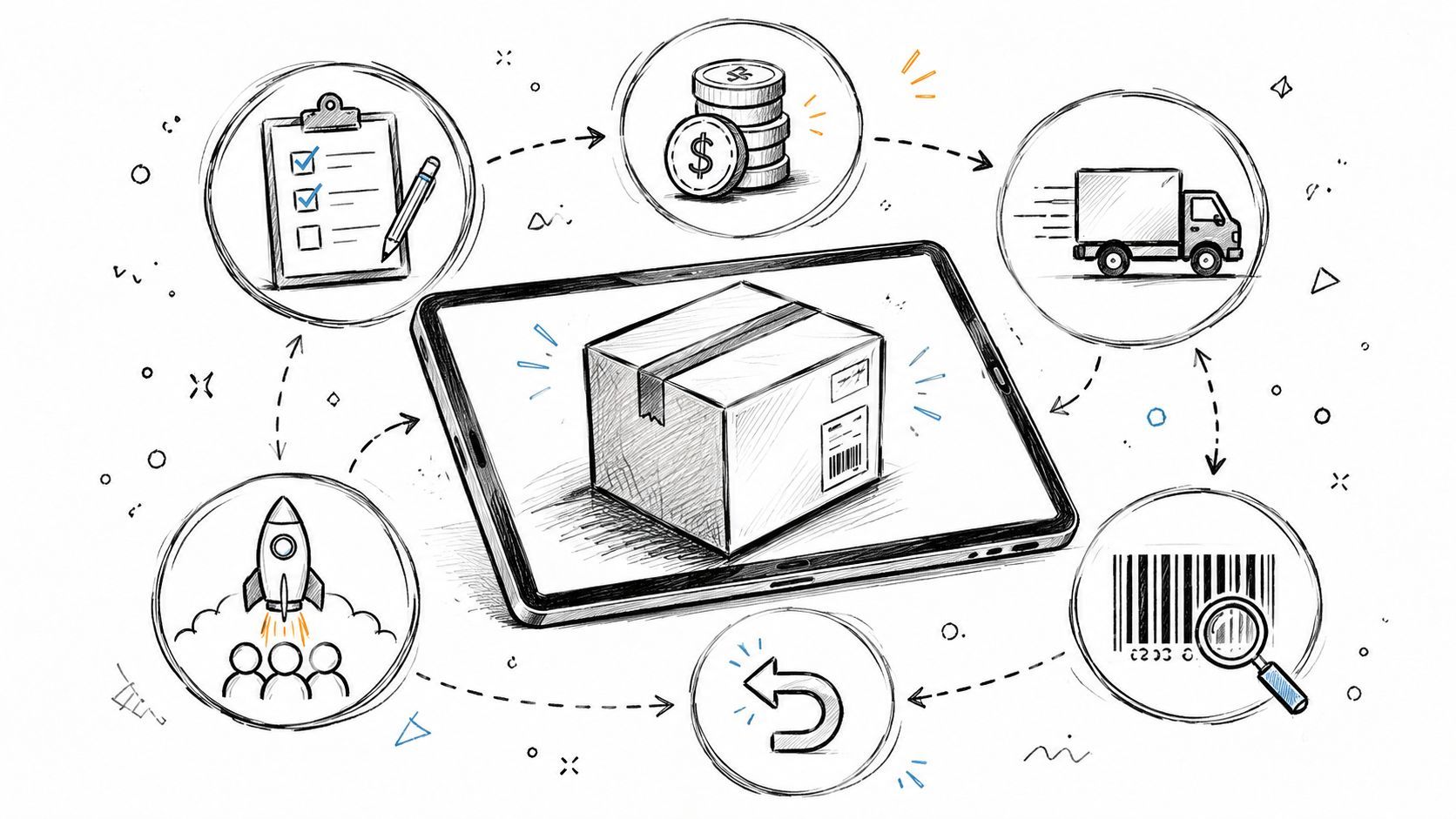
Master order fulfillment automation for Kickstarter & Indiegogo. This 2026 guide covers workflows, pledge managers, KPIs, and common pitfalls for creators.
Your campaign just ended. The funding total looks great, comments are full of congratulations, and for a brief moment it feels like the hard part is over.
Then you open the backer export.
Now you're staring at reward tiers that changed halfway through the campaign, add-ons that weren't packaged into the original SKU plan, hundreds or thousands of addresses that still need confirmation, and a shipping bill that can swing wildly if even a small slice of backers picked the wrong region. This is the moment many first-time creators realize crowdfunding doesn't break at launch. It usually breaks after funding, when a one-off promise has to turn into thousands of accurate deliveries.
That's where order fulfillment automation stops sounding like a warehouse buzzword and starts looking like a survival tool.
A funded campaign creates a very specific kind of chaos. It's not normal retail chaos. A store sells repeat products through a repeat process. A crowdfunding campaign creates a one-time storm of mixed rewards, edits, upgrade requests, shipping exceptions, and anxious backers who all expect clear answers.
That pressure is one reason fulfillment systems are getting so much attention. The global fulfillment automation market was valued at $28.4 billion in 2025 and is projected to reach $103.8 billion by 2034, with a 14.2% CAGR according to Market Intelo's fulfillment automation market report. The same report says about 45% of enterprises now rely on fulfillment software to manage more than 50 billion parcels annually. Crowdfunding creators may not ship at that scale, but the same operational truth applies. Manual processes crack faster than anticipated.
Most first-time creators start with good intentions. They export backers, clean the data in a spreadsheet, send a few emails, and assume they can patch the rest manually.
That works until the exceptions pile up:
A spreadsheet can store information. It can't run the process for you.
Crowdfunding fulfillment fails in the handoff between “we have the data” and “we can trust the data enough to ship.”
Creators who want a cleaner path usually need a system that collects final choices, validates what can be validated, and pushes shipping-ready orders downstream. If you want a grounded look at that process in practice, this crowdfunding order fulfillment guide is a useful reference point.
Automation doesn't remove responsibility. It removes repetitive handling.
Instead of touching the same order five times, you set rules once and review exceptions when they appear. That's the difference. It's like switching from manually directing traffic at every intersection to installing working traffic lights. Cars still need roads, signs, and oversight, but the flow becomes manageable.
For a creator, order fulfillment automation isn't about buying robots or building a giant warehouse stack. It's about making your campaign data move cleanly from pledge to delivery without your team retyping, rechecking, and re-exporting the same order over and over.

A normal e-commerce store usually deals with live inventory, stable product listings, and recurring orders. Crowdfunding is messier.
You're often handling:
That's why a generic “just use shipping software” approach often falls short. Shipping software handles labels well. It usually doesn't solve the upstream problem of messy pledge data.
In practical terms, a creator-friendly automated flow usually handles a few core jobs:
The power is in the connections. Each handoff you automate removes one more place where a wrong quantity, stale address, or bad SKU mapping can slip in.
Most creators don't need to automate everything on day one. They need to automate the points where handoffs create friction.
A good way to think about it is this: if you're still copying data between tools, you don't have a workflow yet. You have a relay race with dropped batons.
For a broader view of how automation changes business operations beyond shipping, Nexist's business automation guide is worth reading because it helps frame automation as process design, not just software setup.
Practical rule: Automate the repeatable path. Keep humans for the weird stuff.
That's the model that works for crowdfunding. You let software carry standard orders, then step in where context matters.
Manual fulfillment feels cheaper at first because you don't pay for structure upfront. You pay later through mistakes, delays, and a support inbox that turns into a second job.
The strongest argument for automation is simple. It protects margin and reputation at the same time.
A shipping error isn't just a bad package. It triggers replacement costs, support time, inventory confusion, and public frustration from the person who backed you early.
That's why the warehouse side of automation is so relevant even for creators using external partners. According to SellersCommerce's warehouse automation statistics roundup, implementation of warehouse automation technologies yields 25 to 30% reductions in labor costs, order fulfillment speeds can increase by up to 300%, and companies report accuracy rates approaching 99%. Those aren't vanity metrics. For a crowdfunding project, they translate into fewer avoidable fires.
Your backers won't say, “Production was great but fulfillment was messy, so overall this was fine.” They judge the full experience.
A creator can spend months perfecting a product page and still damage the campaign's legacy with confusing surveys, late shipping notices, or duplicate requests for the same information. Automation helps because it creates consistency. Orders move through the same rules. Notifications go out on time. Fewer details depend on someone remembering the next step.
This doesn't mean every click should be automated. It means repetitive work should be.
Use people for:
Use systems for:
A lot of creators need help reducing admin load before they ever touch the warehouse floor. Logivo on logistics administration is useful here because it focuses on the drain caused by manual logistics work, which is exactly where many campaign teams get stuck.
The best automation setup doesn't replace judgment. It saves judgment for decisions that actually need it.
That's the advantage. Your team stops spending energy on clerical repetition and starts using it on fulfillment control.
When creators ask how fulfillment automation works, they usually expect a complicated technical answer. The useful answer is much simpler. You're building a clean path from raw pledge data to shipment-ready orders.

A strong campaign workflow usually moves through these stages:
This is where the pledge manager matters. Kickstarter pledge manager is like Amazon and PledgeBox pledge manager is like Shopify. Amazon gives you a marketplace with its own boundaries. Shopify gives you your own storefront logic and more control over the buyer experience. The same idea applies here. A native campaign tool may be enough for simple projects, but a dedicated pledge manager gives creators more control over branding, upsells, order logic, and export structure.
Most fulfillment issues begin before the warehouse sees the order. They start when a campaign ships from incomplete, outdated, or loosely structured backer data.
That's why the survey stage deserves more attention than creators usually give it. You're not just asking for an address. You're converting a pledge into an actual order.
One practical option in this category is PledgeBox. PledgeBox is free to send the backer survey, and it only charges 3% of upsell if there's any, meaning creators can import backers, collect addresses and reward choices, and send surveys for $0, with the 3% fee applying only to optional upsell revenue collected during the survey flow, as shown on PledgeBox pricing.
For a quick visual walkthrough of how this kind of setup fits together, this video is helpful:
Your fulfillment partner should not have to interpret your campaign. They should receive clean instructions.
That usually means your export needs to answer these questions without extra explanation:
| Fulfillment field | Why it matters |
|---|---|
| Backer identity | Prevents duplicate or mismatched orders |
| Final SKU or bundle mapping | Tells the warehouse what to pick |
| Confirmed address | Reduces returns and delivery failures |
| Shipping class or region | Helps route by destination and method |
| Special handling note | Flags edge cases without stopping all orders |
If you need a useful operational read on upstream order control, MENA SME purchase order guide offers a solid perspective on structured order management. The context is broader than crowdfunding, but the discipline is the same. Clean input creates cleaner fulfillment.
If your warehouse has to ask what an order means, the automation chain is already broken.
The point of order fulfillment automation is not speed alone. It's reliable translation. A backer makes a pledge, then your system turns that promise into a package without your team manually rebuilding the order every step of the way.
An automated workflow only works if one system acts as the source of truth. Without that, every tool becomes its own version of the campaign, and the mismatches start immediately.
For most creators, the source of truth should sit where backer choices become finalized orders. Once that record is stable, shipping tools and fulfillment centers should receive data from it, not rebuild it.
The biggest mistake I see is letting multiple systems stay editable for too long. A creator updates one spreadsheet, the fulfillment partner updates another file, and customer support has a third note thread with special instructions. Nobody is looking at the same order anymore.
Use a simpler rule set:
That structure matters because crowdfunding has more edge cases than standard retail. According to Cleverence on order fulfillment automation gaps, 30 to 40% of orders in crowdfunding-style campaigns require manual address validation or custom packaging, and 62% of hardware creators face fulfillment delays due to unstandardized backer requests. That's exactly why integration design matters. Your standard orders should flow automatically so your team can focus on the messy ones.
Don't start by connecting every possible tool. Start with the links that remove duplicate work.
A sensible integration order is:
If your core data is still changing every day, adding more integrations won't help. It just spreads unstable information faster.
A practical overview of what a dedicated crowdfunding data hub should handle is in this crowdfunding pledge manager guide. The key idea is simple. Keep changes upstream, keep fulfillment downstream, and don't let warehouse files become customer service tools.
Automation should carry the common path. Human review should catch the odd cases:
That's the balance creators need. If everything needs a human, the system doesn't scale. If nothing gets reviewed, avoidable mistakes leave the building in sealed cartons.
If you don't measure fulfillment, you'll end up managing by noise. The loudest backers get attention, while the actual operational problem stays hidden.
That's why creators need a small KPI set they can review every week during fulfillment.

I'd track these:
Order accuracy rate
This tells you how many orders arrived exactly as promised. If support tickets keep mentioning missing items or wrong variants, this number exposes it fast.
Fulfillment cycle time
Measure the time from completed survey to shipment. That's more useful for crowdfunding than measuring from campaign end, because production and survey timing often move independently.
Shipping cost versus budget Compare what you planned to spend against what orders are costing once packaging, destination, and carrier choice settle into reality.
Exception rate Track how many orders require manual intervention. By tracking this, creators determine if their workflow is automated or merely dressed up with software.
Return, loss, or damage trend
Don't only count failures. Categorize them. Bad packaging, address issues, and customs-related returns are different problems.
A number only matters if it points to action.
If order accuracy falls, check SKU mapping and pack instructions. If fulfillment cycle time drifts, inspect where approvals are stacking up. If shipping cost variance grows, review zone assumptions and carrier rules. If exception rate is high, your survey or order structure may be collecting too much ambiguity upstream.
A KPI should answer one question: where should the team look next?
For creators managing multiple bundles or staggered production runs, inventory discipline matters just as much as shipping discipline. This piece on best practices for inventory management is useful because it connects stock control to downstream fulfillment reliability.
Don't build a corporate reporting stack for a one-off campaign. A compact dashboard is enough if the metrics are tied to decisions.
The goal isn't elegant reporting. It's catching trouble while you can still fix it.
Automation can make a weak fulfillment plan fail faster. That's the part many creators learn too late.
The common mistake is assuming software will smooth out a campaign that still has unclear shipping rules, incomplete tax planning, or no exception process for international orders. It won't. It will only process that confusion at scale.
This shows up most clearly in cross-border fulfillment. According to Logic Providers on cross-border order fulfillment automation, full automation may worsen outcomes for creators shipping to emerging markets where VAT and customs increase per-order costs by 22 to 35%. The same analysis notes that 48% of global crowdfunding fulfillments in 2025 cross at least two borders, yet less than 12% of automation platforms offer proactive cross-border exception workflows.
That gap matters. If your tool sends every international order down the same lane without checking for regional compliance issues, you haven't created efficiency. You've created a faster route to customs holds, returns, and angry updates in your comment section.
A few patterns repeat:
Dirty source data
If reward mappings are sloppy, automation just reproduces the sloppiness.
Wrong partner fit
A 3PL that handles simple D2C replenishment may struggle with collector's editions, expansions, signed copies, or campaign-specific inserts.
No exception lane
Orders with address problems, partial stock, or custom requests need a separate queue. If they stay mixed with normal orders, everything slows down.
Over-automated communication
Generic status emails can calm people when shipping is smooth. When something slips, canned messages make backers feel ignored.
Use a hybrid model.
Automate standard domestic orders and straightforward international lanes. Put riskier regions, unusual bundles, and customs-sensitive shipments behind review rules. This approach resembles an airport security line. Most passengers move through the standard process. A smaller group gets additional screening because the cost of a miss is higher.
Good crowdfunding fulfillment isn't fully automated. It's selectively automated.
That's the practical position. Software should carry the obvious orders. Operators should handle the orders that need judgment.
You don't need a giant systems project to get started. You need a clean first pass.

Use this checklist before you lock surveys or send data to fulfillment:
That's enough to replace panic with process.
If you want a practical way to organize post-campaign surveys, collect final backer details, and turn messy pledge data into cleaner fulfillment-ready orders, PledgeBox is built for that workflow. It's free to send the backer survey, and it only charges 3% on optional upsell revenue if there is any.
PledgeBox
The All-in-One Toolkit to Launch, Manage & Scale Your Kickstarter / Indiegogo Campaign