 PledgeBox
Kickstarter Card Game Launch Success Guide
Launch a successful Kickstarter card game with our expert guide. Learn design, marketing, and post-campaign management to bring your game to life.
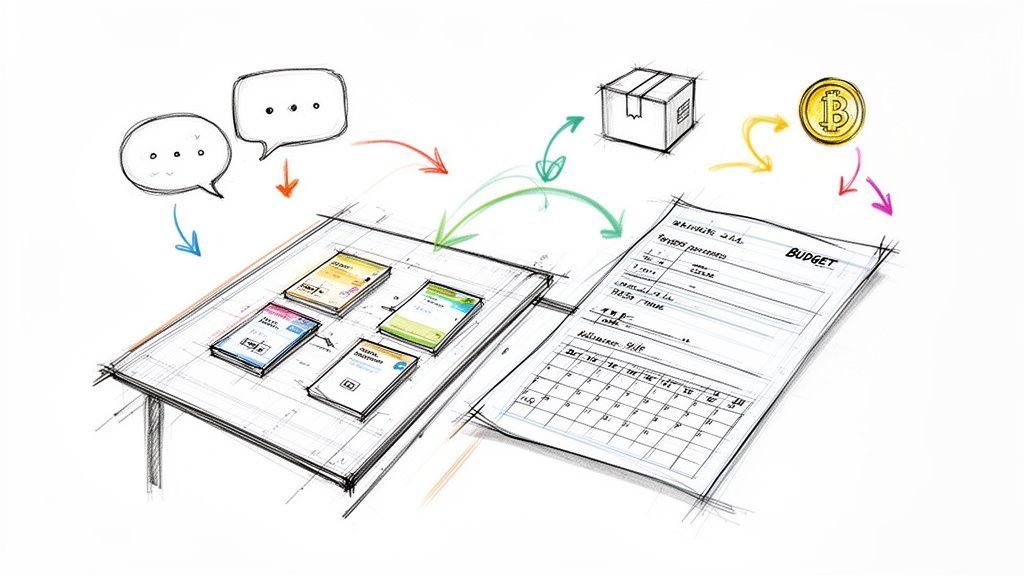
Launch a successful Kickstarter card game with our expert guide. Learn design, marketing, and post-campaign management to bring your game to life.
Thinking about launching a Kickstarter for your card game? It might feel like a massive gamble, but the truth is, the odds are better than you think. Tabletop games, which include card games, have one of the highest success rates on the platform. Passionate communities are ready and waiting to help bring new projects to life. This guide will walk you through the entire journey, from that first spark of an idea all the way to getting the final game into your backers' hands.

Getting a card game funded on Kickstarter takes more than just a great game. It's about running a well-planned campaign that starts long before you hit the "launch" button and continues well after the funding clock runs out. The great news? The tabletop gaming community is one of the most supportive and engaged audiences you'll find anywhere.
Many first-time creators get tunnel vision on the 30-day campaign, but the real magic happens in the prep work and the post-campaign follow-through. A solid plan always covers three distinct phases:
Here's a helpful way to think about how the different platforms work together. Think of the Kickstarter pledge manager as the Amazon of the crowdfunding world. It's a huge marketplace with millions of potential backers browsing for their next favorite game. Being on Kickstarter gives your card game incredible visibility to an audience you couldn't reach on your own. It's the perfect place to find new fans and prove there's a real demand for your game.
But once your campaign ends, Kickstarter's job is mostly done. Its built-in tools for managing backer information are pretty basic and aren't designed for the complex logistics of shipping a physical product. This is where a pledge manager becomes your best friend.
A pledge manager is your post-campaign command center. If Kickstarter is the giant retailer that brings in the customers, your pledge manager is your own specialized shop where you nurture those relationships and make your project even more successful.
This is precisely why a tool like PledgeBox is so crucial. You can think of the PledgeBox pledge manager as the Shopify for your project. It’s your own branded, customizable system that gives you total control over everything that happens after the campaign. While Kickstarter helps you get the initial pledges, a pledge manager helps you deliver on your promises and often increases your overall funding.
One of the biggest advantages is the business model. With PledgeBox, it is completely free to send your backer survey. This means you can start collecting shipping addresses, letting backers manage their rewards, and communicating with your community without any upfront cost. The platform only charges a 3% fee on upsell revenue—that is, money you make from selling add-ons or late pledges. This setup ensures the tool literally pays for itself by bringing in extra income for your game.
In the end, a successful Kickstarter card game relies on a two-part strategy: use Kickstarter's massive audience to get funded, then use a powerful pledge manager to handle the complex fulfillment logistics and grow your revenue. This guide will show you how to master that formula, step by step.

This is where the magic happens. Your brilliant idea finally starts taking shape, becoming something real that backers can see, touch, and get genuinely excited about. Turning a concept into a physical prototype is probably the most important step in your entire Kickstarter card game journey. It’s all about nailing down the mechanics, getting honest feedback, and building a budget that won’t sink your project later.
Forget about fancy graphics for now. Your first prototype should be scrappy. I’m talking about handwritten notes on index cards, or even just plain paper cutouts. The only goal here is to test the core engine of your game. Is it actually fun? Are the rules clear? Does a single turn flow without a dozen questions?
This low-fidelity, DIY approach means you can iterate incredibly fast without spending a dime. You can literally cross out a card's text, adjust a rule on the spot, and see the results in the very next turn. This cycle of play, tweak, and play again is the absolute heart of solid game design.
Once you’ve got the basic rules feeling pretty good, it’s time to hand it over to others. And no, just playing with friends who tell you it’s amazing doesn’t count. To make a great game, you need honest, constructive, and sometimes brutally blunt feedback.
Here’s how I recommend you tackle playtesting:
Your goal during playtesting isn't to get compliments; it's to find every single crack in your game's foundation. Breaking your cheap paper prototype now will save you from the nightmare of finding a fatal flaw after you've manufactured 2,000 copies.
If you want to dig deeper into turning your initial idea into something tangible, check out our guide on how to craft your crowdfunding prototype. It walks you through the whole process.
I can't say this enough: getting your budget wrong is the number-one killer of funded Kickstarter projects. A realistic, detailed budget is your project's financial lifeline. It’s what guarantees that when you hit your funding goal, you actually have enough cash to cover every single expense and deliver the game you promised.
Your funding goal shouldn't be a number you just pull out of thin air. It needs to be the calculated sum of all your projected costs, plus a healthy buffer for all the things that will inevitably go wrong. A common rookie mistake is to focus only on the manufacturing cost, but in reality, making the game is often less than half of your total budget.
To help you get started, here's a sample budget breakdown. Remember, these are estimates—you'll need to get real quotes for your specific project.
| Expense Category | Estimated Cost Range (for a $20,000 Goal) | Key Considerations |
|---|---|---|
| Art and Design | $1,500 - $4,000 | Varies wildly based on artist experience and the amount of art needed. Includes card art, box art, and graphic design. |
| Manufacturing | $5,000 - $7,000 | Get quotes from at least 3 manufacturers. Cost depends on card count, quality, box size, and print run size. |
| Freight Shipping | $2,000 - $3,500 | Shipping games from the factory (e.g., China) to your fulfillment centers. A major, often-forgotten cost. |
| Fulfillment & Shipping | $3,500 - $5,000 | The cost to pick, pack, and ship individual games to backers. Includes postage, labor, and materials. |
| Platform & Payment Fees | ~$2,000 (10%) | Kickstarter takes 5%, and Stripe takes another 3-5%. You'll only receive about 90% of funds raised. |
| Marketing & Promotion | $500 - $1,500 | Includes ads, sending review copies to content creators, and other promotional activities to drive traffic. |
| Contingency Fund | $2,000 - $3,000 (10-15%) | Your safety net. ALWAYS add a buffer for unexpected costs, delays, or price hikes. It will save you. |
Building a comprehensive budget spreadsheet is non-negotiable. Don't guess; start getting quotes for these categories as early as possible. This financial planning is what separates the campaigns that deliver from the ones that end in disaster.
A huge Kickstarter card game campaign doesn't just happen. The truth is, the most successful projects are already winning weeks, or even months, before they go live. This pre-launch window is all about getting a snowball rolling—starting with a small, core group and building it into an avalanche of day-one backers.
Think of it this way: your entire pre-launch is dedicated to building an email list of people who are genuinely excited to buy your game. You want a massive surge of pledges the moment you launch. That initial momentum is what gets you noticed by the Kickstarter algorithm, which can land you a "Project We Love" feature or a spot on the front page. That's free exposure to thousands of new potential backers.
Your first move should be creating a home base for your future community. A sharp, effective pre-launch page is your best friend here. This isn't just a "coming soon" sign—it's a machine built to do one thing: capture email addresses. Services like PledgeBox offer tools to build these pages quickly, so you can start growing your list right away.
Your pre-launch page absolutely needs:
To get the right eyeballs on that page, investing in some cutting-edge digital advertising strategies can be a game-changer. These tactics help you find and attract people who are already looking for games like yours. For a complete breakdown on setting up your pre-launch, check out our deep dive on running a successful Kickstarter pre-launch.
Once you've built an audience, you need a campaign page that turns their curiosity into actual pledges. Your Kickstarter page is your storefront, your sales pitch, and your community forum all rolled into one. Every single element needs to work together to build both trust and hype.
A great campaign video is not optional. Aim for something short and punchy, around 2-3 minutes, that quickly gets to the heart of why someone should back your game. Start with the "why"—the experience your game delivers—not a boring list of features. And please, show people having fun playing it! Laughter and genuine excitement are far more powerful than a dry rules rundown.
The rest of your page should be built for scanners. Use clear headings, gorgeous photos of your prototype, and GIFs that show off key gameplay mechanics. Someone should be able to scroll through and "get" your game in under 30 seconds.
Crowdfunding campaigns have a magic circle, not unlike the one we’re familiar with around the tabletop. For a limited window of time, you and other like-minded people gather together and participate in the creation of something that did not exist before and cannot exist without you.
A powerful campaign page is what invites people into that circle.
The work is far from over when you hit the launch button. Running a live campaign is all about active community management. You need to be in the comments, posting regular updates, and being totally transparent about your progress. This is also your chance to have some fun with stretch goals.
Instead of just a boring, linear list of upgrades, why not make it interactive? The creator of the game Almighty invented a "God of Upgrades" character who would respond to backer enthusiasm, letting the community's excitement influence which upgrades got added. It turned the comments section into a fun, thematic part of the campaign and built incredible goodwill.
This community-focused mindset has powered some of Kickstarter's biggest hits. Just look at the Official Cyberpunk Trading Card Game by WeirdCo. It didn't just succeed; it shattered records, becoming the most-funded tabletop game ever by raising over $15 million. It started with a modest $100,000 goal that it blew past in minutes. That insane momentum was fueled by the Cyberpunk IP's massive fanbase and smart community building, like influencer previews and events. It proved that the right IP, combined with a fired-up community, can rewrite crowdfunding history. You can read more about how WeirdCo achieved this record-breaking crowdfunding success.
So, your campaign is funded. Take a moment to celebrate—it’s a massive achievement! But don't rest on your laurels for too long, because the real work is just getting started. This next part, fulfillment, is hands-down the most complex piece of your Kickstarter card game puzzle. If you get this wrong, a successful campaign can quickly become a financial and logistical nightmare. Get it right, and you'll have a legion of happy backers eager for your next project.
Even though the campaign clock has run out, your relationship with your backers is entering its most important phase. You're shifting gears from fundraiser to project manager. Your job now is to gather accurate backer info, manage all the different rewards, correctly charge for shipping, and get your game into everyone’s hands without a hitch.
This whole process can be broken down into three main stages, with the post-campaign logistics being the final, critical step.

As you can see, this is where you make good on your promises, turning all that initial hype into a real, tangible game delivered to your community.
Kickstarter is amazing for raising money, but its built-in survey system is, to put it mildly, basic. It's a one-and-done tool. You can ask for an address, but that's about it. It falls apart when you need to calculate variable shipping, manage add-ons, or let a backer update their address a few months down the line. This is exactly why a dedicated pledge manager isn't just a nice-to-have; it's an absolute necessity for any serious creator.
Here's an analogy I like: the Kickstarter pledge manager is the Amazon of crowdfunding—a huge marketplace that brings you an audience. The PledgeBox pledge manager is your own specialized Shopify store. It gives you the control and flexibility to manage your orders, deliver on your promises, and even grow your total funding after the campaign is over.
This is where a tool like PledgeBox becomes your mission control for everything post-campaign. It’s built from the ground up to solve the exact logistical headaches that every creator runs into. It provides a professional, branded portal where your backers can finalize their orders, pay for shipping, and even pick up a few extra goodies.
What really makes PledgeBox stand out for creators, especially first-timers, is its risk-free model.
It is completely free to send the backer survey to all of your supporters. You can collect addresses, manage pledges, and organize all your data without spending a dime upfront. PledgeBox only takes a small 3% fee on funds raised from upsells—meaning the tool literally pays for itself by generating new revenue for you.
This model is a true game-changer. You get access to a professional-grade tool without it cutting into your core funding, leaving more of your budget for what matters most: manufacturing and shipping your game.
Your backer survey is the most important information-gathering tool you have. A well-crafted survey prevents backer confusion, cuts down on data entry errors, and makes your life infinitely easier. With a real pledge manager, you can build surveys that are as simple or as complex as your campaign needs.
A solid survey should let backers:
Nailing your shipping calculation is essential. If you want to dive deeper into the nitty-gritty of that process, we have a detailed guide on navigating board game shipping that breaks it all down.
The post-campaign window isn't just for logistics; it's a golden opportunity to boost your overall funding. You'll find that many of your backers are excited to add more to their pledge, and plenty of people who missed the campaign will be looking for a way to get in on the action.
Upsells are extra items you offer your existing backers inside the survey itself. Think about offering things like:
Late Pledges essentially open a pre-order storefront for anyone who missed the Kickstarter campaign entirely. This is a fantastic way to capture sales from the "I just found out about this!" crowd. Since you're already placing a large manufacturing order, adding these extra units is incredibly profitable.
This post-campaign revenue isn't just pocket change; it can be a massive boost. For many projects, the funds raised through a pledge manager account for an additional 10-20% of their initial Kickstarter goal. In the hyper-competitive world of crowdfunding, that extra capital can be the difference between breaking even and having a runaway success.
And success is very attainable in this niche. The tabletop gaming category on Kickstarter boasts a success rate of around 52%, far higher than the platform-wide average of 43%. This points to a passionate, engaged community ready to support great projects, which makes post-campaign optimization even more powerful.
You’ve done it. You’ve gone from a simple idea scribbled on a napkin to a fully-funded product with a community of excited backers. The road to launching a successful Kickstarter card game is a marathon, not a sprint, packed with careful planning, genuine community building, and smart post-campaign management. It’s tough, but the right tools and strategies make it more achievable than you might think.
Every lesson you’ve learned—from designing your game and budgeting your costs to marketing and fulfillment—all comes down to one core idea: preparation is everything. A solid budget protects your profits, pre-launch hype drives that crucial day-one funding, and a smooth post-campaign plan creates happy, loyal backers. Each step sets the stage for the next, giving you a strong foundation for this project and all the ones that follow.
One of the biggest game-changers for creators has been the rise of powerful, easy-to-use tools built just for crowdfunding. You no longer have to wrestle with messy spreadsheets, manual email follow-ups, and clunky survey systems to get the job done. Specialized platforms now exist to handle the most complex parts of the process, especially after your campaign timer hits zero.
Here's an analogy I like: think of the Kickstarter pledge manager as the Amazon of crowdfunding. It’s a huge marketplace where you can find your audience and make the initial sale. But once you're funded, you need a different tool for the job. This is where a service like the PledgeBox pledge manager becomes your Shopify—it’s a customizable home base built for creators, where you can manage your new customer base professionally and efficiently. It’s the tool you use to deliver on the promises you made.
Your creative vision has real value. With a solid plan, you can get your card game onto tables around the world, turn your first backers into a true fanbase, and pave the way for your next big idea. The secret is simply using the right tool for each part of the journey.
The best tools are the ones that only succeed when you do. A pledge manager that charges you per backer or hits you with high setup fees can drain your funding before you've even paid your manufacturer. That’s why finding a platform with a creator-first business model is so important.
We built PledgeBox around this very idea. We don't think you should have to pay just to manage your backers and collect their info. That's why it's completely free to send the backer survey and gather all the essential details you need. Our platform only makes money if you do—we charge a small 3% fee if you successfully generate upsell revenue from add-ons you sell in the survey.
This model means the tool pays for itself and directly boosts your bottom line, completely risk-free. Your journey doesn't stop when the Kickstarter campaign ends; it’s really just the beginning of building your brand.
Running your first Kickstarter card game campaign will inevitably bring up a ton of questions. I’ve seen it time and time again. Getting clear answers on everything from profitability to post-campaign tools can be the difference between a smooth launch and a project that becomes a total headache.
Let's walk through some of the most common questions I hear from creators just like you.
This is the big one, isn't it? The truth is, profitability for a Kickstarter card game can swing wildly. You see record-breakers like the Cyberpunk TCG pulling in millions, but for a new creator, a successful campaign typically lands somewhere between $20,000 and $100,000. But remember, that's funding—not profit.
First, let's talk fees. Kickstarter will take its 5% cut, and payment processors like Stripe will take another 3-5%. Right off the bat, you're looking at receiving about 90% of the total funds raised. From there, you have to cover all your costs: manufacturing, artwork, freight, marketing, and the final fulfillment to your backers. A healthy, realistic profit margin to aim for after all of that is in the 20-40% range.
One of the best ways to protect and even boost that margin is by generating revenue after the campaign ends.
This is where you can really move the needle on your bottom line. By offering add-ons and late pledges through a pledge manager, you create a whole new stream of income after the initial 30-day rush. That extra cash goes a long way in covering unexpected costs and increasing your overall profit.
This is a key reason why using a specialized tool is so valuable.
I get this question a lot: "Do I really need a pledge manager, especially for a simple card game?" The answer is always a firm yes. Kickstarter's built-in survey tool is incredibly basic—it's a one-time, static form that just can't handle the realities of shipping a physical product.
Think about these common, real-world situations:
Kickstarter’s native survey can't do any of this. A dedicated pledge manager is built specifically to solve these problems. It gives backers a portal to update their own address, lets you charge accurate shipping fees post-campaign, and gives you a storefront to manage and sell more add-ons.
Here’s a good way to think about it: the Kickstarter pledge manager is the Amazon of crowdfunding, a massive marketplace to find your initial audience. The PledgeBox pledge manager is your project's Shopify—a professional, creator-owned storefront to manage customer relationships and logistics.
The great news is that modern pledge managers are built with creators' budgets in mind. For example, with PledgeBox, it is completely free to send the backer survey to collect addresses and manage everyone's rewards. You get all the organizational power without any upfront cost.
The platform only charges a small 3% fee on successful upsells. This model means the tool literally pays for itself by generating new income for your project. It's a no-risk way for creators on any budget to access professional-grade tools.
Without a doubt, the single most damaging mistake I see first-time creators make is underestimating shipping and fulfillment costs. It happens all the time. They'll budget every penny for art and manufacturing but treat shipping as an afterthought. This is a fast track to turning a successful project into a financial loss, often forcing creators to pay for shipping out of their own pockets.
It is absolutely critical to research shipping rates and get quotes from fulfillment centers before you launch. The best practice is to use a pledge manager to charge for shipping after the campaign is over. This lets you calculate the exact cost based on each backer's location and final order weight, ensuring you cover your costs accurately and protect your project's bottom line.
Ready to streamline your next campaign? With tools for pre-launch, surveys, and upsells, PledgeBox provides everything you need to succeed. Get started for free today and see how thousands of creators are building bigger, better campaigns.
PledgeBox
The All-in-One Toolkit to Launch, Manage & Scale Your Kickstarter / Indiegogo Campaign