 PledgeBox
How to Write a Pledge That Backers Actually Finish
Learn how to write a pledge for Kickstarter and Indiegogo that boosts conversion, avoids disputes, and ships smoothly with a strong pledge manager.
Learn how to write a pledge for Kickstarter and Indiegogo that boosts conversion, avoids disputes, and ships smoothly with a strong pledge manager.
You've got a visitor on your campaign page, hovering over a reward tier with a payment method ready. They understand the product, like the story, and want to support the project. Then they reach a sentence such as “Includes all rewards, shipping included,” and pause. What does “all” mean? Which version will they receive? When is shipping covered? Will taxes be added later?
That hesitation isn't only a conversion problem. It's a fulfillment problem waiting to happen. Learning how to write a pledge means writing a promise that still makes sense when production quantities are locked, addresses are collected, shipping is calculated, and customs paperwork is prepared.
A pledge isn't merely a donation, a preorder button, or a persuasive headline. It's a future fulfillment contract between the creator and the backer. The campaign page creates the expectation, while the survey and fulfillment process turn that expectation into an order.
The wording matters months later, when a backer asks whether an accessory was included, a variant needs confirmation, or a shipping fee appears after the campaign. A vague tier may produce an easy commitment today, but it can also create abandoned surveys, support requests, disputes, and incorrect manufacturing quantities later.
Practical rule: Write every reward tier as if someone unfamiliar with your campaign will use it to prepare a shipment.
That standard changes the drafting process. Instead of asking only whether the tier sounds exciting, ask whether a production manager could interpret it without contacting you. The description should identify the promised item, the backer's action, the fulfillment conditions, and the information still to be confirmed.
Kickstarter's fulfillment workflow reflects this operational reality. Its dashboard requires creators to track pledge counts by country and reward tier, inventory breakdowns, shipping funds, survey completion, and shipment status before production can be planned, as explained in its fulfillment dashboard guidance.
A low-cost entry tier can still be useful, but it should be deliberate rather than vague. Before publishing one, review this guide to using a one-dollar reward level and decide what the tier represents.
The practical mindset is simple: a backer is not buying your intention. They're committing against the words on the page. Those words need to survive the handoff from marketing to manufacturing, shipping, tax collection, and customer support.
Every strong pledge contains three elements: the object of commitment, the act of commitment, and the supported value or outcome. Together, they tell the reader what is being promised, what action creates that promise, and why the commitment matters.
The history of the United States Pledge of Allegiance shows how small wording changes can affect interpretation. Francis Bellamy's pledge first appeared in The Youth's Companion on September 8, 1892, then was publicly used during the October 21, 1892 National Public School Celebration. Its original wording referred to “my flag.” At the 1923 National Flag Conference, that phrase changed to “the flag of the United States.” “Of America” followed in 1924, and “under God” was inserted in 1954, as documented by the U.S. Department of Veterans Affairs.
Crowdfunding pledges require the same attention to reference and scope. A term that seems obvious to the creator may leave a backer, manufacturer, or support agent unsure about what the pledge covers. Clear wording reduces disputes when the campaign reaches surveys, production, shipping, and customer service.
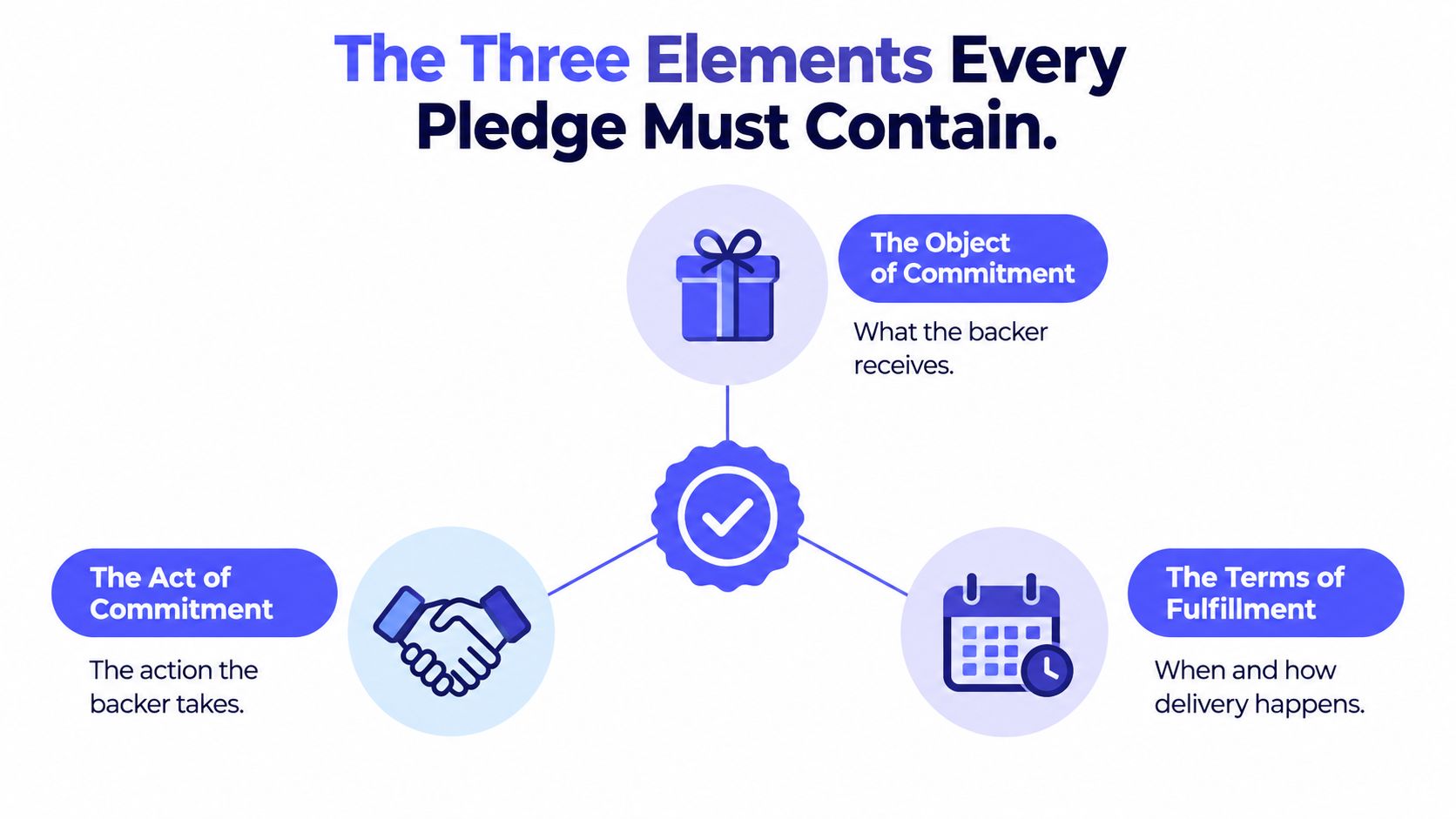
Name exactly what the backer receives. “Reward pack” identifies a category, not an inventory item. Specify the product, edition, quantity, and meaningful components.
State the backer's action and your corresponding obligation. Direct wording such as “I commit” or “I will” suits personal, nonprofit, and community pledges. Reward tiers should use equally direct delivery language.
Explain what the pledge helps make possible without turning the tier into a slogan. The outcome may involve the project's purpose, a production milestone, or a community result.
A complete version could read: “The Founder's Reward Pack includes one Founder's Edition device and its standard charging cable. Your pledge reserves this reward for delivery to the address you confirm after the campaign. Your support helps fund independent hardware manufacturing in California.”
Use these principles when improving convenience and clarity in crowdfunding reward levels. Audit each tier by marking its object, act, and supported outcome. If one element is missing, the reader must fill in a contractual gap, and that assumption may fail during fulfillment.
A reliable reward tier follows a predictable order. Start with the headline, then define the guaranteed contents, selectable options, limits, shipping treatment, and post-campaign confirmation. Readers should be able to scan the block and understand what they're committing to without opening a separate FAQ.
Use this sequence:
Consider a tabletop tier that originally says:
“Add a copy of the game for $35.”
That line leaves several questions unanswered. Is the copy the standard or deluxe edition? Is it a second game or the reward's main game? Is the quantity unlimited? Does shipping get charged now or later? Can the backer select a language or add expansions?
A clearer version would be:
Tabletop Game Add-On
Add one standard campaign edition of the game to your pledge. This add-on is optional and limited to one copy per backer. Shipping will be collected after the campaign according to your delivery region. VAT may apply to backers in the European Union. You'll confirm your quantity, language option, and shipping address in the post-campaign survey.
The improved copy separates the guaranteed base item from the later configuration. That distinction matters because Kickstarter's upgraded Backer Survey is designed to collect SKU quantities, variants, and add-ons, while dynamically displaying questions based on each backer's pledge so responses can become production-ready data for all backed items, as described in its Backer Survey overview.
A flexible pledge should still have an inflexible promise at its center.
For multi-item orders, include a plain-language example:
“Example: selecting two game copies means two standard campaign editions. Choosing a playmat adds one separate playmat SKU. Variant selections are confirmed in the survey and become locked after the stated deadline.”
If your campaign involves cross-border trade or specialized export terms, creators may also benefit from reviewing consultation terms for African exporters before finalizing delivery language.
Use this template as a drafting block:
[Tier name and edition]
Includes [quantity and exact items].
Optional selections: [variants, sizes, colors, languages].
Limits: [quantity cap or eligibility rule].
Shipping: [when charged, how calculated, and which regions are covered].
Taxes: [whether VAT, customs, or other charges may apply].
Survey: [what the backer confirms and when selections lock].
Changes: [what happens if production or delivery changes].
Maximum pledge count isn't always the best outcome. A vague tier can increase initial interest while creating more abandoned surveys, disputes, support tickets, and fulfillment errors. Before publishing, test every tier against six operational questions.
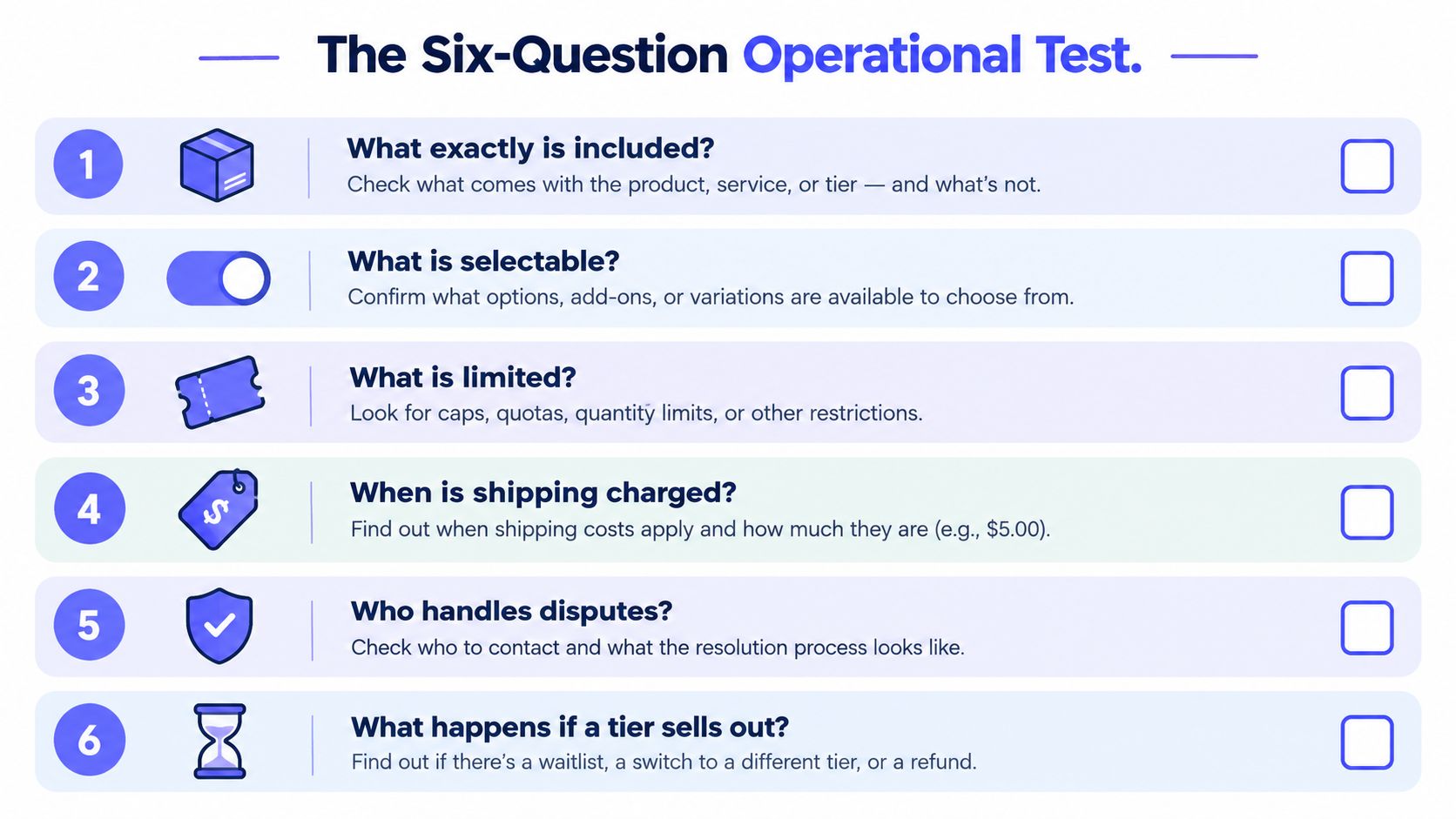
What exactly is included? Name the edition, quantity, accessories, digital components, and packaging where those details affect production. A hardware tier should identify the device and included cable. A tabletop tier should name the edition and component set. An apparel tier should identify the garment, not just “merch.”
What is optional? Separate the guaranteed reward from variants, add-ons, upgrades, and later purchases. A color choice may be included, while an extra battery or expansion pack may be a separate add-on.
When and how will shipping be charged? State whether shipping is collected during the campaign, after the campaign, or through a later checkout. Explain that the amount can depend on destination, reward tier, add-ons, or quantity.
Could taxes apply? Avoid promising a universal landed price if VAT, customs, or regional taxes may be handled later. A European Union apparel backer may face VAT treatment that differs from a domestic backer, while a hardware shipment may involve customs processing.
What information will the backer provide later? List the expected address, variant, size, phone number, tax details, or other fulfillment information. If the survey changes based on the pledge, say so plainly.
What happens if production or delivery changes? Explain how you'll communicate schedule changes, substitutions, delayed components, or regional shipping constraints. Don't promise an impossible date merely because it sounds reassuring.
Red-flag phrases usually fail this test:
Replace each phrase with a measurable condition or a clearly stated unknown. Good pledge copy doesn't eliminate uncertainty. It tells the backer where uncertainty exists and what happens next.
Your pledge manager becomes part of fulfillment, not just a checkout tool. Kickstarter's native Pledge Manager keeps the transaction inside its platform, while PledgeBox offers a storefront-style experience with more customization, add-ons, and post-campaign selling. Choose based on the catalog, regions, tax handling, and support work your team can manage.
Kickstarter's native Pledge Manager has no upfront cost. It collects addresses, reward preferences, taxes, and shipping costs closer to fulfillment. Kickstarter's usual fees are deducted from payments made through the manager, according to its Pledge Manager documentation.
That workflow fits a campaign with a simple catalog, limited add-ons, and straightforward regional shipping. Standardized steps mean fewer systems to coordinate. The trade-off is reduced flexibility for a branded storefront, a broad post-campaign catalog, or more complex commercial flows.
PledgeBox is free for sending the backer survey and charges 3% of upsell sales when there's any, rather than charging for the original campaign pledge. This suits creators who want to shape the post-campaign buying experience and connect additional sales with fulfillment.
Choose Kickstarter's native option when:
A customizable manager fits campaigns with multiple regions, late backer preorders, a substantial add-on catalog, or an agency managing several campaigns. It also helps when the post-campaign phase operates like a store, with separate products, shipping rules, subscriptions, and upsell paths.
Survey completion is the operational measure to watch. Opening the survey does not confirm that the pledge is ready for fulfillment. Completion shows whether backers can provide the required address, variant, shipping details, and checkout information. An incomplete survey can leave the item unconfigured, the address unverified, or the shipping charge unpaid.
Review this guide to selecting the right pledge manager before committing. Map each tool against your catalog, regions, tax treatment, add-ons, and support capacity.
The right choice preserves clarity from pledge selection through final shipment. A familiar tool may limit the workflow you need, while a flexible tool may add setup and support work that your team cannot absorb.
Pledge copy is difficult to test during a live campaign because changing a popular tier can confuse existing backers and disrupt social momentum. The safer approach is to test the explanation before launch, then use fulfillment behavior as the final judgment.
Start with the pre-launch landing page. Present the same reward with different information priorities, such as an image-first card versus a price-first card. Keep the underlying promise identical. You're testing whether readers understand the offer, not shifting what they'll receive.
After launch, use updates and creator emails as controlled framing opportunities. One message can lead with the product's practical use, while another can lead with the limited manufacturing run or the project's purpose. Compare the quality of resulting commitments, not just clicks.
The strongest read-outs happen after the campaign:
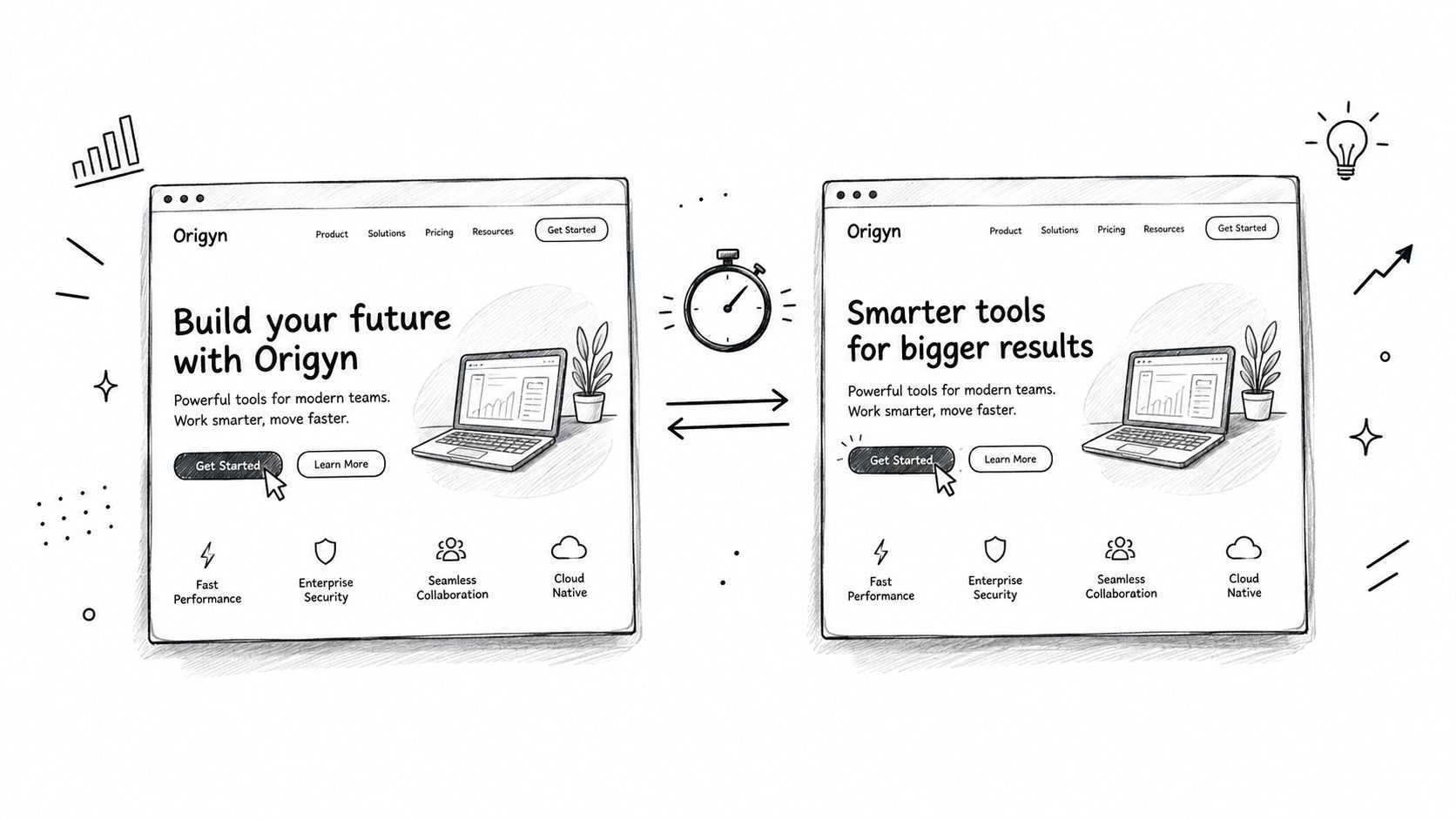
Try three focused experiments:
Price anchoring: Place the premium tier beside the core tier, then observe whether backers choose the intended package without asking what the difference includes. The useful measure is tier selection quality, not a higher click count alone.
Scarcity framing: Replace generic scarcity language with a precise condition, such as a production limit or a selection deadline. Watch for fewer availability questions and fewer late changes.
Social proof: Test a factual progress statement against a purely emotional appeal. Evaluate whether the clearer version produces more completed surveys and fewer requests for clarification.
Don't declare a winner from a single vanity metric. A pledge description succeeds when the backer reaches fulfillment with the same understanding they had at checkout.
Run this checklist for every tier before launch:
A pledge is ready when someone on your fulfillment team can turn it into a production and shipping instruction without interpreting the marketing language.
State that shipping will be calculated or collected later, identify the factors that affect the amount, and name any regions that may require confirmation. Don't write “shipping included” unless you can define exactly what that includes.
Use calm, direct language. Explain that VAT, customs, or other local charges may apply depending on the backer's location and fulfillment arrangement, then point backers to the later checkout or survey step where applicable.
Update the tier immediately and state whether the reward is closed, replaced, or available under a new production allocation. Don't leave a sold-out tier visible with wording that suggests new backers can still receive the original terms.
Set a limit when quantities affect inventory, production planning, or fair access. If multiple quantities are allowed, define how they interact with variants, shipping, add-ons, and the post-campaign survey.
Identify each add-on as a separate optional item, name its quantity rules, and explain whether shipping is recalculated when it's added. Backers should understand the difference between receiving more of the base reward and purchasing an additional SKU.
PledgeBox charges no upfront, per-backer, or campaign fee, is free to send the backer survey, and charges only 3% of add-on or upsell sales when those sales occur, as stated in its campaign management tools explanation. That model lets creators collect survey responses without a survey-distribution fee while tying the platform charge to incremental upsell revenue.
The final test is operational: read the tier as a backer, then read it as the person responsible for manufacturing, tax collection, customer support, and customs paperwork. If both readers reach the same interpretation, your pledge is doing more than converting. It's protecting the fulfillment process.
PledgeBox offers branded backer surveys, shipping and tax collection, add-on upsells, late backer preorders, and fulfillment tools designed to keep pledge data usable from checkout through delivery. Visit PledgeBox to turn clearer pledge copy into a more organized post-campaign workflow.
PledgeBox
The All-in-One Toolkit to Launch, Manage & Scale Your Kickstarter / Indiegogo Campaign