 PledgeBox
Best Campaign Management Tools 2026: Kickstarter &
Discover top campaign management tools for Kickstarter & Indiegogo. Covers features, evaluation, & post-campaign fulfillment.
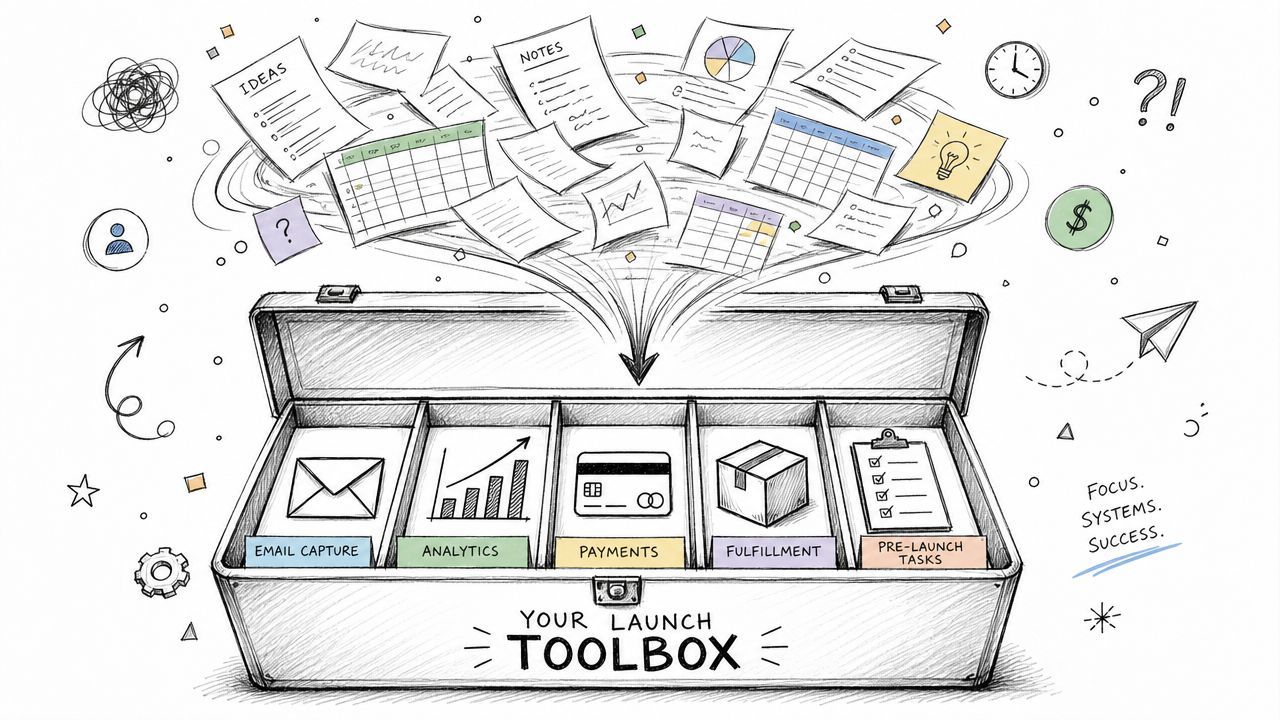
Discover top campaign management tools for Kickstarter & Indiegogo. Covers features, evaluation, & post-campaign fulfillment.
You're probably dealing with this right now. Backer data lives in one spreadsheet, pre-launch emails live in another tool, shipping quotes sit in a carrier portal, and VAT questions are buried in your inbox. The campaign funded, but the work didn't get simpler. It just changed shape.
That's why most advice about campaign management tools feels incomplete for crowdfunding. It talks about ads, calendars, content approvals, and launch reporting. Those matter. But for Kickstarter and Indiegogo creators, operational pain usually starts after funding, when you need surveys, add-ons, shipping fee collection, tax handling, and fulfillment exports to work together without breaking your team.
Creators often start with a patchwork stack because it seems cheaper and faster. A form tool for surveys. A spreadsheet for reward mapping. A payment link for shipping upgrades. A separate inbox for support. That setup works right up until it doesn't. One wrong import, one outdated address file, or one missed shipping rule can create hours of cleanup and a backer experience that feels sloppy.
Serious campaign management tools fix that by giving you one operating system for the campaign. Not just a dashboard. A real workflow layer that connects planning, communication, data collection, and handoff to fulfillment. That's the line between “we launched a successful campaign” and “we can deliver this without chaos.”
The category is growing because teams are tired of managing campaigns with disconnected point solutions. The global campaign management software market is projected to grow from US$7.4 billion in 2026 to US$15.9 billion by 2033 at a projected 11.7% CAGR, driven by demand for data-driven, omnichannel campaign execution and stronger ROI measurement, according to Persistence Market Research's campaign management software analysis.
A good setup does three things at once:
Practical rule: If your team has to reconcile the same backer data in multiple places, you don't have a tool stack. You have a future support problem.
For crowdfunding teams, campaign management isn't just launch planning. It's what happens after the money lands. A more complete view of that workflow shows up in this guide to handling everything after your crowdfunding project ends.
A funded campaign looks like the finish line from the outside. For creators, it's usually the handoff into harder work. You still need to confirm rewards, collect addresses, handle region-specific shipping, sort tax questions, manage add-ons, and answer the same support questions over and over unless your systems are set up properly.

That's why post-campaign operations deserve more attention than they get. A 2023 industry survey found that 78% of Kickstarter creators said post-campaign operations consumed more time than the campaign launch itself, as reported by The Campaign Workshop's review of campaign tools. If you've managed a hardware launch or a tabletop project with variants, that result isn't surprising at all.
The weak spots show up fast after funding:
A lot of creators spend heavily on pre-launch marketing, then limp through the fulfillment phase with generic tools that weren't built for crowdfunding logic. That's backward. If the post-campaign system is weak, every earlier win gets harder to monetize and harder to deliver.
Performance tracking still matters. Strong teams track performance metrics during launch so they can spot which channels and messages are driving backers. But launch reporting only tells you how demand was created. It doesn't solve the operational work that starts once demand has to be fulfilled.
The campaign page gets the applause. The survey flow does the heavy lifting.
Real campaign management for crowdfunding has to cover both halves. The launch gets attention. The post-launch system determines whether the project stays profitable and whether backers feel taken care of.
Most software buyers ask the wrong question first. They ask whether a tool has surveys, analytics, or automations. The better question is whether the pieces work together well enough to remove manual work from the full campaign lifecycle.

The strongest campaign management tools aren't just feature-rich. They're workflow-aware. They understand that creators move from audience building to funding, then into data collection, payment recovery, and delivery.
Before launch, you need structure. Not glamour.
That means clear reward definitions, import-ready backer fields, audience capture, and a plan for how campaign data will flow once the campaign ends. If your reward tiers are messy before launch, every post-campaign process gets slower.
Look for tools that support:
Most generic tools fall apart at this point. They can manage tasks, but they can't manage the specific mechanics of crowdfunding fulfillment.
You need a system that can handle order logic, shipping rules, taxes, and final exports without creating new reconciliation work. For Indiegogo creators, that also means understanding platform-specific constraints. For example, PledgeBox notes that creators need to lock Indiegogo orders before sending surveys because of Indiegogo's refund policy. It also supports collecting increased shipping fee differences during the survey process, as described in PledgeBox's help documentation for sending surveys.
Field note: If shipping, VAT, and add-ons are handled outside the same workflow, someone on your team becomes the integration layer. That person usually burns out.
Backers don't think in departments. They don't care which app stores addresses, which one processes add-ons, and which one sends reminders. They want one clear path to confirm what they bought and what happens next.
That's why ongoing management features matter:
There's also a straightforward productivity case for automation. Advanced campaign management tools can reduce repetitive tasks by up to 40% through rule-based logic and automated workflows, according to Camphouse's overview of campaign management software.
Payment flexibility matters too. If your tool can't collect money smoothly when backers owe shipping differences, taxes, or add-ons, your survey completion rate won't tell the full story. You also need a reliable payment gateway integration for crowdfunding operations so collection happens inside the workflow instead of through side channels.
There are two very different ways to think about pledge management.
The first is the marketplace model. The second is the operator model. That difference affects your branding, your upsell strategy, your control over data, and how much flexibility you get when things change.

Kickstarter's native pledge manager is like Amazon. It's convenient, standardized, and built around the platform's own environment. That can be enough for straightforward projects with simple tiers and limited post-campaign customization needs.
The trade-off is control. Marketplace-style systems tend to prioritize consistency over flexibility. That usually means less room for branded survey experiences, fewer options for custom upsell flows, and tighter limits around how you structure the post-campaign journey.
PledgeBox pledge manager is like Shopify. It sits closer to the creator's own operation, which gives more control over how surveys, add-ons, shipping fee collection, and backer flows are configured. That matters when your project has variants, regional fee differences, or a meaningful post-campaign revenue opportunity.
A key pricing detail also changes the decision. PledgeBox is free to send the backer survey to Kickstarter and Indiegogo creators, with no setup fees or per-backer costs, and it only charges 3% of upsell sales if there's any add-on revenue, according to PledgeBox's Kickstarter post-campaign survey explanation. It is free to send the backer survey and only charge 3% of upsell if there's any.
That fee model is easier to work with than paying upfront for a tool before you know whether backers will buy extras.
For creators comparing options, this breakdown of a crowdfunding pledge manager workflow is useful because it shows where native and third-party approaches diverge.
A quick product walkthrough helps make that difference more concrete:
Native tools are fine for simple projects. Complex campaigns usually need a system that behaves more like commerce infrastructure than a basic survey utility.
The right tool depends less on your campaign page and more on your operational complexity after funding. A card game with a few simple rewards can tolerate more rigidity. A hardware product with accessories, region-based shipping, and tax handling can't.
Start with your failure points, not the feature checklist. Ask where your current workflow breaks. Is it survey completion, fee collection, data exports, backer support, or team coordination? Good evaluation starts with those weak spots.
Use this checklist when comparing campaign management tools:
| Criteria | What to Look For | Why It Matters |
|---|---|---|
| Campaign platform integration | Native or smooth connection with Kickstarter and Indiegogo | Reduces manual import and syncing mistakes |
| Survey flexibility | Conditional questions, branded pages, variant logic | Keeps the backer experience relevant and cleaner |
| Shipping and tax handling | Support for shipping fee collection, VAT/tax logic, and regional rules | Prevents under-collection and manual corrections |
| Upsell support | Add-ons, late backer options, and post-campaign purchase flows | Helps recover revenue after the campaign closes |
| Export quality | Clean downloadable reports and vendor-ready fulfillment exports | Saves ops time before orders are sent out |
| Payment collection | Reliable handling of balances due for shipping, taxes, and extras | Avoids chasing backers through email |
| Backer self-service | Address updates and pledge adjustments without staff intervention | Cuts support volume and delays |
| Pricing model | Upfront subscription, setup costs, or commission-based pricing | Changes risk, especially for smaller creators |
| Ease of use | Fast setup, clear dashboard, low training burden | Busy teams won't adopt a tool they can't operate |
| Support quality | Human help plus useful documentation | Important when survey logic or imports go wrong |
Some teams overbuy. They choose enterprise-style work management software when they really need better pledge operations. Others underbuy and try to run a multi-region fulfillment workflow from a spreadsheet.
A practical way to choose is to sort your campaign into one of three buckets:
A tool can look cheap and still cost you more if it creates support overhead or forces manual reconciliation. The opposite is also true. A commission model can be a better fit if you want to avoid fixed software cost before post-campaign revenue is collected.
The best choice is usually the one that removes the most operational friction for your specific campaign shape. Not the one with the longest feature page.
A tool only helps if you implement it like an operations system instead of a last-minute patch. Most rollout problems come from rushing the import, skipping validation, or launching surveys before anyone has tested edge cases like add-ons, region-based shipping, or tax handling.

Before you configure anything, review your backer and reward data. Normalize naming. Remove duplicate fields. Make sure pledge levels, variants, and special cases are documented in plain language that someone outside your core team could understand.
Then build your workflow in order.
Assess actual needs Define what the system must do. Survey collection is obvious. Shipping upgrades, VAT, add-ons, address edits, and fulfillment exports are where requirements get missed.
Select the tool based on post-campaign fit
Don't choose based only on launch-facing features. The cleaner question is whether the tool can survive your messiest operational week.
Set up integrations and logic
Connect campaign data, payment handling, and any downstream fulfillment process. Configure survey rules so backers only see what applies to them.
Teams skip testing because they're in a hurry. Then they discover that one reward tier maps incorrectly, one region isn't collecting enough shipping, or one add-on appears for the wrong backers.
Use a pilot group first. Run internal tests and, if possible, test with a small set of trusted backers before broad release.
Operational habit: If your vendor needs to “fix the file a little” before shipping, the file wasn't ready.
Once the survey is live, watch completion patterns and support tickets closely. The first wave of backer behavior tells you where confusion lives. Tighten wording, update FAQ responses, and send reminders based on real friction points.
That same mindset matters earlier in the funnel too. Benchmarks cited by Oracle say tools with integrated A/B testing and customer journey mapping can improve conversion rates by 25 to 30 percent compared with non-automated approaches, because teams can optimize in real time through the campaign lifecycle, as explained in Oracle's campaign management overview.
Implementation works best when one person owns the process end to end, even if multiple people touch the system. Shared visibility is good. Shared accountability usually creates gaps.
The biggest mistake is treating campaign management tools like storage instead of process control. If you dump data in without rules, the software just gives you cleaner-looking confusion.
A second problem is trying to preserve every exception manually. Some creators keep side spreadsheets for VIP cases, local pickup edge cases, or special reward swaps. That usually breaks reporting and creates fulfillment mismatches later.
Use the platform as the record of truth. Put edge cases into a defined workflow, not a private note on one team member's laptop.
Small exceptions become large liabilities when they sit outside the system.
Keep surveys short, test every fee path, and write support macros before launch. If a backer asks the same question twice, the process probably needs fixing, not just the reply.
No. For crowdfunding, that's the narrow view and usually the costly one. The launch phase gets attention because it's public. The post-campaign phase is where creators lose time through disconnected surveys, fee collection, and fulfillment prep.
You can, especially on a simple project. But once you add multiple reward tiers, shipping differences, tax questions, or add-ons, spreadsheets become a patch job. They don't enforce logic well, they depend heavily on manual discipline, and they're easy to break.
For crowdfunding, fulfillment features usually decide whether the operation stays manageable. Analytics help you understand performance. Post-campaign capabilities determine whether you can convert funding into delivered orders without burning the team out.
No. Some behave like native platform extensions with less flexibility. Others act more like independent commerce infrastructure with stronger control over branding, upsells, and backer flows. That's why the Amazon versus Shopify analogy is useful. It describes the difference in operating model, not just the feature list.
Test reward mapping, survey branching, shipping collection, tax handling, add-ons, and final exports. Also test the backer-facing language. A technically correct workflow can still fail if the instructions are confusing.
Look at complexity, not ambition. If your campaign includes variants, late add-ons, global shipping, or multiple operational handoffs, you need a tool that can hold those rules in one place. If the campaign is simple, don't overcomplicate it. The right tool is the one your team can run well under pressure.
If you need one system for surveys, upsells, shipping fee collection, taxes, and fulfillment handoff, PledgeBox is one option to evaluate. It's free to send the backer survey for Kickstarter and Indiegogo creators, and it only charges 3% on upsell sales if there's any. That pricing model makes it easier to adopt without adding fixed software cost before post-campaign revenue is collected.
PledgeBox
The All-in-One Toolkit to Launch, Manage & Scale Your Kickstarter / Indiegogo Campaign