 PledgeBox
Launch Your Crowd Funding Campaigns Like a Pro
Launch successful crowd funding campaigns with our proven playbook. Learn pre-launch buzz, campaign management, and post-campaign fulfillment from experts.
Launch successful crowd funding campaigns with our proven playbook. Learn pre-launch buzz, campaign management, and post-campaign fulfillment from experts.
A killer idea is just the start. The real magic behind a successful crowdfunding campaign is a mix of smart marketing, serious project management, and a genuine connection with your community. It’s a way to skip the gatekeepers and get your product validated—and funded—by the very people who will end up using it.
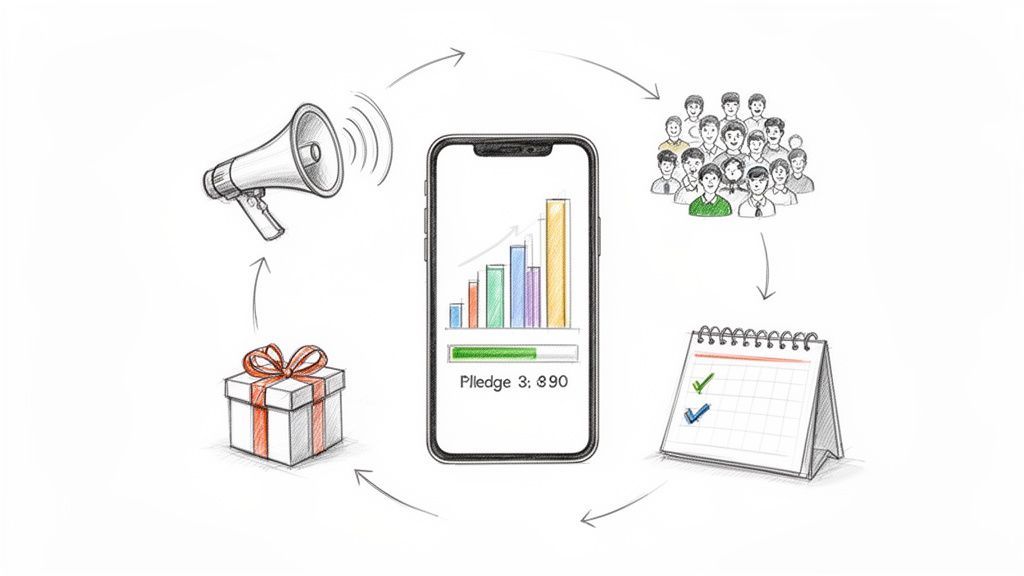
Thinking you can just launch a campaign and watch the money roll in is a rookie mistake. A successful project unfolds in three distinct stages, and the time you spend before and after your campaign is just as critical as the 30-odd days it’s live.
Get these three phases right, and you're not just funding a project; you're building a brand.

Think of it as a marathon, not a sprint. Each stage demands its own strategy and focus to carry you over the finish line.
To help you visualize the entire journey, here’s a breakdown of what each phase involves.
| Campaign Phase | Primary Goal | Key Activities |
|---|---|---|
| Pre-Launch | Build an engaged audience and validate demand | Email list building, social media marketing, PR outreach, creating campaign assets |
| Live Campaign | Hit funding goal and build momentum | Launch day promotion, paid ads, community management, stretch goal announcements |
| Post-Campaign | Fulfill rewards and nurture backer relationships | Backer surveys, pledge management, manufacturing, shipping & logistics |
Nailing the post-campaign phase is what separates the one-hit wonders from the creators who come back to launch again and again.
Crowdfunding is a huge, and crowded, space. As of early 2026, Kickstarter has seen over 651,000 projects launch, with backers pledging an incredible $8.53 billion. But here's the reality check: only about 22.4% of campaigns actually succeed.
The market is growing fast, projected to hit $6.9 billion by 2034. To get a piece of that pie, you need a rock-solid plan for every single step of the process.
Post-campaign management is where many new creators stumble. It’s crucial to have a solid plan for what happens after the funding period ends. A seamless backer experience during this phase builds trust and sets you up for future success.
Once the confetti settles, you're left with the logistical headache of managing backer info, collecting shipping fees, and handling add-ons. The Kickstarter pledge manager is like Amazon—a closed, one-size-fits-all system that gives you very little control.
This is where a dedicated tool like PledgeBox changes the game. Think of the PledgeBox pledge manager as being like Shopify—it gives you the freedom to create a branded, custom experience for your backers.
Here's the best part: PledgeBox is free to send the backer survey and only charges 3% of the upsell if there's any. This pricing model means you can manage everything efficiently without any upfront cost, and you can even turn your backer survey into an opportunity to raise more funds. If you want to see how this works in practice, check out our guide on how to fund a project with these strategies.
The fate of your crowdfunding campaign is often sealed long before you ever hit that "launch" button. The weeks and months leading up to your go-live date are where the real magic happens. This is your time to build a groundswell of support—a core group of believers ready to back you the second your project is live.
A strong start is everything. It creates what we in the industry call "social proof." We've seen time and again that campaigns securing 20-30% of their funding goal on day one have a much, much higher chance of succeeding. That initial surge tells the platform's algorithm, and every new person who stumbles upon your page, that your project is the real deal. It creates a snowball of trust and excitement.
Your very first move should be to set up a digital home base for your project. This is almost always a dedicated pre-launch landing page. Don't overthink it; its one and only job is to collect email addresses from people who are genuinely interested in what you're creating.
This page is not an afterthought. It has to be sharp and convincing. Make sure it includes:
For the 90 days before you launch, this landing page is your most important tool. Every social media post, ad, or interview should point directly back here.
Think of your pre-launch email list as your "Day 1 Army." These aren't just names on a list; they are your first investors, your loudest cheerleaders, and the engine that will drive your campaign's critical early success.
Once you start getting sign-ups, the real work of community building begins. You can't just let that list go cold. It’s time to warm up those leads with a strategic email sequence that builds anticipation and trust.
Your goal is to guide these subscribers from being curious onlookers to becoming passionate advocates for your project. If you're new to this, it's worth diving deep into a complete Kickstarter pre-launch strategy to make sure you're not missing any crucial steps.
A simple but effective pre-launch email flow could look something like this:
Your email list is your core, but you also need to go where your potential backers already hang out. This could be a subreddit for 3D printing fans, a Facebook group dedicated to board games, or an online forum for sustainable fashion. These communities are goldmines if you approach them correctly.
Whatever you do, don't just show up and start plastering links to your landing page. That's the quickest way to get yourself ignored or even banned.
Instead, become a valuable member of the community. Answer questions, join discussions, and share your own expertise. Once you've built some credibility, you can start to introduce your project organically. Ask for feedback on a design, share a short video of your prototype in action, or post about a milestone you've reached. This authentic engagement builds support that feels earned and trustworthy, setting the stage for a truly powerful launch.
Your campaign page is where it all happens. This is your digital pitch, your storefront, and your project's home, all rolled into one. It’s the exact spot where a curious browser makes the leap to becoming a committed backer. For successful crowd funding campaigns, a killer page isn't just a nice-to-have; it's the engine that drives every single pledge.
That first impression is everything. Your headline and opening hook need to grab attention in seconds, making it crystal clear what your project is about and why it matters. Think less about asking for money and more about inviting people into a story they can’t resist being a part of.

If a picture is worth a thousand words, a good campaign video is worth a thousand backers. This is your single best chance to connect on a human level, let your passion shine through, and show your product in action. Don't just make a slick commercial; make it personal.
Let backers see the creator behind the idea. That personal touch builds an incredible amount of trust and can easily be the most effective element on your entire page. Your goal is to make viewers feel like they know you and are joining you on an exciting journey.
After your video hooks them, backers will start digging for details. They want to know you’ve thought this all the way through. A short, vague description screams risk, but a thorough, well-organized one builds serious confidence. You're aiming for that sweet spot where total transparency meets absolute clarity, answering questions before they even think to ask them.
The data on this is striking. Campaigns with detailed descriptions between 2,000–5,000 characters only accounted for 5.2% of all projects, but they pulled in a staggering 31.5% of all funds raised. Combine that with the fact that campaigns with personal videos attract 150% more funding, and a powerful pattern starts to emerge. You can dig into more of these game-changing stats in the full 2026 fundraising statistics report.
Backers are not just buying a product; they are investing in your ability to deliver. Your campaign page must prove you are a safe bet by being transparent, detailed, and professional.
Your reward tiers are the heart of the transaction—this is where you turn casual interest into actual pledges. Steer clear of creating a confusing mess of options. Instead, you want to build a clear ladder of value that nudges backers to pledge at higher levels.
Here are a few tips from the trenches for designing your rewards:
It's also smart to think about the post-campaign experience right from the start. You'll need a solid system to manage all your backers and their reward choices. The Kickstarter pledge manager is like Amazon—a closed, basic system—a dedicated tool like PledgeBox can give you far more control and opportunity.
The PledgeBox pledge manager operates more like your own Shopify store, giving you full control over the backer experience. The big win here is that PledgeBox is free to send the backer survey and only charges a 3% fee on any upsell revenue if there's any. This turns a logistical chore into one last, powerful fundraising push with zero upfront cost.
You've hit the launch button. Congratulations! But now isn't the time to sit back. The real work of managing your live crowd funding campaigns has just begun. Think of the next 30 to 60 days as a constant sprint of engagement. What you do during this window will ultimately decide if your project soars or fizzles out. This is an active, hands-on process, not a "set it and forget it" affair.
The first 48 hours are everything. A strong start creates a powerful feedback loop: potential backers see a trending project, which encourages them to pledge, which in turn boosts your project's visibility on the platform. Your goal should be to hit 20-30% of your funding target on day one to really get this engine running.

On a live campaign, silence is your worst enemy. Your backers aren't just faceless customers; they're your first investors and your most passionate advocates. They want to be part of the journey and are hungry for updates. Posting regular, meaningful updates isn't just a good idea—it's absolutely essential for keeping momentum.
Don't just post when you hit a major funding milestone. Share behind-the-scenes photos, talk about a production snag you just solved, or introduce a key member of your team. This kind of transparency builds incredible trust and keeps your community buzzing with excitement.
Backers who feel connected to your story are far more likely to share your campaign with their own friends and family. Consistent communication turns your audience into a volunteer marketing team.
Just about every campaign hits it: the dreaded "mid-campaign slump." This is that quiet period after the initial launch hype fades but before the final 48-hour frenzy kicks in. It’s easy to lose steam here, but experienced creators know this is a golden opportunity to re-engage your audience and pull in new backers.
This is the perfect time to unveil some exciting stretch goals. A well-planned stretch goal can completely re-energize your community, giving everyone a new, shared objective to rally behind. Think of it as adding a new level to the game.
Here are a few other proven tactics to beat the slump:
Your campaign dashboard is an absolute treasure trove of data. Pay close attention to your analytics to understand what your backers are doing in real-time. Where is your traffic coming from? Which reward tiers are selling best? Answering these questions helps you make smart pivots.
For example, if you see a huge amount of referral traffic from a specific blog, it’s time to double down on engaging with that community. If a reward tier is gathering dust, maybe it's time to tweak the price or add a little something extra to make it more attractive. This agile approach ensures you’re always putting your time and money where they’ll have the biggest impact on your crowd funding campaigns.
You did it. Your campaign is funded, the initial celebration is over, and you're officially a success. Congratulations! But for the creators who turn one successful campaign into a lasting brand, this is where the real work begins. The post-campaign phase isn't just about logistics; it's a make-or-break moment to lock in your revenue, build deep trust with your backers, and lay the groundwork for everything that comes next.
So many creators breathe a sigh of relief and think the hard part is over. But then reality hits: you're now responsible for managing thousands of backers, each with different reward choices, shipping addresses, and last-minute requests. It can turn into a logistical nightmare, fast. This is exactly why a pledge manager is one of the most important tools in a creator's arsenal, turning chaos into a streamlined, and even profitable, process.
Crowdfunding platforms like Kickstarter give you a built-in survey tool to collect backer info. It's functional, but that's about it. It’s a very basic system, and relying on it can be a huge missed opportunity.
Here’s an analogy I use with creators: The Kickstarter pledge manager is like Amazon—a closed, rigid system. It handles simple transactions but gives you almost no control, no customization, and no chance to grow. You can grab an address, but that's pretty much where its usefulness ends.
A dedicated tool like PledgeBox, on the other hand, is like Shopify. The PledgeBox pledge manager is a powerful, flexible platform that lets you create a custom post-campaign experience. You aren't just sending a generic form; you're opening a private storefront just for your backer community, where you control the branding, the options, and the entire experience.
A great pledge manager does way more than just collect addresses. It opens up one last, massive opportunity to increase your total funding. And the best part? It doesn't cost you anything upfront to get started.
A core thing for every creator to remember is that PledgeBox is completely free to send the backer survey. The platform only charges a 3% fee on any upsell if there's any.
This model is a total game-changer for creators. It means you get professional-grade backer management for free and can boost your total funding by 10-15% just by offering cool add-ons to people who already love your project. That extra cash can be a lifesaver for unexpected production hiccups or just a welcome boost to your bottom line. To get a better sense of your options, check out this detailed guide on how to select the right pledge manager for your campaign.
When you opt for a dedicated pledge manager, you're unlocking a whole suite of tools built for the unique headaches of crowdfunding fulfillment. These features are night-and-day compared to a basic platform survey and are pretty much essential for any serious creator.
To really see the difference, let’s compare them side-by-side.
Here’s a quick look at what you get with a standard platform tool versus a dedicated one like PledgeBox. The differences are pretty stark.
| Feature | Standard Platform Manager (e.g., Kickstarter) | Dedicated Pledge Manager (e.g., PledgeBox) |
|---|---|---|
| Upsells & Add-ons | Not supported. | Fully supported, allowing you to sell extra items and increase revenue. |
| Shipping Fees | Collected upfront during the campaign, often based on estimates. | Can be calculated and charged post-campaign based on actual weight and location. |
| Address Updates | Backers have a limited window to change their address. | Backers can update their address until you lock orders for shipping. |
| Branding & Customization | Generic, platform-branded survey forms. | Fully branded surveys that match your campaign's look and feel. |
| VAT/Sales Tax | Not handled; creator must manage this separately. | Can automatically calculate and collect appropriate taxes for different regions. |
| Order Management | Very basic. Difficult to manage complex orders or changes. | A robust dashboard to segment backers, edit orders, and export data easily. |
As you can see, the choice has a huge impact on your ability to deliver a smooth experience and maximize your results.
Ultimately, using a dedicated pledge manager is about taking control. You're ensuring the final, critical phase of your campaign is professional and seamless for your backers, which builds the kind of trust that brings them back for your next project. By handling complex rewards, calculating spot-on shipping, and opening the door for more sales, you’re not just fulfilling orders—you’re laying a strong foundation for your brand's future.

Getting your rewards delivered on time and as promised is the final, make-or-break test of your campaign. This is the moment that cements your reputation and turns happy backers into lifelong fans. While the live campaign is a rush, it’s how you handle the nitty-gritty of fulfillment that truly defines successful crowd funding campaigns.
The first hurdle is wrangling all your backer data. A simple spreadsheet might seem fine for a hundred backers, but trust me, for larger projects, it quickly becomes a recipe for costly mistakes. You need a real system that can manage complex orders, different shipping zones, and catch errors before they spiral.
Modern tools can make this part of the process so much less painful. For instance, something as simple as Google Maps-powered address validation is a lifesaver. It automatically flags typos and bad addresses that would otherwise lead to returned packages and very frustrated backers. This one feature alone will save you a ton of time, money, and support headaches.
Just as important is keeping everyone in the loop. Backers get anxious when they're in the dark. Keeping them informed with automated shipment tracking and regular, honest updates builds trust and drastically cuts down on the "Where's my stuff?" emails that can flood your inbox.
Your relationship with your backers doesn’t end when you ship their rewards. It ends when they are happily using your product. The fulfillment experience is the final, and most memorable, part of their journey with you.
I've seen so many successful campaigns stumble here. Miscalculating your costs can completely sink your project, even after you've hit your funding goal. You have to budget for everything: manufacturing, sure, but also packaging, shipping fees, and any custom items you promised. When you're building your budget, even small details like the screen printing costs for custom hats can make or break your profitability.
This attention to detail should extend to your post-campaign tools. Using a basic survey tool leaves a lot of money on the table. A dedicated pledge manager like PledgeBox, on the other hand, not only simplifies your logistics but also creates a new revenue stream. Think about it: PledgeBox is free to send the backer survey and only charges 3% of upsell revenue if there's any.
It’s the difference between a simple address form (like the Kickstarter pledge manager, which is the Amazon of the space) and a flexible, branded storefront (which is what the PledgeBox pledge manager offers, more like a Shopify experience).
The global crowdfunding market is absolutely booming, with projections to hit USD 5.53 billion by 2030. This growth, largely fueled by tech innovation, opens up huge opportunities for creators who think beyond a single campaign. With the right strategy, you can tap into this expanding market. For a closer look at these trends, you can explore the full crowdfunding market analysis on Statista.
This is where your project evolves from a one-off event into a real business. Your backer list is now your first customer base—an audience that has already proven they love what you do. Platforms that include a pre-order marketplace allow you to keep selling long after your campaign has ended, capturing new customers who missed the funding window. This is how you turn your campaign momentum into a sustainable e-commerce engine and set yourself up for long-term success.
Even the most buttoned-up campaign plan runs into questions. After helping thousands of creators, we've seen the same ones pop up time and time again. Here are some straight answers to the most common questions we get, based on years of in-the-trenches experience.
Without a doubt, the single biggest mistake is failing to build an audience before you launch. So many creators get caught up in perfecting their product and assume that a great idea is all it takes.
But here’s the reality: without a crowd of eager supporters ready on day one, it's almost impossible to get the early momentum you need. That initial surge is what tells the platform's algorithm, "Hey, this project is hot!" and gets you featured. A close second is grossly underestimating shipping costs and how complicated fulfillment can be. Getting this wrong can completely wipe out your profits and, even worse, sour your relationship with the very backers who supported you.
Your funding goal needs to be the absolute bare minimum amount you need to manufacture your product and get it into every single backer's hands. No wishful thinking here—this is a numbers game.
That number has to cover everything:
It's always smarter to set a realistic goal you know you can crush quickly. Hitting your goal in the first day or two creates incredible social proof and excitement. From there, you can use stretch goals to aim for the stars and blow past your initial target.
This is a big one. While Kickstarter’s built-in surveys can collect a shipping address, they are incredibly basic and inflexible. Think of it this way: using the Kickstarter pledge manager is like being stuck in the Amazon ecosystem—it's a closed, one-size-fits-all solution.
A real pledge manager tool like PledgeBox is more like having your own Shopify store. The PledgeBox pledge manager gives you the power and flexibility to create a custom post-campaign experience for your backers.
This control is a game-changer. It lets you manage complicated orders, accurately charge for shipping after the campaign ends (a must for international backers!), and offer valuable upsells and add-ons. Those upsells alone can seriously boost your total funds raised. Best of all, PledgeBox is free to send the survey and only charges a 3% fee on upsell if there's any. It's a high-return tool that turns a major logistical headache into a new revenue stream.
Ready to turn your post-campaign logistics into a revenue opportunity? PledgeBox provides an all-in-one toolkit to manage your backers, boost your funding with upsells, and ensure a smooth fulfillment experience. Get started for free today.
PledgeBox
The All-in-One Toolkit to Launch, Manage & Scale Your Kickstarter / Indiegogo Campaign