 PledgeBox
Crowdfunding Facebook Ads: Ultimate Playbook 2026
Crowdfunding facebook ads - Master crowdfunding Facebook Ads in 2026. This ultimate playbook reveals proven strategies to boost your campaign success and
Crowdfunding facebook ads - Master crowdfunding Facebook Ads in 2026. This ultimate playbook reveals proven strategies to boost your campaign success and
Most creators start running crowdfunding facebook ads when the campaign is already in trouble. The page is live, the first wave of friends has backed, momentum is slowing, and Meta Ads Manager starts to look like a rescue button.
That’s usually where the waste begins.
Facebook ads can help a campaign. They can also burn cash fast when they’re treated like a last-minute fix instead of a system. Crowdfunding behaves differently from normal ecommerce. You’re not selling a stocked product with instant fulfillment. You’re asking strangers to trust a prototype, a creator, and a timeline. That changes how you target, how you warm people up, and what counts as a conversion.
The strongest signal is still social trust. Analysis from Startups.com found that moving from 100 to 1,000 Facebook friends raised campaign success probability from 20% to 40%, and 12% of Facebook shares converted directly into donations on their dataset, which is why social proof and network effects matter so much in crowdfunding (Startups.com crowdfunding statistics). That same dynamic is why paid traffic works best when it amplifies an audience you’re already building.
If you come from ecommerce, some of the mechanics will feel familiar. The difference is the funnel timing and the role of community. A useful primer on the broader effectiveness of Meta ads for Shopify helps frame the platform side of the equation. For crowdfunding, the ad account has to serve the launch, the campaign, and the revenue that comes after the campaign closes.
Most failed ad campaigns fail long before the first click.
The common pattern looks like this. A creator launches on Kickstarter, waits to see traction, then starts buying traffic to a campaign page that has weak social proof, no warmed audience, no follow-up sequence, and no clear tracking. Facebook gets blamed, but the problem is usually funnel design.
A lot of creators expect ads to create trust from scratch. That’s not how crowdfunding works. Ads can accelerate attention, but they don’t replace launch preparation, creator credibility, or post-click nurturing.
Practical rule: Don’t ask cold traffic to do a high-trust action before you’ve given it a lower-friction step first.
That lower-friction step is usually an email signup before launch, then retargeting during launch, then segmented follow-up once the campaign is live. When creators skip the first step, they pay more to push colder traffic straight to a pledge page.
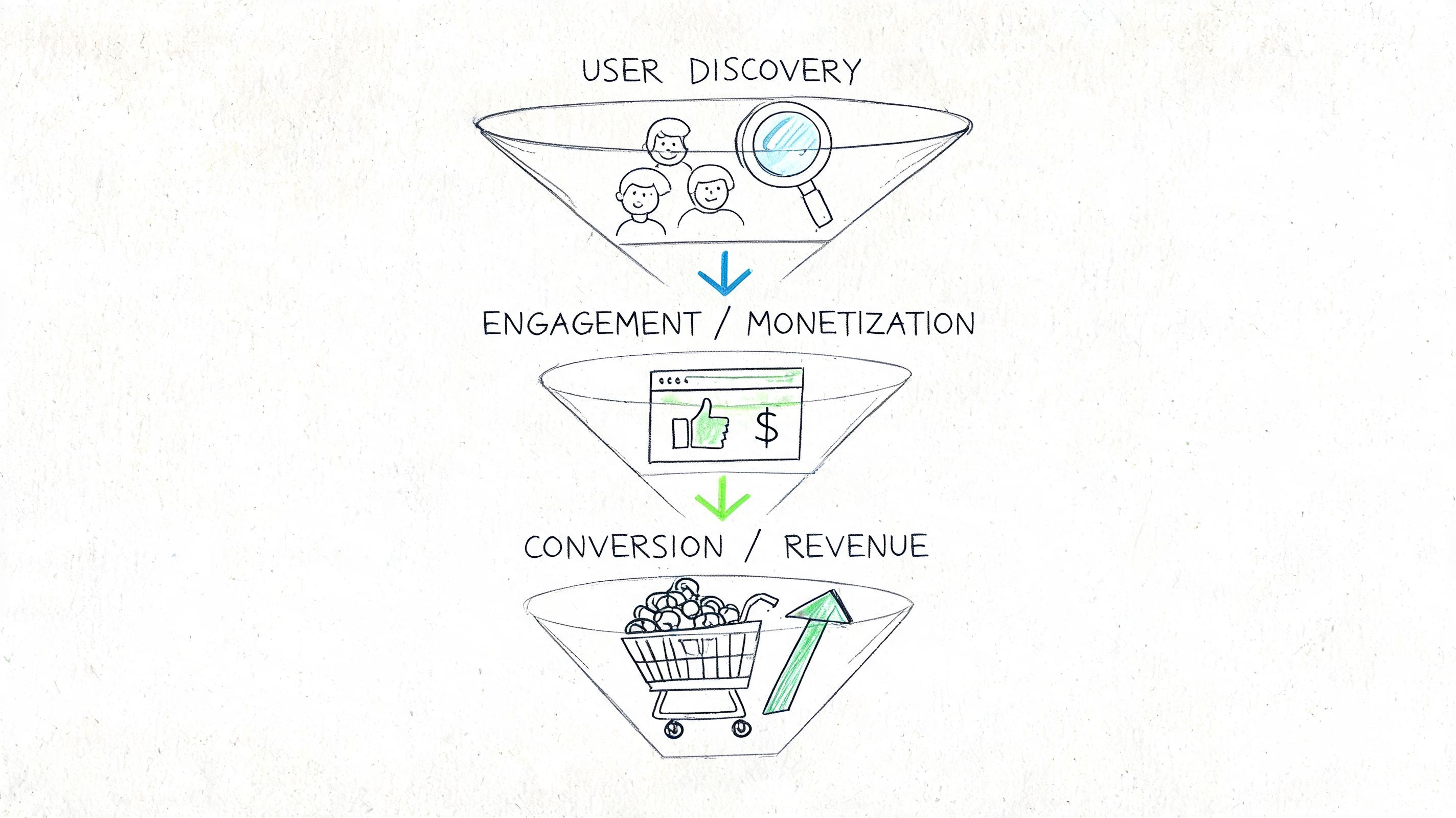
The healthier way to think about crowdfunding facebook ads is as a full-funnel asset. You build audience before launch. You convert the warmest slice on day one. You retarget visitors and engaged leads during the campaign. Then you keep using the same audience data after the campaign to drive survey completion, add-ons, and late backer revenue.
That last part gets ignored too often. Native crowdfunding tools can collect basic information, but they don’t give creators much control over post-campaign merchandising or audience segmentation. If you want ads to improve total project revenue, not just launch-day pledges, the ad strategy has to connect to the pledge management layer.
The ad funnel for crowdfunding is not one campaign. It’s a chain of campaigns with different jobs.

The simplest way to structure it is this:
Pre-launch
Build the list. The only thing that matters here is capturing intent from people likely to care when the project goes live.
Launch window
Hit the warmest people first. Early pledges create social proof, and social proof makes the rest of your traffic convert better.
Mid-campaign
Keep qualified traffic moving while refreshing creative and retargeting people who engaged but didn’t back.
Post-campaign and pledge manager
Recover unfinished actions, collect surveys, and present add-ons or late backing offers to people who already trust the project.
That fourth phase is where many teams leave money on the table.
Using the wrong Facebook objective creates misleading data. If the job is list-building, use a lead-focused setup. If the job is getting known visitors back to a live campaign page, use retargeting and conversion-focused campaigns. If the job is post-campaign monetization, track the actions that matter inside your survey and pledge flow.
| Campaign Phase | Primary Goal | Recommended Facebook Objective |
|---|---|---|
| Pre-launch | Capture interested leads | Lead generation or conversions |
| Launch | Convert warm audience into backers | Conversions |
| Mid-campaign | Retarget engaged visitors and sustain momentum | Conversions or traffic for retargeting pools |
| Post-campaign | Drive survey completion, add-ons, and late backers | Conversions |
Most campaigns that scale cleanly already have a lead engine running before launch. Instead of sending traffic to Kickstarter immediately, send it to a pre-launch page with one action: join the list.
This is also where the tool stack matters. If you want an example of how creators structure this flow, this guide on Facebook ads for Kickstarter campaigns shows the pre-launch page model clearly.
The practical goal in pre-launch is simple:
The strongest launch ads usually aren’t broad interest campaigns. They’re warm audience campaigns aimed at people who already visited the pre-launch page, joined the list, watched a large portion of the video, or engaged with launch reminders.
That’s what creates a more stable day one. Instead of asking Meta to discover your market from zero on launch day, you’re telling it who already showed intent.
Warm traffic doesn’t make a weak campaign strong. It makes a prepared campaign efficient.
At this stage, many ad strategies stop too early.
If someone backed but hasn’t completed a survey, that’s not an admin issue. It’s a conversion issue. If someone completed a survey but didn’t add an accessory, expansion, bundle, or upgraded reward, that’s not just fulfillment. It’s merchandising.
The creators who think this way get more value from the same audience. The ones who don’t usually stop measuring ROI when Kickstarter closes, even though the buying window is still open in a different form.
Audience quality and message fit decide whether Meta finds buyers or just cheap clicks. In crowdfunding, that matters more than in standard ecommerce because the buyer is not only judging the product. They are judging timing, trust, and whether backing now feels worth the risk.

Cold interest targeting still works for some campaigns. I use it for products with clear enthusiast categories such as board games, miniatures, EDC gear, maker tools, or hobby hardware. But broad prospecting is a testing lane, not the audience I trust first with serious spend.
The first audiences worth building are the ones that already carry context about the project:
Good setup matters here. Install the Meta Pixel on the pre-launch site and, if your stack allows it, on the pledge manager and survey flow as well. If you use PledgeBox after the campaign, that post-campaign behavior becomes useful audience data for survey reminders, add-on ads, and late upsell pushes. That is one of the biggest gaps in weak crowdfunding ad accounts. They optimize until Kickstarter ends, then stop collecting signals from the part of the funnel where margin often improves.
Treat each audience as a separate temperature band instead of merging everyone into one retargeting bucket.
Keep recent site visitors separate from older visitors. Split short video viewers from deep viewers. Separate email signups from campaign backers if your data flow supports it. A person who watched 75 percent of a demo video last week is different from someone who clicked a teaser post a month ago.
Lookalikes work best when the seed audience reflects a meaningful action. Pre-launch signups, add-to-cart equivalents, survey completers, and high-value backers are all stronger seeds than generic engagement. The system needs a clean source before it can find similar people at scale.
Interest targeting is still useful, but it works better when the angle is specific. For a board game, genre and adjacent titles usually beat broad tabletop interests. For a gadget, use-case interests usually beat generic consumer tech audiences. Tight interest sets also make creative testing easier because you can see which message wins with which market slice.
Smaller audiences with clearer intent usually produce cleaner learning.
Why should this person care right now?
That is the job. If the ad looks nice but delays the answer, click quality drops. If the ad explains features without showing stakes, conversion rate drops.
A practical structure is Hook, Proof, Offer.
For a board game, show table presence, player reaction, and one memorable mechanism before explaining systems. For a gadget, show the problem in use and the product solving it in real conditions. In many crowdfunding campaigns, prototype footage beats polished brand video because buyers care more about credibility than finish.
Carousel ads also help when your reward tiers or add-ons need visual explanation. KlientBoost Facebook ads statistics notes that carousel ads are effective for showcasing multiple offers or product angles.
Many creators lose efficiency when they run one hero video everywhere and expect the same result from strangers, launch-day subscribers, and backers who still have not filled out their survey.
Use different creative for different decisions:
That last category matters more than many guides admit. If a backer completes a survey and adds an expansion, accessory, or upgraded bundle through PledgeBox, that revenue should be part of ad ROI analysis. Creative for post-campaign upsells usually works best when it assumes ownership, not discovery. “Complete your set” beats “Meet our product.”
Crowdfunding copy needs momentum. It needs specificity. It needs enough conviction to reduce hesitation without sounding like a catalog page.
Useful copy angles include:
If you want examples of ad writing that stays product-focused instead of sounding templated, this guide on Facebook ad copy for print on demand is useful because the core copy principles transfer well to crowdfunding.
Strong copy and strong audience structure work together. One without the other usually produces misleading results. A weak audience can make good creative look average. Weak creative can hide the value of a strong retargeting pool. The account gets easier to scale once each audience sees the message that fits its stage in the funnel.
A campaign goes live, the first ads start spending, and the dashboard looks busy. Clicks are coming in. CPM is tolerable. Comments are active. Then pledge volume stalls, CAC climbs, and nobody can explain whether the next $500 should go to prospecting, retargeting, or post-campaign recovery.
That budgeting problem starts with the wrong question. Spend should be assigned by job, not by gut feel.

Each stage of a crowdfunding funnel needs a different standard for success.
Pre-launch spend buys email leads, pixel data, and proof that the offer can attract the right kind of interest. Launch spend buys fast conversion from the audience you warmed up. Mid-campaign spend keeps volume stable when organic momentum dips. Post-campaign spend buys survey completion, late pledges, and upsell revenue through tools like PledgeBox.
That last category gets ignored too often. If ads help recover incomplete surveys or sell add-ons after the campaign ends, that revenue belongs in the same ROI model as launch pledges. Teams that stop measurement at campaign close usually understate ad performance and make weaker budget decisions on the next project.
For testing, ABO gives better control. It forces delivery across audience and creative variations, which matters when you need clean signals from a small or mid-sized budget.
For scaling, CBO starts to make sense after you already know which combinations can hold spend without breaking efficiency. If you switch too early, Meta will push budget into whatever gets the easiest short-term result. In crowdfunding, that often means you learn less about new audiences and overfeed one warm pocket until costs rise.
Frequency matters here. As noted earlier, repeated exposure can drive costs up and response rates down. In practice, I start reviewing creative fatigue before the account looks obviously bad. If comments get stale, CTR softens, and the same audience has seen the same angle too many times, higher spend usually makes the decline more expensive.
A useful reporting view is simple.
Are we buying qualified attention?
Check click quality, landing page engagement, lead quality, and whether traffic behaves like potential backers instead of casual browsers.
Are warm audiences outperforming cold audiences?
If they are not, either tracking is incomplete or the message is mismatched to the funnel stage.
Where should the next dollar go?
Prospecting, retargeting, survey recovery, and post-campaign upsells should compete against each other based on return, not habit.
Cheap traffic can still lose money. Reach can still be irrelevant. A good-looking ad account with a weak pledge path is one of the most common failure modes I see.
Decision filter: If a metric does not help you pause, fix, or scale an ad, it is a vanity metric.
For pre-launch, I watch cost per lead and what those leads do next. Do they open launch emails? Do they click through when the campaign goes live? Do they convert into backers at a rate that supports list-building spend?
For live campaigns, I care more about purchase-path behavior than top-line click volume. A cold ad can produce acceptable CPC in Ads Manager and still send weak traffic to Kickstarter or Indiegogo. That gap matters more than the click price.
For post-campaign flows, I watch survey completion rate, add-on take rate, and recovered revenue per audience segment. That is where full-funnel measurement pays off. If a retargeting campaign helps a backer finish a survey or buy an expansion inside PledgeBox, the ad account is doing more than generating front-end pledges. It is improving total campaign revenue.
For a cleaner KPI framework, this guide on metrics to evaluate for a crowdfunding campaign is a useful reference.
After the basics are set, workflow starts to matter. Teams managing multiple products, storefronts, or ad channels may also find this overview of software for scaling marketplace PPC performance useful for process design.
This walkthrough is a good companion if you want a visual refresher on ad performance analysis:
Scale only after a message keeps converting at higher spend without a meaningful drop in lead quality, pledge quality, or downstream revenue. One strong day is not enough. I want to see stability.
Cut faster than feels comfortable when performance drops and there is no clear reason to stay in market. If frequency is climbing, warm pools are thin, and new creative is not ready, holding budget rarely fixes the problem. It just burns more cash while the team waits for better news.
The campaign ending is not the end of revenue. It’s the point where a lot of teams stop paying attention, which is why they miss one of the most controllable profit phases.

By the time a backer enters the survey and fulfillment phase, trust is already established. That changes the ad economics. You’re no longer proving the project deserves support. You’re guiding known backers to complete tasks or make a second purchase.
This is why the ad account should stay connected to the pledge manager layer.
A key gap in most crowdfunding advice is the missing connection between paid ads and post-campaign tools. Samit Patel’s analysis points out that many guides ignore this phase, even though a large portion of final revenue often comes from late backers and pledge manager upsells. The practical takeaway is to track events like “survey completed” and “add-on purchased” so you can build more precise retargeting audiences (Samit Patel on Facebook ads and Kickstarter).
Creators often treat survey completion like admin. It isn’t. It’s a measurable user action with clear business value.
If someone hasn’t completed a survey, they may still need reminders, clearer deadlines, or a simpler path back in. That’s where ads can help, especially when paired with email. A good email sequence still does much of the heavy lifting, and this resource on email marketing for a successful Kickstarter campaign fits naturally into that post-campaign handoff.
Native Kickstarter surveys are functional, but they’re limited. The cleanest analogy is this: Kickstarter’s pledge manager is like Amazon, and a dedicated pledge manager is like Shopify.
Amazon gives you a standard environment with less control. Shopify gives the merchant more control over presentation, merchandising, and customer flow. The same logic applies here. If you want to present branded upsells, sequence reminders, track deeper events, and shape the buyer journey after funding ends, a dedicated pledge manager gives you more room to operate.
This is also where the fee model matters. PledgeBox is free to send the backer survey and only charges 3% of upsell if there’s any. That structure changes the risk calculation for post-campaign optimization because you’re not taking on an upfront platform cost just to collect surveys.
Not every post-campaign ad should try to sell.
Some should only move backers to the next necessary action:
The better the segmentation, the simpler the ad copy can be. If the audience is “completed survey, no add-on,” the creative can focus entirely on one accessory or one upgrade path. If the audience is “opened survey, no completion,” the ad should reduce friction and reassure, not push more products.
A post-campaign ad should match the exact unfinished action. The more specific the audience, the less copy you need.
Backers are still in a trust relationship with the project. Hard-sell ecommerce tactics can feel off here. Show the add-on in context. Explain why people pair it with the main reward. Remind them that the survey window is the cleanest time to finalize everything in one place.
The same principle applies to late backers. Don’t frame the message like a closeout sale. Frame it like access to a project people already validated.
A lot of ad problems are not targeting problems. They’re expectation problems, funnel problems, or policy problems.
One of the clearest cautionary examples comes from Pine Island Games. In their Nut Hunt Kickstarter case study, Facebook lead generation produced a $2.70 CPL for direct campaigns and $3.17 including ancillary expenses, but the lead-to-backer conversion rate was only 1.5%, ending at a $208 cost per conversion from 32 backers out of 2,102 emails on $9,289 total spend. Their write-up identifies weak post-lead nurturing as the primary issue, which is exactly why a lead campaign without a strong follow-up sequence often disappoints (Pine Island Games on Kickstarter Facebook advertising).
That case matters because the lead cost didn’t look outrageous. The weakness showed up after the opt-in.
Many creators increase spend because an ad gets clicks, comments, or cheap traffic. None of those prove purchase intent on a crowdfunding project.
Warning signs include:
If you can’t identify your highest-intent audience segment, you’re not ready to scale.
Crowdfunding ads sit between ecommerce and fundraising, which means creators need to stay careful with language. Avoid anything that sounds like a guaranteed return, an investment promise, or a raffle-style offer if the platform’s rules don’t allow it. Keep claims tied to the product and the reward, not speculative outcomes.
The safest pattern is simple. Be concrete about what backers receive, what stage the product is in, and what the campaign is trying to accomplish. Don’t imply certainty where there is development risk.
Compliance problems usually start in the copy. Tighten promises before Meta or the platform does it for you.
People who clicked once are not equal. Someone who visited yesterday is not the same as someone who bounced weeks ago. Segment by recency and behavior.
Also pay attention to comments. Crowdfunding ads attract practical objections fast. Shipping concerns, prototype skepticism, delivery timing, and category confusion all show up there. Good teams use those objections to sharpen the next round of creative and email copy.
Crowdfunding facebook ads work best when they stop being treated like isolated campaigns.
The playbook is connected. You build intent before launch. You use that intent to create early momentum. You retarget based on real behavior during the live campaign. Then you keep the ad system connected to surveys, add-ons, and late-backer flows after the public campaign ends.
That approach changes the economics. Ad spend stops being a desperate launch expense and starts functioning like infrastructure. Each phase feeds the next. Your pixel data gets better. Your audience gets warmer. Your follow-up gets sharper. Your post-campaign revenue becomes measurable instead of accidental.
Most creators don’t lose money on Facebook because Meta is impossible. They lose money because the funnel is incomplete.
Treat the ad account, email system, campaign page, and pledge manager as one machine. That’s how you make paid traffic support pledges, fulfillment, and total project revenue instead of just buying temporary attention.
If you want one platform to connect pre-launch audience capture, campaign analytics, and post-campaign surveys in the same workflow, take a look at PledgeBox. It’s built for Kickstarter and Indiegogo creators who need more control after funding ends, and it’s free to send backer surveys, with a 3% charge only on upsells if they happen.
PledgeBox
The All-in-One Toolkit to Launch, Manage & Scale Your Kickstarter / Indiegogo Campaign