 PledgeBox
Best Practices for Vendor Management: 10 Tips
Discover best practices for vendor management in crowdfunding, from vetting and contracts to KPIs, quality checks, backups, and PledgeBox workflows.
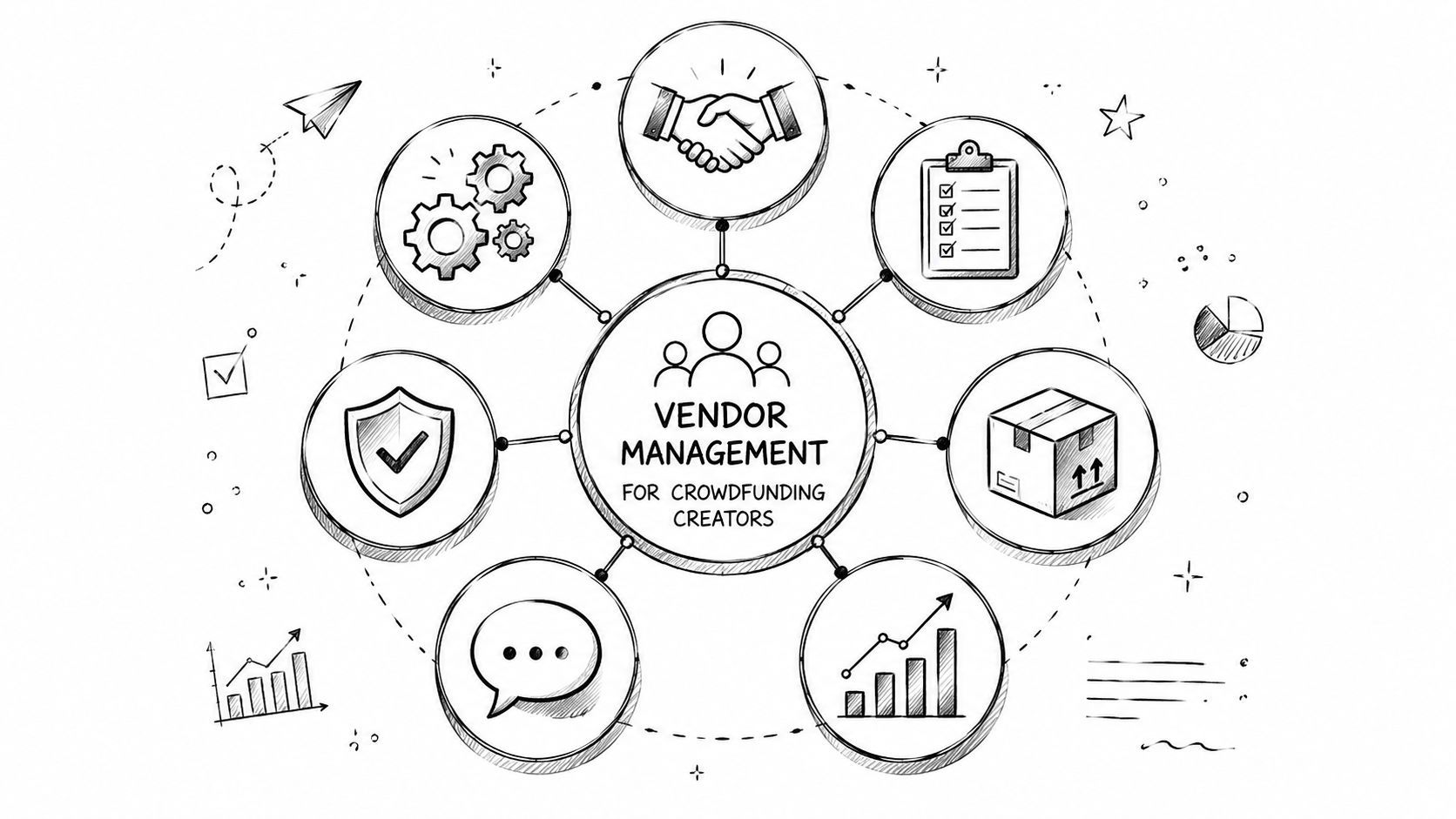
Discover best practices for vendor management in crowdfunding, from vetting and contracts to KPIs, quality checks, backups, and PledgeBox workflows.
Your campaign has succeeded, the rewards are manufactured, and backers are waiting. Then fulfillment becomes a maze of disconnected spreadsheets, shipping vendors, VAT or tax questions, address corrections, production delays, and updates that never reach the right people. Each vendor may be competent on its own, yet the overall process still breaks because nobody owns the handoff between them.
The best practices for vendor management begin before you sign a contract and continue through delivery, support, and post-campaign review. A manufacturer, logistics provider, assembly partner, survey platform, and tax or shipping specialist should operate from the same fulfillment plan, with clear responsibilities and measurable checkpoints.
The 11 practices below connect vendor selection, contracts, pricing, data transfer, quality assurance, communication, contingency planning, and technology into one crowdfunding workflow. PledgeBox helps creators manage the survey and add-on stage without adding a fixed platform burden. It's free to send the backer survey, and PledgeBox charges only 3% of upsell sales if there are any.
A low quote doesn't make a vendor suitable for crowdfunding. Your supplier must also handle variable demand, reward variations, international destinations, changing backer data, and the reputational pressure that follows a missed delivery.
Build a qualification matrix before requesting proposals. Score manufacturing, logistics, assembly, and support vendors against the same criteria, then involve the people who'll live with the decision. Finance should review payment exposure, legal should examine contractual risk, and the fulfillment lead should test operational capacity.
Useful qualification questions include:
A formal SRM program has historically been associated with much shorter supplier lead times. One APQC-linked study found that organizations without formal SRM programs reported supplier lead times 233% longer than organizations with SRM, and the research identified 10 repeatable excellence practices across methodology, collaboration, technology, and measurement. The SCMR summary of the SRM research provides the relevant context.
PledgeBox can support the approved-vendor handoff through direct exports of backer data. That won't rescue a poorly qualified supplier, but it can reduce the manual re-entry that often creates fulfillment errors. The trade-off is time upfront. A stricter process may shrink your vendor pool, yet changing a manufacturer or logistics partner mid-campaign usually creates more disruption than careful qualification.

A fulfillment contract should describe the work so precisely that a new team member could understand what the vendor must deliver without relying on campaign folklore. Define the products, SKUs, packaging, inspection standards, shipping responsibilities, destinations, reporting, and acceptance process.
Tie payments to meaningful milestones where appropriate. A manufacturing partner might receive approval-based payments tied to samples, production, inspection, and handoff. A logistics vendor's agreement should identify when it receives the production file, how it reports exceptions, and who pays for address corrections, storage, returned parcels, or damaged goods.
Include operational contingencies rather than treating them as legal decoration:
Your contract should also connect the vendor's obligations to the data you provide. If PledgeBox exports survey results and order details, the agreement should state which fields the vendor receives, how it validates them, and when it confirms that the file is production-ready.
Legal review costs time, and international enforcement can be difficult. Overly aggressive penalties can also make a good supplier less cooperative. The better approach is a realistic agreement that protects both parties and gives everyone a documented response when a shipment, batch, or data file goes wrong. For additional legal context, review this California breach of contract guide.

Vendor pricing should support the campaign's cash flow, not just produce an attractive unit cost. Ask suppliers to explain the cost drivers behind manufacturing, packaging, storage, picking, assembly, shipping preparation, and exception handling. That visibility helps you distinguish a genuine efficiency from a discount that hides future charges.
Negotiate around the full campaign lifecycle. Volume-based pricing may help when reward quantities are predictable, while milestone payments protect cash before the campaign has completed its post-campaign collection. Early payment discounts can work when your cash position is strong, but they aren't automatically better than retaining funds for taxes, shipping adjustments, or customer support.
Performance-linked terms can also improve alignment. For example, you might connect a portion of payment to an agreed inspection result or a completed data handoff. Any incentive or penalty must be practical to measure, and it shouldn't encourage a vendor to rush production at the expense of quality.
PledgeBox gives creators a straightforward budget consideration: sending the backer survey is free, and only 3% of upsell sales is charged if there are any. That means survey collection doesn't require a per-backer or campaign fee, leaving more room to negotiate with fulfillment partners or fund useful add-ons.
The platform comparison matters too. Kickstarter's pledge manager is like Amazon, a marketplace-centered model. PledgeBox's pledge manager is like Shopify, a more controlled storefront-style model where creators can manage their own post-campaign experience and add-ons. Shopify's own model centers on merchants building their own online store, while Amazon operates as a marketplace, as described in this comparison of vendor management approaches.
Don't negotiate so hard that the vendor must cut labor, inspection, or communication to protect its margin. A stable commercial relationship is usually worth more than a nominally lower rate that produces defects and rework.
Most fulfillment errors don't begin in a factory. They begin when the creator and vendor assume they're using the same definitions for an order, destination, tax responsibility, or completed shipment.
Create a handoff packet that names the vendor owner, fulfillment contact, escalation contact, file format, SKU rules, shipping destinations, address-validation requirements, VAT or tax responsibilities, and reporting cadence. Confirm whether the vendor needs one production file or staged files, and define who can approve changes after the handoff.
Use a staged process instead of sending the final file immediately:
PledgeBox's order fulfillment workflow fits this staged approach by giving creators a practical place to organize survey data and fulfillment outputs. PledgeBox also supports downloadable reports, direct vendor exports, address validation, shipping-fee collection, and VAT or tax collection.
Privacy should be part of onboarding, not an afterthought. Give the vendor only the fields it needs, define how it protects them, and establish deletion procedures after fulfillment. The trade-off is that test files add a step before production. That step is cheaper than discovering after shipment that a vendor interpreted a product option or postal code incorrectly.
Backers don't experience your supplier network as separate companies. They experience one product, one delivery, and one creator who must answer when something is wrong. Quality assurance therefore needs checkpoints before goods leave the vendor's control.
Set acceptance criteria that both sides can inspect. Incoming material checks can catch problems before assembly, in-process checks can identify defects before an entire batch is completed, and final pre-shipment inspections can prevent damaged or incomplete rewards from entering the carrier network.
Your protocol might include:
Sampling can reduce inspection cost, but the sampling method and acceptance threshold must be agreed before production. Automated defect detection may help in suitable manufacturing environments, yet it doesn't replace human judgment for packaging, reward completeness, or presentation.
PledgeBox lets creators send post-fulfillment surveys for free, giving them a low-friction way to collect feedback without turning every quality check into another platform expense. The survey won't replace inspection. It closes the loop after delivery and can reveal patterns your factory report missed.
QA can slow fulfillment and create friction when inspectors reject goods that a vendor considers acceptable. Clear standards, photographs, sample approvals, and documented escalation rules keep the discussion factual rather than personal.
A vendor review should answer whether the supplier delivered what the campaign needed, not merely whether the relationship felt busy. Choose KPIs that connect directly to backer outcomes and campaign economics.
Track delivery reliability, quality acceptance, cost variance, response time, issue resolution, and shipment status. Establish the baseline and data owner before production starts. If nobody defines what counts as an on-time shipment or a resolved exception, the dashboard will create arguments instead of accountability.
Gartner reports that 62% of companies practicing SRM use supplier scorecards to measure supplier performance, according to its supplier relationship management guidance. The operational lesson is straightforward. A scorecard should support decisions, not become a decorative report.
Use PledgeBox campaign reporting to connect backer and shipment information with vendor performance. The platform supports campaign analytics, downloadable reports, auto shipment tracking, and shipment-status visibility. Its campaign performance reporting guide can help structure the information you review with a fulfillment partner.
Practical rule: Every KPI needs an owner, a review date, a threshold, and a defined action.
Keep the number of metrics manageable. Too few measures hide problems, while too many encourage teams to collect data nobody uses. A vendor that misses a target should receive a corrective-action request with a due date. If performance remains poor, the record should inform renegotiation, additional oversight, or an exit decision.
A supplier can't solve a problem it learns about after the shipment deadline. Share the campaign calendar, expected reward complexity, likely address exceptions, and any backer communication commitments that depend on the vendor's work.
Set a regular meeting rhythm that matches operational risk. A critical manufacturer or logistics provider may need weekly status updates during production and shipment. A lower-risk service provider might need less frequent oversight. The point isn't to hold meetings for their own sake. It's to give both sides a reliable place to surface blockers while recovery is still possible.
Use one documented communication system for decisions. Record:
PledgeBox's reminders and notifications can keep survey completion, address updates, and fulfillment milestones visible to the relevant stakeholders. That visibility works best when the vendor knows which event triggers an action and who owns the next step.
Communication should be candid without becoming adversarial. If a vendor flags a capacity problem early, work through options before assigning blame. Time zones, language differences, and excessive meeting volume can still slow progress, so use short agendas and written decisions.

A backup vendor isn't useful if you discover its limitations during a crisis. Pre-qualify alternatives for functions that could stop fulfillment, such as manufacturing, assembly, storage, or international shipping. Confirm their capabilities, lead times, data requirements, pricing logic, and emergency contact details before you need them.
The backup doesn't have to mirror the primary vendor in every detail. It does need a defined activation threshold. For example, a repeated quality failure, an uncorrected capacity issue, or a confirmed inability to meet the delivery plan could trigger a review with the secondary provider.
Maintain a failover packet containing:
Supply chain visibility guidance from PledgeBox can support the broader objective of tracking where orders and exceptions sit across the fulfillment process.
Dual sourcing costs more and creates coordination work. It may also reduce volume benefits with the primary vendor. For critical rewards, however, the cost of having no alternative can include delayed shipments, urgent rework, and damaged trust. Keep the backup informed enough to remain viable, but don't pay for duplicate capacity you can't justify.
The best vendor review often happens after the immediate pressure has ended. Once the last shipment leaves, compare the original plan with actual production, inspection, data, shipping, support, and add-on outcomes.
A useful business review should produce decisions, not a general statement that the partnership went well. Ask the vendor to bring its own analysis, then compare it with your campaign records. Discuss where the creator caused avoidable churn, where the vendor created rework, and where the platform or data handoff introduced friction.
Review these areas together:
Document each action with an owner and due date. A post-campaign review that produces no assigned work becomes a ritual. A review that changes the next contract, inspection plan, or export format creates compounding operational value.
The cadence should reflect the relationship. Quarterly or semi-annual reviews may suit an ongoing strategic partner, while a one-off campaign vendor may need a focused closeout review. Leadership participation matters when the discussion involves capacity, pricing, quality investment, or a decision to renew.
Continuous improvement shouldn't mean adding process indefinitely. Remove steps that don't prevent errors, improve visibility, or clarify accountability.
A vendor missing a production date is only one possible failure. Product liability, data loss, regulatory breaches, insolvency, or business interruption can also disrupt fulfillment, expose the creator to costs, and leave backers without clear answers.
Set requirements before approval, then refresh evidence according to the vendor's risk. Request general and product liability coverage, cybersecurity controls, business continuity plans, financial information, regulatory records, and certificates of insurance. The contract should define required coverage, proof and renewal procedures, claims handling, deductibles, and exclusions. For practical guidance on coverage, review this Miami commercial insurance advice.
Use one intake checklist for legal, finance, security, and campaign staff. It should cover privacy policies, incident-response summaries, subprocessors, legal standing, sanctions exposure, recent litigation signals, and insolvency concerns. Apply the same approval record to manufacturers, fulfillment partners, shipping providers, and platforms that handle backer information. The vendor management best-practices resource provides practical guidance for this review.
Scale oversight to the supplier's risk rather than applying identical checks everywhere. A vendor handling products or sensitive backer data may require documented controls, scheduled evidence updates, and a named escalation contact. A lower-risk provider may need a lighter review.
Insurance requirements can increase a smaller vendor's price or cause it to decline the engagement. That trade-off belongs in campaign budgeting. For a critical supplier, documented coverage and recovery plans offer stronger protection than an informal promise. Record the decision, its owner, and the trigger for reassessment. Use The 2025 Venminder survey report to inform broader third-party oversight planning.
Manual coordination fails when campaign data moves between survey tools, spreadsheets, payment systems, shipping vendors, and customer support inboxes. Each re-keyed field creates another opportunity for a wrong SKU, incomplete address, missed tax responsibility, or outdated shipment status.
Choose technology that follows the fulfillment journey rather than adding another isolated dashboard. PledgeBox combines pre-launch pages, audience capture, email marketing, surveys, campaign analytics, and a pledge manager. It also supports direct vendor exports, downloadable reports, address validation, auto shipment tracking, automated reminders, mobile-friendly backer portals, and payment processing through Stripe and PayPal.
That integrated approach is particularly useful when the creator must move from survey completion to fulfillment without exporting and reconciling several unrelated systems. Privacy-first data isolation and one-click data erasure also give the team a clearer way to control backer information during vendor handoffs. Visit PledgeBox to review the platform's workflow and fulfillment capabilities.
PledgeBox's commercial model is easy to account for in a campaign budget. Creators can send the backer survey for free and pay only 3% of upsell sales if any occur. The pledge manager also supports add-on upsells, late backer pre-orders, shipping-fee collection, VAT or tax collection, subscriptions, and structured exports for fulfillment partners.
Automation still requires configuration. Teams must map SKUs, test exports, connect shipping services, define notification rules, and train the people responsible for exceptions. Platform lock-in is another consideration, so exportability, data access, and deletion procedures should be part of the vendor review rather than ignored because the interface looks convenient.
| Practice | Implementation Complexity 🔄 | Resource Requirements ⚡ | Expected Outcomes 📊 | Key Advantages ⭐ | Ideal Use Cases 💡 |
|---|---|---|---|---|---|
| Establish Clear Vendor Selection Criteria and Qualification Standards | Medium 🔄🔄, structured process & scorecards | Moderate ⚡⚡, time for assessments, samples | 📊 Higher supplier quality, fewer disruptions, measurable accountability | ⭐ Reduces supplier risk, consistent quality, long-term partners | 💡 Hardware startups, board game publishers, agencies managing multiple vendors |
| Develop Comprehensive Contracts with Clear Terms, Timelines, and Contingencies | High 🔄🔄🔄, legal drafting and review | High ⚡⚡⚡, legal fees, negotiation time | 📊 Clear obligations, dispute reduction, enforceable recourse | ⭐ Legal protection, aligned expectations, faster conflict resolution | 💡 Time-sensitive fulfillment, cross-border vendors, high-value orders |
| Negotiate Strategic Pricing and Payment Terms to Optimize Campaign Economics | Medium 🔄🔄, requires market insight and negotiation | Moderate ⚡⚡, research, financial modeling | 📊 Lower unit costs, improved cash flow, aligned incentives | ⭐ Better margins, payment flexibility, performance-linked savings | 💡 Volume campaigns, multi-campaign agencies, hardware manufacturing |
| Onboard Vendors With a Controlled Data and Handoff Workflow | Medium 🔄🔄, staged tests and validations | Moderate ⚡⚡, time for test exports and validations | 📊 Fewer handoff errors, repeatable process, clearer responsibilities | ⭐ Data security, reduced fulfillment mistakes, reliable handoffs | 💡 Creators exporting production files, multi-vendor fulfillment setups |
| Implement Quality Assurance and Inspection Protocols to Protect Backer Satisfaction | High 🔄🔄🔄, QA plans and inspection regimes | High ⚡⚡⚡, QA staff, inspection tools, time | 📊 Lower defect rates, fewer returns, protected reputation | ⭐ Preserves backer satisfaction, reduces warranty claims, continuous improvement data | 💡 Hardware, board games, campaigns with high quality expectations |
| Implement Performance Metrics and KPI Tracking for Vendor Accountability | High 🔄🔄🔄, metrics definition and tracking systems | High ⚡⚡⚡, analytics tools, data collection effort | 📊 Early detection of issues, data-driven vendor management | ⭐ Objective accountability, improved negotiations, early warnings | 💡 Large campaigns, many vendors, agencies needing real-time oversight |
| Foster Collaborative Communication and Transparency Throughout the Partnership | Low–Medium 🔄🔄, set cadence and channels | Low–Moderate ⚡⚡, time for meetings and tools | 📊 Faster issue resolution, higher trust, less rework | ⭐ Stronger relationships, proactive problem-solving, better alignment | 💡 Long-term vendor relationships, complex fulfillment projects |
| Create Contingency Plans and Diversify Vendor Sources for Critical Functions | High 🔄🔄🔄, multi-vendor coordination & testing | High ⚡⚡⚡, onboarding backups, possible extra costs | 📊 Increased resilience, reduced single-point failures | ⭐ Backup readiness, negotiation leverage, reduced delivery risk | 💡 Critical manufacturing/logistics, geographically dispersed supply chains |
| Establish Regular Business Reviews and Continuous Improvement Initiatives with Vendors | Medium 🔄🔄, scheduled reviews and action tracking | Moderate ⚡⚡, leadership time, performance data prep | 📊 Ongoing efficiency gains, cost/quality improvements | ⭐ Strengthens partnerships, drives innovation, aligns goals | 💡 Post-campaign analysis, strategic vendor partnerships, recurring campaigns |
| Implement Risk Management and Insurance Requirements for Vendor Relationships | High 🔄🔄🔄, insurance specs and verification | High ⚡⚡⚡, compliance checks, potential vendor cost increases | 📊 Reduced financial exposure, clearer claims procedures | ⭐ Legal and financial protection, compliance assurance, stakeholder confidence | 💡 High-value campaigns, international vendors, products with liability risk |
| Leverage Technology and Automation to Improve Vendor Coordination and Fulfillment Visibility | Medium 🔄🔄, platform selection and integration | Moderate ⚡⚡, setup, configuration, training | 📊 Fewer manual errors, faster fulfillment, real-time visibility | ⭐ Scalability, automated workflows, improved backer experience | 💡 High-backers campaigns, agencies managing multiple projects, creators seeking consolidation |
Vendor management becomes useful when it turns campaign complexity into repeatable decisions. Don't start by building a massive procurement program. Start with the vendors that can delay delivery, expose sensitive data, create quality failures, or affect the backer experience most directly.
Score current vendors against capability, stability, quality, communication, cost, and risk. Then document the result in a shared record with one internal owner for each relationship. A simple scorecard is more useful than an intricate system nobody updates.
Next, make the commercial and data handoffs explicit. Your contracts should identify deliverables, payment milestones, inspection rights, delay procedures, insurance, data handling, and exit responsibilities. Your onboarding workflow should define the test file, validation process, production export, tax and shipping ownership, address exceptions, and change-control path.
Set quality and KPI checkpoints before the vendor begins work. Inspect materials, monitor production, verify final orders, and track delivery and exception status. A scorecard should connect to action, whether that action is corrective work, additional review, renegotiation, or a vendor change. Gartner's supplier relationship management guidance identifies scorecards as a common tool among SRM practitioners, and the broader discipline has been linked with financial and risk benefits in historical industry research. The SCMR coverage reported that 42% of respondents saw financial benefits above 4% from SRM, while 41% reduced risk. That historical SRM update is useful context, but the numbers shouldn't be treated as a forecast for your campaign.
Right-size oversight by vendor risk. A critical manufacturer handling the core reward deserves more attention than a transactional service provider. A 2025 third-party risk survey found that 52% of respondents used a hybrid operating model, up from 41% the prior year, supporting a practical structure with centralized governance and distributed execution. The survey announcement describes that shift.
Finally, schedule the post-campaign review while the evidence is still available. Record what happened with production, quality, shipping, data, taxes, communication, and backer feedback. Update the checklist before the next campaign, not after the same problem returns.
PledgeBox fits this reusable framework because it keeps survey collection, add-ons, shipping and tax collection, reporting, tracking, and vendor exports within one crowdfunding workflow. The platform is free for sending the backer survey and charges only 3% of upsell sales if there are any. Its pledge manager is like Shopify, giving creators a more controlled storefront-style approach, while Kickstarter's pledge manager is like Amazon, with a marketplace-centered model. For teams comparing operational tools, this distinction can sit alongside broader evaluations such as these best agency client tools for 2026.
Use PledgeBox to collect backer details, manage add-ons, validate fulfillment data, track shipments, and send structured exports to your vendors. Visit PledgeBox to set up a workflow where the survey is free to send and only 3% of upsell sales is charged if any occur.
PledgeBox
The All-in-One Toolkit to Launch, Manage & Scale Your Kickstarter / Indiegogo Campaign