 PledgeBox
Safeguard Your Innovation: Intellectual Property Protection
Learn how intellectual property protection safeguards ideas for crowdfunding. Discover practical steps, costs, and enforcement basics for 2026.
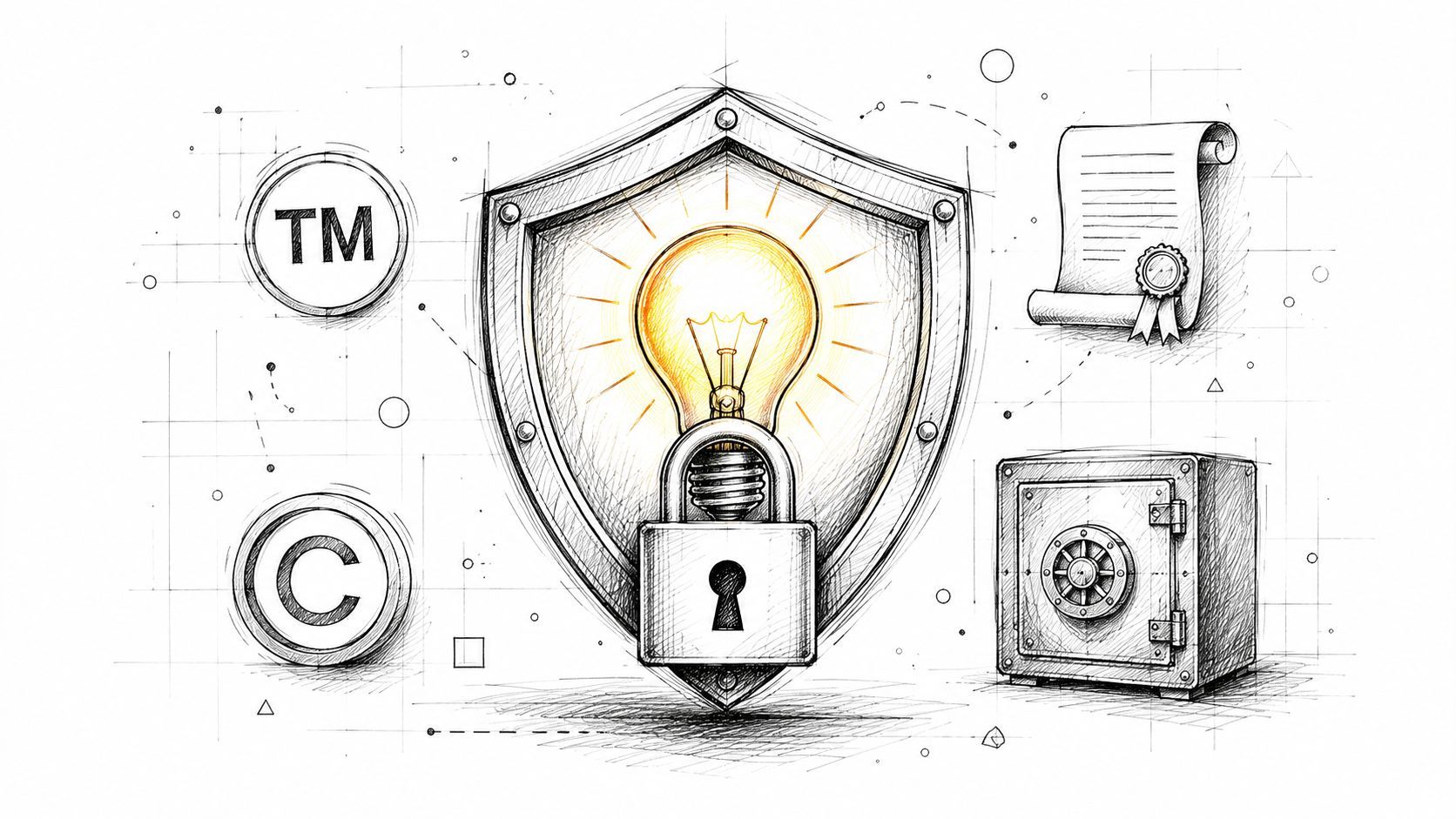
Learn how intellectual property protection safeguards ideas for crowdfunding. Discover practical steps, costs, and enforcement basics for 2026.
You're finalizing a campaign page, checking prototype photos, and answering backer questions when a quiet risk shows up. One contractor has seen the product files, your survey draft is sitting in a shared inbox, and a rival can already guess what your launch looks like from the public teaser. That's the moment intellectual property protection stops being a legal abstraction and starts being a campaign safeguard.
For crowdfunding creators, the problem isn't just copying. It's disclosure, timing, ownership, and the fact that once something is visible online, it can be screenshotted, forwarded, and reused fast. If you're building hardware, a board game, software, or a branded product, you need a plan that matches the way campaigns work, not a generic legal checklist.
A creator can spend months refining a product, then lose their advantage in one afternoon. A prototype image goes live, a freelancer shares a file outside the team, or a backer survey exposes manufacturing details before the campaign even closes. At that point, the issue isn't only who copied what, it's whether your team can prove ownership and control the release of sensitive material.
Crowdfunding makes this more delicate because visibility is the point. You want attention, but you don't want to publish your most valuable information too early. That tension shows up in every project, from a gadget with a clever mechanism to a board game with original art and a brand name that needs to stay distinct, which is why creators often need a campaign-specific workflow rather than a one-size-fits-all filing habit.
A protected idea is easier to defend than a scattered one. Once files, drafts, and sample units move through too many hands, the burden shifts to proving what you owned and when.
If you're trying to map the risk points in a crowdfunding launch, it helps to start with the practical warning signs. A useful overview of the common exposure points appears in PledgeBox's guide to crowdfunding risks, especially for creators who are coordinating vendors, contractors, and early backers at the same time.
Global filing activity shows that intellectual property protection has become standard business infrastructure, not a niche concern. WIPO reports that patents in force worldwide grew 6% in 2024 to an estimated 19.7 million, while active trademark registrations rose 6.1% to about 93.2 million. In the same year, patent applications rose 4.9% to 3.7 million, design filings rose 2.2% to 1.6 million, and Asia accounted for roughly 65% to 70% of worldwide patent, trademark, and design filings in 2024, which shows how concentrated and industrialized formal protection has become worldwide, especially in major Asian markets. WIPO's 2025 facts and figures

That scale matters to creators because crowdfunding compresses market entry. Your project may be visible long before you've locked manufacturing, distribution, and brand ownership. A public campaign can validate demand, but it can also hand competitors a roadmap, especially when the idea is easy to copy and hard to distinguish once the pitch is public.
Backers respond to clarity. Competitors do too. The more your campaign explains about mechanism, packaging, materials, and workflow, the easier it becomes for another seller to imitate the surface features while avoiding your exact messaging.
That's why the central question isn't whether your project is “small enough” to need protection. It's whether your public materials reveal more than your rights structure can support. If the answer is yes, you've created exposure without enough legal or technical control behind it.

Intellectual property usually falls into patents, trademarks, copyrights, and trade secrets, and those four categories are the basic toolkit for protecting non-physical business assets from unauthorized use. APU's overview of intellectual property law frames them as the core legal tools under U.S. law, which is the right starting point for creators who need to separate product features from brand identity and confidential know-how.
A patent is like a passport for an invention. It can give you exclusivity in a specific territory for a limited time, but only if you disclose the invention in the patent system and meet the filing rules in the countries that matter to you. That territorial point matters because there are no worldwide patents, and a patent granted in one country generally doesn't protect the invention elsewhere. The territorial nature of patents is explained here
For crowdfunding, patents are most useful when the thing you're selling is the thing that could be reverse-engineered, like a mechanical feature, a new process, or a functional device. A provisional filing can buy breathing room before launch if the invention is still evolving, but it's not a substitute for a broader strategy.
Trademarks cover brand names, logos, and slogans, which makes them essential for board games, consumer products, and any campaign that expects repeat sales. If your product name gets copied, the market can get confused even when the underlying product isn't identical.
For print-on-demand sellers, this is especially important because a design can look original while still infringing a protected brand or phrase. A practical reference on that problem is Trendlytic's POD trademark rules and guidelines, which is worth reading before you print or advertise anything that leans on a catchy line, logo, or recurring brand element.
Copyright attaches when a work is fixed in a tangible medium of expression, and it protects the expression of an idea rather than the idea itself. In the United States, works created on or after January 1, 1978 are generally protected for life of the author plus 70 years. Stanford's intellectual property overview lays out both the fixation rule and the term clearly.
For creators, that means art, copy, rulebooks, software code, product photos, and campaign graphics are all part of the protectable layer, as long as they're original enough. It doesn't stop someone from making a similar product, but it can stop them from lifting your actual text, art, or code.
Trade secrets work best when the value comes from secrecy itself. A trade secret is confidential information with commercial value that you keep secret through reasonable measures, which is why internal controls matter as much as paper agreements. For digital assets, that often means licenses, access controls, and confidentiality terms that define who can use the data, what they can use it for, and what happens to derivatives.
Practical rule: If the asset would lose value the moment it becomes public, secrecy and access control may be more useful than rushing to disclose it through a broad filing.
For a crowdfunding team, trade secret treatment often fits formulas, sourcing methods, software logic, supplier pricing, or a manufacturing workaround that's hard to detect from the finished product. The hard part is discipline, because once a team leaks the information casually, the protection weakens fast.
The edge case creators often miss is that a product can use more than one form of protection at once. The name can be a trademark, the manual can be copyrighted, the mechanism can be patented, and the sourcing method can stay secret.
For creators comparing which right fits which asset, PledgeBox's discussion of the patent paradox in crowdfunding is a useful reminder that a patent filing isn't always the only signal of a serious project.
The safest campaigns treat intellectual property protection as a sequence, not a one-time filing. The key is to protect the most fragile parts first, because the earliest leak is often the one that causes the most damage. If a competitor sees your mechanism, name, and supplier details before your campaign closes, they don't need to copy everything, they only need to copy enough to make your launch feel ordinary.
Start with ownership. Every contractor, designer, engineer, and manufacturer should know who owns the outputs, what's confidential, and what can be shared outside the project. If you're still refining a mechanical product, a provisional patent can be useful as a placeholder while the design stabilizes, but only if the disclosure is accurate and the inventors are identified correctly.
A strong pre-launch packet usually includes:
That mix matters because registration alone doesn't solve collaboration risk. Thomson Reuters notes that protecting IP in collaborations is especially hard when contractors and manufacturers are involved, and that strong contracts alone don't answer which strategy fits which workflow. That guidance is here
Once the campaign is public, the goal changes from creation to containment. Your page has to sell the idea, but your internal files don't. Keep prototypes, supplier quotes, and reward fulfillment data behind controlled systems, and limit who can export them or forward them.
If you're using a pledge manager, treat it like a gated workspace, not a mailing list. Keep the survey language lean, avoid exposing product development notes in backer messaging, and separate fulfillment information from the files used to build the product. That separation is especially important when you're collecting address data, variant selections, and add-on orders, because those fields often reveal more than creators realize.
After funding closes, many teams get looser, not tighter. That's a mistake. The post-campaign phase is when prototypes become production instructions, and that's exactly when ownership clauses, derivative-work rights, and confidentiality terms need to be explicit.
Use this stage to convert temporary filings into the right long-term protection, update vendor agreements, and document what changed after the campaign launch. If software or AI features are part of the product, keep the secret parts inside controlled workflows and avoid unnecessary disclosure in marketing, support, or fulfillment documents.
The hidden cost breakdown here isn't only legal fees. It's the cost of rework, delayed tooling, disputed artwork, and the lost advantage that comes from showing your cards too early. A campaign that seems cheaper at launch can become much more expensive after a leak.
Even a well-prepared campaign can get copied. The difference is that a prepared team knows what to do before the damage spreads. U.S. intellectual property theft is commonly estimated at $225 billion to $600 billion annually, and there are about 18,400 federal court filings each year, which shows that enforcement is both common and costly. CRI Group's overview of the economics of IP protection captures that scale clearly.
Watch the places where imitation shows up first. Search marketplaces, social platforms, and search results for your brand name, product name, and distinctive phrases. If you find a copy, collect screenshots, timestamps, URLs, and any visible order details before you contact anyone.
A short internal checklist helps:
File first, argue later. If you wait until the copy spreads, you may win the point and still lose the market conversation.
The exact escalation path depends on the right you're enforcing. Copyright claims can move differently from trademark complaints, and contract breaches are a separate lane entirely. The important thing is to avoid overclaiming, because a broad, sloppy threat can weaken a strong position.
For crowdfunding-specific disputes, PledgeBox's guide to Kickstarter IP disputes is a useful reference on the practical steps creators use when a project gets challenged.
Crowdfunding doesn't stop at the border, but many IP rights do. Patents are territorial, so a patent granted in one country generally doesn't protect the invention in another, which means creators have to think in markets, not just in ideas. The territorial rule is explained in this patent overview
That reality matters most when your backers, manufacturer, and fulfillment channels are spread across different jurisdictions. A board game sold internationally may need a trademark strategy in more than one country, while a gadget with an invention component may need filing decisions made before public disclosure hurts foreign options. The basic mistake is assuming that one registration solves worldwide exposure.
| Jurisdiction | Patent Territory | Trademark Duration | Unique Requirements |
|---|---|---|---|
| United States | Protection applies only in the U.S. | Depends on maintenance and use | Timing and disclosure matter for filing choices |
| European Union | Protection is regional, not worldwide | Regional brand coverage is possible | Multi-country strategy often matters for launch and fulfillment |
| China | Protection applies within the jurisdiction | Local brand protection is separate | Local enforcement planning is important for manufacturing and sales |
| Japan | Protection applies within Japan | Local registration is separate | Filing strategy should match product timing and market entry |
A territorial strategy usually starts with the market where you plan to sell, ship, or manufacture first. If your campaign is already public, the filing clock may be ticking in places that care about novelty or prior disclosure, so creators need to plan earlier than they think.
The right answer is rarely “file everywhere.” It's usually “file where the business needs protection first, then expand in the order that matches revenue, manufacturing, and enforcement reality.” That keeps budgets aligned with actual market risk instead of theoretical coverage.
PledgeBox can sit in the middle of a privacy-first campaign workflow because it combines surveys, fulfillment controls, and data isolation in one place. It's also free to send the backer survey and only charges 3% of upsell revenue if there's any, which makes the cost structure easier to map against a campaign budget. Creators often compare Kickstarter's pledge manager to Amazon, while PledgeBox's pledge manager is more like Shopify, meaning it gives you more flexibility in how you structure branded surveys and post-campaign changes.

The practical value is simple. You can use a controlled survey flow to limit which backers see which details, keep campaign files separate from fulfillment data, and reduce unnecessary exposure when collecting add-ons or shipping information. That doesn't replace contracts, but it does reduce the number of people who can accidentally leak something important.
For creators who need an operational way to keep sensitive information contained while still running a public campaign, PledgeBox is one tool that fits the workflow. Used carefully, it can support the same discipline you'd want in NDA handling, file access, and post-campaign fulfillment.
The strongest crowdfunding campaigns treat intellectual property protection as part of launch engineering, not a legal afterthought. Protect the name, the expression, the invention, and the confidential material in the right places, and don't assume that one filing covers every risk. Territorial rights, collaborator contracts, and controlled data handling all matter because your campaign is both a sales event and a disclosure event.
Start with the pieces that can't wait. Lock down ownership with collaborators, decide whether a provisional patent or secrecy strategy fits the asset, and keep public materials narrower than your internal files. If you're running surveys and fulfillment, configure them so they don't expose more than they need to.
A simple progress check helps:
Do those things early, and you give your campaign a better chance to stay original, defensible, and commercially useful.
A CTA for PledgeBox.
PledgeBox
The All-in-One Toolkit to Launch, Manage & Scale Your Kickstarter / Indiegogo Campaign