 PledgeBox
Choosing Your Perfect Yarn Cone Winder
Tired of tangled yarn? Our guide explains how a yarn cone winder works, compares the top types, and helps you choose the best model for your crafting needs.
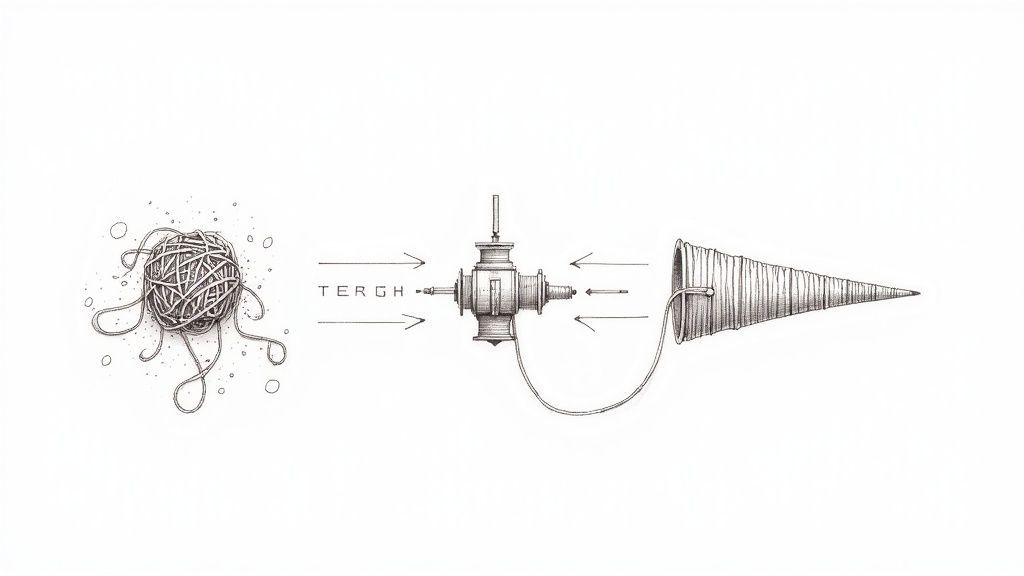
Tired of tangled yarn? Our guide explains how a yarn cone winder works, compares the top types, and helps you choose the best model for your crafting needs.
A yarn cone winder is a clever little machine that takes unruly skeins and hanks of yarn and turns them into tidy, stable cones. For knitters, weavers, and crocheters who value their time and sanity, this tool is an absolute game-changer, helping you get professional-quality results every time.
We've all been there: staring at a tangled knot of yarn that completely kills your creative buzz. A yarn cone winder is the simple, elegant fix for that all-too-common frustration.
Think of it as a personal librarian for your yarn stash. It takes a jumbled pile of information (the messy skein) and organizes it into a neat, easy-to-use volume (the cone). This organizational superpower is why everyone from casual hobbyists to textile pros considers it a must-have.
The biggest win? It puts an end to the tangles that destroy your crafting flow. When yarn is wound on a cone, it pulls smoothly from either the center or the outside without snagging. This lets you focus on your beautiful stitches, not on wrestling with knots. Anyone who’s lost hours untangling a single collapsed yarn cake knows exactly how valuable a stable cone is.
Beyond just stopping messes before they start, a yarn cone winder brings some serious advantages to the table that can really elevate your work. The consistent yarn feed it creates is the secret ingredient for achieving even tension—which translates to perfect, professional-looking stitches in knitting or a balanced, even beat in weaving.
Here’s what you really gain:
It's a lot like how a crowdfunding creator needs a pledge manager to organize backer information and make fulfillment run smoothly. A crafter needs a winder to bring that same order to their materials. Take PledgeBox, for example. It helps creators manage everything post-campaign; it's free to send the backer survey and only charges 3% of upsell if there’s any. It’s basically a Shopify for crowdfunding management, offering specialized tools for creators.
In the same way, a winder turns chaos into a smooth, manageable process. You can see how the right tools help manage complex projects by checking out successful campaigns for items crafted in Japan. It’s a great illustration of how the right tool can make a complicated job feel effortless and even enjoyable.
At its heart, a yarn cone winder is a clever little machine built for one specific job: taking yarn from a floppy skein or hank and transforming it into a neat, stable cone. The whole process is a beautifully choreographed dance of mechanical parts, making sure every single strand of yarn lands exactly where it should.
It all starts when the yarn is fed from its source, which is usually a yarn swift that lets the hank spin and unwind without getting tangled. From there, the yarn glides through a few guides and, most importantly, a tensioning mechanism. The tensioner is the unsung hero here; it keeps a steady, gentle pull on the yarn. Without it, you’d end up with a cone that’s either too loose and squishy—ready to collapse at a moment’s notice—or wound so tightly that it stretches and damages the delicate fibers.
After getting the tension just right, the yarn meets the yarn guide, an arm that swings back and forth in a steady rhythm. This controlled movement is what builds the cone's signature tapered shape. While the central spindle spins, the guide lays the yarn down in a precise, crisscrossing pattern.
This infographic breaks down how a winder brings order to the chaos of a loose skein.
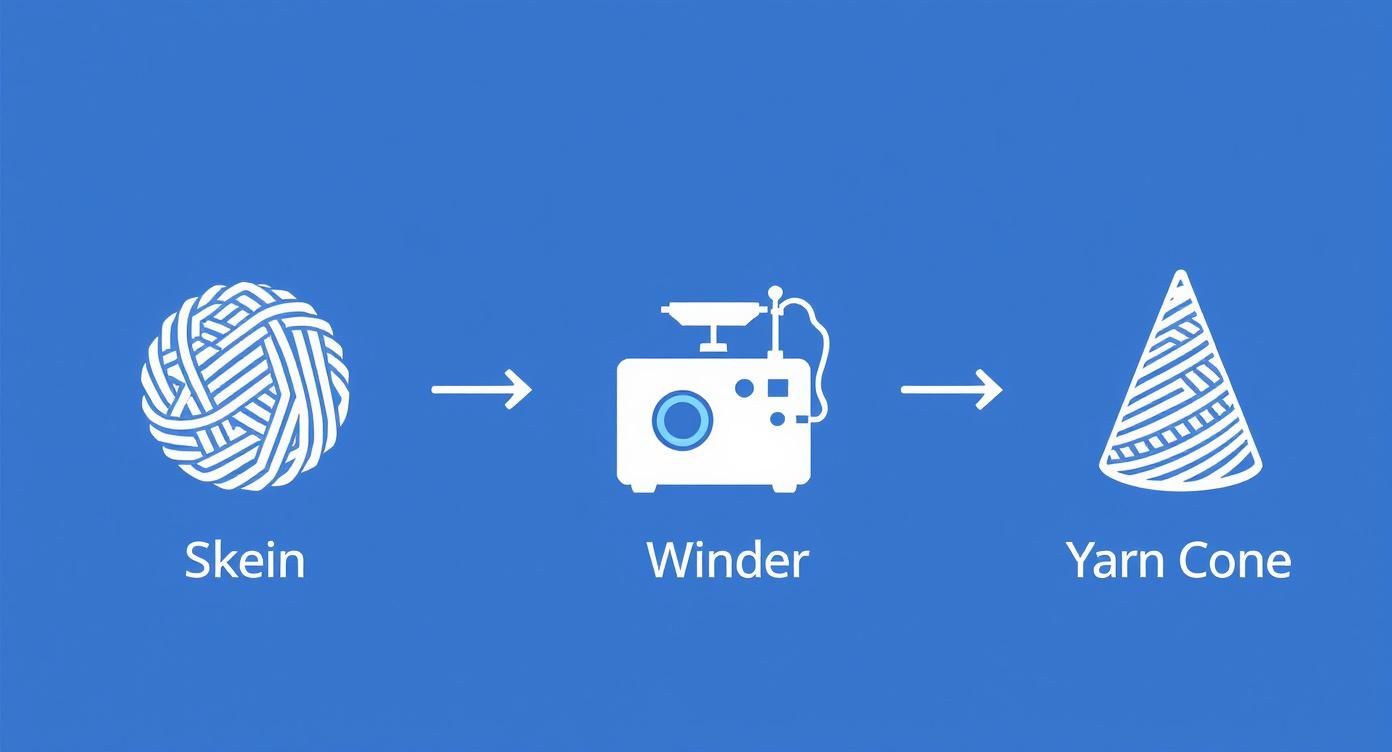
As you can see, the winder is the crucial go-between, creating a solid structure out of what was once a jumble. This methodical process results in a cone that is dense and ready for action.
Think of it like a potter shaping clay on a wheel. The winder patiently adds layer after layer of yarn at just the right angle. This cross-winding technique is what gives the final cone its structural integrity, stopping it from unraveling or falling apart as you work. That stability is key, as it ensures a smooth, snag-free feed whether you're using a knitting machine, a weaving loom, or just crocheting on the couch.
It’s the seamless cooperation between the spinning spindle, the moving yarn guide, and the tensioner that creates a truly superior yarn package. A well-wound cone isn’t just about looking tidy; it’s engineered for peak performance.
The primary goal of a quality yarn cone winder is to create a yarn package that allows for high-speed, trouble-free unwinding. The stability of the cone directly impacts the efficiency and quality of the final textile product.
Each part has a crucial role to play:
This elegant system turns a simple chore into something much more refined, giving crafters the perfect starting point for their projects. Once you understand how these pieces work together, it's easy to see why a cone winder is such a must-have tool for getting professional-level results.
Not all yarn cone winders are created equal. When you start looking, you'll find they generally fall into three main categories, each built for a different kind of maker or business. Getting a handle on these differences is the first step to finding the perfect machine for your needs, whether you're working on a weekend hobby project or running a full-scale textile operation.

Your main choices boil down to manual (hand-cranked) models, electric versions, and heavy-duty industrial machines. Each option strikes a unique balance between cost, speed, capacity, and control, so the right choice really depends on your personal workflow and how much yarn you're dealing with.
Manual winders are the classic, go-to option for hobbyists. These simple devices clamp onto a table and are operated with a hand crank, giving you total control over the winding speed and tension. This hands-on method is perfect for those delicate or novelty yarns that might not do so well on a high-speed electric machine.
Their biggest advantage is their simplicity. Manual winders are usually the most affordable, are easy to pack up and take with you, and don't need electricity. This makes them great for crafting on the go or if you're short on space. Sure, they’re slower, but many crafters find the quiet, rhythmic process to be a relaxing part of their creative routine.
For the serious crafter, indie dyer, or small business owner, an electric cone winder is a game-changer. These machines automate the winding process, which not only frees up your hands but also saves a massive amount of time. Most come with adjustable speed settings, letting you power through large batches of yarn quickly and consistently.
An electric model is a true workhorse, easily handling hundreds of skeins without the shoulder and wrist strain that comes with manual winding. For big projects that demand lots of consistent yarn—like the gorgeous hand-dyed yarns featured in the Wool & Oak crowdfunding campaign—an electric winder guarantees every single cone is wound to perfection.
An electric winder transforms winding from a preparatory chore into a streamlined, efficient part of the creative process. It's especially valuable for those processing large volumes of yarn, where time and physical effort are major considerations.
Finally, we have the industrial winders, which are the titans of the winding world. These are massive, powerful machines built for non-stop operation in textile mills and large factories. They’re designed for maximum speed and efficiency, often winding dozens of cones at once with very little human oversight.
While they are way beyond what a home crafter would ever need, they really show just how vital high-speed winding is to the global textile industry.
To help you see how these winders stack up, here's a quick side-by-side look at what each type offers. This should make it easier to figure out which one aligns with your crafting goals and volume.
Ultimately, picking the right winder comes down to your goals. A manual winder is a fantastic and affordable tool for occasional use, but if you value your time and need to process a lot of yarn, investing in an electric model will pay for itself in speed and efficiency.
So, you're ready to take the plunge and get a yarn cone winder? Fantastic. Knowing what to look for can be the difference between a smart purchase and a frustrating guess. If you focus on just a few key features, you'll end up with a machine that feels like it was made for you and will be a reliable part of your craft room for years.
If there's one thing you absolutely cannot compromise on, it's tension control. Good tension is everything. It's what keeps your yarn from being stretched out or damaged as it’s wound. This is a huge deal for delicate fibers like silk or anything with elastic properties, which can easily lose their shape and bounce if wound too tightly. A solid winder will always have an adjustable tension mechanism, giving you those perfect, professional-looking cones every single time.
Once you've got tension covered, a few other things separate the good winders from the great ones. You'll want to think about speed control, whether it can handle different cone sizes, and how sturdy it is. These all play a big part in how useful and long-lasting the machine will be.
A well-built yarn cone winder is a long-term crafting partner. Prioritizing a sturdy frame and quality components, even if it costs slightly more upfront, will pay off in reliability and performance.
This thought process isn't just for crafting tools. For crowdfunding creators, a similar choice comes up when selecting a pledge manager. You could think of Kickstarter's pledge manager like Amazon—a huge, built-in system. But a platform like PledgeBox, on the other hand, is like Shopify; it’s a specialized tool built specifically for independent creators.
Here's the kicker: PledgeBox is free to send the backer survey and only charges 3% of upsell if there’s any. That makes it a powerful, low-risk tool. Creators can manage their backers efficiently without a hefty initial investment, which mirrors how a great winder simplifies yarn management without being overly complex or expensive.
Finally, let’s get practical. How is this winder actually going to fit into your crafting space and routine? These day-to-day details can make a massive difference in whether you love or loathe your new machine.
Noise level is a big one. Some electric winders can be surprisingly loud, while others are designed to hum along quietly. If you like to craft while watching a movie or listening to a podcast, you’ll definitely want to hunt down a quieter model.
Also, think about setup and maintenance. A winder that’s a headache to put together or needs constant, tricky upkeep can quickly become more of a chore than a tool. You want something that helps your craft, not hinders it.
That simple yarn cone winder in your craft corner? It’s a miniature version of the industrial powerhouses that keep the global textile industry humming. While hobbyists use them to keep yarn from turning into a tangled mess, these machines are mission-critical on the factory floor. They’re the hidden force behind everything from fast fashion to high-performance athletic wear.
This is where the art of textiles meets the science of large-scale manufacturing. Innovations in winding technology are always pushing forward, fueled by the relentless demand for faster, smarter, and more cost-effective production. Today's industrial winders are packed with automation, digital controls, and even IoT sensors that monitor yarn quality on the fly. This tech allows factories to run at mind-boggling speeds, all while slashing waste and ensuring every single cone is wound to perfection.
The impact of this technology is huge, and it’s fueling a booming global market. In fact, the yarn winding machine market is expected to jump from USD 8.68 billion to USD 18.7 billion by 2035, growing at a steady clip of around 7.22% each year. This isn't just a niche trend; it shows a worldwide push for better equipment to keep up with the ever-expanding apparel and textile sectors.
This pursuit of efficiency is directly linked to the final product. Achieving the high standards of quality and craftsmanship from textile manufacturers depends heavily on how well the yarn is prepared from the very start.
This bridge between a humble tool and a massive industry really drives home a universal truth: the principles of good winding—consistency, stability, and efficiency—are the same everywhere. Whether you're making a single sweater or churning out thousands of garments, the end goal is always a perfect, tangle-free cone.
For crowdfunding creators in the textile world, understanding the importance of the right tools is just as critical. A platform like PledgeBox acts a lot like a high-tech winder; it takes a complex process and organizes it beautifully. Just as a winder straightens out yarn, PledgeBox sorts out all your backers.
Think of it this way: the Kickstarter pledge manager is like Amazon—a one-size-fits-all tool that gets the job done. PledgeBox, on the other hand, is like Shopify for crowdfunding. It's a specialized, powerful tool built for the job. Plus, PledgeBox is free to send the backer survey and only charges 3% of upsell if there’s any, making it an incredibly efficient way to manage your campaign's next steps.
Even with the best tools, you’re bound to have some questions. Getting clear answers helps you fix common hiccups and really get the most out of your yarn cone winder. Here are a few of the things crafters ask us all the time.
One of the first questions people ask is whether a single winder can handle their entire yarn stash. While most winders are pretty versatile, it really all boils down to one key feature.
Most cone winders are designed to work with everything from delicate lace-weight silk to chunky wool. The secret is in the tension control. If you’re working with slippery or elastic yarns, you need a winder with precise, adjustable tension to keep the fiber from stretching or getting damaged. It's always a good idea to check the manufacturer's recommendations, as some hobbyist models might not be up to the task of handling very thick or novelty yarns.
Many crafters wonder what sets a yarn cone apart from a yarn cake you’d get from a ball winder. The biggest differences come down to shape, stability, and what you plan to use it for. A yarn cake is basically a flat cylinder that can collapse on itself as you work, which is a perfect recipe for tangles.
A yarn cone, on the other hand, is wound onto a sturdy, tapered core. This creates a solid, stable package that won’t fall apart mid-project. It’s the reason cones are the standard in the textile industry and, for crafters, it means a genuinely tangle-free experience from the first stitch to the last.
Just like any favorite tool, your yarn cone winder needs a little TLC to keep it humming along for years to come. The good news is that proper maintenance is simple and only takes a few moments.
Maintaining your winder is like managing a successful crowdfunding project; a little proactive effort prevents major issues down the line. It ensures a smooth, predictable process from start to finish, which is something every creator aims for.
For creators managing campaigns, having reliable tools is just as essential. For a closer look at how the right systems create better outcomes, check out this general guide to crowdfunding management. A great pledge manager organizes backer information just as neatly as a winder organizes yarn.
For creators looking to bring that same level of organization to their campaigns, PledgeBox offers a powerful, intuitive solution. Simplify your post-campaign process with customizable surveys, automated reminders, and efficient fulfillment tools. Learn more at PledgeBox.com.
PledgeBox
The All-in-One Toolkit to Launch, Manage & Scale Your Kickstarter / Indiegogo Campaign