 PledgeBox
Slay the Spire Kickstarter: slay the spire kickstarter Secrets & Tactics
Discover the inside story of the slay the spire kickstarter and learn proven rewards, marketing, and fulfillment tactics behind its record-breaking success.
Discover the inside story of the slay the spire kickstarter and learn proven rewards, marketing, and fulfillment tactics behind its record-breaking success.
The Kickstarter for the Slay the Spire board game wasn't just a success; it was a phenomenon. It hit its funding goal in a matter of hours, a clear sign that the massive fanbase from the original video game was ready and waiting to jump on board.
The Slay the Spire board game didn't just crawl past its funding goal—it completely demolished it right out of the gate. The team at Contention Games ran a masterclass in how to engineer a viral launch, turning a beloved digital game into a tabletop titan. It's a textbook case of how putting in the work before you launch pays off in a massive way on day one.
That initial surge is about way more than just the money. It's the social proof that gives a campaign its legs. When a project funds that quickly, it sends a powerful signal to both the Kickstarter algorithm and browsing backers that this is a "winner." This creates a feedback loop, attracting more pledges, unlocking stretch goals faster, and whipping up a frenzy of community excitement.
The numbers really tell the story here. When the campaign went live on November 1, 2022, the response was immediate and overwhelming. It was fully funded in just a few hours, pulling in over 10,000 backers who collectively pledged nearly $1.5 million on the first day alone. This was a direct result of leveraging the brand recognition from the digital game and tapping into the huge demand for bringing that experience to the physical world.
This timeline gives you a great visual of just how explosive that first day was.
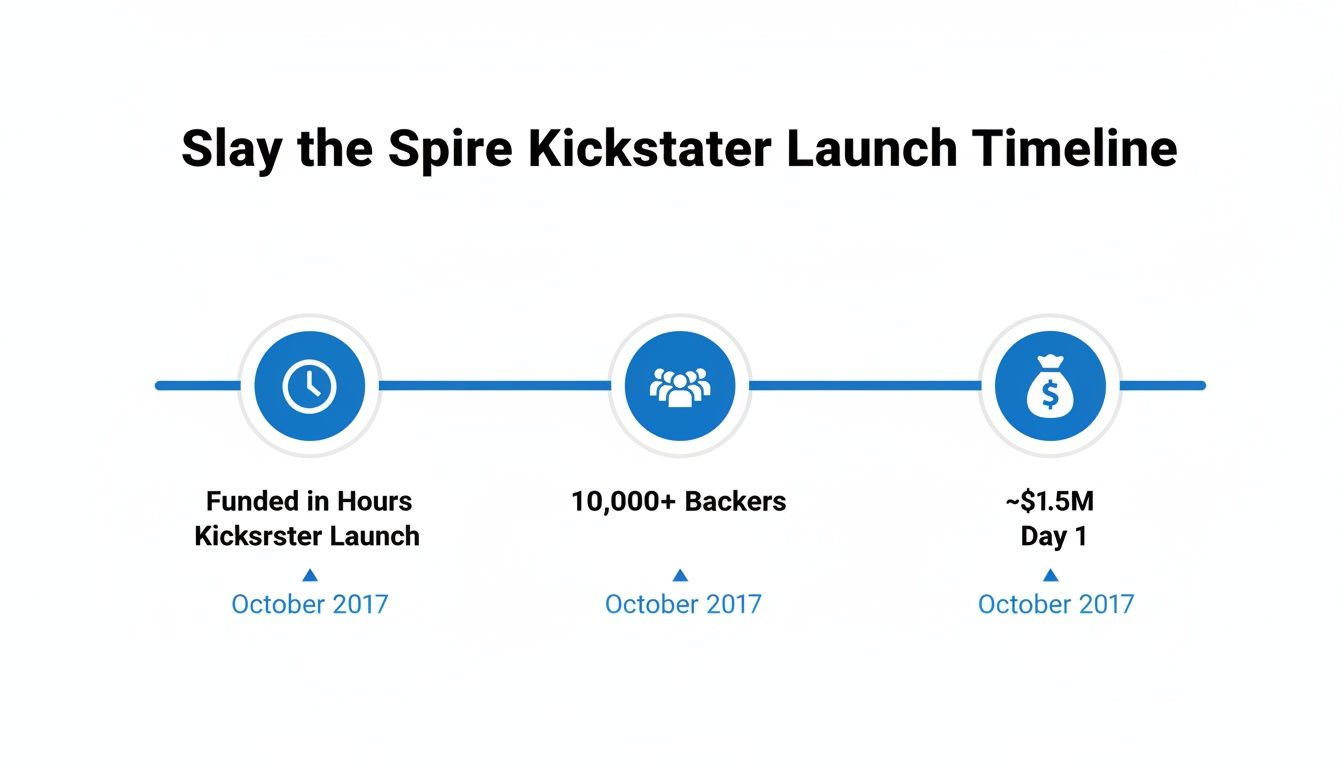
As you can see, the combination of rapid funding, a huge number of backers, and a massive initial funding total created a perfect storm of unstoppable momentum.
So, how did they pull this off? It definitely wasn't luck. That massive launch was built on months of strategic pre-launch work aimed at gathering and energizing their audience. A big piece of the puzzle is effectively turning social media followers into customers, usually by funneling them to a pre-launch page to capture their emails.
The good news is that these tactics are entirely repeatable. If you're looking to create your own day-one explosion, focus on these key activities:
The big takeaway here is that a Kickstarter launch isn't a single day's event. It's the grand finale of months, sometimes years, of careful community building and marketing. That "overnight success" was earned long before anyone clicked the "Back this project" button.
This blueprint of converting an existing audience into backers is incredibly powerful. We saw a similar dynamic play out with another huge video game adaptation, which you can read about in our deep dive on the Hollow Knight Kickstarter. It just goes to show that a built-in fanbase, when you treat them right, is the best launch fuel you could ever ask for.
A killer reward structure is the engine of any big Kickstarter, and the Slay the Spire Kickstarter was a finely tuned machine. The team didn't just throw random options at the wall and hope something stuck. Instead, they built a smart ladder of pledge tiers designed to guide backers from casual interest all the way up to a premium investment. This approach was absolutely essential for boosting their average pledge amount and smashing their funding goal.

They got one thing right from the start: not all backers are created equal. Their pledge tiers catered to totally different people—from the curious fan of the video game who just wanted to check it out, to the hardcore tabletop collector who absolutely needed everything. By offering clear value at each level, they made it a no-brainer for backers to find their perfect entry point.
At the heart of their strategy was a tiered system that created a natural sense of "good, better, best." This is a classic move that taps right into a backer's desire to get the most bang for their buck, often nudging them to pledge a little higher than they first planned.
For a project like this, a successful structure usually looks something like this:
This setup just works. It frames the deluxe version not as a simple upgrade, but as the definitive version of the game. It triggers a powerful sense of FOMO (fear of missing out) on all that exclusive content that won't ever hit retail shelves.
Beyond the core pledge levels, Slay the Spire's add-on strategy was pure genius. They offered awesome extras that made the game better without making the standard pledge feel incomplete. Think playmats, custom card sleeves, and cool cosmetic miniatures that just elevated the whole experience.
Add-ons do two things really well: they let backers customize their pledge to get exactly what they want, and they dramatically increase the average pledge value after the campaign ends. And that's where a solid pledge manager becomes non-negotiable.
So many creators make the mistake of thinking the Kickstarter campaign is the finish line. It’s not. It’s the starting pistol. Your pledge manager is your post-campaign storefront, and a huge chunk of your final funding will come from there.
If you're mapping out your own campaign, you need to be thinking about how you'll handle these post-campaign sales from day one. A great way to think about it is to compare it to e-commerce. The Kickstarter pledge manager is the like amazon—a massive marketplace where people discover your product. A pledge manager like Pledgebox is like Shopify—it’s your personalized, powerful backend for managing orders, upselling more products, and sorting out all the logistics.
This distinction is crucial. While Kickstarter gets you the initial pledge, a pledge manager handles all the messy details that come after. Better yet, Pledgebox is free to send the backer survey and only charges 3% of the upsell revenue if there's any. This makes it an incredibly low-risk way to maximize your funds.
You can dive deeper into this in our guide on offering rewards your backers will love. By planning your add-ons and your pledge manager strategy from the very beginning, you create a system that keeps bringing in revenue long after the 30-day campaign clock runs out.
A great Kickstarter isn’t just about the transaction; it’s about starting a community. The team behind the Slay the Spire Kickstarter really got this. They weren't just dropping a product—they were growing a dedicated following by being present, transparent, and responsive on multiple platforms long before the campaign even thought about launching.
Their whole strategy was about meeting fans where they already hang out. Instead of forcing everyone into a new, unfamiliar space, they just showed up in the existing hubs for tabletop gamers and Slay the Spire fans. This approach created a constant, low-level buzz that built up into a deafening roar on launch day.
Contention Games was smart about where they spent their time, picking platforms that were perfect for building a loyal base. Each one played a specific role in their communication plan, creating a web of engagement that caught different types of fans.
This wasn't just about shouting into the void; it was a conversation. The team was constantly listening to feedback, answering questions honestly, and making backers feel like they were a real part of the development. That kind of collaborative spirit builds massive trust, and trust is the ultimate currency in crowdfunding.
Once the campaign went live, the game changed to keeping that momentum going. The Kickstarter update section became their main tool for telling a story and keeping backers hooked for the full 30-day run. Their updates were a masterclass in pacing.
The secret to great Kickstarter updates is to treat them like episodes in a mini-series. Each one needs a purpose—reveal something new, celebrate a milestone, or answer a burning question—to keep your audience tuning in for the next installment.
They timed their updates perfectly to keep the energy high. Instead of dumping all the info at once, they strategically dripped out content. This meant revealing new stretch goals right as old ones were hit, sharing behind-the-scenes prototype photos, and posting gameplay videos that showed off how the tabletop mechanics actually worked. Every update felt like its own reward, which encouraged backers to share the project and help unlock the next cool thing.
The conversation didn't stop when the timer hit zero. This is where so many campaigns drop the ball, but the Slay the Spire team kept providing regular, detailed updates through the entire production and fulfillment slog. They understood that keeping backers in the loop after the campaign is essential for maintaining trust and setting yourself up for future success.
This ongoing communication is also critical for a smooth fulfillment process. When it's time to send out those crucial backer surveys, you need your community to be engaged and paying attention. This is where a pledge manager becomes your best friend. It’s more than just a tool to collect addresses; it’s an extension of your campaign itself.
Think of it this way: The Kickstarter pledge manager is the like amazon—a massive, crowded marketplace. But a pledge manager like Pledgebox is like Shopify—it's your own branded storefront where you have total control over the experience. Best of all, Pledgebox is free to send the backer survey and only charges 3% of the upsell revenue if there's any. It’s a no-brainer for managing your community and logistics without any upfront risk, ensuring your engaged backers have a seamless journey from the moment they pledge to the moment the product is in their hands.
When that campaign clock finally hits zero, the celebration is awesome... but brief. Now the real work starts: fulfillment. This is where your campaign promises crash into the messy reality of collecting funds, verifying addresses, and shipping thousands of rewards. Getting this right is what separates a smooth delivery from a logistical train wreck.
Your most important tool for this phase is a pledge manager. Think of it as your post-campaign command center, picking up right where Kickstarter’s basic tools fall short. It's an absolute must-have for essentials like gathering accurate shipping info, handling complex add-on orders, and even capturing sales from late backers who missed the initial rush.
It’s tempting to think Kickstarter’s built-in survey tool is all you need, but trust me, that’s a common and costly mistake. The native survey is just a one-time, static questionnaire. It’s clunky and inflexible for anything more than asking for a t-shirt size or a mailing address. There's no way for backers to upgrade their pledge or buy extra items.
Trying to manage a complex fulfillment process with only Kickstarter's tools is like trying to run an online store using nothing but a simple contact form. It just doesn't work.
Here's the best way to think about it: the Kickstarter pledge manager is the like amazon—a giant, closed marketplace where people make a one-off purchase. A dedicated pledge manager, on the other hand, is like Shopify—it gives you a powerful, custom storefront to manage your customer relationships, process complex orders, and drive more sales.
This Shopify-like control lets you create a seamless, professional experience for your backers long after the campaign hype dies down. It turns the post-campaign phase from a massive headache into a major revenue opportunity. You can see how the specific features make a pledge manager essential for creators.
To really spell it out, here’s a quick breakdown of what you're working with:
| Feature | Kickstarter Surveys | Pledgebox Pledge Manager |
|---|---|---|
| Pledge Upgrades | Not supported. Backers are locked into their initial pledge. | Yes. Backers can easily upgrade to higher reward tiers. |
| Add-On Sales | Not supported. No way to sell extra items post-campaign. | Yes. A full "storefront" to sell add-ons and boost revenue. |
| Address Changes | Difficult. Backers have a limited window to make changes. | Yes. Backers can update their address anytime before shipping. |
| Shipping Calculation | Manual. You have to figure out costs for every backer. | Yes. Automatically calculates complex shipping & tax rates. |
| Late Pledges | Not supported. Missed the campaign? Too bad. | Yes. Capture sales from people who discovered you late. |
| Order Management | Basic list of backers. Exporting can be messy. | Yes. A powerful dashboard to filter, segment, and manage orders. |
As you can see, a pledge manager isn't just a survey tool; it's a full-blown e-commerce and logistics platform designed specifically for crowdfunding.
One of the biggest wins with a pledge manager is the ability to handle upsells. For the Slay the Spire Kickstarter, this meant backers could easily add extras like playmats or miniature packs to their order. This isn't just a nice-to-have for backers; it's a huge source of funding. Many successful campaigns report that 10-20% of their total funds are generated from these post-campaign upsells.
To make this even more attractive, platforms like Pledgebox have a killer pricing structure. One of the best parts is that Pledgebox is free to send the backer survey. They only take a small 3% fee on the funds you raise from successful upsells—if you raise anything at all.
This performance-based model makes using a pledge manager a low-risk, high-reward decision. You get an incredibly powerful logistics and sales platform with zero upfront cost, meaning you only pay when you're actually making more money. It perfectly aligns the platform’s success with your own.
Adapting a smash-hit video game for the tabletop is a minefield of tough calls and high expectations. The incredible success of the Slay the Spire Kickstarter wasn't just a marketing win; it was born from the team’s obsession with capturing the soul of the digital game in cardboard, plastic, and ink. This is way more than just copying mechanics—it’s about completely rebuilding the experience from the ground up.
Think about the core loop of the video game: you’re drafting cards, fighting monsters, and picking a path up the spire. It’s all lightning-fast because a computer handles the tedious bits—shuffling, calculating damage, and tracking dozens of status effects. The biggest puzzle for the board game team was clear: how do you keep that pace and energy alive without bogging players down in endless bookkeeping?
The first massive hurdle was making the game’s core systems feel good in your hands. This meant making some really difficult decisions about what to keep, what to change, and what to leave on the cutting room floor.
Deckbuilding on the Fly: In the video game, your deck is always changing. The board game needed a smooth, tactile way to add, remove, and upgrade cards. This put a huge emphasis on high-quality card stock and crystal-clear icons, making deck management feel satisfying instead of like a chore.
Keeping Combat Punchy: Digital combat is snappy. To keep that pace, the team designed a physical system that felt dangerous without needing a calculator. Their solution? Elegant enemy AI boards and streamlined turn structures that keep players focused on making smart plays, not doing math.
The Spire Map: That iconic branching map had to become a physical thing. They landed on a modular board system that generates a new Spire for every game, keeping the roguelike replayability that fans absolutely loved from the original.
Every one of these design choices had a massive domino effect, influencing component quality, manufacturing complexity, and, ultimately, the final price tag of the game.
With the design locked in, the team had to dive into the messy world of manufacturing. Sourcing great components is an art form. You have to worry about everything from the tactile snap of the card stock to the satisfying heft of the tokens. For a premium product like their Collector's Edition, packed with detailed miniatures, that process got even more complicated.
This is where the rubber really meets the road. It involved a few non-negotiable steps:
Finding the Right Partner: Choosing a factory is probably the single most important decision you'll make. It means digging through their past work, vetting their quality standards, and making sure they can deliver on everything from precise color printing to sharp miniature sculpts.
Prototype, Test, Repeat: No game gets it right on the first try. The team cycled through multiple prototypes, getting physical copies to testers to find confusing rules, clunky components, or anything that just felt off before they hit the big green button on a massive print run.
Building a Realistic Timeline: Manufacturing isn't an overnight process. A smart timeline has to account for creating molds for miniatures, printing, assembly, quality checks, and the painfully slow journey across an ocean on a freight ship. Pros always add a buffer of a few months to handle the delays that will happen.
Here's a piece of hard-won advice for any creator: budget for the unexpected. Shipping prices will spike. Material costs will change. Production errors will happen. Building a 10-15% contingency into your budget isn't a "nice-to-have"—it's an absolute necessity for surviving the production phase.
The Slay the Spire team nailed this part of the process, showing a deep understanding of the operational grind. They delivered a top-tier product that didn't just meet but blew past the expectations of backers who were already huge fans of the video game. This meticulous planning is what turned the hype from the Kickstarter campaign into a final product that was truly worthy of the name.
Looking at a massive campaign like the Slay the Spire Kickstarter can feel overwhelming. You see the incredible success, but figuring out the nuts and bolts of how they got there is another story. This section is all about demystifying the process and tackling the most common questions creators have when they're just getting started.
Think of this as your practical guide—just straight, actionable advice to help you navigate the wild world of crowdfunding.
There’s no one-size-fits-all answer here, but let's be clear: you can’t launch a successful campaign with zero budget. Every great Kickstarter requires some upfront investment to look professional and build trust.
At a minimum, you'll need a budget for a high-quality campaign video, professional photos of your prototype, sharp graphic design, and some pre-launch marketing (like social media ads). You should plan to invest at least several thousand dollars to create a polished presentation. This initial spend is what convinces backers that you’re a serious creator who can actually deliver on your promises.
A pledge manager is a third-party service you bring in after your Kickstarter campaign successfully funds. It's an absolutely essential tool for collecting shipping addresses, letting backers grab extra add-ons, and charging for shipping based on each backer’s location.
It’s a non-negotiable for any project with physical rewards because Kickstarter's built-in surveys are just too basic for complex orders. Here’s an easy way to think about it:
The Kickstarter pledge manager is the like amazon—a huge, busy marketplace where the goal is the initial transaction. A pledge manager like Pledgebox, on the other hand, is your personal Shopify. It gives you a powerful, customizable storefront to manage your backer relationships and even drive post-campaign sales.
This difference is key. Plus, Pledgebox is free to send the backer survey and only charges 3% of the upsell revenue if there's any. This makes it an incredibly powerful, low-risk tool for boosting your final funding total and keeping your entire fulfillment process from turning into a nightmare.
Shipping is easily one of the trickiest parts of crowdfunding. The golden rule is simple: never bake shipping costs into your pledge tier prices. You absolutely must state clearly on your campaign page that shipping will be calculated and charged after the campaign ends, using a pledge manager.
To get your estimates, reach out to a few crowdfunding fulfillment centers with your game’s projected weight and final box dimensions. They’ll give you detailed cost tables for different regions across the globe. Always be transparent with backers and let them know these are estimates. This simple step protects you from getting burned by unexpected hikes in global shipping rates.
Stretch goals are extra funding targets you set beyond your initial goal that unlock new content or upgrades for everyone. They are your secret weapon for keeping momentum high and your community buzzing long after the first few days.
A solid strategy means having your stretch goals planned out well before you hit "launch." Good stretch goals make the core product better without blowing up your production costs or throwing your timeline into chaos.
Here are a few smart stretch goal ideas to get you started:
The best approach is to reveal them one at a time as you hit previous goals. This creates a natural rhythm of excitement and gives backers a reason to share the campaign to help unlock the next cool thing. It’s a self-sustaining hype machine.
Ready to streamline your campaign and maximize your funding from pre-launch to fulfillment? PledgeBox provides an all-in-one toolkit designed for creators. Manage your backers, upsell add-ons, and handle logistics with ease. Learn more and get started today at https://www.pledgebox.com.
PledgeBox
The All-in-One Toolkit to Launch, Manage & Scale Your Kickstarter / Indiegogo Campaign