 PledgeBox
Video game kickstarter Essentials: Launch a Successful Campaign
Discover a proven plan for video game kickstarter campaigns: pre-launch buzz, funding strategy, and fulfillment tips.
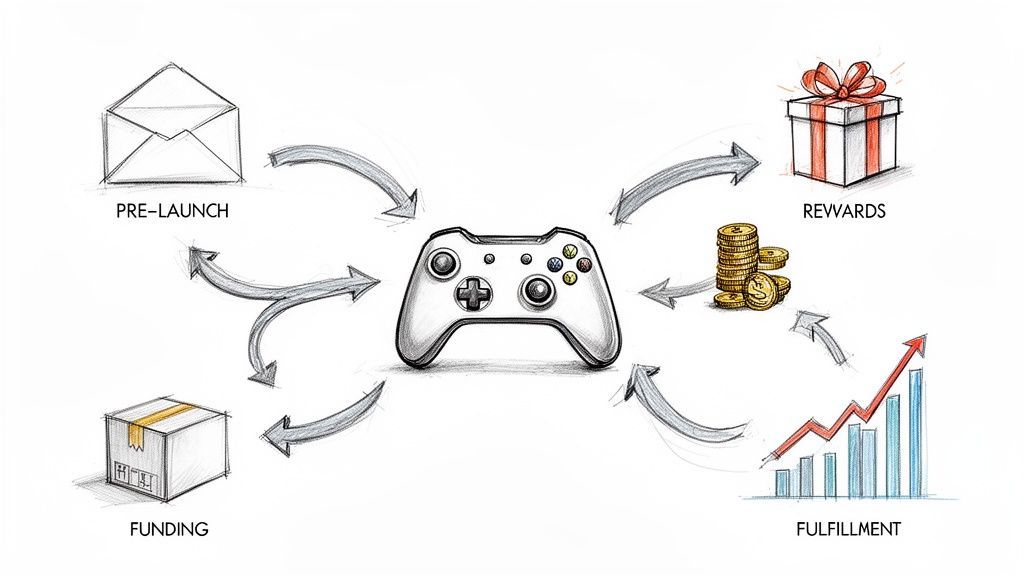
Discover a proven plan for video game kickstarter campaigns: pre-launch buzz, funding strategy, and fulfillment tips.
Running a successful video game Kickstarter these days takes more than just a great idea and a flashy campaign page. It requires a real playbook—a strategic plan that covers everything from building an audience before you launch to getting rewards into your backers' hands after you’ve funded. This guide is that playbook, designed to help your project thrive in a crowded, competitive space.
Gone are the days when you could just throw a project on Kickstarter and hope for the best. The barrier to entry has vanished, which means you are now your own gatekeeper. A winning campaign isn't an accident; it's a full-fledged business launch executed with precision.
The landscape for video game crowdfunding has completely matured, and the numbers don't lie. Video games are seeing a massive surge in momentum on the platform. Creators recently pulled in a staggering $26 million across 441 successfully funded campaigns—that's a 28% jump from the previous year. It’s the highest number of successful game projects in Kickstarter's history, showing just how much confidence both creators and backers have in the system. If you want to dig deeper, you can explore more data on this gaming trend.
No matter how big or small your project is, every campaign unfolds across three distinct stages. Think of it as a journey with a clear beginning, middle, and end.
This process makes one thing clear: the real work begins long before you hit "launch" and doesn't stop when the campaign clock runs out. Each phase has a unique mission, from building hype to converting pledges and, finally, managing the complex logistics of fulfillment. Getting all three right is what separates the breakout hits from the projects that just scrape by.
To help visualize this, here's a simple breakdown of how these phases work together.
Key Phases of a Video Game Kickstarter Campaign
| Phase | Primary Objective | Key Activities |
|---|---|---|
| Pre-Launch | Build an engaged audience and validate your idea. | Email list building, community management, press outreach, creating marketing assets. |
| Live Campaign | Convert interest into funding and hit your goal. | Driving traffic, engaging with backers, unlocking stretch goals, managing campaign updates. |
| Post-Campaign | Fulfill rewards and maintain your community. | Sending backer surveys, managing pledges, collecting shipping/VAT, logistics, and fulfillment. |
Mastering this entire lifecycle is the secret to not just funding your game but building a loyal fanbase that will stick with you for future projects.
Think of your campaign as a three-act story. The pre-launch is Act I, where you introduce the world and build suspense. The live campaign is Act II, the climax where all the action happens. And post-funding is Act III, the resolution where you deliver on your promises and set up the sequel.
One of the most overlooked parts of the entire process is what happens after you’re funded. This is where a pledge manager becomes your best friend.
If Kickstarter's built-in survey tool is like an Amazon checkout—functional but rigid—a dedicated pledge manager like PledgeBox is like having your own Shopify storefront. It gives you the tools to manage backer relationships, handle complex orders, and even raise more funds.
Tools like PledgeBox, for example, let you send your backer surveys for free. They only charge a 3% fee on upsell revenue if there's any, making it a risk-free way to collect shipping info while giving backers a chance to grab add-ons or upgrade their pledge. This often boosts your total funding significantly, turning fulfillment from a simple chore into a final, powerful extension of your campaign.
A successful video game Kickstarter rarely just happens on day one. Instead, it’s the payoff from months of laying the groundwork. This pre-launch phase is where you build your foundation, turning a cool idea into an event people are genuinely excited to throw their money at. Skipping this step is honestly one of the biggest reasons I see campaigns fizzle out before they even get started.
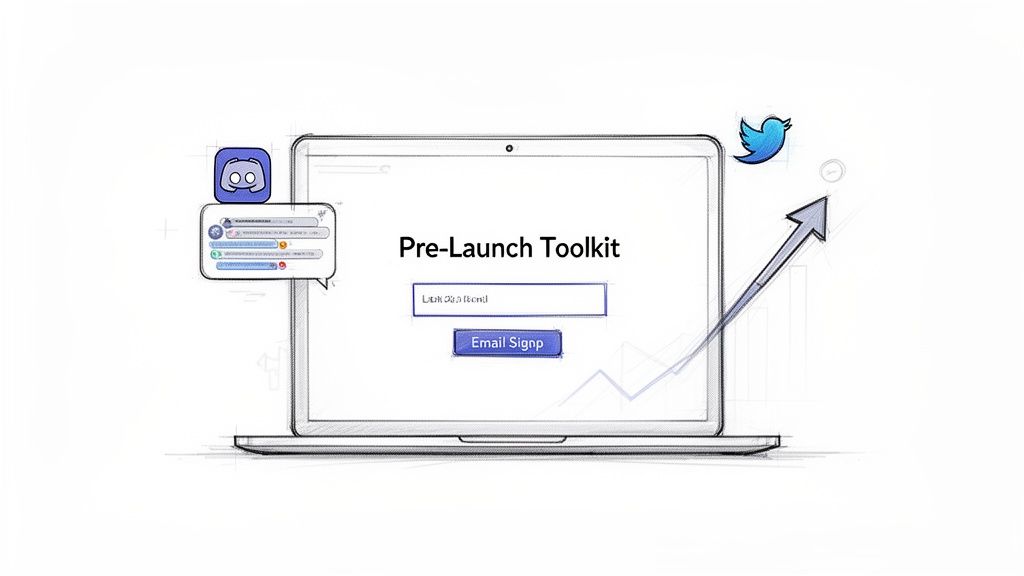
The main goal here is pretty simple: build a tribe of fired-up, day-one backers. When your project hits its funding goal fast—we're talking the first 24 to 48 hours—it sends a huge signal to Kickstarter's algorithms and anyone on the fence about backing. A quick start creates powerful social proof that says, "Hey, this thing is a winner."
Your first order of business should be a simple but effective landing page. This isn't your full game website; think of it more like a digital sign-up sheet designed to do one thing perfectly: collect email addresses.
Slap your game's best visual hook right at the top—a gorgeous piece of concept art, a slick logo, or an animated GIF of some early gameplay. Pair it with a short, punchy sentence or two about what makes your game special. And most importantly, have a big, obvious button asking people to sign up for email updates so they know the second you launch.
Key Takeaway: Your email list is the single most valuable weapon in your pre-launch arsenal. Unlike social media, it’s a direct line to your most passionate fans, with no pesky algorithms getting in the way.
Email is fantastic for big announcements, but real community is built in the day-to-day grind. You need a central spot where fans can hang out, ask you questions, and geek out together. For indie devs, this is almost always a combo of Discord and Twitter.
The key to building a real following is starting early and being genuine. If you want more tips on this, PledgeBox has a great guide on how to build your community before your Kickstarter campaign.
Once you've got a little community bubbling, it's time to think about press and influencers. A polished press kit is absolutely non-negotiable. It’s a one-stop-shop that makes it dead simple for anyone who wants to write about or stream your game.
Your press kit needs to have:
With your press kit good to go, start building a targeted list of journalists, YouTubers, and Twitch streamers who cover games in your specific genre. Don't just blast out a generic email. Personalize every single message and explain why your game would be a great fit for their audience. Good promotion is a must for any launch; for a broader look at digital marketing, you can check out these proven mobile app marketing strategies.
Finally, think about setting aside a small, focused ad budget to juice your email list growth. Platforms like Facebook, Instagram, and Reddit let you get super specific, targeting users based on interests—like fans of similar games, genres, or even people who have backed other Kickstarter projects.
The trick is to point these ads directly at your landing page, not just your social media profiles. An ad spend of just a few hundred dollars can easily add hundreds of high-quality leads to your email list, which can make all the difference on day one. It's an investment that pays for itself by making sure your video game Kickstarter launches with the explosive start it needs to succeed.
Your Kickstarter page is the single most important sales tool you have for your video game. It's the digital stage where you pitch your vision and ask for support, and its design can absolutely make or break your campaign. A well-designed page turns casual viewers into committed backers; for a deeper dive, check out this guide on how to create a website that converts visitors.
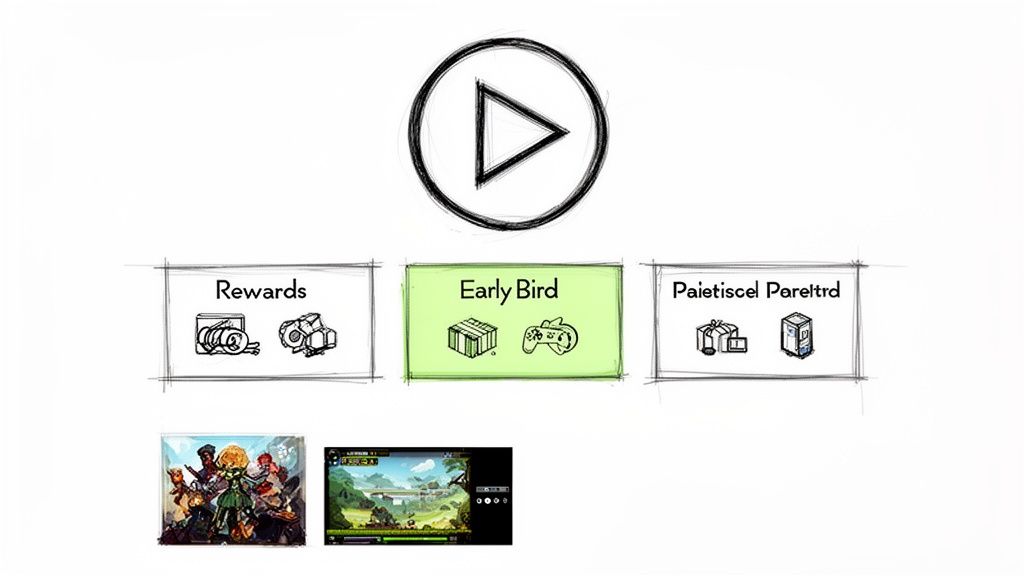
Think of your page as a journey you're guiding visitors through. It all starts with the campaign video—the first thing almost everyone sees. You have a razor-thin window of about 5-10 seconds to grab their attention before they move on. Start strong with your most thrilling gameplay, a gorgeous cinematic, or a gripping narrative hook. The rest of the video needs to quickly explain what the game is, why you're making it, and finish with a direct call to action: back the project.
Beyond the video, your page needs to be a rich mix of compelling visuals and persuasive text. Break up long blocks of text with gameplay GIFs, character art, and screenshots. Show, don't just tell. Instead of wasting words describing a cool combo system, show a GIF of it in action. Let your art and gameplay do the heavy lifting. If you're looking for more guidance on visual storytelling, check out these excellent Kickstarter campaign page design tips.
Your reward tiers are where the magic happens. This is the spot where a curious browser decides to pull out their wallet and become a backer. A huge mistake I see all the time is offering way too many tiers, which just creates decision paralysis. Keep it clean and focused with 5-7 core tiers that offer clear, escalating value.
The psychology of pricing is everything here. You absolutely need a low-cost, digital-only tier, usually around $15-$25 for a digital copy of the game. This gives people an easy "yes" and a low-risk way to get involved.
From there, build your tiers to add real value. 'Early Bird' tiers are fantastic for creating urgency and getting that all-important day-one funding spike. For example, offering the first 200 backers the game for $20 instead of $25 taps into a powerful fear of missing out (FOMO) and gets things moving fast.
One of the biggest strategic choices you'll make is the mix of digital versus physical rewards. Digital goods are high-margin and a breeze to deliver. But physical merch? That adds a tangible sense of value and exclusivity that a lot of backers really want. A healthy mix of both is almost always the winning formula.
To give you an idea, here’s how you might structure this balance.
Sample Reward Tiers Digital vs Physical
This table shows some common examples of how you can structure digital and physical rewards to create compelling pledge levels for different types of backers.
| Tier Level | Digital Reward Example | Physical Reward Example |
|---|---|---|
| Pioneer | Digital Game Copy + Name in Credits | N/A |
| Collector | Digital Soundtrack + Digital Art Book | Exclusive Art Print + Sticker Pack |
| Patron | Alpha/Beta Access + Exclusive In-Game Item | T-Shirt + Enamel Pin |
| Legend | Design an NPC or Minor Item | Collector's Edition Box Set + Signed Poster |
This kind of structure lets backers choose what they care about most, whether it's early access or a cool box for their shelf, which helps you appeal to the widest possible audience.
Key Takeaway: Treat your reward tiers like a product lineup. Each one should have a clear "customer" in mind. Who is the "Pioneer" backer? Who is the "Collector"? Designing for these personas makes your offerings much more compelling.
Let's be clear: your main funding goal should be the absolute minimum amount of money you need to finish the game and deliver every single promised reward. Don't get greedy here. A lower, achievable goal that you can smash quickly builds incredible momentum and inspires confidence. An over-inflated goal can scare backers off, making them feel like their pledge is just a drop in an empty bucket.
Once you have a solid funding goal, it's time to map out your stretch goals. These are the incentives that keep the community pledging long after the initial goal is met. Good stretch goals add value without introducing "scope creep"—the silent killer of so many projects.
Stay away from promising massive new features like a multiplayer mode. Instead, focus on enhancements that enrich the game you've already pitched:
By carefully designing your campaign page, rewards, and goals, you create a persuasive pitch that not only shows off your video game Kickstarter but makes backing it feel like an opportunity no one wants to miss.
You did it. The timer hit zero, the confetti settled, and your video game Kickstarter is officially a success. It’s a massive moment and you should absolutely celebrate, but don't get too comfortable—this is where the real work begins. The next phase is all about turning those pledges into a finished, delivered game, and frankly, it’s where a lot of campaigns fall apart.
Post-campaign management is way more than just sending a few thank-you emails. It's a complex logistical beast. You're suddenly responsible for collecting shipping info from backers all over the world, navigating tricky VAT and sales tax rules, and giving your community a simple way to manage their pledges. This is precisely why a dedicated pledge manager is one of the most important tools you'll use.
Look, Kickstarter has a built-in survey tool, but it's incredibly basic. You get to send it only one time, and it offers almost no room for customization. Once a backer hits "submit," that's it. There’s no easy way for them to update their address if they move, grab an extra add-on, or pay for shipping down the line. That kind of rigidity can turn into a logistical nightmare fast.
This is why nearly every experienced creator uses a third-party pledge manager. These are specialized platforms built to handle the chaos of post-campaign life. They act as the bridge between your funding period and your fulfillment, making the entire experience smoother for both you and your backers.
Think of it this way: Kickstarter pledge manager is like Amazon. It’s fine for a simple, one-time transaction but gives you very little control. A PledgeBox pledge manager is like Shopify. It’s a powerful, flexible, and customizable storefront designed to help you manage backer relationships and even grow your revenue.
A good pledge manager becomes the central command center for everything post-campaign, from collecting addresses to selling last-minute add-ons. It professionalizes your operation and saves you from a world of spreadsheet-induced pain.
One of your very first post-campaign tasks is sending out backer surveys. This is how you'll get the critical info you need to deliver everyone's rewards, especially physical addresses. A pledge manager handles this whole process for you.
Here’s what a solid pledge manager helps you do:
Maybe the most powerful feature of a pledge manager is its ability to bring in more money. Your funding total on Kickstarter doesn't have to be the final number. Your survey is the perfect opportunity to offer backers more of what they already love.
This is where a platform like PledgeBox really shines, especially with its creator-friendly pricing. A huge advantage is that PledgeBox is free to use for sending the backer survey. There are no setup fees, no per-backer charges, and no hidden costs just to collect information from your community.
The platform only charges a 3% fee on new upsell revenue you generate. This means if a backer simply confirms their address and original pledge, it costs you absolutely nothing. But if they decide to add an extra art book or a digital soundtrack through the survey, PledgeBox takes a small cut of that new money.
This risk-free model makes it an incredibly powerful way to boost your funding after the campaign is over. The platform's success is tied directly to yours, turning a simple administrative task into one last fundraising push for your video game.
Just because your 30-day Kickstarter campaign is over doesn't mean the fundraising has to stop. In fact, for smart creators, it’s just getting started. A huge chunk of your total revenue can roll in after the campaign clock hits zero, all thanks to strategic upsells and a late pledge system.
This post-campaign window is a golden opportunity. You're talking to your most passionate supporters—the ones who already believe in your vision. That makes them the perfect audience for extra goodies that deepen their connection to your game.
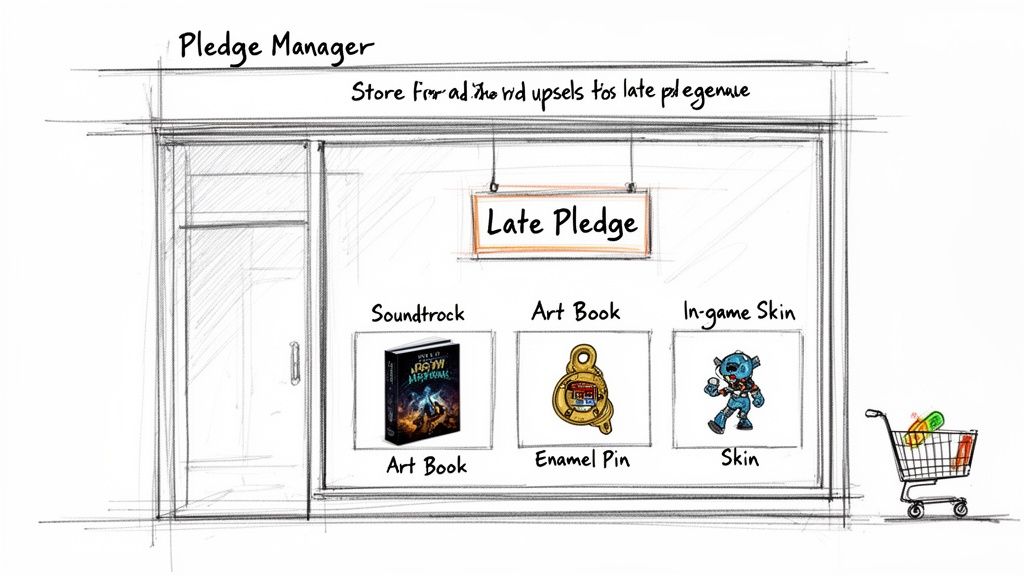
A good upsell never feels like a sleazy sales pitch. It should feel like an exclusive opportunity. When you send out your backer surveys through a pledge manager, you can present your backers with a curated menu of add-ons they can pop right into their order.
The trick is to offer items that add genuine value and feel like a natural part of the world you’ve built. Put yourself in your fans' shoes—what would they absolutely love to own?
This isn't just a small-time tactic; it's a powerhouse. Many campaigns report that 15-20% or more of their final funding comes directly from these post-campaign upsells. If you want a deeper dive, there's a great breakdown on using upsells to increase funding that’s worth a read.
What about everyone who found your project on day 31? Or the people who were on the fence and just missed the deadline? That's where a late pledge storefront comes in, letting you capture a whole new wave of support long after the main event is over.
Your Kickstarter campaign is the big, hyped-up launch party. Your late pledge store is the exclusive after-party where newcomers can still get in on the fun. This creates a steady trickle of funding while you're heads-down in development—a total lifesaver for any indie studio.
Here's a way to think about it: the Kickstarter pledge manager is like Amazon—a one-and-done marketplace. A PledgeBox pledge manager is your Shopify—a customizable storefront that empowers you to keep selling and building your own brand.
Juggling upsells and a late pledge store might sound like a headache, but modern pledge managers make it surprisingly simple. They roll everything into one seamless experience for your backers. When they fill out their survey, they can confirm their pledge, grab some add-ons, and pay for shipping all in one clean process.
This is where the business model of some platforms gives you a massive advantage for your video game Kickstarter. A great example is PledgeBox, which has a game-changing feature: PledgeBox is free to send the backer survey. You don't pay any upfront costs or per-backer fees just to collect the info you need for fulfillment.
Instead, the platform only charges 3% of upsell revenue if there's any. This creates a performance-based partnership. It costs you nothing to use the core survey tools, and you only share a small slice of the new money you bring in. This turns a logistical chore into a completely risk-free revenue engine, helping you squeeze every last dollar out of your campaign.
Diving into a video game Kickstarter for the first time can feel overwhelming. You’ve probably got a million questions floating around, from setting your funding goal to figuring out how you’ll actually ship everything. Let’s tackle some of the most common questions we hear from indie developers.
This is easily one of the most important decisions you'll make, and the rule here is brutally simple: your goal must be the absolute minimum you need to make the game and deliver every single reward. No exceptions.
That means accounting for everything—manufacturing your physical goodies, buying shipping boxes, and, of course, Kickstarter's cut (which is roughly 5% plus payment processing fees).
Don't be tempted to pad your goal, thinking it'll lead to a bigger haul. A lower, more achievable target that you can smash quickly creates a powerful sense of momentum and social proof. Nothing attracts new backers like a campaign that's already funded. An overly ambitious goal just signals risk and can scare potential supporters away before they even consider pledging.
You definitely don't need a finished game, but you need way more than just a cool idea on a napkin. Backers are smart, and they want to see that you've got the skills to deliver on your promises.
Your aim should be to have a polished vertical slice ready to go. Think of it as a short but complete taste of your game that showcases the core gameplay, the art style, and the overall vibe.
Your campaign page needs to be plastered with high-quality gameplay GIFs and a killer trailer, all cut from that vertical slice. This is your proof. It shows backers exactly what they’re investing in and demonstrates that your team can actually build this thing. A solid prototype removes a massive amount of perceived risk from the minds of your community.
A great way to think about it is this: the Kickstarter pledge manager is like Amazon—a simple, one-time transaction. A PledgeBox pledge manager is your personal Shopify—a flexible, powerful storefront that lets you manage backer relationships and keep selling long after the campaign ends.
Yes. 100% yes. While Kickstarter gives you a basic survey tool, it's incredibly rigid. You can only send it out once, and it offers zero help if a backer moves or decides they want to grab an extra add-on later. For any serious campaign, a dedicated pledge manager isn't a luxury; it's essential.
A pledge manager lets you:
This is where platforms like PledgeBox really shine. PledgeBox is free to send the backer survey, so you can collect all your fulfillment info without any upfront cost. The platform only charges 3% of upsell revenue if there’s any, which makes it a no-brainer. It turns a logistical headache into another real opportunity to increase your final funding for your video game Kickstarter.
Ready to streamline your campaign from pre-launch to fulfillment? PledgeBox provides an all-in-one toolkit to help you build your audience, manage backers, and maximize your funding. Get started with PledgeBox today and see how thousands of creators are running smarter, more profitable campaigns.
PledgeBox
The All-in-One Toolkit to Launch, Manage & Scale Your Kickstarter / Indiegogo Campaign