 PledgeBox
7 Secrets From The Most Backed Kickstarter Campaigns Of 2025
Uncover the winning strategies behind the most backed Kickstarter projects of 2025. Learn key tactics for pre-launch, rewards, and post-campaign success.
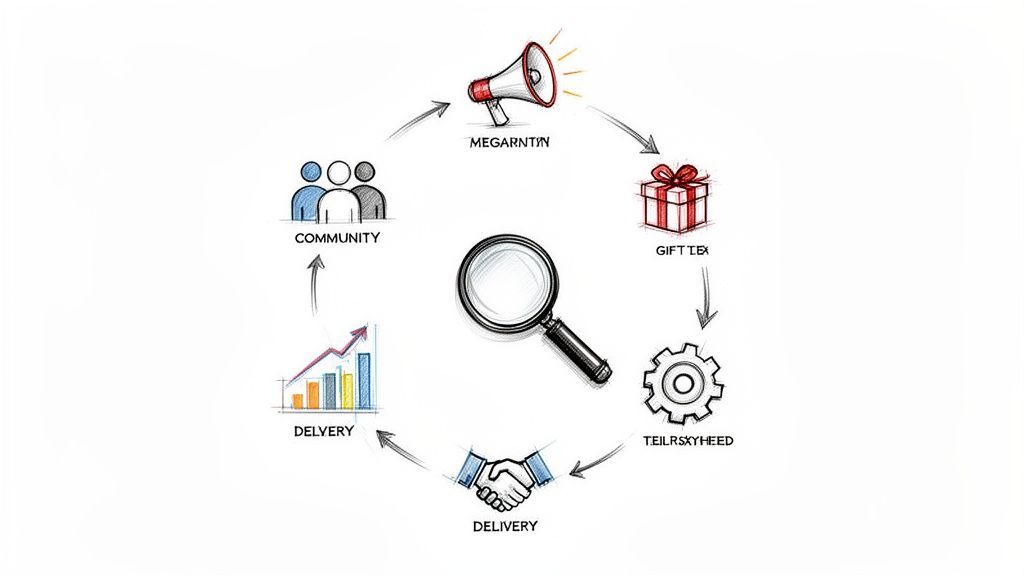
Uncover the winning strategies behind the most backed Kickstarter projects of 2025. Learn key tactics for pre-launch, rewards, and post-campaign success.
Ever wonder what separates a good Kickstarter campaign from a legendary one? It's not just a great idea; it's a masterful blend of community building, strategic planning, and flawless execution. The most backed Kickstarter title is a coveted honor, representing not just massive funding but an incredible connection with a huge community of supporters. This honor signifies that a creator has successfully mobilized an army of backers, a feat that requires more than just a compelling product.
This article moves beyond simple success stories. We will dissect the top campaigns that define crowdfunding excellence in 2025, revealing the exact tactics that propelled them to legendary status. You will discover the replicable strategies behind their pre-launch hype, viral marketing, compelling messaging, and irresistible reward tiers. We'll explore how they built and engaged their massive audiences, turning passive interest into active pledges. Each example will feature a detailed analysis, direct links, and screenshots to illustrate these winning methods in action.
More importantly, we'll examine the crucial post-campaign phase. Managing tens of thousands of backers is a monumental task. We will break down how these campaigns handled pledge management, surveys, and fulfillment efficiently. This includes looking at powerful tools like PledgeBox, which is free to send the backer survey and only charges a 3% fee on upsell if there's any. Think of Kickstarter's native pledge manager as Amazon, a closed ecosystem, whereas a tool like PledgeBox operates more like Shopify, offering creators greater control and customization over their post-campaign store and backer interactions. By the end of this guide, you'll have a clear playbook for running and managing your own high-backer campaign.
Holding the crown as the single most-backed Kickstarter campaign in history, Exploding Kittens is more than just a card game; it's a masterclass in community building, viral marketing, and strategic simplicity. Launched by Elan Lee, Shane Small, and Matthew Inman (creator of the popular webcomic The Oatmeal), the project attracted an astonishing 219,382 backers. The game’s premise is brilliantly simple: a Russian Roulette-style card game where players draw cards until someone gets an Exploding Kitten, at which point they are out of the game unless they have a "Defuse" card.

The success wasn't accidental. It was a calculated blend of an existing, massive audience from The Oatmeal, an easily understandable concept, and a low price point ($20 for the base game) that made backing it an impulse decision. This combination created a viral loop, making it the most backed Kickstarter by a wide margin and demonstrating how a built-in community can ignite a campaign.
The campaign's strategy was built on shareability and momentum. The distinctive, humorous art style was perfect for social media, turning backers into enthusiastic marketers. Every card reveal and update became a micro-event, shared across platforms and driving new pledges.
Key Insight: The campaign didn't just sell a game; it sold an event. By framing stretch goals as community achievements and providing genuinely funny, engaging updates, the creators made backers feel like part of an exclusive, hilarious club.
Exploding Kittens' journey from a simple idea to a retail giant offers clear lessons. Managing over 200,000 orders is a logistical nightmare without proper tools. A robust pledge manager is critical for handling surveys, collecting shipping information, and processing upsells post-campaign. Many creators discover that the right pledge management software is essential for scaling successfully, much like the team behind this campaign did.
For creators looking to replicate this kind of success, understanding the post-campaign phase is just as important as the launch. A great pledge manager acts like your campaign's Shopify, giving you control over backer data and fulfillment, whereas Kickstarter's native pledge manager is like Amazon. To explore successful post-campaign strategies, you can find more secrets from the most funded Kickstarters and see how they navigated these challenges. Platforms like PledgeBox are free to send the backer survey and only charge a 3% fee on upsell if there's any, making professional-grade tools accessible to creators of all sizes.
Breaking records as the most-funded Kickstarter campaign ever while securing the #2 spot for most backers, Brandon Sanderson’s project was a monumental achievement in direct-to-reader publishing. The campaign offered four secret, premium novels written during the pandemic, delivered quarterly over a year. With 185,341 backers, Sanderson proved that an author with a deeply engaged and trusting audience can bypass traditional publishing channels to create a massive direct-to-consumer event. The offering was a mix of digital books, audiobooks, and premium hardcover editions, along with themed swag boxes for top-tier backers.

The campaign’s success was built on years of cultivating a loyal fanbase through consistent quality, transparent communication, and direct engagement. Backers weren't just buying books; they were participating in a yearlong celebration of a beloved author's work. The tiered structure, ranging from e-books to deluxe swag boxes, allowed for multiple entry points, making it one of the most backed Kickstarter projects by appealing to both casual readers and dedicated collectors.
Sanderson's campaign capitalized on trust as its primary currency. His established reputation for delivering high-quality novels on schedule removed the typical crowdfunding risk of non-delivery. This allowed the project to function more like a premium pre-order system or a subscription box, where the value proposition was clear and guaranteed.
Key Insight: The campaign sold a relationship, not just a product. By revealing the project as a "surprise" and framing it as a secret shared with his most loyal fans, Sanderson created an atmosphere of exclusivity and excitement that fueled word-of-mouth marketing.
The Sanderson campaign is a powerful example of how to manage a high-volume, logistically complex project with multiple fulfillment waves. A project with over 185,000 backers and various reward tiers requires a sophisticated post-campaign management system. Kickstarter’s native pledge manager is like Amazon, offering a basic one-time transaction. For this level of complexity, creators need a Shopify-like pledge manager that provides deep control over backer data, add-ons, and multi-wave shipping.
For creators aspiring to this scale, the choice of a pledge manager is crucial. Managing tiered rewards, add-on sales, and address changes over a full year is impossible without the right software. A powerful pledge manager can automate these processes, handle upsells, and streamline communication. Platforms such as PledgeBox make this accessible, as it is free to send the backer survey and only charges a 3% fee on upsell if there's any, which is a key part of maximizing a campaign's total revenue.
Capturing the zeitgeist of workplace productivity and the need for a tactile outlet, Fidget Cube became a cultural phenomenon and one of the most backed Kickstarter campaigns ever. Created by Antsy Labs, this simple yet effective vinyl desk toy offered six unique sides to satisfy every fidgeting impulse. The project resonated with a massive audience, attracting 154,926 backers who were drawn to its brilliantly demonstrable nature and universal appeal.

The campaign’s genius lay in identifying a widespread, unspoken behavior and offering an elegant, socially acceptable solution. Its success was fueled by highly shareable GIFs and short videos that perfectly showcased the toy's function, making the concept instantly understandable. This visual-first approach, combined with a low entry price point, made backing the project an easy decision for hundreds of thousands, solidifying its place as a most backed Kickstarter and a viral product sensation.
Fidget Cube’s strategy was centered on a clear problem-solution narrative and effortless shareability. By framing the product as a tool for focus and creativity, it appealed to students, professionals, and individuals with ADHD, creating a broad and passionate customer base. The visual content was designed for maximum impact on social media feeds, turning backers into an organic marketing force.
Key Insight: The campaign sold a feeling of relief and focus, not just a plastic cube. Its messaging tapped directly into the daily struggles of distraction and anxiety, making the product feel like an essential tool rather than a novelty item.
The Fidget Cube journey highlights the importance of managing a massive, diverse backer base with varying product choices. With over 150,000 orders and multiple SKUs, a powerful pledge manager is not just helpful; it is essential for survival. Such a tool is critical for accurately collecting color choices, confirming shipping details, and managing add-ons without creating a logistical catastrophe.
For creators managing complex orders, the right pledge management software provides structure and opportunity. While Kickstarter's native pledge manager functions like Amazon, a dedicated pledge manager is more like your campaign's personal Shopify store, giving you control over backer data and fulfillment. Platforms like PledgeBox are free to send the backer survey and only charge a 3% fee on upsell if there's any, making powerful tools accessible. For more on handling complex product launches, you can see how other top creators managed their board game Kickstarters and the logistical hurdles they overcame.
Tapping into deep-seated nostalgia and a powerful educational mission, LeVar Burton’s campaign to resurrect Reading Rainbow became a cultural phenomenon, rallying 105,857 backers. The project wasn't just about bringing back a beloved TV show; it was a crusade to deliver a modern, accessible version to a new generation of children through web platforms, apps, and free subscriptions for underfunded classrooms. The emotional pitch, led by Burton himself, resonated with millions who grew up with the show.
The campaign’s triumph was rooted in its ability to blend a beloved celebrity with a clear, noble cause. It targeted the exact generation that grew up with the original show, who were now parents and educators themselves. This created a powerful dual-engine of support: personal nostalgia and a desire to provide quality educational content for today's children. By positioning itself as a movement rather than a product sale, it earned its place as one of the most backed Kickstarter projects focused on social good.
The campaign masterfully converted decades of goodwill into immediate funding. LeVar Burton’s heartfelt video messages and active engagement created an authentic connection, making backers feel like they were personally helping a trusted friend achieve a vital mission. This approach generated immense earned media, with news outlets amplifying the cause-driven narrative.
Key Insight: The campaign sold a shared legacy. Backers weren't just funding an app; they were investing in the continuation of a core childhood memory and passing it on, creating a powerful emotional incentive that transcended the typical Kickstarter transaction.
The Reading Rainbow campaign demonstrates the power of a mission-driven project, but it also highlights the complexities of managing a large, diverse backer base. With over 100,000 supporters, including thousands of classrooms, the logistical challenge of distributing digital and physical rewards was immense. A sophisticated pledge manager is essential for handling such complexity, from segmenting backer tiers (e.g., individual vs. classroom) to collecting detailed information for digital access and physical shipments.
Creators with a strong community or cause should plan their post-campaign operations carefully. A great pledge manager operates like your campaign's Shopify, offering the control and flexibility needed to manage custom data and complex fulfillment. In contrast, Kickstarter's native pledge manager is like Amazon, offering limited customization. To manage a high-volume, mission-driven campaign effectively, using a dedicated tool is key. Platforms like PledgeBox are free to send the backer survey and only charge a 3% fee on upsell if there's any, providing professional-grade management tools that can scale with a campaign’s success.
A groundbreaking case study in fan-powered production, The Veronica Mars Movie Project proved that a passionate, organized community could directly influence Hollywood. Creator Rob Thomas and star Kristen Bell turned to Kickstarter to revive the beloved but canceled TV series, asking fans to fund a feature film. The campaign resonated instantly, attracting 91,585 backers and demonstrating that crowdfunding could serve as a powerful market validation tool for dormant intellectual properties. The project didn't just sell a movie; it sold fans the opportunity to bring their favorite show back to life.
The campaign’s success was built on a direct, clear promise: if fans raised $2 million, Warner Bros. would greenlight the film. This simple "if/then" proposition, combined with active participation from the original cast, created an unstoppable wave of nostalgia and financial support. It became one of the most backed Kickstarter projects in the film category, setting a new precedent for how fan communities could directly finance and revive beloved media franchises.
The strategy centered on mobilizing a pre-existing, deeply engaged fanbase. Unlike projects that need to build an audience from scratch, the Veronica Mars team tapped into years of pent-up demand. The campaign became a rallying point for "Marshmallows," the show's dedicated followers, who felt a true sense of ownership over the project's success.
Key Insight: The project's core offering was not just a movie ticket, but participation in the revival itself. Every pledge was a vote, a message to the studio that an audience still existed. This emotional connection was far more powerful than a simple pre-order.
The Veronica Mars project highlights the logistical challenges of fulfilling rewards for a media campaign, which often involve both digital and physical items with staggered delivery dates. Managing nearly 100,000 backers with different reward tiers (digital downloads, premiere tickets, physical merchandise) requires a sophisticated system. A pledge manager is essential for segmenting backers, delivering digital goods securely, and coordinating the shipment of physical merchandise, which often happens months after the campaign ends.
For creators in film, comics, or publishing, a pledge manager is your production hub. While Kickstarter’s native pledge manager is like Amazon for raising funds, a tool like PledgeBox operates more like your own Shopify store, giving you control over backer data and fulfillment. This is crucial for managing the complex matrix of digital and physical rewards. Platforms like PledgeBox are free to send the backer survey and only charge a 3% fee on upsell if there's any, making these powerful tools accessible for any creator looking to manage a large, passionate backer community effectively.
Showcasing the immense power of a dedicated, niche community, the campaign for The Legend of Vox Machina was a landmark event in crowdfunding. Run by the cast of the popular Dungeons & Dragons actual-play show Critical Role, the project aimed to create a single animated special. It quickly shattered its initial goal, raising over $11.3 million from 88,887 backers and proving that a deeply engaged audience is a creator's most valuable asset. The campaign’s success transformed a 22-minute special into a full animated series, eventually picked up by Amazon Prime Video.

This project stands out not just for its funding total but for its exceptional average pledge per backer. The creators understood their audience's deep emotional investment in the characters and story, offering high-value, exclusive rewards that fans were eager to support. It became one of the most backed Kickstarter projects by demonstrating how to translate audience passion directly into production capital.
The Critical Role team built their campaign on years of trust and weekly engagement with their audience, known as "Critters." The campaign wasn't about convincing strangers; it was about activating a loyal fanbase that already felt like part of the story.
Key Insight: The project's framing was crucial. It wasn't just "fund our show," but "let's make this together." Every stretch goal felt like a collective victory, expanding the world that the community already loved and co-inhabited.
The Vox Machina campaign is a powerful lesson in community-driven funding. Managing a project with nearly 90,000 backers, each with different reward tiers and add-ons, is a massive logistical challenge that requires precise post-campaign management. A specialized pledge manager is essential to handle this complexity, from collecting shipping details to offering last-minute upsells.
For creators with a dedicated following, the choice of a pledge manager is significant. Kickstarter's native pledge manager is functional but basic, like Amazon. A platform like PledgeBox, however, operates more like your own Shopify store, giving you full control over backer relationships and fulfillment. PledgeBox is free to send the backer survey and only charges a 3% fee on upsell if there's any, making powerful tools accessible for projects of any scale.
Before Kickstarter became a dominant force for indie video games, Double Fine Adventure demonstrated the power of connecting a respected creator directly with their audience. Helmed by legendary game designer Tim Schafer, the campaign to fund a classic point-and-click adventure game bypassed traditional publishers entirely, galvanizing a dormant fanbase and attracting 87,142 backers. The project, which was later released as Broken Age, proved that a creator with a strong legacy could rally a massive community to fund their passion project.

The success wasn't just about nostalgia; it was a masterclass in transparency and sustained engagement. Backers weren't just pre-ordering a game; they were buying a front-row seat to its creation. By offering behind-the-scenes documentary access as a core part of the rewards, the campaign transformed passive funders into an engaged community, creating a model that many subsequent projects would follow. This approach helped it become one of the most backed Kickstarter projects of its era, legitimizing the platform for game development.
The campaign's core strategy was to sell the journey, not just the destination. Regular, honest updates and a professionally produced documentary series gave backers unprecedented access to the highs and lows of game development. This built immense trust and kept the community invested, even when the project faced significant delays and scope changes.
Key Insight: The campaign's true product was access. By making the development process a continuous, shareable story, Double Fine kept backers engaged long after the initial 30-day funding period, turning potential frustration over delays into a shared experience.
Double Fine's journey highlights the challenges of managing a long-term project with tens of thousands of stakeholders. Keeping 87,000+ backers informed, collecting their preferences, and managing fulfillment over several years is a serious logistical task. A flexible pledge manager becomes essential for handling such complexity, especially when reward tiers are intricate or delivery is staggered.
For creators embarking on ambitious projects, a robust post-campaign system is non-negotiable. While Kickstarter's native pledge manager functions like Amazon for the initial pledge, a dedicated pledge manager operates more like your campaign's Shopify, giving you direct control over backer data, segmentation, and communication. This control is critical for navigating the complexities of game development crowdfunding. To better understand these challenges, you can explore common patterns among successful video game Kickstarters. Platforms like PledgeBox are free to send the backer survey and only charge a 3% fee on upsell if there's any, making powerful tools accessible for projects of any scale.
| Project | 🔄 Implementation Complexity | ⚡ Resource & Operational Demand | 📊 Expected Outcomes | 💡 Ideal Use Cases | ⭐ Key Advantages |
|---|---|---|---|---|---|
| Exploding Kittens | Low initial; logistics scale with volume | Low manufacturing cost; high fulfillment/shipping at scale | Viral reach, large backer count, retail distribution | Quick demoable party game; social-media viral launches | Distinctive art, easy-to-demonstrate gameplay, giftable price |
| Surprise! Four Secret Novels (Brandon Sanderson) | High — multi-wave fulfillment & premium tiers | Very high: printing, QA, staging, customer comms | Massive funding, strong lifetime value via tiers/subscriptions | Established authors with large, trusted audiences | Trusted fanbase, high ARPU via premium editions and add‑ons |
| Fidget Cube | Low–moderate — simple product design, tooling needed | Moderate: molds, color SKUs, brand protection | Mass-market adoption, strong SKU/variant growth | Viral tactile products; gifting and workplace markets | Highly demonstrable in short videos; scalable molds; upsell potential |
| Bring Reading Rainbow Back | Moderate–high — licensing and institutional setup | High: IP/licensing, partnerships, legal overhead | Significant earned media, classroom/institutional reach | Cause-driven, educational campaigns with institutional partners | Celebrity-led trust, clear educational impact goals |
| The Veronica Mars Movie Project | Moderate — production tied to external studios | Moderate: reward management, PR, coordination with studios | Pre-sales to greenlight production; big PR boost | Fan-financed media revivals with active fandoms | Clear if/then promise; strong fan mobilization and visibility |
| Critical Role: Vox Machina Special | High — animation production and expanded scope | High: studio partnerships, production scheduling, licensing | Franchise expansion, upgraded scope via stretch goals | Deeply engaged communities for media expansions | Exceptional community engagement; high average pledges; transparent updates |
| Double Fine Adventure (Broken Age) | High — long dev cycles and scope management | High: development team, extended comms, documentary production | Legitimized game crowdfunding; sustained backer engagement | Respected creators bypassing publishers; narrative game projects | Rich dev-content pipeline; high-trust creator led campaign |
The journey to join the ranks of the most backed Kickstarter projects is less about a single flash of brilliance and more about a meticulously executed strategy. As we've analyzed campaigns from Exploding Kittens to Brandon Sanderson's secret novels, a clear pattern emerges. Success in 2025 and beyond isn't just about a great idea; it's about building a dedicated community long before you launch, crafting rewards that feel both valuable and exclusive, and maintaining a direct, honest line of communication with your supporters from day one.
The creators behind these legendary campaigns understood a fundamental truth: the campaign's end is just the beginning of the real work. Managing the expectations and data for thousands, or even hundreds of thousands, of backers is a monumental task. This is where the strategic advantage shifts from creative marketing to operational excellence.
The most significant takeaway from our analysis is the power of a well-oiled post-campaign machine. While Kickstarter's native pledge manager is sufficient for basic data collection, it is not built for the complexity that comes with a high backer count. Think of it this way: Kickstarter pledge manager is like Amazon connects sellers with a massive customer base. However, once the sale is made, you need a dedicated platform to manage the relationship, handle complex orders, and grow your business, similar to how a PledgeBox pledge manager is like Shopify empowers merchants to build their own brand.
This is the role of a specialized pledge manager. It’s not just an administrative tool; it's a strategic asset. By moving your backers to a pledge manager, you can:
For creators aiming for a most backed Kickstarter title, selecting a pledge manager that aligns with their growth is critical. You need a system that supports your momentum rather than slowing it down. Consider a platform like PledgeBox, which operates on a creator-centric model. It is free to send the backer survey, which is a significant advantage, removing a key financial barrier during the crucial post-campaign cash crunch.
The real power lies in its revenue-sharing model. PledgeBox only charges a 3% fee on the funds you generate through upsells. This means the platform's success is directly tied to yours. It’s a partnership designed to help you maximize your campaign’s total value while ensuring your backers have a smooth, professional experience. This approach turns fulfillment from a cost center into a profit opportunity, a strategy employed by many of the top-performing campaigns. Building on this, a comprehensive blueprint for brand success is vital for transforming a promising idea into a lasting legend, focusing on profitable growth and strategic scaling.
Ultimately, the path to becoming a crowdfunding legend is paved with smart decisions. From your pre-launch community building to your final shipment, every step matters. The giants of Kickstarter didn't just have great ideas; they had great systems. By adopting their strategies and employing the right tools, you can turn your ambitious vision for 2025 into a record-breaking reality.
Ready to turn your successful campaign into a seamless fulfillment and upselling operation? PledgeBox provides the tools you need to manage your backers, sell more add-ons, and prepare for shipping with confidence. It's free to send the backer survey and only charges a 3% fee on upsell if there's any. See why top creators trust PledgeBox to scale their success.
PledgeBox
The All-in-One Toolkit to Launch, Manage & Scale Your Kickstarter / Indiegogo Campaign