 PledgeBox
crowdfunding for video games: Launch and master campaign
Learn crowdfunding for video games with a practical, step-by-step guide covering pre-launch, campaign management, and post-funding fulfillment.
Learn crowdfunding for video games with a practical, step-by-step guide covering pre-launch, campaign management, and post-funding fulfillment.
Crowdfunding a video game is so much more than just a fundraiser. It’s your chance to rally a passionate community around your vision and prove your game concept has legs long before you launch. But a successful campaign doesn't just happen—it’s built on a solid foundation laid months in advance, focused on building a fanbase and creating something they can actually see and feel.
Let's be honest: the work you put in before your campaign goes live is the single biggest factor in whether you'll sink or swim. This pre-launch phase is all about building undeniable momentum. Forget flashy marketing for a second. This is about establishing a core community, validating your idea, and showing everyone what your game is truly capable of.
Think of it as building the engine for your campaign. Without it, you’re just a pretty shell that's not going anywhere.
The timing couldn't be better. The market for crowdfunding video games hit a massive $2.14 billion in 2024 and is on track to reach $2.46 billion in 2025. That growth is driven by players who are hungry for unique, indie experiences. The audience is out there, waiting to back the next great game.
Before you even think about writing your campaign page, you need to answer one critical question: does anyone actually want to play this game? This isn't about chasing trends; it's about making sure you have an audience waiting for what you're building.
Start by digging into games that share your genre, art style, or core mechanics. Scour their crowdfunding campaigns. What worked? What fell flat? Read the backer comments—they are a goldmine of information about what features got players excited. You're not just collecting data; you're trying to get inside the heads of your future players to understand what they truly want.
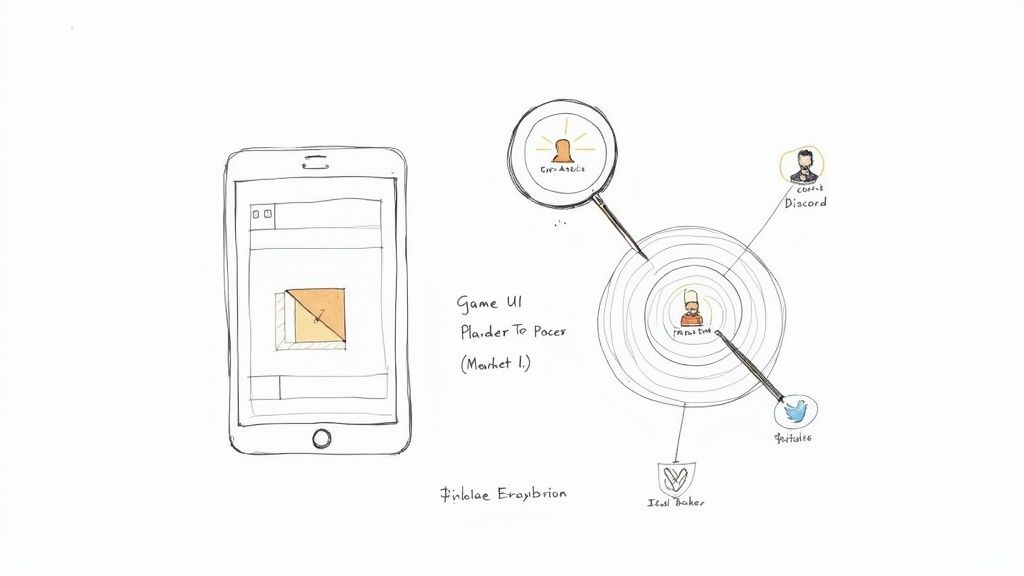
Amazing concept art and a slick description are great, but nothing sells a game like gameplay. A playable prototype or a "vertical slice" is your most powerful asset before you launch. It doesn't need to be perfect or packed with every feature. Its job is to showcase the core gameplay loop—the main thing players will be doing over and over again.
The goal of your prototype is simple: make your vision tangible. It needs to let potential backers feel the fun, proving your concept is more than just an idea on paper.
This immediately removes a huge amount of risk for anyone thinking about pledging. It proves you have the skills to pull it off and gives them a real taste of what they're helping you create.
Your community is the lifeblood of your campaign. You can't wait until launch day to find them; you need to start building that relationship early. The goal is to cultivate a group of followers who aren't just aware of your game but are genuinely invested in seeing it succeed.
Pick the Right Hangouts: Discord is perfect for creating a tight-knit community hub where you can have deeper conversations with your most dedicated fans. Twitter is better for broader outreach, sharing quick development updates, and connecting with press and influencers.
Give Them a Reason to Stick Around: Don't just post "coming soon!" Share behind-the-scenes content, dev logs, concept art, and short gameplay videos. Ask for their feedback on a new character design or a proposed mechanic. Make them feel like they’re part of the team. A solid social media marketing for startups strategy can help you build that initial buzz.
If you do this right, you won't be scrambling for backers on launch day. Instead, you'll be activating an army of fans who are ready and waiting to pledge.
To help you get organized, here’s a quick checklist to keep you on track.
This table breaks down the core phases and goals to hit before you even think about clicking "launch." Following this will ensure you're not just hoping for success but actively building it.
| Phase | Key Objective | Success Metric |
|---|---|---|
| Concept Validation | Confirm there's a real audience for your game idea. | Positive feedback from target communities; clear understanding of competitor strengths/weaknesses. |
| Prototype Development | Create a playable demo showcasing the core fun factor. | A stable "vertical slice" that is engaging and clearly communicates your vision. |
| Community Building | Grow an engaged following on key social platforms. | 500-1,000+ engaged Discord members or email subscribers; consistent social media interaction. |
| Asset Creation | Prepare key marketing materials (trailer, GIFs, screenshots). | A compelling campaign trailer and a folder of high-quality visuals ready for launch week. |
This early groundwork is what separates a funded project from a forgotten one. To get a complete rundown of everything you'll need, check out the resources at https://pledgebox.com/prelaunch-kit. Putting in this effort now transforms your launch from a hopeful wish into a powerful statement of community-backed confidence.
Think of your campaign page as your digital storefront, your narrative canvas, and your elevator pitch all rolled into one. This isn't the place for a dry list of features. It's where you translate the raw passion for your game into a compelling story that makes people want to be part of your journey. A great page doesn't just ask for money—it sells a vision.
And that vision is powerful. Crowdfunding for video games has become a lifeline for indie devs, with Kickstarter leading the pack. As of January 2025, the games category alone has pulled in over $2.32 billion in pledges across nearly 40,000 successful projects. That makes it the most-funded category on the entire platform. The potential is massive if you get it right.

Your campaign video is, without a doubt, your single most important asset. The data doesn't lie: campaigns with a video have a much, much higher success rate. You've got about 15 seconds to stop someone from scrolling past. Make them count.
Start with your best stuff. Show off some exhilarating gameplay, a gut-punch story moment, or a piece of art that just pops off the screen. Right after that hook, tell them exactly what your game is and why it's special. The rest of the video is your chance to introduce yourself and the team, letting your passion and expertise shine through.
Above all, be real. Polished, corporate-style videos tend to feel out of place and can even backfire. People are backing you, the developers. Your genuine enthusiasm is way more persuasive than any slick marketing ever could be.
Your reward tiers are the engine of your funding strategy. A classic mistake I see all the time is having way too many options, creating a confusing mess for potential backers. The goal here is to build a clear "value ladder" that gently nudges people to pledge just a little bit more.
Here’s a tried-and-true structure that works wonders for game campaigns:
Your reward structure should tell a story of escalating value. Each tier should feel like a natural and worthwhile step up from the last, making the decision to pledge more feel like an easy choice for the backer.
Stretch goals aren't just an excuse to ask for more money. They're a killer tool for keeping your community fired up and engaged, especially after you've smashed that initial funding target. They create a shared mission and give backers a reason to keep shouting about your campaign.
Instead of just tacking on more content, try framing your stretch goals as direct upgrades to the core game that everyone benefits from. Think "New Game+ Mode," "Full Voice Acting," or "Expanded Soundtrack." This builds a sense of collective achievement and helps fight off that dreaded mid-campaign slump.
For a deeper dive into laying all this out, check out these awesome Kickstarter campaign page design tips. A smart approach here keeps your project focused while building the kind of sustained excitement that carries you past the finish line.
So you’ve hit the big green 'launch' button. Congrats! Now the real work begins. Think of the next 30 days as an intense sprint where your every move can make or break your funding goal. The initial buzz from your pre-launch community will give you a fantastic start, but that momentum will inevitably slow. Then comes the real test: the dreaded mid-campaign slump.
This is the quiet period where many campaigns start to fizzle out. But for you, it’s an opportunity. With the right strategy, you can turn this lull into a second wind. It’s all about constant engagement, crystal-clear communication, and a few smart moves to keep the pledges rolling in.
During the live campaign, communication is your most important job. Period. Backers aren't just pre-ordering a game; they're investing in you and your dream. They want to be part of the story, which means you need to show up and interact with them every single day.
This goes way beyond posting a few scheduled updates. You need to live in the comments section, answering every question quickly and honestly. Acknowledge their feedback, celebrate milestones with them, and share snippets of behind-the-scenes progress. This builds a massive amount of trust and makes your backers feel like they’re truly part of the team.
A live campaign is a conversation, not a broadcast. How you communicate during these 30 days will define your relationship with your community long after the campaign is over.
Think of every comment as a chance to show your passion and prove you know your stuff. When a potential backer sees a creator who is present and engaged, it instantly makes the project feel less risky and gives them the confidence to pledge.
That initial rush of funding is an amazing feeling, but it won’t last forever. When the pace slows, it's time to roll out the content reveals and marketing pushes you planned for this exact moment.
Here’s how to fight back when things get quiet:
Never underestimate the power of a well-timed boost. We've seen just how much crowdfunding can do for gaming projects. The tabletop game Frosthaven raised a staggering $12.97 million, while Kingdom Death: Monster 1.5 pulled in $12.34 million. These numbers show what’s possible when momentum is sustained throughout the entire campaign. You can discover more insights about these crowdfunding trends and see what you can achieve.
Your updates need to be more than just funding milestones. Don't just post, "We hit 50%!" Instead, tell backers what that funding actually unlocks. Show them concept art for the stretch goal they just helped fund or share a quick thank-you video from the dev team. Every update should give your backers something valuable and make them want to share it.
Also, don't forget about cross-promotions. Find other game campaigns running at the same time that appeal to a similar audience. Offering a simple shout-out in each other's updates is a free, win-win strategy that can drive highly relevant traffic to both projects. This kind of collaboration is a huge part of the indie dev community and can give you a surprising lift when your organic reach starts to slow. Steering the campaign is an active, daily job—don't just set it and forget it.
You’ve done it. The campaign is funded, the confetti has settled, and you’ve finally caught your breath. Now the real work begins, and one of the first big decisions you'll make is choosing a pledge manager. This isn't just some boring administrative tool; it's the central hub for your entire fulfillment process and a massive opportunity for post-campaign revenue.
Your choice here fundamentally shapes how you interact with backers and manage the complex logistics of getting your game into their hands. The path you take will directly impact backer satisfaction and, just as importantly, your final budget.
When you're looking at post-campaign tools, you'll generally find two main approaches. It helps to think of it as a comparison between a massive, one-size-fits-all marketplace and a personalized, powerful storefront that you control.
The default Kickstarter pledge manager, for example, acts a lot like Amazon. It’s a closed, straightforward system designed to do one thing: collect essential backer data like shipping addresses. It gets the basic job done reliably, but its functionality is pretty much limited to just that—data collection.
On the other hand, a specialized tool like Pledgebox operates more like Shopify. It gives you a highly customizable and powerful storefront to not just manage your existing backers but also to keep selling your game. This approach turns fulfillment from a simple cost center into a potential new revenue stream.
This distinction becomes crystal clear when you look at the pricing. The biggest difference—and a total game-changer for indie developers—is how you pay for the service. Pledgebox is completely free to send your backer surveys. You can gather every shipping address and manage all your pledge levels without spending a dime upfront.
Pledgebox only charges a modest 3% fee on funds raised from upsells and late pledges. This "pay-as-you-grow" model means the tool pays for itself. You can open up a late pledge store for fans who missed the campaign or offer exciting add-ons to your existing backers. The revenue generated from these upsells can be substantial, often helping to fund surprise stretch goals or cover those unexpected production costs that always seem to pop up.
This infographic breaks down a key decision point from the live campaign phase—managing momentum. Understanding when to push and when to maintain is a skill that directly impacts your final funding, which then flows right into your post-campaign management strategy.
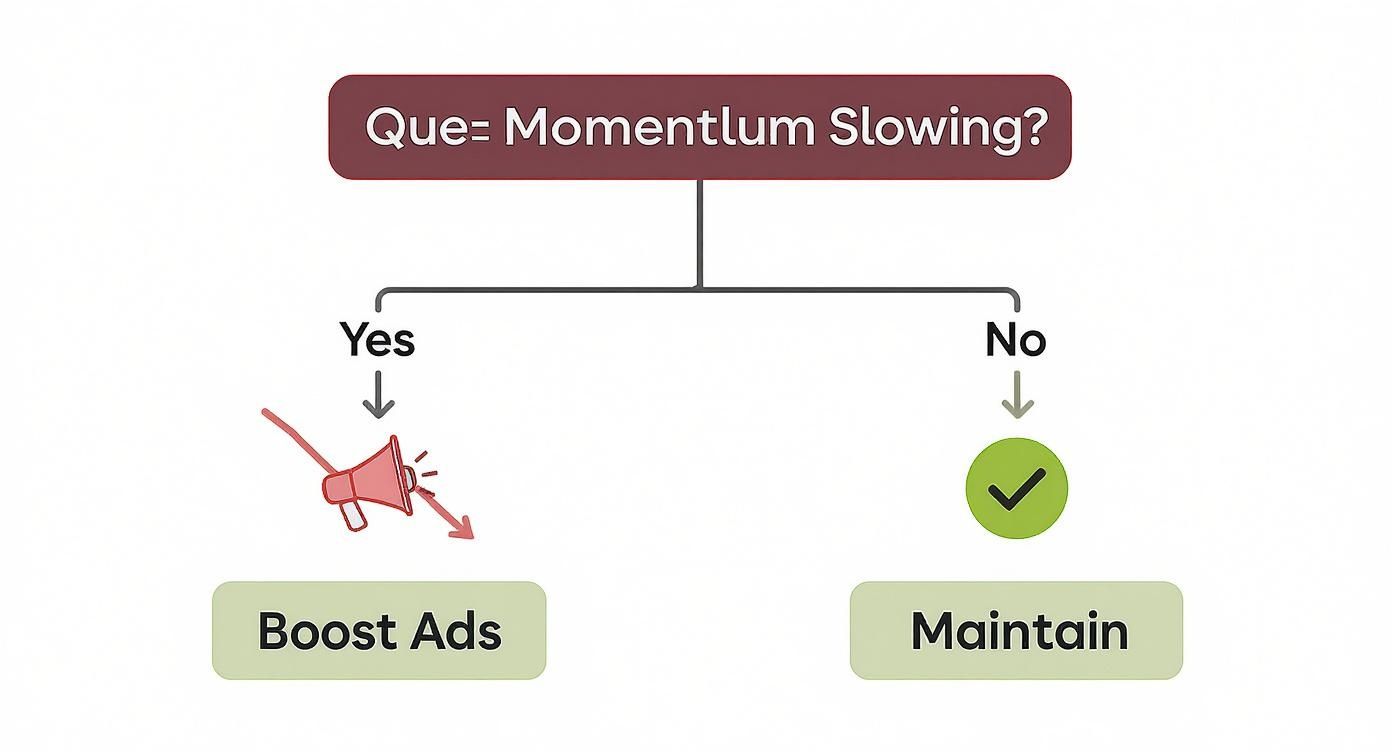
This simple chart highlights how active campaign management requires reacting to real-time data. That same principle extends directly into choosing a pledge manager that can adapt to your needs after the campaign ends.
So, how do you decide? It really comes down to your goals.
If your crowdfunding for video games campaign was super simple, with just a couple of reward tiers and no plans for add-ons, the basic Kickstarter manager might be all you need. It’s clean and gets you the essential data.
However, if you want to maximize your project's financial potential and build a more robust post-campaign experience, a dedicated pledge manager is almost always the better option. The ability to upsell items like digital artbooks, soundtracks, or exclusive in-game content can add a significant chunk of change to your total funds raised.
A pledge manager is more than a survey tool. It's your first fulfillment partner, your post-campaign sales platform, and a direct line to your community. Choosing the right one sets the tone for the entire post-campaign journey.
To help you weigh the pros and cons based on your project's specific needs, I've put together a quick comparison of the two approaches.
This table offers a head-to-head look at the core differences between using the default platform tool and a dedicated pledge manager like Pledgebox. It should make the decision a lot easier.
| Feature | Kickstarter Pledge Manager | Pledgebox Pledge Manager |
|---|---|---|
| Survey Cost | Included in Kickstarter's 5% fee | Free to send surveys |
| Upsells/Add-ons | Not supported | Supported (3% fee on funds raised) |
| Late Pledges | Not supported | Full pre-order storefront functionality |
| Customization | Limited; basic data fields | Highly customizable surveys and store |
| Shipping Management | Basic address collection | Advanced shipping calculations and integrations |
Ultimately, this decision is about control and opportunity. While the built-in option is functional, a tool like Pledgebox gives you the flexibility to grow your funding and streamline complex fulfillment, all while keeping your community engaged and excited.
For a deeper dive, Pledgebox has a great guide where you can learn more about how to select the right pledge manager.
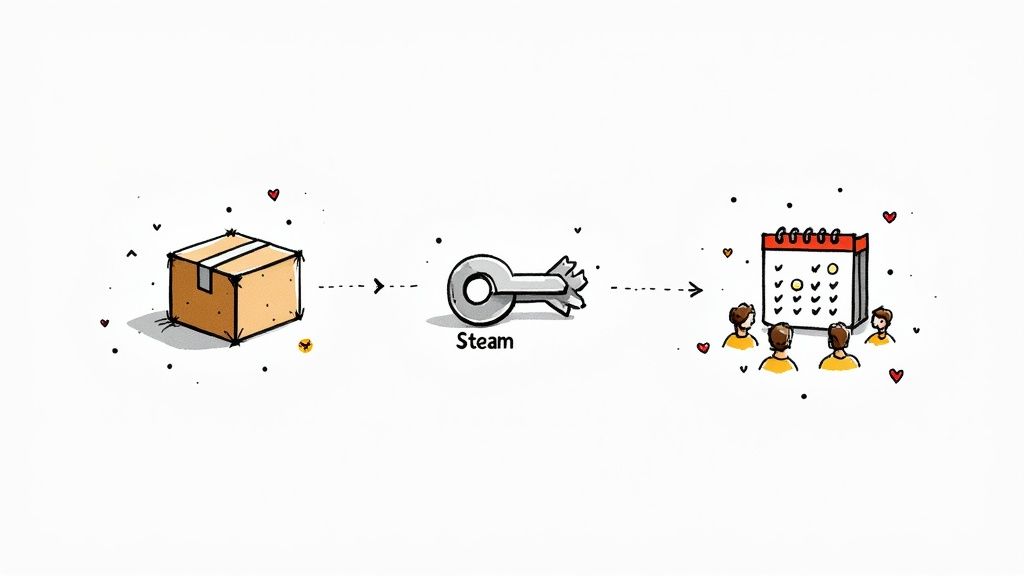
The moment your campaign ends and the confetti settles, a whole new phase kicks in. You've sold the dream, and now it's time to actually deliver. This is where a surprising number of creators falter—not because of game development hurdles, but because of messy logistics and poor communication.
Think of managing fulfillment and your community as the final boss of your campaign. How you handle this stage will forge your studio's reputation. Get it right, and your backers become evangelists for life. Get it wrong, and you'll become a cautionary tale on Reddit.
Getting rewards into the hands of your backers means juggling two completely different pipelines: digital and physical. Each comes with its own unique set of headaches, and nailing both requires solid planning from the start.
For digital goodies like game keys, there are services that make distributing thousands of keys for Steam or GOG relatively painless. The trick is to have a clean, organized list of your backers from your pledge manager, all neatly segmented by their reward tier.
Physical fulfillment, on the other hand, is a much bigger beast. If your campaign involves t-shirts, art books, or collector's editions, logistics are everything. This usually means choosing a suitable 3PL partner. These third-party logistics companies take care of warehousing, picking, packing, and shipping, which frees you up to do what you do best—finish the game.
Your relationship with your community doesn't end when the campaign funds. It's an ongoing dialogue that requires honesty and consistency. Keeping backers informed, especially when things go wrong, is what builds lasting trust.
This is where a powerful pledge manager really shows its worth. A platform like Pledgebox becomes your command center for all this post-campaign chaos. A huge plus is that it's free to send the backer survey to collect addresses and confirm tiers. They only charge a 3% fee on any upsell revenue you generate through add-ons.
To put it simply, Kickstarter’s native pledge manager is like a basic Amazon checkout. Pledgebox is more like having your own dedicated Shopify store, giving you way more control over the entire experience.
In the world of crowdfunding, transparency is everything. Your backers are smart; they know game development is a messy, unpredictable journey. What they won't tolerate is being left in the dark.
Set a realistic and consistent schedule for your updates—monthly is a great place to start. And make sure these updates have substance. "We're still working on it" just doesn't cut it. You need to show them.
This kind of open, consistent communication is what separates a well-run crowdfunding for video games project from a disaster. You aren't just shipping a product; you're guiding your earliest and most passionate supporters through the final leg of a journey they chose to be a part of. Treat that responsibility with the respect it deserves, and they'll be lining up to back your next project before you've even written a single line of code.
Even with the best-laid plans, crowdfunding for video games can feel like you’re navigating a minefield of unknowns. You get the big picture—build a community, launch a campaign, ship a game—but it's the little details that can trip you up. Let’s tackle some of the most common (and critical) questions we see from creators.
These are the things that often get overlooked but can have a massive impact on whether your campaign succeeds and, just as importantly, whether you stay sane after it's over. Getting these right from the start will save you a world of headaches later on.
Picking your funding goal is one of the most strategic decisions you'll make. It’s not just about how much money you need; it’s a huge psychological signal to potential backers. The classic rookie mistake is setting your goal to your total dream budget, which often looks so high that early backers get scared off.
Instead, your main funding goal should be the absolute bare minimum you need to create the game and deliver the core rewards. Nothing more. This number needs to cover:
Setting a lower, more achievable goal makes it easier to get funded quickly. That early success creates a powerful sense of momentum that attracts more backers. You can always use stretch goals to fund all the cool extra features you're dreaming of.
Okay, this is the part that makes most creators nervous, but it doesn't have to be a nightmare. First, and most importantly: the money you raise from crowdfunding is generally considered taxable income. It is not a gift. This is a crucial distinction, and ignoring it can leave you with an eye-watering tax bill you weren't prepared for.
Our best advice? Talk to a tax professional or an accountant—ideally one who has worked with crowdfunded projects before—before you launch. They can help you set things up properly and tell you which expenses you can write off to lower your tax burden.
It's also a smart move to form a legal entity for your studio, like an LLC. This creates a firewall between your business and personal finances, protecting your personal assets if things go sideways. It might feel like a bit much for a small indie team, but it’s a professional step that provides essential protection.
While you can technically run a campaign without one, skipping a pledge manager for a game with multiple rewards is a massive strategic mistake. It's the single best tool for making fulfillment manageable and for bringing in a significant amount of post-campaign cash.
Think of it this way: Kickstarter’s built-in survey tool is like Amazon—simple, functional for getting basic info, but very locked down.
A dedicated pledge manager like Pledgebox is more like having your own Shopify store. It gives you a powerful, flexible storefront to manage everything after the campaign ends. The best part? Pledgebox is free to send your backer survey, so you can collect shipping details without any upfront cost. The platform only charges a 3% fee on upsell revenue, if you generate any. This model lets you easily offer add-ons and late pledges, creating a whole new income stream that often covers unexpected production costs.
This turns fulfillment from just another expense into a potential profit center. For any serious campaign, a good pledge manager isn't just nice to have—it's essential.
At PledgeBox, we give you a complete toolkit to manage your backers, sell more with add-ons, and make your entire fulfillment process a breeze. Our system is built to save you time and help you raise more money after your campaign ends, all with a risk-free pricing model that creators love.
Discover how PledgeBox can simplify your post-campaign management today!
PledgeBox
The All-in-One Toolkit to Launch, Manage & Scale Your Kickstarter / Indiegogo Campaign