 PledgeBox
Crowdfunding Success: Top Community Engagement Tactics
Boost crowdfunding with 10 community engagement tactics. Learn pre-launch, live, & post-campaign strategies to build a loyal backer base.
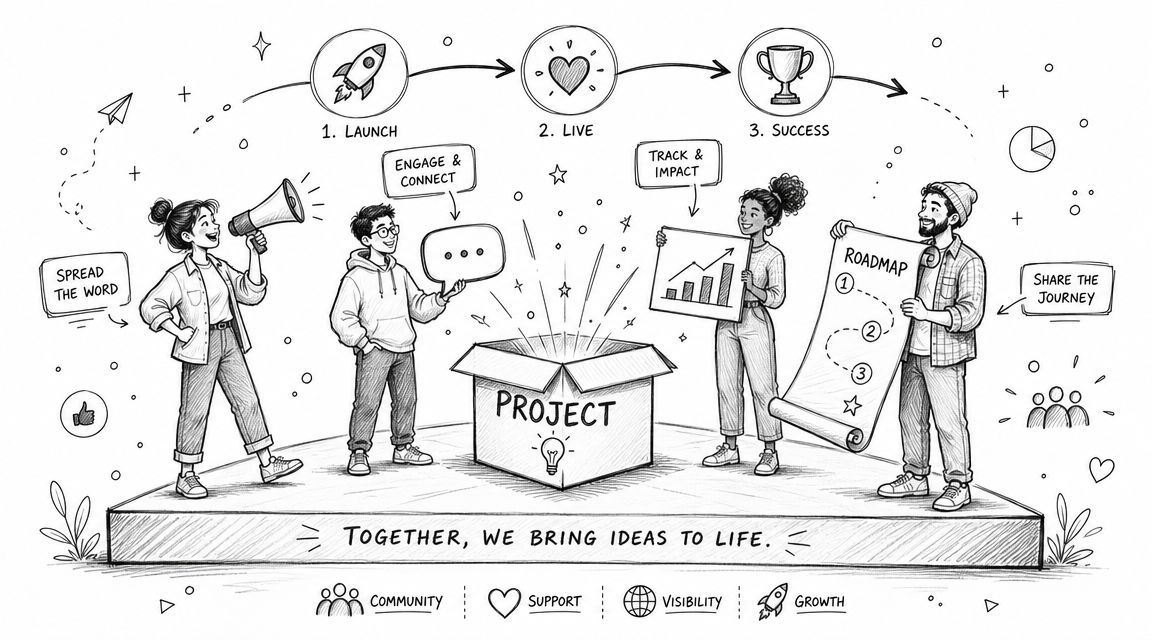
Boost crowdfunding with 10 community engagement tactics. Learn pre-launch, live, & post-campaign strategies to build a loyal backer base.
Launching a crowdfunding campaign can feel deceptively simple at first. You have a product, a page draft, a reward plan, and a date on the calendar. Then reality shows up. Your early followers don't all convert, comments pile up faster than expected, and once funding ends, you still have months of communication, surveys, fulfillment questions, and backer expectations to manage.
The creators who come out ahead usually build more than a campaign page. They build a community that stays engaged before launch, during the funding window, and after the pledge total stops moving. That shift matters because community engagement has matured from a one-off communications tactic into a structured practice with stages such as outreach, consultation, involvement, collaboration, and fostering initiative, plus measurable KPIs like participation, retention, survey results, and event attendance, as outlined in Qualtrics' guide to community engagement.
If you run a campaign like a short-term sales event, you'll get short-term behavior. If you run it like a community, you give people reasons to stay, respond, share, and buy again. That's true whether you're launching a gadget, a board game, or a niche lifestyle product. If you want a broader perspective on how communities drive loyalty in other industries too, this guide for gym owners on building communities is a useful parallel.
Before the campaign page goes live, you need a place to collect intent. Social followers are useful, but email is where launch momentum gets organized. A focused pre-launch page gives interested people one job: raise their hand now so you can bring them back the moment the campaign opens.
For creators, this is one of the most practical community engagement tactics because it turns vague attention into a trackable audience. You can monitor subscriber growth, sign-up sources, and launch-day response instead of guessing who was "interested."
A good pre-launch page doesn't just ask for an email. It offers a reason to join early. That might be first access to early-bird rewards, behind-the-scenes development updates, prototype progress, or a say in final colorways and add-ons.
Use more than one traffic source so your list isn't dependent on a single algorithm.
A weak pre-launch page says "coming soon" and nothing else. That doesn't create commitment. It creates a bookmark people forget.
Another common mistake is treating the whole list the same. Casual followers and hot prospects shouldn't get identical launch emails. Segment by interest, use case, or product variant where possible, then send sharper messages.
For a deeper walkthrough, PledgeBox published 7 actions to build your community before your Kickstarter campaign, and the underlying principle is right: momentum starts before the public launch button ever gets pressed.
Practical rule: If your pre-launch page can't answer "why join now?" in one sentence, rewrite it.
A campaign page goes live, and the comments fill with the same questions. How does it work in real life? What problem does it solve? Why is this version better than the cheaper alternative? If creators wait until launch week to answer those questions, they spend the campaign reacting instead of converting.
Useful content fixes that early. It gives potential backers enough context to understand the product before they ever see the campaign page, and it keeps your launch messaging from collapsing into hype.
Educational content works best in the pre-launch phase because it pulls in qualified traffic and filters out weak-fit subscribers. During the live campaign, the same assets become sales tools. A setup walkthrough can turn into an email. A materials comparison can become an ad angle. A short rules explainer can answer comment thread objections before they stall pledges.

The mistake I see often is overproducing brand content and underproducing decision content. A polished trailer has value, but it rarely carries the full load. Backers back when they can picture ownership, usage, and fit.
A stronger content mix includes:
This is one of the clearest dividing lines between average campaigns and disciplined ones. Average campaigns publish content that says, "look at our product." Strong campaigns publish content that answers, "should I buy this, how would I use it, and which option fits me?"
Track content by campaign-phase outcomes, not vanity reach. Before launch, watch email signup quality, reply rates, and which topics pull the strongest waitlist conversions. During the live campaign, watch which pieces drive pledges, add-ons, longer page time, or fewer repeated support questions. If you're using a tool like PledgeBox after the campaign, the content that pre-answers fulfillment, upgrades, or add-on questions will also make post-campaign upsells easier to manage.
For international or multilingual audiences, clarity beats cleverness. Shorter sentences, stronger visuals, captions, and mobile-friendly formatting usually outperform smart copy that needs too much interpretation.
Practical rule: Every content piece should answer one buying question. If it only builds mood, it needs a second job.
You don't need the biggest audience. You need access to the right adjacent audiences.
Partnerships work when the overlap makes sense. A desk accessory creator can partner with productivity channels. A tabletop campaign can work with painters, reviewers, or solo-gaming communities. A travel gadget launch can cross-promote with creators who already speak to frequent flyers or digital nomads.
The biggest mistake here is partnering with direct competitors or with giant accounts that have no reason to care. You want complementary fit and a believable recommendation.
Start with a short target list and evaluate each potential partner on three things:
Partnerships get stronger when you remove friction. Give partners a simple brief, a few images, one key angle, and a specific timeline. If you make them do strategy work for you, the promotion gets delayed or diluted.
Good partner outreach sounds like a collaboration plan, not a favor request.
After the campaign, report back. Tell them what kind of traffic or backer interest they sent. That keeps the relationship alive for late pledges, future launches, or retail announcements.
Reward tiers aren't just pricing. They're a map of your community.
Some people want the simplest way in. Some want the collector version. Some want extras, bundles, or a premium experience. If your tiers don't reflect those differences, you're forcing different types of backers into the same path.

Most campaigns don't have a tier problem. They have a clarity problem. Too many options, muddy naming, and weak differentiation make backers pause when they should be committing.
A clean structure usually works better than a clever one.
The key is that each tier should make sense in one sentence. If you need a paragraph to explain a tier, the offer isn't ready.
Creators often overload the tier page with every possible variation. That's how fulfillment complexity sneaks up on you. Use core tiers to segment broad intent, then use add-ons and post-campaign upsells to handle the extra customization.
This is also where a dedicated pledge manager becomes more useful than platform-native tooling. Kickstarter's pledge manager is like Amazon. It's standardized and familiar. PledgeBox is more like Shopify. You get more control over the branded experience, post-campaign choices, and how backers move through surveys and add-ons.
Live sessions create a kind of trust you can't fake with static assets. When people can see the product, hear unscripted answers, and watch you handle questions in real time, the campaign stops feeling abstract.
That doesn't mean every creator needs a big personality. It means backers need proof that a real team is present and accountable.
A simple stream can be enough to move fence-sitters. Show a demo. Answer objections. Compare versions. Walk through a prototype. Bring in a collaborator if they can explain a technical detail better than you can.
To support the event, use visual social proof before and after the stream.

Don't go live just to say you're live. Give the session structure.
Keep the event focused. Long streams with no pacing lose people fast. Short, useful sessions are easier to repurpose into clips, update content, and retargeting material.
A walkthrough like this can work well as supporting media:
A campaign hits a delay on Tuesday. Backers notice by Wednesday. If the creator stays quiet until Friday, the comment section usually fills the gap with guesses, frustration, and refund anxiety.
That pattern is avoidable.
Strong creators build a reporting rhythm before problems show up. They share progress, explain decisions, and close the loop on backer input. That matters in the live phase, but it matters even more after funding, when excitement starts to fade and people want proof that the team is still executing.
Updates should answer three practical questions.
The last part is where trust is usually won. If backers voted for a feature, asked for a packaging fix, or pushed you to clarify a timeline, report back on the outcome. Say what you accepted, what you rejected, and why. Communities stay engaged when they can see their input affect the project instead of disappearing into a form or comment thread.
I usually tell creators to set a cadence they can maintain under pressure. Weekly works well during a busy live campaign. Every two weeks can work post-campaign if each update includes real movement. A late polished update does less for trust than a clear, honest one sent on time.
PledgeBox has a useful breakdown of what you need to know about project updates on Kickstarter if you want platform-specific update mechanics. For the measurement side, this guide on how to track community engagement data is a solid reference.
Track the signals that show whether your feedback loop is working. Watch update open rates, comment volume, response time, survey completion, repeat questions, and the number of support tickets triggered after each announcement. If one update creates confusion, rewrite the next one with tighter language, clearer dates, and a single call to action.
Backers can handle bad news. They stop trusting teams that go quiet.
Testimonials work best when they sound like buyers, not marketers. That means less polished praise and more specific context.
Ask early supporters what problem the product solves for them, why they backed now, or what nearly stopped them from pledging. Those answers are more persuasive than generic "looks great" comments because they mirror the objections future backers already have.
A campaign looks stronger when different types of people validate it. A hobbyist, a power user, an international supporter, and a first-time backer all reveal different reasons to trust the project.
Turn that into assets you can reuse:
The trick is specificity. "This solves cable clutter on my tiny desk" is stronger than "Amazing product." "I backed because setup took me five minutes" is stronger than "Easy to use."
Social proof also works internally. When your existing backers see others actively engaging, they become more willing to comment, answer questions, and share. Communities often need visible participation before they start contributing on their own.
On day three of a campaign, a familiar pattern shows up. One backer leaves a thoughtful comment, shares your page in two niche groups, and brings in more pledges than a paid social post that cost real money. That person is not just a happy customer. They are a distribution channel.
Referral and ambassador programs work best during the live phase, when attention is already building and backers need a reason to pull others in. The mistake is overengineering the program. If supporters need a tutorial to understand how to share, they will not bother. Give them a personal link, a short message they can copy, and a clear reason to participate.
A simple structure usually outperforms a complicated points system:
Each tier should have a concrete benefit. Early access to updates, limited add-ons, private Q&A sessions, or public recognition in campaign updates all work. Cash rewards can help, but they also attract low-fit affiliates who send cheap traffic and weak leads. For crowdfunding, status and access often produce better backer quality than pure commission.
Track outcomes closely. Clicks matter, but pledge conversion matters more. Watch which advocates drive traffic that stays on the page, converts at a healthy rate, or leads to useful discussion in comments and Discord. A supporter with 300 targeted followers in your category can outperform a creator with 30,000 general followers.
I also look at post-click behavior. Do referred visitors back at the entry level only, or do they choose higher tiers and add-ons? Do they ask fewer support questions because the ambassador explained the product well? Those signals tell you which advocates are creating trust, not just noise.
If you plan to collect referrals and segment backers for follow-up, your survey and fulfillment setup needs to support that handoff cleanly. The ultimate guide to backer surveys is useful for planning how referral-driven backers move into post-campaign data collection without creating admin headaches.
Recognition still matters. Feature top ambassadors in an update. Thank them by name. Let them preview stretch goal decisions before the wider list. Good ambassadors want proximity, not just perks.
A backer just pledged, felt the rush, and expects the next step to be easy. Then the survey arrives with too many fields, unclear add-ons, and variant choices buried in a wall of text. Completion drops, support tickets rise, and the post-campaign experience starts to feel like cleanup instead of momentum.
Handled well, surveys do more than collect shipping details. They turn late enthusiasm into confirmed orders, cleaner fulfillment data, and extra revenue from relevant upgrades. That makes this phase different from pre-launch list building and live-campaign engagement. Here, the job is precision.
Keep the survey short, clear, and tied to the pledge a backer already made. Ask for required information first. Show only the options that apply to that reward tier. If someone backed a base edition, do not make them click through expansion choices meant for premium tiers.
PledgeBox fits this stage well because creators can send the backer survey without an upfront survey fee, and the platform charges only on upsells if backers buy extras. That pricing model matters in post-campaign operations. It lets creators test add-ons and customization paths without adding fixed survey cost.
A strong survey flow usually includes four parts:
The trade-off is straightforward. More options can raise average order value, but every extra choice adds friction. I usually advise creators to limit upsells to the few items that clearly fit the original purchase. If backers need a chart to understand what to buy, the survey is doing too much.
Good customization also improves fulfillment accuracy. Clean variant selection now means fewer message chains later about color swaps, missing accessories, or address corrections. That saves time your team would otherwise spend fixing preventable errors.
For a practical setup reference, use this guide to planning and structuring backer surveys.
A backer survey should feel like a clear post-purchase step with useful choices, not a second campaign hidden inside a form.
A lot of campaigns go quiet right after funds clear. Backers notice. Silence after a high-energy launch makes the project feel transactional, even if fulfillment is still on track.
The smarter approach is to treat the post-campaign phase as retention, not cleanup. This is the third phase of community engagement, and it has a different job from pre-launch hype or live-campaign conversion. Now the goal is to keep trust high, turn buyers into repeat backers, and build a community asset you can use on the next launch without starting from zero.
Post-campaign communities last when they offer ongoing value, not just announcements. That usually means a defined cadence and a clear benefit for paying attention.
Useful formats include:
There is a trade-off here. More community perks can raise retention, but every extra channel takes time to run well. A neglected Discord is worse than a strong monthly email. I usually advise creators to choose one primary hub and one broadcast channel, then keep both active for at least six months after the campaign.
If post-campaign engagement matters, measure it. Otherwise it turns into vague "community building" work that gets dropped as soon as fulfillment gets busy.
A simple scorecard is enough:
Tool choice matters here too. If you are already using a post-campaign manager such as PledgeBox for late pledges, add-ons, or follow-up commerce, track how many backers stay engaged after fulfillment and how many come back to buy again. That gives you a cleaner picture of lifetime value than campaign revenue alone.
The teams that build durable brands keep showing up after delivery. They share progress, admit delays clearly, reward loyal backers, and keep the relationship useful between launches. That is how a crowdfunding campaign turns into a repeatable customer base instead of a one-time spike.
| Strategy | 🔄 Implementation Complexity | ⚡ Resources & Time | 📊 Expected Outcomes (impact) | 💡 Ideal Use Cases | ⭐ Key Advantages |
|---|---|---|---|---|---|
| Pre-Launch Community Building & Email List Capture | Medium 🔄, landing pages, segmentation, cadence planning | Moderate ⚡, weeks–months, marketing spend & outreach | High 📊, strong launch-day velocity, lower campaign risk; ⭐⭐⭐⭐ | New product launches needing instant backers; Kickstarter hardware | Immediate funding momentum; audience insights; message testing |
| Content Marketing & Educational Resources | Medium–High 🔄, consistent content calendar & SEO work | High ⚡, months of content production and distribution | Medium–High 📊, durable organic traffic and authority (slow build); ⭐⭐⭐⭐ | Campaigns needing credibility and long-term discovery | SEO value; repurposable assets; trust building |
| Strategic Partnership & Cross-Community Promotion | Medium 🔄, outreach, negotiation, co-creation | Low–Moderate ⚡, coordination time, co-branded assets | High 📊, amplified reach, lower CAC when aligned; ⭐⭐⭐⭐ | Accessing adjacent audiences via creators/influencers | Credibility transfer; cost-effective audience expansion |
| Tiered Reward Structure & Community Segmentation | Medium 🔄, reward design, pricing, fulfillment mapping | Moderate ⚡, product bundling and fulfillment planning | High 📊, increases average pledge and conversion; ⭐⭐⭐⭐ | Campaigns with diverse backer segments (deluxe vs budget) | Captures full value spectrum; encourages upgrades |
| Live Streaming & Real-Time Community Events | Medium–High 🔄, production prep, scheduling, moderation | Moderate–High ⚡, quality streaming gear, staff, timing | Medium–High 📊, short-term pledge spikes & engagement; ⭐⭐⭐ | Launch day boosts, final-hour urgency, demos | FOMO generation; real-time objection handling |
| Community Feedback Loops & Transparency Updates | Medium 🔄, regular updates and active moderation | Moderate ⚡, ongoing community management time | High 📊, builds trust, lowers disputes/refunds; ⭐⭐⭐⭐ | Complex projects with delivery risk or long timelines | Strengthens trust; creates advocates; issue mitigation |
| Social Proof & Backer Testimonials Strategy | Low–Medium 🔄, solicit, curate, and publish UGC | Low–Moderate ⚡, collection workflows, editing for reuse | Medium–High 📊, improves credibility and conversion; ⭐⭐⭐⭐ | Late-stage campaigns or skeptical audiences | Third-party validation; organic social reach |
| Referral & Ambassador Programs | Medium 🔄, tracking, rewards, program ops | Moderate ⚡, incentives, tracking systems, admin | High 📊, drives organic acquisition with higher LTV; ⭐⭐⭐⭐ | Scaling reach via community advocates | Cost-effective CAC; sustained promoters |
| Backer Surveys & Customization Engagement | Medium 🔄, survey logic, add-on flows, data collection | Low–Moderate ⚡, survey builder, reminders, integrations | High 📊, increases AOV and fulfillment accuracy; ⭐⭐⭐⭐ | Post-campaign upsells and fulfillment management | Automates shipping/tax; boosts add-on revenue |
| Post-Campaign Community Sustainability & Loyalty Programs | High 🔄, long-term program design & content | Moderate–High ⚡, community platforms, ongoing perks | High 📊, increases LTV and recurring revenue; ⭐⭐⭐⭐ | Creators planning repeat launches or subscriptions | Recurring revenue; reduced future CAC; product feedback |
The strongest crowdfunding campaigns don't just collect pledges. They build participation at every stage. Before launch, that means capturing intent and teaching the market why your product matters. During the live campaign, it means creating moments of trust through updates, social proof, live interaction, and clear reward paths. After funding closes, it means staying present long enough to turn backers into repeat buyers, advocates, and future launch momentum.
That continuous model matches where community engagement has gone more broadly. Practitioners no longer treat it as episodic outreach. The emphasis is on continuity, relationship-building, and measurable response over time. For creators, that's a practical shift, not a theoretical one. It changes how you write updates, how you structure surveys, how you choose channels, and how you decide whether a tactic is working.
The biggest mistake I see is treating engagement as decoration. A nice Discord. A few launch emails. A quick update when people get impatient. That's not a system. A real system has feedback loops, audience segmentation, visible responsiveness, and post-campaign follow-through. It also accepts trade-offs. More channels are not always better. More tiers are not always better. More content is not always better. Better fit is better.
Tool choice matters here because tools shape the backer experience. Kickstarter's native pledge manager is a useful baseline, but it's closer to Amazon. It's standardized and marketplace-oriented. PledgeBox is more like Shopify. It gives creators more control over the branded post-campaign experience, especially when you want your survey, add-ons, and backer portal to feel like part of your own operation rather than a generic handoff.
That cost structure is also unusually creator-friendly. PledgeBox is free to use for sending backer surveys and only charges a 3% fee on revenue generated from upsells. If you don't generate upsell revenue, there's no upsell fee to pay. For many campaigns, that lowers the risk of improving the post-campaign experience, especially if you're trying to collect shipping cleanly, offer relevant add-ons, and keep your community engaged after the platform campaign ends.
The creators who win long term usually understand one thing early. Your campaign page is rented attention. Your community is the asset. Build it before launch. Take care of it during the campaign. Keep earning it after the funding window closes.
If you want a simpler way to manage surveys, add-ons, and the post-campaign backer experience without upfront survey fees, take a look at PledgeBox.
PledgeBox
The All-in-One Toolkit to Launch, Manage & Scale Your Kickstarter / Indiegogo Campaign