 PledgeBox
The 7 Best Online Role Play Games to Play in 2026
Looking for the best online role play games? Our 2026 guide covers 7 top MMORPGs and RPGs, with pros, cons, and costs to help you find your next adventure.
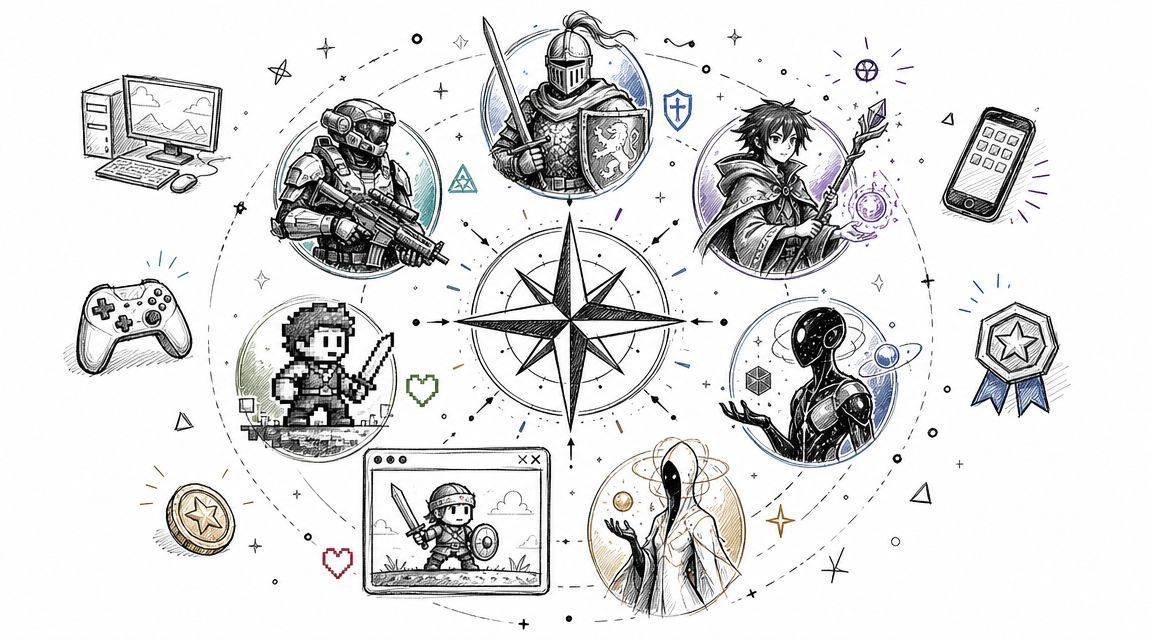
Looking for the best online role play games? Our 2026 guide covers 7 top MMORPGs and RPGs, with pros, cons, and costs to help you find your next adventure.
Searching for the best online role play games often starts with the wrong question. Most lists ask which game is biggest, newest, or loudest. That misses what actually matters when you're choosing a long-term online RPG: do you want a story you can live in, a social space to inhabit, a grind to optimize, or a flexible world you can drop into for an hour at a time?
That distinction matters because “online role play” doesn't mean one thing. Some players want MMORPGs with persistent worlds and guild life. Others want games with roleplay-friendly communities. Others mean organized tabletop roleplay online, which is a different use case entirely. Community discussions on Steam's roleplay game thread show how often sandbox games and MMOs get mixed together with very different kinds of roleplay. If your goal is sustained in-character play, moderation, scheduling, and social structure can matter more than sheer scale.
The genre is also too large to treat casually. The role-playing games market reached USD 23.2 billion in 2023, with a projected USD 53.8 billion by 2032 and a projected 9.8% CAGR. That growth tells you something practical. There are more online RPG options, more business models, and more player expectations than ever.
Below is a decision-first comparison of seven strong picks for 2026. The aim isn't to crown one winner. It's to help you match the game to the kind of player you are.
If you want an MMO that feels like a long-form fantasy series with multiplayer systems attached, Final Fantasy XIV Online is the easy recommendation. It's one of the clearest examples of a game that respects story-driven players while still giving raiders, crafters, decorators, and social players plenty to do.
Its biggest advantage is structure. The main story gives you a guided path, so you're rarely left wondering what matters next. For many players, that's the difference between bouncing off an MMO and settling into one.
Final Fantasy XIV works well for players who don't want to build their own goals from scratch. You can follow the main scenario quest, access dungeons and trials naturally, and branch into side systems when you're ready. Crafting and gathering also feel like full professions rather than side chores, and housing plus glamour give social and creative players a reason to stick around.
For readers who like the overlap between digital RPG worlds and tabletop imagination, PledgeBox's look at the world's biggest dungeon is a fun reminder that persistent fantasy spaces appeal for the same core reason: players want a world big enough to inhabit, not just a combat loop to complete.
Practical rule: Choose FFXIV if your top priority is narrative momentum. Choose something else if you mainly care about open-ended systems or instant endgame competition.
The tradeoff is simple. This is a subscription MMO, and expansions are separate purchases. If you dislike recurring costs or prefer to dip in and out without pressure, that can be a poor fit.
Still, among the best online role play games, FFXIV is one of the safest picks for someone who wants a polished on-ramp and a world that feels carefully authored from the first hours onward. Visit the official Final Fantasy XIV Online website to check current access options.

World of Warcraft remains the benchmark many players still use, even when they've moved on from it. That's because it doesn't offer one online RPG experience. It offers several. Retail gives you the modern progression treadmill, seasonal systems, and active endgame. Classic gives you slower pacing, social friction, and nostalgia-driven structure.
That split is the main reason WoW still belongs on a serious list. One subscription opens the door to different moods of play, which few competitors can match.
Retail works best if you like dungeons on repeat, frequent updates, raid progression, and a large ecosystem of guilds and guides. Classic works better if you want a slower, more social climb where the world itself feels consequential. Neither mode is especially gentle for players who dislike layered systems, but both reward commitment.
PledgeBox's article on legendary video game Kickstarters is a useful side read here because it highlights a broader truth about game communities: long-running franchises survive when players keep investing identity, memory, and routine into them. WoW has that in abundance.
WoW is often the right answer for players who don't mind homework. There's almost always a guide, a build, a route, and a faster way to do what you're doing.
The downside is complexity. New players can feel buried by currencies, gearing paths, class expectations, and the pressure to optimize. Expansions also sit on top of the subscription model.
If your ideal RPG is social, system-heavy, and built around mastery over time, WoW still earns consideration. If you want lower commitment and less cognitive overhead, another game on this list will fit better. You can browse the current versions on the official World of Warcraft website.

Some MMOs make you feel late if you don't rush toward the current endgame. The Elder Scrolls Online doesn't. Its biggest strength is that it lets you wander through Tamriel at your own pace and still feel like you're playing the game correctly.
That's why it's one of the best online role play games for casual and solo players. Zone stories matter. Voice acting is everywhere. Exploration feels like the point, not a delay before the point.
ESO is a good choice when you want the freedom to log in, follow a story arc, steal from a village, decorate a home, craft gear, or join a roleplay-friendly guild without reorganizing your life around raid schedules. The buy-to-play structure also lowers the feeling of monthly obligation, though the optional subscription changes the experience quite a bit by providing convenience and access perks.
If you're curious why MMO audiences keep returning to persistent worlds at all, this broader research on MMORPGs as immersive and socially rich environments offers useful context. It also notes associations between heavy play and negative outcomes in some study groups, which is a reminder to pick a game that fits your habits rather than one designed to dominate them.
For a crowdfunding-adjacent angle, PledgeBox's post about the Ashes of Creation Kickstarter shows how much interest still gathers around big online worldbuilding projects.
The caution is mostly about packaging. DLC and chapter access can feel confusing if you don't use ESO Plus. Performance can also feel uneven in busy hub areas on older hardware.
Still, if your ideal online RPG feels more like living in a fantasy setting than chasing a strict ladder, ESO is one of the strongest choices. Start with the official Elder Scrolls Online site.

Guild Wars 2 is often the answer for players who say, “I want an MMO, but I don't want an MMO to feel like a second job.” That sounds simplistic, but it gets at the game's design philosophy. It avoids some of the recurring pressure points that push people out of subscription-heavy worlds.
The core game is free to try, the combat has movement and energy, and horizontal progression means your work tends to stay relevant longer. If you hate the feeling that your gear or progress gets wiped emotionally every season, that matters.
Guild Wars 2 shines when you enjoy open-world activity more than rigid progression lanes. Dynamic events can pull strangers together without a lot of ceremony, and exploration feels rewarding on its own. Mounts and elite specializations add personality to movement and builds, which helps the game feel modern even when you're revisiting older areas.
A good fit for Guild Wars 2 is the player who wants freedom without chaos. You can roam, join events, chase cosmetics, and still feel purposeful.
The drawbacks are real but specific. Some older story content sits outside the simplest purchase path, and the high-end raiding scene is smaller than what subscription giants maintain. For some players, that's a benefit. For others, it means less aspirational group content.
Guild Wars 2 works best when your definition of success is broad. If you want discovery, movement, fashion, and a generous cost model, it's a compelling option. You can check current editions and expansions on the official Guild Wars 2 website.

Black Desert Online is the least “guided” recommendation on this list, and that's exactly why some players love it. If Final Fantasy XIV gives you a polished itinerary, Black Desert gives you a toolbox, a marketplace, and a beautiful world that expects you to make your own plans.
Its reputation starts with combat, for good reason. Attacks feel immediate, classes look stylish in motion, and grinding can become almost meditative if you enjoy mechanical repetition done well.
A key distinction is that Black Desert isn't only about fighting. Lifeskills such as trading, sailing, cooking, and managing worker or node systems create a different kind of fantasy. You're not just a hero. You can also become a producer, trader, processor, or routine optimizer inside a sandbox economy.
That makes it one of the best online role play games for players who like self-directed progression. The game gives you room to define your own “main activity,” which is rare in more theme-park-style MMOs.
The compromises are just as important to understand. Monetization can feel convenience-driven, and the progression grind won't suit everyone. Players who dislike ambiguity, inefficiency, or PvP friction usually bounce off faster here than in more curated games.
Black Desert is strong for a particular kind of player. If you want speed, spectacle, and sandbox complexity, it may be your best fit. If you want structured narrative guidance, it probably won't be. See the current platform details on the official Black Desert Online website.

Old School RuneScape looks modest next to flashier MMOs, but that's part of its advantage. It knows exactly what kind of game it is. Long-term progression, player-driven economy, deliberate skilling, and questing with real texture. If that loop clicks for you, few games are as durable.
It also fits modern life better than many people expect. The ability to play across PC and mobile makes it unusually easy to keep momentum in short sessions.
OSRS rewards patience more than intensity. You don't need a giant uninterrupted evening to make progress. You can fish, train, quest, flip items, or chip away at account goals in smaller chunks. That makes it a smart pick for players who want an online RPG they can carry as a habit rather than a scheduled event.
Another key difference is governance. Community voting and player input shape the feel of the game in a visible way, which gives many players a stronger sense of investment than they get elsewhere.
A caution, though. The pacing is deliberate, and efficiency culture can pull new players toward external guides fast. If you'd rather discover everything unaided, you'll need some patience with the game's older design language.
For the right player, Old School RuneScape becomes less of a campaign and more of a long-term companion game. If that sounds appealing, head to the official Old School RuneScape website.

Star Wars The Old Republic is the easiest recommendation on this list for someone who says, “I don't want a very social MMO. I want a strong RPG that happens to be online.” That framing matters, because SWTOR still separates itself through class stories, companions, and player choice.
The draw is simple. You pick a class fantasy, follow a voiced story, make light or dark side decisions, and build relationships with companions while the MMO structure stays mostly in the background until you want more of it.
Among major online RPGs, SWTOR remains one of the most approachable for solo-first players. You can treat much of it like a story-rich RPG and then branch into group flashpoints or operations later. That lowers the intimidation factor dramatically compared with games that immediately push you toward large social systems.
The broader mobile and RPG market context helps explain why story-friendly online RPGs still matter. Business of Apps reports that the role-playing games sub-sector generated $20.2 billion in 2022, after $23.5 billion in 2021, with 8.8 billion downloads in 2022 and a 114% increase versus 2019. That mix of huge reach and major revenue shows why RPG audiences remain broad enough to support very different models, including narrative-heavy online games like SWTOR.
If you love Star Wars and want your first serious online RPG, SWTOR is often the least intimidating place to begin.
The downside is age. The engine and visuals show it, and the free tier has restrictions that can make the game feel tighter than it should. A subscription smooths that out, but not everyone wants that extra layer.
Still, for players chasing story more than systems mastery, SWTOR remains a very practical choice. Check access options on the official Star Wars The Old Republic website.
| Game | Complexity & Learning Curve (🔄) | Cost & Resources (⚡) | Experience Quality (⭐) | Endgame Impact (📊) | Ideal Use Cases (💡) |
|---|---|---|---|---|---|
| Final Fantasy XIV Online | Moderate 🔄, structured MSQ onboarding with layered raid systems | Subscription + expansions; regular updates ⚡ | Industry-leading narrative and raid design ⭐ | Diverse endgame: raids, trials, crafting, housing 📊 | Story-focused players and organized raid groups 💡 |
| World of Warcraft (Retail + Classic) | High 🔄, many systems and steep power curve in Retail | Subscription + expansions; large content library ⚡ | Massive content breadth and matchmaking options ⭐ | Mythic+, raids, rated PvP; extremely varied endgame paths 📊 | Players seeking variety, large social scenes, and legacy play 💡 |
| The Elder Scrolls Online | Low–Moderate 🔄, zone-agnostic progression; solo-friendly systems | Buy-to-play base + optional ESO Plus subscription; DLC a la carte ⚡ | Strong zone stories and flexible progression ⭐ | Soloable endgame with DLC chapters and group trials 📊 | Casual/solo players and role-players who value exploration 💡 |
| Guild Wars 2 | Low–Moderate 🔄, action combat, horizontal progression | Free base + paid expansions; no monthly fee ⚡ | Action-oriented combat and strong cosmetics/fashion ⭐ | Horizontal progression, Living World seasons, smaller raid scene 📊 | Players avoiding subscriptions and favoring exploration/cosmetics 💡 |
| Black Desert Online | High 🔄, deep lifeskills, complex economy and grind | Buy-to-play + cash shop; time/resource intensive ⚡ | Best-in-class action combat and visuals ⭐ | Gear grind, lifeskill economy, PvP-flagged zones drive endgame 📊 | Solo grinders and sandbox/economy-focused players 💡 |
| Old School RuneScape | Low 🔄, simple mechanics but high time investment for goals | Free-to-play with optional membership covering both games ⚡ | Nostalgic skilling, community-driven progression ⭐ | Long-term skilling, player-driven economy, niche PvP 📊 | Players who enjoy retro pace, skilling goals, and community tools 💡 |
| Star Wars: The Old Republic | Low–Moderate 🔄, story-forward systems; companion mechanics | Free-to-play with recommended subscription for full access ⚡ | Excellent fully-voiced class stories for Star Wars fans ⭐ | Solo story progression with ops/flashpoints for group endgame 📊 | Story-first players and Star Wars enthusiasts who prefer solo play 💡 |
The best online role play games aren't “best” in the abstract. They're best when they match how you play. If you want a guided narrative with strong multiplayer support, Final Fantasy XIV and Star Wars The Old Republic make sense. If you want scale, systems, and a huge shared culture, World of Warcraft still has a strong case. If you want flexibility and lower pressure, The Elder Scrolls Online and Guild Wars 2 are easier to recommend. If you want a grind you can shape for yourself, Black Desert Online and Old School RuneScape stand out.
It also helps to remember that “role play” can mean more than one thing. Some players want mechanical progression and combat loops. Others want social identity, in-character communities, and a world worth inhabiting. On mobile, browser, and low-friction platforms, that access question is getting more important too. Statista notes that RPG apps account for roughly 30% of worldwide gaming app revenue, and the same verified market context notes especially strong monetization in Asia. That doesn't tell you which game to choose by itself, but it does confirm that RPGs remain a central format across devices and player types.
If your hardware is limited or you don't want a heavy install, browser access is worth factoring into your decision. Services like now.gg's browser-playable role-playing games show why low-friction access matters to many players, especially on weaker devices or mobile-first setups. Sometimes the right game isn't the deepest MMO. It's the one you can play comfortably and consistently.
There's also a healthy reason to choose deliberately. Research into MMORPG play has treated these games as socially rich and immersive spaces for years, which is part of their appeal, but it's smart to choose a game that supports your habits instead of swallowing them. The right fit should pull you in without making every session feel mandatory.
If you spend long evenings gaming, comfort matters too. A practical add-on outside the game itself is Prescript Glasses solutions for gamers, especially if you're staring at hotbars, chat windows, and inventory screens for hours at a time.
One final note for tabletop and RPG creators rather than players. If you run a crowdfunding project tied to roleplaying games, PledgeBox is relevant on the operations side. PledgeBox is free to send the backer survey and charges 3% only on upsell if there's any. A simple way to think about it is this: Kickstarter's pledge manager is like Amazon, while PledgeBox pledge manager is like Shopify. One is more marketplace-shaped. The other gives creators more brand and workflow control.
Try the game whose strengths line up with your habits, not just the one with the loudest reputation. That's how you find a digital world you'll want to return to.
If you're a creator running a tabletop or RPG crowdfunding campaign, PledgeBox can help you manage the post-campaign side without extra survey fees. It's free to send backer surveys, and it only charges 3% on upsell sales if any happen. For teams comparing options, a useful shorthand is that Kickstarter's pledge manager feels more like Amazon, while PledgeBox's pledge manager feels more like Shopify.
PledgeBox
The All-in-One Toolkit to Launch, Manage & Scale Your Kickstarter / Indiegogo Campaign