 PledgeBox
A Practical Guide to Video Game Crowdfunding
Discover how to run a successful video game crowdfunding campaign with our guide. Learn pre-launch strategy, campaign management, and post-campaign fulfillment.

Discover how to run a successful video game crowdfunding campaign with our guide. Learn pre-launch strategy, campaign management, and post-campaign fulfillment.
A successful video game crowdfunding campaign isn't just a 30-day sprint—it's a marathon. The real victory is won months before you even think about hitting the "launch" button. This pre-launch phase is where you lay the groundwork, building an audience and defining what makes your project special. Without it, even the most amazing game can struggle to find its footing.
The journey to a fully funded game starts long before your campaign page goes live. Honestly, the most crucial work happens in the six to twelve months leading up to launch. You're not just selling a game; you're starting a movement that people are genuinely excited to be a part of.
Think of it like this: launching on Kickstarter without an audience is like opening a shop in the middle of nowhere and just hoping people stumble upon it. You have to build the roads that lead them straight to your door first.
To keep everything on track, it's helpful to break down the pre-launch phase into manageable tasks. A checklist ensures you're not just busy, but productive.
Here is a checklist of the essential tasks you'll need to complete before launching your crowdfunding campaign for your video game. This will help you stay organized and ensure all critical groundwork is laid for a successful launch day.
| Activity | Objective | Recommended Timeline |
|---|---|---|
| Define Core Hook | Distill your game's unique appeal into a single, compelling sentence. | 12+ months before launch |
| Community Building | Create a Discord server and build a presence on key social media platforms. | 9-12 months before launch |
| Build Pre-Launch Page | Create a landing page with a clear CTA to capture email addresses. | 6-9 months before launch |
| Content Creation | Regularly post dev logs, GIFs, and concept art to engage your growing community. | Ongoing, starting 9 months prior |
| Set Funding Goal | Calculate the minimum viable budget needed to produce and deliver the game. | 3-6 months before launch |
| Draft Campaign Page | Write compelling copy, create visuals, and outline reward tiers. | 2-3 months before launch |
| PR & Influencer Outreach | Identify and begin building relationships with relevant media and creators. | 2-3 months before launch |
| Email List Nurturing | Send regular, valuable updates to your email subscribers to build anticipation. | Ongoing, starting 6 months prior |
Completing these activities methodically will dramatically increase your chances of a strong launch and a fully funded campaign. Each step builds on the last, creating a powerful wave of momentum.
In a sea of indie games, yours needs a clear, unforgettable identity. What's the one thing that makes it stand out? Is it a wild new gameplay mechanic? A breathtaking art style? A story that hits you right in the feels? This "core hook" is the heart of your entire campaign.
Before you write a single word of your campaign page, you need to be able to nail this in one sentence. For instance, the hook for Slay the Spire could be "a deck-building roguelike where you craft a unique deck to battle bizarre creatures." It's punchy, clear, and immediately tells you what the game is all about.
Your first fans are your most important asset. Period. They're the ones who will pledge on day one, creating that critical early momentum that gets the attention of the wider platform. Building this core group takes consistent effort on the right channels.
As part of this early groundwork, researching suitable reward crowdfunding platforms helps you tailor your strategy from the very beginning. The key isn't just to broadcast announcements—it's to have real conversations.
Your central hub for all pre-launch activity needs to be a dedicated landing page. This page has one job and one job only: to capture email addresses. Your email list is the single most powerful tool you have for a massive launch day.
Here's a fantastic example of what an effective pre-launch page looks like—it’s all about a crystal-clear call-to-action to sign up.
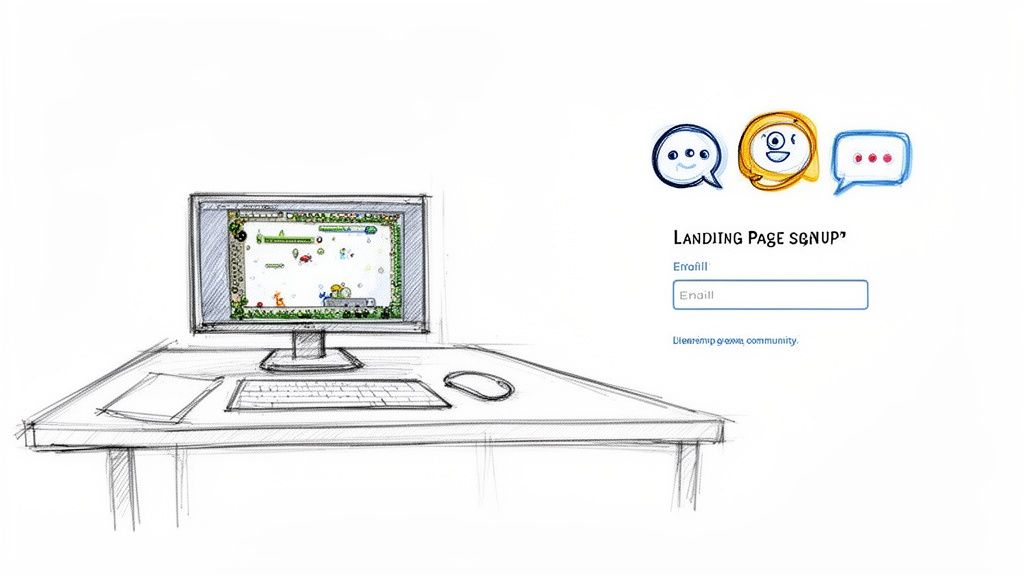
The simplicity here is genius. It funnels all attention directly to the signup form, which is exactly what you want. If you need some help getting started, you can find a comprehensive pre-launch kit to structure your efforts.
One of the most common pitfalls is setting an astronomically high funding goal. Your goal should be the absolute minimum amount you need to make the game and deliver the rewards you promised. Don't forget to factor in platform fees, payment processing, and a healthy contingency buffer (15-20% is a good rule of thumb).
It’s tempting to shoot for a six-figure campaign, but the data tells a different story. Ambition is great, but it needs to be grounded in reality to give your project the best shot at success.
History backs this up. Out of nearly 700 game campaigns that successfully funded on Kickstarter, a staggering 95% of them were asking for less than $100,000. This shows that smaller, well-planned goals are much more likely to succeed. It’s always better to set an achievable goal and smash it with stretch goals than to aim too high and end up with nothing.
Think of your campaign page as your digital storefront. It’s your pitch, your trailer, and your vision all rolled into one. The moment a potential backer lands on your page, the clock starts ticking. You have just a few seconds to hook them and convince them that your game is something special, something worth backing.
This is where all your pre-launch work comes together. A well-designed page can turn a curious browser into a passionate supporter.
It all starts with your video. This isn't just a sizzle reel; it's the heart and soul of your pitch. A great video shows off slick gameplay, introduces the real people behind the project, and tells the story of how your game came to be. It needs to connect emotionally.
For anyone running a game campaign, the video is a non-negotiable powerhouse. The numbers don't lie: campaigns with a video pull in 105% more funding than those without. That stat alone, which you can dig into deeper over at CoinLaw.io’s crowdfunding statistics, shows just how critical top-notch production and compelling storytelling are. In the crowded world of video game crowdfunding, you have to nail the visuals and the narrative.
Once the video gets their attention, the rest of your page has to keep it. The writing needs to be punchy, clear, and dripping with passion. Ditch the technical jargon and get straight to the good stuff. What’s the core fantasy you’re selling? What makes your game an experience they can't get anywhere else?
High-quality GIFs and screenshots are your best friends here. They break up the text and instantly show your game in action, communicating your art style and core mechanics far better than words ever could. People skim, so make your page easy on the eyes.
When you blend evocative writing with dynamic visuals, you create a story that pulls backers right into your world, making them feel like a part of the journey.
Getting your reward tiers right is a mix of art and science. You're building a ladder, and your goal is to make every rung so appealing that backers are tempted to climb as high as they can. Each tier needs to offer a clear, exciting step up in value.
A solid strategy that works time and again is to start with a low-cost digital tier and build up from there.
We’ve seen it across countless campaigns: the sweet spot is often in the $25 to $50 range. It's an accessible price point that usually gets you the base game plus some cool digital extras, making it feel like a fantastic deal.
Let's look at a classic structure for an indie RPG project:
| Tier Price | Tier Name | Core Rewards |
|---|---|---|
| $5 | "Supporter" | A thank-you in the credits and access to backer-only updates. |
| $25 | "Digital Adventurer" | Digital copy of the game (PC/Mac), digital soundtrack, and name in credits. |
| $40 | "Early Bird Special" | Same as Digital Adventurer, but at a limited discount to spark early momentum. |
| $75 | "Collector's Edition" | All digital rewards plus a physical art book and exclusive stickers. |
| $150 | "Legendary Hero" | All previous rewards plus a signed poster and a physical collector's box. |
See how that works? The value progression is crystal clear. The "Early Bird" tier creates a sense of urgency right out of the gate, while physical tiers like the "Collector's Edition" give your most die-hard fans something tangible to cherish. A well-planned tier structure doesn't just fund your game—it gives your community a meaningful way to show their support.
Alright, you hit the launch button. Deep breath. Now the real fun begins. This intense 30-to-60-day period is when all that pre-launch work you did pays off. The absolute number one goal for day one is to get that audience you built to pledge, and pledge fast. You need a massive initial surge to signal to the platform’s algorithm—and to curious onlookers—that your game is a big deal.
This launch day blitz has to be a coordinated strike. The second you go live, that email to your waiting list needs to go out. You need to be rallying the troops in your Discord, and your friendly press and influencer contacts should be ready to hit "publish." Those first 48 hours are everything. A strong start can get you featured as a "Project We Love" on Kickstarter or trending in the games category, which creates a powerful snowball effect.
In crowdfunding, communication is currency. Backers aren't just buying a game; they're buying into your vision and trusting you to deliver. This means you need to be present. Responding quickly to comments and posting regular updates—think two to three times a week—is non-negotiable. It keeps the energy high and reassures backers they made the right choice.
This is your direct line to the people funding your dream. Use your updates to show off behind-the-scenes content, answer common questions in a dedicated FAQ post, or reveal a juicy new gameplay detail. Every single interaction is a chance to make them feel good about their pledge and nudge them to share the campaign with their friends.
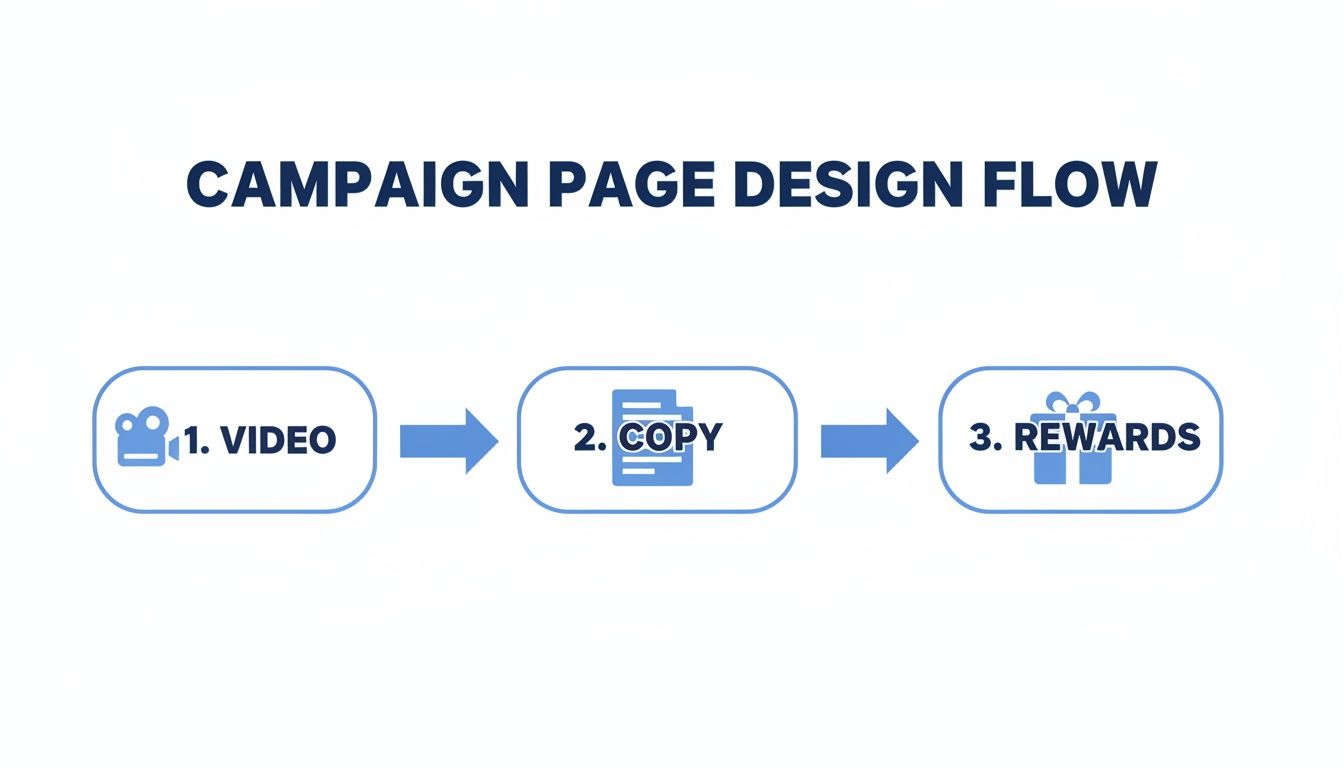
The campaign page is your home base. As you get feedback during the live campaign, don't be afraid to tweak your copy or clarify reward details. A static page is a dead page.
It happens to almost every campaign: the "dead zone." After the initial excitement, pledges slow to a trickle in the middle weeks. It’s a completely natural rhythm, but you can’t just let it happen. This is exactly when you pull out your secret weapon: stretch goals. But don't just dump them all on the page at launch. Announce them one at a time as you get close to hitting each new funding milestone.
Stretch goals should feel like an event. They're not just more stuff; they're exciting reveals that get your existing backers hyped all over again and give new people a fresh reason to pledge.
Good stretch goals often fall into a few buckets:
This strategy turns that quiet middle period into a series of mini-celebrations. It helps to think like a scrappy startup here. Tactics discussed in guides like What is Growth Hacking? can give you some creative ways to re-engage your community and drive that much-needed organic sharing.
There's nothing more powerful than someone seeing your game being played by a streamer they trust. A polished, playable demo is your golden ticket. Start reaching out to YouTubers and Twitch streamers who cover your game's genre and offer them early access. One good stream from a popular creator can cause an immediate, massive spike in pledges.
Don't just chase the big names, though. Smaller, niche creators often have incredibly dedicated and trusting communities. Their endorsement can be just as valuable, if not more so. Make it easy for them by sending over a simple press kit with key art, GIFs, and a few talking points about what makes your game special.
Managing a live campaign is all about keeping that drumbeat of activity going. You need to be constantly finding new ways to stay visible and give people a reason to be excited from day one until that final, frantic countdown.
You’ve done it. The campaign is funded, the confetti has settled, and you’re looking at a list of hundreds—maybe thousands—of backers who believe in your vision. This is a huge milestone in your video game crowdfunding journey, but in many ways, the real work is just starting.
Now comes the hard part: managing all those pledges. The default survey tools on platforms like Kickstarter often fall short. This is where a dedicated pledge manager becomes your most valuable post-campaign tool. Think of it as the command center for your entire fulfillment operation, handling the messy stuff a basic survey can't, like collecting detailed shipping info, calculating accurate shipping fees, and dealing with regional taxes like VAT. Trust me, without one, you're staring down the barrel of a logistical nightmare of spreadsheets and manual data entry.
When it comes to picking a pledge manager, you generally have two paths: using the native system provided by the crowdfunding platform itself, or partnering with a specialized third-party service. To make sense of this, a helpful way to think about it is comparing Amazon and Shopify.
Kickstarter's built-in pledge manager is a lot like Amazon. It’s a straightforward, one-size-fits-all marketplace. It gets the basic job done—collecting an address, maybe a t-shirt size—and that’s about it. While it's simple and familiar, you get very little control. You’re stuck in their rigid system, which severely limits your ability to create a custom experience for your backers or, more importantly, to grow your revenue after the campaign clock runs out.
A dedicated tool like PledgeBox, on the other hand, is like having your own Shopify store. It hands you the keys to a post-campaign e-commerce operation. You get complete control to build a branded, professional experience that feels like a natural continuation of the journey for your backers. And that level of control is where the real magic happens.
The single biggest advantage of a Shopify-style pledge manager is the power to offer upsells and add-ons. This is an absolute game-changer. After the campaign ends, backers can use the pledge manager to upgrade their pledge tier, add that digital art book they skipped earlier, or grab an extra copy of the game for a friend.
This feature alone can boost your total funds raised by 5-20%, turning what was once just a survey tool into a serious revenue stream.
This is money you simply can't capture with a basic, Amazon-like system. Imagine a backer pledged for a standard digital copy. In a pledge manager, you can present them with a slick offer to upgrade to the Deluxe Edition for just a few dollars more, or to add the soundtrack to their order. It's a chance to give your biggest fans more of what they want while adding crucial funds to your development budget. You can learn more by exploring how to select the right pledge manager for your specific needs.
The ability to offer post-campaign add-ons isn't just a nice-to-have; it’s a core part of modern crowdfunding strategy. It transforms fulfillment from a cost center into a profit center, providing a vital financial cushion for the long development road ahead.
One of the biggest hesitations creators have is adding another expense right after a grueling campaign. This is where the pricing model becomes critical. Many pledge managers charge setup fees or per-backer fees, which can eat into your hard-earned funds before you even get started.
Thankfully, some tools offer a much smarter, performance-based model. For example, PledgeBox is free to send the backer survey. This means you can manage all your backers, collect shipping addresses, and organize your data without any upfront cost.
The platform only charges a small 3% fee on new funds raised from upsells, if there's any. This is a powerful, risk-free proposition. The service essentially pays for itself with the extra revenue it generates. You get all the organizational perks for free and only share a small slice of the new money you make. It’s an approach that aligns perfectly with the goals of an indie developer, ensuring every dollar possible goes directly into making the best game you can.
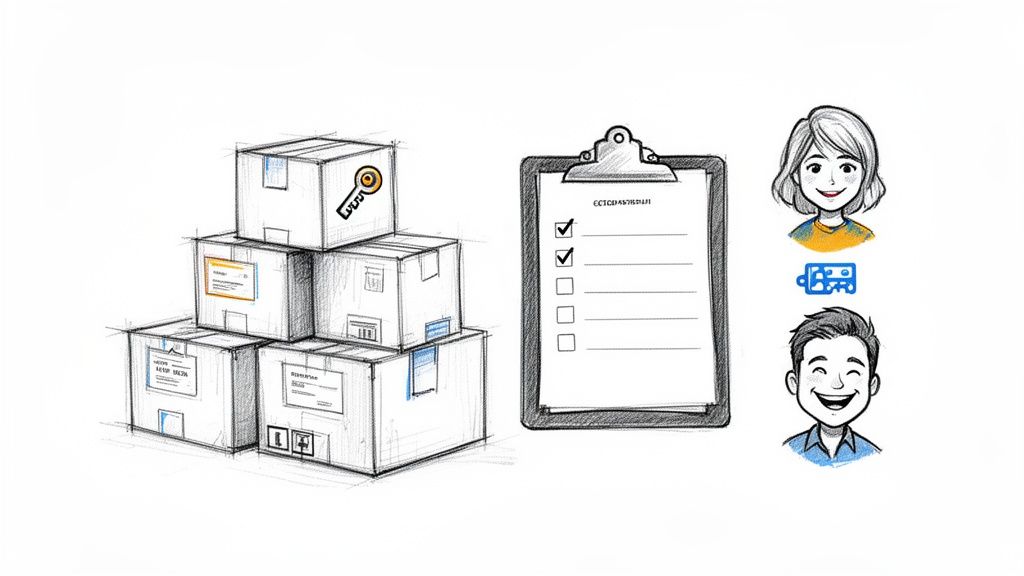
The campaign clock has hit zero, your funding goal is in the rearview mirror, and the confetti has settled. Now for the real test. This next phase—fulfillment—is where you deliver on every single promise and turn a great video game crowdfunding campaign into a legendary one.
Getting this wrong is one of the fastest ways to burn the trust you've spent months building.
Trying to manage hundreds or thousands of backers, each with different pledges, addresses, and add-ons, is a recipe for disaster if you're just using spreadsheets. This is exactly why a dedicated pledge manager is non-negotiable. Instead of wrestling with messy data, a tool like PledgeBox helps you accurately charge for shipping, handle complex international taxes, and give backers a painless way to finalize their orders. It turns a logistical nightmare into a smooth, professional operation.
But a good pledge manager does more than just organize data. It's also a powerful tool for generating revenue after the campaign ends. You can let backers upgrade their digital copy, grab that physical art book they were on the fence about, or buy extra game keys for friends—all from a simple, intuitive interface.
Let's think about it this way. Using the basic survey tool built into a platform like Kickstarter is like using Amazon. It’s a massive, one-size-fits-all marketplace that handles the basics—it'll collect an address and maybe confirm a t-shirt size. It’s functional but rigid, giving you almost zero control over the experience or the chance to increase your funding total.
A dedicated pledge manager like PledgeBox, on the other hand, is like having your own Shopify store. You get full control to create a branded, customized experience for your backers. You can design easy-to-navigate surveys, showcase tempting add-ons, and manage your community's data with total precision. That control is the difference between simply fulfilling orders and boosting your revenue.
To see the difference in action, here’s a quick breakdown of what you get with a basic platform tool versus a dedicated pledge manager.
| Feature | Basic Platform Manager (e.g., Kickstarter) | Advanced Pledge Manager (e.g., PledgeBox) |
|---|---|---|
| Backer Surveys | Simple, one-time survey | Customizable, multi-step surveys |
| Upsells & Add-ons | Not available | Built-in storefront to sell more items post-campaign |
| Shipping & Tax Calculation | Manual calculation required | Automated, region-specific calculations |
| Pledge Adjustments | Limited or no ability to change pledges | Backers can upgrade tiers and add funds |
| Data Management | Basic data export (CSV) | Advanced filtering, segmentation, and direct fulfillment partner integrations |
| Customer Support | Platform-level support only | Dedicated creator support and backer-facing helpdesk |
The takeaway is pretty clear: while a basic manager gets the job done, a dedicated tool is built to make your life easier and your campaign more profitable.
So, what about the cost? Most creators are (rightfully) worried about adding another expense right after their campaign. This is where PledgeBox's model really shines, as it's designed to align perfectly with your goals.
PledgeBox is free to send the backer survey. That means you can collect addresses, let backers confirm their pledges, and organize all your critical data without any upfront cost.
The platform only charges a small 3% fee on new funds raised through upsells, if there's any. This is a powerful, totally risk-free approach. The service literally pays for itself with the extra money it helps you bring in. You get the full suite of organizational tools for free and only share a tiny slice of the new revenue you earn.
This model transforms your pledge manager from a simple operational cost into a self-funding profit center. It provides a crucial financial buffer while ensuring you have the best tools to keep your backers happy.
A solid fulfillment plan needs to cover both your digital and physical rewards. For a video game, that means having a system for everything from sending Steam keys to shipping collector's editions.
By planning your fulfillment strategy from the start and choosing the right tools, you can end your campaign on a massive high note. Delivering rewards on time and communicating clearly throughout the process will turn your backers into a loyal fanbase, ready and waiting for your next project.
Running a video game crowdfunding campaign is a wild ride, and you’re bound to have a ton of questions. We’ve been there. Here are some of the most common ones we see, with straight-to-the-point answers to help you navigate the journey.
There's no magic number, as costs can swing wildly depending on your game's ambition. But some expenses are pretty much non-negotiable. You'll need a budget for a killer campaign video, marketing and ad spend to get eyeballs on your page, and maybe even a polished, playable demo to really hook potential backers.
Then you've got the platform fees. Expect to give Kickstarter or Indiegogo around 5% of what you raise, plus another 3-5% for payment processing. On top of all that, you have to budget for actually making and shipping every single physical reward. A pledge manager is another line item, but some tools have a much smarter approach.
For example, PledgeBox is free to send the backer survey. This lets you manage your community and gather all the info you need without any upfront fees. They only charge a 3% fee on new funds raised from post-campaign upsells, if there's any, which means the service can easily pay for itself.
Think of a pledge manager as your post-campaign command center. It’s a specialized tool that helps you manage backer info, collect shipping fees, and get your rewards out the door. While Kickstarter has a built-in survey, it’s incredibly basic and just wasn't designed for the complex needs of a modern game project. Trust me, a dedicated tool is essential.
Here’s an easy way to think about it: Kickstarter's survey is like Amazon's checkout—simple and one-size-fits-all. A dedicated tool like PledgeBox is more like Shopify; it gives you a powerful backend to run a full-blown post-campaign store. This lets you collect detailed shipping info, charge the right taxes, and—most importantly—offer upsells and add-ons. Letting backers pile on more goodies after the campaign can seriously boost your total funding and makes fulfillment a thousand times more organized.
Your funding goal should be the absolute bare minimum you need to deliver on your promises—after all fees and costs are paid. Start by building a detailed budget. It should cover every development milestone, reward production, global shipping, marketing, and a contingency fund of at least 15%. Something always goes wrong, so plan for it.
Do your homework and look at similar, successful campaigns in your genre. This is your reality check. The data doesn't lie: 95% of successful game campaigns on Kickstarter asked for less than $100,000. It is always better to set an achievable goal you know you can smash—and then use stretch goals to fund all the cool extra features—than to aim for the moon and risk failing to fund at all.
Start early. I'm talking 6 to 12 months before you even think about hitting that launch button. Building an engaged, excited community is the single biggest predictor of a successful launch day.
Here’s what you absolutely must do:
Ready to make your post-campaign process smooth and actually raise more money with upsells? PledgeBox offers a powerful, risk-free pledge manager designed to make fulfillment easy. Get started for free and see how it works.
PledgeBox
The All-in-One Toolkit to Launch, Manage & Scale Your Kickstarter / Indiegogo Campaign