 PledgeBox
How to Get Brand Awareness for Your Crowdfunding Campaign
Learn how to get brand awareness for your Kickstarter or Indiegogo campaign. Discover practical tactics for pre-launch, launch, and post-campaign success.
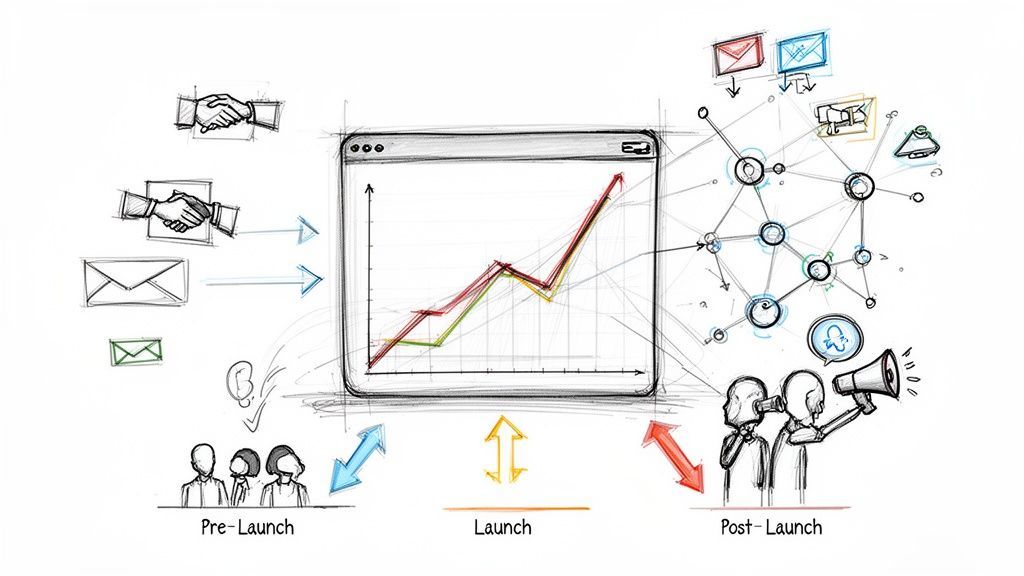
Learn how to get brand awareness for your Kickstarter or Indiegogo campaign. Discover practical tactics for pre-launch, launch, and post-campaign success.
Getting people excited about your crowdfunding campaign means creating a strong, consistent identity before you even think about launching. The real work happens early on as you define your message, build an audience with pre-launch pages, and then hit the ground running with social media, PR, and influencers to create unstoppable momentum.
True brand awareness isn’t something you just tack on once your campaign is live—it's the foundation you lay for months in advance. This early stage is all about creating a magnetic and consistent identity that draws people in, making them feel like they're part of something special before they've even pledged a single dollar. This is where you nail down your brand’s core message, visual style, and the unique value you're offering backers.
Your goal is to make your project instantly recognizable and trustworthy. When someone stumbles across your logo, color scheme, or even just your project's name, you want them to immediately know it's you and feel a sense of familiarity. This consistency isn't just about looking professional; it directly impacts how people remember you when it's time to pledge.
Before designing a single graphic, you need to answer a fundamental question: What does your brand actually stand for? This goes deeper than the product you're making; it's about the story, the mission, and the community you’re hoping to build.
As you start this journey, it’s crucial to know how to build brand awareness that lasts, which sets you up for success long after the campaign ends.
This quick timeline shows the essential steps for establishing your brand's foundation long before you launch.
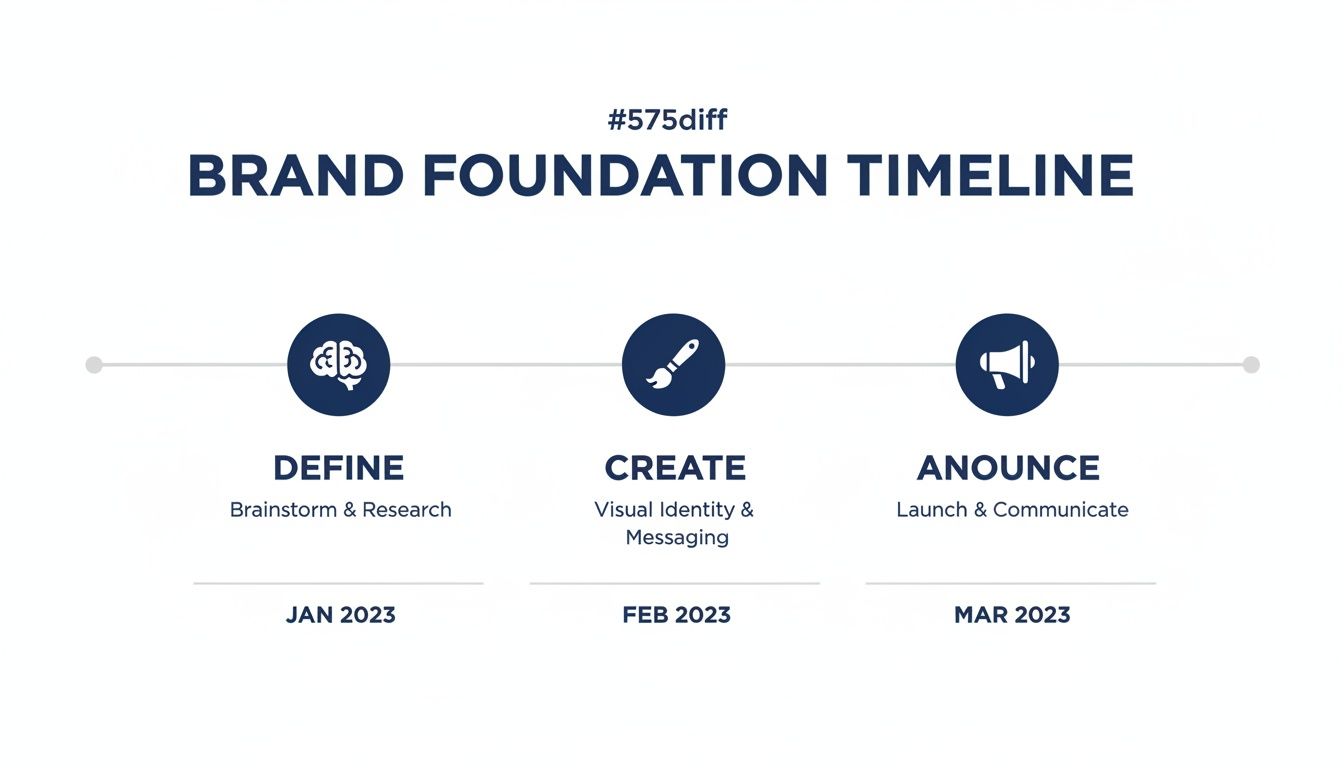
As you can see, defining your brand’s purpose is the critical first step before you ever get into the creative or promotional phases.
To make sure you've covered all your bases, here's a simple checklist to run through before you start actively promoting your campaign.
| Checklist Item | Actionable Tip | Why It Matters for Awareness |
|---|---|---|
| Finalize Core Message | Write a one-sentence mission statement. Can you explain your "why" in 10 seconds? | A clear message is memorable and shareable, making it easier for early followers to spread the word. |
| Lock in Visual Identity | Create a simple brand guide with your logo, color codes (HEX), and primary/secondary fonts. | Visual consistency makes your project look professional and builds instant recognition across all platforms. |
| Establish Brand Voice | Write 3-5 adjectives describing your brand's personality (e.g., "playful," "authoritative," "minimalist"). | A consistent voice builds a relationship with your audience, making them feel connected to your mission. |
| Secure Social Handles | Claim your brand name on all relevant social media platforms, even if you don't plan to use them all immediately. | This prevents others from grabbing your name and ensures your audience can find you wherever they look. |
| Create Key Assets | Design a few core templates for social media posts, email headers, and ad creative using your brand guide. | Having ready-to-go assets ensures everything you publish looks cohesive and reinforces your brand identity from day one. |
Following this checklist ensures your brand presents a united, professional front, which is key to building trust and excitement before you ask for a single pledge.
Once you’ve defined your brand identity, you have to apply it everywhere. Consistency is the engine of brand recall. In fact, research shows that consistent branding across all platforms can boost brand recall by up to 33%. This means the brands that maintain a uniform visual identity on their pre-launch page, emails, social media, and even post-campaign surveys have a massive advantage.
A tabletop game creator using a tool like PledgeBox’s pre-launch page builder isn't just collecting emails; they're teaching early adopters what their brand stands for. This creates an unforgettable first impression that sets the stage for a powerful launch.
Think about the tools you're using. The standard Kickstarter pledge manager can feel a bit like Amazon—functional but totally generic. A customizable tool like PledgeBox, on the other hand, is more like Shopify, giving you complete control over the brand experience from start to finish.
What's more, PledgeBox is free to send the backer survey and only charges 3% of upsell if there's any, making it a risk-free way to keep your brand's look and feel intact even after the campaign ends. If you're looking for more guidance, check out our guide on https://www.pledgebox.com/post/how-to-build-a-list-of-potential-backers-before-your-kickstarter-campaign-launches. This pre-launch work is what separates a forgettable project from one that builds a truly loyal community.
Once your campaign goes live, the strategy shifts. All that pre-launch work built your foundation, but now it's about creating relentless momentum. This is the amplification phase, where you need a multi-channel attack to drive a steady stream of backers and make your project feel like an unmissable event.
Your pre-launch efforts gave you a warm, engaged audience, but to really succeed, you have to reach far beyond that core group. The goal is a synchronized marketing push that keeps your campaign top-of-mind and builds unstoppable energy, from day one right through the final countdown.
During a live campaign, your social media can't just be about posting updates. It has to be about creating content that people feel an urge to share. Think strong visuals, celebrating backer milestones, and behind-the-scenes content that makes your community feel like they're part of the inner circle.
For example, a board game creator might share a time-lapse video of a game night or run a "backer of the day" spotlight. These small gestures build community and can generate huge organic reach. Pair this with targeted ad campaigns on platforms like Facebook and Instagram to find lookalike audiences—people who share traits with your existing backers but just haven't found you yet.
Don't just hit "boost post" and hope for the best. Create specific ad campaigns with clear goals, like driving traffic directly to your Kickstarter page or showcasing a particularly compelling reward tier. It’s about precision, not just volume.
This two-pronged attack ensures you're nurturing your current community while actively hunting for new supporters. You can learn more about establishing a strong brand presence through a multi-channel approach.
Video is, without a doubt, the most powerful tool you have for building brand awareness when your campaign is live. It’s the closest you can get to putting your product directly into a potential backer's hands. Short, punchy demo videos, backer testimonials, or quick clips explaining a unique feature can make all the difference.
A HubSpot survey found that 72% of consumers prefer to learn about products through video, which makes it an essential tactic. This is especially true in crowdfunding. Industry benchmarks show that Indiegogo campaigns with product demo videos get 3x more shares. For hardware or board game projects, this might mean creating short videos you can also use in your post-campaign PledgeBox surveys for upsells, potentially boosting your add-on revenue by 15-20%.
Your video strategy should include a mix of formats:
While your own social media and ads are critical, nothing beats the credibility boost of third-party validation from media outlets and influencers. The key here is targeted, personalized outreach—not just blasting out a generic email to a massive list.
Start by sorting your contacts into tiers:
When you reach out, make their job as easy as possible. Your email should be short and sweet, with a link to a digital press kit that includes high-res images, your main campaign video, and a quick, compelling summary of your project's story. Remember, they get hundreds of pitches. Yours needs to stand out by showing you've actually done your homework and understand their audience. A single successful placement can send a wave of new pledges your way and seriously broaden your brand's reach overnight.
Trying to build brand awareness all by yourself is a grind. The smartest campaigns I've seen get a massive boost by tapping into existing, passionate communities through strategic partnerships. It’s all about borrowing credibility and getting in front of audiences who are already wired to love what you've built.
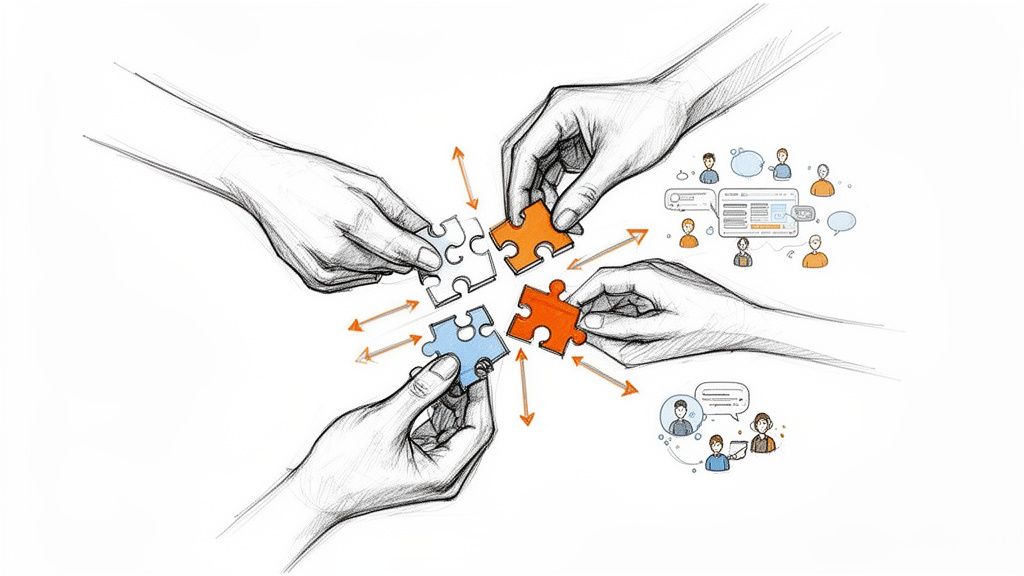
This isn't just about paying for a quick shout-out. We're talking about building real relationships that help both you and your partners. From cross-promotions with fellow creators to affiliate programs that give others a real reason to spread the word, collaborations can be a serious engine for your campaign.
First things first: you have to find the right collaborators. A huge following means nothing if the audience doesn't align with your ideal backer. A bad fit means your message, no matter how great, will just be noise.
Start looking for partners in these hotspots:
Once you’ve got a list, your outreach needs to be personal. Generic, copy-and-paste emails are a one-way ticket to the trash folder. Show them you've actually looked at their work, explain why a partnership makes sense for their audience, and make it ridiculously easy for them to say yes.
A solid partnership is built on clear expectations. You need to spell out exactly what you're asking for and what's in it for them. Don't be afraid to get creative here.
A simple cross-promotion could be as easy as shouting out each other's campaigns in a backer update or social media post. For a deeper collaboration, you could create a special bundled reward tier that includes both of your products—an exclusive deal that gets both communities excited. Affiliate programs are another fantastic route, offering partners a cut of the pledges they bring in, which gives them a powerful incentive to promote you hard.
The secret to a great partnership is making it a win-win. Always frame your pitch around what they get out of it—whether that's access to your audience, a cool new product for their followers, or a financial kickback. A one-sided ask is a recipe for getting ignored.
When these collaborations click, they create a powerful loop of excitement and social proof that can dramatically expand your project's reach. It’s a key part of figuring out how to get brand awareness in a way that feels genuine and trustworthy.
Beyond one-on-one partnerships, you can tap into the energy of existing communities on platforms like Reddit, Discord, and niche forums. The golden rule here? Be a member first, marketer second. No one likes the person who just drops a link and vanishes.
Get involved in these communities long before you even think about launching. Answer questions, give advice, and just share your passion. When you eventually talk about your project, you'll be seen as a valued member, not a spammer. Share your journey, ask for feedback on your prototypes, and treat the community like an expert focus group. This doesn't just build awareness—it turns strangers into true advocates who champion your project because they feel connected to its success.
So, you hit your funding goal. Pop the champagne, celebrate with your team, and take a deep breath. But don't think for a second that this is the finish line. In reality, the starting pistol for the next critical race has just fired—the race to build a lasting brand.
The real secret to building brand awareness that sticks is what you do after the funding clock runs out. This is your golden opportunity to turn those one-time backers into genuine, lifelong advocates who will shout about your brand from the rooftops for years to come.
This post-campaign phase is all about nurturing the community you've just spent months building. It means keeping them in the loop with transparent updates and, just as importantly, using the pledge manager experience as another chance to reinforce your brand. It’s these details that make all the difference in how people remember you.
Let's be clear: your backers are now emotionally and financially invested in your journey. That's a powerful connection. Don't let it fizzle out. The key is consistent, honest communication that makes them feel like insiders, not just customers.
This steady stream of contact keeps your brand top-of-mind and builds on the positive vibe from the campaign. It's what makes backers excited to support your next project before you've even announced it.
Think about it—the survey you send out is often the last direct, mass communication you'll have with your entire backer community. Too many creators treat this as a boring logistical step, but it's a massive branding opportunity. The tool you choose here has a huge impact on the final impression you leave.
The standard Kickstarter pledge manager is a bit like getting a package from Amazon. It works, it’s efficient, but it’s completely generic. It does nothing to reinforce your unique brand identity. The whole time, it feels like you're dealing with Kickstarter, not the cool creator you just backed.
On the other hand, a platform like PledgeBox offers a more 'Shopify-like' experience. It puts you in the driver's seat, letting you create a seamless, branded environment that feels like a natural extension of your campaign page, not some clunky, third-party form.
This isn't just a minor detail; it's fundamental to keeping your brand's momentum going. You want your backers to feel like they are still interacting with your brand, not just ticking boxes on a spreadsheet.
When you use a pledge manager you can customize, you get to inject your brand's personality into every corner of the fulfillment process. This makes the entire experience feel polished, professional, and cohesive.
You can deck out your backer surveys with your logo, brand colors, and the same voice you used throughout the campaign. This small touch goes a long way, reassuring backers they're in the right place and that their pledge is being handled by a team that sweats the details. It's your last best chance to thank them again in your own voice while smoothly guiding them through confirming rewards, grabbing add-ons, and finalizing their shipping info.
And here’s the best part: this powerful branding move doesn't have to break the bank. With PledgeBox, it is completely free to send your branded backer survey. The platform only charges a small 3% fee of upsell if there's any. This makes it a no-brainer, risk-free way to continue the conversation with your community, deliver a superior backer experience, and even boost your funding total after the campaign is over. For any creator serious about building brand awareness that lasts, this isn't just a nice-to-have—it's essential.
There's an old saying in business: "If you can't measure it, you can't improve it." Pouring your heart and soul into building brand awareness is only half the battle. The other half is figuring out what’s actually working without shelling out for enterprise-level analytics. Luckily, you don’t need a massive budget to get a clear picture of your brand's health and reach.
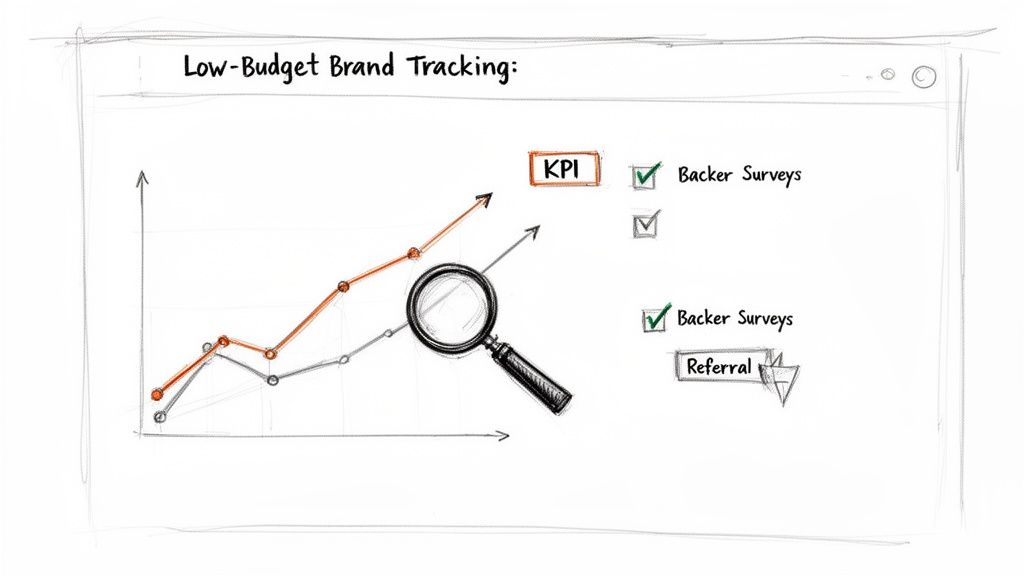
It's time to move beyond vanity metrics like follower counts. Instead, let's focus on actionable KPIs that tell the real story of your brand’s reach and how people perceive it. This means digging into social media mentions, seeing how people land on your pre-launch page, and using backer surveys to get feedback straight from the source.
One of the most direct ways to see if your brand is making waves is to listen to what people are saying about you online. This isn't just about tracking likes on your own posts; it's about tuning into the broader conversation.
A great metric to watch is your "share of voice." It sounds complicated, but it's simple: how often is your brand being talked about compared to your direct competitors? Track their mentions alongside yours to see if you're starting to own more of the conversation in your niche.
For a deeper dive, it's worth learning about the crucial metrics to evaluate for a crowdfunding campaign to get a complete picture of your performance.
To make this easier, here’s a quick breakdown of the metrics that matter most for crowdfunders.
| Metric | How to Track It | What It Tells You |
|---|---|---|
| Direct Traffic | Google Analytics (Acquisition > Source/Medium) | People are typing your URL directly. They know your brand by name. |
| Referral Traffic | Google Analytics (Acquisition > Source/Medium) | Shows which blogs, influencers, or communities are sending people your way. |
| Social Mentions | Google Alerts, X/Reddit search | Measures organic conversation and "buzz" around your project. |
| Engagement Rate | (Likes + Comments + Shares) / Followers | Shows how well your content resonates with your audience, not just its reach. |
| Survey Responses | Post-campaign backer surveys (PledgeBox, etc.) | Direct feedback on which marketing channels brought backers to you. |
These KPIs give you a real, tangible sense of whether your efforts are paying off, helping you focus your energy where it counts.
Your pre-launch page and campaign site are goldmines of data. Google Analytics is a free and incredibly powerful tool that shows you exactly how people are discovering your brand.
Jump into the Acquisition > All Traffic > Source/Medium report. This is where the magic happens. Are you seeing a steady increase in Direct traffic? That's a classic sign of strong brand recall—people are seeking you out specifically. At the same time, keep an eye on Referral traffic to see which blogs, forums, or influencers are driving the most valuable visitors.
Finally, don't forget the simplest method of all: just ask. Your post-campaign backer survey is the perfect moment to gather direct, qualitative feedback on your brand awareness.
The way you handle this process also says a lot about your brand. While the default Kickstarter survey gets the job done, it can feel impersonal, almost like an Amazon checkout. A customizable platform like PledgeBox offers a more polished, "Shopify-like" experience that keeps your branding front and center.
Here's the best part: PledgeBox is free to send the backer survey and only charges 3% of upsell if there's any. It's a risk-free way to improve your backer experience. You can add a simple question like, "How did you first hear about our campaign?" to your survey. The answers are pure gold, giving you direct insight into which marketing channels are actually converting. That's the kind of data that helps you nail your next launch.
Navigating the world of crowdfunding can bring up a lot of questions. This is especially true when you're trying to build brand awareness that actually turns into pledges and, eventually, a loyal community. Here are some of the most common questions we hear from creators, along with our best advice to help you get it right.
While there's no single magic number, a good rule of thumb is to set aside 10-20% of your total funding goal for pre-launch marketing. So, if your campaign goal is $50,000, you should be looking at a budget between $5,000 and $10,000. This investment is crucial for building a solid foundation of eager backers before your campaign even goes live.
You don't have to spend a fortune to see results. You can start lean by focusing your budget on a few high-impact activities. Prioritize things like targeted social media ads designed specifically to capture email sign-ups or producing one great video you can use everywhere. Remember, some of the most effective tactics—like authentic community engagement and organic social media—cost more in time than in money.
For a new board game, nothing beats a powerful combination of high-quality video content and genuine community engagement. When done right, these two things work together to show off your game professionally while building real, grassroots excitement from the people who will become your biggest fans.
First, create a compelling gameplay trailer or a super-clear how-to-play video. Get that content in front of trusted board game reviewers and influencers who can give your game a credible stamp of approval. At the same time, become an active member of online communities like BoardGameGeek (BGG) and relevant subreddits. The key is not to just spam your link—share your design process, ask for feedback, and actually build relationships.
Don't overlook your pledge manager—it’s one of the most important brand touchpoints you have after your campaign is successfully funded. Instead of sending a generic survey that feels totally disconnected from your project, a platform like PledgeBox lets you customize the entire experience, creating a seamless and professional final impression for your backers.
Think of it as the difference between Shopify and Amazon. Kickstarter's native pledge manager is functional but impersonal, like buying from a massive marketplace. In contrast, PledgeBox gives you 'Shopify-like' control to fully brand your surveys with your own logo, colors, and messaging. You can reinforce your brand story right in the survey introduction and use branded imagery for all your add-ons.
This approach makes backers feel like they are still inside your unique world, not just filling out a boring form. It’s a powerful final touchpoint that builds lasting loyalty and reinforces the value you've worked so hard to create.
Best of all, this is a completely risk-free way to elevate your brand. PledgeBox is free to send the backer survey and only charges a small 3% fee of upsell if there's any. It’s a smart, cost-effective tool to extend your brand experience and make every backer feel truly connected to your journey.
Ready to create a seamless, branded post-campaign experience for your backers? With PledgeBox, you can build stunning, customized surveys, manage pledges effortlessly, and boost your funding with high-converting upsells. Learn more and get started for free at PledgeBox.com.
PledgeBox
The All-in-One Toolkit to Launch, Manage & Scale Your Kickstarter / Indiegogo Campaign