 PledgeBox
top funded kickstarter: 7 places to find great campaigns
top funded kickstarter: discover 7 trusted platforms to find promising campaigns and learn how creators sustain momentum after funding.

top funded kickstarter: discover 7 trusted platforms to find promising campaigns and learn how creators sustain momentum after funding.
Kickstarter has revolutionized how innovative products come to life, with some campaigns raising millions and captivating global audiences. But what happens after the countdown timer hits zero? The journey for a top funded Kickstarter project is far from over. From post-campaign sales to managing tens of thousands of backers, the real work often begins after the funding goal is met. Success at this scale requires a specific set of tools and platforms to handle complex fulfillment, late pledges, and continued sales.
This roundup dives into the 7 key platforms where you can find, track, and even purchase these record-breaking products long after their initial campaigns have ended. We'll explore the ecosystem that supports crowdfunding's biggest hits, from pre-order stores to specialized marketplaces.
We'll also explore the critical tools creators use to manage this success. For instance, we'll highlight the differences between various pledge managers, comparing options like Kickstarter’s native pledge manager, which acts like an Amazon-style marketplace, to a service like PledgeBox, which provides creators with a more customizable, Shopify-like store. PledgeBox is free to send the backer survey and only charges a 3% fee on upsells if there are any. Each entry in our list includes screenshots and direct links to help you navigate the post-campaign world.
The best place to find the top funded Kickstarter projects is, unsurprisingly, Kickstarter itself. As the original and largest crowdfunding platform, it's the primary source for tracking record-breaking campaigns, discovering emerging trends, and backing new products directly from creators. Its robust discovery tools are essential for anyone studying successful campaigns or looking for the next big thing.
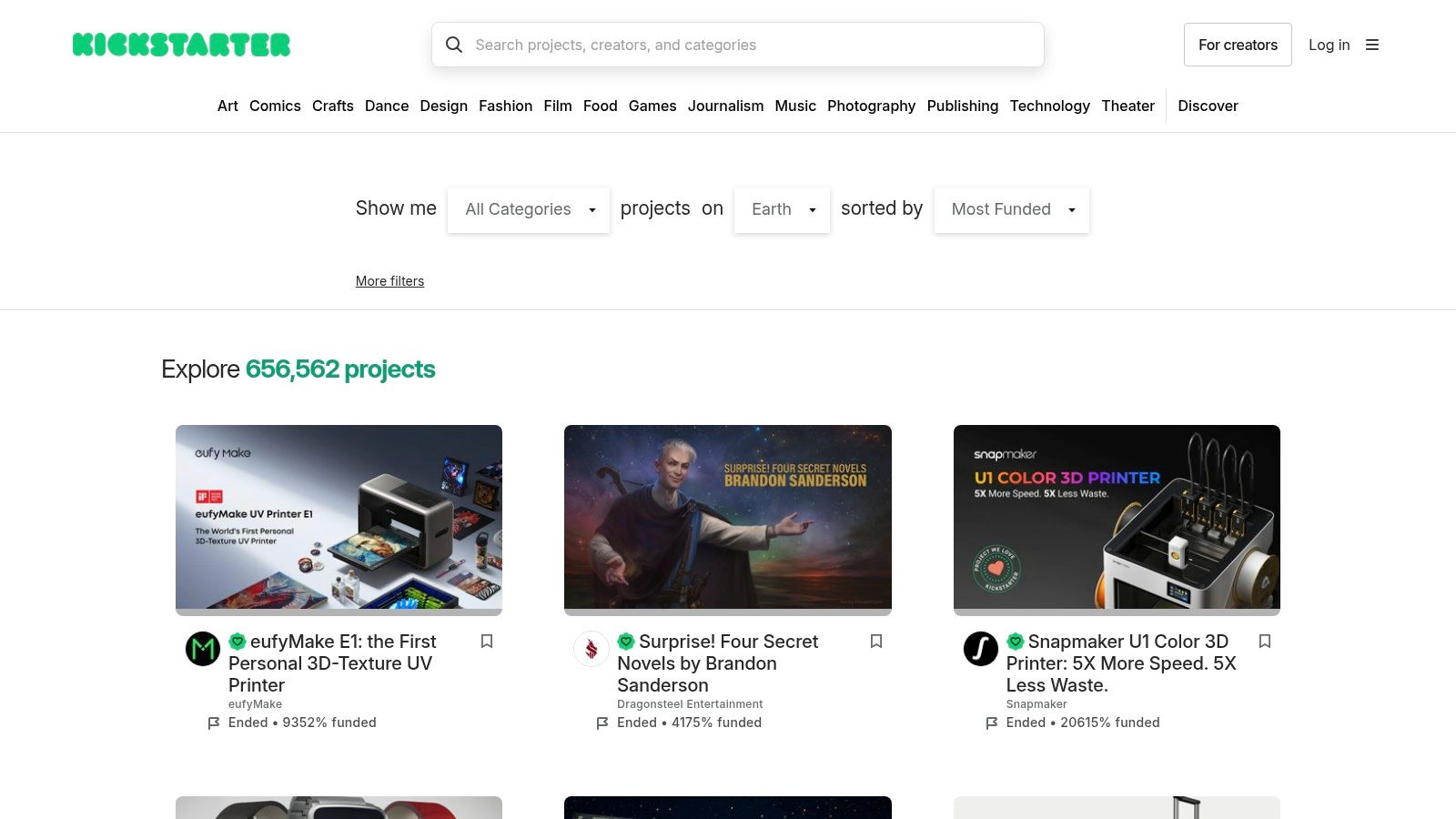
Kickstarter's interface allows users to filter projects by the "most funded" category, instantly surfacing a ranked list of all-time leaders. Each project page is a treasure trove of data, transparently displaying total funds raised, backer counts, funding timelines, and detailed creator histories. This direct access to campaign metrics provides unparalleled insight into what makes a project successful.
What makes Kickstarter the definitive source is its sheer volume of data and direct creator access. You can analyze everything from reward tier structures to stretch goal strategies and read through thousands of backer comments to gauge public sentiment.
Actionable Tip: Use Kickstarter's "most funded" filter not just to see the winners, but to dissect why they won. Analyze their launch timing, the structure of their Early Bird tiers, and how they used updates to maintain momentum. This is free, high-value market research. For a deeper dive into the platform's mechanics, you can learn more about how Kickstarter works.
While Kickstarter's pledge manager is like Amazon for crowdfunding where the campaign happens, creators often need a Shopify-like solution for post-campaign management. This is where tools like PledgeBox become essential, offering a free survey tool and charging only a 3% fee on funds raised from upsells to manage backers and fulfillment efficiently.
Website: https://www.kickstarter.com/discover/advanced?sort=most_funded
After a campaign ends, many of the top funded Kickstarter projects continue to raise funds through "late pledges" or preorder stores. BackerKit is a primary hub for these post-campaign sales, providing a centralized directory where consumers can discover and purchase products from successfully funded projects that are now in production. It acts as an e-commerce extension for campaigns that have already proven their market demand.
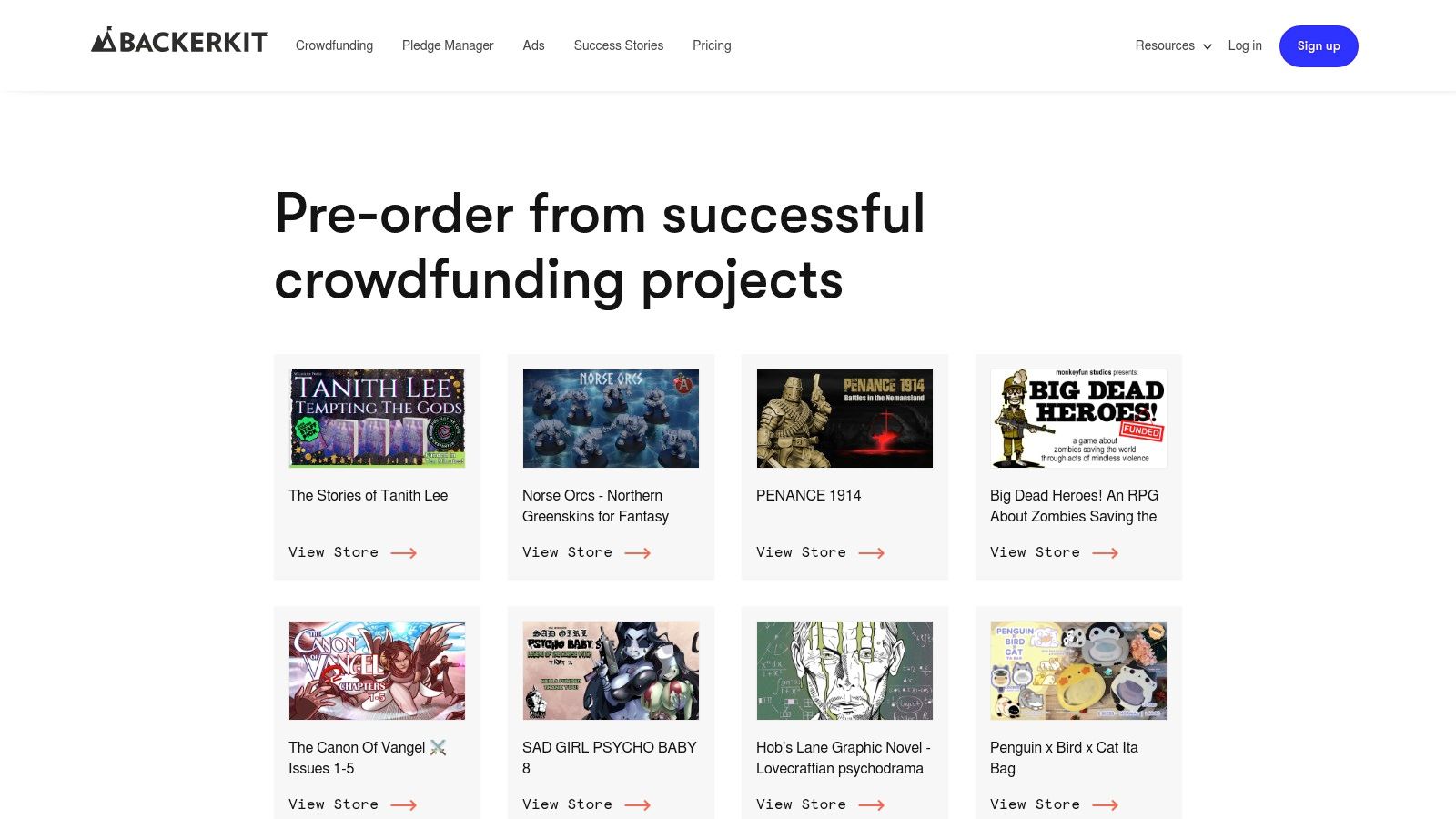
Unlike browsing Kickstarter's live campaigns, BackerKit's preorder marketplace feels more like a traditional online store. It offers a cleaner, cart-based checkout process for products that have already been validated by the crowdfunding community. This platform is invaluable for creators who want to capture sales from customers who missed the original campaign window and for backers looking for a second chance to support a popular project.
BackerKit’s strength lies in its function as a bridge between a successful Kickstarter campaign and full retail launch. It gives creators a powerful tool to manage both original backers and new preorder customers in one unified system, streamlining fulfillment and communication.
Actionable Tip: When browsing BackerKit, pay close attention to the estimated delivery dates. Since these are preorders for products still in production, shipping can be months away. Use it to snag a spot for a high-demand product before it hits mass retail, often at a better price. For creators evaluating post-campaign tools, you can explore a detailed comparison of PledgeBox vs. BackerKit.
While Kickstarter's pledge manager is like Amazon where the campaign happens, creators need a Shopify-like solution for post-campaign management. This is where tools like PledgeBox become essential, offering a free survey tool and charging only a 3% fee on funds raised from upsells, allowing creators to manage backers and fulfillment efficiently.
Website: https://www.backerkit.com/preorder_projects
For those who missed out on a campaign, Indiegogo InDemand serves as a vital secondary marketplace to purchase products from many of the top funded Kickstarter projects. It allows successful creators to transition seamlessly from a timed crowdfunding campaign to an ongoing pre-order store, extending the product's availability while they ramp up production and manufacturing. This makes it an essential destination for discovering and buying blockbuster products after their initial funding window has closed.
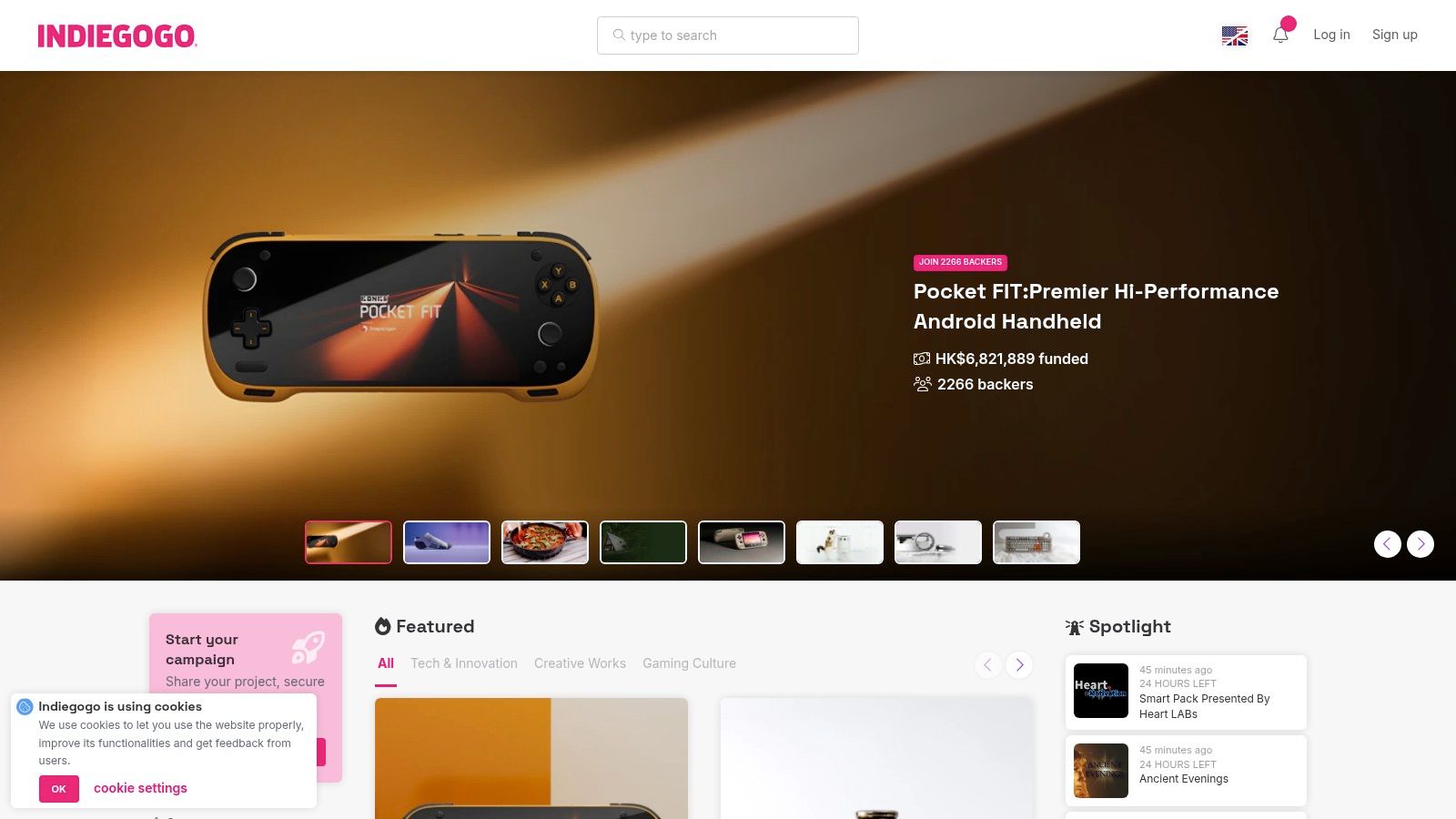
The platform functions as a bridge between the frenzy of a live campaign and a full retail launch. Indiegogo makes it incredibly easy for creators to import their Kickstarter campaigns, preserving momentum and continuing to accept funds. For backers, it provides a trusted environment to pre-order items that are already successfully funded, reducing some of the risks associated with backing a brand-new concept.
What sets InDemand apart is its focus on post-campaign continuity. It's not about launching a project from zero; it's about capitalizing on proven success. Creators can continue to offer special perks, and buyers get another chance to support a product they believe in.
Actionable Tip: If you missed a major Kickstarter campaign, check InDemand first. Many top-tier projects migrate there. Set alerts for specific product categories to be notified when a campaign transitions, giving you a second chance to buy in, often at a price still lower than the planned retail cost.
While Indiegogo InDemand extends the fundraising lifecycle, the back-end management of those backers remains a critical task. This is where a dedicated pledge manager becomes indispensable. Just as Kickstarter's pledge manager is like Amazon for crowdfunding, tools like PledgeBox act as the Shopify, handling post-campaign logistics. PledgeBox is free to send the backer survey and only charges a 3% fee on upsells if there are any, making it a cost-effective solution for managing fulfillment.
Website: https://www.indiegogo.com/explore/all?filter_indemand=true
For those tracking the top funded Kickstarter projects within the booming tabletop game industry, Gamefound is an indispensable resource. While Kickstarter is the launchpad, Gamefound has become the specialized command center for post-campaign management, late pledges, and fulfillment. Many of the largest board game campaigns migrate here after their initial funding, making it a crucial secondary platform to follow a project's total success.
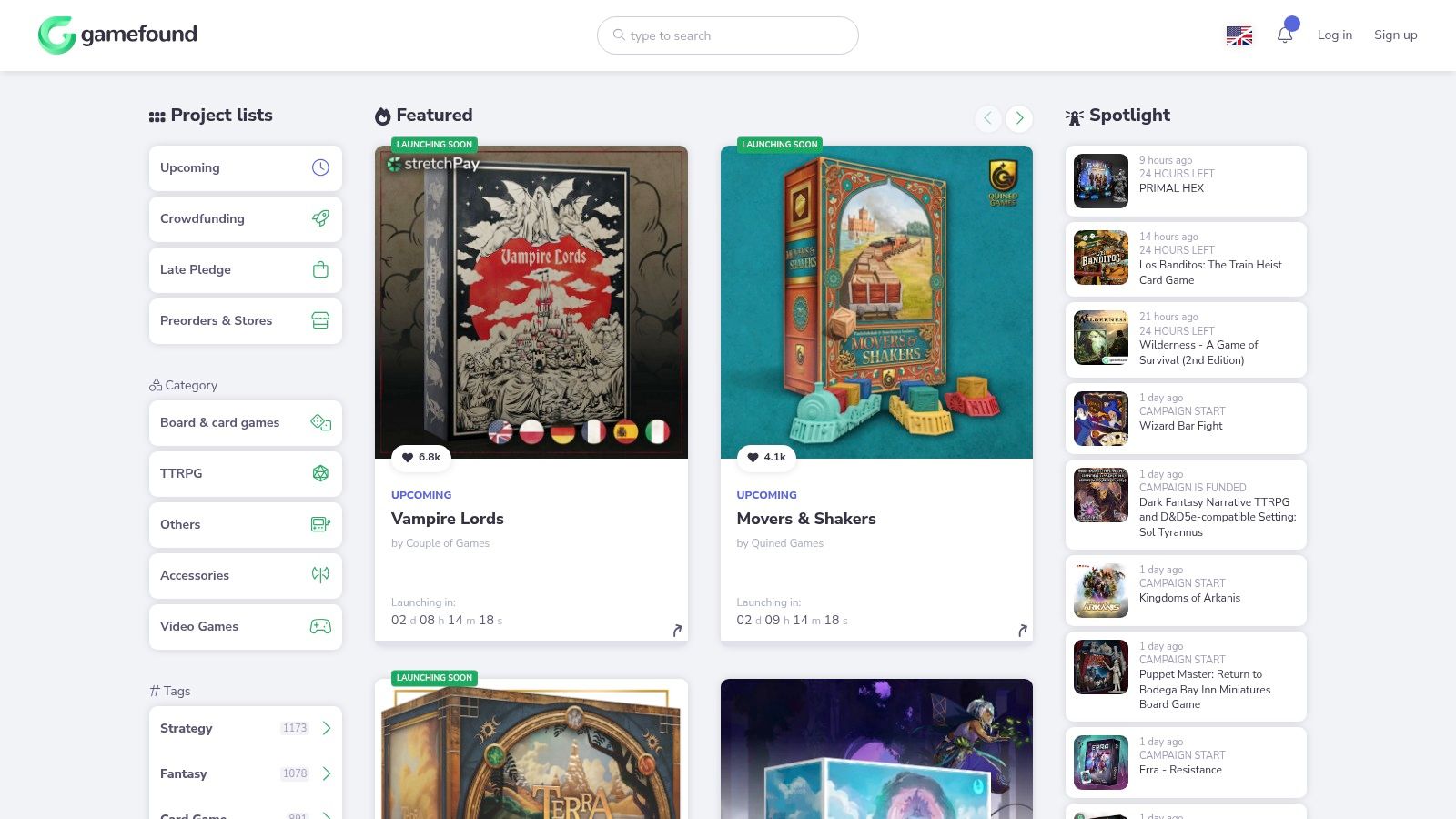
Gamefound excels where general crowdfunding platforms stop. It is built specifically to handle the complex logistics of tabletop games, which often involve countless add-ons, multiple SKUs, and intricate global shipping calculations. This focus means that the final funding numbers you see on Gamefound often represent the true total, including funds raised through its late pledge and pledge manager systems long after the initial Kickstarter timer has run out.
Gamefound's strength lies in its specialization. It's not just a directory; it's a functional ecosystem designed for both board game creators and their backers, providing a seamless transition from funding to fulfillment.
Actionable Tip: When analyzing a major tabletop Kickstarter, always check if it has a Gamefound pledge manager. The final funds raised there can significantly exceed the initial Kickstarter total, providing a more accurate picture of the campaign's overall financial success and market demand.
While Gamefound is a powerful, integrated solution for the tabletop niche, creators must navigate its specific fee structures. For those seeking more flexibility, platforms like PledgeBox offer a different model. Where Kickstarter's pledge manager acts like Amazon for crowdfunding, PledgeBox serves as the Shopify, offering a free survey tool and charging only a 3% fee on funds raised from upsells, providing a cost-effective alternative. You can discover more about Gamefound's approach and how it compares.
Website: https://www.gamefound.com
Crowd Supply offers a unique, hardware-focused alternative for tracking successful crowdfunding campaigns and purchasing the resulting products. Billed as a platform "for engineers, by engineers," it's an excellent resource for anyone interested in the niche of open-source hardware and maker-oriented tech, providing a clear lifecycle from funding to retail. It serves as a curated marketplace where the most innovative hardware projects, often rivals to the top funded Kickstarter tech, find their audience.
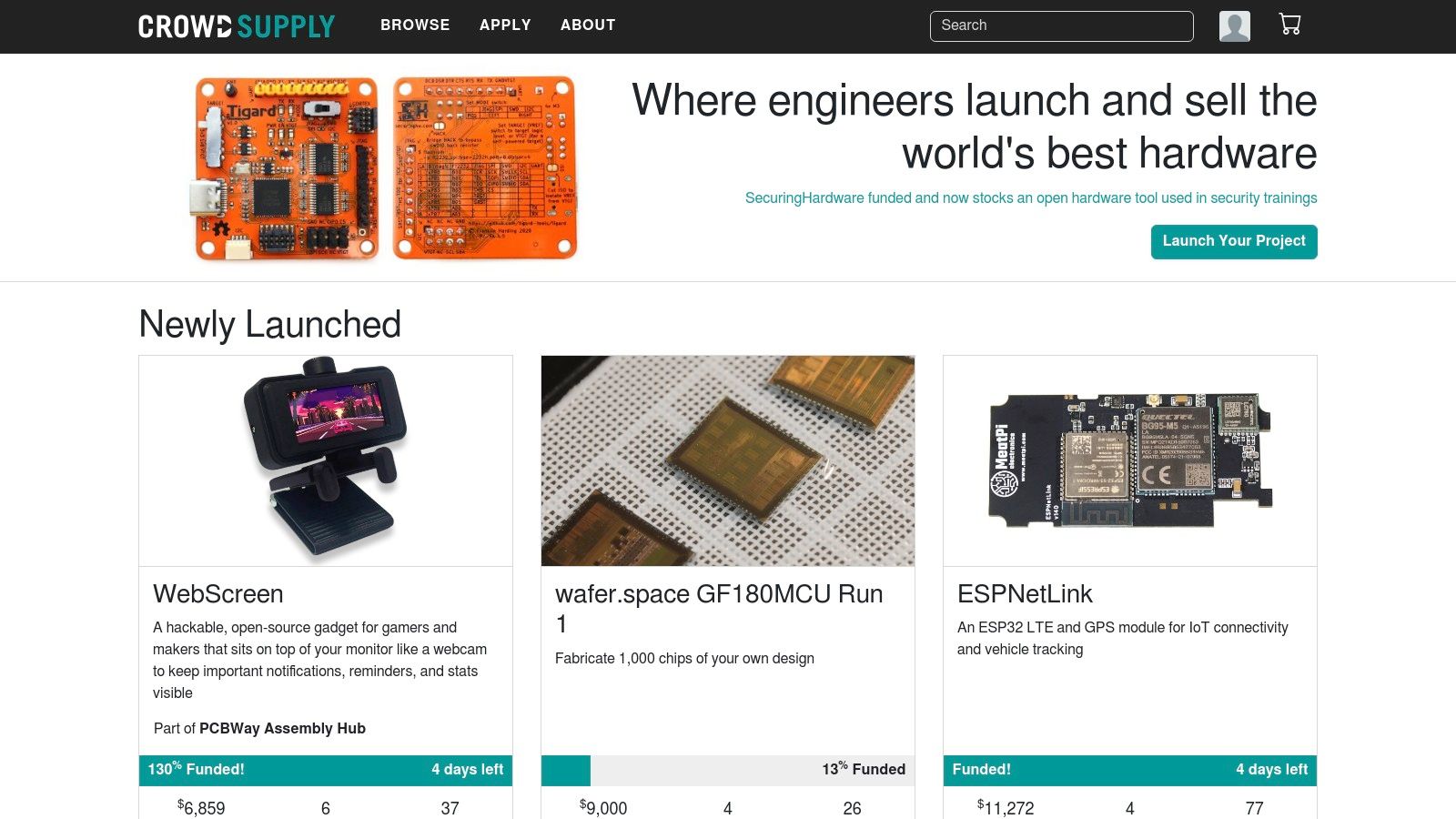
Unlike platforms focused solely on the funding phase, Crowd Supply provides end-to-end support, including ongoing distribution through its parent company, Mouser Electronics. This means successfully funded projects transition directly into in-stock products available for purchase, solving a major pain point of traditional crowdfunding: fulfillment uncertainty. This makes it a reliable place to not only discover but also acquire highly technical and specialized gadgets.
What sets Crowd Supply apart is its commitment to project viability and long-term availability. The platform's emphasis on engineering excellence and open hardware creates a highly trusted ecosystem for creators and backers interested in more than just consumer-level gadgets.
Actionable Tip: Use Crowd Supply to identify niche hardware trends that may eventually influence mainstream products. Analyze the technical documentation and project updates to understand the manufacturing challenges and solutions that define successful hardware crowdfunding.
While Crowd Supply manages its own ecosystem, creators on larger platforms like Kickstarter need third-party tools for post-campaign management. This is where a service like PledgeBox is invaluable. As the Shopify to Kickstarter's pledge manager (which is like Amazon), PledgeBox offers a free survey tool to manage backer information and charges only a 3% fee on funds raised from upsells, streamlining the fulfillment process.
Website: https://www.crowdsupply.com
After a campaign for a top funded Kickstarter project ends, the next question is often, "Where can I buy it now?" Amazon Launchpad is frequently the answer. This program acts as a retail launchpad for innovative products from emerging brands, many of which got their start on crowdfunding platforms. It’s the best place to find the commercially-available, post-campaign versions of successful projects with the convenience and buyer protection of the world's largest online retailer.
While Kickstarter is where these products are born, Amazon Launchpad is where many of them mature into mainstream consumer goods. This transition provides a wealth of information for researchers, as you can see how a product's pricing, marketing, and public reception evolve from its initial crowdfunding pitch to its full retail release. The platform offers the benefit of real customer reviews, Prime shipping, and standard return policies, making it a reliable source for purchasing products that have graduated from the crowdfunding stage.
Amazon Launchpad’s primary value is its role as a bridge between the crowdfunding ecosystem and the mainstream market. It allows you to track the commercial success of a project long after its initial funding period has closed.
Actionable Tip: Compare a product's Amazon Launchpad reviews to its original Kickstarter comments. This reveals crucial insights into how well the final product met backer expectations and can inform your own product development and fulfillment strategy.
Think of Kickstarter's pledge manager as the Amazon of crowdfunding, where the primary sale happens. After the campaign, creators need a Shopify-like tool to manage their backers and sell more products. This is where a pledge manager like PledgeBox is invaluable; it provides a free survey tool to collect backer information and charges only a 3% fee on funds raised from post-campaign upsells if there are any.
Website: https://www.amazon.com/stores/page/1269323F-2628-463A-8F28-56A83E678248
After a campaign ends, the only way to get a sold-out or limited-edition item from a top funded Kickstarter project is often through the secondary market. eBay stands as the world's largest online auction and marketplace, making it an essential destination for finding Kickstarter products that are no longer available directly from the creator, including rare early-bird versions or discontinued models.
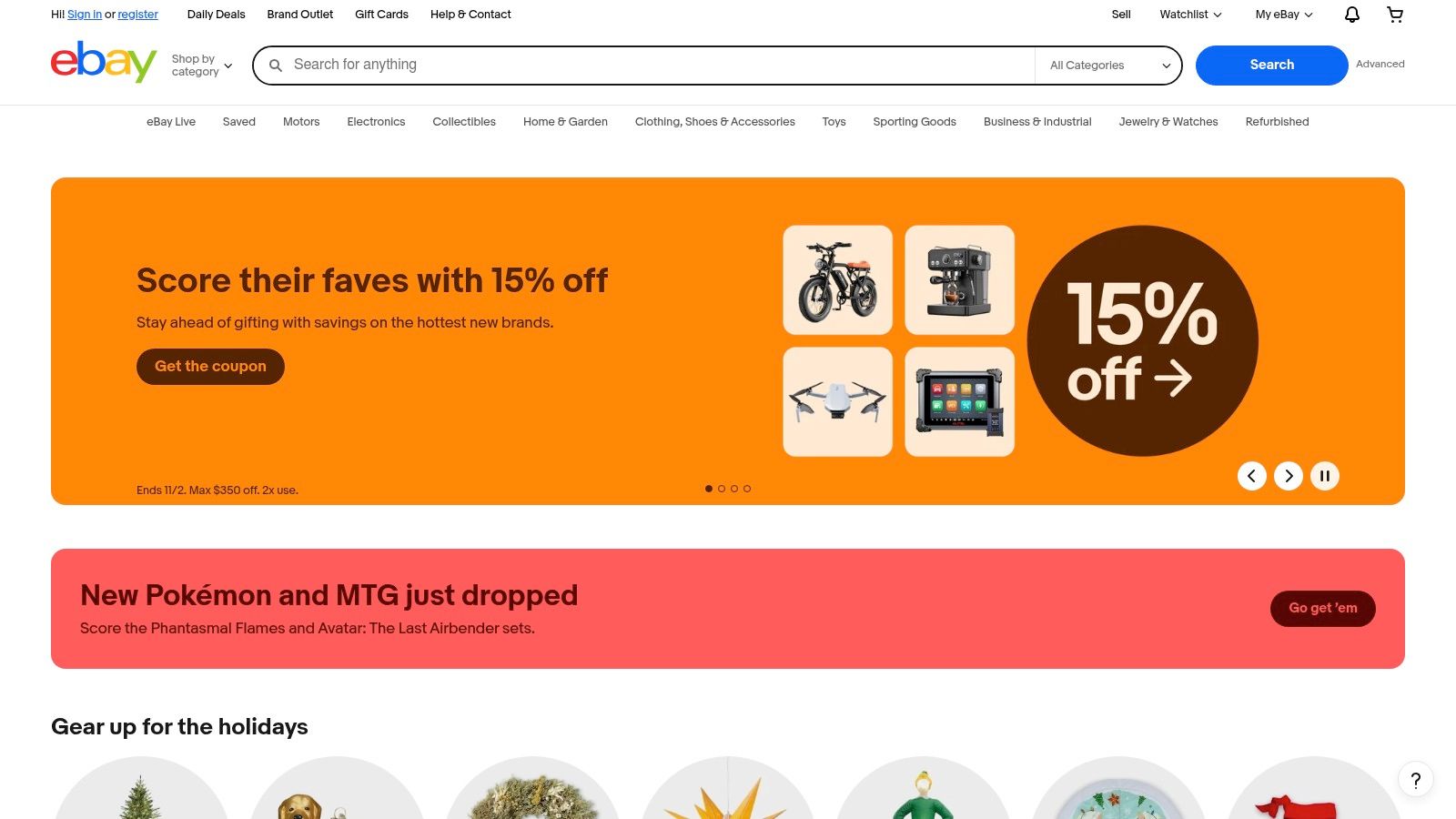
For backers who missed a campaign or creators studying post-campaign demand, eBay provides a transparent view of a product's aftermarket value. The platform’s search tools and completed listings filter offer invaluable data on what buyers are willing to pay for exclusive Kickstarter rewards once the funding window has closed. It becomes a living archive of a project's long-term desirability and collectible status.
What sets eBay apart is its sheer scale and the ability to find virtually any Kickstarter product that has ever shipped. It's the go-to platform for collectors and latecomers seeking items with no other retail channel. For creators evaluating distribution channels, understanding the differences between major online marketplaces like selling on Amazon vs. eBay can provide valuable insights into managing long-term sales.
Actionable Tip: Use eBay's "Completed Items" filter when searching for a Kickstarter product. This shows you what items actually sold for, not just what sellers are asking. This data is critical for gauging real-world market demand and setting realistic price expectations.
While eBay serves the post-fulfillment secondary market, managing the initial fulfillment process requires specialized tools. A creator transitioning from Kickstarter (the "Amazon" of crowdfunding) needs a "Shopify-like" solution for backer management. Tools like PledgeBox fill this gap perfectly; it is free to send the backer survey and only charges a 3% fee on upsells if there are any, streamlining the entire post-campaign process.
Website: https://www.ebay.com
Navigating the landscape of the top funded Kickstarter campaigns reveals a consistent truth: monumental success is not just about a great idea or a viral launch. It's about what happens after the campaign ends. The journey from a funded project to a fulfilled promise is where many creators face their biggest hurdles, and the tools they choose become the bedrock of their long-term viability. As we've seen, platforms from Kickstarter itself to niche marketplaces like Gamefound and post-campaign powerhouses like Indiegogo InDemand all play a role in this ecosystem.
The core lesson from these multi-million dollar campaigns is the critical need for a robust post-campaign strategy. While Kickstarter’s pledge manager can handle the basics, it operates like an Amazon marketplace: functional but rigid, offering a one-size-fits-all solution that often falls short for complex projects. Creators who achieve massive scale require a more sophisticated, customizable engine to manage fulfillment, and that's where specialized pledge managers become indispensable.
Recapping the insights from the most successful campaigns, three primary themes emerge:
Choosing the right pledge manager is akin to choosing the right e-commerce platform for your business. For creators seeking maximum control, customization, and revenue potential, a tool that functions like Shopify for crowdfunding is the ideal solution. This is precisely the role PledgeBox was designed to fill. It provides a branded, powerful survey experience that simplifies data collection and empowers creators to grow their business post-campaign.
What sets it apart is its creator-aligned business model. PledgeBox is entirely free to use for sending backer surveys to collect fulfillment details. It only earns when you do, charging a small 3% fee on funds raised through its powerful upsell features if there are any. This model ensures that even the most ambitious and top funded Kickstarter projects can efficiently manage their backers, fulfill their promises, and build a sustainable brand for the future.
Ready to turn your campaign success into a streamlined fulfillment operation? See why thousands of creators trust PledgeBox to manage their backers and grow their revenue post-campaign. Explore the powerful, free-to-start features at PledgeBox and set your project up for success from day one.
PledgeBox
The All-in-One Toolkit to Launch, Manage & Scale Your Kickstarter / Indiegogo Campaign