 PledgeBox
A Creator's Guide to Pre Order Board Games
Master pre order board games with our guide. Learn proven strategies for using a pledge manager to boost funding and streamline fulfillment for your project.

Master pre order board games with our guide. Learn proven strategies for using a pledge manager to boost funding and streamline fulfillment for your project.
Once your Kickstarter campaign wraps up, the real work begins. Nailing down a solid plan to handle pre order board games is what separates a good project from a great one. This stage is so much more than just putting games in boxes; it's your best chance to bump up your funding, earn backer trust for the long haul, and make sure fulfillment goes off without a hitch. A dedicated pledge manager is the tool that turns this logistical headache into a smooth, professional operation.
So, you did it. Your crowdfunding campaign was a hit! The pledges poured in, you smashed through stretch goals, and your community is buzzing. It’s definitely a moment to celebrate, but don't pop the champagne just yet—the most important part of your project is just getting started. How you handle everything from here on out will ultimately define your project’s profitability and your reputation as a creator.
This is exactly where your choice of pledge manager becomes critical. Think of Kickstarter's built-in survey tool as the Amazon of crowdfunding—it's great for taking the initial pledge, but it's incredibly simple and rigid. It’s a one-size-fits-all solution designed to grab the most basic info.
On the other hand, a specialized platform like PledgeBox acts like your own personalized storefront, similar to Shopify. It gives you a powerful, flexible hub to manage your community, sort out complex orders with add-ons, and even bring in more sales.
A smart post-campaign strategy goes way beyond just collecting data. It’s about continuing the awesome journey you started with your backers during the campaign. This means focusing on:
To really knock it out of the park, you need to know your audience inside and out. Understanding the market and what players are looking for—like exploring trends in legendary cooperative board games—helps you tailor your post-campaign offerings to give them exactly what they want.
Crowdfunding has completely changed the game for how people pre-order board games. Just look at Frosthaven—it raised over $13 million on Kickstarter. A recent survey also found that 41% of board game fans have bought games directly through crowdfunding. This just goes to show how essential these platforms have become for both creators and the community. You can dig deeper into the impact of crowdfunding on the tabletop market to see the full picture.
Here's the best part: a platform like PledgeBox is free to send the backer survey. They only take a small 3% cut on funds you raise from upsells, if there's any. This risk-free approach lets you set up a professional, profitable post-campaign system with zero upfront cost, turning what could be a logistical nightmare into your biggest financial win.
Okay, your campaign was a huge success. High-fives all around! But now comes the part where the real work begins: managing your pre order board games. This is where you pivot from the excitement of fundraising to the nitty-gritty of logistics, and a tool like PledgeBox is built to make this shift as painless—and profitable—as possible.
First things first, you need to get all your backer data out of Kickstarter or Indiegogo and into your new system. PledgeBox has a direct import feature that pulls everything over, so you don't have to worry about messing up a CSV file and sending someone's deluxe edition to the wrong continent. It’s a huge relief.
Once your backer list is safely loaded, you can get to the fun part: setting up your products.
This isn't just data entry; this is your chance to really nail your upsells. You'll be creating individual product listings, or SKUs, for every single thing you plan to sell. That means separate listings for:
My advice? Think like a shop owner. Each listing needs great photos and punchy descriptions that remind people why they were so excited about your project in the first place. You want to make those add-ons look absolutely irresistible. If you want a deep dive into the setup process, you can learn more about how PledgeBox works on their site.
This whole journey, from campaign to fulfillment, is a well-defined process.
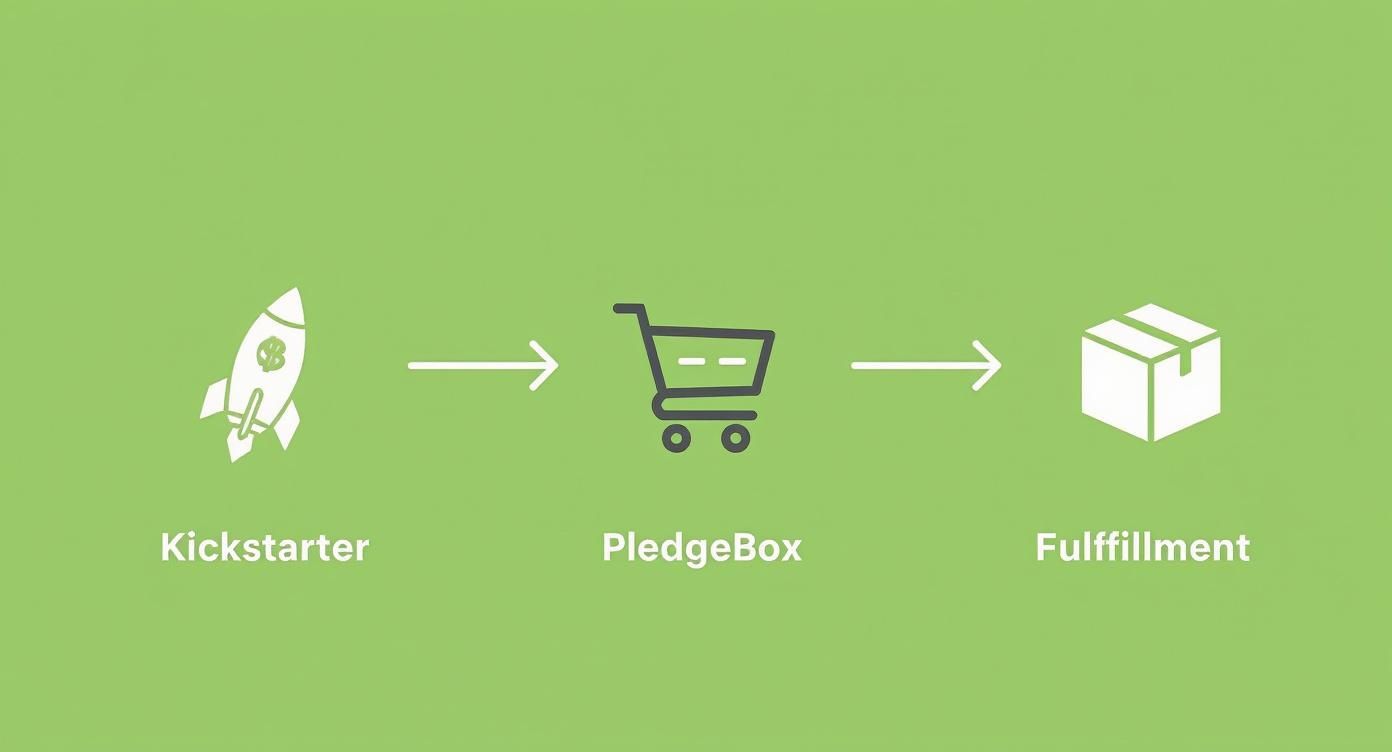
As you can see, it's a smooth handoff. The funding on Kickstarter ends, and the management and upsell phase in PledgeBox begins, leading right up to getting the final product into your backers' hands.
Now, let's talk about one of the biggest reasons creators lean on tools like PledgeBox: the financial model. A lot of us get nervous about the upfront costs associated with pledge managers, but this is where PledgeBox really stands out.
It is completely free to send your backer survey. The platform only charges a 3% fee on new funds raised from upsells and add-on sales, if there's any. This means you can build a professional, fully-featured pledge management system without any initial investment.
This pricing structure is a total game-changer for independent creators.
Think about it. If your backers just confirm the pledge they already made and pay for their shipping, you pay PledgeBox nothing for the survey service. The fee only kicks in when the platform helps you make more money.
This is a world away from Kickstarter's own survey tools, which function like Amazon's simple checkout. PledgeBox, on the other hand, gives you a customizable storefront—more like Shopify—designed specifically to boost your project's total funding after the campaign is over.
By showcasing your add-ons in an attractive, easy-to-use interface, you're not just sending a survey; you're opening a second sales window. That 3% fee quickly becomes a smart investment that can pay for itself many times over. The whole platform is set up to help you keep the momentum going long after the campaign clock hits zero.
Your backer survey is easily the most powerful sales tool you have once the campaign clock hits zero. Don't think of it as just a form to collect addresses; it’s a direct line to your most passionate fans right when their excitement is at its absolute peak. When you design this experience thoughtfully, it stops being a simple data-gathering chore and becomes a profitable upsell funnel that can seriously boost your total funding.
This is where the difference between Kickstarter's built-in tools and a dedicated platform like PledgeBox becomes night and day. Think of Kickstarter as the Amazon of crowdfunding—fantastic for that initial pledge. But for everything that comes after the campaign, you need a Shopify-like experience. That’s exactly what PledgeBox delivers: a customizable storefront where you can continue the conversation with your backers.
And here’s the best part: sending the backer survey through PledgeBox is completely free. The platform only takes a 3% fee on the new funds you raise through upsells, if there's any. This model means there's zero risk to creating a beautiful, effective survey and a huge incentive to make your add-on shop as compelling as possible.
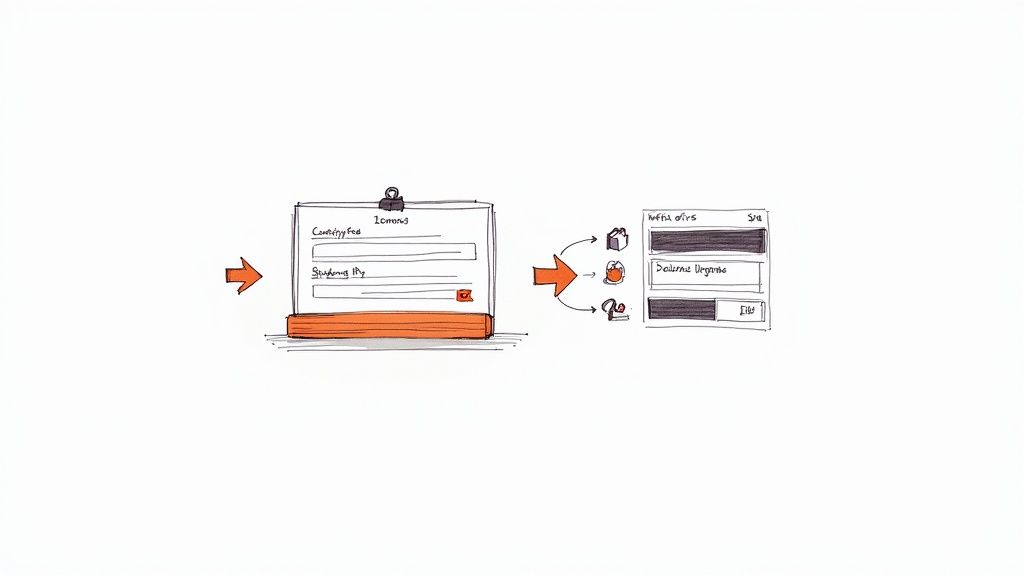
The goal here is to guide backers seamlessly from confirming their pledge to browsing your add-on store. Structure the survey logically. Start with the essentials—confirming their pledge level and grabbing their shipping information. Once that's out of the way, you can roll out the red carpet to your add-on shop.
A well-designed upsell never feels pushy; it just demonstrates value. Think about what truly enhances the game experience. For instance, offering a set of premium card sleeves isn't just selling plastic; it’s selling the peace of mind that their cherished game will last for years. A collector's edition art book isn't just paper and ink; it's a deeper dive into the world you’ve worked so hard to create. For a deep dive into building the survey itself, check out our guide on designing the ultimate backer survey.
A great upsell funnel doesn't feel like a hard sell. It feels like an exclusive opportunity for your biggest fans to customize and upgrade an experience they're already invested in.
The global board games market is booming, valued at around $18.53 billion and projected to hit $41.63 billion by 2033. A massive driver of this growth is the convenience of online channels, which account for roughly 60% of sales. This tells us one thing loud and clear: your backers are already comfortable shopping online. Your survey should meet that expectation with a smooth, engaging storefront experience. You can see more in the full board games market report.
To really maximize your revenue, your upsell strategy needs to be smart and targeted. It's not just about what you offer, but how you offer it.
Here are some proven strategies we've seen work wonders for pre order board games:
The table below breaks down a few more ideas to get you started.
Thinking about what to offer can be tough. Here's a breakdown of common upsell items we see succeed, categorized by backer interest and why they work so well.
By focusing on value, exclusivity, and enhancing the experience, your upsell funnel becomes an exciting final step for your backers, not a tedious chore. This approach ensures they are happy, your game gets the premium treatment it deserves, and your project's funding gets a healthy final boost.
Let’s be honest: shipping is the final boss of any crowdfunding project. I’ve seen it happen time and again—a massively successful campaign gets completely wiped out by miscalculated shipping costs. What should have been a huge win turns into a financial nightmare.
This section is all about taming that beast. We’ll break down how to calculate shipping, handle the headaches of VAT, and get clean, accurate data to your fulfillment partners when you pre order board games.
Before you even think about global logistics, it's crucial to wrap your head around understanding what ecommerce fulfillment entails. This knowledge is the bedrock of a solid, stress-free shipping plan. The goal is to turn what feels like a logistical mess into a manageable, data-driven process.
PledgeBox gives you the exact tools you need to do just that. It's built to segment your backers by region, slap on the right shipping rates, and handle all those international complexities without the usual aspirin-inducing stress.
The single biggest mistake I see creators make is guessing their shipping costs. You can’t guess. You need hard numbers, and that process starts with getting detailed specs from your fulfillment center. Don't even think about moving forward until you've checked off everything on this list:
With this data in hand, you can plug it straight into PledgeBox. The system then automatically calculates the precise shipping cost for each backer’s unique order, no matter how many add-ons they piled into their cart.
For a much deeper dive, we've put together a comprehensive guide to board game shipping and fulfillment that covers all the nitty-gritty details.
A key takeaway: Treat shipping as a pass-through cost, not a profit center. Your goal is to collect the exact amount needed to get the game to your backers' doorsteps. This protects your project's budget from getting devoured by postage fees.
Shipping internationally inevitably means dealing with taxes like VAT and GST. PledgeBox lets you create specific tax rules for different countries, which means you can collect the correct amount from backers in places like the UK and the EU. This simple step saves you from getting a massive, unexpected tax bill months after the campaign ends.
Finally, remember that transparency is everything. Shipping timelines can shift, and delays are almost a given in this industry. Use your pledge manager to send out regular, clear updates about where things stand with fulfillment. Let your backers know when their games have shipped and, most importantly, give them tracking numbers.
Keeping that line of communication wide open builds a huge amount of trust and keeps your community happy, even when things don't go perfectly to plan. This kind of proactive approach is what turns first-time backers into loyal fans for your next big project.
Your campaign doesn't just stop when the last package goes out the door. In fact, one of the most valuable things you walk away with is a mountain of data you just collected. The information gathered in PledgeBox is an absolute goldmine that can give your next project a massive head start, turning pure guesswork into a data-driven strategy for your future pre order board games.
With just a few clicks, you can dive right into your campaign's performance and pull out some seriously useful insights. The platform’s reporting tools show you exactly which add-ons were a hit, what percentage of backers upgraded their pledge, and even where your biggest pockets of support are located around the world. This isn't just fun trivia; it's a blueprint for your next game.
Let's imagine you offered premium metal coins as a small add-on, and they ended up being your top-selling upsell. That’s not a coincidence; it's a clear signal from your audience. For your next campaign, you might consider baking those metal coins right into the deluxe edition or maybe even making them a core component of the base game from the start.
This kind of analysis can shape almost every aspect of your next launch:
This approach is more important than ever as the tabletop market continues to explode. Pre-order board games are now deeply tied to digital tools, which has opened them up to a global audience. With online platforms now driving about 60% of sales, creators have more data at their fingertips than ever before. The global tabletop games market is projected to swell from $19 billion to a staggering $51.84 billion by 2034, highlighting the huge opportunity for creators who know how to use their data. You can dig into this market growth on The Brainy Insights.
But maybe the most powerful thing you get from your campaign is a high-intent email list. The backers who completed your PledgeBox survey aren't just names in a spreadsheet; they are proven buyers who love what you do enough to support it from the very beginning. This is a curated audience that already trusts you.
Your backer list is your most valuable long-term asset. These are the people who will fund your next project, share it with their friends, and champion your brand for years to come.
By exporting this list, you create a direct line of communication for whatever you do next. When you're ready to announce your new game, you'll be talking to a warm audience, which dramatically increases your chances of a massive day-one launch. This cycle of engagement, fulfillment, and data analysis is how you turn a single successful campaign into a sustainable, long-term brand. And since PledgeBox is free to send the backer survey, with only a 3% fee on upsells if there's any, you get all this invaluable data without paying a dime upfront.
Once the campaign confetti settles, you're faced with the logistics of getting your game into backers' hands. If this is your first time managing pre order board games, you probably have a lot of questions. We get it. Let's walk through some of the most common ones we hear from creators just like you.
Don't wait. The best time to start setting up your pledge manager, like PledgeBox, is the moment your crowdfunding campaign ends. Get that backer report imported right away to make sure every last piece of data is captured correctly.
The sweet spot for sending out your backer surveys is within 2-4 weeks after the campaign closes. This keeps the momentum going while backers are still buzzing with excitement for your project.
This is a big one. The industry standard, and frankly the smartest way to do it, is to charge for shipping in the pledge manager. Shipping rates are notoriously unpredictable, and collecting these fees closer to your actual fulfillment date lets you charge based on what it actually costs.
Using a tool like PledgeBox to manage this protects your budget from sudden price hikes or miscalculations you might have made months earlier.
Key Takeaway: The single most catastrophic mistake you can make is underestimating shipping costs and VAT. This isn't an exaggeration; it can completely wipe out your project's profit margin. Use a robust pledge manager to build detailed, region-specific shipping rules and always, always get firm quotes from your fulfillment partner before you charge a single backer.
Thinking of the basic Kickstarter survey as a pledge manager is a common rookie mistake. Kickstarter's built-in tool is just a simple form for gathering addresses. PledgeBox, on the other hand, is a complete post-campaign management platform.
Think of it this way: Kickstarter is like Amazon—simple and transactional. PledgeBox is like Shopify, giving you a powerful, customizable storefront where you can really grow your project. It empowers you to:
Best of all, PledgeBox is free to send the backer survey and only charges 3% of upsell revenue if there’s any. This makes it a zero-risk tool to professionally manage your project and even increase your funding after the campaign is over.
Ready to streamline your post-campaign process and maximize your funding? PledgeBox provides all the tools you need to manage surveys, upsells, shipping, and fulfillment with confidence. Get started for free today and see how thousands of creators are building bigger, better campaigns.
PledgeBox
The All-in-One Toolkit to Launch, Manage & Scale Your Kickstarter / Indiegogo Campaign