 PledgeBox
Peak Design Marketplace Review & Alternatives
Explore the Peak Design Marketplace model, fees, and workflow. Discover why PledgeBox offers a more effective alternative for creators.
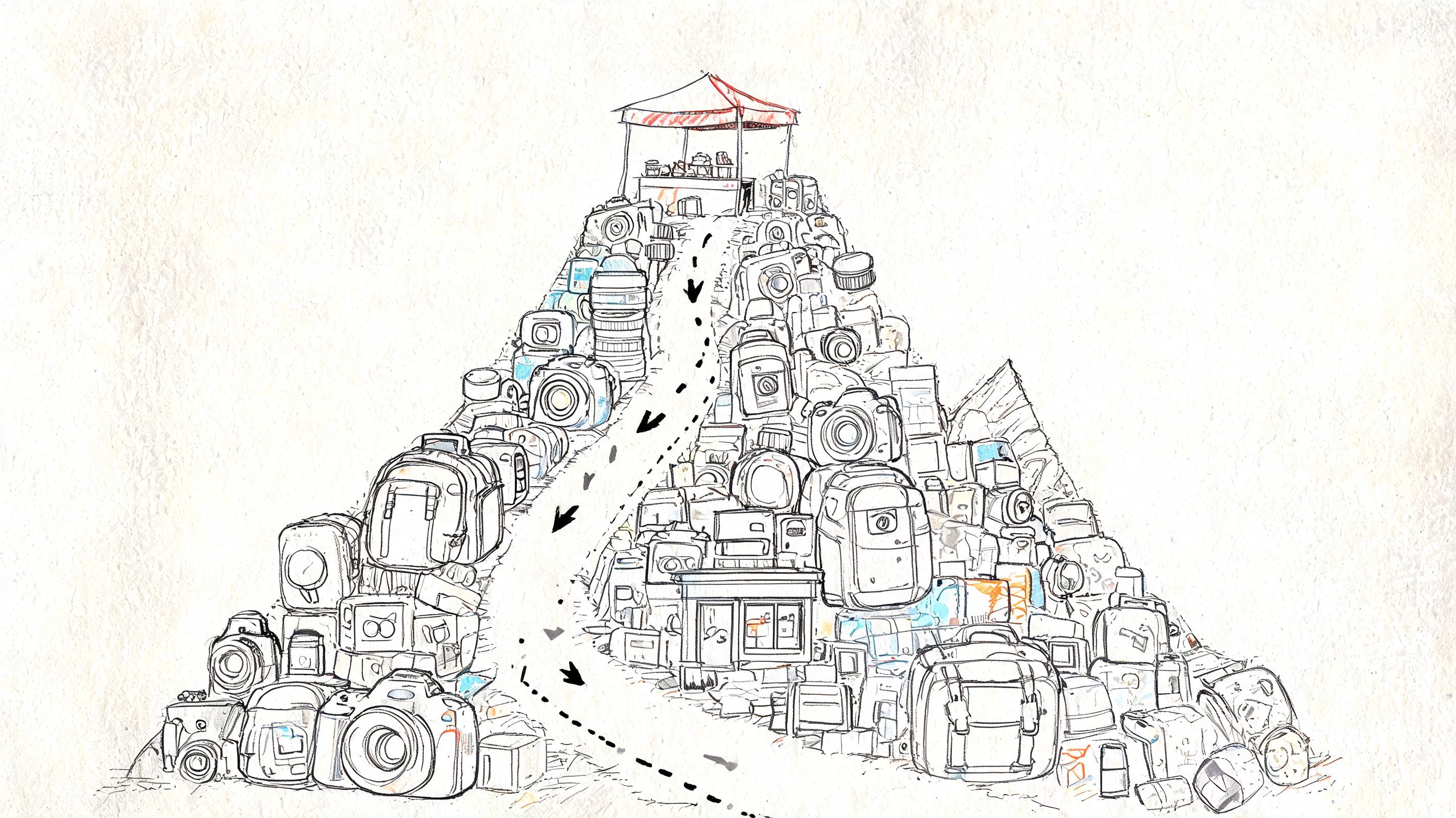
Explore the Peak Design Marketplace model, fees, and workflow. Discover why PledgeBox offers a more effective alternative for creators.
You launched a crowdfunding campaign, shipped the core rewards, and then the actual mess started. A batch came back with damaged packaging. A few units passed QC but aren't pristine enough for full-price retail. Some backers want swaps, some want add-ons, and some missed the campaign entirely but still want to buy.
That's the post-campaign problem most creators underestimate.
The money isn't only in the launch. It's in what happens after fulfillment starts: overstock, returns, refurbished units, accessory bundles, and price-sensitive buyers who won't touch your main storefront at full MSRP. If you don't build a plan for that inventory, it turns into operational clutter and margin leakage.
Peak Design is one of the few crowdfunded hardware brands that has clearly taken this problem seriously. The peak design marketplace isn't just a resale page. It's a signal. It shows what happens when a mature brand treats secondary sales, clearance, and used gear as part of the business model instead of a side issue.
Creators should pay attention, but not copy it blindly.
For most Kickstarter teams, building a dedicated marketplace is the wrong first move. The smarter move is understanding the strategic lesson behind it: control the post-campaign funnel, keep customers in your ecosystem, and turn leftover inventory into revenue without wrecking your brand.
A campaign ends with applause and spreadsheets. Then the awkward inventory shows up.
You have units with dented boxes. You have customer returns that work perfectly. You have extra stock from conservative manufacturing buffers. You also have late buyers who missed the campaign and still want in. None of those fit neatly into the original reward structure.
Most creators handle this badly. They dump inventory into random discount channels, answer resale questions manually, or let used units circulate through third-party platforms with zero brand control. That creates two problems fast: pricing gets messy, and trust gets weaker.
The inventory problem usually comes in a few forms:
Each category needs a different sales approach. If you treat all of it as “discount stock,” you train customers to wait for markdowns.
Practical rule: Don't solve a brand problem with a liquidation mindset.
Running a campaign teaches you how to launch. It doesn't teach you how to manage product lifecycle. That's a different discipline. Now you're making pricing decisions, handling support edge cases, and trying to preserve the premium feel of the brand while still moving imperfect inventory.
That's why brand-run secondary channels are interesting. They can create a controlled place for discounted goods, refurbished units, and resale activity. Done well, that protects the main store from chaos.
Done badly, it becomes a customer service sink with low liquidity and confused positioning.
Peak Design is a useful case study because it shows both the appeal and the limits of this model.
Peak Design's setup matters because people often lump two separate systems into one idea. That's a mistake. The peak design marketplace is really two different plays under the same broader strategy.

On its official marketplace collection, Peak Design runs a dedicated channel for open-box, refurbished, and overstock gear, with lightly used or fully functional items carrying a lifetime guarantee at 10% off MSRP and brand-new gear at 20% off according to the official Peak Design Marketplace collection.
That's not a casual clearance page. It formalizes how the company handles imperfect or excess inventory.
Here's what that tells me:
For a premium hardware brand, that's smart. You separate your polished retail experience from your clearance logic.
There's also a separate peer-to-peer resale concept for used Peak Design gear. That serves a different purpose. It gives customers a trusted place to buy and sell used products inside the brand ecosystem instead of pushing them out to generic marketplaces.
Those are not the same thing.
One is brand-owned inventory distribution. The other is customer-to-customer resale with the brand sitting in the middle. If you're a creator studying this model, that distinction matters because the operational burden is different.
| Marketplace layer | What it does | Why it matters |
|---|---|---|
| Official inventory channel | Sells open-box, refurbished, and overstock items | Helps recover value while controlling discounting |
| Peer-to-peer resale | Lets users trade used products inside the ecosystem | Extends trust and keeps resale activity tied to the brand |
The lesson isn't “build a marketplace.” The lesson is “separate full-price retail from secondary inventory before secondary inventory muddies the whole brand.”
Peak Design has done that clearly. Most creators haven't.
The peer-to-peer side is where the model gets more interesting, and more dangerous.
Peak Design's resale channel lets customers buy and sell used gear within a brand-run system. That sounds elegant. It is elegant for the brand. It is less elegant for the seller unless they understand the economics.

Peak Design says transactions can be free if the seller chooses Peak Design store credit as the payout. If the seller wants cash, the platform charges a 25% fee. It was also initially launched in beta and limited to U.S. users, as described in this launch overview of the Peak Design Marketplace mechanics.
That fee structure is the whole story.
Peak Design isn't just enabling resale. It's using resale to drive customers back into its own commerce loop. If sellers accept store credit, they stay in the ecosystem. If they insist on cash, they pay a steep price for the exit.
That's not a flaw. It's the business model.
For a seller, the practical tradeoff looks like this:
The transaction flow also matters. Coverage has described a three-step post-ship-pay flow. Operationally, that means the platform sits between both sides long enough to reduce some direct risk, but it also adds coordination overhead.
If you run a marketplace, you're not just listing products. You're managing disputes, shipment timing, payout expectations, and trust.
You should copy the closed-loop thinking. You probably shouldn't copy the platform model.
Peak Design can justify a resale ecosystem because it has a broad catalog, repeat buyers, and enough product recognition to make used gear attractive. Most campaign creators have one flagship product, a few add-ons, and a support team that's already overloaded.
A better move for smaller teams is to create controlled post-campaign sales paths instead of building a full resale network. That could mean late pledges, backer-only clearance offers, refurbished inventory drops, or a pre-order marketplace workflow for post-campaign sales that keeps inventory moving without asking you to operate a two-sided marketplace.
If you're not ready to police trust and payout mechanics at scale, don't pretend you are.
Most campaigns should not build their own marketplace. That's the blunt answer.
A marketplace only works when you have enough traffic, enough inventory circulation, and enough brand trust to keep both buyers and sellers active. Without that, you don't have a marketplace. You have an empty section on your website and a new support burden.
Independent ecommerce intelligence from Grips suggests peakdesign.com generated US$39.5 million in 2025 online sales and had over 1.2 million monthly sessions, which is exactly the kind of scale that can support a dedicated secondary channel, according to ECDB's sample retailer data for Peak Design.
That traffic matters more than the marketplace concept itself.
If people already visit your site in large numbers, then a resale or clearance layer has a real chance to convert price-sensitive buyers and recover inventory value. If your site gets modest traffic and your product line is narrow, a marketplace won't fix that. It will expose it.
Ask yourself these questions:
Here's the strategic split:
| If you are... | Marketplace verdict |
|---|---|
| A mature brand with a catalog and strong DTC traffic | Possibly worth exploring |
| A single-product creator after a first campaign | Usually a distraction |
| A team holding overstock and add-ons after fulfillment | Better served by a controlled post-campaign funnel |
Treat the Peak Design model as an advanced-stage play, not a default template.
For most hardware creators, the goal isn't “launch a marketplace.” The goal is simpler: clear inventory, preserve margin, and keep customers inside your brand experience. You can do that with structured post-campaign selling, backer surveys, add-on offers, and late-order flows.
That gives you the upside creators need. It avoids the legal, operational, and liquidity problems they usually don't see coming until too late.
This is the cleanest way to think about post-campaign tools.
Kickstarter's native pledge manager is like Amazon. It's integrated, convenient, standardized, and built around the platform's rules. That's useful if you want the simplest possible path and you're willing to accept limited control.
A creator-controlled pledge manager is like Shopify. You own the customer experience. You control branding, offers, upsells, data flow, and how the post-campaign funnel operates.
Creators often choose tools based on what feels easiest in the moment. That's short-term thinking.
When you use the marketplace-style approach, you gain convenience but give up flexibility. Your post-campaign flow becomes more rigid. That can be fine for a simple campaign with no real upsell plan, no complex shipping logic, and no need to segment backers.
If you want to operate like a brand instead of a one-off project, flexibility matters more.
| Model | Strength | Limitation |
|---|---|---|
| Amazon-style pledge management | Simplicity and built-in familiarity | Less control over branding and funnel design |
| Shopify-style pledge management | More control over experience, data, and monetization | Requires more deliberate setup |
That's why I like the analogy. It forces the right question.
Don't ask, “What's the easiest tool today?” Ask, “What kind of business am I trying to build after the campaign?”
A creator who plans to launch one product can tolerate a rigid system. A creator building a brand needs a flexible one.
If you want a creator-controlled option, a pledge manager built for branded post-campaign flows fits the Shopify side of the analogy better than a closed native system.
That distinction matters more once you start handling add-ons, overstock, regional shipping variation, and late backers.
Most creators don't need a marketplace. They need a post-campaign sales funnel.
That means one place to collect surveys, charge shipping, offer add-ons, move leftover inventory, and keep late buyers converting without building a separate platform from scratch.

Use your post-campaign flow to segment inventory intentionally.
For example:
That gives you most of the commercial benefit of a marketplace without the two-sided complexity.
If you want a practical tool for this, PledgeBox handles branded backer surveys, shipping collection, taxes, add-on upsells, and late-order flows. It's free to send the backer survey and only charges 3% of upsell if there's any. That pricing model is a strong fit for creators who don't want upfront pledge-management cost before revenue shows up.
This is the better mental model: Kickstarter pledge manager is like Amazon, and PledgeBox pledge manager is like Shopify.
That's not about hype. It's about control.
With a more flexible setup, you can decide:
A rigid native flow usually can't support that level of nuance well.
Here's the approach I recommend to most hardware teams:
You don't need to imitate Peak Design's marketplace architecture to get the core benefit. You need a cleaner funnel and better control.
Peak Design's marketplace is impressive because it reflects maturity. The brand has moved past the simple “launch and ship” phase. It treats open-box stock, refurbished inventory, overstock, and resale behavior as part of a long-term commerce strategy.
That's the right lesson to take from it.
The wrong lesson is thinking every campaign should build a marketplace. Most shouldn't. A custom resale ecosystem is heavy. It needs traffic, trust, catalog depth, operational discipline, and enough customer demand on both sides to stay alive.
Most creators need something leaner and more practical.
They need control over the post-campaign experience. They need a way to send surveys, collect shipping, offer add-ons, move leftover inventory, and keep selling after the campaign closes. That's a funnel problem, not a marketplace problem.
Build the system that helps you sell the next unit. Don't build the system that makes you feel like a big brand before you've earned the need for it.
If you're sitting on overstock, open-box units, or missed post-campaign revenue, fix that first. Create a structured sales path for existing backers and late buyers. Protect your flagship product pricing. Separate imperfect inventory from the main storefront. Keep the customer relationship in your hands.
That's how small creators become durable brands.
If you want a practical next step, take a look at PledgeBox. It gives creators a way to run backer surveys, shipping collection, upsells, and post-campaign sales without building a full marketplace, and it's free to send surveys with a 3% charge only on upsells if they happen.
PledgeBox
The All-in-One Toolkit to Launch, Manage & Scale Your Kickstarter / Indiegogo Campaign