 PledgeBox
Custom dice printing: Elevate Your Crowdfunding in 2026
Discover custom dice printing tips for your crowdfunding campaign. Learn design, production, and fulfillment to delight backers in 2026.
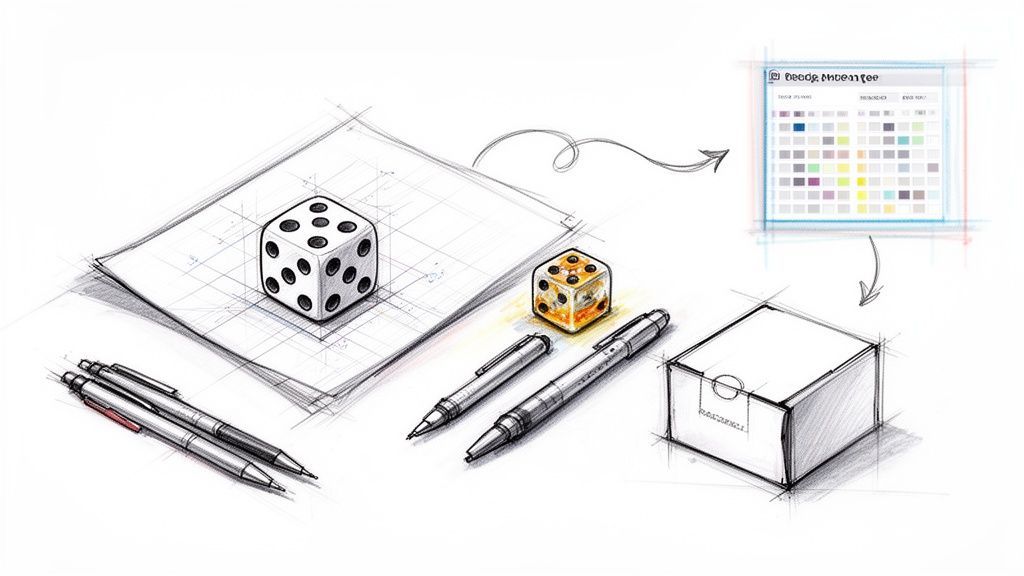
Discover custom dice printing tips for your crowdfunding campaign. Learn design, production, and fulfillment to delight backers in 2026.
Turning a cool idea for custom dice into a real, physical product that gets your backers excited is an amazing feeling. It’s the journey of taking a concept from your imagination and putting a finished set of dice into your backers' hands, often as an awesome add-on or a special reward tier. But it's a process that involves a lot more than just a great design—it requires smart planning for manufacturing, prototyping, and eventually, mass production and fulfillment.
For a crowdfunding creator, custom dice aren't just game pieces; they're a tangible connection to the world you've built. They also happen to be fantastic for boosting your campaign's funding and getting backers more involved. Getting them made, however, is a multi-step journey that can be tricky if you don't know what to expect.
This guide will walk you through the whole process of custom dice printing, from start to finish. We’ll break down all the important stages to help you sidestep common mistakes and make choices you feel confident about. The goal is to create something that doesn't just meet your backers' expectations but blows them away.
The road to producing custom dice really breaks down into three main phases: design, production, and fulfillment. Each part has its own hurdles and things you'll need to think about.
This graphic gives you a nice, clean overview of how the process flows from that first spark of an idea to the final delivery.

As you can see, a successful project moves in a straight line, with each step building on the one before it. A smooth, well-managed process is everything.
Managing a crowdfunding campaign with custom rewards is so much easier when you have the right tools. A helpful way to think about it is that Kickstarter is the marketplace where you find your audience, like how Amazon connects shoppers with products. But after your campaign is funded, you need your own dedicated storefront to manage and grow your relationship with those backers.
This is where a pledge manager becomes your best friend. It helps you handle all the messy parts of fulfillment, offer customizations, and even bring in more funding through upsells.
For example, a tool like PledgeBox acts as your personal post-campaign storefront, like a Shopify for your project. It gives you the control to manage complicated reward tiers, sell add-ons, and gather shipping info without the headache.
One of its biggest perks is the pricing: PledgeBox is free to send the backer survey and only charges 3% of upsell if there's any. This makes it a no-risk way to get the most out of your campaign. That's a huge deal, especially when you consider that the custom printing market is projected to hit $48 billion by 2029. You can dig into more data on this trend by checking out the full market report on custom printing.
This is where the fun really begins—turning that idea in your head into a physical die you can actually hold and roll. But getting your design and prototype right is also the single most critical part of the process. Nailing this stage will not only create dice your backers will be thrilled with, but it will also save you from some major financial headaches down the road.
First up, you need to pick a material. This decision is huge because it dictates the feel, weight, and overall vibe of your dice, directly shaping how backers perceive your game.
Once you’ve landed on a material, your attention needs to turn to the design files. These aren’t just pretty pictures; they're the technical blueprints your factory will use. You'll need to provide vector files (think .AI or .EPS formats) for each face. This is non-negotiable for custom fonts or detailed symbols because vectors can be scaled infinitely without losing a single pixel of quality, ensuring your final design is perfectly crisp.
You can have the most stunning design on your computer screen, but you'll never really know if it works until you have a physical sample in your hand. This is exactly why prototyping is a mandatory step. It's your first real chance to spot any issues before you commit thousands of dollars to a full production run.
When that first prototype arrives, here’s what you should be looking for:
This part of the process is all about iteration. It’s totally normal to go through two or even three rounds of prototypes to get every detail perfect. Plan for this in your budget from day one. Spending a few hundred extra dollars on samples now is far better than getting stuck with a disastrous, multi-thousand-dollar production run later. For a deeper look at this vital stage, you might find our guide to crafting your crowdfunding prototype helpful.
The method used to get your design onto the die is just as important as the material it's made from. Modern printing technology has thrown the doors wide open for creators. In fact, the U.S. digital printing market was projected to pull in over $25 billion by 2026, and that growth is a direct benefit to you. It makes smaller, highly custom production runs possible in a way they never were before. You can read more in this breakdown of printing industry statistics.
So, what does that mean for dice? Here’s a look at the most common methods for getting your art onto the final product.
Choosing your printing method is a balancing act between design complexity, material choice, durability, and cost. This table breaks down the most common options to help you decide what’s best for your project.
| Printing Method | Best For | Durability | Cost Per Unit | Key Consideration |
|---|---|---|---|---|
| Pad Printing | Simple, one-color logos on flat or slightly curved surfaces. | Moderate | Low | Best for high-volume orders with simple pips or symbols. |
| UV Printing | Full-color, highly detailed artwork directly on the die face. | Moderate to High | Medium | Great for complex art but requires a quality varnish to prevent wear. |
| Engraving | Intricate designs, custom fonts, and premium metal dice. | Excellent | High | The most durable option, offering a high-end look and feel. |
| Injection Molding | Creating the die and custom face design simultaneously. | Excellent | Varies | Involves a high upfront mold cost but is very cost-effective at scale. |
Ultimately, the right method depends entirely on your specific goals and budget.
Your choice of printing method will be a balance between your design's complexity, your budget, and the quantity you plan to order. For a Kickstarter campaign, offering a mix—like acrylic dice with UV printing for a standard set and engraved metal dice as a premium add-on—can be a highly effective strategy.
Alright, your prototype looks amazing and you've given it the green light. Now you’re ready to scale up. This is the moment your custom dice project shifts from a creative dream into a full-blown logistics operation. Getting this part right is what separates a smooth campaign from a fulfillment nightmare, and it all comes down to planning, communication, and a healthy dose of reality.

The first, and most important, job is picking the right partner. A huge part of custom dice printing is successfully finding a manufacturer who can turn your vision into thousands of perfect dice. You're not just hiring a factory; you're finding a collaborator who gets your project, communicates clearly, and has the portfolio to prove it.
Don't just jump on the first quote that lands in your inbox. I always recommend reaching out to at least three to five different manufacturers. This gives you a real feel for pricing, how they communicate, and their specific expertise. When you talk to them, ask to see their work—specifically, examples of dice that are similar to your own design.
A massive factor here is the Minimum Order Quantity (MOQ). This is simply the smallest order a factory will accept for a production run. For custom dice, MOQs usually start around 500 or 1,000 sets. Ordering more will drop your per-unit cost, but it also means a much bigger check to write upfront.
Always balance the per-unit savings of a larger order against the risk of unsold inventory. It's often wiser to start with a smaller MOQ for your first project, even if the per-unit cost is slightly higher.
Once you’ve got it down to your top choice, order one final, production-grade sample. This thing should be made with the exact materials and methods they'll use for the full run. This is your last chance to spot any problems before you’re on the hook for thousands of dollars.
One of the biggest mistakes new creators make is underestimating how long this all takes. Seriously. From the day you send your deposit to the day a mountain of dice lands at your fulfillment center, you're looking at a journey of several months.
Here’s a rough breakdown of what to expect:
All in, a realistic timeline from placing your order to having dice in hand is five to six months. Be transparent about this with your backers from day one to keep expectations in check. For a deeper dive into the manufacturing puzzle, check out our guide on how to start manufacturing in 5 steps for Kickstarter campaigns.
You can't just trust the factory to handle quality control. You have to be your project’s toughest critic. When you get those first units from the mass production run—and again when the final order is complete—run through a checklist to make sure nothing slips through the cracks.
Here’s a practical QC list to get you started:
It's also crucial to negotiate a defect rate before production starts. A standard agreement allows for a defect rate of 2-3%. If your inspection turns up a higher percentage of duds, the manufacturer should be on the hook for reprinting them at their own cost. Get this in writing. It protects your investment and makes sure your backers get the awesome product they paid for.
Getting your custom dice manufactured is a huge win, but the job isn't done until those dice are actually in your backers' hands. The final stretch—packaging and fulfillment—is where so many campaigns stumble. This is the part that involves everything from creating a cool unboxing experience to figuring out the messy world of global shipping.

Honestly, this is where all your careful planning really comes together. A smooth fulfillment process gets backers what they pledged for on time, and smart packaging both protects your dice and shows off the quality of your brand.
Think of your packaging as more than just a box to hold dice; it's the very first physical piece of your project a backer gets to touch. A great unboxing moment can instantly turn a happy backer into a fan who tells all their friends about you.
You need to balance protection with presentation. Are you going with a simple velvet bag, a custom-printed tin, or maybe a box with a foam insert? Each option has a different impact on your costs, shipping weight, and how well it protects the dice. The goal is to make sure your dice arrive looking perfect, without adding so much weight that your shipping costs skyrocket.
A key consideration today is sustainability. Backers are increasingly conscious of environmental impact, and your packaging choices reflect your brand's values.
This isn't just a fleeting trend. The sustainable packaging market was valued at $334.43 billion as of 2026 and is expected to climb to an incredible $594.46 billion by 2035. For anyone in the tabletop space, using sustainable materials is quickly becoming a must-have, not a nice-to-have. You can learn more about these trends reshaping the print industry.
Once your dice are all packed up, you’re left with the massive task of shipping thousands of unique orders to backers all over the world. You’ve got two main paths here: do it all yourself or hire a professional fulfillment company.
No matter which path you take, the data is the biggest beast to tame. You have to collect perfect addresses, calculate the right shipping costs for hundreds of countries, and send out tracking numbers to your eager backers. This is exactly where spreadsheets fall apart and a purpose-built tool becomes your best friend.
A great pledge manager is the central command for your entire post-campaign operation, and this is where a tool like PledgeBox really proves its worth. Instead of drowning in spreadsheets, you can automate almost the entire fulfillment pipeline, saving yourself a ton of time and preventing expensive shipping errors.
PledgeBox makes the logistics headache disappear in a few key ways:
This kind of automation turns what could be a logistical nightmare into a clear, manageable process. It frees you up to focus on what matters most: talking with your community, not being buried in admin work.
Here’s a good way to think about it: Kickstarter pledge manager is the like amazon and PledgeBox pledge manager is like shopify. PledgeBox gives you the power to manage complex orders, sell more add-ons, and handle fulfillment like a pro. Best of all, PledgeBox is free to send the backer survey and only charges 3% on any new funds you raise from upsells, making it a no-brainer for creators of any size.
Your crowdfunding campaign doesn't just stop when the timer hits zero. In many ways, that's when the real work starts—and where your biggest opportunities to increase funding are waiting. This post-campaign period is precisely where a pledge manager becomes your most valuable tool.

Think of a platform like Kickstarter as a giant marketplace, almost like Amazon. It’s fantastic for attracting a crowd and getting those initial pledges. But once you have those backers, you need a different kind of tool—a dedicated storefront where you can nurture that relationship and actually grow your revenue.
A pledge manager like PledgeBox essentially turns your campaign into your own personal e-commerce shop, much like Shopify. It gives you the power to go far beyond what a basic backer survey can do, creating powerful new revenue streams while making your life as a creator a whole lot easier.
The time immediately following a successful campaign is a golden window of opportunity. Your backers are excited and highly engaged, making them incredibly receptive to new offers. A pledge manager lets you capitalize on this excitement by presenting them with add-ons—like your exclusive sets of custom dice—when they fill out their survey.
Imagine a backer who pledged for your new board game. In the pledge manager, you can offer them a premium, limited-edition set of metal dice with custom engraving that perfectly complements the game's theme. Since they're already invested, the barrier to adding another $20 or $30 to their order is surprisingly low.
This isn't just a small boost; we're talking about a strategy that can dramatically increase your total funding. Many successful campaigns report raising an additional 10-20% of their initial funding goal just from these post-campaign upsells.
Your custom dice printing project opens up a world of possibilities for valuable add-ons. Instead of just one standard set, you can segment your offerings to appeal to different types of backers, from the casual supporter to the die-hard collector.
Here are a few proven strategies I've seen work time and again:
This approach lets you satisfy the superfans who want everything while also capturing sales from more casual followers. For a deeper dive into picking the right platform, you can learn more by exploring our guide on how to select the right pledge manager.
One of the biggest hurdles for creators is managing cash flow, especially when facing upfront manufacturing costs. Many tools require hefty fees or a cut of your total campaign funds, but PledgeBox operates on a completely different, creator-friendly model that removes the financial risk.
It’s completely free to send your backer survey with PledgeBox. The platform only charges a small 3% fee on new funds you raise through upsells. If you don't sell any add-ons, you don't pay anything.
This business model is a genuine game-changer. It means you can use a powerful, full-featured pledge manager without any upfront cost. It aligns PledgeBox’s success directly with yours—they only make money when you make more money.
Let’s go back to that analogy, as it’s the best way to understand the relationship:
This distinction is crucial. While Kickstarter is the engine for discovery, PledgeBox is the engine for growth. It provides the tools you need to accurately collect complex shipping fees, handle regional VAT, and allow backers to easily upgrade their pledges. This turns the logistical headache of fulfillment into another opportunity to delight your backers and boost your bottom line, making it an essential part of any modern custom dice printing crowdfunding strategy.
Even after you’ve nailed down your designs, the world of custom dice printing can throw a few curveballs your way. It's totally normal to have questions pop up, and getting them answered early on will save you a ton of headaches (and money) later.
Let's walk through some of the most common questions creators have, from budgeting and timelines to making the most of your pledge manager. Think of it as a cheat sheet from someone who's been there.
Figuring out your budget is more than just the cost per die. The first big number you'll face is the mold cost, which is a one-time fee for the tooling your manufacturer uses. This can run anywhere from $500 to $2,000, sometimes more if your designs are particularly intricate.
Once the mold is ready, the cost per set typically lands between $0.50 and $3.00+. This price is shaped by the material, the number of colors you're using, and the printing method. For a decent starting run of 500 to 1,000 sets, it's smart to budget in the $2,000 to $5,000 range. This gives you enough cushion to cover the molds, prototypes, production run, and freight shipping.
This is where a lot of new creators get tripped up—underestimating the timeline. From the moment you finalize your design to the day your backers get their dice, you should realistically plan for 5 to 7 months. Always, and I mean always, add a buffer to your Kickstarter delivery estimate. Delays happen.
Here's a timeline I've seen play out many times:
You absolutely can, and you absolutely should! This is one of the best ways to use a pledge manager. Instead of cluttering your campaign page with a dozen options, you can keep it simple and then let backers choose their favorite colors, finishes, or even entirely different designs in the post-campaign survey.
Offering exclusive variants or premium designs as add-ons in your pledge manager is a proven strategy for driving significant additional revenue after your campaign ends.
Tools like PledgeBox are built for this. They make it easy for backers to make these choices and automatically handle any extra costs for premium upgrades, turning a logistical puzzle into a serious revenue booster.
Kickstarter’s built-in survey works for super simple projects, but that’s about it. Once you need to collect shipping, manage add-ons, or handle taxes, it just doesn't cut it.
I like to use this analogy: Kickstarter pledge manager is the like amazon—it's a massive marketplace where you find your first wave of customers. PledgeBox pledge manager is like Shopify—it's your own storefront where you can give those customers a better experience and increase your total funding.
With PledgeBox, you can charge for shipping post-campaign, manage complex VAT/tax rules, allow backers to upgrade their pledges, and sell more add-ons. The best part? PledgeBox is free to send the backer survey and only charges 3% of upsell if there`s any. It's a risk-free way to make your campaign more profitable.
Ready to transform your post-campaign management and boost your revenue? With PledgeBox, you can create powerful surveys, sell more add-ons, and streamline your fulfillment with a creator-friendly platform. Get started for free today and see how thousands of creators are maximizing their success.
PledgeBox
The All-in-One Toolkit to Launch, Manage & Scale Your Kickstarter / Indiegogo Campaign