 PledgeBox
A Guide to 3D Holographic Cards and How They Work
Discover how 3D holographic cards create stunning visual effects. This guide explores the technology, materials, and key uses in marketing and crowdfunding.
Discover how 3D holographic cards create stunning visual effects. This guide explores the technology, materials, and key uses in marketing and crowdfunding.
Ever held a card and felt like you were looking into a tiny, three-dimensional world? That's the unmistakable magic of 3D holographic cards. They're not just printed images; they're an experience, tricking your eyes into seeing depth, movement, and life on a completely flat surface. It’s an effect that’s hard to forget.
So, how does it work? At its heart, a 3D holographic card is an amazing piece of engineering designed to play with light. Think of it as a small, flat window into another dimension.
Instead of just reflecting light back as a single, static image, the card's surface is covered with microscopic lenses or special foils. These tiny structures bend and direct light differently to each of your eyes. This mimics how we see depth in the real world, creating a powerful and convincing illusion.
This technology has grown far beyond a simple gimmick. Its ability to grab and hold attention makes it a seriously powerful tool.
The demand for these eye-catching visuals is blowing up, and it's not just limited to cards. To see the bigger picture, just look at how other industries are using technologies like holographic displays to create truly immersive experiences.
The entire holographic sector is on a steep upward curve. The global market was valued at $1.13 billion back in 2020 and is projected to skyrocket to $11.65 billion by 2030. This isn't just a niche trend; it’s a clear signal that people are hungry for more dynamic and engaging physical media.
That stunning 3D effect you see on holographic cards isn't magic—it's just a brilliant trick played on your eyes. At its core, the technology is mimicking how we naturally see the world. Our brain processes two slightly different images, one from each eye, and merges them to create a sense of depth. Holographic cards manage to pull off this same feat on a totally flat surface.
So, how do they do it? The most common method is lenticular printing. This process involves printing an image onto a special plastic sheet covered in thousands of tiny, microscopic lenses called lenticules. These little lenses are angled just right to send different parts of the image to your left and right eyes. Tilt the card, and the lenses show you a new slice of the image, creating that incredible illusion of movement or depth.
Another popular technique uses holographic foils. Instead of lenses, these cards are embossed with a surface full of microscopic grooves. When light hits these grooves, it diffracts—splitting into different colors and reflecting at various angles. This is what creates that signature shimmering, multi-dimensional look many holographic cards are known for.
The tech behind these cards isn't a one-trick pony. Different production methods can produce a whole range of unique and memorable visual styles. Once you understand the options, you can really start to appreciate the artistry that goes into each design.
This concept map gives you a quick visual breakdown of how it all comes together, from the core technology to our own perception.
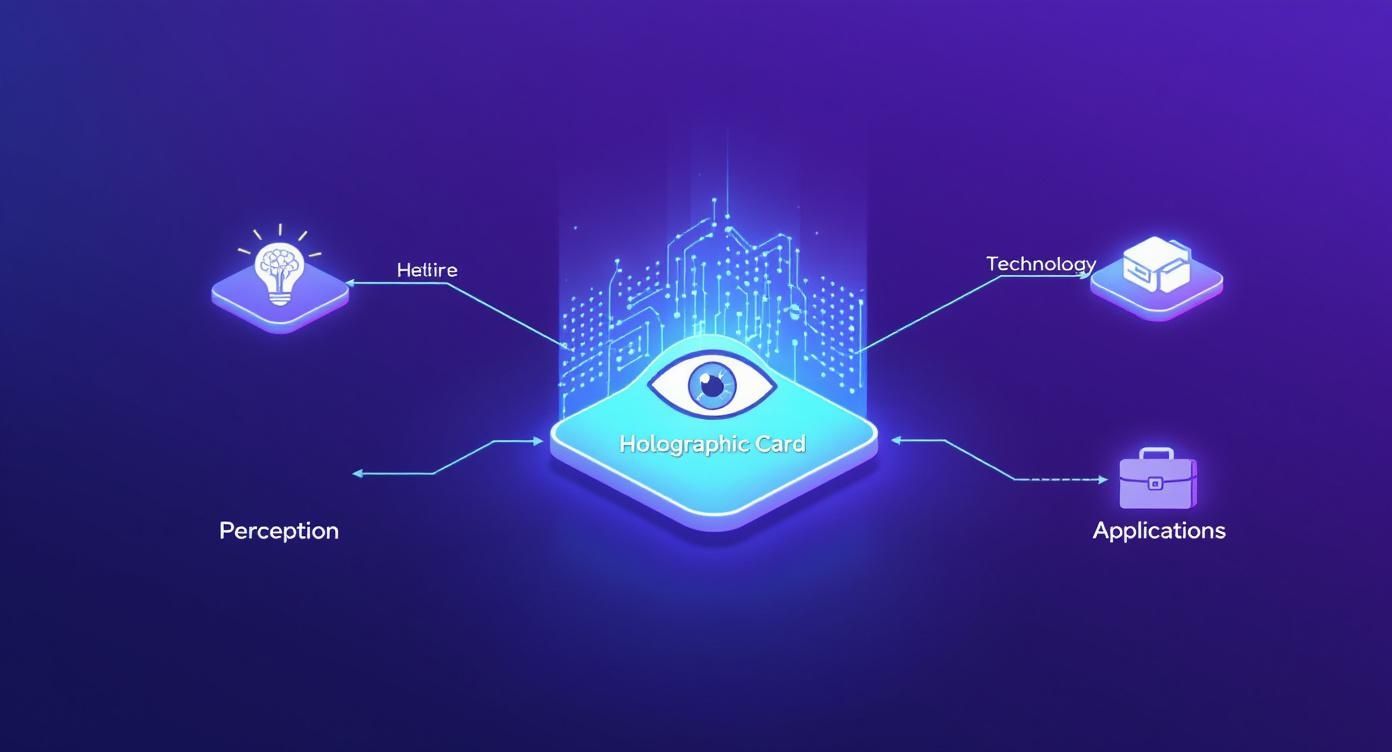
As you can see, the final card is a mix of precise engineering, human psychology, and practical application. Each piece of the puzzle is vital to creating a card that really makes an impact.
If you're thinking about producing your own holographic cards, getting a handle on these concepts is a game-changer. The choice between a complex 3D scene versus a simple motion flip affects everything from your initial artwork to your final production costs. It’s the difference between a simple, eye-catching gimmick and a truly immersive piece of art.
Knowing how the illusion works gives you the power to make smarter creative choices. You can start designing for the medium, ensuring your final product not only looks good but feels intentional and thoughtfully crafted. That extra bit of attention to detail is what separates a generic novelty from a collectible or marketing tool that people will actually remember.
The secret sauce to a truly breathtaking 3D holographic card isn't just the artwork—it's the material it’s printed on. Think of it like a painter choosing their canvas. The cardstock and finish you select can completely transform a simple design into something that feels alive in your hands. Getting these choices right is the first step to making a memorable impression.
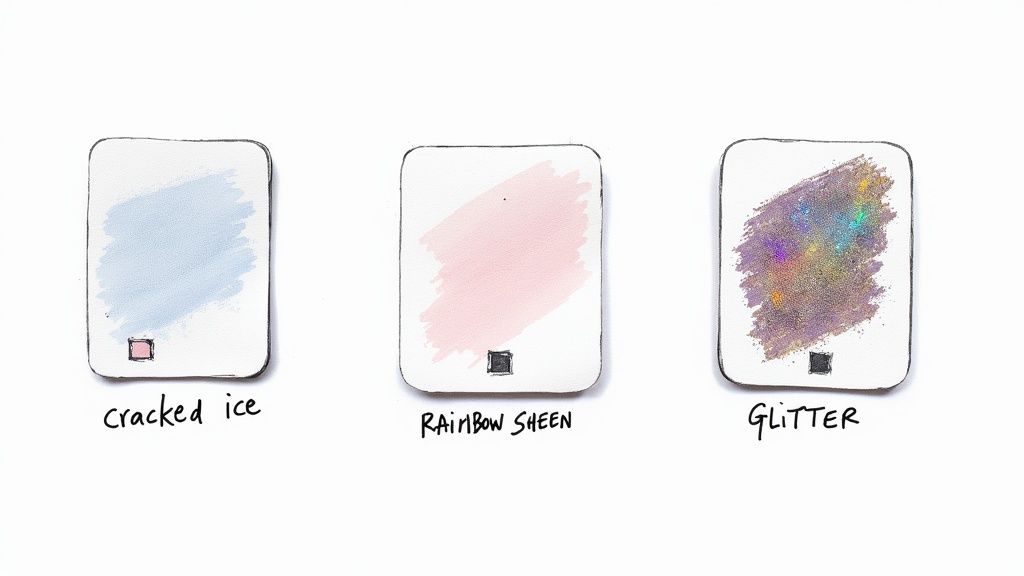
Printable holographic cardstock is your foundation, and it comes in a whole range of patterns that react to light in wildly different ways. This is where the magic really starts.
It's no surprise that this stuff is getting more popular. The market for printable holographic cardstock is projected to hit around $500 million in 2025, and it’s only growing from there. This trend shows a real hunger for eye-catching print materials in everything from custom packaging to unique marketing swag. You can dig into the numbers in this printable holographic cardstock market report.
Choosing the right pattern is all about setting the mood for your card. Each finish provides a distinct background texture that can either sync up with your artwork or create a striking contrast. It's a creative choice.
Remember, these patterns aren't just for show—they're an active part of your design. A smart choice can guide the viewer's eye, highlight key details in your art, and really drive home the theme of the card.
Picking the right finish can feel overwhelming with all the options out there. To help you decide, here’s a quick breakdown of the most common holographic card finishes and what they’re best suited for.
Ultimately, the best choice depends on the story you want your card to tell. Don't be afraid to order samples and see how each one interacts with your specific artwork before committing to a full print run.
Once you've picked your base cardstock, you can take things to another level with advanced finishing techniques. This is where you can add layers of texture and contrast that make a design truly pop.
One of the most powerful tricks in the book is using a matte varnish on specific parts of the glossy holographic foil. This creates an awesome push-and-pull between the matte areas that absorb light and the holographic sections that reflect it.
For instance, you could have a character printed over a busy "cracked ice" background. By applying a matte finish just to the character, they’ll stand out dramatically from the shimmering, chaotic background. It’s a simple technique with a huge impact.
This kind of selective finish makes the card a more tactile object. It invites people to touch it, tilt it, and engage with it on a deeper level. These are the thoughtful little details that turn a simple piece of cardstock into a premium, collectible experience.
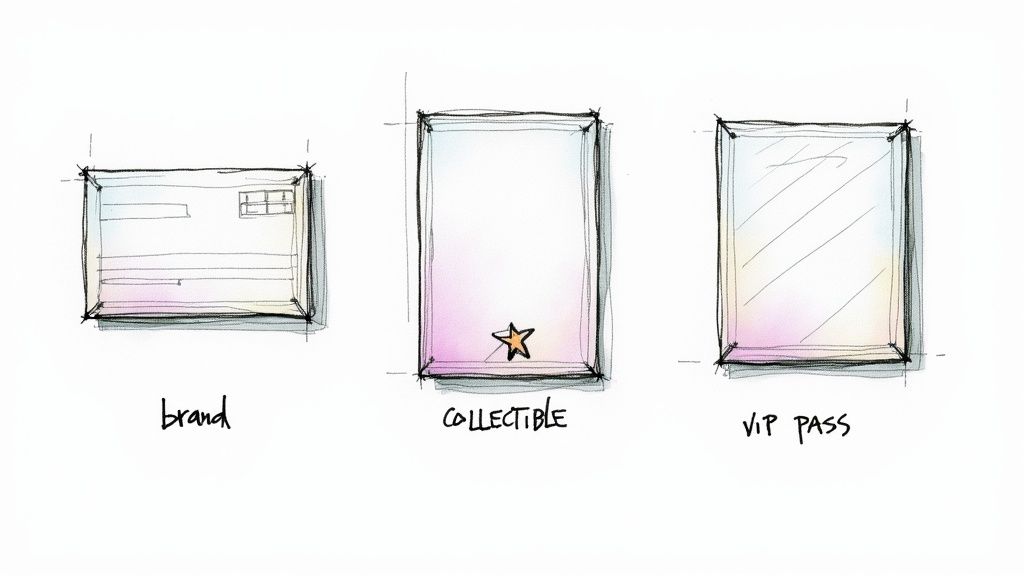
The real magic of 3D holographic cards happens when you move them from a cool idea to a practical tool. In the incredibly crowded worlds of marketing and collectibles, just being seen isn't enough—you have to be remembered. These cards give you a physical, tangible way to slice through the noise and create a genuine "wow" moment.
Picture this: you hand someone a business card, but instead of flat paper, it's a shimmering, multi-dimensional object that comes alive in their hands. What happens next is instinct. They’ll tilt it, watch the light play across it, and truly engage with it. That immediate interaction is why holographic mailers and business cards consistently outperform their standard counterparts. They make people pause and take a second look.
This isn't just a niche trend. The global 3D holographic market was valued at around $0.68 billion in 2024 and is projected to hit $1.86 billion by 2029. That kind of growth signals a clear shift toward more dynamic and engaging visual technologies across the board. You can find more data on the expanding holographic market size on openpr.com.
Beyond just snagging attention, holographic elements change the entire vibe of a brand. They add a layer of sophistication and value that plain old cardstock just can't compete with.
3D holographic cards are a perfect example of modern promotional products that go beyond just putting a logo on something; they create a lasting impression.
Using a holographic card is like giving your audience a small piece of art. It’s an intentional choice that communicates creativity, attention to detail, and a forward-thinking attitude.
In the world of collectibles, whether it's trading cards or limited-edition art, visual appeal and rarity are king. Holographic cards are the ultimate signal for a "chase" or rare item. Their distinct look makes them instantly recognizable as something special, which naturally drives up their desirability and value on the secondary market.
This same psychology works wonders for crowdfunding campaigns. Offering a set of exclusive 3D holographic cards as a reward tier or a stretch goal can seriously energize your backers. It gives them a unique collectible that feels tied to the project’s success. This is where smart campaign management really shines. For example, PledgeBox is free to send the backer survey and only charges a 3% fee on any upsell revenue if there's any. This setup lets creators offer awesome add-ons without any upfront platform fees eating into their budget.
Think of it like this: the Kickstarter pledge manager is like Amazon—a huge marketplace where you launch your idea to the world. A pledge manager like PledgeBox, on the other hand, is like Shopify, giving you a dedicated backend to manage your community and sell exclusive items after the campaign is over. It’s the perfect system for handling special rewards, and you can learn more about how great art and design can fuel Kickstarter success right here on our blog.
For creators on platforms like Kickstarter and Indiegogo, cutting through the noise is everything. A successful campaign is built on rewards that don't just feel valuable but spark real excitement. This is where 3D holographic cards can be your secret weapon, turning a simple reward tier into a collectible someone just has to have.
These cards are brilliant for energizing your backer community. You can use them as exclusive tier rewards, tempting add-ons, or exciting stretch goals that push people to bump up their pledges. The premium, tangible feel of a holographic card makes backers feel like they're getting a true piece of the project's history—something way more special than a standard print.
But managing unique rewards like these takes the right setup. Once a campaign is funded, the real work starts: coordinating surveys, collecting shipping info, and handling add-ons. This post-campaign phase can bog down creators in logistics, but it's also a golden opportunity to raise even more funding.
This is exactly why a dedicated pledge manager is so essential. While Kickstarter is your launchpad, a tool like PledgeBox becomes your mission control center after you've landed. It's built from the ground up to handle the messy details of backer management and fulfillment.
A huge plus for creators is the cost. PledgeBox is free to send the backer survey, so you can get all the essential information from your backers without any upfront cost. That's a massive relief when you're managing a tight post-campaign budget. The platform only takes a 3% fee on funds raised from upsells if there's any, which means it only makes money when you make more money.
This model is a game-changer because it encourages you to offer cool add-ons, like extra holographic card sets or other exclusive merch, without any financial risk.
Think of it this way: the Kickstarter pledge manager is like Amazon—a massive marketplace to get your product in front of a huge audience. PledgeBox, on the other hand, is like your personal Shopify storefront. It gives you direct control over your backer relationships and the tools to upsell exclusive items after the campaign is officially over.
Using holographic cards as post-campaign add-ons is a seriously powerful strategy. The people who've already backed your project are your biggest fans, and they're often eager to grab extra items if you give them the chance.
Here’s a simple playbook to make it work:
This approach doesn't just delight your existing backers; it boosts your overall funding total long after the campaign clock has run out. Managing a complex project like a custom deck of cards comes with its own set of challenges, but with the right strategy, the payoff can be huge. If you're diving into this world, you can learn more from our guide on launching playing cards on Kickstarter. This smart use of a pledge manager turns a simple reward into a major revenue driver for your project.
Even after getting a handle on the tech and its potential, you probably still have a few practical questions about actually making 3D holographic cards. Let's clear those up. This section tackles some of the most common queries we hear, covering everything from design basics to the realities of production, so you can move forward with confidence.
One of the first things creators ask is about the minimum order quantity, or MOQ. For professionally printed holographic cards, especially those with cool lenticular effects, the MOQ is usually higher than for standard printing. You're typically looking at a starting point of 500 or 1,000 units.
Why so high? The setup process for holographic and lenticular printing is pretty involved and expensive. Getting the initial calibration right, creating the plates, and aligning the materials takes a significant investment, which makes tiny print runs economically impractical for the printer.
You might be surprised by how tough these cards are. Most are printed on sturdy cardstock and then laminated or coated. This top layer is key—it protects the delicate holographic foil or lenticular lens from scratches, scuffs, and moisture. With just a little care, they can last for years, making them perfect for collectibles and marketing materials that need to stand up to being handled.
The main takeaway here is that durability isn't just an afterthought; it’s baked into the process. The same lamination that seals in the holographic magic also acts as a protective shield, ensuring the "wow" factor doesn't fade.
Designing for a 3D effect is a different beast than standard graphic design. If you want a deep, layered 3D scene, you'll need to provide your artwork in layered files, like a Photoshop PSD. Think of each layer as a different plane of depth—the printer uses these to build the final composite image.
For a simpler flip effect, you just need to supply the two (or more) separate images you want to alternate between. Always, always check with your printer for their specific file requirements and ask for a design template. It's the best way to guarantee a great result.
As you'd probably guess, 3D holographic cards cost more to make than plain old printed cards. The final price can be anywhere from 2 to 5 times higher per card. This depends on how complex the effect is, how many you order, and the materials you choose. The specialized equipment, unique materials, and longer setup time all add to the higher price tag.
But it’s important to think of this as an investment in impact and memorability, not just a cost.
Absolutely! They are a fantastic choice for add-ons. The key is using the right tools to manage these premium rewards. A pledge manager is essential here. For instance, PledgeBox is free to send the backer survey, which is a massive help for creators trying to stick to a budget. The platform only takes a 3% fee on upsell revenue if there's any.
This model makes offering premium add-ons completely risk-free. If this sounds like a strategy you'd want to explore, we've got a whole guide covering what you should know about Kickstarter add-ons. It's a lot like a popular e-commerce strategy: think of the Kickstarter pledge manager as Amazon for launching your project and a pledge manager like PledgeBox as Shopify for managing your customers and selling more products afterward.
Ready to take your crowdfunding campaign to the next level with powerful tools for backer management and upsells? PledgeBox provides an all-in-one solution designed for creators like you. Click here to learn more and get started for free!
PledgeBox
The All-in-One Toolkit to Launch, Manage & Scale Your Kickstarter / Indiegogo Campaign