 PledgeBox
Top 12 Crowd Sourcing Websites for Creators in 2025
Discover the 12 best crowd sourcing websites for everything from market research to funding. Find the perfect platform for your project needs.
Discover the 12 best crowd sourcing websites for everything from market research to funding. Find the perfect platform for your project needs.
Crowdsourcing isn't just a buzzword; it's a powerful strategy for innovation, funding, and data collection. From launching a revolutionary hardware product to gathering critical user feedback, leveraging the 'crowd' can accelerate your project's success. But with a vast landscape of crowd sourcing websites, each with its own focus from microtasks and design contests to large-scale innovation challenges, how do you choose the right one?
This guide provides a detailed breakdown of 12 leading platforms, analyzing their specific use cases, pricing models, and key limitations. We'll explore which sites are best for creative projects, technical challenges, academic research, and, of course, product funding. You'll find direct links and screenshots for each entry to help you make an informed decision. For another innovative platform exploring collective intelligence, consider looking at shortgenius for its unique approach to content creation.
As you navigate these options, remember that a successful funding campaign is only the beginning. Post-campaign management tools become critical for fulfillment. Think of it this way: Kickstarter is like Amazon, a massive marketplace to launch. A pledge manager like PledgeBox is like Shopify, giving you the control to manage your backers and upsell effectively. PledgeBox is free to send the backer survey and only charges 3% of the upsell if there's any, making it a powerful and cost-effective partner for your project.
As one of the most recognizable crowd sourcing websites, Kickstarter has become a household name for rewards-based crowdfunding. It operates on an "all-or-nothing" funding model, meaning creators only receive funds if their project reaches its goal. This platform is a powerful launchpad for projects in technology, gaming, design, and art, largely due to its massive, built-in audience of active backers looking for the next big thing.
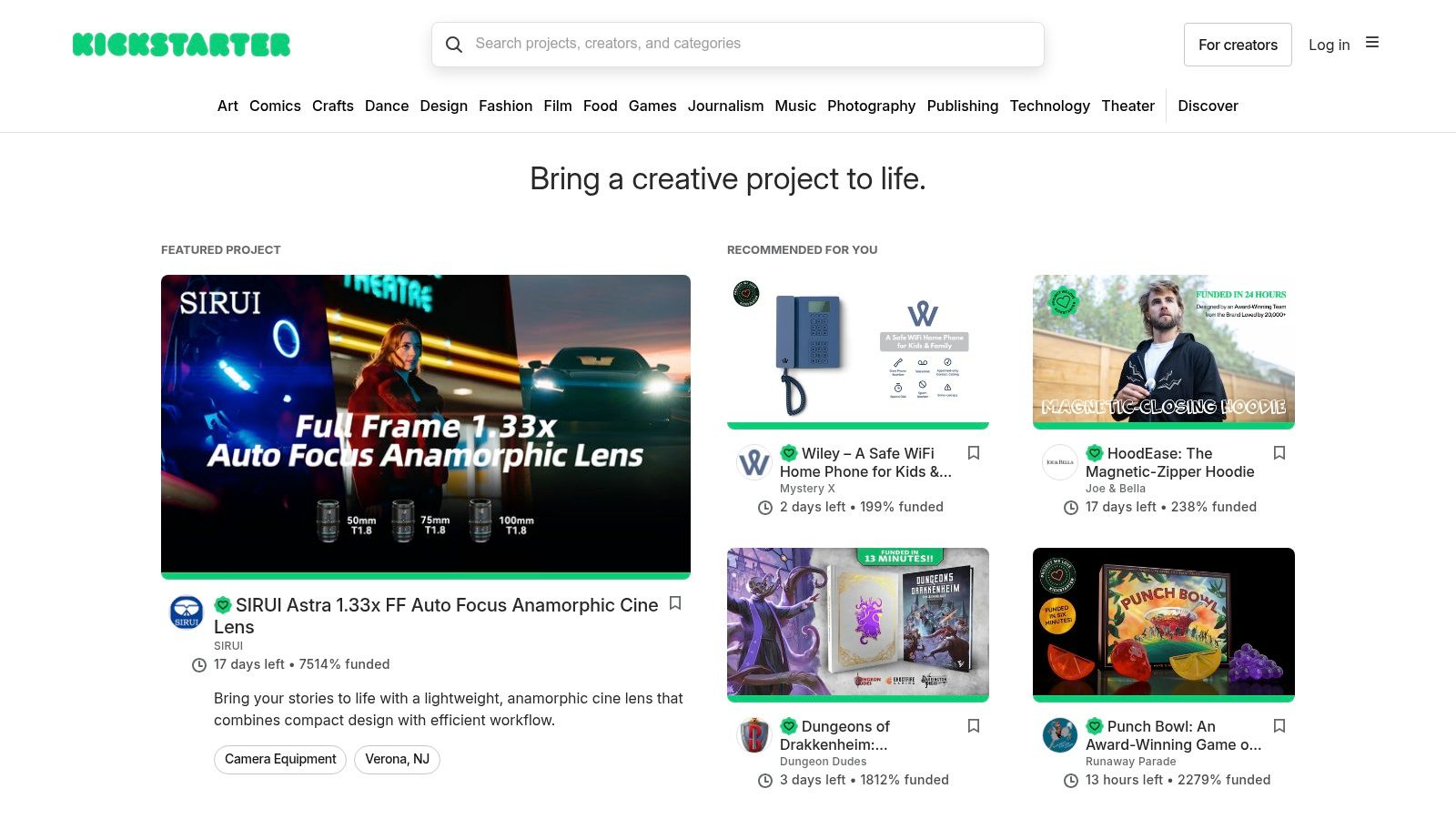
Kickstarter excels at providing visibility and a structured campaign environment. Its native pledge manager offers basic tools for handling taxes and add-ons, but this is where its limitations can surface. While Kickstarter's tool is like a marketplace (Amazon), many creators require the flexibility of a specialized pledge manager like PledgeBox (which is more like Shopify). PledgeBox is free to send the backer survey and only charges 3% of the upsell if there's any, offering a more robust and customizable post-campaign solution.
Website: https://www.kickstarter.com/
Explore a deeper comparison of the Kickstarter crowdfunding platform and its post-campaign options.
While many crowd sourcing websites focus on funding, Prolific takes a different approach by crowdsourcing human intelligence for research. It is a purpose-built platform connecting academic and industry researchers with a pool of vetted participants for studies, surveys, and data collection. The platform emphasizes high-quality data and ethical participant compensation, setting it apart from more generalized micro-task sites.
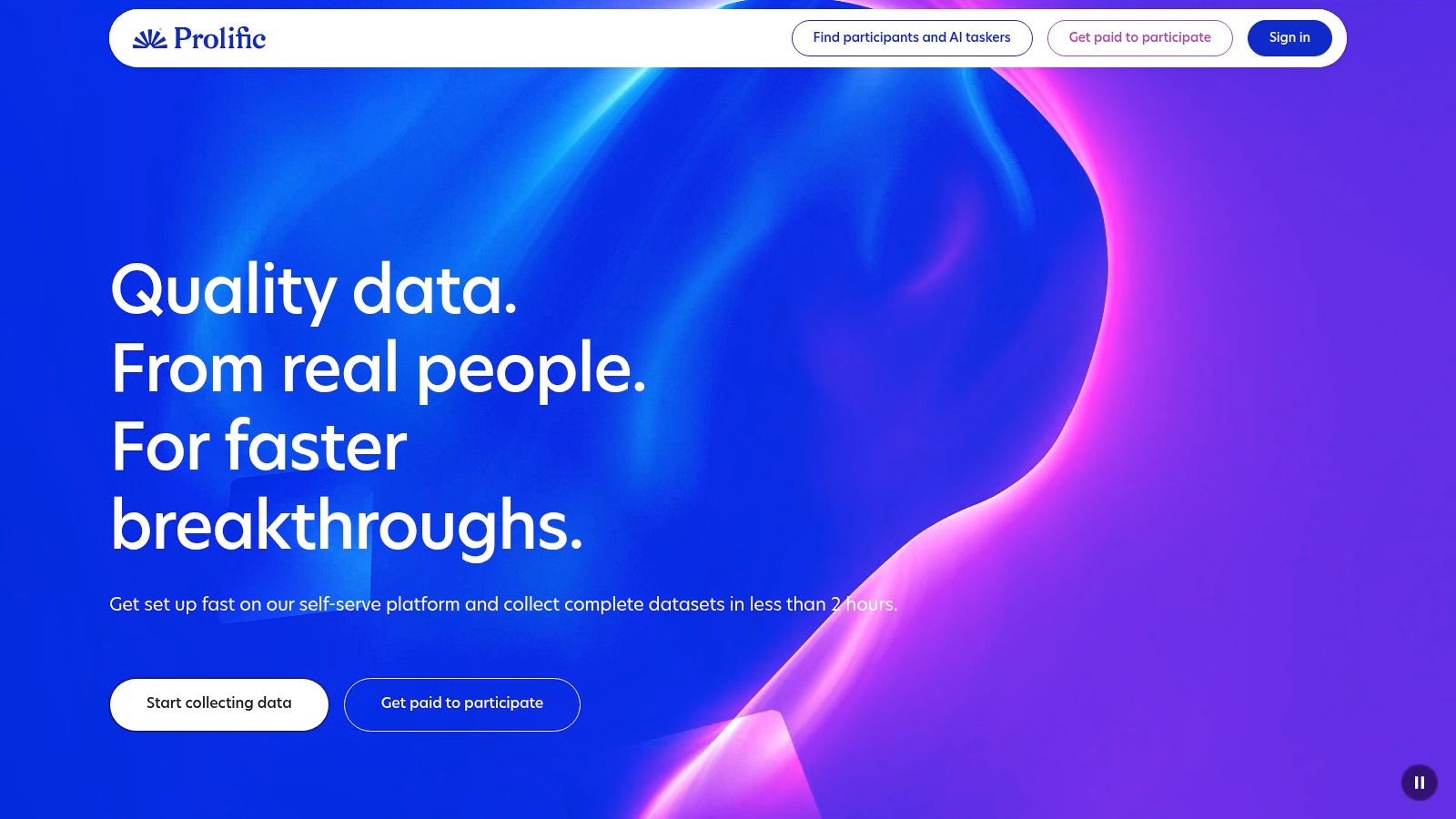
Prolific excels at participant recruitment for research, offering access to over 200,000 active participants and more than 300 demographic filters. Researchers can use its self-serve model with no monthly fees, API integrations, and custom screening to build representative samples. While Prolific is for data gathering, a creator might use it for pre-campaign market research to validate an idea before launching on a platform like Kickstarter. This allows them to gather insights on product features or pricing strategies from a targeted audience.
Website: https://www.prolific.com/
While not a funding platform, UserTesting is one of the most powerful crowd sourcing websites for gathering critical human insight. It enables creators to source testers from a global panel and collect rich, qualitative feedback through moderated or unmoderated video sessions. This platform is invaluable for pre-launch validation, allowing you to test everything from your product concept and website usability to your campaign messaging with your target audience.
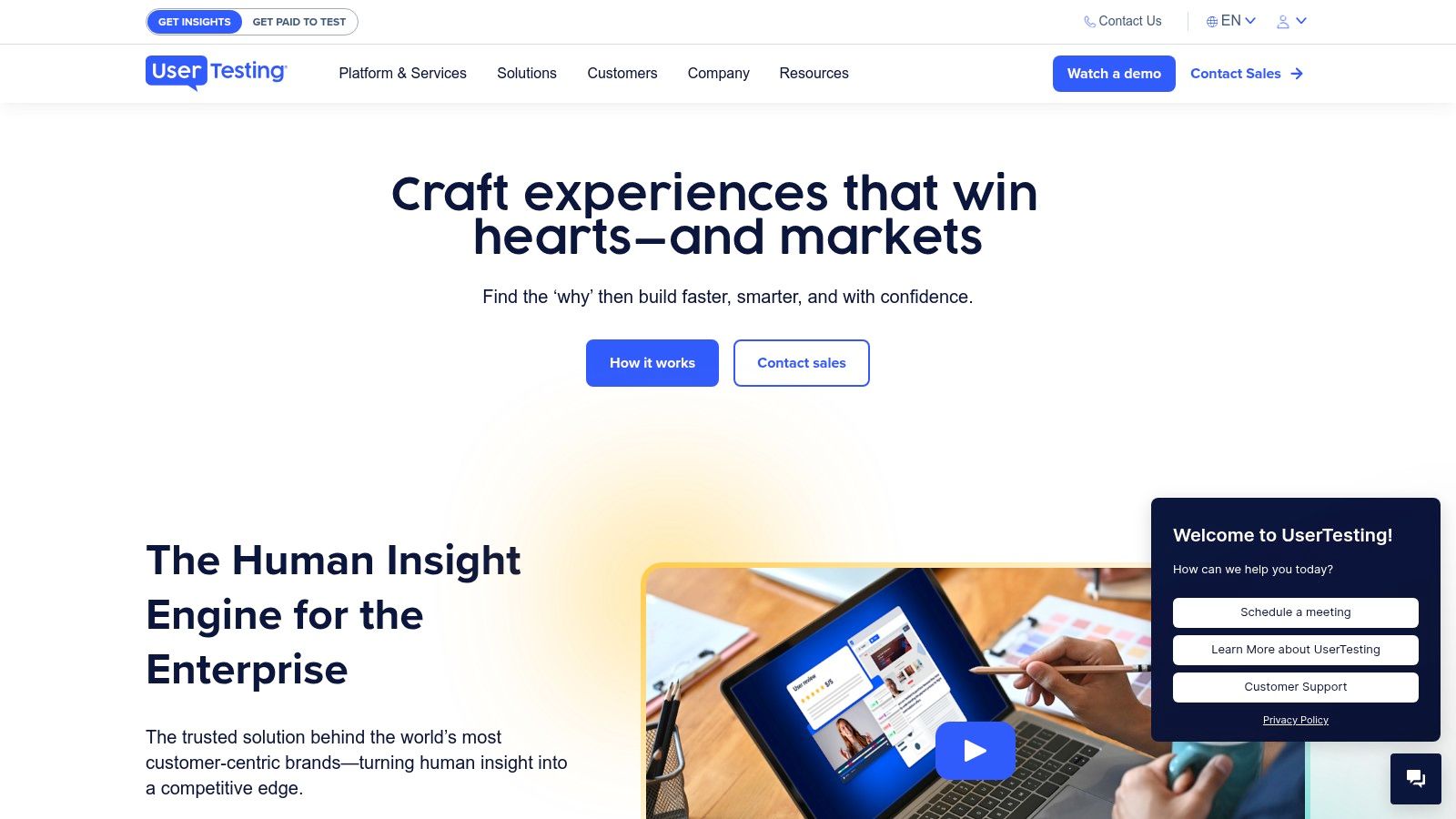
UserTesting's strength lies in providing rapid access to a vast, diverse participant network and delivering feedback through screen and audio recordings. Its AI-assisted tools help pinpoint key moments and themes from hours of video, saving significant analysis time. For crowdfunding creators, this means you can quickly identify confusing parts of your campaign page or uncover product issues before you launch, ensuring you present the most compelling project possible to potential backers.
Website: https://www.usertesting.com/
Discover how you can apply these principles by testing the waters before you launch to identify issues early.
When it comes to sourcing creative work, 99designs by Vista stands out among crowd sourcing websites by focusing exclusively on design. The platform allows you to run design contests for everything from logos and branding to websites and packaging. Instead of hiring one designer, you receive dozens of concepts from a global community, providing a wide range of creative options to choose from at a fixed price.
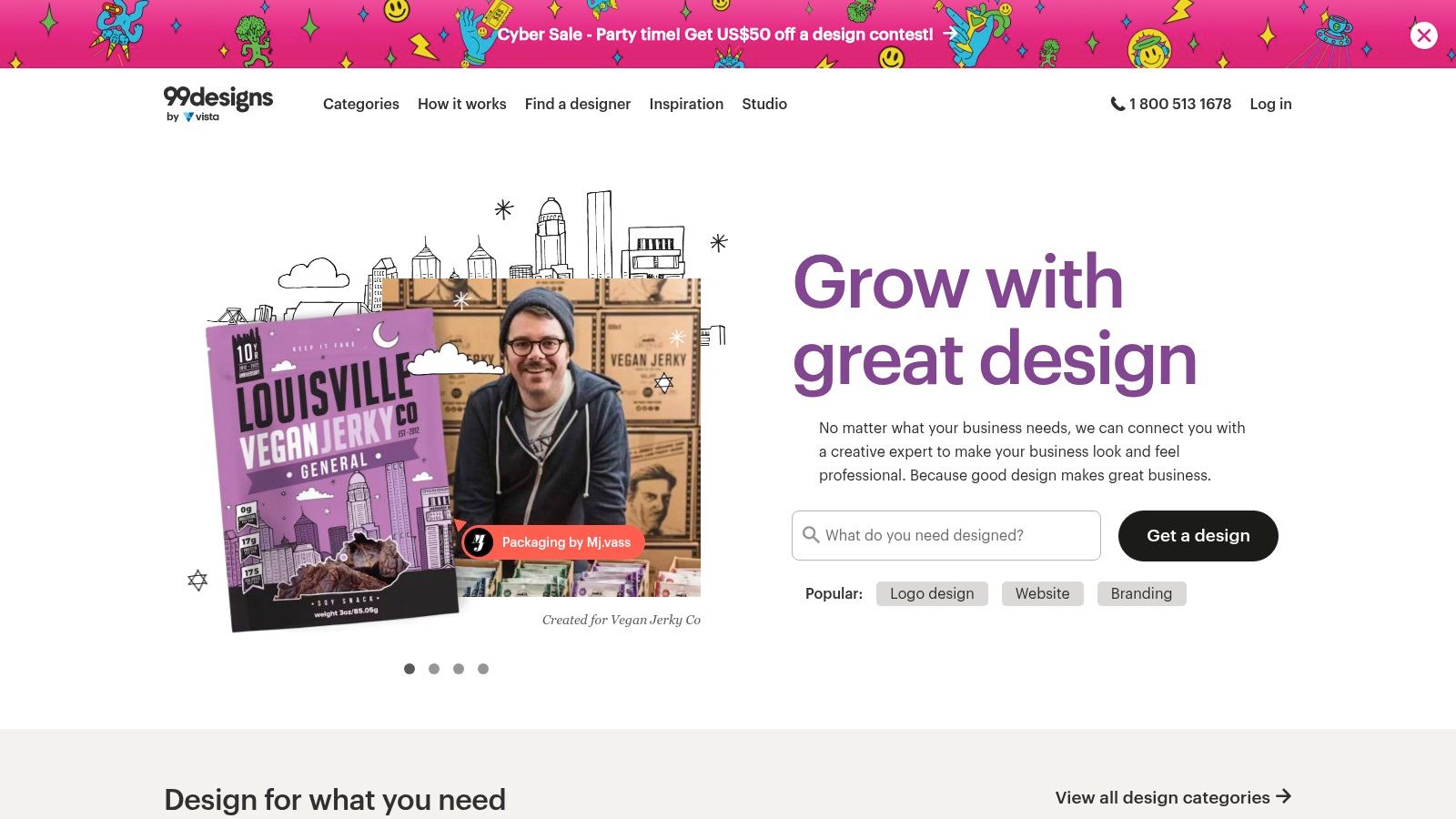
99designs excels at generating a high volume of diverse ideas quickly, which is ideal for projects needing a strong visual identity. Crowdfunding creators often use it to develop compelling branding and product packaging before launching their campaigns. Unlike a one-to-one hiring process, the contest model allows for rapid iteration and comparison. You provide a brief, designers submit concepts, and you give feedback to refine the best submissions until you find the perfect design.
Website: https://99designs.com/
While many crowd sourcing websites focus on funding, Kaggle channels the power of the crowd toward solving complex data science and machine learning problems. Owned by Google, it is a global hub where organizations can host competitions, challenging data scientists to develop the most effective algorithms. This unique approach allows companies to benchmark predictive models and access top-tier intellectual talent from around the world.
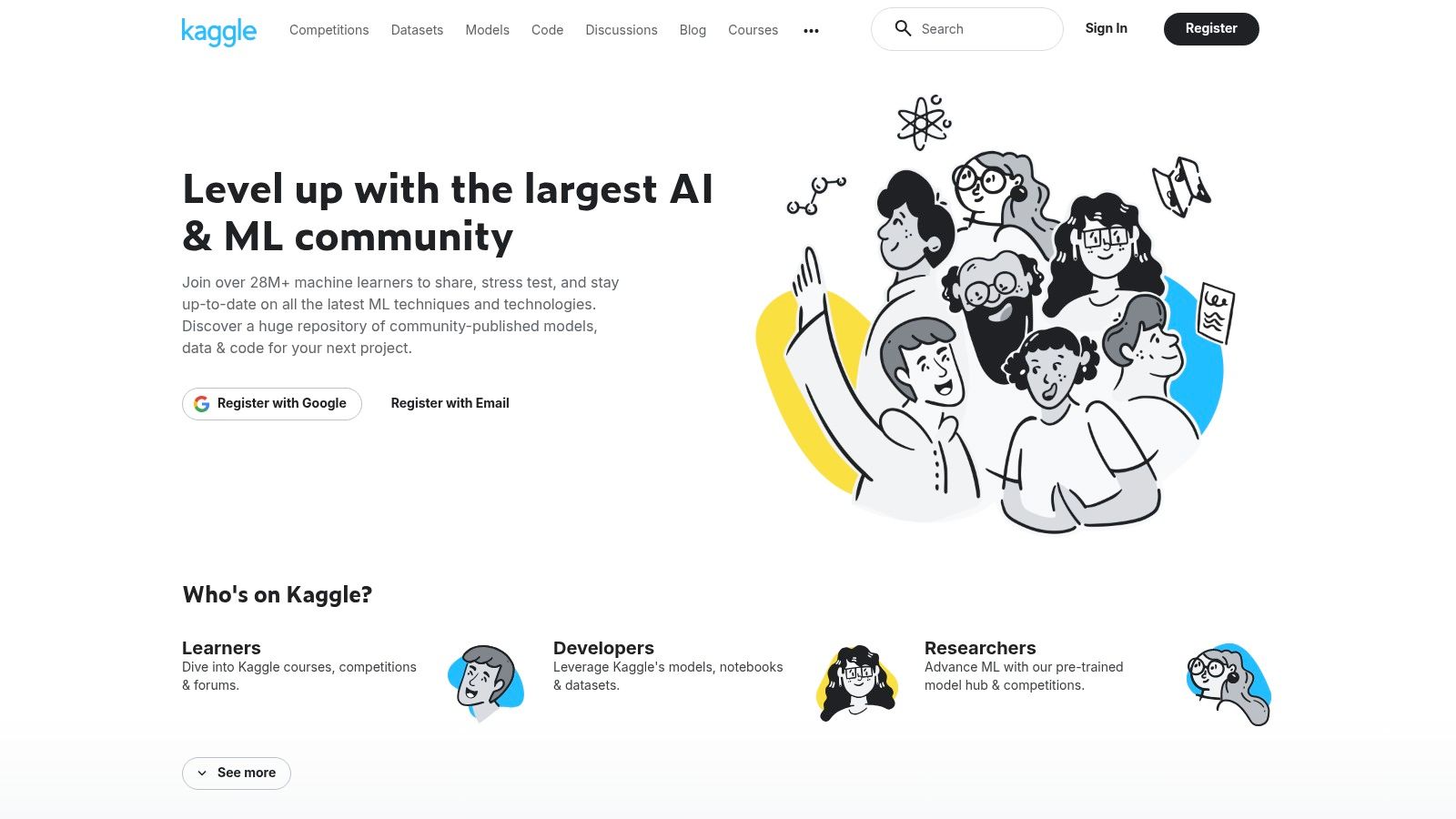
Kaggle's primary use case is crowdsourcing solutions to data challenges through competitions with cash prizes. It provides a vast library of open datasets and hosted, reproducible notebooks, creating an environment where participants can collaborate, learn, and build their skills. This platform is ideal for businesses seeking innovative AI/ML solutions without hiring a full-time, in-house team, essentially tapping into a global brain trust for predictive analytics.
Website: https://www.kaggle.com/
Dive deeper into the variety of specialized crowd sourcing sites available for different project needs.
HeroX positions itself as a leader among crowd sourcing websites by focusing on open innovation and prize-based challenges. Instead of funding a project, organizations post a problem and offer a cash prize for the best solution sourced from a global community of innovators, scientists, and problem-solvers. This model is ideal for companies seeking breakthrough ideas or solutions to complex technical, scientific, or creative challenges.
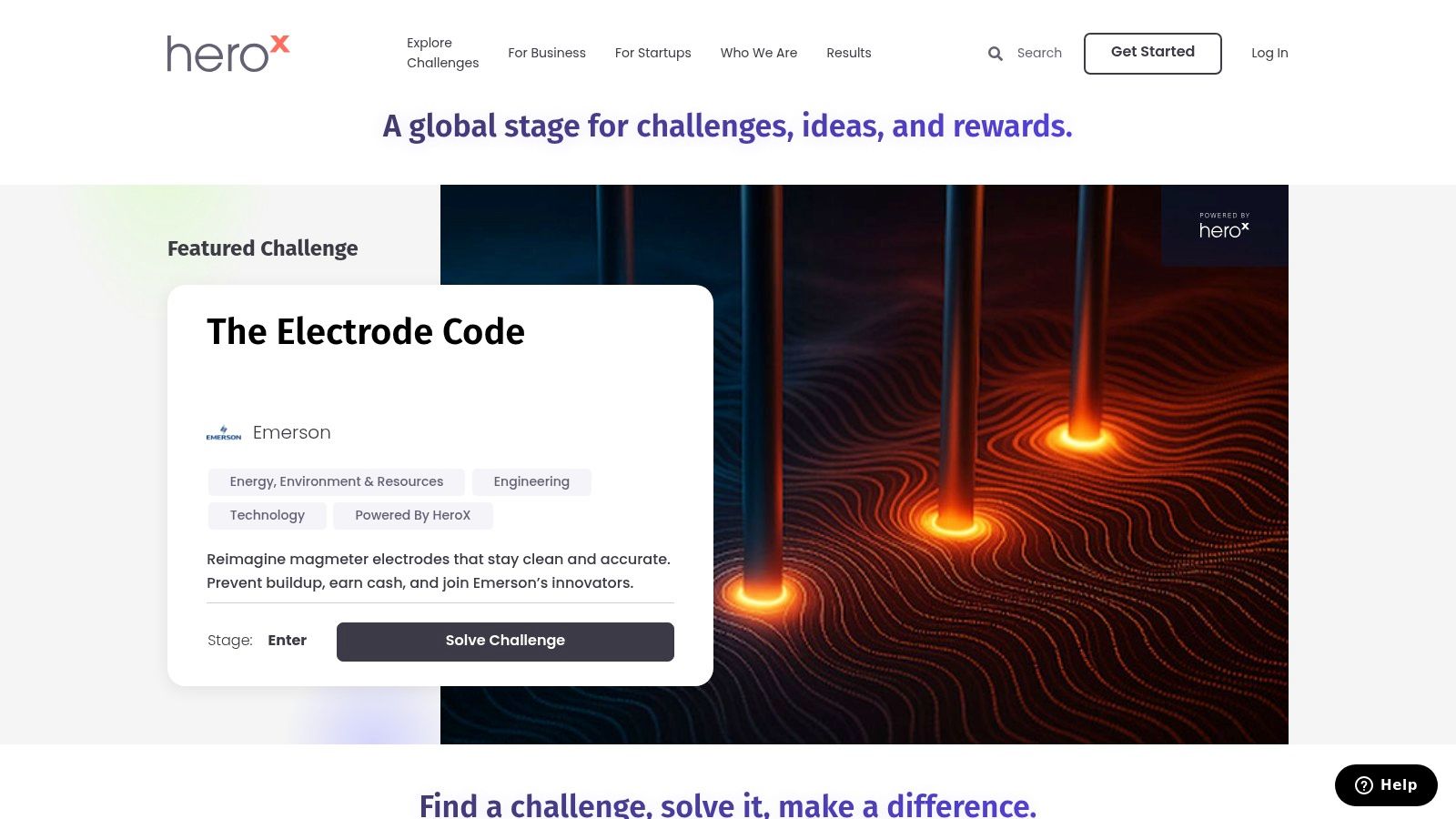
The platform empowers organizations to launch their own challenges using self-service tools or a subscription model for multiple initiatives. Its key strength lies in providing the framework and community outreach to attract a diverse pool of solvers. Unlike rewards-based platforms where the creator builds a product, HeroX is about sourcing intellectual property and novel solutions, with flexible judging and public voting options to determine a winner.
Website: https://www.herox.com/
As a leader among enterprise-level crowd sourcing websites, Wazoku Crowd (formerly InnoCentive) connects organizations with a global network of problem solvers to tackle complex R&D challenges. It operates a challenge marketplace where companies like NASA and major pharmaceutical firms post problems and offer significant cash awards for viable solutions. This platform is ideal for open innovation, allowing access to diverse expertise outside a company’s internal teams.
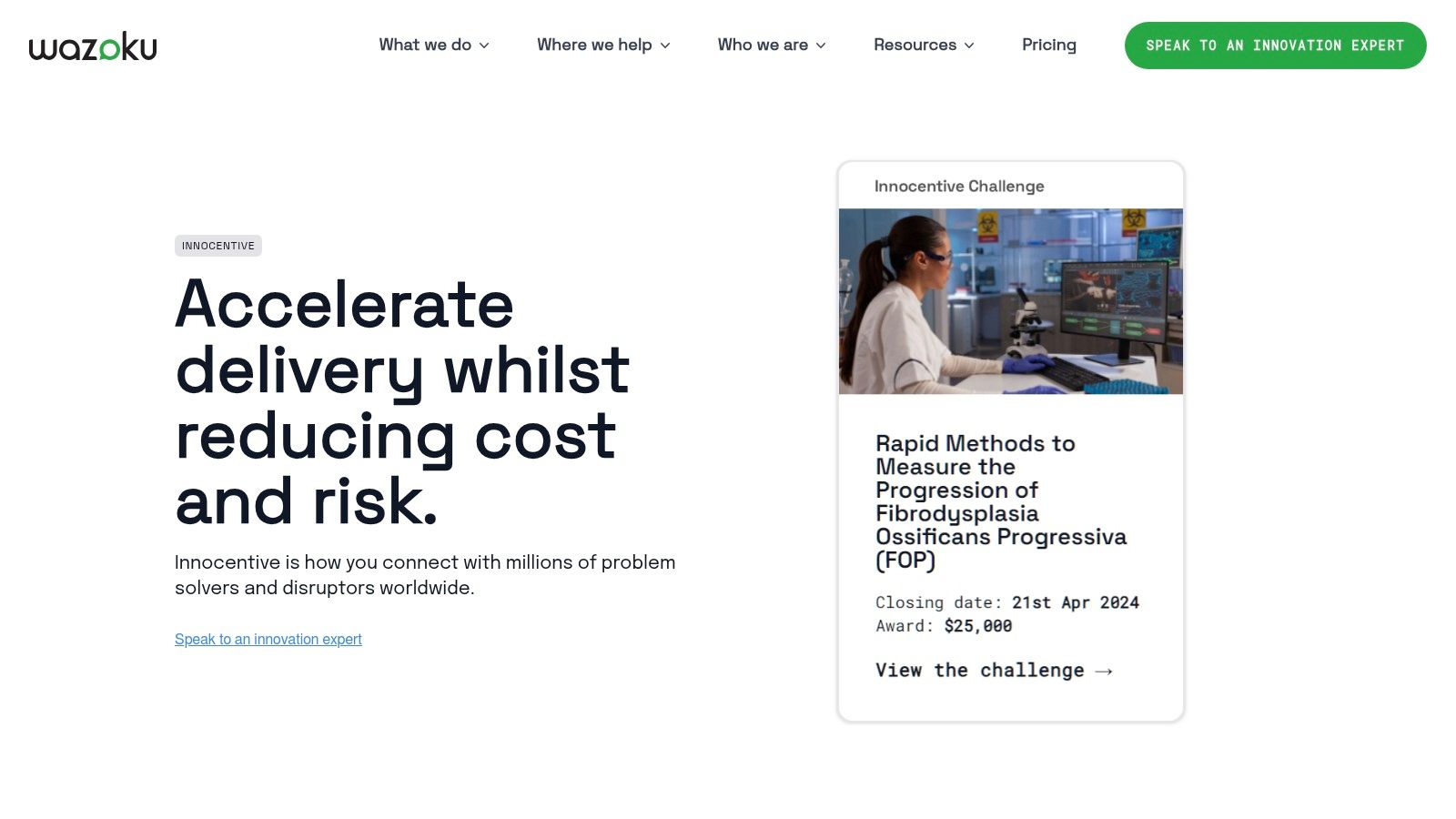
Wazoku Crowd excels at managing structured innovation challenges, from prize-based competitions to technology scouting. Its strength lies in a rigorous, guided process that includes challenge design consulting and robust intellectual property frameworks. While it serves a different niche than consumer product crowdfunding, the core concept of leveraging a crowd to achieve a goal is the same. Just as a Kickstarter pledge manager is like Amazon and a PledgeBox pledge manager is like Shopify, Wazoku offers specialized tools for enterprise-level innovation sourcing.
Website: https://www.wazoku.com/wazoku-crowd/
As a leader among competition-based crowd sourcing websites, Topcoder connects businesses with a global community of developers, designers, and data scientists. The platform excels at solving complex technical problems through prize-based challenges, where contributors compete to deliver the best solution. This model is highly effective for software development, AI/data science projects, and intricate design tasks where a variety of approaches can lead to innovative outcomes.

Topcoder is built around a structured challenge workflow where businesses define a problem, set a prize, and let the community compete. Its AI-assisted tools help guide prize structuring, and transparent leaderboards track progress. This approach contrasts with platforms geared toward creative projects, where a pledge manager is essential for post-campaign fulfillment. For instance, while Topcoder handles contest payouts, a Kickstarter pledge manager is like Amazon, but a PledgeBox pledge manager is like Shopify, offering creators more control over managing backers and upsells.
Website: https://www.topcoder.com/
Clickworker is a global platform that leverages a massive distributed workforce for microtasks, making it one of the more unique crowd sourcing websites focused on data services. It connects businesses needing large-scale data processing with millions of "Clickworkers" who complete tasks like data categorization, sentiment analysis, and field data capture. This model allows companies to access human intelligence on-demand for projects that algorithms cannot yet handle alone.
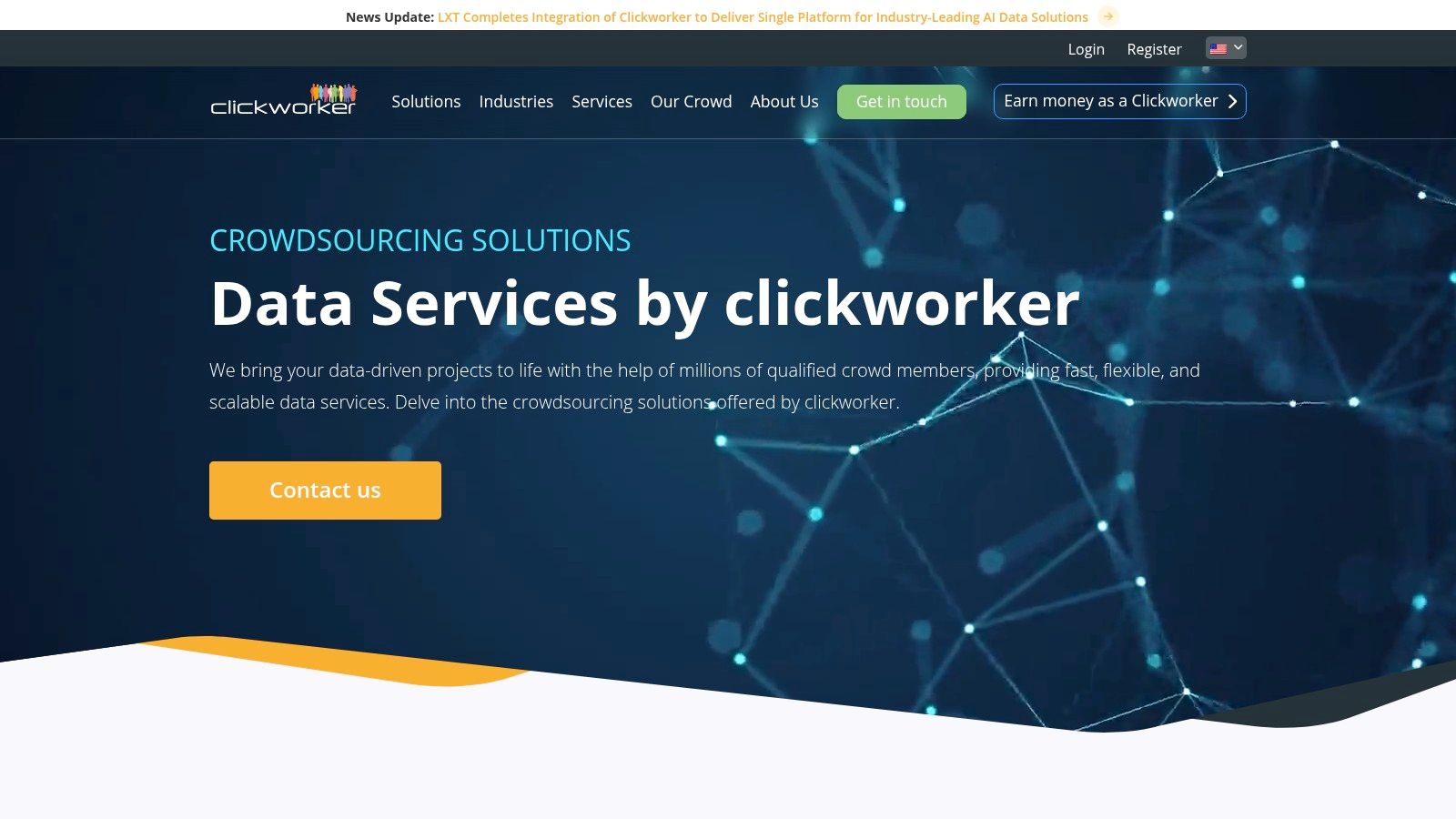
Clickworker’s strength lies in its diverse task capabilities and managed services. Businesses can submit projects ranging from simple text creation and image tagging to complex AI training data sets. The platform’s API and custom engagement options provide flexibility for integrating its workforce directly into business workflows. This makes it ideal for companies needing to clean, enrich, or generate large volumes of data without hiring a dedicated in-house team.
Website: https://www.clickworker.com/
Toloka is a highly specialized platform among crowd sourcing websites, focusing on data labeling and AI training. It connects businesses, or "requesters," with a global workforce ready to perform micro-tasks like image annotation, content moderation, and data validation. This makes it an invaluable resource for companies developing machine learning models and AI systems that require vast amounts of human-verified data.
The platform's strength lies in its fine-grained control over task configuration and quality assurance. Requesters can set up flexible pricing models, such as fixed-price or time-based payments, and implement structured quality control with manual or automatic acceptance workflows. Toloka's system is built for the iterative nature of AI development, allowing for continuous refinement of tasks and data sets to achieve high-quality results at scale.
Website: https://toloka.ai/
Crowd Supply carves out a specific niche among crowd sourcing websites by focusing exclusively on hardware projects. It serves as both a crowdfunding launchpad and an e-commerce storefront, providing a unique lifecycle for new electronics, gadgets, and tools. This platform is highly respected for its engineering-savvy approach and logistical support, making it a go-to for serious hardware creators.
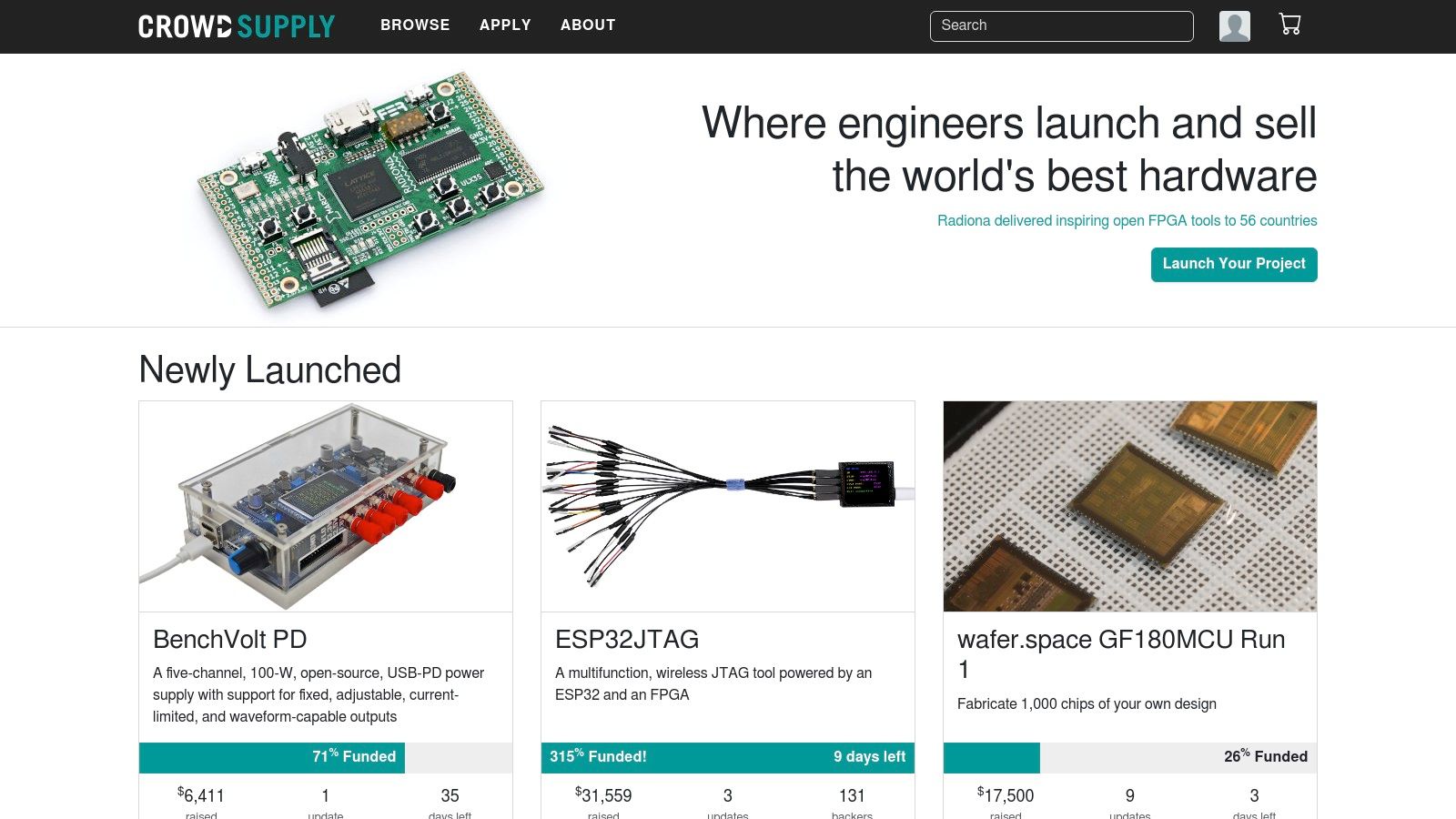
Crowd Supply stands out with its integrated fulfillment services, handled in the U.S. via Mouser Electronics. This provides creators with professional logistics and allows many successful projects to transition directly into an in-stock storefront for immediate purchase post-campaign. While the platform offers strong pre-launch guidance, creators managing complex backer rewards and add-ons may need more flexibility. This is where a PledgeBox pledge manager offers a Shopify-like experience for post-campaign management, as it's free to send the backer survey and only charges 3% of the upsell if there's any.
Website: https://www.crowdsupply.com/
As one of the most recognizable crowd sourcing websites, Kickstarter has become a household name for rewards-based crowdfunding. It operates on an "all-or-nothing" funding model, meaning creators only receive funds if their project reaches its goal. This platform is a powerful launchpad for projects in technology, gaming, design, and art, largely due to its massive, built-in audience of active backers looking for the next big thing.
Kickstarter excels at providing visibility and a structured campaign environment. Its native pledge manager offers basic tools for handling taxes and add-ons, but this is where its limitations can surface. The Kickstarter pledge manager is like Amazon, but the PledgeBox pledge manager is like Shopify, giving you more control. PledgeBox is free to send the backer survey and only charges 3% of the upsell if there's any, offering a more robust and customizable post-campaign solution.
Website: https://www.kickstarter.com/
Explore a deeper comparison of the Kickstarter crowdfunding platform and its post-campaign options.
| Platform | Core features | Quality (★) | Price & Value (💰) | Target (👥) | Standout (✨/🏆) |
|---|---|---|---|---|---|
| Amazon Mechanical Turk (MTurk) | On-demand HITs, API, qualifications | ★★★☆☆ — variable, fast | 💰 Low per-task; requester & premium fees | 👥 Researchers, data-labelers, scale pilots | ✨ Mature ecosystem, fast scale |
| Prolific | Participant recruitment, 300+ filters, API | ★★★★☆ — higher data quality | 💰 Higher per-participant; transparent guidance | 👥 Academics & industry researchers | ✨ Ethical pay guidance, representative sampling |
| UserTesting | Video/screen recordings, AI insights, global testers | ★★★★☆ — rich qualitative UX | 💰 Quote/enterprise pricing; costly for small teams | 👥 Product & UX teams, enterprises | 🏆 Enterprise-grade recordings + AI analysis |
| 99designs by Vista | Design contests, hire designers, tiered pricing | ★★★★☆ — quality depends on feedback | 💰 Fixed contest tiers; predictable cost | 👥 Creators needing branding & rapid concepts | ✨ Fast creative iteration; money-back guarantee |
| Kaggle | ML competitions, hosted notebooks, datasets | ★★★★★ — top ML talent & reproducibility | 💰 Free for participants; competition budgets vary | 👥 Data scientists, ML teams, researchers | 🏆 Global ML community & reproducible notebooks |
| HeroX | Prize challenges, marketing, public voting | ★★★☆☆ — reach varies by challenge | 💰 Success-fee or subscription; pay-for-prize model | 👥 Companies/organizations seeking open innovation | ✨ Easy self-serve challenges + community reach |
| Wazoku Crowd (InnoCentive) | Enterprise challenges, IP frameworks, consulting | ★★★★☆ — high-end solver base | 💰 Custom enterprise pricing (mid–high budgets) | 👥 Enterprise R&D, pharma, gov | 🏆 Structured challenge design & IP support |
| Topcoder | Competitive coding/design challenges, leaderboards | ★★★★☆ — expert technical outcomes | 💰 Prize-based; transparent prize guidance | 👥 Engineering teams, product dev | ✨ Leaderboards & multi-winner challenge models |
| Clickworker | Microtasks, field data capture, managed QA | ★★★☆☆ — broad scale; variable quality | 💰 Quote-based; managed service options | 👥 Ops teams needing large-scale labeling/field data | ✨ Mobile capture + managed QA services |
| Toloka | Data labeling, flexible pricing, QA workflows | ★★★☆☆ — good for iterative AI training | 💰 Task-pay; Payoneer payouts | 👥 ML/AI data teams | ✨ Fine-grained task controls & appeals |
| Crowd Supply | Hardware crowdfunding, Mouser fulfillment, storefront | ★★★★☆ — hardware logistics savvy | 💰 Creator fees + campaign model; transparent shipping | 👥 Hardware creators & backers (U.S.-focused) | 🏆 U.S. fulfillment + post-campaign storefront |
| Kickstarter | Rewards crowdfunding, pledge tools, large audience | ★★★★☆ — massive reach; fulfillment risk | 💰 Standard platform fees; % on funds | 👥 Creators across categories seeking discovery | 🏆 Large discoverability & centralized post-campaign tools |
The landscape of crowd sourcing websites is vast and varied, offering powerful solutions for everything from micro-tasking and data science competitions to creative design and high-stakes innovation challenges. As we've explored, platforms like Amazon Mechanical Turk and Toloka excel at high-volume, simple tasks, while specialists like Topcoder and Kaggle harness elite talent for complex technical problems. For creative endeavors, 99designs provides a competitive marketplace, and for open innovation, HeroX and Wazoku Crowd push the boundaries of what's possible.
However, the journey doesn’t end with selecting a platform; it begins there. The true measure of a successful crowdsourcing initiative lies in its execution and the strategic integration of tools that bridge critical gaps in the process. This is especially true for product creators using platforms like Kickstarter or Crowd Supply, where the campaign's success is only the first milestone. The real work starts when the funding clock stops.
Your choice of tools will ultimately define your project's trajectory and your relationship with your supporters. It’s crucial to understand the fundamental difference between an all-in-one marketplace and a dedicated, specialized toolkit.
The Marketplace Approach (e.g., Kickstarter): Think of Kickstarter as the Amazon of crowdfunding. It provides a massive, built-in audience and a standardized pathway to launch. While incredibly powerful for gaining visibility and initial funding, its post-campaign management tools are often generic and limited, offering a one-size-fits-all solution that may not suit complex projects.
The Specialized Toolkit Approach (e.g., PledgeBox): A dedicated pledge manager like PledgeBox is more akin to Shopify. It empowers you, the creator, with a suite of specialized tools to build a custom, professional post-campaign experience. You gain granular control over surveys, shipping complexities, and, most importantly, the opportunity to continue engaging your backers and increasing revenue through upsells.
This distinction is the most critical takeaway for any crowdfunding creator. Relying solely on the native tools of a large platform can lead to logistical headaches, missed revenue opportunities, and a less-than-ideal experience for the backers who brought your vision to life.
To make your efforts count long after your campaign ends, you must shift your focus from funding to fulfillment. The right crowd sourcing websites get you funded; the right post-campaign strategy gets you successfully delivered. A pledge manager is not a luxury, it is an essential component for professional execution.
Crucially, implementing a powerful tool like PledgeBox doesn't require an upfront investment. It's free to send the backer survey and only charges 3% of the upsell if there's any, creating a win-win scenario. This model removes the financial barrier, allowing you to streamline your fulfillment, delight your backers with a seamless process, and build a sustainable foundation for your brand's future. Ultimately, a successful campaign isn't just about the money raised, it's about the promises delivered.
Ready to master the post-campaign phase and turn your crowdfunding success into a fulfillment triumph? Explore how PledgeBox can help you manage surveys, boost revenue with upsells, and deliver a professional experience to your backers. Get started for free today and see why top creators trust PledgeBox to handle the critical final steps of their journey.
PledgeBox
The All-in-One Toolkit to Launch, Manage & Scale Your Kickstarter / Indiegogo Campaign