 PledgeBox
Your Ultimate Guide to the Medieval Spawn Kickstarter
Unlock everything you need to know about the Medieval Spawn Kickstarter. This guide covers pledge tiers, add-ons, fulfillment, and post-campaign management.
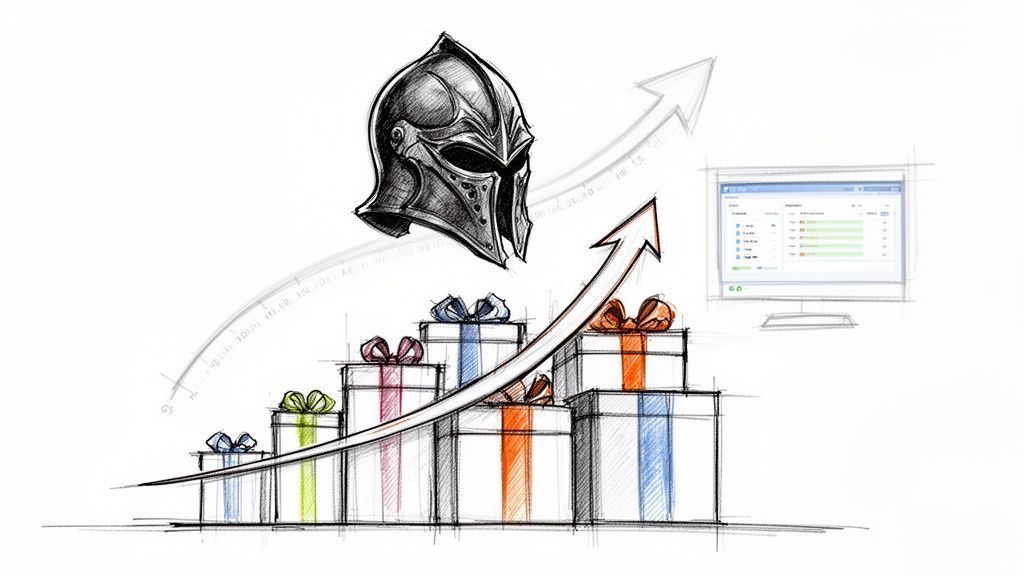
Unlock everything you need to know about the Medieval Spawn Kickstarter. This guide covers pledge tiers, add-ons, fulfillment, and post-campaign management.
When comics legend Todd McFarlane launched the Medieval Spawn Kickstarter, it wasn't just another campaign—it was a crowdfunding masterclass. This project tapped into a deep well of nostalgia and brand loyalty, and the results were nothing short of explosive. It was a perfect storm, proving that when you give dedicated fans exactly what they want, they'll show up in a massive way.

Coming off the high of his previous crowdfunding wins, McFarlane Toys knew exactly which buttons to push. The Medieval Spawn project wasn't just about selling a toy; it was about delivering a premium collectible that celebrated one of the most beloved versions of the character.
The centerpiece was a brand-new, fully articulated 7-inch figure loaded with an insane amount of accessories. Backers weren't just pre-ordering a figure—they were securing a piece of art complete with multiple weapons, shields, and swappable heads. This high perceived value is what lit the fuse for its incredible launch.
The launch numbers were simply staggering. The Medieval Spawn Kickstarter hit its $100,000 goal in just two minutes, crushing the eight-minute record set by his original Spawn campaign. But the momentum didn't stop there.
It rocketed to $1 million in a mere five hours, making it the fastest toys campaign to ever hit that milestone on Kickstarter. To top it all off, all 700 Premium 3-Packs were completely sold out in just 45 minutes. This kind of launch velocity is what happens when an established creator connects directly with a passionate audience. You can read more about the record-setting launch details here.
Of course, this kind of runaway success brings its own challenges. How do you manage thousands of backers, each with different orders, add-ons, and shipping addresses? That’s where a good pledge manager becomes absolutely critical.
It helps to think of it this way: Kickstarter's pledge manager is like the Amazon of crowdfunding—a massive marketplace to get your project funded. A pledge manager like PledgeBox, on the other hand, is your Shopify. It's the powerful backend that lets you manage your "store," send out surveys, and even sell more products after the campaign ends.
The best part for creators is the pricing. For instance, PledgeBox is free to send the backer survey and only charges 3% of any revenue you make from upsells. This smart model lets you handle all the post-campaign logistics without digging into your initial funding, turning what could be a headache into another opportunity to grow your project.
The secret to a killer crowdfunding campaign often lies in its reward structure. It needs to be simple enough for anyone to understand but compelling enough to get people excited. The Medieval Spawn Kickstarter absolutely nailed this balance, offering a tight set of pledge tiers that catered to everyone from casual fans to the most dedicated collectors.
This smart approach avoided the classic pitfall of overwhelming backers with too many choices. Instead, the core offerings were direct and desirable. You could grab a single figure in one of several awesome versions—the Classic Blue, the moody Black Edition, or even an unpainted Artist’s Prototype for the customizers out there. For those who wanted it all, a premium three-pack was on the table, which even included an autographed figure. Simple. Effective.
McFarlane Toys didn't muddy the waters with a bunch of unnecessary fluff. They knew fans were there for one thing: the figures. So, they kept the pledge structure laser-focused on that.
To give you an idea of how well this worked, the Medieval Spawn Kickstarter didn't just meet its $100,000 goal—it blew past it in about two minutes. Five hours later? It had already hit $1 million. This explosive start pulled in over 7,000 backers in the first 48 hours and showed just how powerful a well-designed campaign can be. It ultimately became the second highest-funded toy project on the entire platform.
Here's a quick look at how the main tiers stacked up:
| Pledge Tier | Core Contents | Price (Approx.) | Ideal For |
|---|---|---|---|
| Single Figure | One Medieval Spawn figure (e.g., Classic Blue, Black) | $125 | Casual fans or those wanting a specific version for their collection. |
| Three-Pack Bundle | All three figure versions, one of which is autographed. | $350 | Serious collectors who want the complete set and a signed piece. |
| Artist's Prototype | One unpainted Medieval Spawn figure. | $100 | Customizers and artists who love to paint their own figures. |
This table shows just how easy it was for backers to find the perfect pledge for their budget and collecting style.
Of course, the campaign didn't stop at just the main tiers. To keep the energy high and bump up the average pledge, they rolled out a series of awesome add-ons and stretch goals. As the funding climbed, new goodies like extra weapons or cool swappable heads were unlocked for every single backer. This made everyone feel like they were part of the win.
Think of a Kickstarter campaign like a pop-up online store. The way you organize your products (pledges) and upsells (add-ons) is crucial. If you're managing a project with a lot of moving parts, it can be helpful to look at how the best ecommerce platforms for small business handle their product catalogs for inspiration.
This is also where a pledge manager really shines. After the campaign ends, tools like PledgeBox let you send out surveys where backers can grab extra items they missed out on. It’s a fantastic way to boost your final funding numbers. If you're thinking about launching your own project, you should definitely read up on how to make add-on perks work for you.
So, the Medieval Spawn Kickstarter countdown finally hits zero and the campaign is a massive success. You'd think the hard part is over, but for backers, a whole new phase is just beginning. Your role in bringing this epic collectible to life doesn't stop at your pledge; now the real action starts.
First up, Kickstarter gets to work processing everyone's payments. This is an automated process that usually wraps up in about 14 days. Kickstarter will try to charge the card you have on file. If the payment fails for any reason, don't panic—you’ll get an email and have a chance to fix it before your pledge gets dropped.
This is where your initial pledge level really matters, as it helps the creators lock down the final production count.

Whether you went for a casual tier or a premium one, every single pledge informs how many figures get made.
Once all the funds are successfully collected, the next critical step is the backer survey. This is how the creators get all the final details they need to actually get your rewards to you. You'll be asked to confirm your shipping address, lock in your rewards, and, crucially, pay for shipping and any applicable taxes (like VAT).
This is almost always handled by a third-party service called a pledge manager. A good way to think about it is like this: Kickstarter's pledge manager is the big, exciting marketplace like Amazon where you make your initial purchase. A third-party pledge manager, like PledgeBox, is the creator's own specialized storefront like Shopify after the fact. It gives them a powerful back-end to manage every single order, calculate precise shipping costs, and even offer you a last chance to grab some cool add-ons.
For creators, using a pledge manager is a no-brainer. PledgeBox is free to send the backer survey and only charges a 3% fee on upsell revenue. This means creators keep all the money they raised on Kickstarter and only pay a small fee on any extra money they make through the pledge manager.
With all the survey info in hand, the project shifts into full-blown production. For a figure as intricate as Medieval Spawn, this is a massive undertaking. We're talking about manufacturing thousands of figures, painting them, creating all the accessories, and designing the packaging. While you're eagerly waiting, the creators are deep in the trenches of manufacturing—juggling materials, quality control, and unexpected costs. Following a clear set of product production guidelines is what helps them keep this complex process on track.
Now, be ready for a bit of a wait. Large-scale projects like this can run into delays, whether from supply chain hiccups or the need to fix a quality control issue. Good creators will keep you in the loop with regular updates, showing you everything from the steel molds being cut to the first figures rolling off the assembly line. Patience is a virtue here, but the payoff is a stunning, high-quality collectible showing up right at your door.
For anyone new to crowdfunding, one of the biggest surprises—whether you’re backing the Medieval Spawn Kickstarter or any other project—is learning that shipping costs aren't included in your initial pledge. It's a standard practice in the crowdfunding world, but it definitely catches people off guard.
Think of it this way: your pledge on Kickstarter is like a pre-order that secures your reward. The actual cost to get that reward to your doorstep is handled much later, once the product is ready to ship.
There’s a really important reason for this. It's practically impossible for creators to guess the exact shipping price for thousands of backers across the globe months before the figures are even made. The final package weight, box dimensions, and constantly changing carrier rates all have to be factored in. Calculating shipping at the moment of fulfillment is the only way to be fair to both you and the creator.
If you're an international backer, things get a little more complicated. On top of the base shipping fee, you will also be responsible for any customs fees or Value Added Tax (VAT) that your country requires. These charges are set by local governments and are completely out of the creator's hands.
The final amount you'll owe depends on the declared value of your rewards and your country’s specific import laws. This is another major reason these costs are collected after the campaign ends—they can only be calculated accurately once your specific order and shipping destination are locked in via the backer survey.
This is exactly where a pledge manager becomes essential. Kickstarter is fantastic for raising funds, but it isn't built to manage the complex logistics of global fulfillment. To handle the thousands of unique orders from a massive project like the Medieval Spawn Kickstarter, creators rely on specialized tools.
Think of Kickstarter's pledge manager as the Amazon storefront where you find and buy a product. A third-party pledge manager like PledgeBox is more like Shopify—it’s the powerful, customized backend that gives the creator full control over order management, shipping calculations, and post-campaign sales.
This whole system is designed to make the process smoother for everyone. Once the campaign is over, the creator sends out a survey using their pledge manager. In it, you'll confirm your final order and provide your exact shipping address. The system then automatically calculates the precise shipping cost and any applicable taxes for your location. You can learn more about the nuts and bolts in our detailed guide on how to calculate shipping costs for your own projects.
Separating the pledge from fulfillment ensures everything is accurate and fair. It's also incredibly efficient for creators. A platform like PledgeBox is free to send the backer survey and only charges 3% on upsell revenue, which lets them manage all the post-campaign logistics without digging into their hard-earned campaign funds.

When you're running a campaign as massive as the Medieval Spawn Kickstarter, handling thousands of individual orders is a beast of a task. The moment the campaign clock hits zero, the real work begins. Creators are left with a giant spreadsheet of backer data, but it's missing all the critical details needed for shipping.
This is exactly where a pledge manager becomes a creator’s best friend.
Think of it this way: Kickstarter's pledge manager is like the Amazon of crowdfunding. It’s a huge, public marketplace where people discover your project and make their initial pledge. It’s fantastic for building hype and securing that first wave of funding.
A third-party pledge manager, on the other hand, is like your project’s private Shopify store. It’s a powerful backend tool that gives you total control to manage every single order, calculate tricky shipping costs, and even keep selling after the main event is over.
A pledge manager’s primary job is to build the bridge between a funded campaign and a delivered product. Creators use it to send out detailed backer surveys that are way more powerful than Kickstarter's basic built-in version.
Through these surveys, your backers can:
This system turns a potential logistical nightmare into a smooth, step-by-step process. Instead of trying to email thousands of people manually, creators can automate the whole data collection workflow, saving a ton of time and cutting down on human error.
A pledge manager is the essential tool that transforms raw backer data into actionable fulfillment orders. It sorts addresses, add-ons, and shipping payments into a clean, organized format that fulfillment centers can actually use to get rewards out the door.
But modern pledge managers do a lot more than just collect info. They're designed to help creators manage the entire post-campaign phase. You can dig deeper into the importance of pledge manager in Kickstarter projects in our complete guide.
Platforms like PledgeBox offer a whole suite of features built for crowdfunding. A huge one is setting up "late pledge" pages to catch sales from people who missed the campaign. They also let you offer last-minute add-ons right in the survey, giving backers one final chance to grab extra items and boosting the project’s total revenue.
The best part for creators is often the pricing. With PledgeBox, for instance, it’s free to send the backer survey and you only pay 3% of any upsells. This means creators can manage their entire post-campaign logistics without dipping into their Kickstarter funds, paying only a small slice of the extra money they bring in. It makes it a totally risk-free tool for any project, big or small.
A pledge manager is essential for handling the logistics after a campaign wraps up, but the right one does so much more. For a massive project like the Medieval Spawn Kickstarter, the post-campaign phase isn't just about shipping—it's a golden opportunity to boost the final funding total. This is where a creator-focused tool like PledgeBox really shines.
What sets it apart is the pricing model. Sending backer surveys and managing your existing pledges is completely free. PledgeBox only takes a competitive 3% fee on new funds raised from upsells. This means you keep 100% of the money you raised on Kickstarter and only share a small slice of the extra revenue you generate through the platform. It's a no-risk way to grow your bottom line.
Let's break it down with an analogy. Think of Kickstarter's pledge manager as Amazon—it’s a huge marketplace where you can launch a product and reach a massive audience. A third-party pledge manager like PledgeBox, on the other hand, is like your personal Shopify store. It gives you a powerful, customizable backend to manage all your "orders" and continue selling directly to your most passionate fans.
This completely changes the game. Your pledge manager goes from being a simple survey form to a strategic sales channel. Creators can seamlessly offer last-minute add-ons to backers right inside the survey. Did someone pledge for a single figure but now they’re eyeing the complete set after seeing all the buzz? The upsell feature makes it an easy, one-click purchase for them.
Beyond getting existing backers to add more to their pledge, a pledge manager is perfect for scooping up sales that would have otherwise been missed.
PledgeBox lets creators set up a "late pledge" page, which is basically an extension of the campaign for anyone who missed the original deadline. This feature alone can add a serious chunk to the final funding total by attracting newcomers who find out about the project after the Kickstarter has already closed.
By combining free survey management with powerful sales tools, PledgeBox gives creators the ability to squeeze every last drop of potential out of their campaign's success. You’re not just fulfilling orders anymore; you’re actively growing your project’s funding, completely risk-free. It's the best way to make sure all the momentum you built during the campaign pays off.
Once a project like the Medieval Spawn Kickstarter wraps up, the post-campaign phase can feel a little confusing, especially if you're new to crowdfunding. We've got you covered. Here are some straightforward answers to the most common questions backers have about what comes next.
Think of this as your guide to the final steps between the campaign's end and your rewards arriving at your door.
This is a big one. A common surprise for new backers is that shipping costs and taxes (like VAT for international folks) are not included in your initial Kickstarter pledge. These fees are handled after the campaign is over.
You’ll pay for them through a backer survey sent from a pledge manager. The survey will ask for your final shipping address, which is used to calculate the precise cost based on your location and the weight of your package.
Yes, you absolutely can! This is one of the best features of using a pledge manager. Most creators, particularly on big projects, will let you upgrade your pledge tier or buy extra add-ons right in the survey.
It's the perfect second chance to snag that extra figure or accessory pack you were on the fence about. This flexibility is a win-win for both backers who get what they want and creators who can better manage production.
A pledge manager is a crucial tool creators use to handle all the post-campaign details. To put it simply, Kickstarter's pledge manager is like Amazon—a massive marketplace where the initial sale happens. A third-party pledge manager like PledgeBox is like Shopify—a powerful back-office system that makes sure your reward actually gets delivered to you.
Hitting that survey deadline is incredibly important—seriously. Creators rely on that information to lock in their final production numbers and organize all the shipping logistics.
If you miss the deadline, your shipment will almost certainly be delayed. In some cases, you could even risk forfeiting your rewards entirely, since creators have to place their manufacturing orders based on the numbers they have. Always keep an eye out for survey and reminder emails and fill it out as soon as you can.
Ready to make your next campaign's fulfillment a breeze and increase your post-campaign revenue? With PledgeBox, sending backer surveys is free, and you only pay a 3% fee on the funds you raise from upsells. Learn more and see how it works at https://www.pledgebox.com.
PledgeBox
The All-in-One Toolkit to Launch, Manage & Scale Your Kickstarter / Indiegogo Campaign