 PledgeBox
Kickstarter Potato Salad A Viral Campaign Breakdown for Your Project
Unpack the Kickstarter potato salad campaign. Learn the viral marketing and crowdfunding secrets you can apply to make your own project a runaway success.

Unpack the Kickstarter potato salad campaign. Learn the viral marketing and crowdfunding secrets you can apply to make your own project a runaway success.
The Kickstarter potato salad campaign is one of those legendary stories you hear in crowdfunding circles. A guy named Zack "Danger" Brown wanted to make potato salad, asked for just $10 on Kickstarter, and somehow ended up with over $55,000. It was the perfect storm of deadpan humor, low-stakes fun, and timing that captured the internet's full, undivided attention.

It all started with an idea so simple it was almost ridiculous: a man just wanted to make his very first potato salad. What began as a joke snowballed into a global phenomenon. The campaign’s real genius wasn’t a world-changing product, but its total lack of pretense. It was an open invitation to be part of something hilarious and pointless—a welcome escape from the usual high-stakes projects on crowdfunding sites.
Zack Brown's campaign description was pure gold: "I'm making potato salad. Basically I'm just making potato salad. I haven't decided what kind yet." That raw, unpolished honesty hit a nerve with an online audience drowning in slick marketing. It felt real, relatable, and just funny.
The campaign itself was a masterclass in comedic timing. With an initial goal of only $10, the barrier to entry was basically zero. Pledging a buck or two felt less like an investment and more like buying a ticket to a weird comedy show. Backers weren't just funding a project; they were getting in on the joke.
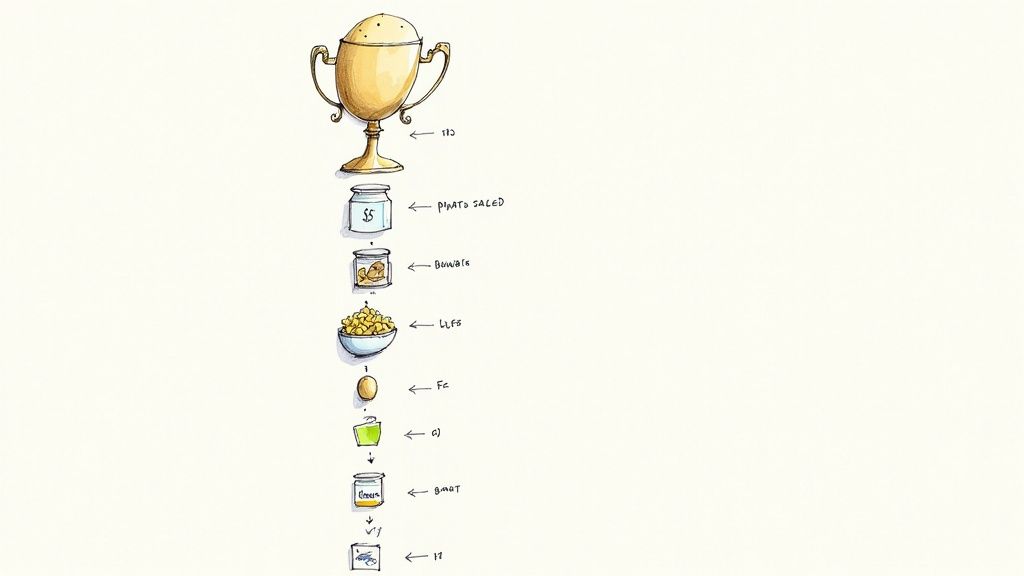
As the money rolled in, the stretch goals got more and more absurd, which only fanned the flames:
These updates kept the campaign feeling fresh and interactive. It turned passive funders into active evangelists who couldn't wait to share the latest ridiculous milestone with their friends.
The sheer weirdness of the project was perfect bait for the media. It was a funny, feel-good story that was incredibly easy to report on and share. Once major news outlets picked it up, the campaign's momentum went into overdrive.
During its run from July 3rd to August 2nd, 2014, the Kickstarter potato salad project became one of the platform’s most-viewed pages. This media blitz generated 2,068 media mentions across 54 countries, which was instrumental in turning all that viral buzz into $55,492 from 6,911 backers. It's a textbook example of how earned media can be a massive engine for crowdfunding success. You can explore more data on the project's viral spread.
The key takeaway? It was never about the potato salad. It was about creating a shared experience. The campaign gave thousands of people a chance to be part of an inside joke that exploded onto the global stage, proving that sometimes the simplest ideas really are the most powerful.
In the end, the campaign wrapped with "PotatoStock 2014," a huge public party where Brown delivered on his promises. He even used the leftover funds to partner with the Columbus Foundation and start a charity fund, giving the whole joke a genuinely heartwarming conclusion. That move cemented the campaign's legacy—not just as a viral stunt, but as a truly positive moment in internet culture.
The magic of the Kickstarter potato salad phenomenon wasn't a fluke. It was a masterclass in reading the room—in this case, the room was the entire internet. But you don't need a novelty food item to bottle that same lightning. The core principles that made it work—simplicity, humor, and an incredibly low barrier to entry—are universal.
A viral hit rarely happens by accident. It's usually the result of careful planning and knowing how to create a comprehensive marketing strategy that feels completely organic.
The first move is to boil your entire project down to its simplest, most shareable form. What’s the one-liner that makes someone crack a smile or do a double-take? For Zack Brown, it was just, "I'm making potato salad." That's it. No jargon, no backstory needed. It was so simple, it was brilliant.
Now, think about your own project. Can you frame it in a way that’s instantly compelling and needs zero explanation? That’s your hook. That's what will cut through the noise of a crowded social feed.
Your project description is more than a spec sheet; it's your story. This is your chance to inject the personality that turns a cool idea into an irresistible narrative. Brown’s deadpan, almost comically serious tone was the perfect match for his absurd goal. It felt real and unpolished, inviting people to get in on the joke rather than just funding a product.
Don't be afraid to let your own voice come through. Are you a witty creator? Heartfelt? A total nerd about your craft? Lean into it. People connect with people, not with dry, corporate-sounding copy.
Your real goal is to make backers feel like they’ve stumbled into an exclusive club or are part of a story that’s unfolding live. Share why you're doing this, your weird little goals, and maybe even what you're nervous about. That kind of openness builds trust and turns passive funders into active evangelists. For a deeper look, you can explore more tips on how Kickstarter creators can ignite viral buzz.
Let's be honest, the reward tiers for the potato salad campaign were pure genius. They started ridiculously small and escalated in absurdity, which just added fuel to the fire.
This structure accomplished two things perfectly. First, it made backing the campaign a total impulse decision. Who doesn't have a dollar? Second, the escalating humor of the rewards became a story in itself. It made people want to pledge more just to see what kind of ridiculousness would happen next.
Apply that same logic. Create a super low-cost entry point to get people through the door. From there, build your tiers with a mix of genuine value and playful perks that reflect your project's soul. Think about creating experiences, not just shipping products.
Key Insight: Your campaign isn't just about the thing you're making; it's about the entire journey. Make the funding process as fun and memorable as the final reward. This transforms backers into advocates who share your campaign because they genuinely love being part of it.
Even a joke campaign needs a serious game plan for what happens after the confetti settles. This is where a lot of creators, especially those surprised by their own success, can get into trouble. Managing all those backers, collecting addresses, and shipping rewards takes serious organization.
This is where a pledge manager becomes your best friend. A helpful analogy is that the Kickstarter pledge manager is like Amazon, a massive marketplace, while a tool like the PledgeBox pledge manager is like Shopify, giving you your own store to manage relationships. A pledge manager like PledgeBox is your back-office powerhouse for managing orders and keeping your new community happy.
With PledgeBox, you can send the backer survey for free, which is a massive help for any project, no matter the size. You only get charged 3% of the upsell if there's any. That means the core service of getting your backers organized costs you nothing upfront. This setup lets you stay professional and on top of things without draining your funds, ensuring your viral moment ends with happy backers and a project delivered.
One of the wildest parts of the Kickstarter potato salad story is that it blew up without a single dollar spent on ads. It was a pure, organic wildfire fueled entirely by earned media and social proof. Zack Brown never pitched a journalist. He didn't have to. He created a story so weirdly charming that the media couldn't help but come to him.
This is a huge lesson for every creator out there. You don't always need a massive marketing budget to get noticed. What you really need is a story that people have to share. The potato salad campaign was the perfect cocktail of quirky, low-stakes fun, making it irresistible clickbait for news sites and a must-share for anyone scrolling through their social feeds. It became a cultural moment people wanted to be a part of.
Your project’s story is your most powerful tool for earning this kind of attention. It needs to be simple, hit an emotional chord, and be easy for someone to explain in a single tweet.
Journalists and influencers are always on the hunt for stories that will grab their audience. A campaign for another new gadget might be interesting, but a campaign to fund a single bowl of potato salad? That's a story. It shatters expectations and makes people curious.
To find your own media-friendly angle, you need to dig into what makes your project different.
This kind of prep work is non-negotiable. You never know when one influential share could open the floodgates. Learning how to capture media attention for your crowdfunding campaign can give you a more structured playbook for getting your story seen.
While big media outlets acted as the megaphone, platforms like Twitter and Reddit were the kindling. This is where the initial sparks of interest caught and grew into a blaze. Brown’s campaign was tailor-made for these platforms because it wasn't a monologue; it was an invitation to join the fun.
The conversation wasn't just about the campaign; it was the campaign. Backers were posting screenshots of their pledges and laughing at the latest ridiculous stretch goals, creating a snowball of social proof. Every new share was a signal to friends and followers that this was a fun, legit thing to jump into.
Pro Tip: Your campaign updates are a secret weapon for social engagement. Ditch the dry progress reports and use them to keep the story going. Brown’s updates kept the same funny, chill tone as his original pitch, making backers feel like they were insiders on a great joke.
That consistent voice is everything. It builds a real community around your project and gives your backers something to talk about and share. Encourage them to use a specific hashtag, ask for their input on what comes next, and celebrate milestones with them publicly. Every interaction is a chance to grow your reach. The goal is to make your campaign page a destination, not just a donation portal.
The confetti has settled, the funding goal is a distant memory, and you're officially a crowdfunding success. Congratulations! But as the creator behind the legendary Kickstarter potato salad discovered, this is where the real work begins. Getting funded is just the first checkpoint; delivering on your promises is the marathon that defines your reputation.
This is the phase where seamless communication and rock-solid organization are non-negotiable. Even a simple, funny campaign involves real people who gave you their money and trust. Now you have to manage those backers, get their shipping info, and fulfill their rewards—whether it's a bite of potato salad or a complex board game.
Successfully navigating this post-campaign period is what separates a one-hit wonder from a creator who builds a loyal community for years to come.
To get a handle on the tools you'll need, it helps to think in familiar retail terms. The Kickstarter pledge manager is like Amazon—the giant marketplace that gets your idea seen—while the PledgeBox pledge manager is like Shopify—your personal operations hub for handling everything after the sale.
Here's a quick breakdown:
| Function | Kickstarter (Like Amazon) | PledgeBox (Like Shopify) |
|---|---|---|
| Primary Role | A massive marketplace to find an audience and make the initial "sale." | A powerful backend system to manage backers and post-campaign logistics. |
| Audience | Attracts backers from all over the world to a public-facing storefront. | Your dedicated hub for managing your existing backers and customers. |
| Control | Limited control after the campaign ends; basic survey tools. | Full control over backer relationships, surveys, add-ons, and fulfillment data. |
| Revenue | Revenue is generated only during the live campaign. | Allows for post-campaign revenue through upsells and add-ons. |
Basically, Kickstarter is where you find your customers. But once the campaign is over, the relationship largely ends there. For true brand control and professional order management, you need your own system.
That’s where a pledge manager comes in. A tool like PledgeBox is your Shopify—it’s the operational hub where you manage your customer relationships, handle logistics, and control the entire fulfillment experience. It gives you the power to organize orders, communicate effectively, and even grow your initial success.
Relying only on Kickstarter's built-in tools for post-campaign management is like trying to run a professional online store using just email and spreadsheets. Sure, it's possible, but it’s messy, incredibly time-consuming, and an open invitation for costly errors. A dedicated pledge manager automates and organizes this entire process.
Here's what you can finally manage without pulling your hair out:
This level of organization is absolutely critical. Mismanaged addresses, lost survey responses, and delayed rewards can quickly turn a viral success story into a public relations headache.
What makes a tool like PledgeBox so powerful for creators is its business model. A common myth is that these advanced platforms are expensive, but that’s not the case at all. In fact, PledgeBox is free to send the backer survey, which means you can organize all your backers and collect their essential info without any upfront cost.
This is a game-changer for projects of any size. Whether you've raised $55,000 for potato salad or $5 million for a high-tech gadget, you can manage your community like a pro without dipping into your hard-earned funds.
The PledgeBox Advantage: You only pay when you make more money. The platform only charges 3% of the upsell if there's any. This means the service is free for core survey management, and it only takes a cut from the extra revenue it helps you generate.
This model aligns perfectly with a creator's goals. You get a robust management system for free, and the platform is motivated to help you succeed with post-campaign sales. For a complete guide, you can discover more about everything you need to handle after your crowdfunding project ends.
This approach empowers you to keep the momentum going long after the initial hype fades. By offering cool add-ons or exclusive items through the pledge manager, you give your most enthusiastic backers another chance to support you. It's a smart way to increase your project's total funding while delivering more value to your community. At the end of the day, a smooth fulfillment process is the final, crucial chapter of your campaign story.
Going viral feels like hitting the jackpot, but let's be honest—fame is often fleeting. The Kickstarter potato salad campaign was a hilarious, unifying moment for the internet. But what happens after the laughter dies down? A massive spike in traffic and a flood of backers doesn't magically create a loyal community for your next project.
The real work starts when you have to turn that viral moment into a sustainable creative career. It’s all about figuring out who showed up for the joke and who's genuinely interested in sticking around. For most viral hits, the audience is temporary; they're more like attendees at a one-time event than true fans.
This is where you shift gears from the public-facing excitement of a platform like Kickstarter to a controlled, backend system like PledgeBox to actually manage and nurture the community you've just built.
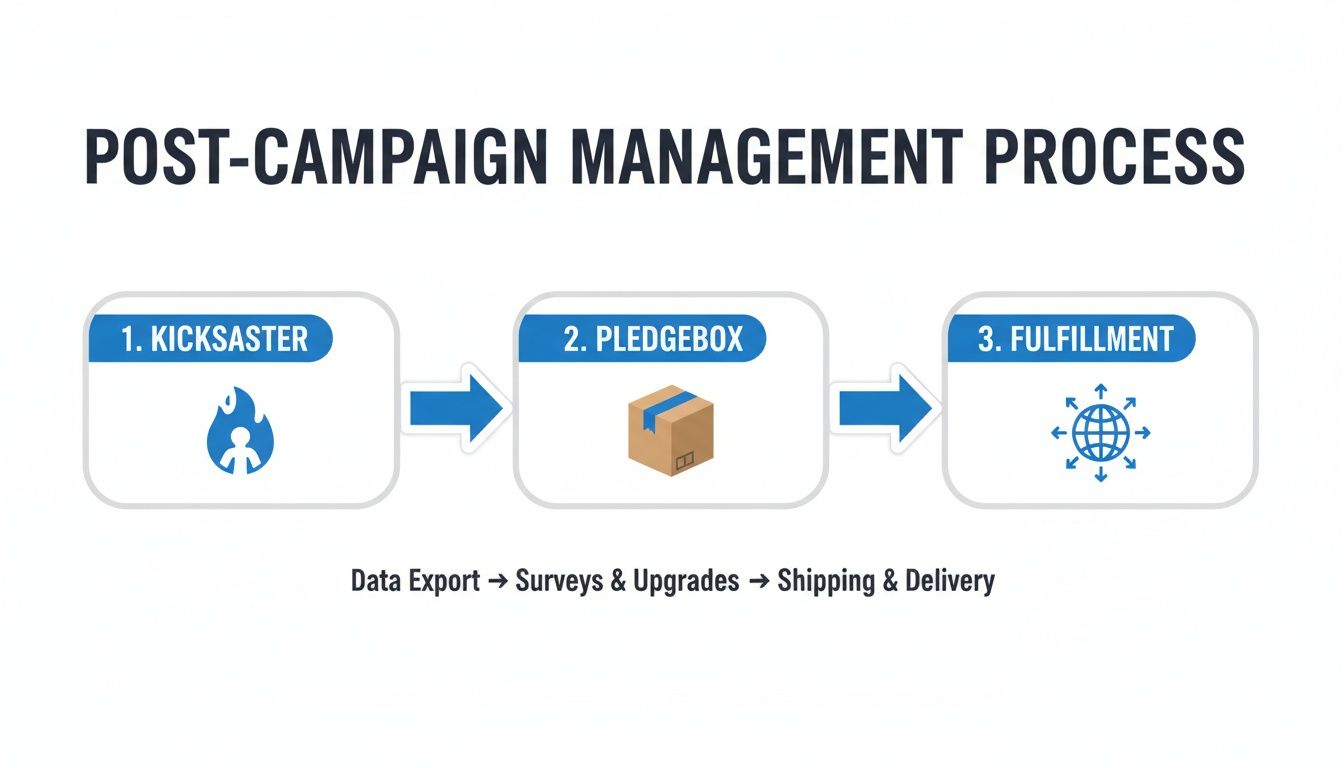
This flowchart visualizes that critical handoff—moving from the public chaos of a viral marketplace to the detailed, operational work required to deliver on your promises and build real relationships.
Kickstarter's own data tells a fascinating story here. The Kickstarter potato salad campaign was a classic case of high visibility but low long-term engagement. At the time, it became the fourth-most-viewed project in Kickstarter's history, even outperforming major tech launches with hundreds of thousands of views.
But here’s the catch: it didn't create nearly as many repeat backers as you'd expect from that kind of exposure. It’s a powerful reminder of why viral growth alone isn't enough for long-term success.
This is a tough but crucial lesson in managing expectations. A viral campaign casts an incredibly wide net, grabbing the attention of millions. Most of these people are just passive observers, enjoying the show from the sidelines without ever really investing in you as a creator.
The goal isn’t just to capture attention; it’s to capture the right attention. Your true community is made up of backers who are interested in your work, not just the one-off event that brought them to your page.
This is why the post-campaign phase is so much more than just shipping stuff out. It’s your first real shot at converting those temporary participants into a genuine community. The way you handle surveys, communication, and delivery sets the tone for everything that comes next.
Think about it from the backer's perspective. A messy, confusing survey or radio silence on updates can instantly kill all the goodwill you built up. On the flip side, a smooth, professional process reinforces their decision to support you and makes them far more likely to check out your next project.
Kickstarter is the perfect launchpad—it's like Amazon, the massive marketplace of crowdfunding where you can get discovered. But for building and nurturing relationships, you need a different set of tools, more like what Shopify offers for e-commerce.
A pledge manager like PledgeBox essentially becomes your brand's home base, giving you a controlled environment to manage backers directly. This is the moment you stop being a temporary listing on a huge site and start owning your customer relationships.
This shift is fundamental for long-term growth. Here’s how it helps you build for the future:
The best part? You can set up this professional foundation without any upfront cost. PledgeBox is free to send the backer survey and only charges 3% on funds raised from upsells, if there are any. This model lets you build a powerful post-campaign system focused on nurturing your newfound audience, turning a fleeting moment of viral fame into the first step of a long, successful journey.
When creators look back at the legendary Kickstarter potato salad campaign, a few key questions always come up. It's natural to wonder if a simple, humor-driven project could still capture the internet's attention today and what lessons we can actually apply from it. Let’s tackle some of the most common ones.
While the internet is a much noisier place now, the principles that made the potato salad project a hit are absolutely timeless. Humor, simplicity, and creating a fun, shared experience will always get people's attention.
The trick is, a modern version would need a completely fresh angle to cut through the static. But the core strategy—being authentic and letting people in on a good-natured joke—is as powerful as ever. It's all about finding an idea that feels unique to this specific moment in time.
Authenticity is everything. Zack Brown's campaign felt completely genuine and off-the-cuff, which is exactly why people were so excited to jump on board. Campaigns that feel too polished or corporate just can't replicate that kind of organic, viral enthusiasm.
The real lesson here is to be unapologetically yourself. Your unique voice and personality are what will make your project stand out and connect with a real audience, turning a simple idea into a memorable event.
You bet. Even for smaller, funny projects, a pledge manager like PledgeBox is crucial for looking professional and staying organized. Trying to manage backer info with spreadsheets, even for just a few dozen people, can turn into a mess fast.
Using a proper tool ensures you collect accurate shipping information and can send out updates smoothly. This builds a ton of trust with your backers, making them far more likely to support your next project. It shows that even if the campaign's theme is lighthearted, you're serious about following through on your promises.
It really comes down to efficiency and saving money. PledgeBox is free to send the backer survey, which is a huge deal for any creator trying to stick to a budget. The platform only charges a 3% fee on upsells, if there are any, which means it can literally pay for itself by helping you generate extra revenue after the campaign is over.
A good way to think about it is this: the Kickstarter pledge manager is like Amazon—the massive marketplace where you find your audience. The PledgeBox pledge manager is like Shopify—your own personal backend. You use Kickstarter to get the crowd, then PledgeBox to manage and grow that crowd professionally, turning a one-off success into a lasting community.
Ready to manage your next campaign like a pro? PledgeBox provides all the tools you need, from backer surveys to upsell management, ensuring a smooth process from funding to fulfillment. Get started for free today and see how easy post-campaign management can be.
PledgeBox
The All-in-One Toolkit to Launch, Manage & Scale Your Kickstarter / Indiegogo Campaign