 PledgeBox
Crowdfunding Reward Based: A Proven Guide to Campaign Success
Launch a successful crowdfunding reward based campaign. This guide covers planning, reward tiers, and post-campaign fulfillment.
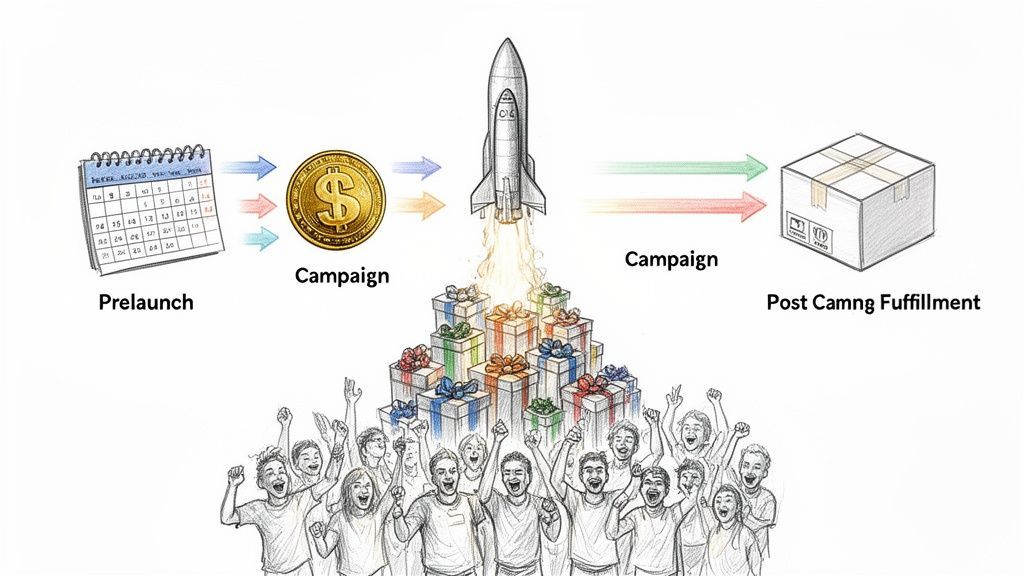
Launch a successful crowdfunding reward based campaign. This guide covers planning, reward tiers, and post-campaign fulfillment.
At its heart, reward-based crowdfunding is a powerful exchange: a creator offers up a future product or a one-of-a-kind experience, and in return, backers pledge money to help make that vision a reality. It's less like an investment and more like a specialized pre-order system where your support directly fuels innovation, art, and new tech.
Reward-based crowdfunding is a way to raise money where individuals (your backers) contribute to a project in exchange for a non-financial reward. These rewards can be anything from a copy of the final product—like a board game or a book—to exclusive experiences, such as a behind-the-scenes tour or a personal thank-you from the creator.
The whole model runs on a promise between you and your community. Backers aren't buying shares or expecting to get rich; they're joining you on the journey. This direct relationship is amazing for building a loyal fanbase around your product long before it ever hits the shelves.
To really get why this model is so special, it helps to see how it compares to the other ways people crowdfund. Each type has a different goal and speaks to different motivations, from financial returns to pure goodwill. We have a detailed guide that further helps you define crowdfunding and explore all its forms.
The proof of this model's power is in the numbers. Platforms like Kickstarter and Indiegogo have become massive hubs for creative projects, turning ideas into reality entirely with community support. By January 2025, Kickstarter alone had seen over $8.53 billion pledged to projects, with a staggering $7.86 billion going to successfully funded campaigns. You can dig into more of these fascinating figures in these crowdfunding statistics on electroiq.com.
The core idea is simple: You are not an investor; you are a founding customer. Your pledge is a vote of confidence that helps a creator cross the finish line, and in return, you get something special that often isn't available anywhere else.
To see what makes the reward-based approach unique, it's helpful to compare it side-by-side with the other major crowdfunding types.
| Model Type | What Backers Give | What Backers Get | Best For |
|---|---|---|---|
| Reward-Based | Money (Pledge) | A non-financial reward (product, experience) | Creative projects, new products, games, and films. |
| Equity-Based | Money (Investment) | A small piece of ownership (shares) in the company. | Startups and businesses with high growth potential. |
| Donation-Based | Money (Donation) | A feeling of goodwill; no material return. | Charities, social causes, and personal fundraising. |
| Lending-Based | Money (Loan) | The original amount back, plus interest. | Individuals or small businesses needing a loan. |
As you can see, the reward-based model is perfectly suited for creators who want to build a community around a tangible product or experience.
To make this even clearer, let's think about what happens after your campaign is funded. Imagine the Kickstarter pledge manager is like Amazon—it’s a standardized, one-size-fits-all marketplace where you complete a basic transaction. It gets the job done, but it doesn't offer much flexibility.
Now, think of a dedicated pledge manager like PledgeBox as your own personal Shopify store. It gives you, the creator, a customizable storefront to manage everything after the campaign. With PledgeBox, you can build detailed surveys, offer cool add-ons, and handle complex orders with total control. Best of all, PledgeBox is free to send the backer survey and only charges 3% of the upsell if there's any, making it a powerful, low-risk tool for any creator.
A successful reward-based crowdfunding campaign isn't a single event. It’s a carefully planned journey that unfolds in three distinct stages. Thinking of your campaign this way—with a clear beginning, middle, and end—breaks an overwhelming process down into manageable, actionable steps.
Each phase has its own goals and challenges. Mastering all three is the secret to turning your creative vision into a funded reality. The whole thing boils down to a simple exchange: your idea, a backer's pledge, and the reward you deliver.
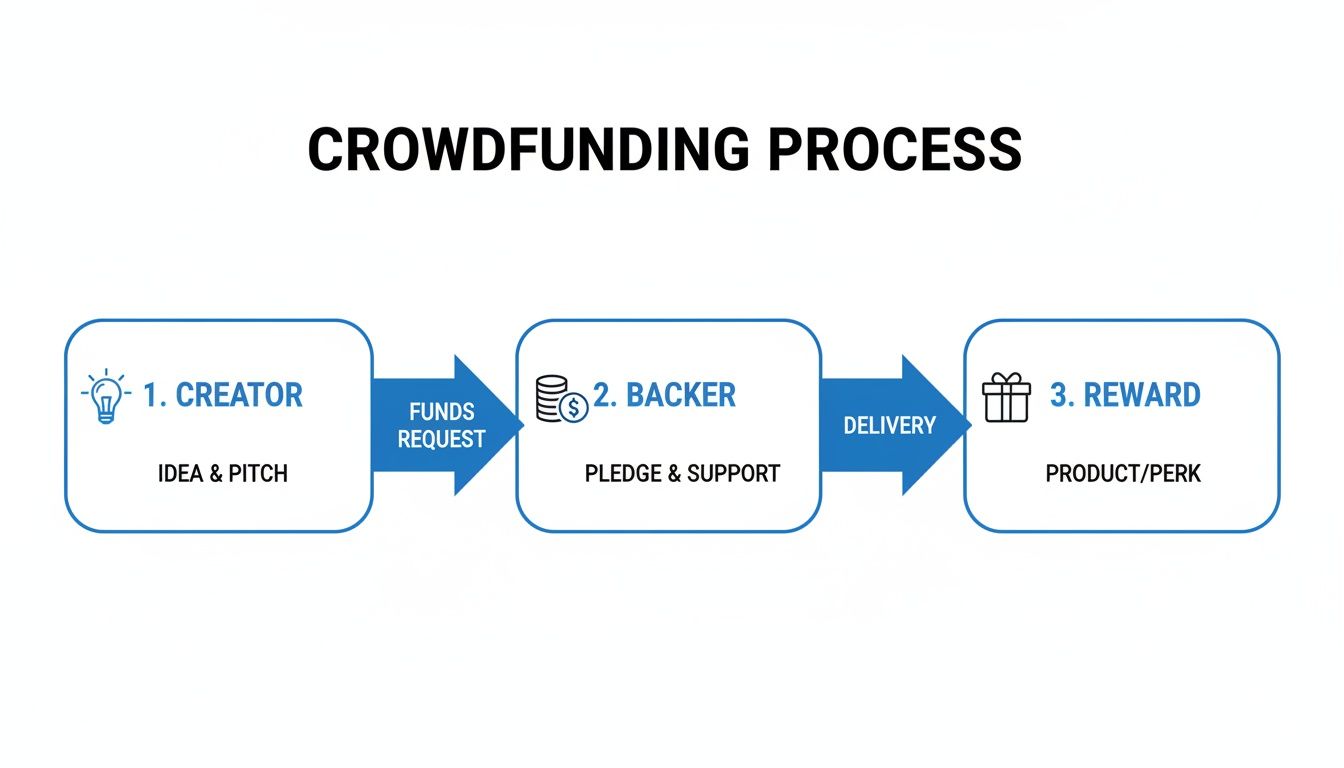
This process starts with your idea, gets fueled by your backers' support, and ends when you deliver on your promises.
You could argue this is the most important phase of all. This is where you lay the groundwork for success long before you ask for a single dollar. The pre-launch is all about building anticipation and gathering a crowd of supporters who are ready to back you on day one.
A strong start is everything. Campaigns that raise 30% of their goal within the first 48 hours have a much, much higher chance of succeeding. Your focus here should be on community building. Create a compelling landing page to collect emails, get active on social media, and share behind-the-scenes content that tells your story. To really get traction, you'll want to integrate a solid marketing plan, drawing inspiration from powerful marketing strategies for books that show how to connect with a passionate audience.
Once you hit that "launch" button, the race is on. This phase usually lasts 30-60 days and is defined by intense communication, promotion, and engagement. Your main goal is to keep the momentum going from your pre-launch and constantly bring in new backers.
During the live campaign, you’ll be juggling a few key tasks:
This phase is a marathon, not a sprint. You’ll likely see big surges of activity at the very beginning and the very end, with a quieter patch in the middle. Your job is to keep the energy up the whole time.
A common mistake is thinking the campaign runs itself after launch. The live phase requires daily attention. It’s about nurturing the community you built and converting that interest into actual pledges.
Congratulations, you got funded! But the work is far from over. This is where you shift from fundraising to fulfillment, and it’s a stage where many creators stumble. The post-campaign phase is all about logistics, communication, and delivering on your promises.
This is where a dedicated pledge manager becomes your best friend. While Kickstarter's built-in survey tool can collect basic info, it's pretty limited. A good way to think about it is that the Kickstarter pledge manager is like Amazon—standardized and simple. In contrast, a tool like PledgeBox is like Shopify; it’s a powerful, customizable platform that helps you manage your backers like a pro.
With a dedicated pledge manager, you can handle all the tricky post-campaign tasks with ease:
Best of all, PledgeBox is free to send the backer survey and only charges 3% of the upsell if there's any. This makes it a no-risk, high-reward tool for maximizing your campaign's financial success while ensuring a smooth fulfillment process for your community. Nailing this final phase is how you build a loyal fanbase that will be excited for whatever you do next.
Your reward tiers are the heart and soul of your campaign. They aren't just a menu of products; they're thoughtfully crafted invitations that convert curious visitors into dedicated backers. A great tier structure tells your story, builds a sense of urgency, and gives people a clear, compelling reason to pledge right now.
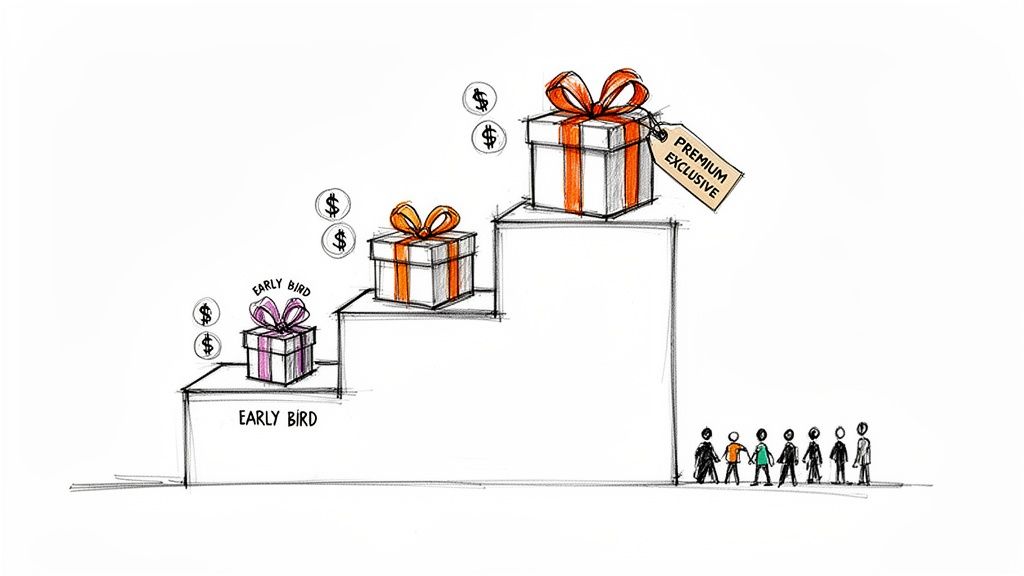
The real magic happens when you strike the perfect balance between great value for your backers and the logistical reality of what you can actually deliver. Getting your rewards right is a proven game-changer. In fact, recent marketing data from 2024–2025 shows that well-executed reward-based campaigns can see success rates near 40%. You can discover more insights about crowdfunding statistics on amraandelma.com to see just how critical your pledge levels are to crushing your funding goal.
Before you even think about pricing, start with your core product. This is your anchor tier—the main reason anyone is on your page in the first place. Every other tier should be built around this central offering, whether it's by adding more value, offering more exclusivity, or simply providing a lower-cost way to get involved.
A simple, effective structure usually looks something like this:
This layered approach gives backers plenty of ways to join you on your journey, no matter their budget or level of excitement.
How you price your tiers does more than just cover your costs; it uses psychology to drive action. You want backers to feel like they're getting an incredible deal they simply can't pass up.
The best reward tiers create a sense of FOMO (Fear Of Missing Out). By making certain rewards limited in quantity or time, you encourage backers to pledge immediately rather than waiting until the end of the campaign.
One of the most powerful tools in your arsenal is the "Early Bird" special. This is where you offer a limited number of your core product at a steep discount just for the first backers. It creates a huge surge of pledges on day one, which in turn boosts your campaign's visibility on the platform. For a closer look at this and other tactics, check out our guide on 6 key strategies for offering rewards your backers will love.
Your work isn't done once a backer picks a tier. The post-campaign phase is a massive opportunity to increase your average pledge amount through upsells and add-ons. And this is where a powerful pledge manager becomes your best friend.
Think of it this way: the Kickstarter pledge manager is like Amazon—it’s functional for a basic transaction but doesn't offer much customization. On the other hand, a specialized tool like PledgeBox is like Shopify; it gives you a branded, flexible storefront to engage with your backers after the campaign ends.
This difference is critical for maximizing your funds. With a dedicated pledge manager, you can set up a "post-campaign store" where backers can add extra items to their pledge, upgrade to a higher tier, or buy exclusive merchandise. The best part? PledgeBox is free to send the backer survey and only charges 3% of the upsell if there's any. This gives you a risk-free way to seriously boost your final funding total while giving your community more of what they already love. You’re turning a simple logistical step into a powerful new revenue stream.
Congratulations, you're funded! Hitting your goal is a huge win, but the work isn't over yet. In fact, you’re now entering the most critical—and often underestimated—phase of any crowdfunding reward based campaign: post-campaign pledge management. This is where you shift gears from raising money to fulfilling promises, and nailing this stage is what separates the good campaigns from the truly great ones.
This part of the journey is all about logistics. You need to gather accurate shipping addresses, sort out complicated orders with different add-ons, and keep the lines of communication open with the community that just placed their trust in you. A smooth process here ensures your backers have an amazing experience from the moment they pledge to the day their reward arrives, turning them into loyal fans for your next project.
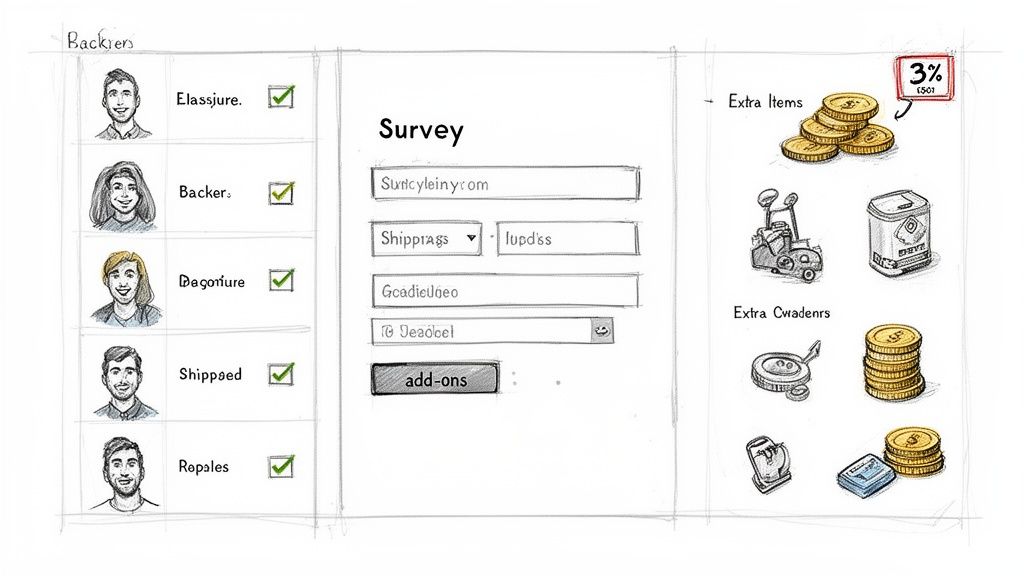
This is where a lot of creators get tripped up, drowning in spreadsheets and manual data entry. That's exactly why a dedicated pledge manager is such a game-changer. It automates the messy parts, slashes the risk of errors, and even opens up new ways to increase your final funding total.
Once your campaign wraps up, platforms like Kickstarter give you a basic survey tool to collect backer info. It gets the job done for super simple projects, but it comes with some serious limitations that can create massive headaches if you have complex rewards or backers around the globe.
Think of the native tool as a one-shot deal. Once a backer hits "submit" on their survey, they can't easily go back to change their address or add another item to their order. This rigidity quickly leads to a flood of manual support emails and messy spreadsheet corrections, eating up time you don't have.
This is precisely where a dedicated pledge manager comes into its own. An analogy might help clarify the difference.
Think of the Kickstarter pledge manager as being like Amazon—it’s a simple, standardized marketplace for a transaction. It does the basic job but offers very little control or customization. In contrast, a specialized tool like PledgeBox is like Shopify; it gives you a powerful, branded storefront to manage your backer relationships, offer upsells, and control every detail of the post-campaign experience.
This isn't just a small distinction; it's a fundamental one. A dedicated manager isn't just a survey tool—it's a platform that can actively generate more revenue for your project.
One of the most powerful features of a dedicated pledge manager is the ability to offer post-campaign upsells and add-ons. As backers fill out their surveys, you can present them with a curated menu of extra goodies—like exclusive accessories, another copy of your board game, or premium materials—that they can add directly to their order.
Suddenly, a simple data-collection chore transforms into a fresh sales opportunity. Your backers are already excited about what you've created, and many are more than willing to grab a little something extra. For a lot of successful campaigns, this post-campaign revenue isn't just a bonus; it's the difference between breaking even and being truly profitable. Choosing the right tool is a key decision, and you can explore this further in our guide on how to select the right pledge manager.
Best of all, you don't have to bet the farm to try this strategy. PledgeBox is free to send the backer survey and only charges 3% of the upsell if there's any. This makes it a totally risk-free way for creators to maximize their funding without any upfront cost.
For creators weighing their options, the choice often comes down to the basic, free tool versus a more powerful, specialized solution. Let's look at how the built-in Kickstarter surveys stack up against a dedicated pledge manager like PledgeBox.
| Feature | Kickstarter Surveys | PledgeBox |
|---|---|---|
| Post-Campaign Upsells | Not supported. | Fully supported, allowing creators to generate extra revenue. |
| Address Updates | Backers cannot easily update their address after submission. | Backers can update their shipping details up until you lock orders. |
| Shipping & Tax Collection | Limited; fees must be estimated and included in the pledge. | Calculates and collects precise shipping and VAT/tax fees based on location. |
| Order Complexity | Best for simple, single-item rewards. | Easily handles complex orders with multiple add-ons and variations. |
| Cost Structure | Included with Kickstarter's platform fee. | Free to send surveys; charges a 3% fee only on funds raised from upsells. |
While Kickstarter’s built-in survey tool might seem like enough to get by, a dedicated pledge manager gives you the control, flexibility, and revenue-boosting power needed to run a professional and profitable campaign. It creates a much smoother experience for both you and your backers, setting you up for success long after the campaign clock runs out.
Turning a great idea into a funded reality is all about careful planning. This isn't just a list; it's a practical roadmap that breaks down the entire crowdfunding reward based journey into clear, manageable steps.
Follow these tasks through the three core phases to keep everything on track and make sure no critical details fall through the cracks.
This is where the magic really happens. A strong pre-launch builds the momentum you need for a massive launch day and can honestly make or break your entire campaign.
Once you go live, the game changes. Your focus shifts from planning to driving pledges, engaging with your new community, and keeping the energy high.
Remember that the global crowdfunding market is growing rapidly, with a significant portion concentrated in major markets. Industry reports in 2024 estimated the market size between USD 1.45–2.14 billion, with North America holding a dominant share. By following a structured checklist, you position your campaign to compete effectively in this expanding space. Learn more about these global crowdfunding market findings.
Congratulations, you're funded! But the work isn't over. Now it's all about communication and fulfillment—this is where you turn happy backers into lifelong fans.
Jumping into the world of reward-based crowdfunding can feel like learning a new language. Let's clear up some of the most common questions creators have so you can move forward with confidence.
This is easily one of the most critical steps, and getting it wrong can sink a successful campaign. Your funding goal isn't just a hopeful number—it needs to be the absolute bare minimum you need to produce your product and get it into every single backer's hands.
Start by mapping out every single cost. Leave no stone unturned.
Add all of that up, and you have a realistic, data-backed funding target. So many creators underestimate these costs and end up in a financial hole, even after hitting their goal. Don't be one of them.
Think of a pledge manager as your post-campaign command center. It’s a specialized tool that helps you collect backer info, manage complicated orders, and organize the chaos of fulfillment. While Kickstarter has its own basic survey system, it often falls short for campaigns with lots of options, add-ons, or international shipping.
Here’s a good way to think about it: the Kickstarter pledge manager is like Amazon. It’s a standard, one-size-fits-all checkout that works for simple transactions, but it’s rigid. A dedicated pledge manager like PledgeBox is more like Shopify; it gives you a fully customizable storefront for your backers where you can offer upsells and control the entire experience.
A dedicated pledge manager turns a post-campaign chore into a fresh revenue stream. You can let backers upgrade their pledge or buy new add-ons, often adding a significant boost to your total funds after the campaign is over.
First, don't panic. Production delays are incredibly common in crowdfunding. What truly matters is how you handle them. The golden rule? Proactive and transparent communication.
The second you even suspect a delay is on the horizon, you need to tell your backers.
Don't wait for them to start filling up your comments section with questions. Post a detailed, honest update. Explain what the problem is, what you're doing to fix it, and what the new timeline looks like. Backers are surprisingly patient and understanding as long as you keep them in the loop. It’s the silence that kills trust and turns supporters into critics.
Offering upsells is one of the smartest ways to increase your final funding total, and a pledge manager makes it almost effortless. When backers are filling out their surveys to give you their shipping address, you can show them a menu of extra items they can add to their order right then and there.
This strategy is powerful because you're catching backers at their peak excitement. They’ve already bought into your vision. With a tool like PledgeBox, this is also a completely risk-free way to make more money. PledgeBox is free to send the backer survey and only charges 3% of the upsell if there's any. This model lets you unlock more funding with zero upfront cost, turning a simple survey into a powerful little storefront.
Ready to streamline your next campaign and maximize your funding? PledgeBox provides all the tools you need, from pre-launch to fulfillment, with a pledge manager designed to boost your revenue. Create your free account and see how easy post-campaign management can be at https://www.pledgebox.com.
PledgeBox
The All-in-One Toolkit to Launch, Manage & Scale Your Kickstarter / Indiegogo Campaign