 PledgeBox
12 Best Sources for Funding for Inventors in 2025
Discover the top 12 sources of funding for inventors in 2025. Explore grants, crowdfunding, and platforms to get your brilliant idea off the ground.
Discover the top 12 sources of funding for inventors in 2025. Explore grants, crowdfunding, and platforms to get your brilliant idea off the ground.
Every groundbreaking product starts with a single idea, but turning that vision into a tangible reality requires a critical resource: capital. Securing funding is often the biggest hurdle for inventors, a complex maze of grants, loans, and investment platforms. This guide demystifies the process, providing a curated list of the 12 best sources for funding for inventors. We have compiled a comprehensive list designed to help you navigate this landscape efficiently and find the perfect match for your project's unique stage and needs.
This article cuts through the noise. We explore everything from non-dilutive government grants that let you keep your equity to crowdfunding platforms that validate your idea while raising capital. To begin your journey from concept to market, a comprehensive step-by-step guide on how to get funding for your invention can provide an excellent foundational understanding. Our list then builds on that foundation, offering direct access to the specific platforms and programs you need.
Each entry includes a practical breakdown, direct links, and screenshots to give you a clear view of the interface and process. We'll delve into specific government programs like SBIR, crowdfunding giants such as Kickstarter and Indiegogo, and equity platforms like Wefunder. Additionally, we will cover essential post-campaign tools like PledgeBox. Think of the Kickstarter pledge manager as a marketplace like Amazon, whereas PledgeBox functions more like your own customizable storefront, similar to Shopify. A key difference is that PledgeBox is free for sending backer surveys and only charges 3% on any funds raised through upsells. This resource is your roadmap to transforming a brilliant concept into a bankrolled reality.
Federal grants are a powerful source of funding for inventors, offering a unique advantage: they are non-dilutive. This means you secure capital to develop your technology without surrendering any equity or ownership in your company. Programs like the Small Business Innovation Research (SBIR) and Small Business Technology Transfer (STTR) are specifically designed to fund high-risk, high-reward research and development.
This type of funding is ideal for inventors working on deep-tech, scientific, or hardware innovations that require significant capital before reaching commercial viability. Securing a federal grant not only provides financial resources but also acts as a powerful third-party validation of your technology, making it easier to attract future venture capital or strategic partners. While the application process is notoriously rigorous and highly competitive, the payoff is substantial.
Pro Tip: Don't underestimate the timeline. The federal grant application process can take months from submission to award. Start by thoroughly researching specific agency solicitations (e.g., from the NSF, NIH, or DoD) that align perfectly with your invention's scope.
Website: https://www.grants.gov/ and https://www.sbir.gov/
Often called "America's Seed Fund," the Small Business Innovation Research (SBIR) and Small Business Technology Transfer (STTR) programs represent a cornerstone of funding for inventors in the United States. SBIR.gov serves as the official, centralized hub for these programs, offering non-dilutive capital specifically for research and development. It consolidates information from all 11 participating federal agencies, making it the definitive starting point for any inventor seeking to turn a high-risk, high-reward idea into a commercial reality without giving up equity.

Unlike a general portal like Grants.gov, SBIR.gov is tailored to the inventor and small business owner. It provides a structured pathway, explaining the phased funding approach (from feasibility in Phase I to prototype development in Phase II) and connecting you directly to active agency solicitations. This focused approach simplifies the complex world of federal R&D funding, ensuring you can quickly identify opportunities that match your technology's specific domain, whether it's in defense, health, or energy.
Pro Tip: Pay close attention to the program's reauthorization status. While it is a long-standing program, its authority requires periodic Congressional renewal. Always check the current status on the site before dedicating significant time to an application.
Website: https://www.sbir.gov/
Grants.gov serves as the official, centralized portal for all federal grant opportunities, making it an indispensable tool for inventors seeking non-dilutive funding for inventors. This platform consolidates thousands of grant listings from every grant-making agency in the United States government. Instead of navigating dozens of separate agency websites, inventors can use this single, powerful search engine to find funding announcements that match their specific technology or research area.
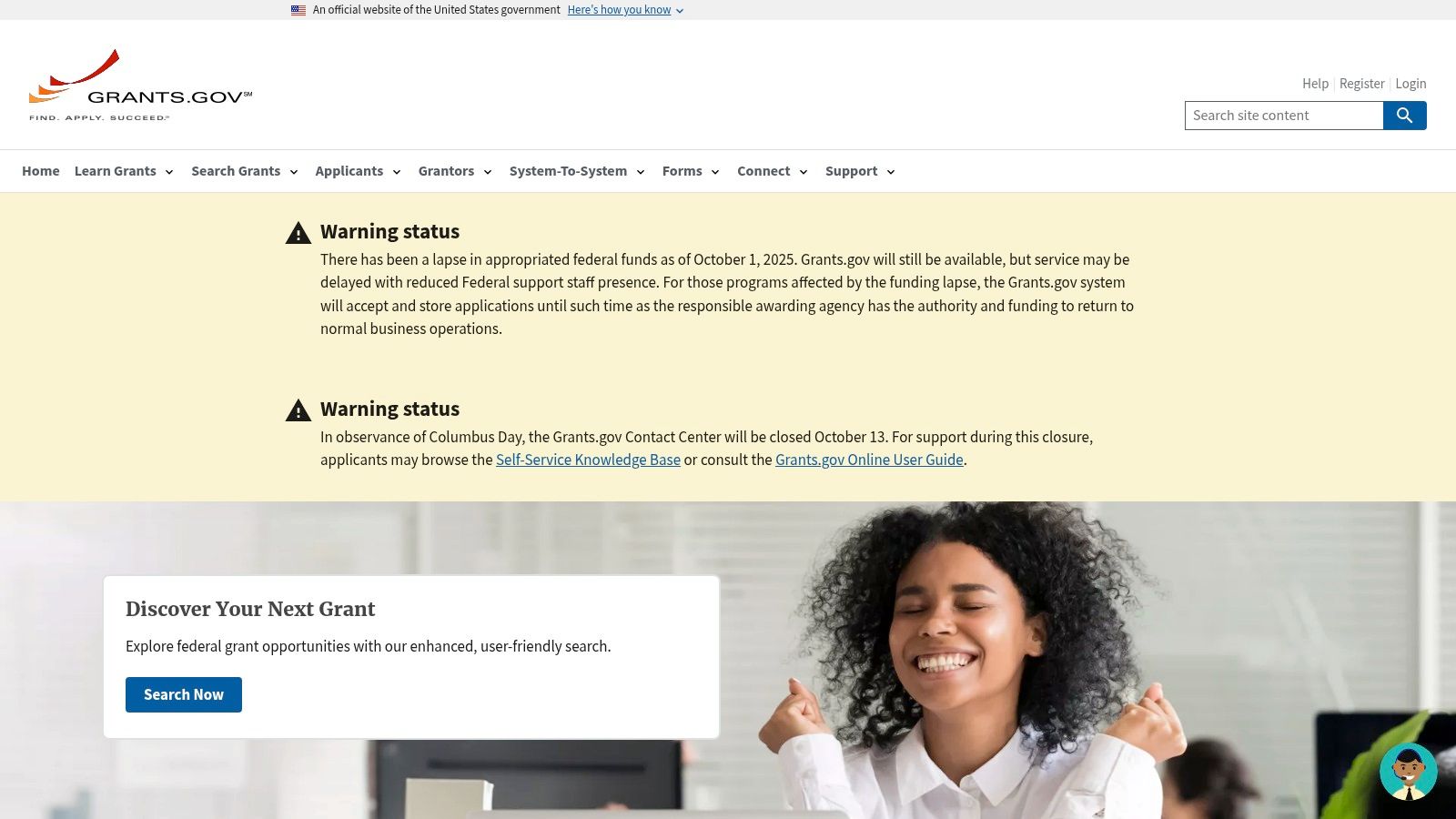
This platform is more than just a search tool; it is a comprehensive application system. It provides a unified "Workspace" where teams can collaboratively prepare and submit complex grant proposals. For inventors who are new to the federal landscape, the site offers extensive training materials, applicant guides, and alerts for new opportunities. While the user interface can feel bureaucratic and the initial registration process is lengthy, its authority and comprehensive nature make it a mandatory stop for serious grant seekers.
Pro Tip: The registration process is not instant. You must obtain a Unique Entity ID (UEI) from SAM.gov and create a Login.gov account, which can take several days or even weeks to process. Start this administrative setup well before any application deadlines.
Website: https://www.grants.gov/
For inventors operating at the forefront of science and engineering, the National Science Foundation's America’s Seed Fund is a premier source of funding for inventors. It provides non-dilutive capital specifically for early-stage, high-risk, deep-tech startups. This funding is designed to help you transform your scientific discovery or technological breakthrough into a commercially viable product without giving up equity or intellectual property.
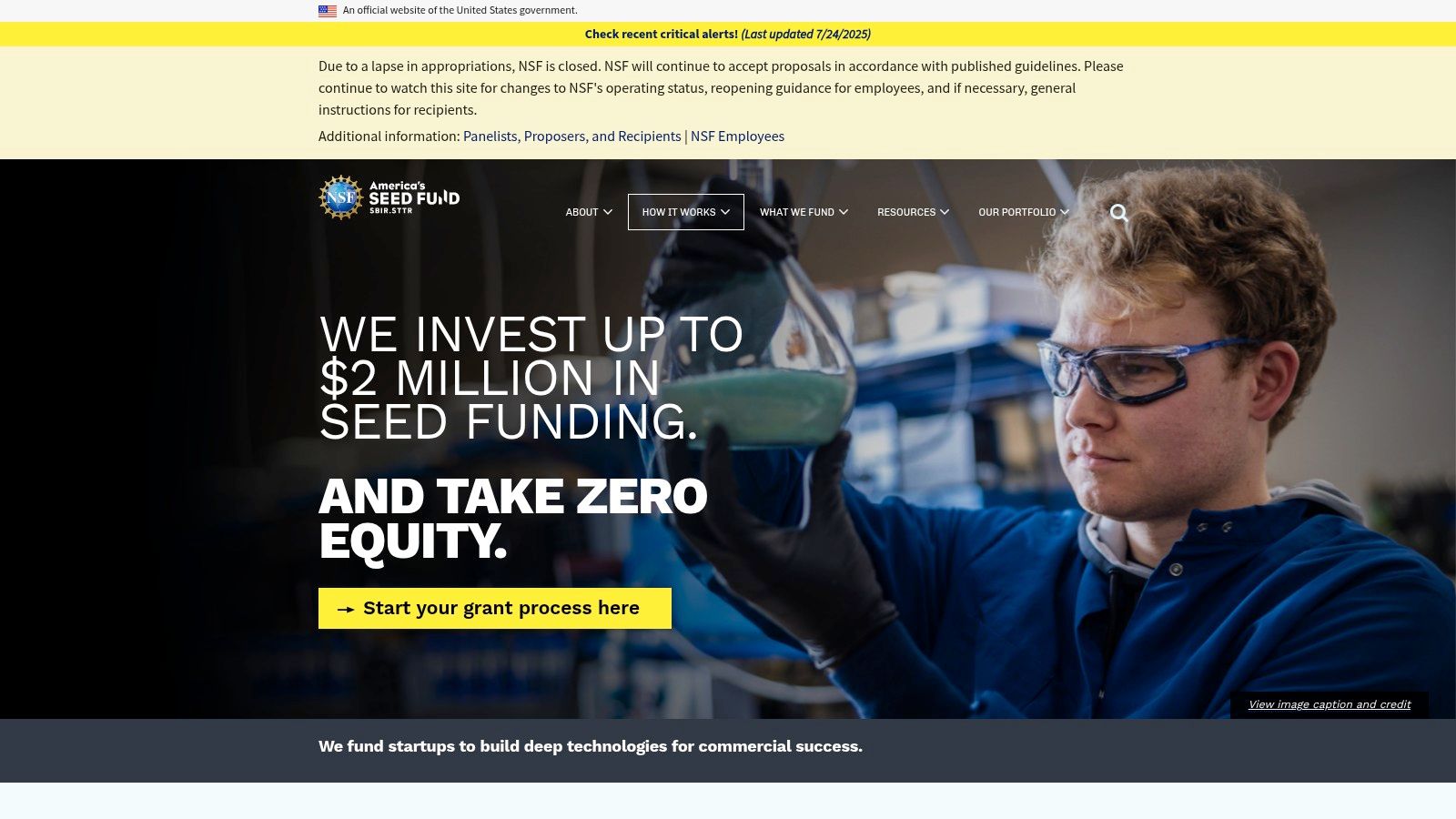
Unlike venture capital, the NSF focuses on technical merit and commercial potential rather than existing revenue. A Phase I award can provide up to $305,000 to conduct feasibility research, and successful projects can progress to Phase II, unlocking an additional $1.25 million or more. This tiered approach provides crucial capital and prestigious validation that often attracts significant follow-on private investment. The process is highly competitive, but the founder-friendly terms make it an unparalleled opportunity for ambitious R&D projects.
Pro Tip: Your application must clearly articulate both the technical innovation and the commercial opportunity. The NSF requires a "Project Pitch" as a first step, which is a short document to gauge suitability. Perfecting this pitch is critical to being invited to submit a full proposal.
Website: https://seedfund.nsf.gov
For inventors in the life sciences, biotechnology, and health sectors, the National Institutes of Health (NIH) offers a specialized and well-funded pathway. Their Small business Education and Entrepreneurial Development (SEED) office manages the largest source of early-stage capital for biomedical innovation in the country. This non-dilutive funding for inventors is designed to de-risk novel technologies and help them advance toward commercialization.
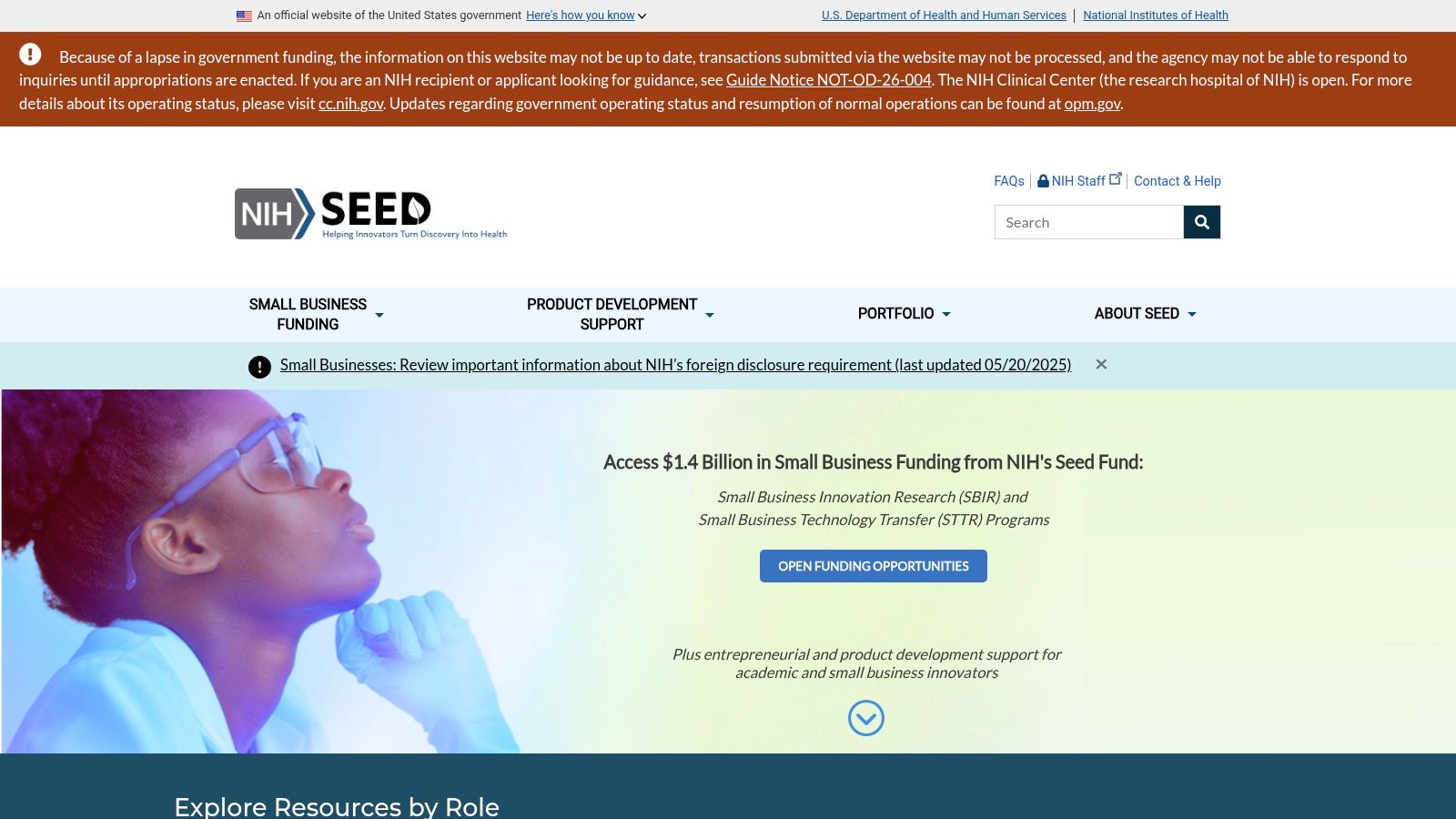
What sets NIH SEED apart is its deep ecosystem of support that extends beyond just capital. It provides inventors with access to specialized resources, commercialization coaching, and regulatory guidance crucial for navigating the complex journey from lab to market. Funding mechanisms are also highly flexible, with options like the Fast-Track application, which expedites review for projects with strong commercial potential, and the Direct-to-Phase II award for innovations that have already demonstrated feasibility. This makes it an essential hub for any health-focused startup.
Pro Tip: Engage with an NIH Program Officer early in your application process. They can provide invaluable feedback on whether your project is a good fit for their institute's priorities and offer guidance on strengthening your proposal before official submission.
Website: https://seed.nih.gov
The Department of Energy's (DOE) SBIR/STTR program, managed by the Office of Science, is a premier source of funding for inventors focused on groundbreaking energy, climate, and advanced manufacturing innovations. This non-dilutive capital is specifically channeled toward high-risk R&D projects that align with national energy and scientific priorities, making it a powerful resource for deep-tech startups.
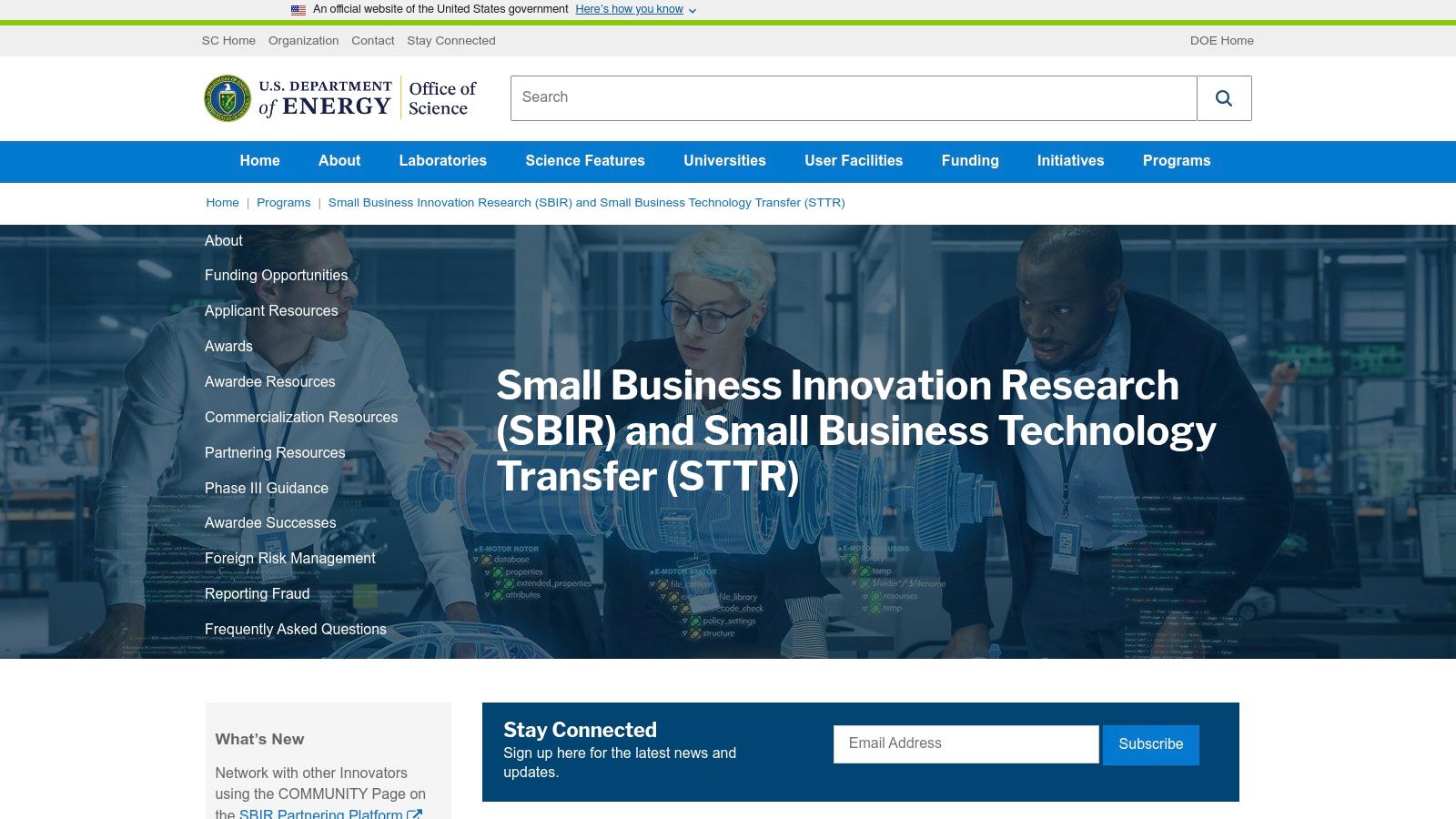
Unlike broader grant portals, the DOE's program offers a highly focused and structured pathway. Inventors can progress through multiple funding phases (Phase I, II, and subsequent IIA/IIB/IIC awards) to mature their technology from initial concept to commercial readiness. Securing a DOE grant also unlocks access to the agency’s world-class national laboratories and scientific expertise, providing an unparalleled advantage for technology validation and development.
Pro Tip: Pay close attention to the annual FOA releases and participate in the topic webinars. The DOE is highly specific about the technological gaps it aims to fund, and aligning your proposal directly with a stated topic is critical for success.
Website: https://science.osti.gov/sbir
Kickstarter is the world's largest rewards-based crowdfunding platform, making it a premier destination for funding for inventors with consumer-facing products. It allows creators to pre-sell their inventions directly to early adopters, providing not only capital but also crucial market validation. Its all-or-nothing funding model minimizes risk, as creators only proceed if they hit their predetermined financial goal, ensuring they have enough capital to deliver on their promises.
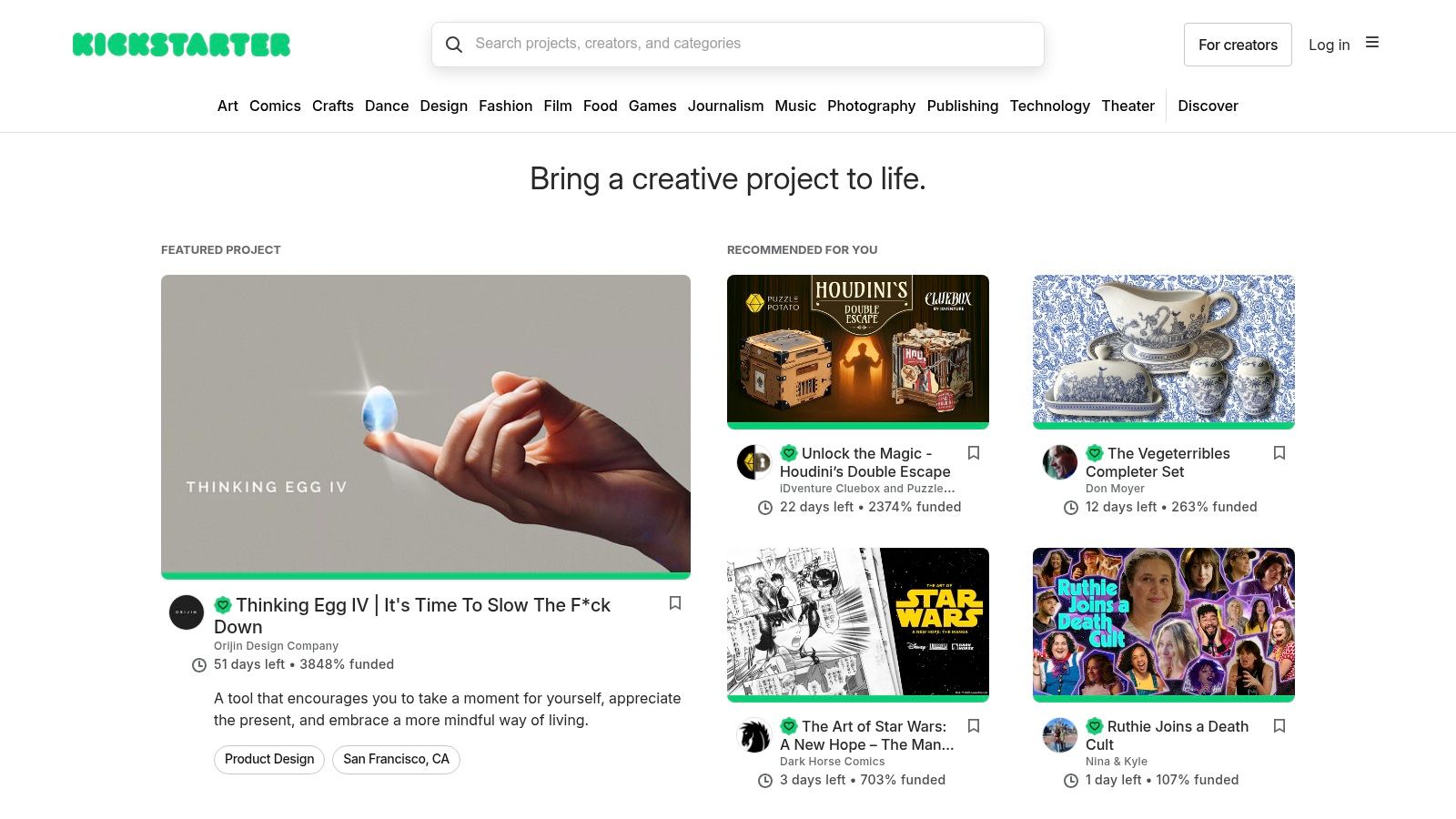
This platform is best suited for inventors with tangible products like gadgets, board games, or design-focused hardware that can be showcased through compelling videos and prototypes. Success on Kickstarter hinges on building a community and a strong marketing narrative before launching. The platform provides integrated tools for managing pledges and backer communication, though many successful creators use third-party pledge managers for more complex fulfillment needs after their campaign concludes.
Pro Tip: Your campaign's success is determined long before you launch. Invest heavily in pre-launch marketing to build an email list and social media following. A strong start in the first 48 hours is critical for activating the platform's algorithm and gaining visibility. Explore proven Kickstarter marketing strategies to maximize your chances of success.
Website: https://www.kickstarter.com
Indiegogo offers a powerful crowdfunding platform for inventors, especially those with consumer-facing hardware, gadgets, and creative products. It serves as a vital tool for market validation, allowing creators to gauge consumer demand, secure pre-orders, and raise capital directly from their future customers. This method provides essential funding for inventors while simultaneously building a community around a new product before it even hits mass production.
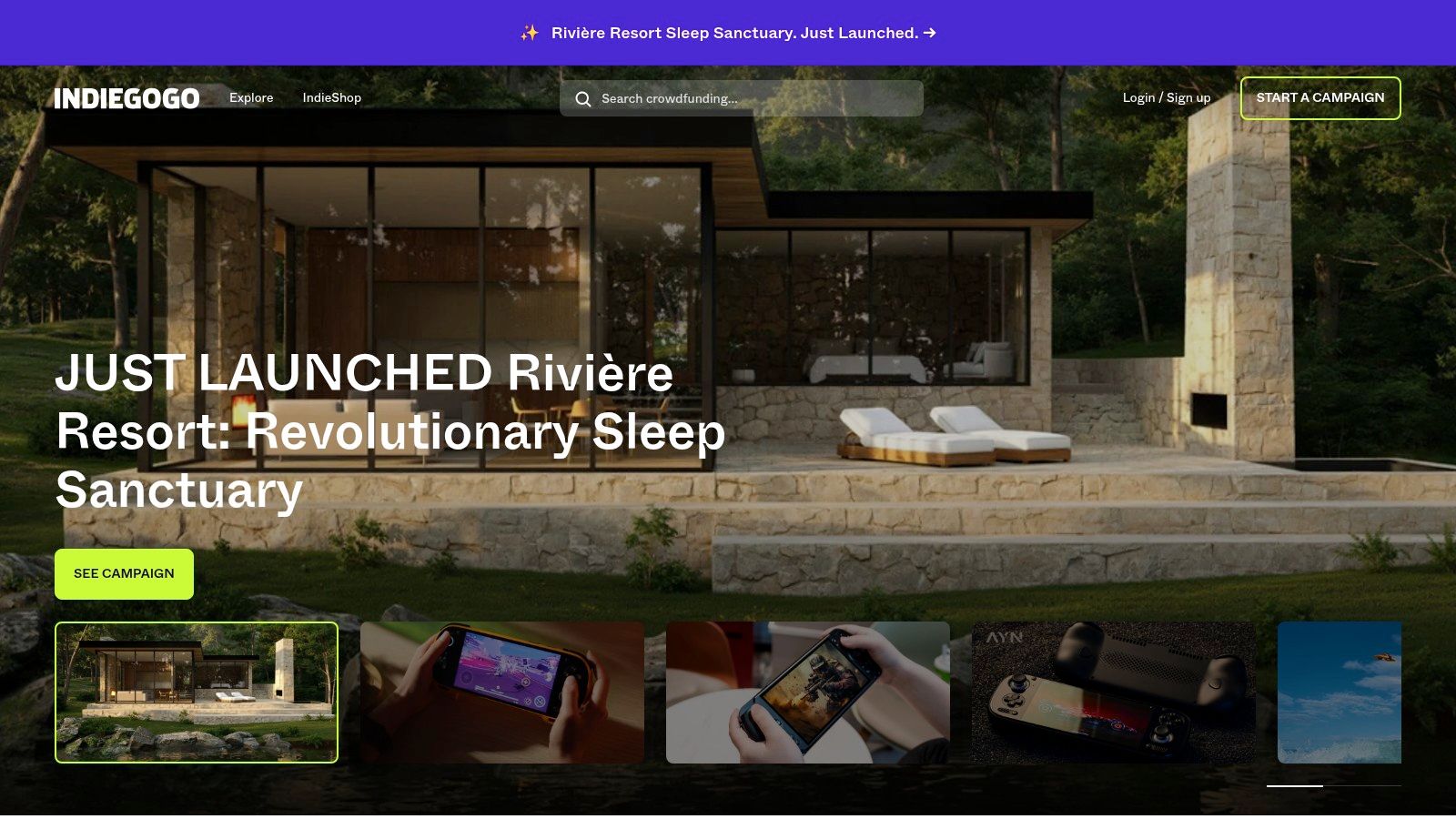
What sets Indiegogo apart is its unique funding models and post-campaign tools. Unlike some platforms, it gives creators the choice between Fixed Funding, where you only keep the money if you hit your goal, and Flexible Funding, where you keep all funds raised regardless of the outcome. This flexibility can be crucial for inventors who can still deliver their product with partial funding. The platform's InDemand feature also allows creators to continue accepting pre-orders even after the initial campaign ends, turning a one-time funding event into an ongoing e-commerce channel.
Pro Tip: Your campaign's success heavily relies on pre-launch marketing. Building an email list and engaging potential backers before you go live is critical. For more on this, check out these email marketing tips to elevate your Indiegogo campaign.
Website: https://www.indiegogo.com
Wefunder democratizes startup investing by allowing inventors to raise capital directly from their fans, customers, and the general public. As an equity crowdfunding platform operating under Regulation Crowdfunding (Reg CF), it provides an alternative path to traditional funding for inventors, enabling you to sell small pieces of ownership (equity) or other securities to a large number of non-accredited investors. This model is exceptionally well-suited for consumer-facing products where a passionate community can double as both early backers and brand evangelists.
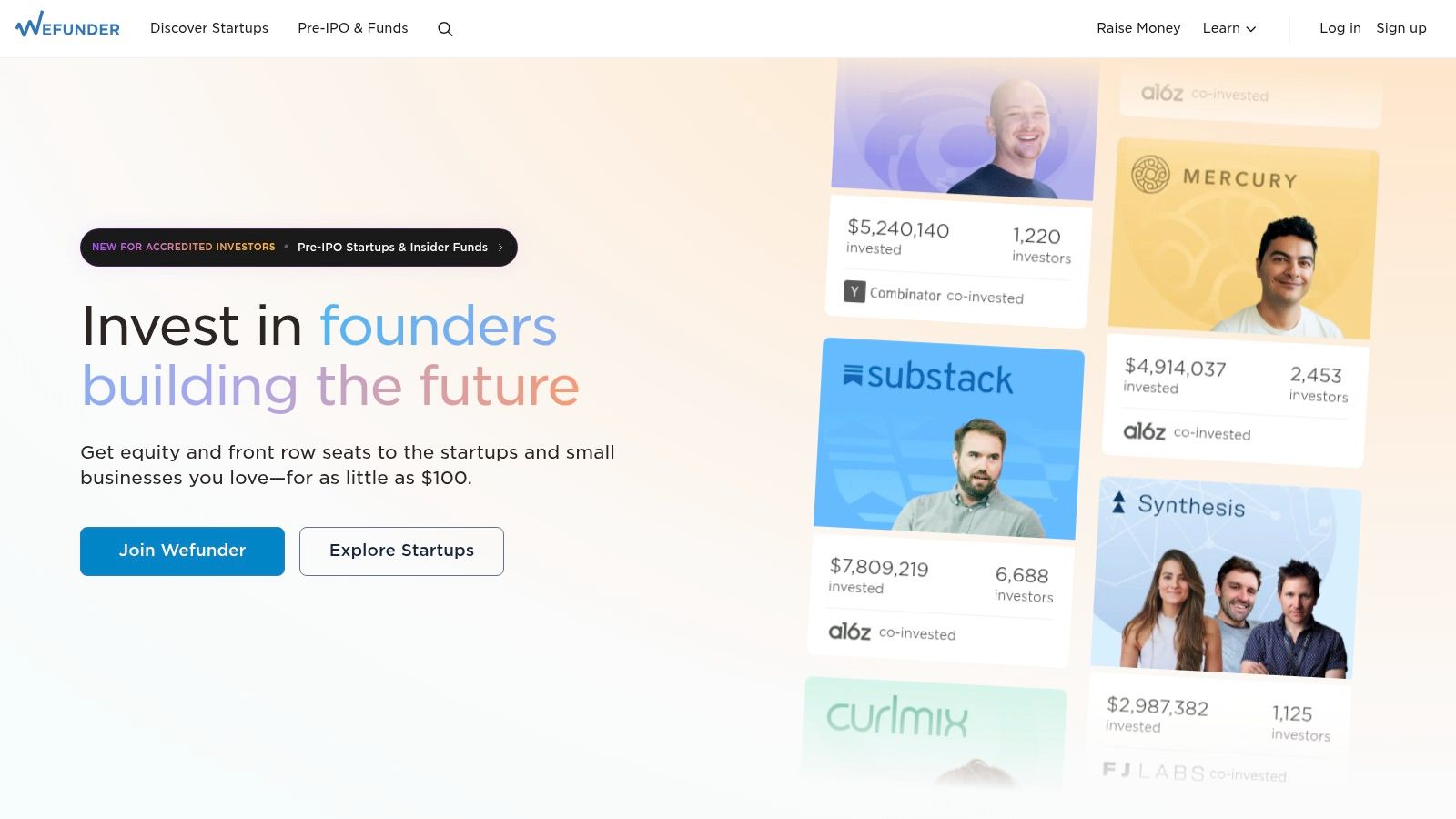
Unlike rewards-based platforms, Wefunder turns your supporters into true stakeholders, aligning their success with your own. The platform is built to simplify the complex legal requirements of a public fundraise, offering a guided, step-by-step process. This approach not only provides capital but also validates market demand and builds a powerful, invested community around your invention from the very beginning. The user interface is clean, and the platform provides strong educational resources for founders new to equity crowdfunding.
Pro Tip: Your Wefunder campaign page is your public pitch. Invest heavily in a compelling video, a transparent business plan, and detailed financial projections. Engage actively with potential investors in the comments section to build trust and momentum.
Website: https://wefunder.com
Republic opens the door to a different kind of funding for inventors: equity crowdfunding. This model allows you to raise capital directly from your community of users, supporters, and the general public, turning them into vested stakeholders. Unlike rewards-based platforms, you sell securities (like equity or SAFEs) in your company, making it a powerful option for inventors transitioning from a product concept to a scalable business.
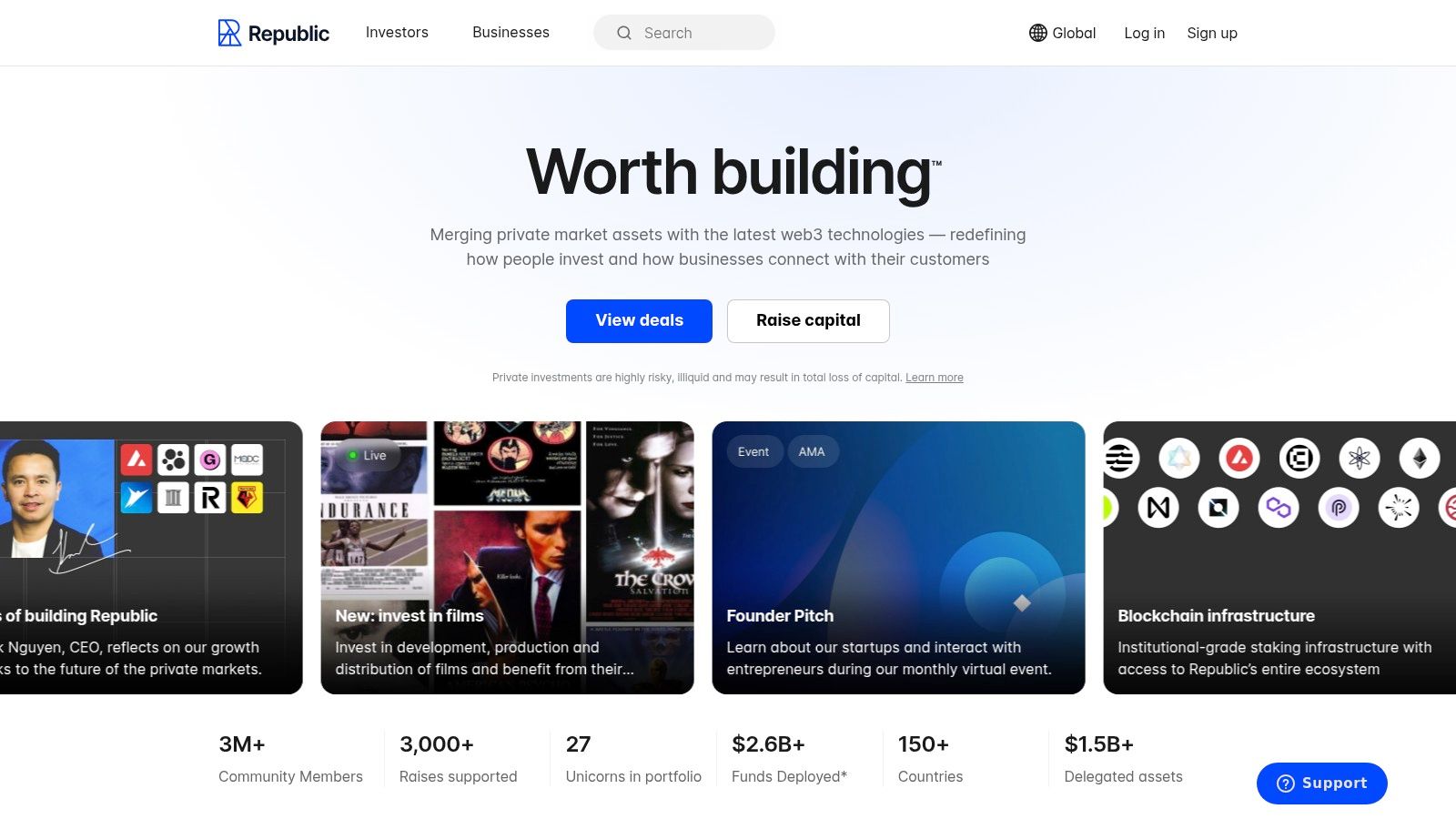
This platform is particularly effective for inventors with consumer-facing products or strong brand stories that resonate with a broad audience. Republic has cultivated a large, active community of retail investors eager to back the next big thing. Raising capital here not only provides funds but also builds an army of brand advocates who have a financial incentive to see your invention succeed. While you give up equity, the marketing value and community validation can be immense.
Pro Tip: Your pitch on Republic is as much a marketing campaign as it is a financial raise. Focus on building a compelling narrative around your invention's mission and the problem it solves. A strong video and transparent communication are critical for building trust with thousands of small investors.
Website: https://republic.com
StartEngine is a leading equity crowdfunding platform in the United States, allowing inventors to raise capital by selling shares directly to the public. Unlike reward-based platforms, this model offers a direct path to significant funding for inventors by turning customers and supporters into actual investors. It supports both Regulation Crowdfunding (Reg CF) and Regulation A+ offerings, catering to startups seeking to raise anything from a few hundred thousand to several million dollars.
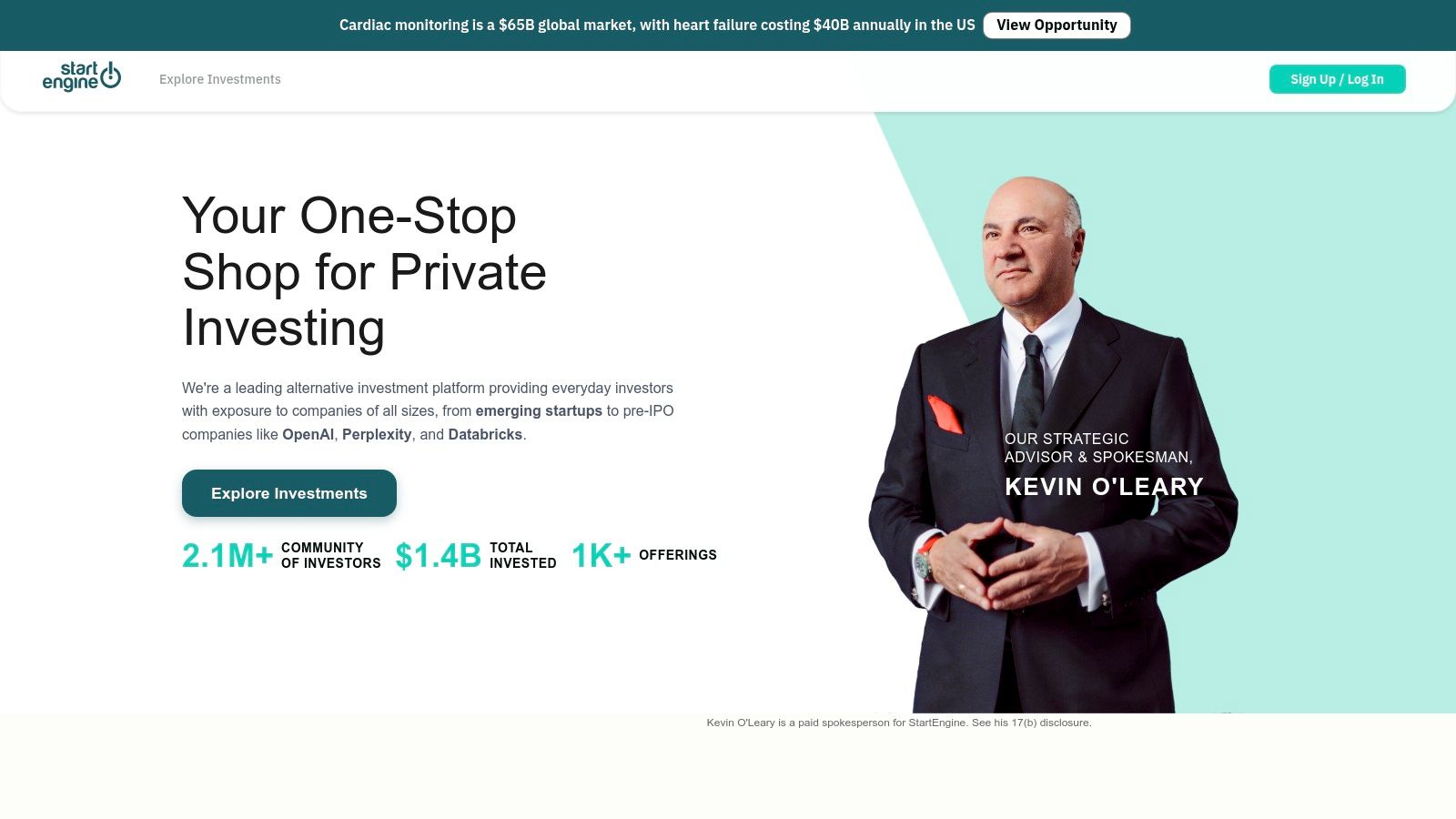
This platform is particularly effective for inventors with tangible consumer products or hardware, as its large user base of retail investors is often drawn to innovations they can see and understand. StartEngine distinguishes itself by offering comprehensive, premium marketing and onboarding packages. While these services come at a cost, they can be invaluable for inventors who need expert guidance to navigate the complex legal and promotional requirements of an equity offering. This hands-on approach helps de-risk the campaign process and maximize fundraising potential.
Pro Tip: Before committing, demand a clear and itemized breakdown of all potential fees. Premium services can require significant upfront capital, so ensure these costs align with your budget. The platform's standard fees and service terms can vary, so getting a confirmed quote is a critical first step.
Website: https://www.startengine.com
Gust serves as a critical bridge connecting early-stage inventors with a vast network of angel investors and accelerator programs. Rather than being a direct funding source, it’s a Software-as-a-Service (SaaS) platform where you create a standardized company profile and use it to apply to over 350 affiliated investor groups. This "apply once, submit many" approach streamlines the initial outreach phase of securing funding for inventors, making it an efficient tool for managing your fundraising funnel.
The platform is designed to guide founders through the necessary steps of preparing for investment, from building a compelling company profile to tracking investor conversations. Because it is so widely adopted by the angel investment community, having a polished Gust profile adds a layer of credibility and signals that you are serious about the fundraising process. While it doesn't guarantee investment, it significantly improves your access to and visibility with active early-stage investors.
Pro Tip: Don't just create a profile and wait. Actively research angel groups on Gust that have a stated interest in your industry or technology. Tailor your introductory message for each group you apply to, referencing their specific investment thesis to show you've done your homework.
Website: https://gust.com/
The journey from a brilliant idea to a market-ready product is a marathon, not a sprint, and securing the right funding for inventors is the critical fuel for that journey. We’ve explored a diverse landscape of options, from the structured, non-dilutive support of federal SBIR and STTR programs on platforms like SBIR.gov and Grants.gov, to the community-driven validation of crowdfunding giants like Kickstarter and Indiegogo, and the long-term partnership potential of equity crowdfunding on sites like Wefunder and Republic. Each path offers a distinct set of advantages, challenges, and strategic implications for your venture.
Your task now is to move from analysis to action. The ideal funding source isn't a one-size-fits-all solution; it's a strategic choice that must align perfectly with your invention's current stage, your ultimate business vision, and your personal risk appetite. The key is to see these tools not as isolated opportunities but as potential stages in a larger funding roadmap.
Reflecting on the tools we've covered, it's clear they serve different phases of an inventor's lifecycle.
As you consider your unique journey, it's wise to explore a comprehensive guide on the 12 Best Small Business Funding Options available. This can provide a broader perspective and help you see how inventor-specific funding fits into the larger financial ecosystem, ensuring you make the most informed decision for your venture's future.
Successfully securing funding for inventors is a monumental achievement, but it's only the halfway point. The period after your campaign closes is where you build trust and lay the foundation for a sustainable business. This is particularly true for crowdfunding, where your backers are not just customers; they are your earliest, most passionate supporters. A poorly managed fulfillment process can quickly erode that hard-won goodwill.
This is why post-campaign management is not an afterthought but a critical component of your funding strategy. A dedicated pledge manager is essential for navigating this complex phase with professionalism. It streamlines everything from collecting accurate shipping information to managing reward variations and, crucially, generating additional revenue through upsells.
To understand the difference, think of it this way: the Kickstarter pledge manager is like Amazon, a massive marketplace to attract buyers. A pledge manager like PledgeBox, however, is like Shopify; it gives you your own powerful, customizable backend to manage your relationship with those buyers effectively. Critically, PledgeBox allows you to send backer surveys for free and only charges a small 3% fee on any new funds raised through upsells. This model turns a logistical necessity into a profitable opportunity, ensuring you deliver on your promises while strengthening your financial position.
Your invention has the potential to make a lasting impact. By choosing your funding path wisely and executing your post-campaign strategy flawlessly, you aren't just launching a product; you are building a legacy.
Ready to turn your successful funding campaign into a seamless fulfillment experience? PledgeBox provides the essential tools to manage your backers, streamline surveys, and boost revenue with powerful upsell features. Start building trust and delivering on your promises today by setting up your free backer survey at PledgeBox.
PledgeBox
The All-in-One Toolkit to Launch, Manage & Scale Your Kickstarter / Indiegogo Campaign