 PledgeBox
A Creator's Guide to Board Game Crowdfunding
Launch a successful board game crowdfunding campaign with this guide. Learn proven strategies for pre-launch, funding, fulfillment, and post-campaign success.
Launch a successful board game crowdfunding campaign with this guide. Learn proven strategies for pre-launch, funding, fulfillment, and post-campaign success.
A successful board game crowdfunding campaign doesn't just magically happen. It's not about building a flashy campaign page and hoping for the best. I've seen it time and time again: the single biggest mistake first-time creators make is launching to a completely empty room. They think the platform itself will bring the audience.
The hard truth is, your campaign's fate is often sealed long before you hit that big green "launch" button.
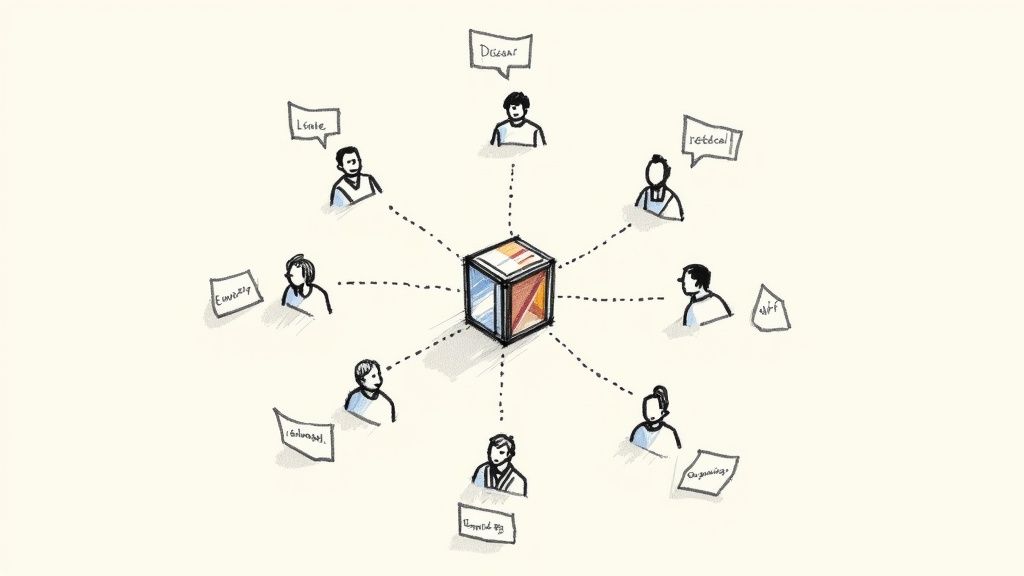
Think of it like building a skyscraper. You wouldn't start with the penthouse suite; you'd spend months laying a deep, solid foundation. Your community is that foundation. They are the engaged, excited fans ready to throw their support behind you the second you go live.
This initial surge is everything on platforms like Kickstarter. It signals to the algorithm that your project is hot, pushing it in front of new backers and creating a snowball effect of visibility and funding.
Your first job is to figure out where your future players hang out online. Don't spread yourself thin trying to be on every platform. Instead, pick a few key spots where board game lovers are already congregating and go deep.
When you show up in these places, don't just broadcast your marketing message. Engage. Ask for feedback on your art, discuss mechanics, and genuinely become part of the conversation.
Once you've found your people, you need to give them a reason to stick around and get excited. Your mission is to turn passive lurkers into active, vocal supporters. You do this by creating a steady drumbeat of content that tells the story of your game.
Share behind-the-scenes "dev diaries" about your design process—the tough choices and the "aha!" moments. Post stunning, high-quality art reveals as they come in to give people a real taste of your game's world. And nothing builds buzz like a gameplay preview, whether it’s a quick GIF of a cool mechanic or a full print-and-play version for your die-hard followers.
A well-executed pre-launch strategy does more than just gather emails; it validates your game concept. When you see hundreds of people eagerly discussing an art reveal or a mechanic deep-dive, you know you're on the right track long before you ask for a single dollar.
All roads should lead back to one place: your pre-launch landing page. This isn't just a "Coming Soon" sign; it's a powerful tool with one critical job: capturing email addresses. Your email list is, without a doubt, your single most valuable asset in crowdfunding.
Your landing page needs to grab attention with your game's best art. It needs a punchy headline that clearly explains what your game is and why it's cool. And most importantly, it needs a big, obvious sign-up form with a clear incentive. Offer a launch day notification, an exclusive promo card for subscribers, or a small discount. This list is your superpower on day one, guaranteeing you launch with that crucial, immediate momentum.
For more on this, check out these 7 actions to build your community before your Kickstarter campaign to get a head start.
Once you've started building a community, the next big decision is picking a home for your campaign. This isn't just a technical choice; it has a huge impact on your project's visibility, the audience you reach, and the tools you'll have to manage everything. In the world of board game crowdfunding, two platforms dominate the conversation: Kickstarter and Gamefound.
Kickstarter is the giant everyone knows. It's a massive marketplace buzzing with projects of all kinds, from tech gadgets to indie films. Then there's Gamefound, a platform built from the ground up by gamers, specifically for gamers. It’s a niche space, which means every eyeball on your project belongs to a tabletop enthusiast.
The rivalry between them has really heated up. While Kickstarter has a long history of successful board game campaigns, Gamefound's rise has been nothing short of meteoric. Just five years after launching, its funding totals for board games started to surpass Kickstarter's. This shift shows just how powerful a dedicated, focused community can be, attracting millions of passionate backers and thousands of creators.
So, which one is right for you? It really boils down to your game and the community you’ve built so far. Kickstarter gives you a shot at a much broader audience, but you’re also fighting for attention against a much wider array of projects. Gamefound offers a curated fishbowl where every backer is already looking for the next great board game.
Your choice should mirror your audience. If you spent your pre-launch phase building hype in general gaming circles, Kickstarter is a solid bet. But if you’ve been cultivating a following on niche forums like BoardGameGeek, Gamefound’s focused audience could be a massive advantage. For a wider perspective on platforms, you might find our https://pledgebox.com/post/kickstarter-vs-indiegogo-choosing-the-right-crowdfunding-platform comparison helpful.
Think of your campaign page as your digital storefront. It needs to do more than just list features—it has to tell a compelling story. The structure is key, starting with a powerful "above the fold" section that hooks visitors the second they land. This is where you put your best art, a killer tagline, and a short, punchy video.
As people scroll, you need to guide them on a journey:
When you're putting the page together, applying some tried-and-true landing page optimization best practices can make a world of difference. A clean, trustworthy page design makes it that much easier for a curious visitor to click that "Back this project" button.
Your pledge levels are the heart of your campaign's offer. The golden rule? Keep it simple. A confusing mess of options will only lead to "analysis paralysis," where a potential backer just gives up and leaves.
A classic, effective structure is to offer a basic pledge for the core game, a deluxe version with upgraded goodies, and an "all-in" bundle with every expansion and add-on. Each tier should feel like a great deal, making the backer feel smart for choosing it. This clarity, paired with an exciting stretch goal map, is what separates a decent campaign from a phenomenal one.
And don't forget to think ahead. A solid post-campaign plan is crucial. How will you collect addresses? How will backers manage their add-ons? Figure this out before you launch.
Figuring out your funding goal is easily one of the most sweat-inducing parts of launching a board game crowdfunding campaign. If you aim too high, you might not fund at all, which kills your momentum and makes backers hesitant. Aim too low, and you could hit your goal but find yourself in a financial hole, unable to actually produce and ship your game.
The only way to get this right is to build your budget from the ground up, accounting for every single cost you can think of. This isn't just about printing the game. Your true number needs to cover everything from the factory floor to your backer's front door. I've seen too many first-time creators make this mistake, and it can be a fatal one for a new project.
Before you can even think about a funding goal, you need a painfully detailed list of every expense. Think of it as reverse-engineering your campaign's finances. And please, don't just guess. Get real quotes for the big-ticket items.
Your budget needs to track every dollar. Here’s what you absolutely must account for:
The most successful campaigns I've seen are radically transparent about their numbers. Building a detailed budget isn't just for you; it shows backers you're a serious creator who has done the homework. That builds a massive amount of trust.
Here's a look at how these costs might break down in a real-world scenario. Of course, your numbers will vary, but this gives you a solid starting point for what to expect.
Example Budget Breakdown for a Mid-Sized Board Game Campaign
| Cost Category | Estimated Percentage of Funding Goal | Key Considerations |
|---|---|---|
| Manufacturing | 25% - 35% | Highly dependent on component quality, miniatures, and print run size. Get multiple quotes. |
| Freight & Fulfillment | 20% - 30% | Varies wildly based on game weight/size and backer locations. Global shipping is complex. |
| Marketing & Ads | 10% - 20% | Includes pre-launch ads, influencer reviews, and campaign-day promotions. Can be higher for new creators. |
| Platform & Payment Fees | 8% - 10% | A fixed cost. Platforms like Kickstarter and Stripe take their cut directly from pledges. |
| Art, Design, & Prototypes | 5% - 15% | Recouping sunk costs. This can include graphic design, illustration, and rulebook editing. |
| Contingency Fund | 10% - 15% | Your safety net for unexpected delays, manufacturing errors, or increased shipping costs. Do not skip this. |
This table illustrates that nearly half the money you raise might go straight to printing and shipping, with the rest covering all the other essential costs of running a business. Plan accordingly!
Okay, so now you have your "break-even" number—the absolute minimum you need to produce the game and fulfill your promises. Here's where strategy comes in. Do you set your public goal to that exact number? Or do you go lower to guarantee a quick win?
Many veteran creators, myself included, will set a lower, more achievable public goal.
Why? Because funding on day one is a massive psychological boost for a campaign. Backers see a project that's already successful and gaining speed, making them feel more confident to jump on board. This initial surge feeds the platform's algorithm, pushing your project onto the front page and driving more organic traffic. It creates a snowball effect.
The risk, of course, is that you must be confident that your momentum will blow past that low goal and carry you well beyond your actual break-even point. This is precisely why building that dedicated, excited audience before you launch is so critical. They're the ones who will make that first-day funding explosion happen.
The confetti has settled, the funding bar is overflowing, and your campaign is a success. This is a huge milestone, but in the world of board game crowdfunding, it's also where a new and equally challenging phase begins. This is the transition from funding to fulfillment, and it hinges on one critical tool: a pledge manager.
This isn't just about sending a basic survey. A robust pledge manager is your operational command center for collecting shipping addresses, managing pledge upgrades, and—most importantly—increasing your project's total revenue through post-campaign sales.
Many creators get tempted to use their platform's native survey tool, like the one on Kickstarter. While functional, it's a massive missed opportunity. To understand the difference, think of the Kickstarter pledge manager like Amazon—it's a massive marketplace that handles the basics. In contrast, the Pledgebox pledge manager is like Shopify—it gives you your own powerful, customizable storefront to control the experience.
With a dedicated tool like Pledgebox, you can offer backers a curated menu of add-ons, allow them to upgrade their pledge levels, and even open the doors for late pledges from people who missed the campaign. This flexibility is what separates a decent post-campaign from a truly profitable one.
Choosing the right post-campaign tool can be the difference between simply fulfilling orders and significantly boosting your overall funding. A well-run pledge manager can often add an extra 10-20% to your campaign total through add-ons and late pledges.
This infographic breaks down the essential flow of budgeting your costs to set a goal and secure funding—a process that directly impacts your post-campaign financial health.
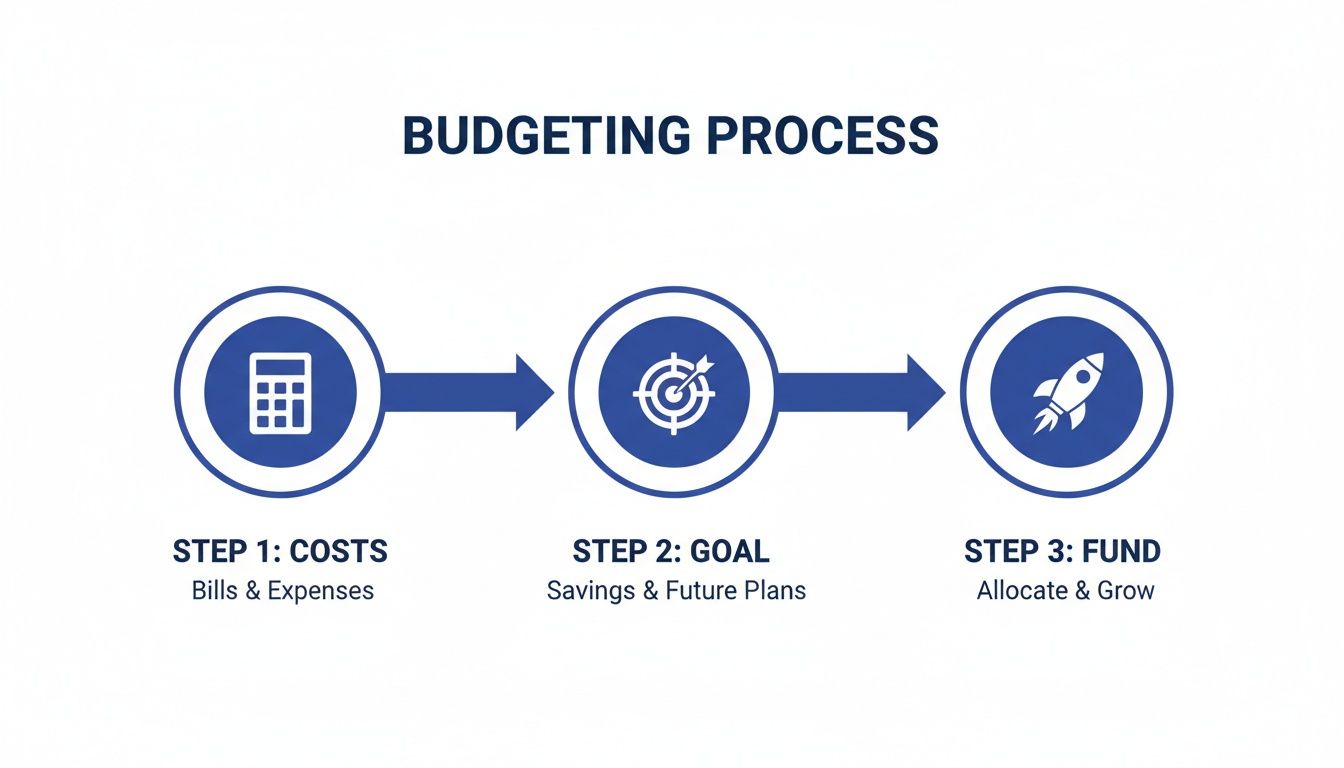
Understanding this financial pipeline is key because every dollar saved in planning can be reinvested or used to cover the inevitable post-campaign costs managed through your pledge manager.
To really see the difference, let's compare the built-in survey tools with a specialized pledge manager.
| Feature | Native Kickstarter Surveys | Pledgebox |
|---|---|---|
| Upsells & Add-ons | No, you can't sell additional items. | Yes, fully customizable storefront for add-ons and upgrades. |
| Late Pledges | Not supported. | Yes, you can accept new backers after the campaign ends. |
| Shipping Collection | Address only; can't charge for shipping post-campaign. | Yes, calculates and charges for shipping based on location/weight. |
| Backer Management | Basic list of backers and their pledge levels. | Advanced dashboard to manage orders, segments, and communication. |
| Fees | Included in Kickstarter's platform fee. | Free to send surveys; 3% fee only on funds raised from upsells. |
The takeaway is clear: if you want to grow your revenue and streamline your fulfillment, a dedicated pledge manager isn't just a nice-to-have; it's essential.
The real magic of a dedicated pledge manager is its ability to generate revenue after the clock runs out on your funding period. This is your chance to offer compelling add-ons that enhance the game experience.
Here are a few upsell strategies I've seen work incredibly well:
The financial model of a platform like Pledgebox makes this incredibly appealing. It is completely free to send the backer survey to collect essential information. The platform only charges a 3% fee on the funds you raise from upsells. This means there’s no risk to you—you only pay when you make extra money.
As you prepare to send out your surveys, clear and consistent communication is everything. Let your backers know when to expect their survey link and what information they'll need to provide.
When designing your survey, keep it simple and intuitive. Guide backers through the process of confirming their pledge, adding extras, and providing their shipping details. A confusing survey leads to frustrated backers and incomplete responses, which creates logistical nightmares down the road.
The power of a strong pledge manager strategy is becoming more evident as platforms evolve. For example, Gamefound has surged in popularity, partly due to its integrated pledge manager, which excels at driving post-campaign revenue. The platform recently achieved over $85 million in live campaigns plus an additional $71 million via late pledges in a single year—a testament to how crucial this phase is for a project's bottom line. You can discover more insights about the evolving crowdfunding platform dynamics and their impact on creators.
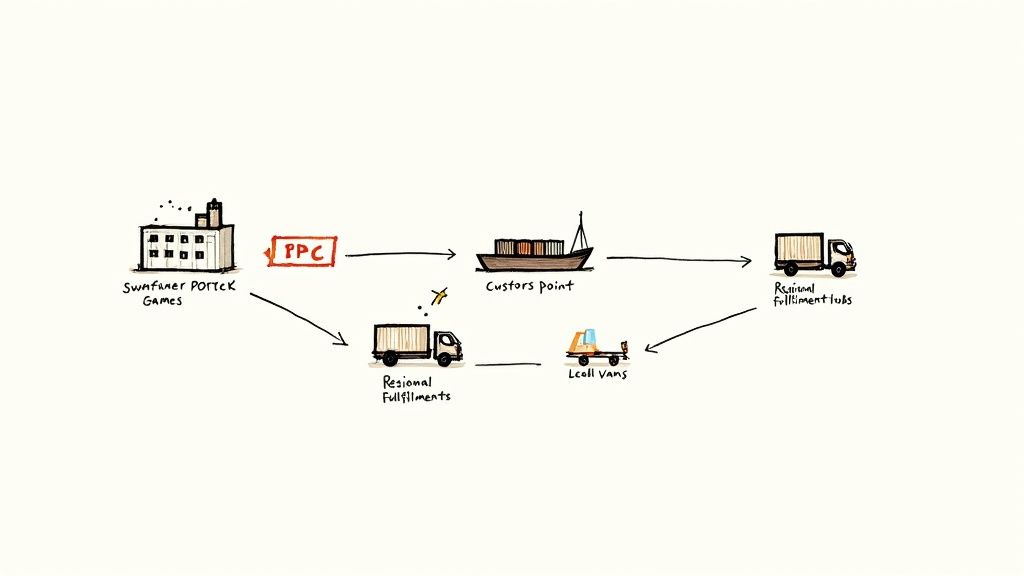
This is it—the moment your board game crowdfunding success starts to feel real. All those spreadsheets and design files are about to become a physical product, a shrink-wrapped box ready for your backers' game nights.
The journey from the factory floor to your backers' doorsteps is easily the most complex part of this whole adventure. It demands precision, a ton of patience, and a healthy respect for global logistics. One wrong move here can undo months of hard-won trust. But if you've got a solid plan, this is where you stick the landing.
First things first, you need to find a manufacturer. For most board game creators, this means looking overseas, particularly to China. Big names like Panda Game Manufacturing are industry standards for good reason—they offer an incredible range of components and high-quality work at a scale that's hard to beat.
But don't just chase the lowest quote. When you're vetting potential partners, you need to dig deeper.
Always get quotes from a few different factories. But when it's time to decide, weigh the price against their communication style and proven quality.
Before you give the green light to print thousands of copies, you absolutely must get a pre-production copy (PPC). This is a single, fully assembled game shipped straight from the factory. It’s your last real chance to catch any mistakes.
The PPC is your safety net. No matter how many times you’ve checked the digital proofs, there's no substitute for holding the finished product. This is where you’ll notice that the red on the box doesn't match the red on the cards, or that the custom meeples don't quite fit in the insert. Approving mass production without a PPC is one of the biggest and most foolish risks a creator can take.
Once you’ve approved the PPC, your game officially enters mass production. This is a perfect time to share unboxing photos and videos with your backers to keep them hyped and in the loop.
With stacks of your game fresh off the assembly line, the next puzzle is getting them into your backers' hands. This usually happens in two major stages: freight forwarding and final fulfillment.
First up is freight forwarding. This is how you move your games in bulk—we're talking giant pallets—from the factory in China to fulfillment centers scattered across the globe. It's a complicated dance of customs clearance and long transit times, usually by cargo ship. You'll need a dedicated logistics company for this part.
Next comes fulfillment, which is the "last mile" of the journey. From those regional warehouses, a fulfillment partner will individually pack each backer's order and ship it out. Choosing your fulfillment model is a huge decision:
After manufacturing wraps up, a crucial step is calculating shipping costs accurately to make sure you don't lose your shirt. Getting this wrong can completely destroy your budget. Being transparent about these costs and how you’re handling VAT from the get-go builds trust and prevents a whole lot of backer frustration later. Throughout this whole process, consistent and honest updates are your best friend.
Even with the best roadmap, every board game crowdfunding journey has its own unique twists and turns. As you move from a great idea to a delivered game, certain questions tend to pop up again and again. Here are my answers to some of the most common ones I hear from creators.
There’s no magic number here, but let's be real: launching a campaign with zero dollars in your pocket is pretty much impossible. A solid project needs some seed money to cover the essentials long before you hit "launch."
Most of these costs fall into a few buckets. You've got your art, graphic design, and rulebook editing, which can easily run from $2,000 to over $10,000, all depending on how ambitious your game is. You'll also need to get physical prototypes made for reviewers and to shoot your promotional videos. Finally, you can't forget a small marketing budget—think $1,000 to $5,000—for pre-launch ads to start building that all-important email list.
You can definitely be scrappy, but one of the most frequent traps I see is creators underestimating these costs, especially for high-quality art. Having at least a few thousand dollars set aside gives you a critical buffer, lets you put your best foot forward, and seriously boosts your odds of success.
Easy. The single most devastating mistake is launching without building an audience first. So many creators get caught up in the idea that the crowdfunding platform itself will magically deliver a crowd. That's just not how it works.
Think of crowdfunding sites as conversion engines, not discovery platforms. They're built to amplify momentum that’s already there. Launching without an engaged email list, a lively Discord server, or an active social media following is like opening a shop in the middle of nowhere and hoping people wander in.
You should plan to spend a solid three to six months just on community building before your campaign ever sees the light of day. You need to gather a group of true fans who are fired up to back your game the moment it goes live. That day-one surge is the signal to the platform's algorithm that your project is hot, which gets you the visibility you need to really take off.
An established community does more than just throw money at you on day one. They are your first playtesters, your loudest cheerleaders, and your most valuable critics. Their feedback can help you iron out the kinks in your game and your campaign page long before the general public ever lays eyes on it.
This is a big one. Offering worldwide shipping can massively expand your pool of potential backers, but it also opens a Pandora's box of logistical headaches and financial risks. Don't take this decision lightly.
Before you click that "ships anywhere" button, you have to do your homework on shipping costs, VAT (Value-Added Tax), and customs rules for key regions like the EU, UK, Canada, and Australia. If you get these numbers wrong, you could watch your profit margin vanish or—even worse—have to go back to backers and ask for more money. That's a quick way to torpedo your reputation.
For bigger campaigns, working with regional fulfillment centers is the way to go. This is how you can offer "customs-friendly" shipping, so your backers in those areas don't get hit with surprise import fees. For your first project, it's often much smarter to keep it simple. Limit shipping to your home country and maybe one or two other major markets you're confident you can handle. And no matter what, be crystal clear about your shipping estimates right on the campaign page.
Consistent, transparent communication is everything. It's the currency of backer trust. The moment your campaign funds, your backers become your investors. They deserve to know what's happening with their money as you bring the project to life.
Get into a rhythm of posting a detailed, public update at least once a month, even if there isn't earth-shattering news. Silence is what makes people nervous. Certain milestones should always trigger an immediate update:
Always be straight with people, especially about delays or problems. You'd be surprised how understanding backers can be when you explain what's going on and what your plan is to fix it. A well-informed backer is a happy backer, and a happy backer is way more likely to jump on your next board game crowdfunding project.
A smooth post-campaign process is key to a great backer experience. PledgeBox offers a powerful toolkit to help you manage surveys, upsells, and fulfillment with ease. Learn how PledgeBox can help you deliver your project successfully.
PledgeBox
The All-in-One Toolkit to Launch, Manage & Scale Your Kickstarter / Indiegogo Campaign